Natural Ruby Inclusions
Explore ruby inclusions in Hyperion, the Lotus Gemology inclusion database. Hyperion contains photomicrographs of inclusions and internal features in natural ruby, documented with information on geographic origin, treatment, lighting conditions, field of view, photographer and published references.
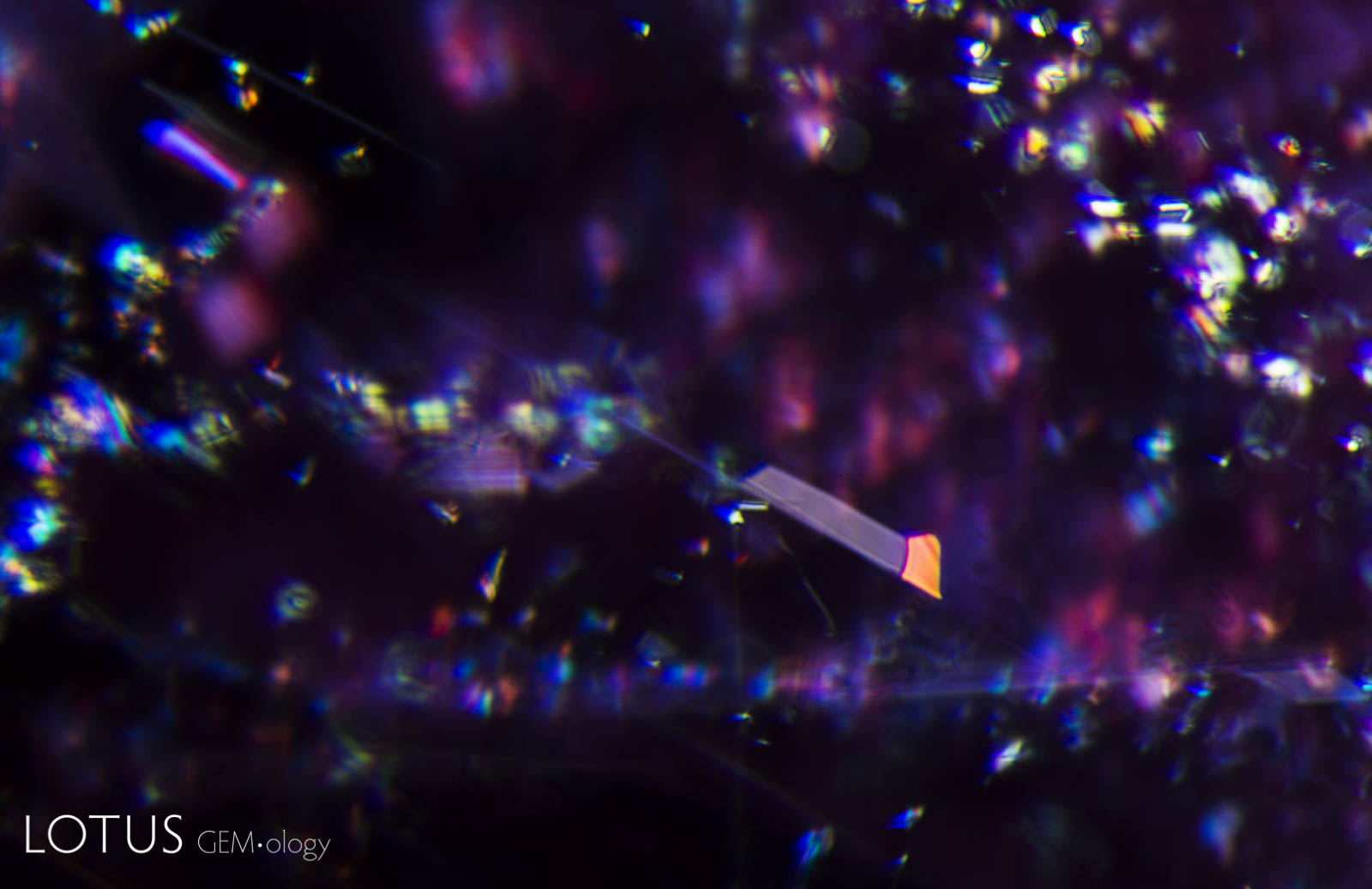
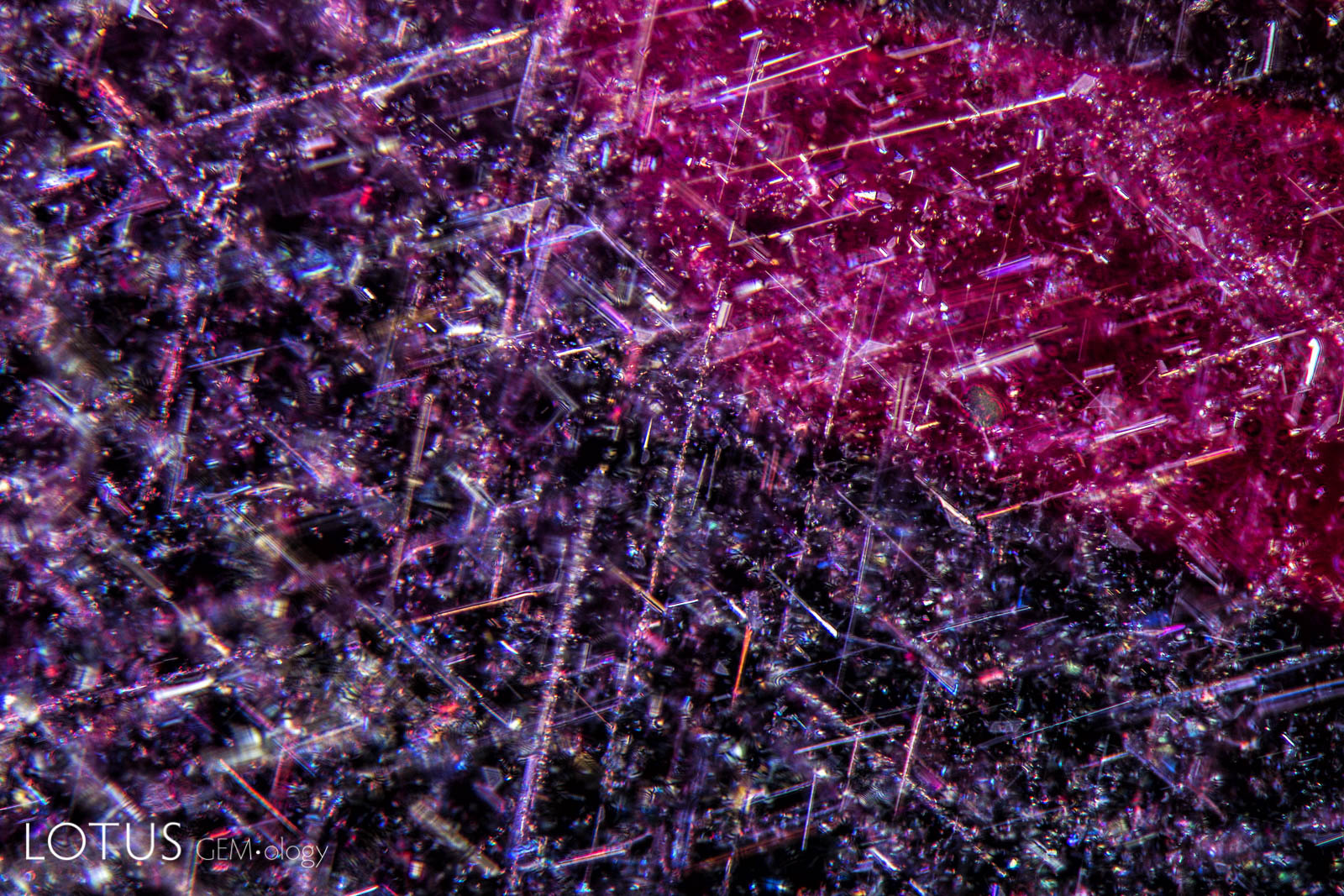
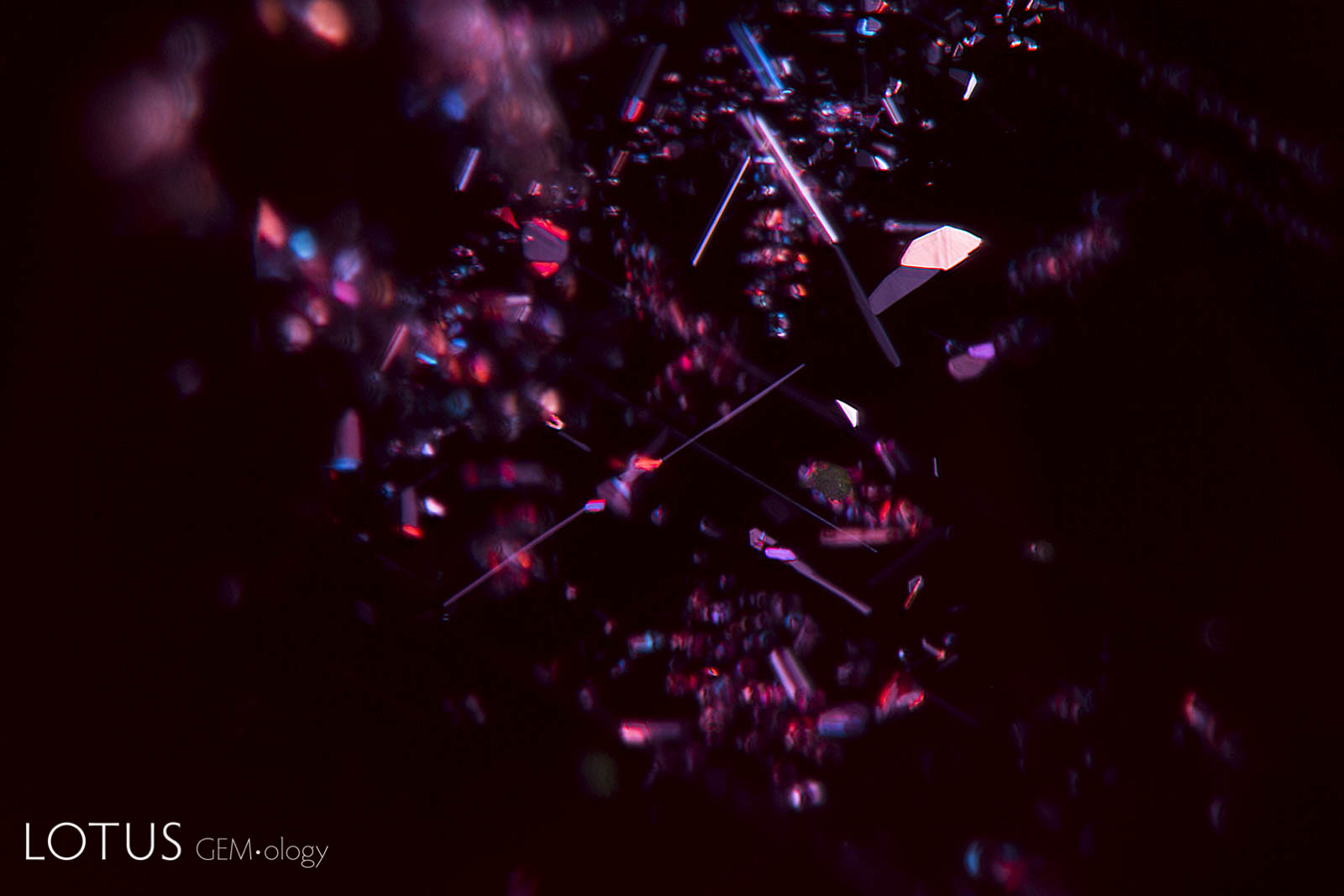
Probably the most common inclusion in Mozambique ruby is rutile silk. The rutile forms as high-relief twinned needles with tiny re-entrant angles at the broad end, attached to “daughter” crystals of lower relief. During heat treatment, the daughter crystals may show breakdown in the form of bubbles or mottling.
Natural Ruby •
Mozambique •
Enhancements:
None Detected (None) •
Lighting Conditions:
Fiber Optic: Diffuse Overhead
Photographer:
E. Billie Hughes •
Image Number:
A-001-0707-1
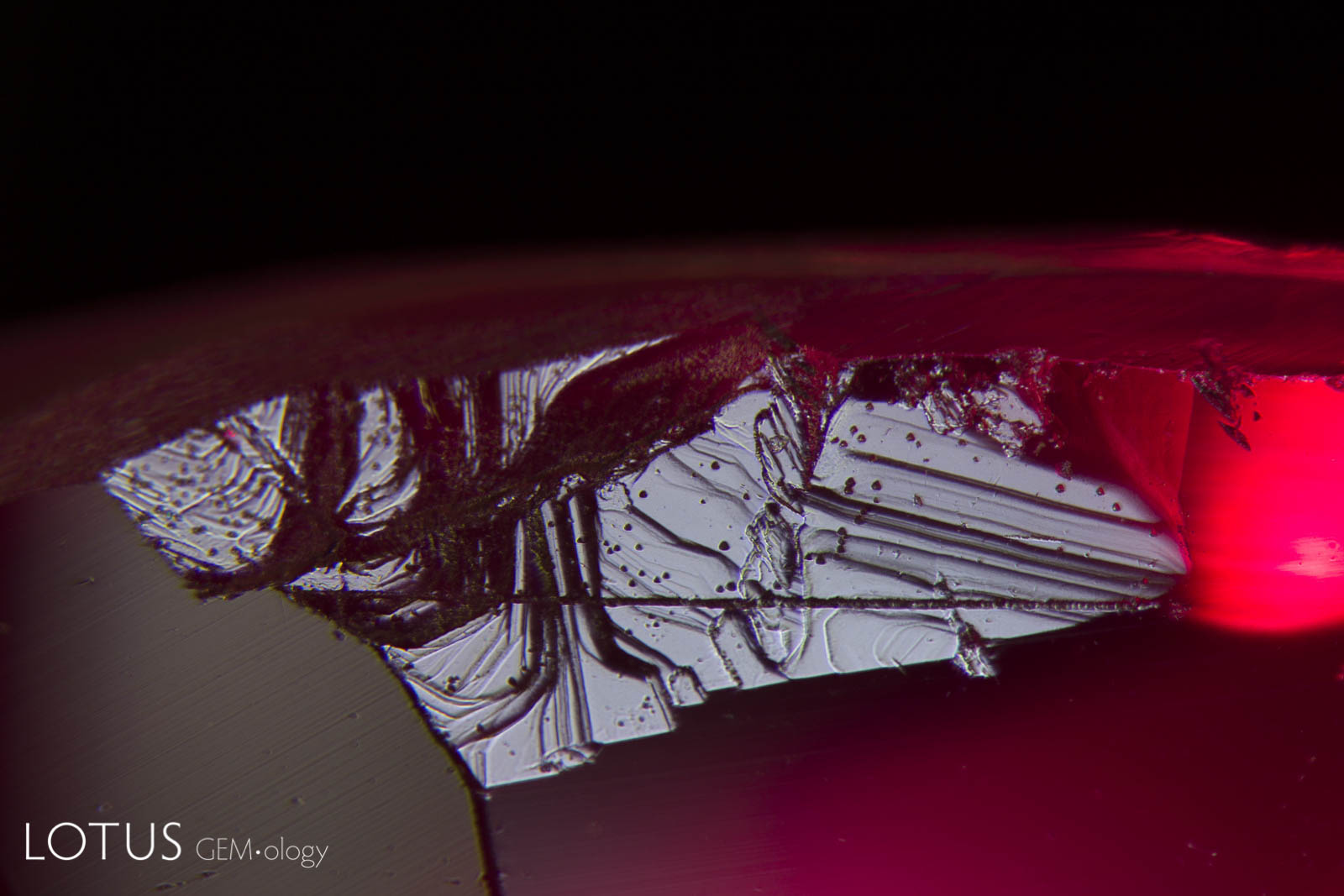
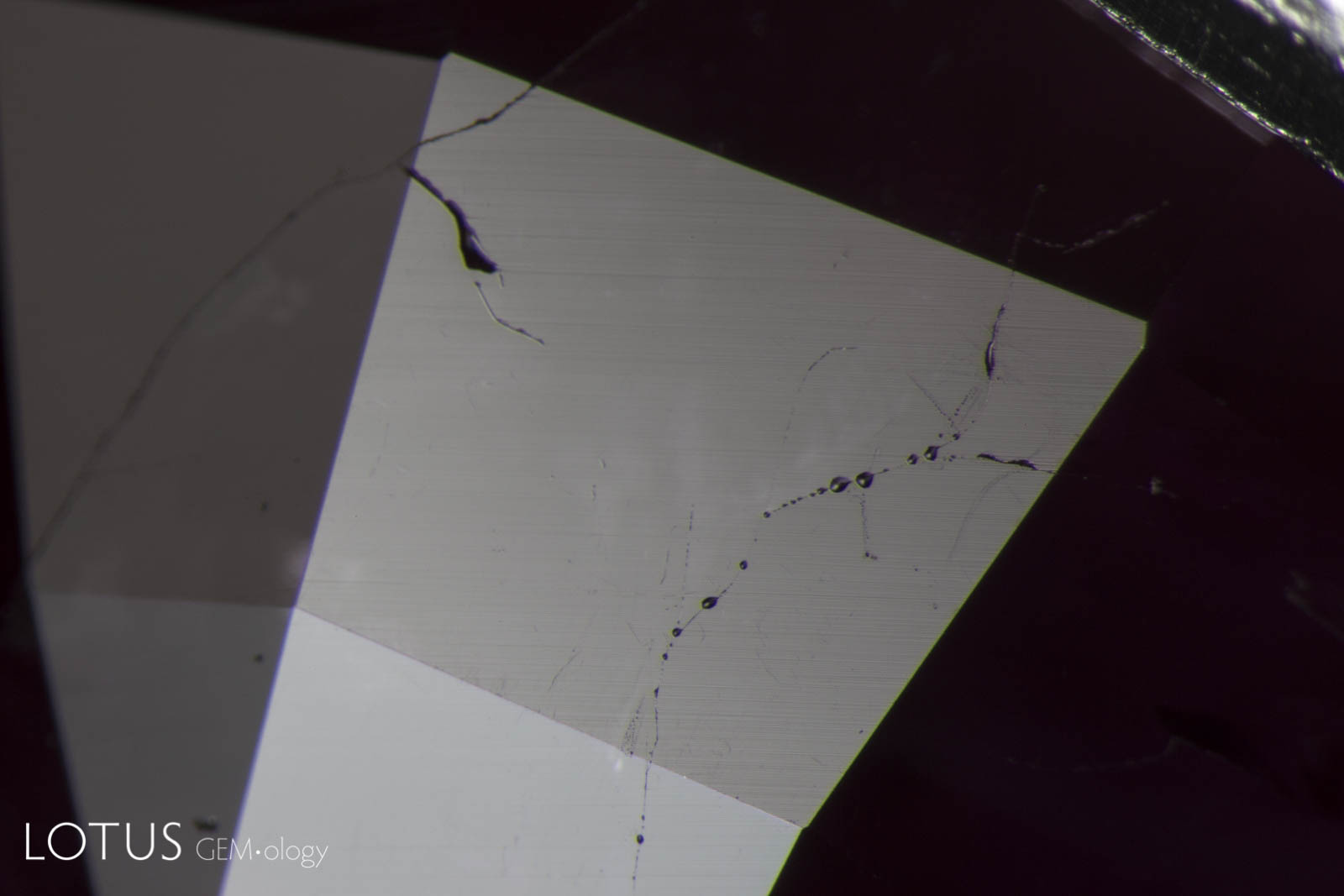
A small “natural” is found on the pavilion of this ruby from Montepuez, Mozambique. Naturals are small traces of the original crystal surface. This one shows tiny triangular pits and stepped “oscillatory” growth.
Natural Ruby •
Mozambique •
Enhancements:
None Detected (None) •
Lighting Conditions:
Fiber Optic: Diffuse Overhead
Photographer:
Richard W. Hughes •
Image Number:
A-001-0701-1
A dense concentration of rutile silk in a ruby from Montepuez, Mozambique.
Natural Ruby •
Mozambique •
Enhancements:
None Detected (None) •
Lighting Conditions:
Fiber Optic: Overhead
Photographer:
Richard W. Hughes •
Image Number:
A-001-0691-1
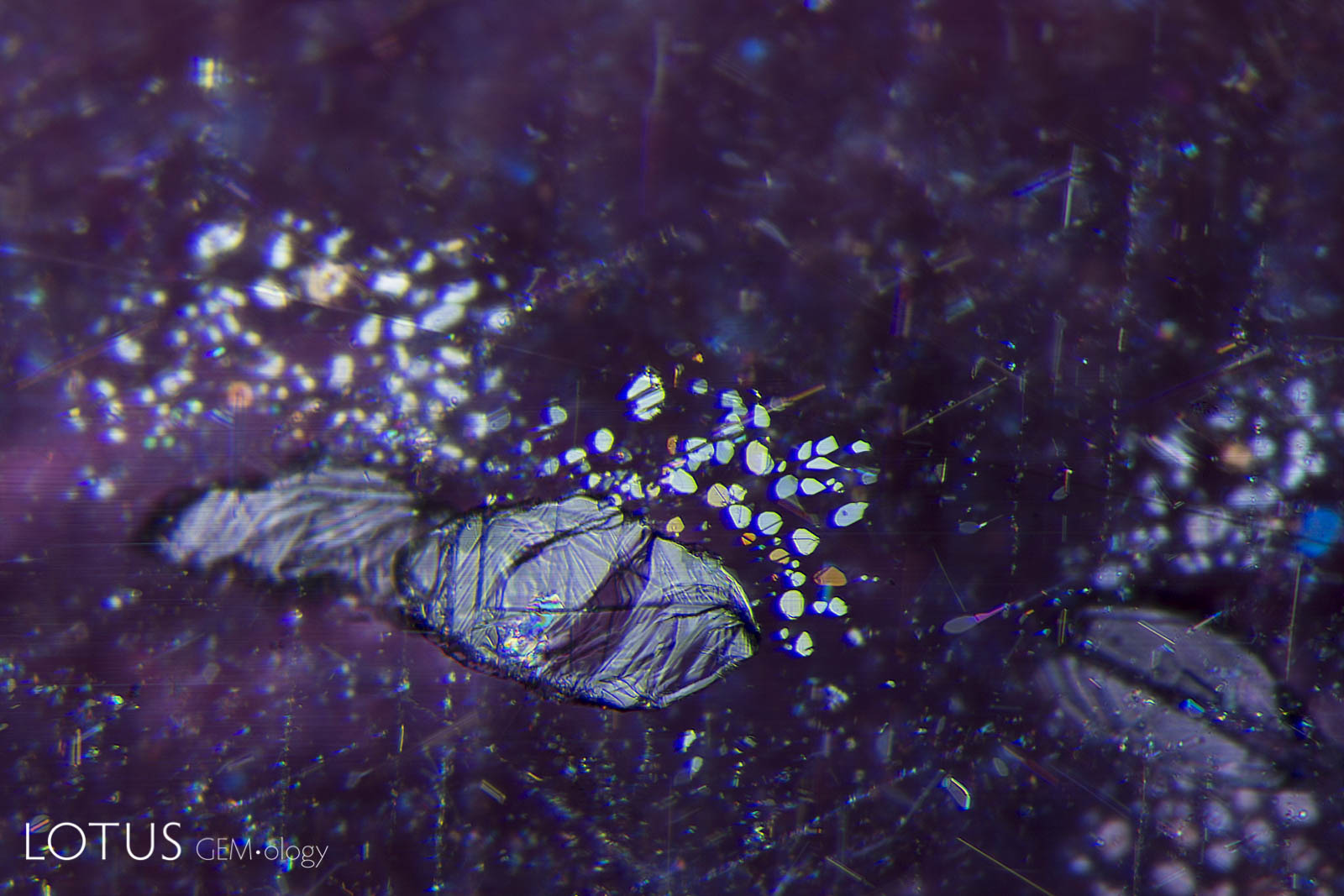
A mica crystal surrounded by a small “rosette” inclusion can be seen in the basal plane of this ruby from Montepuez, Mozambique. Rutile silk is also visible.
Natural Ruby •
Mozambique •
Enhancements:
None Detected (None) •
Lighting Conditions:
Fiber Optic: Diffuse Overhead
Photographer:
Richard W. Hughes •
Image Number:
A-001-0695-1
Exsolved rutile silk (high relief) with attached daughter crystals (darker and of low relief) are a common feature of rubies from Mozambique’s Montepuez mines.
Natural Ruby •
Mozambique •
Enhancements:
None Detected (None) •
Lighting Conditions:
Fiber Optic: Diffuse Overhead
Photographer:
Richard W. Hughes •
Image Number:
A-001-0687-1
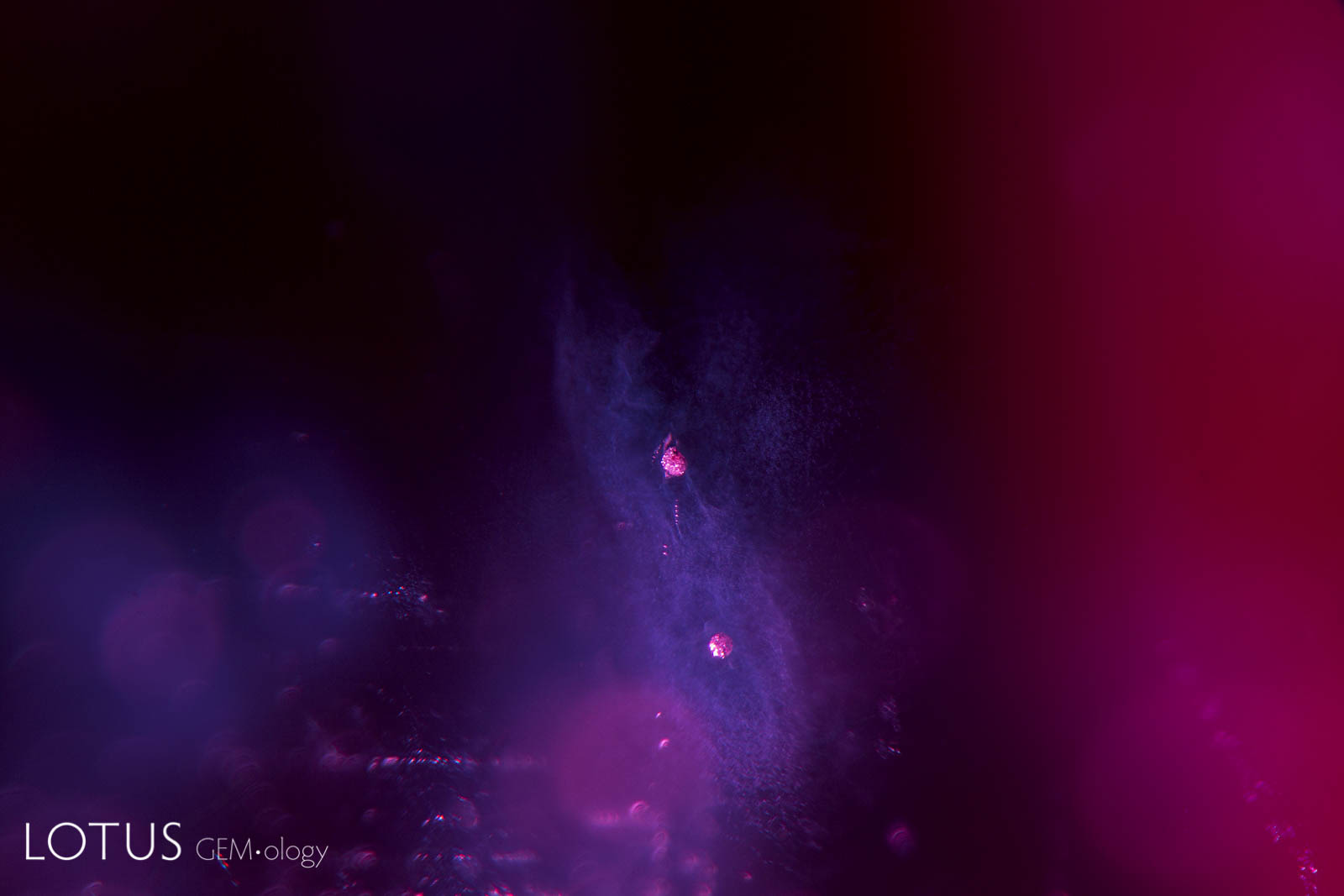
Unusual clouds in a heat-treated ruby said to be from Madagascar. The bluish color is created by Tyndall scattering, light scattering from particles in a fine suspension. Tyndall scattering is also responsible for the blue irises of the human eye and the blue color of opalescent glass.
Natural Ruby •
Madagascar •
Enhancements:
Heat (H) •
Lighting Conditions:
Dark Field + Oblique Fiber Optic
Photographer:
Richard W. Hughes •
Image Number:
P-10058-1
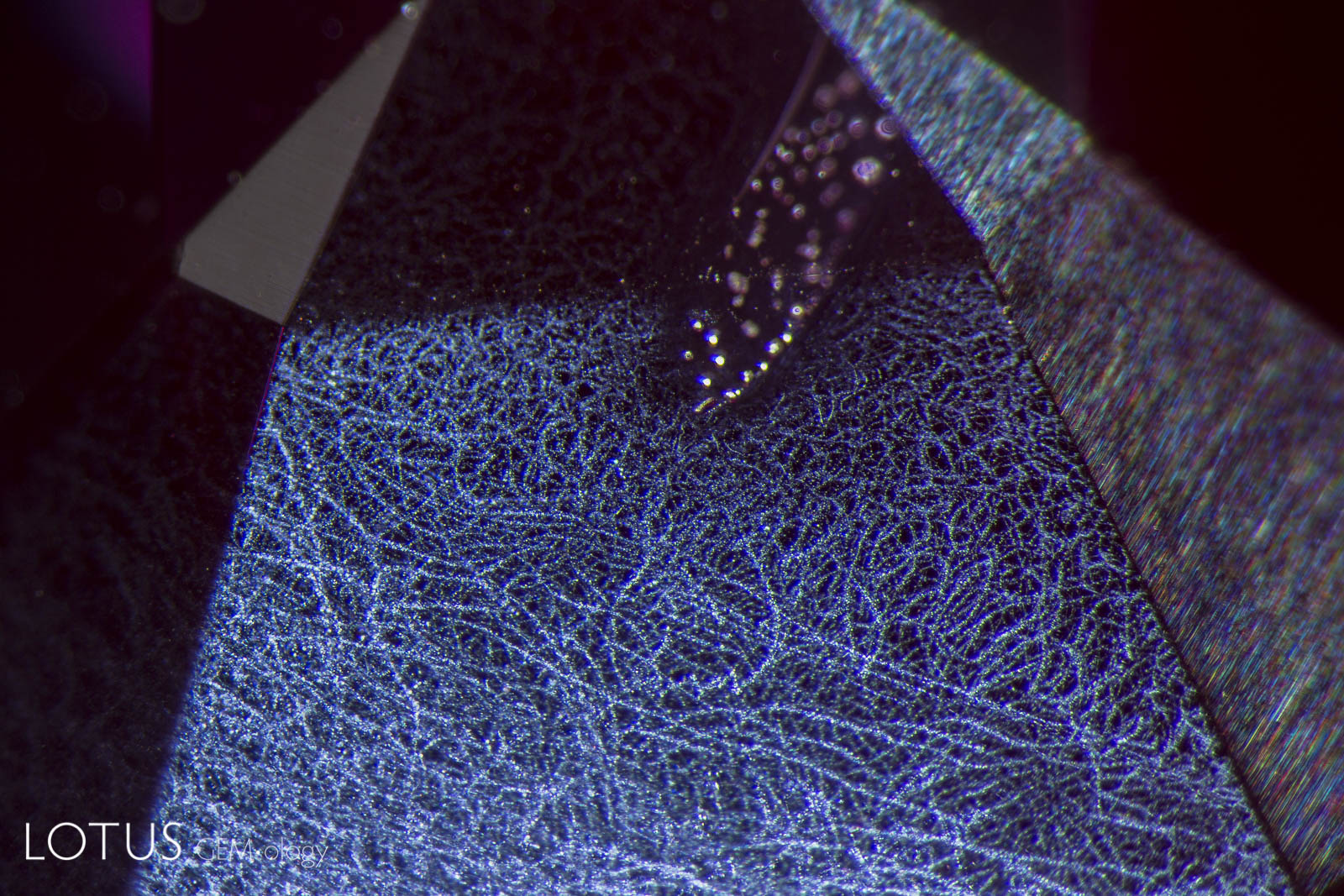
Bizarre spider's web clouds just beneath the surface of this ruby that proved to be beryllium treated.
Natural Ruby •
Not Determinable •
Enhancements:
Heat + Diffusion of external coloring agents (H-D) •
Lighting Conditions:
Fiber Optic: Oblique
Photographer:
Richard W. Hughes •
Image Number:
A-001-0619-3
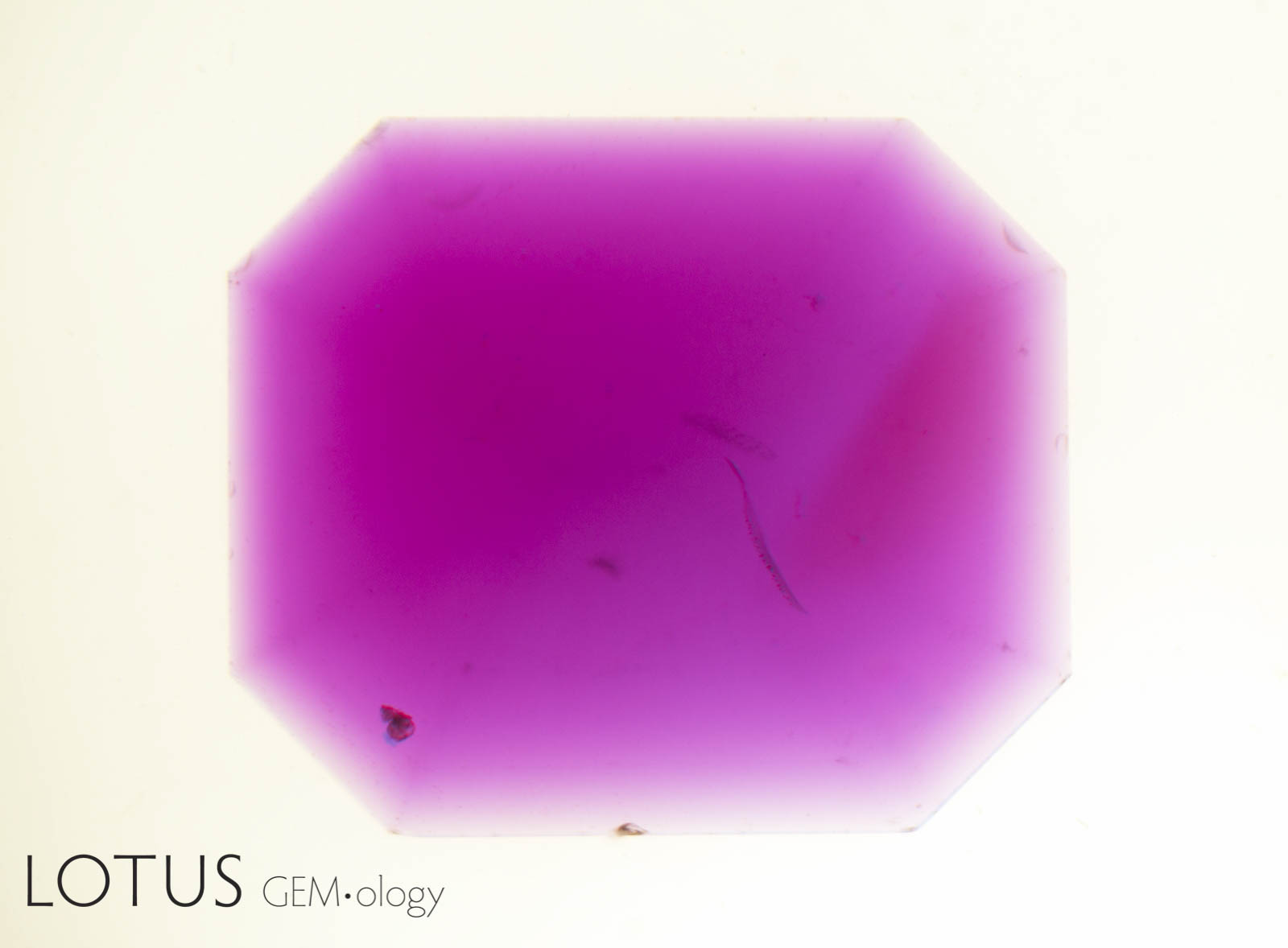
Color zoning with an orange zone in an unusual beryllium-treated ruby.
Natural Ruby •
Not Determinable •
Enhancements:
Heat + Diffusion of external coloring agents (H-D) •
Lighting Conditions:
Diffuse Light Field (Transmitted Light)
Photographer:
Richard W. Hughes •
Image Number:
A-001-0619-2
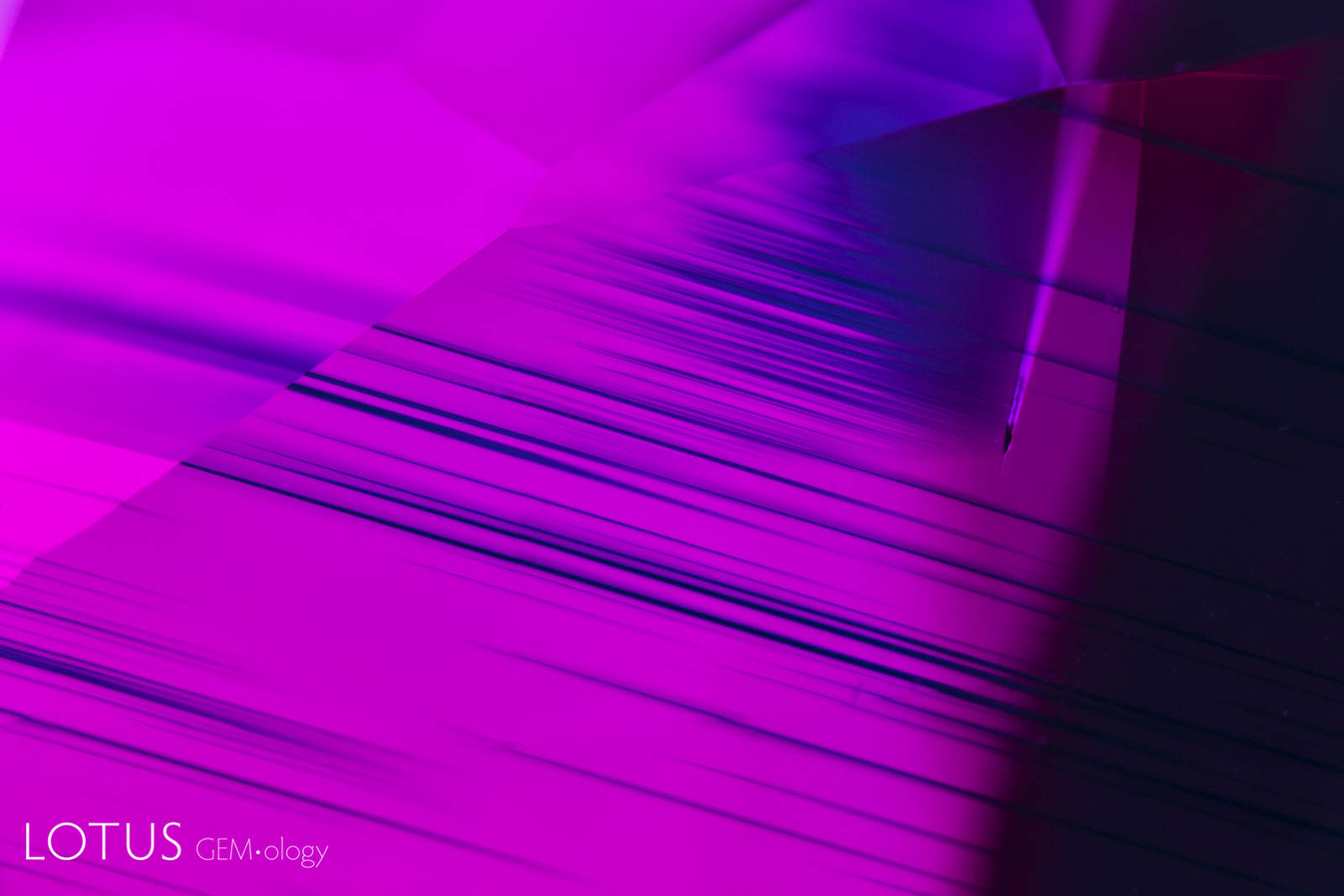
Rubies from Tanzania’s Winza mines often display blue color zones. This is a particularly fine example.
Natural Ruby •
Tanzania; Winza •
Enhancements:
None Detected (None) •
Lighting Conditions:
Fiber Optic: Transmitted
Photographer:
Richard W. Hughes •
Image Number:
A-001-0537-1
Many gems entering the market from Burma have been found to be oiled in an attempt to conceal their fissures. This fraud can often be unmasked by using the hot point, which may cause oil drops to leak from fissures.
Natural Ruby •
Myanmar (Burma); Mogok/Namya •
Enhancements:
Fissure Filling with colorless Oil/resin (FF-O1) •
Lighting Conditions:
Diffuse Overhead
Photographer:
Richard W. Hughes •
Image Number:
A-001-0422-1
Lotus Gemology (2015) Lotus Gemology Lab Alert for Oiled Gems. Bangkok, LotusGemology.com, RWHL*.
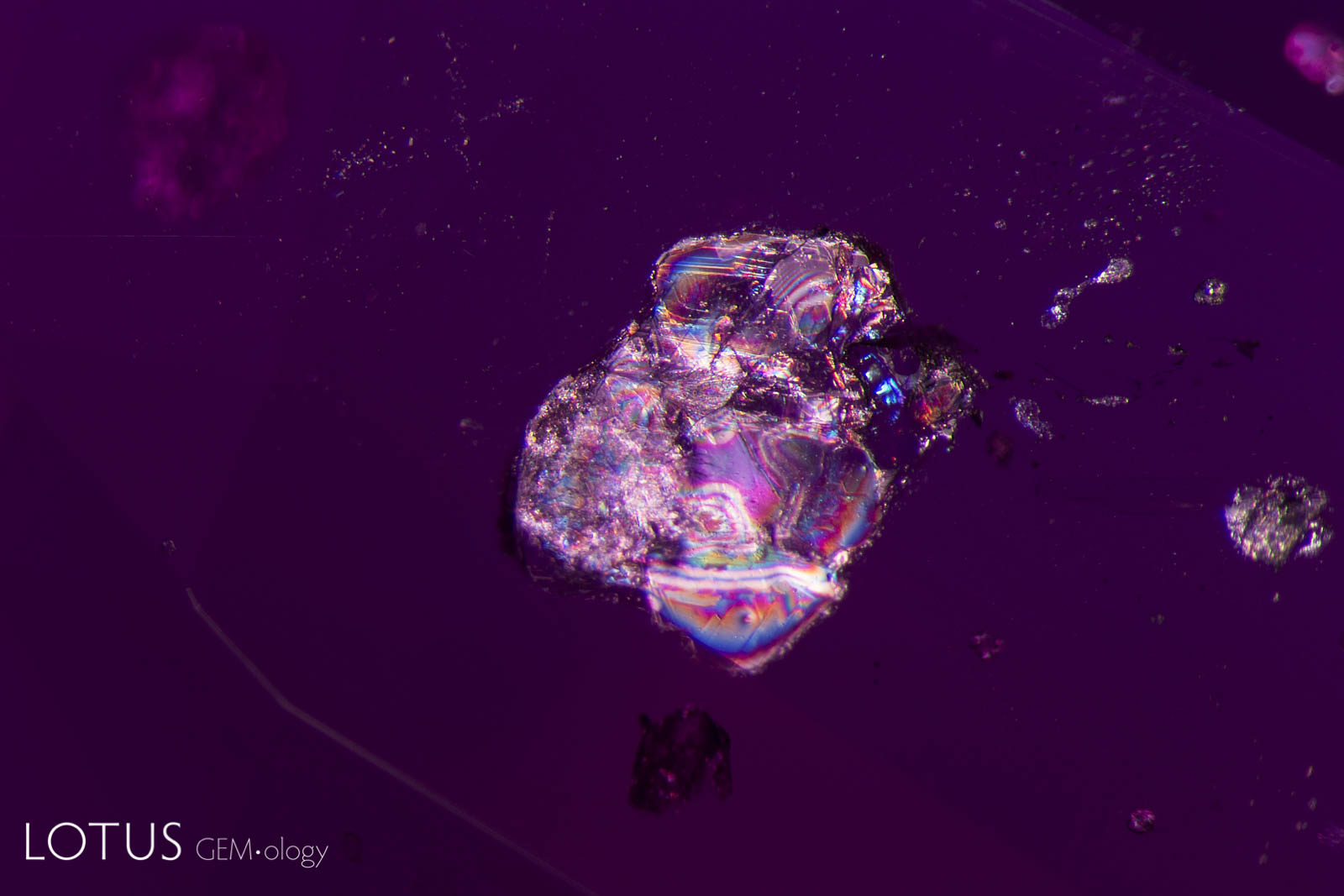
Mica is a common captive in Mozambique ruby. This example displays iridescence from the cleavage planes. Mica is heat sensitive. The lack of a glassy stress fracture surrounding it suggests that the stone has not been subjected to heat treatment.
Natural Ruby •
Mozambique •
Enhancements:
None Detected (None) •
Lighting Conditions:
Fiber Optic: Oblique
Photographer:
Richard W. Hughes •
Image Number:
A-001-0531-1
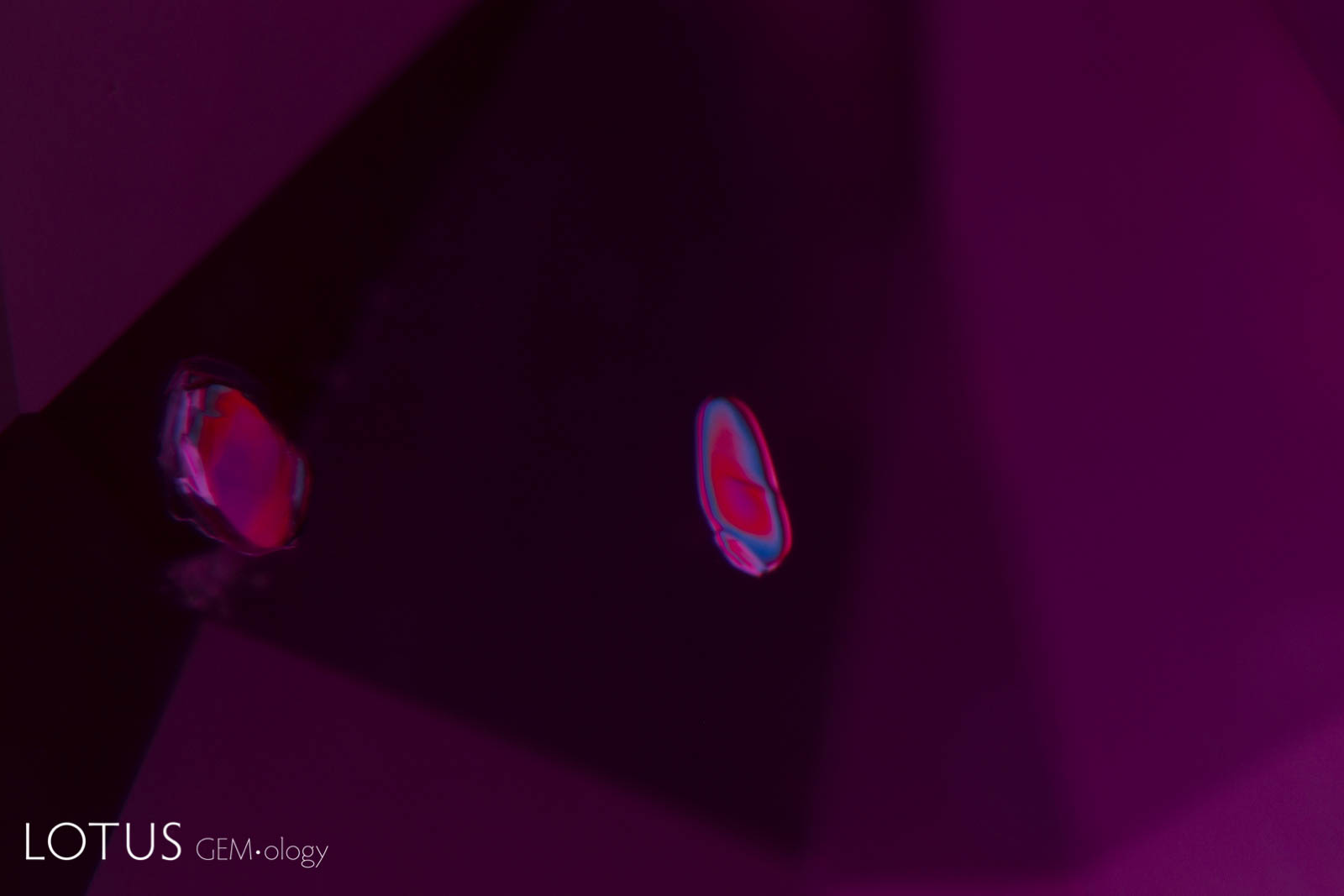
These rounded amphibole grains stand out in dramatic relief when viewed between crossed polars. They are a common guest in Mozambique rubies. This is not surprising when one considers that Mozambique ruby formed in amphibolite (a metamorphic rock consisting mainly of amphiboles) matrix.
Natural Ruby •
Mozambique •
Enhancements:
None Detected (None) •
Lighting Conditions:
Diffuse Light Field + Crossed Polars
Photographer:
Richard W. Hughes •
Image Number:
A-001-0524-1
Natural ruby inclusions may include mineral crystals, rutile silk, healed fissures, fluid inclusions, negative crystals, color zoning and other features formed during or after crystal growth. Such features are important to gemologists because they can provide evidence useful in identifying ruby, understanding its geological history, recognizing treatment and, in some cases, determining geographic origin.
Natural Ruby Inclusion Photomicrographs
The Hyperion natural ruby gallery includes microscopic features found in rubies from major deposits around the world. Each entry is accompanied by descriptive information and, where available, references to the gemological literature.
What Inclusions Can Reveal About Natural Ruby
Inclusions are an important part of ruby identification. Their form, composition, orientation and alteration can help gemologists distinguish natural ruby from synthetic material, recognize evidence of heat treatment, and study the geological environment in which the ruby formed.
Hyperion combines inclusion photomicrography with supporting gemological information so that individual features can be compared with documented examples from known ruby deposits.
About Hyperion
Hyperion is the Lotus Gemology searchable inclusion database. It allows users to browse gemstone inclusions by gem type, geographic origin, treatment and keyword.