Natural Ruby Inclusions
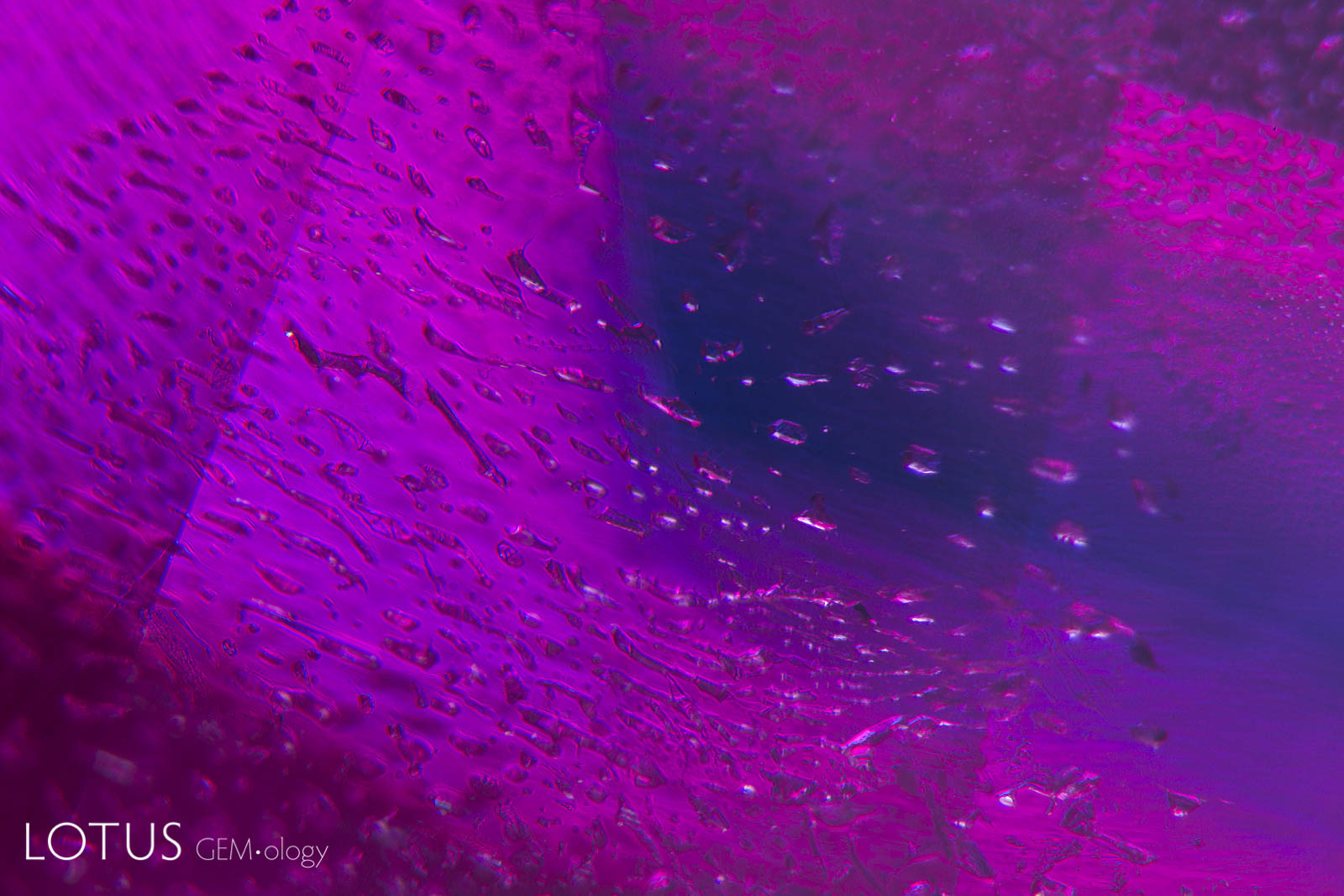
Explore ruby inclusions in Hyperion, the Lotus Gemology inclusion database. Hyperion contains photomicrographs of inclusions and internal features in natural ruby, documented with information on geographic origin, treatment, lighting conditions, field of view, photographer and published references.
Lovely example of a rutile needle with attached daughter crystal in a ruby from Montepuez, Mozambique.
Natural Ruby •
Mozambique •
Enhancements:
None Detected (None) •
Lighting Conditions:
Fiber Optic: Diffuse Overhead
Photographer:
E. Billie Hughes •
Image Number:
A-001-1799-1
Sharp angular growth zoning is commonly seen in rubies from Mozambique’s Montepuez region.
Natural Ruby •
Mozambique •
Enhancements:
None Detected (None) •
Lighting Conditions:
Diffuse Light Field (Transmitted Light)
Photographer:
E. Billie Hughes •
Image Number:
A-001-1800-1
Polysynthetic twinning in a ruby from Vietnam’s Luc Yen district.
Natural Ruby •
Vietnam •
Enhancements:
None Detected (None) •
Lighting Conditions:
Diffuse Light Field + Crossed Polars
Photographer:
E. Billie Hughes •
Image Number:
A-001-1906-2
Polysynthetic twinning in a ruby from Vietnam’s Luc Yen district.
Natural Ruby •
Vietnam •
Enhancements:
None Detected (None) •
Lighting Conditions:
Diffuse Light Field + Crossed Polars
Photographer:
E. Billie Hughes •
Image Number:
A-001-1906-1
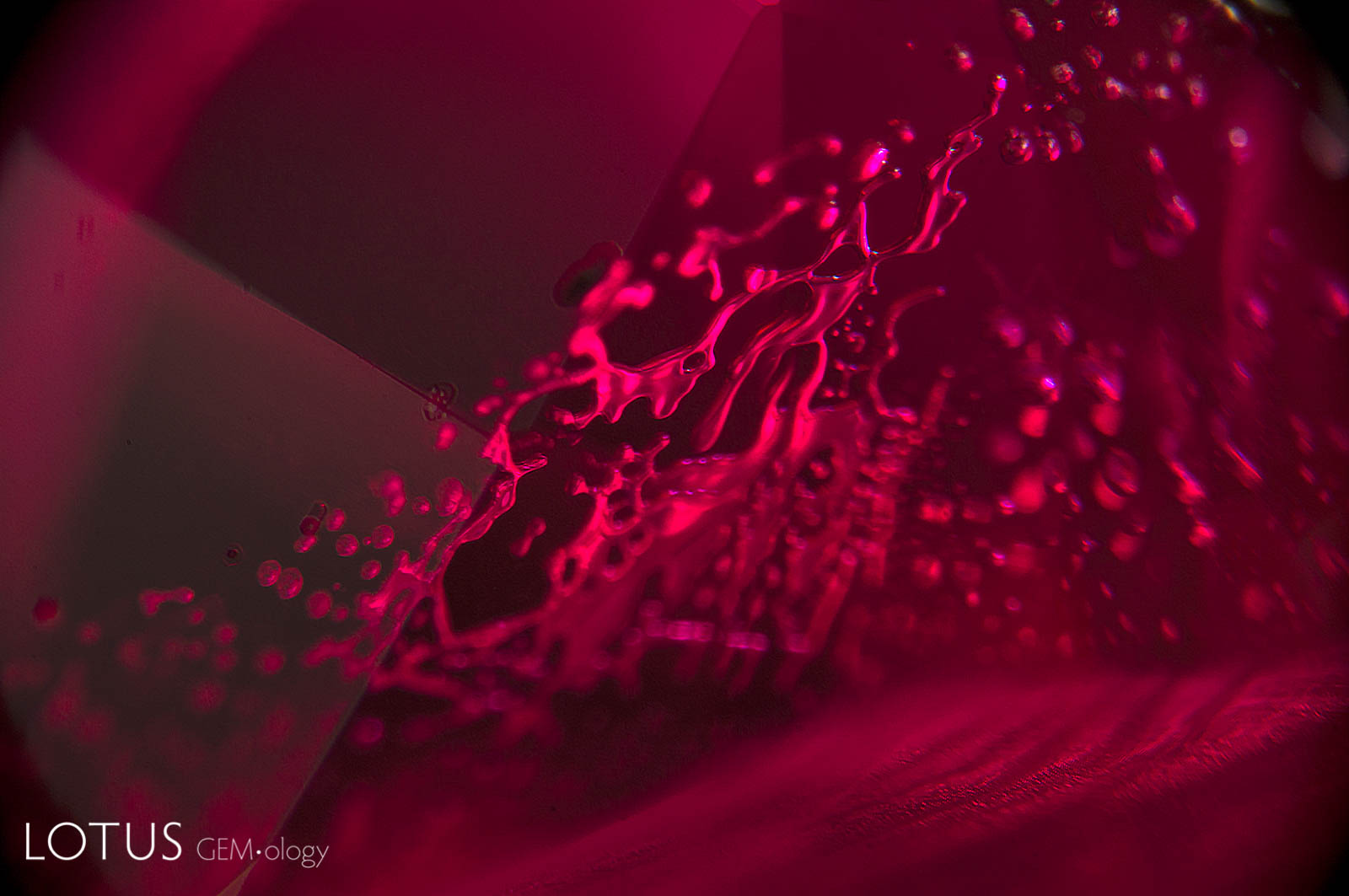
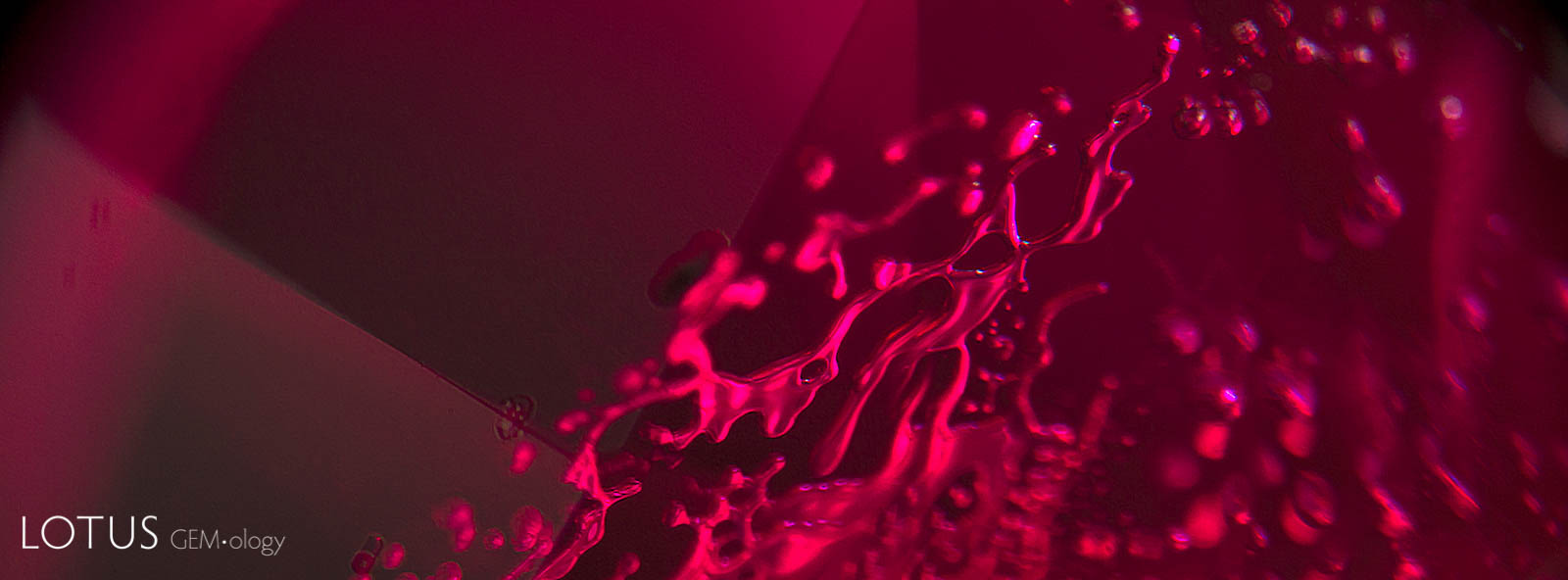
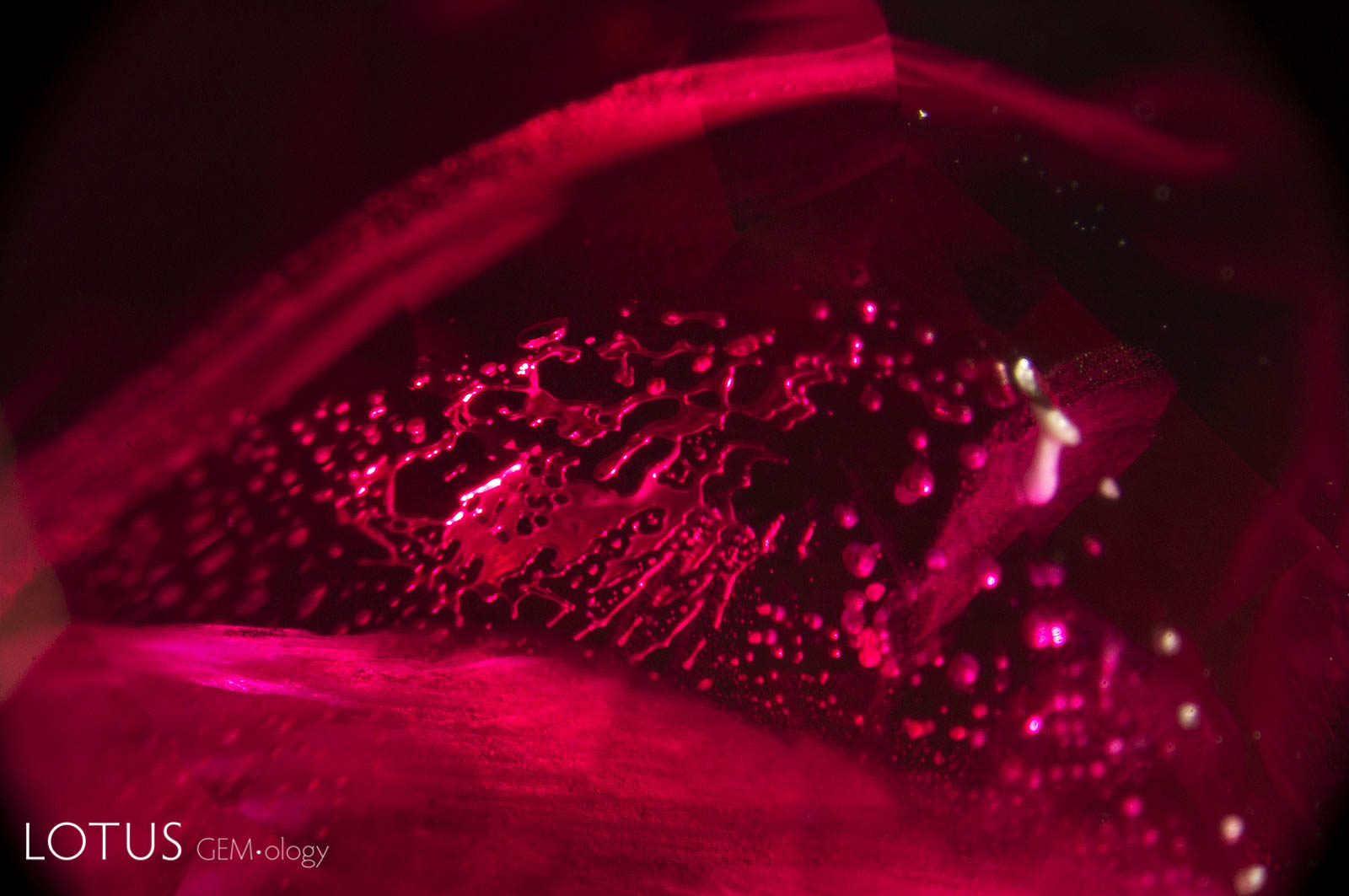
Flux-healed fissure in a heated ruby from Burma’s Mong Hsu area.
Natural Ruby •
Myanmar (Burma); Mong Hsu •
Enhancements:
Heat + Fissure Healing (H-FH) •
Lighting Conditions:
Fiber Optic: Oblique
Photographer:
Wimon Manorotkul •
Image Number:
A-010-0115-3
Flux-healed fissure in a heated ruby from Burma’s Mong Hsu area.
Natural Ruby •
Myanmar (Burma); Mong Hsu •
Enhancements:
Heat + Fissure Healing (H-FH) •
Lighting Conditions:
Fiber Optic: Oblique
Photographer:
Wimon Manorotkul •
Image Number:
A-010-0115-2
Flux-healed fissure in a heated ruby from Burma’s Mong Hsu area.
Natural Ruby •
Myanmar (Burma); Mong Hsu •
Enhancements:
Heat + Fissure Healing (H-FH) •
Lighting Conditions:
Fiber Optic: Oblique
Photographer:
Wimon Manorotkul •
Image Number:
A-010-0115-1
This Mozambique ruby was heated after it was cut and not repolished, leaving evidence of the treatment on is surfaces.
Natural Ruby •
Mozambique •
Enhancements:
Heat (H) •
Lighting Conditions:
Fiber Optic: Diffuse Overhead
Photographer:
Richard W. Hughes •
Image Number:
A-001-1747-1
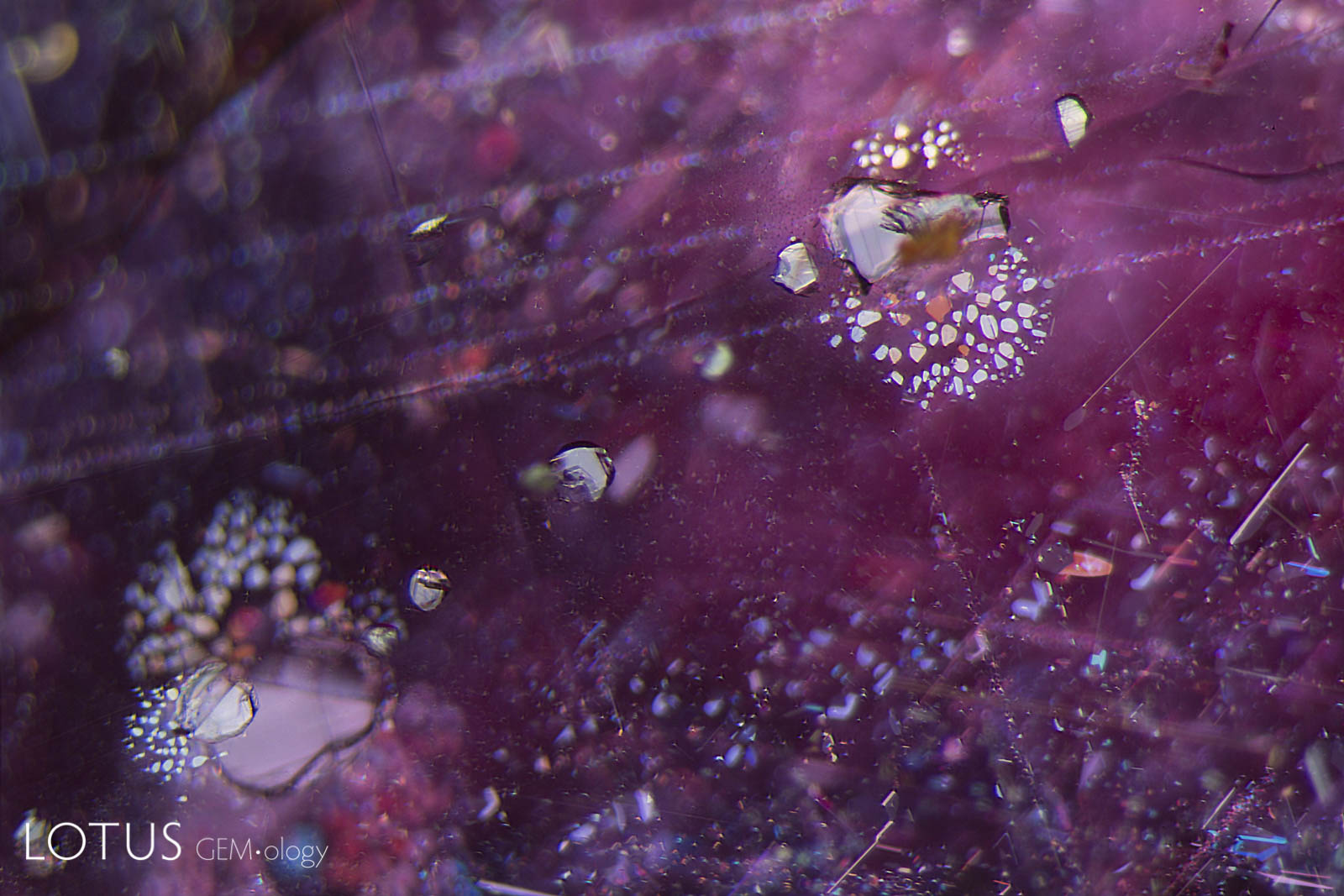
Small mica crystals with surrounding “rosettes” are common and welcome sights in rubies from Montepuez, Mozambique.
Natural Ruby •
Mozambique •
Enhancements:
None Detected (None) •
Lighting Conditions:
Fiber Optic: Overhead
Photographer:
Richard W. Hughes •
Image Number:
A-001-1746-1
A natural fingerprint hovers above a blue color zone in this rare, untreated ruby from Mong Hsu, Myanmar.
Natural Ruby •
Myanmar (Burma); Mong Hsu •
Enhancements:
None Detected (None) •
Lighting Conditions:
Fiber Optic: Transmitted
Photographer:
Richard W. Hughes •
Image Number:
A-001-1534-1
After this ruby grew, it was exposed to high pressure, causing certain planes of atoms to glide into a twinned position. This secondary “polysynthetic” twinning takes place along the rhombohedron faces and is common in many corundums. Twin planes cross at 86.1 and 93.9° angles.
Natural Ruby •
Thailand/Cambodia •
Enhancements:
Heat (H) •
Lighting Conditions:
Diffuse Light Field + Crossed Polars
Photographer:
Richard W. Hughes •
Image Number:
A-001-1440-3
Gübelin, E.J. (1973) Internal World of Gemstones. Zürich, ABC Verlag, reprinted 1983, 234 pp.; RWHL*.
Hughes, R.W. (1997) Ruby & Sapphire. Boulder, CO, RWH Publishing, 512 pp.; RWHL*.
After this ruby grew, it was exposed to high pressure, causing certain planes of atoms to glide into a twinned position. This secondary “polysynthetic” twinning takes place along the rhombohedron faces and is common in many corundums. Twin planes cross at 86.1 and 93.9° angles.
Natural Ruby •
Thailand/Cambodia •
Enhancements:
Heat (H) •
Lighting Conditions:
Diffuse Light Field + Crossed Polars
Photographer:
Richard W. Hughes •
Image Number:
A-001-1440-2
Gübelin, E.J. (1973) Internal World of Gemstones. Zürich, ABC Verlag, reprinted 1983, 234 pp.; RWHL*.
Hughes, R.W. (1997) Ruby & Sapphire. Boulder, CO, RWH Publishing, 512 pp.; RWHL*.
Natural ruby inclusions may include mineral crystals, rutile silk, healed fissures, fluid inclusions, negative crystals, color zoning and other features formed during or after crystal growth. Such features are important to gemologists because they can provide evidence useful in identifying ruby, understanding its geological history, recognizing treatment and, in some cases, determining geographic origin.
Natural Ruby Inclusion Photomicrographs
The Hyperion natural ruby gallery includes microscopic features found in rubies from major deposits around the world. Each entry is accompanied by descriptive information and, where available, references to the gemological literature.
What Inclusions Can Reveal About Natural Ruby
Inclusions are an important part of ruby identification. Their form, composition, orientation and alteration can help gemologists distinguish natural ruby from synthetic material, recognize evidence of heat treatment, and study the geological environment in which the ruby formed.
Hyperion combines inclusion photomicrography with supporting gemological information so that individual features can be compared with documented examples from known ruby deposits.
About Hyperion
Hyperion is the Lotus Gemology searchable inclusion database. It allows users to browse gemstone inclusions by gem type, geographic origin, treatment and keyword.