Natural Ruby Inclusions
Explore ruby inclusions in Hyperion, the Lotus Gemology inclusion database. Hyperion contains photomicrographs of inclusions and internal features in natural ruby, documented with information on geographic origin, treatment, lighting conditions, field of view, photographer and published references.
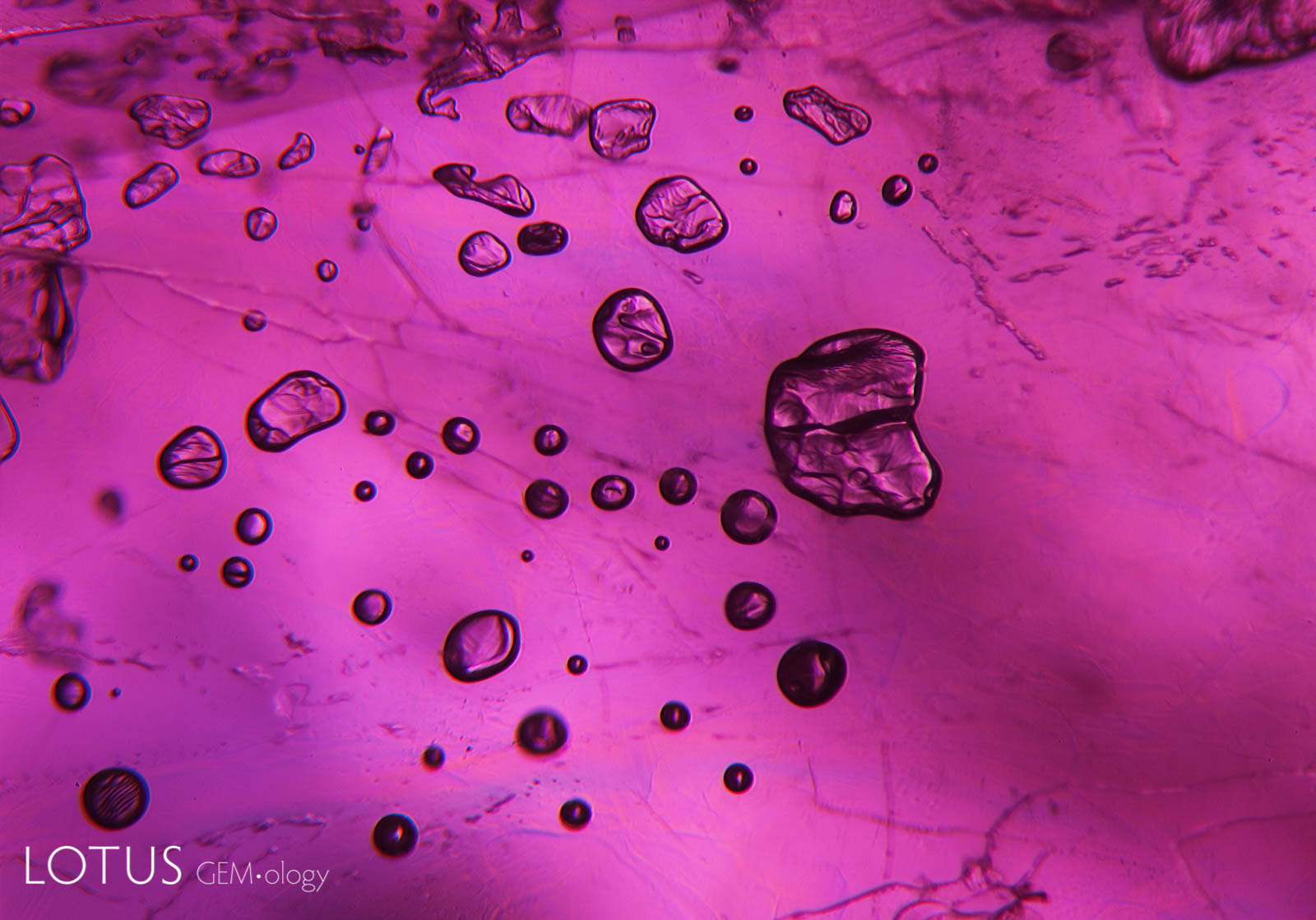
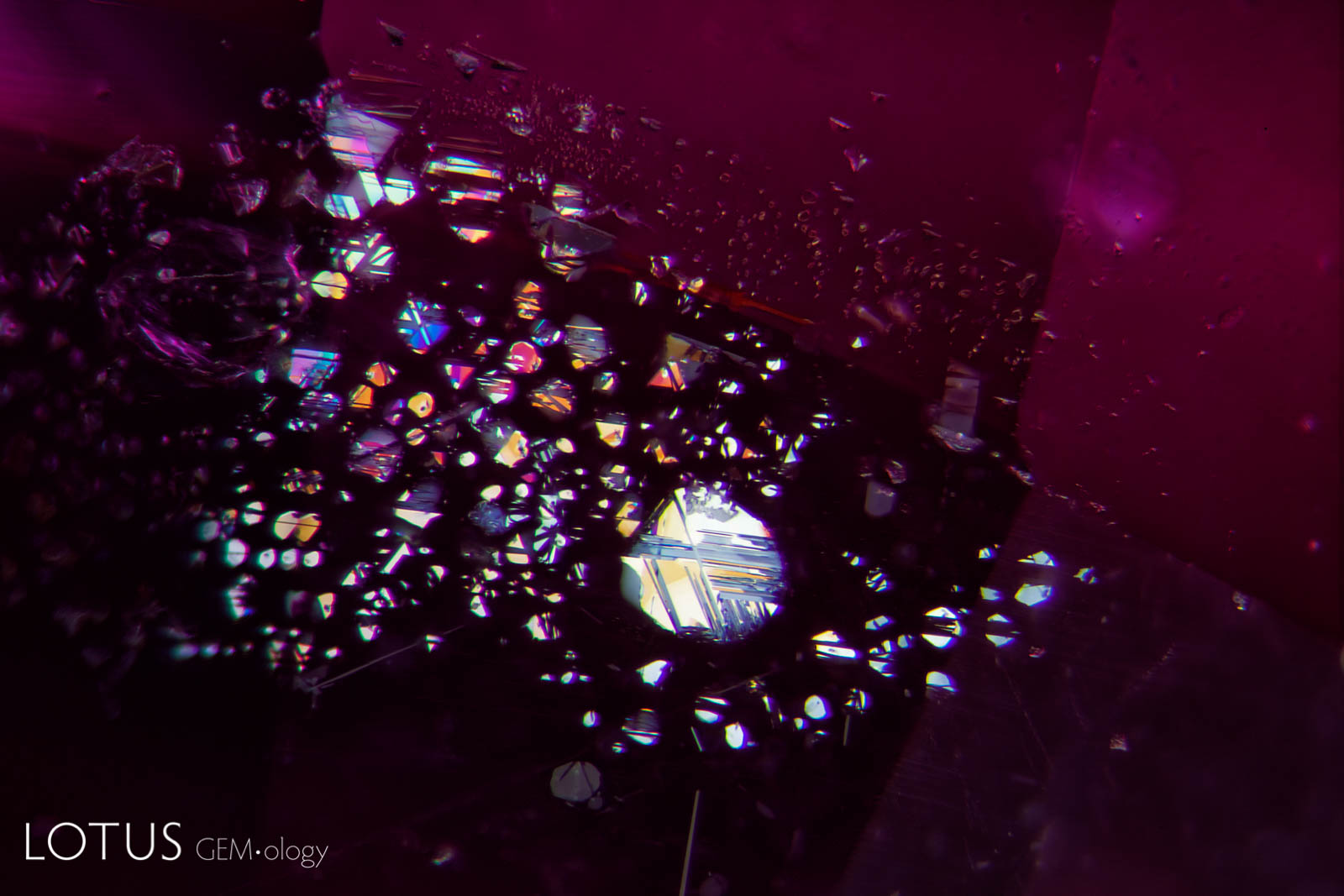
Frozen gas bubbles inside melted crystals within a ruby from the Thai/Cambodian border.
Natural Ruby •
Thailand/Cambodia •
Enhancements:
Heat (H) •
Lighting Conditions:
Fiber Optic: Transmitted
Photographer:
E. Billie Hughes •
Image Number:
A-001-2588-1
Hughes, R.W. (1997) Ruby & Sapphire. Boulder, CO, RWH Publishing, 512 pp.; RWHL*.
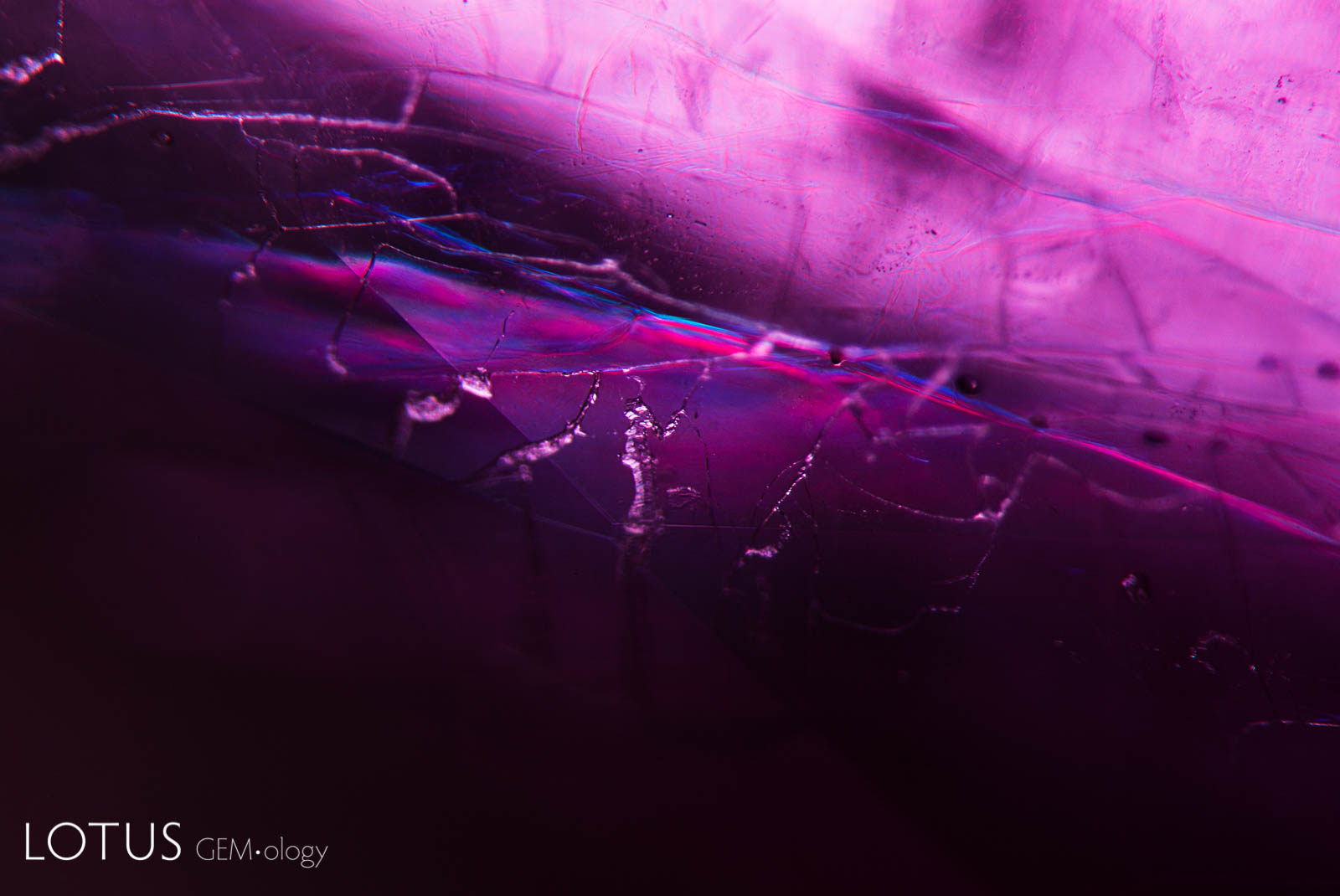
Flattened gas bubbles and faint flashes of color are seen in glass-filled fissures within this heavily treated ruby.
Natural Ruby •
None •
Enhancements:
Lead Glass-type Hybrid (LGH); Heat + Fissure Healing (H-FH) •
Lighting Conditions:
Fiber Optic: Transmitted
Photographer:
E. Billie Hughes •
Image Number:
A-001-2471-2
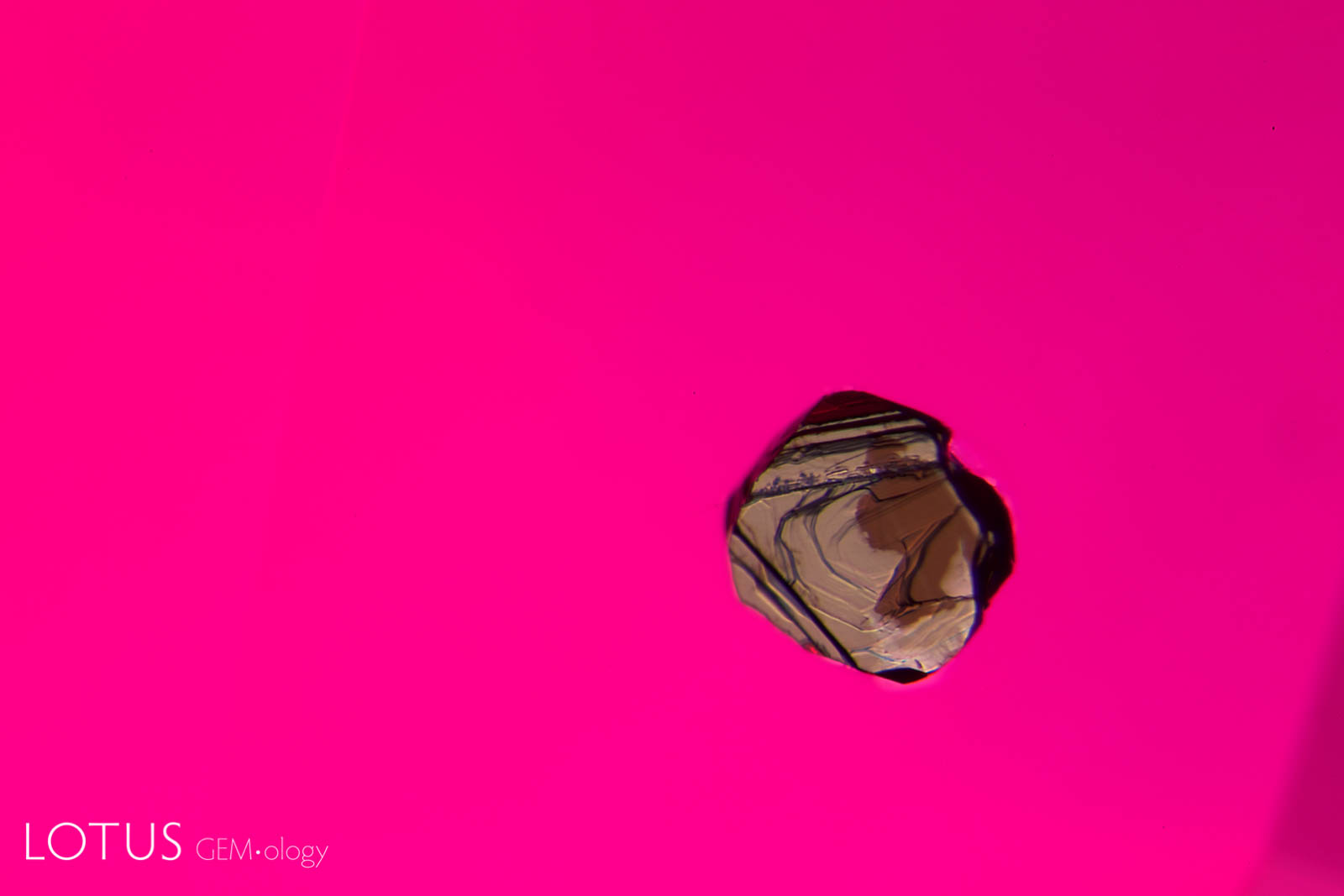
Flashes of color in glass-filled fissures betray the treated nature of this ruby.
Natural Ruby •
None •
Enhancements:
Lead Glass-type Hybrid (LGH); Heat + Fissure Healing (H-FH) •
Lighting Conditions:
Fiber Optic: Oblique
Photographer:
E. Billie Hughes •
Image Number:
A-001-2471-1
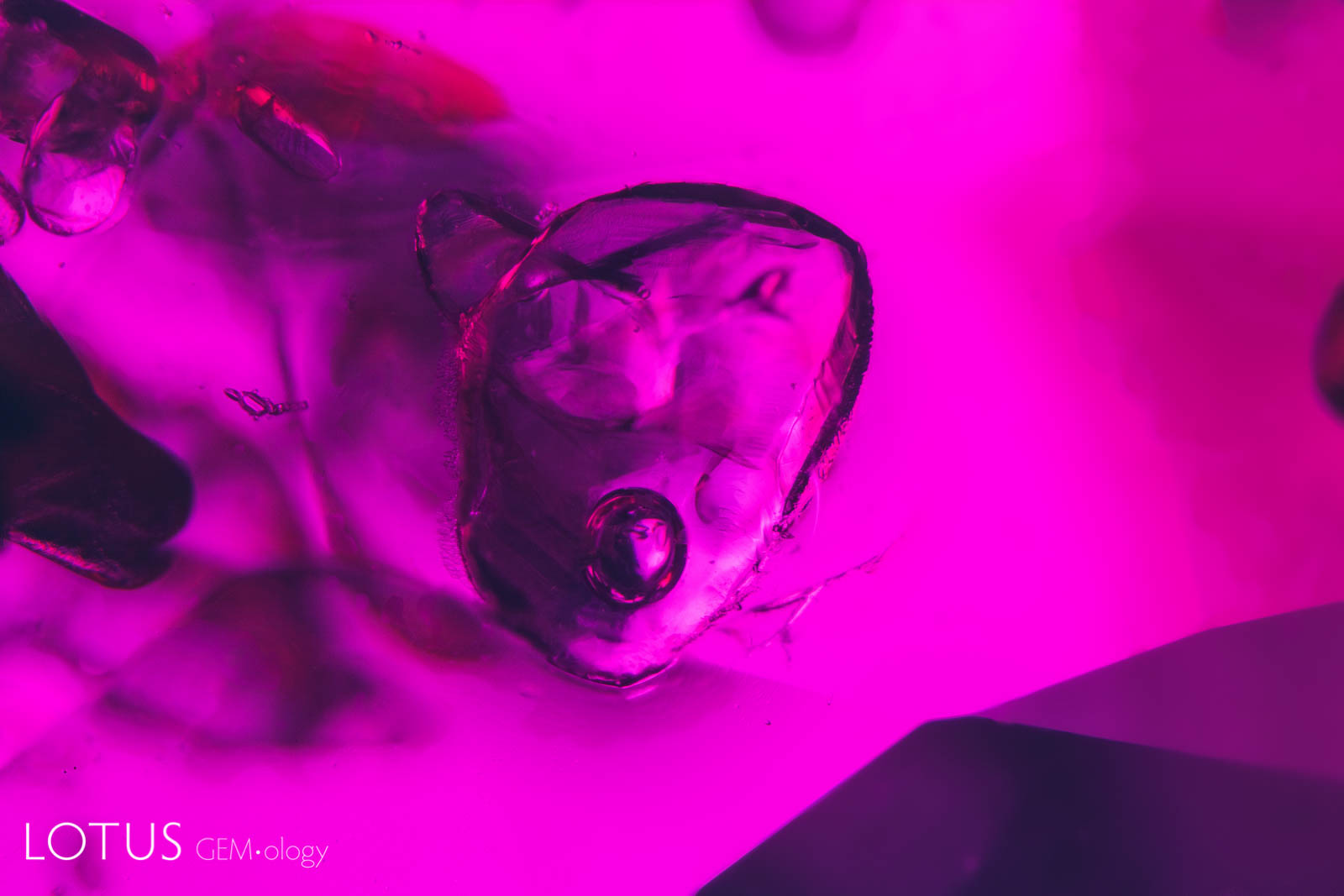
Chalcopyrite crystal floating in the Red Sea of a ruby from Montepuez, Mozambique.
Natural Ruby •
Mozambique •
Enhancements:
None Detected (None) •
Lighting Conditions:
Fiber Optic: Oblique
Photographer:
Wimon Manorotkul •
Image Number:
A-001-2450-1
A mobile bubble within a negative crystal in a ruby from Madagascar. Such inclusions cannot withstand heat treatment and thus are proof of natural origin.
Natural Ruby •
Madagascar •
Enhancements:
None Detected (None) •
Lighting Conditions:
Fiber Optic: Transmitted
Photographer:
E. Billie Hughes •
Image Number:
A-001-2388-2
A mobile bubble within a negative crystal in a ruby from Madagascar. Such inclusions cannot withstand heat treatment and thus are proof of natural origin.
Natural Ruby •
Madagascar •
Enhancements:
None Detected (None) •
Lighting Conditions:
Fiber Optic: Transmitted
Photographer:
E. Billie Hughes •
Image Number:
A-001-2388-1
Mozambique rubies contain mixed silk, where part is rutile and part is another mineral. When heated, the non-rutile portion may show breakdown in the form of mottling or bubbles, as seen here.
Natural Ruby •
Mozambique •
Enhancements:
Heat (H) •
Lighting Conditions:
Fiber Optic: Diffuse Overhead
Photographer:
Richard W. Hughes •
Image Number:
A-001-2392-2
Rosette inclusion in an untreated Mozambique ruby.
Natural Ruby •
Mozambique •
Enhancements:
None Detected (None) •
Lighting Conditions:
Fiber Optic: Oblique
Photographer:
Richard W. Hughes •
Image Number:
A-001-2341-1
Surface conformal orange color rim resulting from beryllium diffusion, seen while immersed in di-iodomethane.
Natural Ruby •
Tanzania; Songea •
Enhancements:
Heat + Diffusion of external coloring agents (H-D) •
Lighting Conditions:
Diffuse Light Field (Transmitted Light)
Photographer:
Richard W. Hughes •
Image Number:
A-001-2297-1
This bubbly fingerprint in a Mong Hsu (Myanmar) ruby has been altered by heat-treatment with flux.
Natural Ruby •
Myanmar (Burma); Mong Hsu •
Enhancements:
Heat + Fissure Healing (H-FH) •
Lighting Conditions:
Light Field + Oblique Fiber Optic
Photographer:
Richard W. Hughes •
Image Number:
A-001-0765-4
A slender amphibole rod perches next to a secondary healed fissure (’fingerprint’) in this untreated ruby from Ambodivoahangy, Madagascar.
Natural Ruby •
Madagascar •
Enhancements:
None Detected (None) •
Lighting Conditions:
Fiber Optic: Oblique
Photographer:
Richard W. Hughes •
Image Number:
A-001-2162-1
Orange crystals of what is probably monazite are seen with polysynthetic twinning in this unheated ruby from Ambodivoahangy, Madagascar
Natural Ruby •
Madagascar •
Enhancements:
None Detected (None) •
Lighting Conditions:
Diffuse Light Field + Crossed Polars
Photographer:
Richard W. Hughes •
Image Number:
A-001-2156-4
Natural ruby inclusions may include mineral crystals, rutile silk, healed fissures, fluid inclusions, negative crystals, color zoning and other features formed during or after crystal growth. Such features are important to gemologists because they can provide evidence useful in identifying ruby, understanding its geological history, recognizing treatment and, in some cases, determining geographic origin.
Natural Ruby Inclusion Photomicrographs
The Hyperion natural ruby gallery includes microscopic features found in rubies from major deposits around the world. Each entry is accompanied by descriptive information and, where available, references to the gemological literature.
What Inclusions Can Reveal About Natural Ruby
Inclusions are an important part of ruby identification. Their form, composition, orientation and alteration can help gemologists distinguish natural ruby from synthetic material, recognize evidence of heat treatment, and study the geological environment in which the ruby formed.
Hyperion combines inclusion photomicrography with supporting gemological information so that individual features can be compared with documented examples from known ruby deposits.
About Hyperion
Hyperion is the Lotus Gemology searchable inclusion database. It allows users to browse gemstone inclusions by gem type, geographic origin, treatment and keyword.