Natural Ruby Inclusions
Explore ruby inclusions in Hyperion, the Lotus Gemology inclusion database. Hyperion contains photomicrographs of inclusions and internal features in natural ruby, documented with information on geographic origin, treatment, lighting conditions, field of view, photographer and published references.
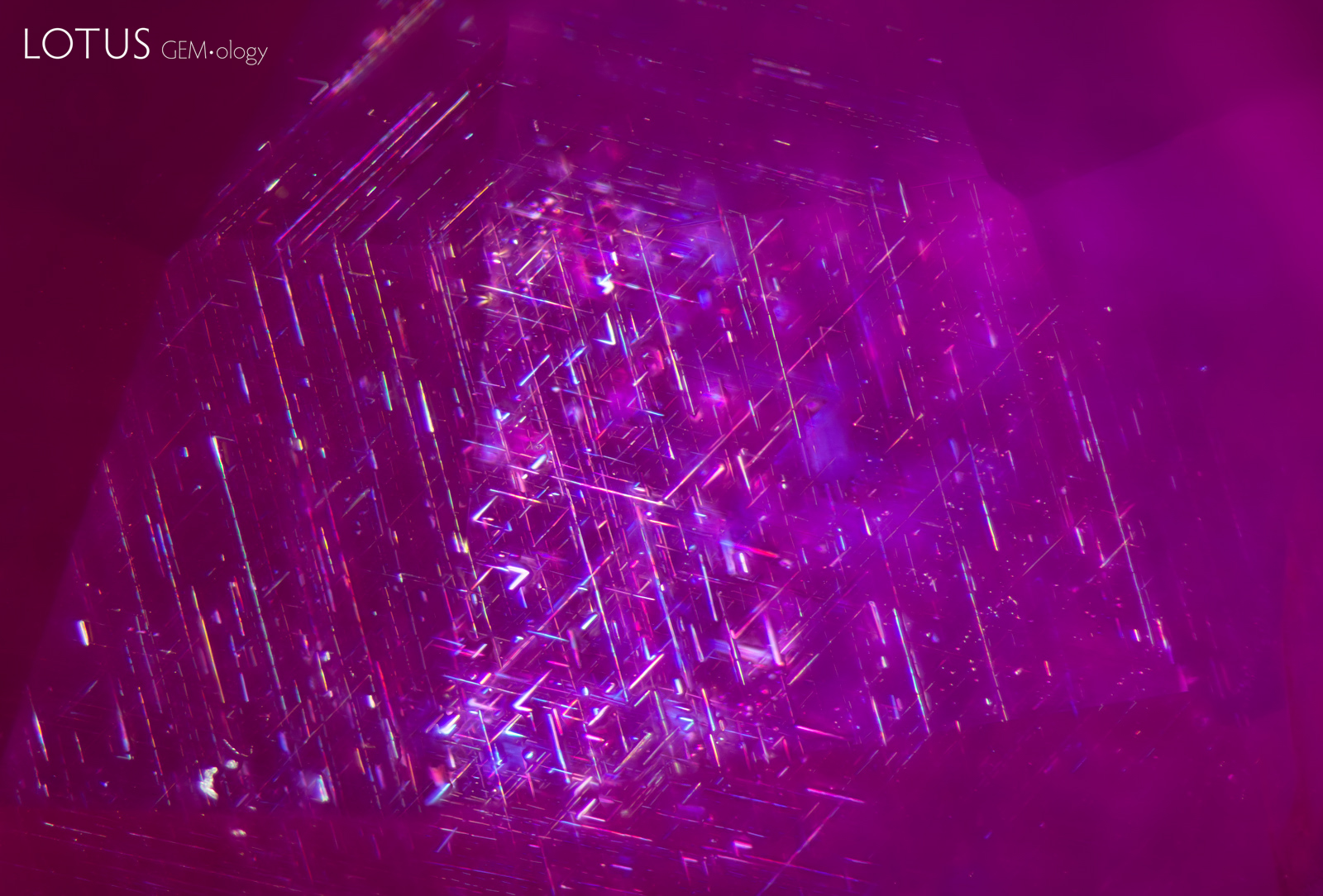
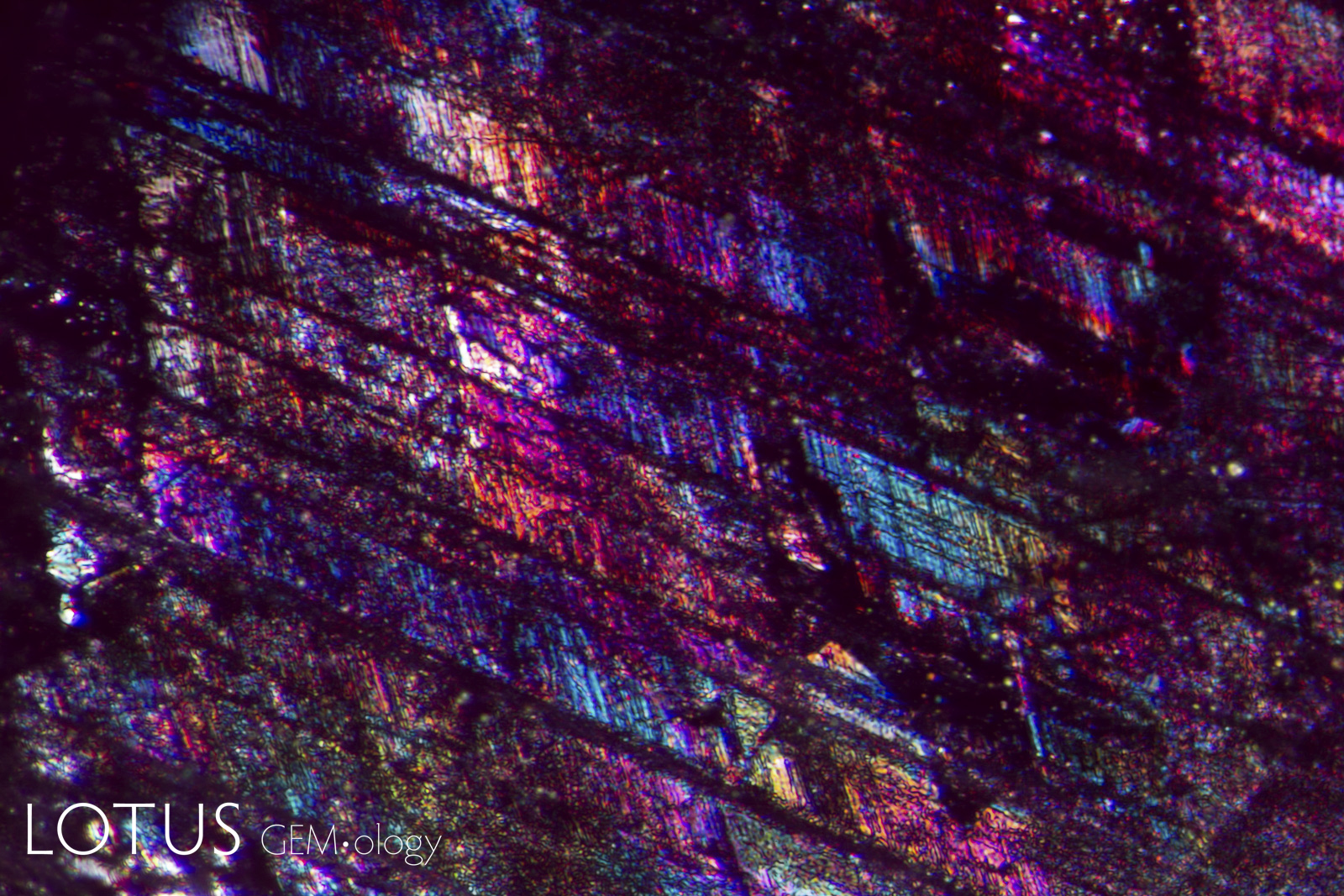
While superficially the rutile silk in this ruby may look intact, closer observation reveals that some of the needles have started to break down and develop gaps. Other evidence in the stone confirmed that this ruby was heated.
Natural Ruby •
Myanmar (Burma); Mogok/Namya •
Enhancements:
Heat (H) •
Lighting Conditions:
Fiber Optic: Diffuse Oblique
Photographer:
E. Billie Hughes •
Image Number:
A-005-8034-6
• Field of View = 3mm
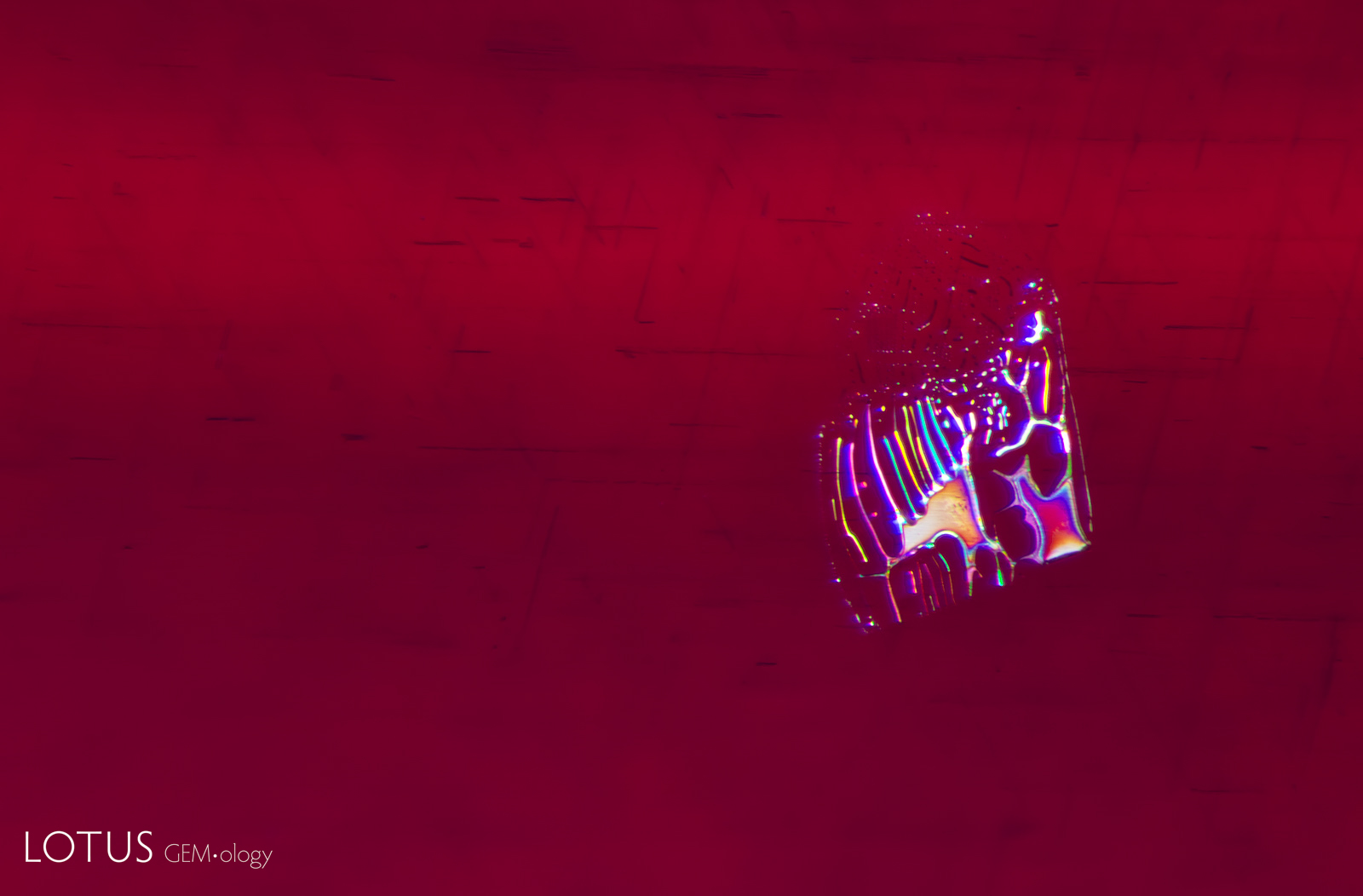
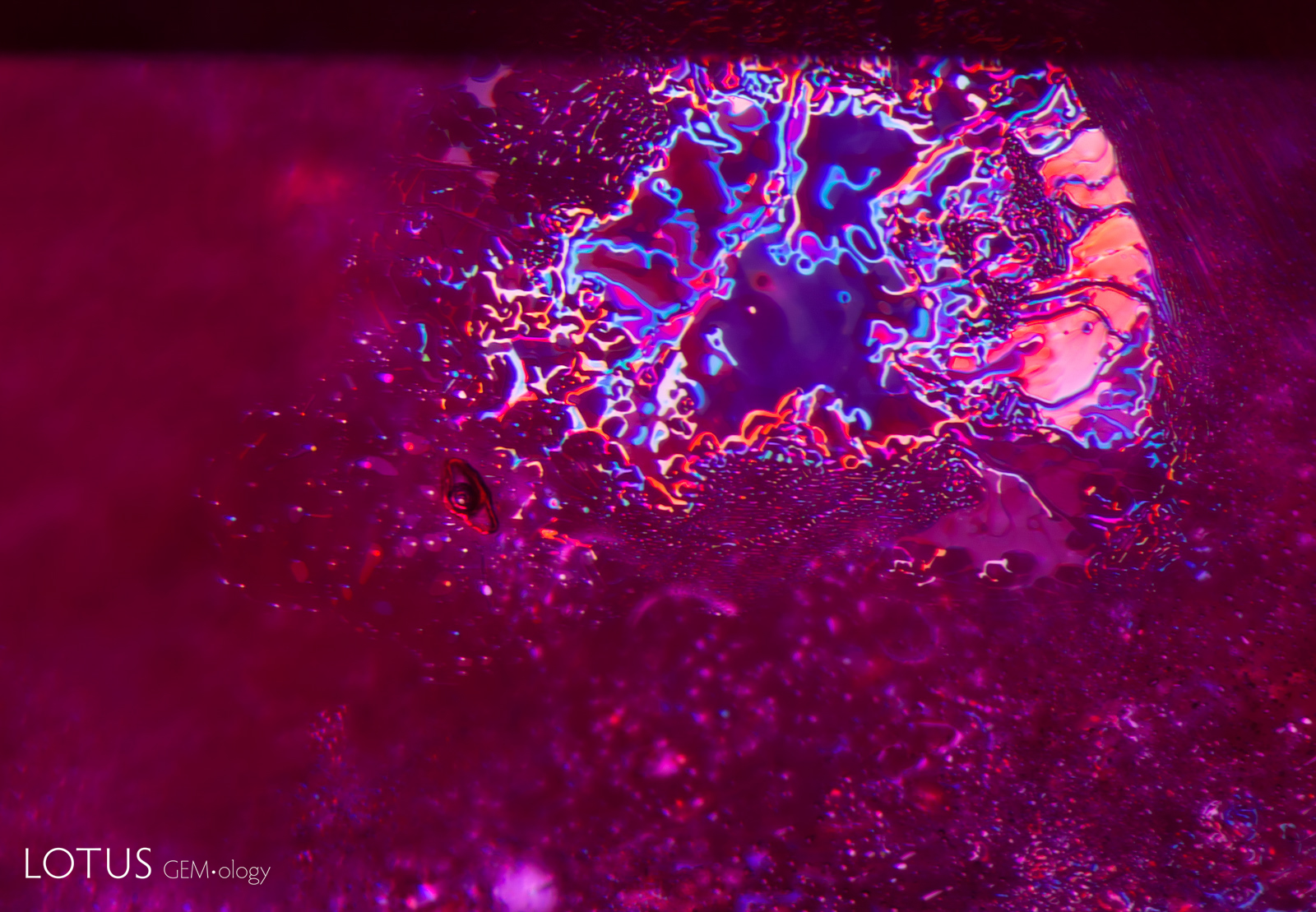
A melted fingerprint with drippy edges provides evidence that this ruby was heated.
Natural Ruby •
Myanmar (Burma); Mogok/Namya •
Enhancements:
Heat (H) •
Lighting Conditions:
Dark Field + Diffuse Fiber Optic
Photographer:
E. Billie Hughes •
Image Number:
A-005-8034-5
• Field of View = 1.8mm
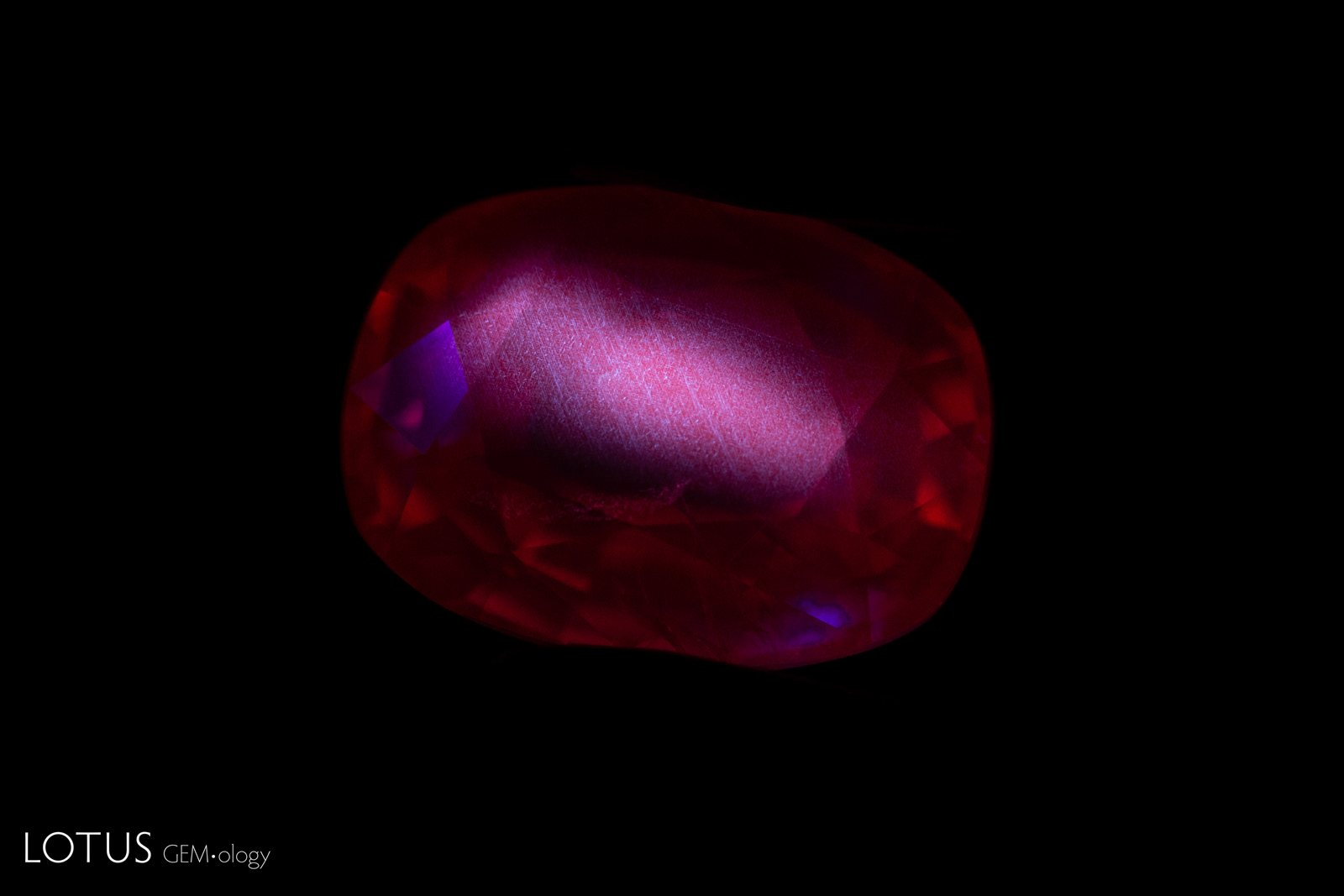
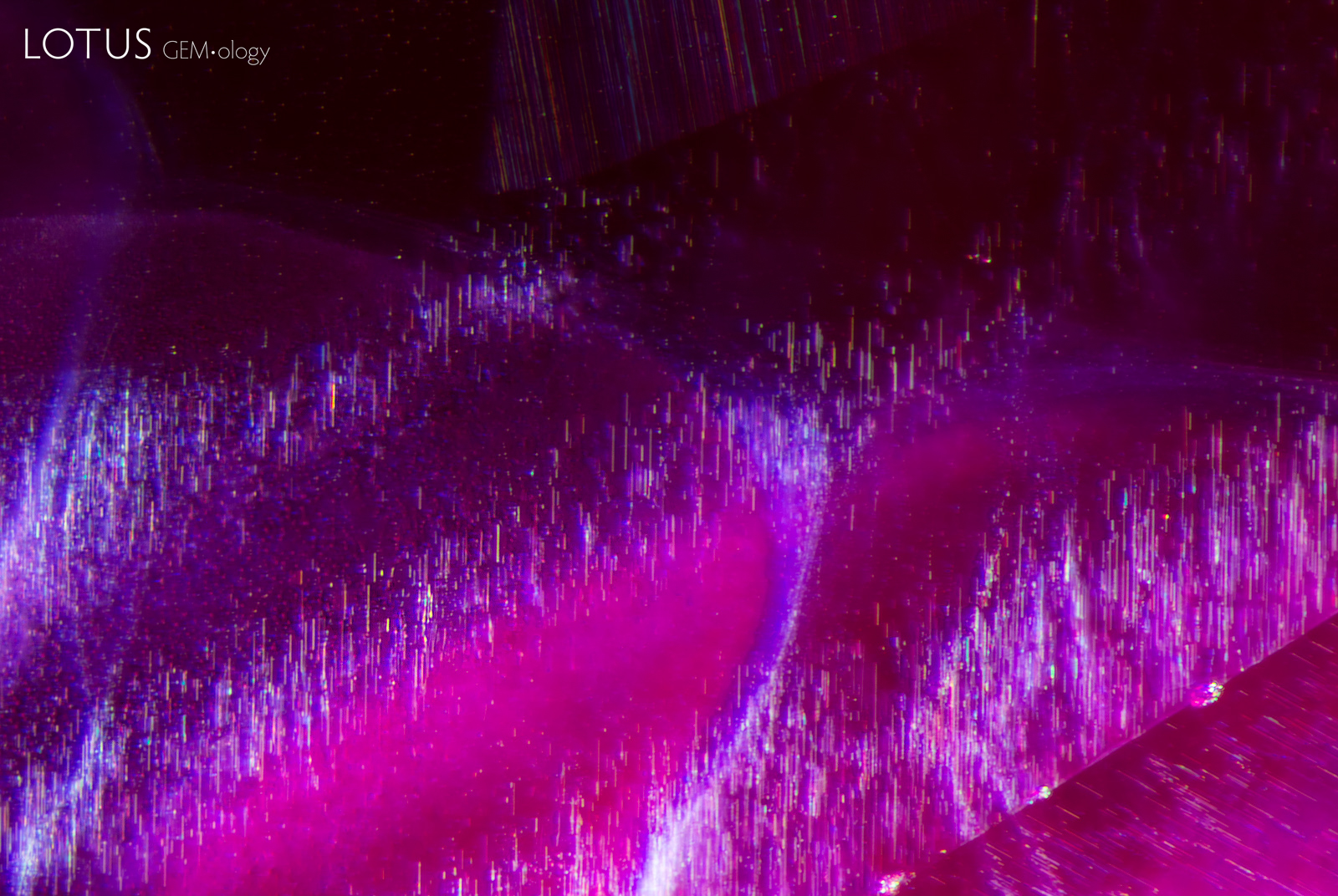
A chalky appearance can be observed in this heated ruby. Note that the chalky areas follow the pattern of silk.
Natural Ruby •
Myanmar (Burma); Mogok/Namya •
Enhancements:
Heat (H) •
Lighting Conditions:
Ultraviolet: Shortwave
Photographer:
E. Billie Hughes •
Image Number:
A-005-8034-1
A cluster of prismatic crystals, resembling primary rutile, with delicate silk needles extending nearby.
Natural Ruby •
Sri Lanka (Ceylon) •
Enhancements:
None Detected (None) •
Lighting Conditions:
Dark Field
Photographer:
Natcha Rattana-anan •
Image Number:
A-005-6970-2
• Field of View = 1.8mm
• Magnification = 10x
A cluster of prismatic crystals, resembling primary rutile, penetrates the stone’s surface with a luster brighter than that of the host.
Natural Ruby •
Sri Lanka (Ceylon) •
Enhancements:
None Detected (None) •
Lighting Conditions:
Fiber Optic: Oblique
Photographer:
Natcha Rattana-anan •
Image Number:
A-005-6970-1
• Field of View = 1.8mm
• Magnification = 10x
Tiny thin films hide under the girdle of this ruby from Baringo, Kenya.
Natural Ruby •
Kenya •
Enhancements:
None Detected (None) •
Lighting Conditions:
Dark Field + Diffuse Fiber Optic
Photographer:
E. Billie Hughes •
Image Number:
A-005-7096-1
• Field of View = 2.2mm
Iridescent fissures illuminate the interior of this ruby. These fissures typically form along the rhombohedron faces and result from external (secondary) pressures after the crystal formed. The same pressures produce polysynthetic glide twinning.
Natural Ruby •
East Africa •
Enhancements:
None Detected (None) •
Lighting Conditions:
Fiber Optic: Overhead
Photographer:
Richard W. Hughes •
Image Number:
A-005-7234-1
• Field of View = 4mm
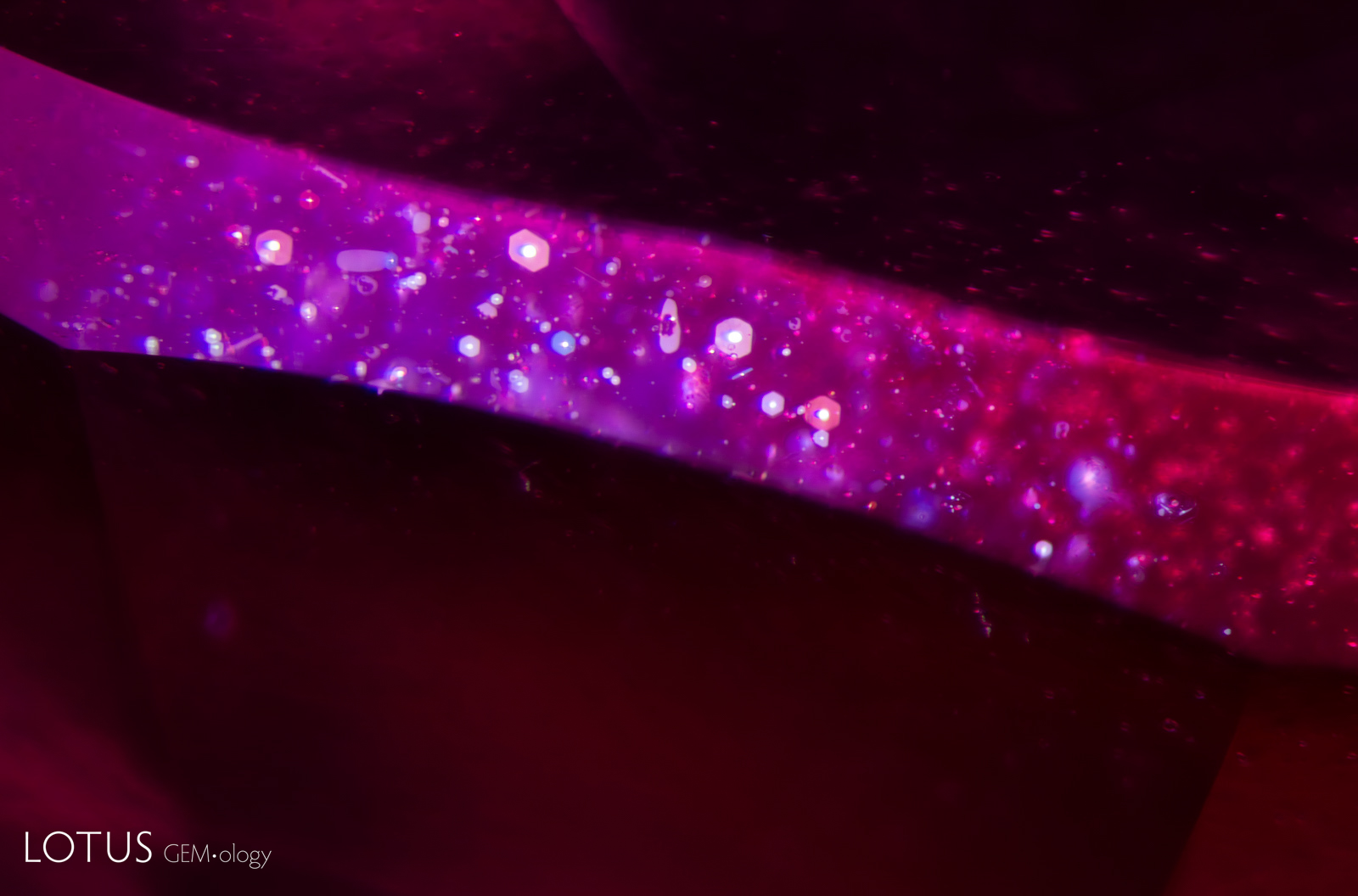
This Thai/Cambodian ruby displays thin films with drippy, irregular edges and a melted crystal inclusion featuring an immobile gas bubble. These features act as evidence that the stone has been heat treated.
Natural Ruby •
Thailand/Cambodia •
Enhancements:
Heat (H) •
Lighting Conditions:
Dark Field + Diffuse Fiber Optic
Photographer:
E. Billie Hughes •
Image Number:
A-005-6897-1
• Field of View = 1.8mm
A sprinkle of rutile silk in this Mozambique ruby provides evidence that the stone is natural.
Natural Ruby •
Mozambique •
Enhancements:
None Detected (None) •
Lighting Conditions:
Dark Field + Diffuse Fiber Optic
Photographer:
E. Billie Hughes •
Image Number:
A-004-4171-1
• Field of View = 4mm
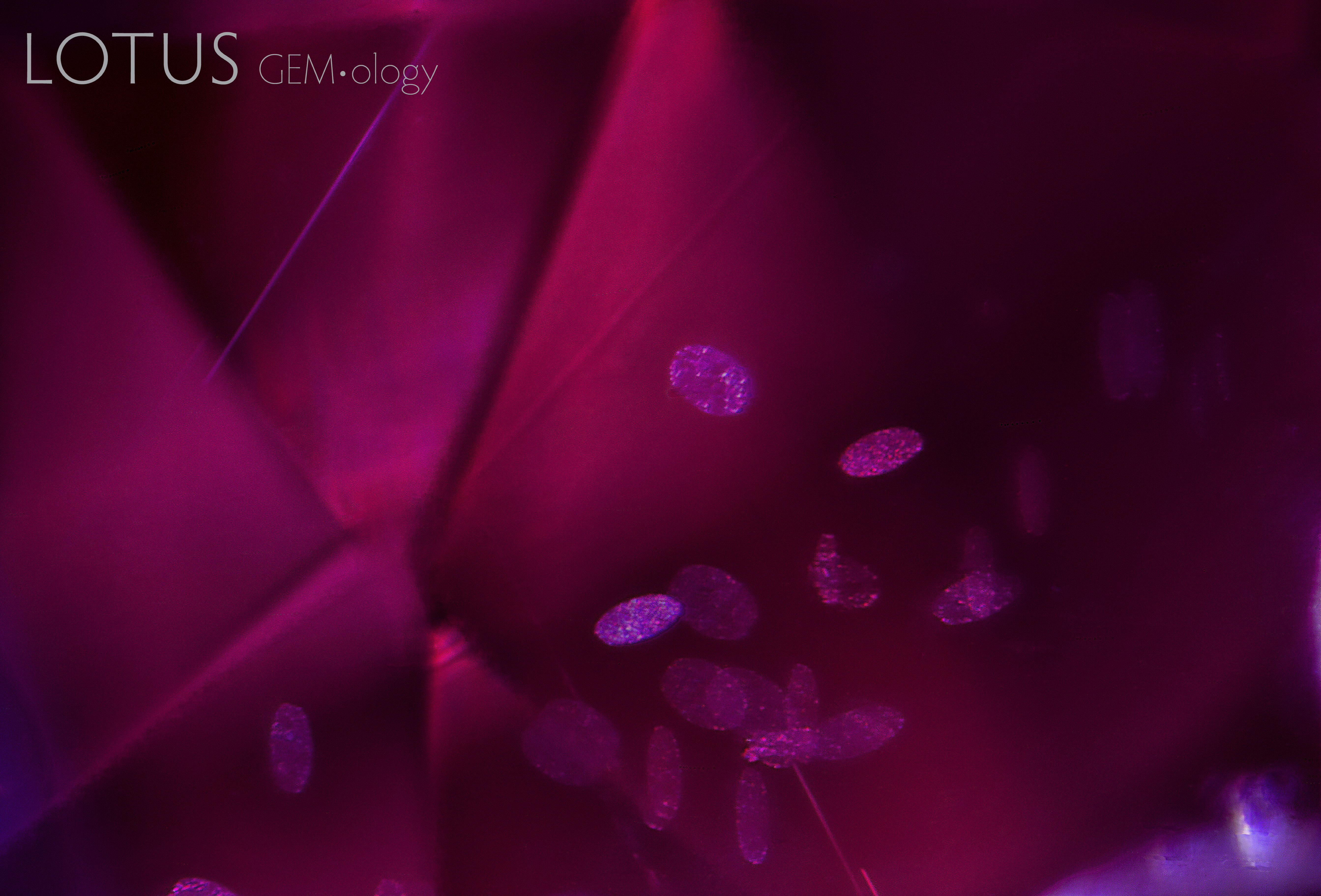
Unusual small “doily”-like flat inclusions in a ruby believed to originate from Mozambique’s Montepuez mine.
Natural Ruby •
Mozambique •
Enhancements:
None Detected (None) •
Lighting Conditions:
Fiber Optic: Oblique
Photographer:
Richard W. Hughes •
Image Number:
R-005-6818-1
• Field of View = 4.5mm
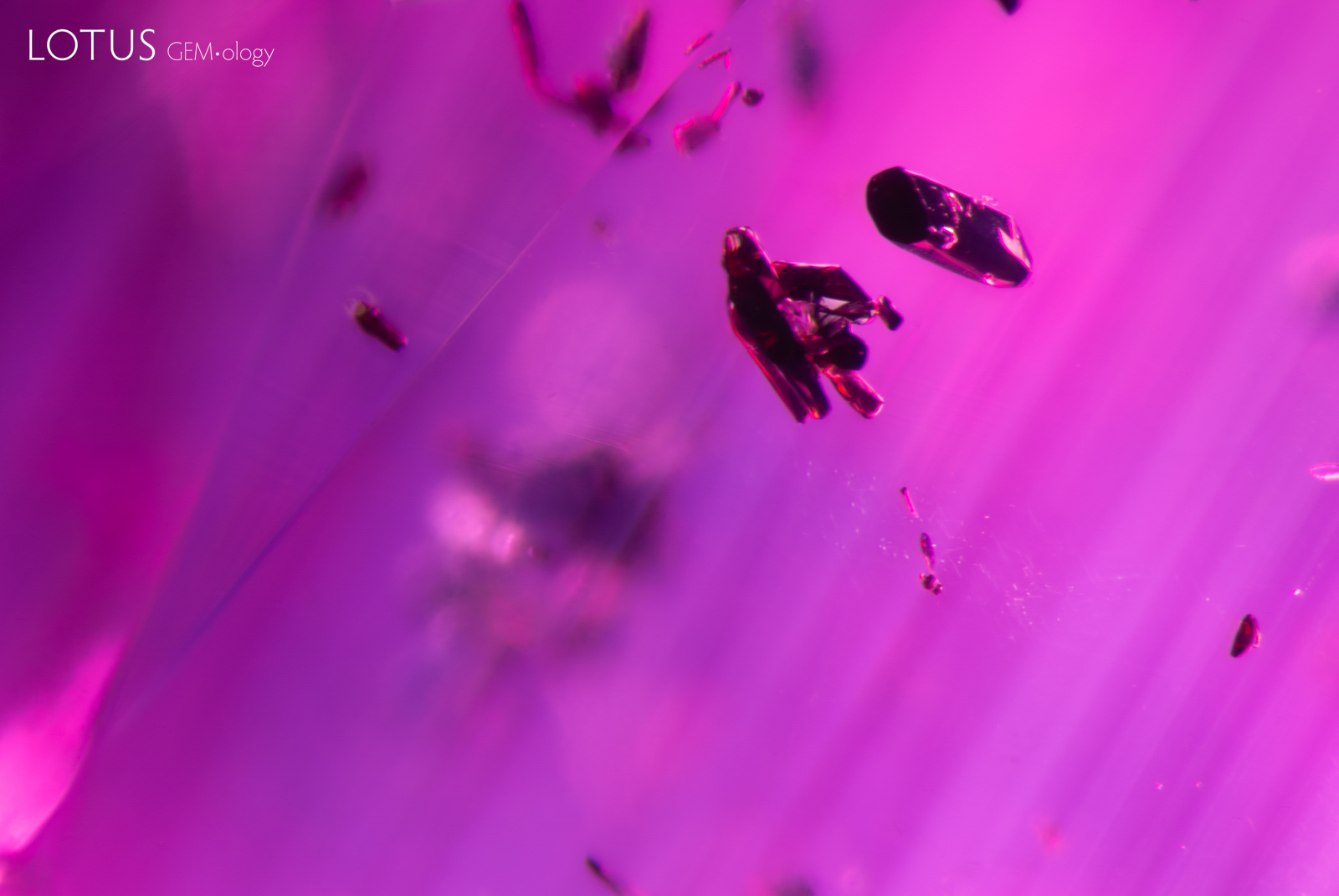
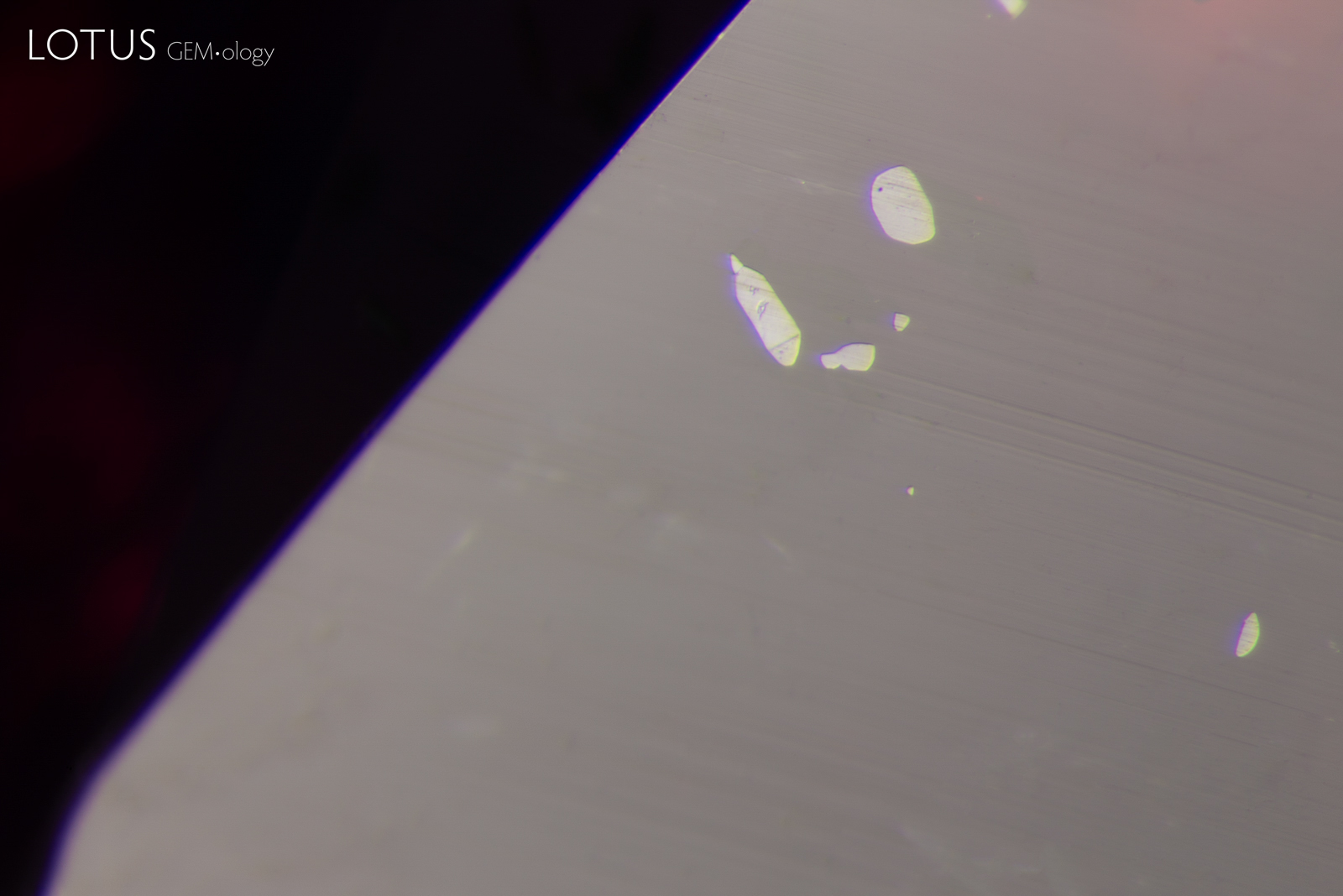
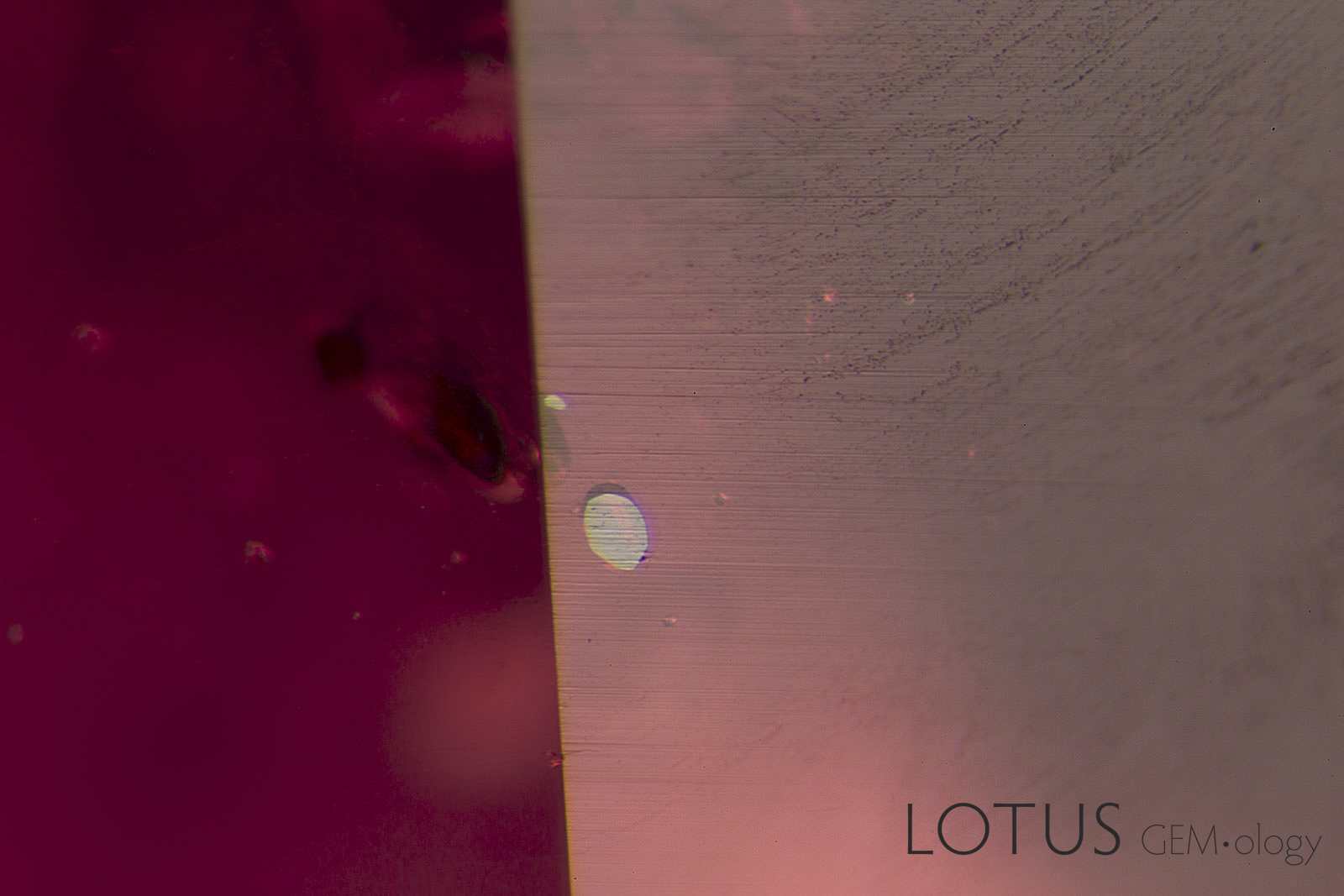
Red-orange crystals of primary rutile surrounded by small rounded grains of zircon believed to be from Mozambique. The identify of the inclusions was confirmed by microRaman (courtesy of GIA Bangkok). It was once thought that primary rutile and zircon were not found in Mozambique ruby, but the current evidence suggests that they are. In this photo shot in reflected light, two of the rutile crystals are cut through on the surface, displaying a much higher luster than the surrounding ruby.
Natural Ruby •
Mozambique •
Enhancements:
None Detected (None) •
Lighting Conditions:
Fiber Optic: Diffuse Overhead + Dark Field
Photographer:
Richard W. Hughes •
Image Number:
R-005-6816-2
• Field of View = 4mm
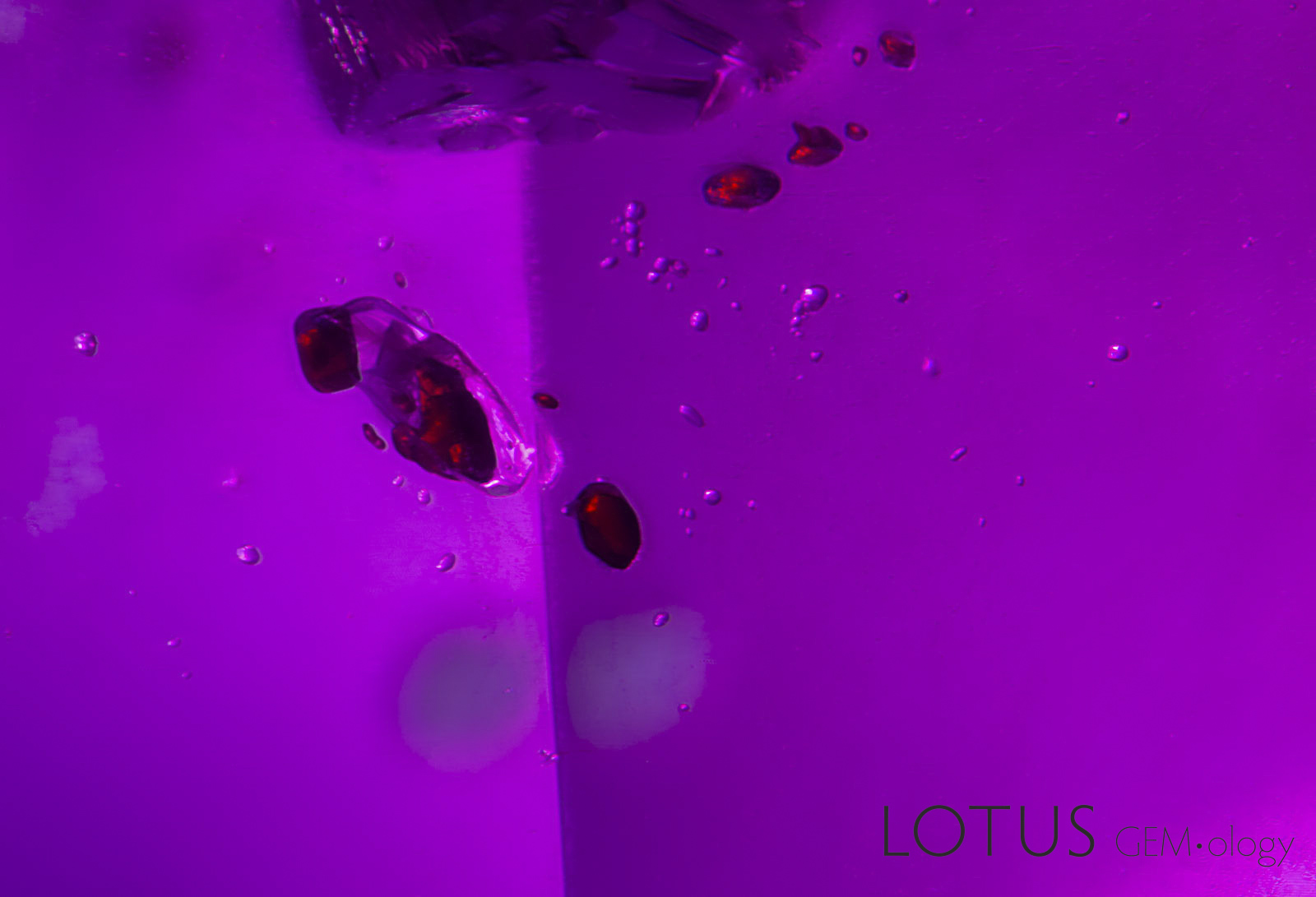
Red-orange crystals of primary rutile surrounded by small rounded grains of zircon believed to be from Mozambique. The identify of the inclusions was confirmed by microRaman (courtesy of GIA Bangkok). It was once thought that primary rutile and zircon were not found in Mozambique ruby, but the current evidence suggests that they are.
Natural Ruby •
Mozambique •
Enhancements:
None Detected (None) •
Lighting Conditions:
Light Field + Oblique Fiber Optic
Photographer:
Richard W. Hughes •
Image Number:
R-005-6816-1
• Field of View = 4mm
Natural ruby inclusions may include mineral crystals, rutile silk, healed fissures, fluid inclusions, negative crystals, color zoning and other features formed during or after crystal growth. Such features are important to gemologists because they can provide evidence useful in identifying ruby, understanding its geological history, recognizing treatment and, in some cases, determining geographic origin.
Natural Ruby Inclusion Photomicrographs
The Hyperion natural ruby gallery includes microscopic features found in rubies from major deposits around the world. Each entry is accompanied by descriptive information and, where available, references to the gemological literature.
What Inclusions Can Reveal About Natural Ruby
Inclusions are an important part of ruby identification. Their form, composition, orientation and alteration can help gemologists distinguish natural ruby from synthetic material, recognize evidence of heat treatment, and study the geological environment in which the ruby formed.
Hyperion combines inclusion photomicrography with supporting gemological information so that individual features can be compared with documented examples from known ruby deposits.
About Hyperion
Hyperion is the Lotus Gemology searchable inclusion database. It allows users to browse gemstone inclusions by gem type, geographic origin, treatment and keyword.