Natural Ruby Inclusions
Explore ruby inclusions in Hyperion, the Lotus Gemology inclusion database. Hyperion contains photomicrographs of inclusions and internal features in natural ruby, documented with information on geographic origin, treatment, lighting conditions, field of view, photographer and published references.

Transparent rod-like crystals peek out from behind a facet edge in this Mozambique ruby. While micro Raman analysis did not conclusively identify these rods, from they are likely amphibole based on their appearance.
Natural Ruby •
Mozambique •
Enhancements:
None Detected (None) •
Lighting Conditions:
Dark Field
Photographer:
E. Billie Hughes •
Image Number:
A-004-0984-1
• Field of View = 4mm
A dusting of rutile silk needles appears to glide inside this ruby from Mogok, Myanmar (Burma).
Natural Ruby •
Myanmar (Burma); Mogok/Namya •
Enhancements:
None Detected (None) •
Lighting Conditions:
Fiber Optic: Oblique
Photographer:
Wimon Manorotkul •
Image Number:
A-004-1095-2
• Field of View = 3mm
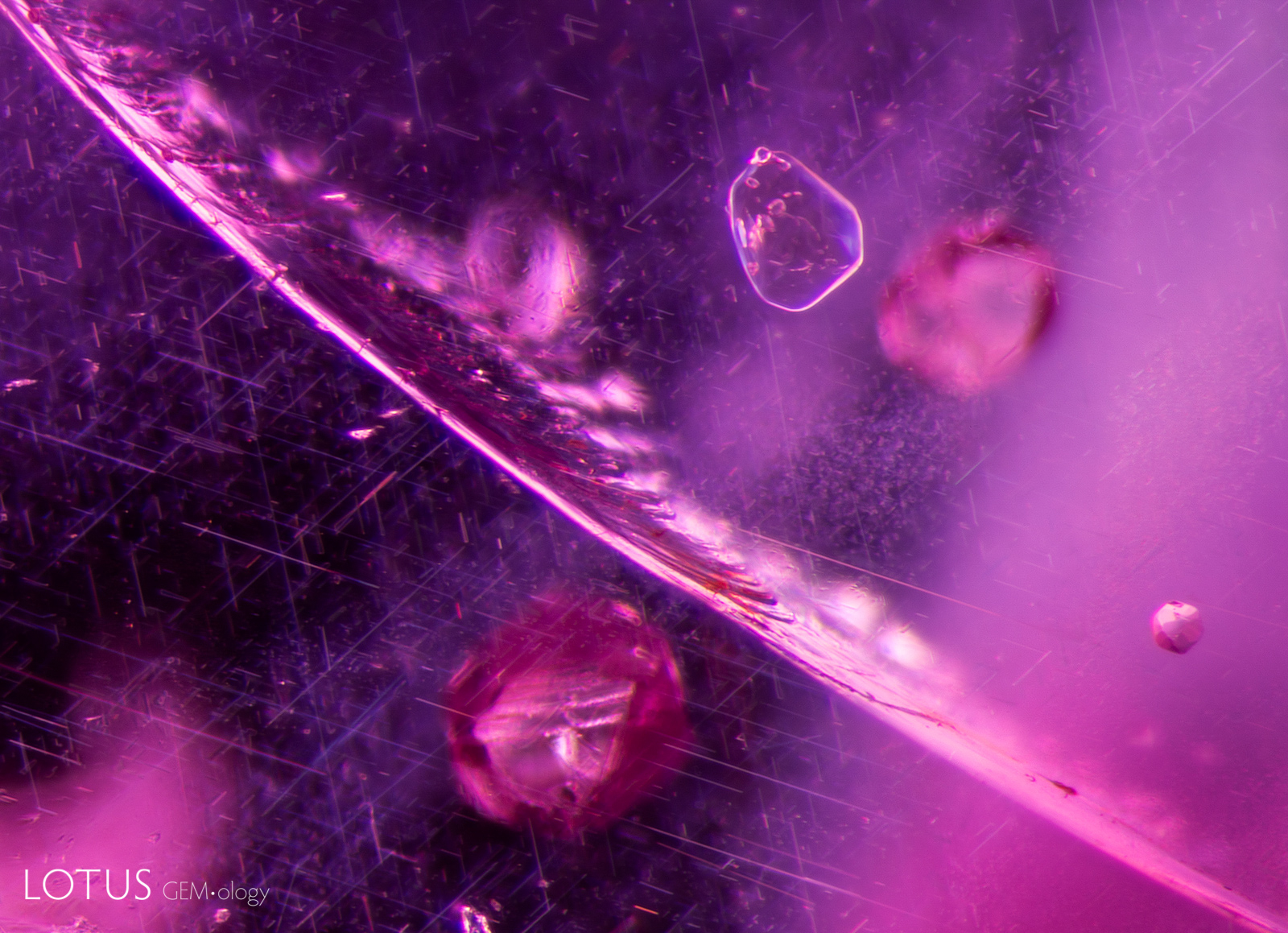
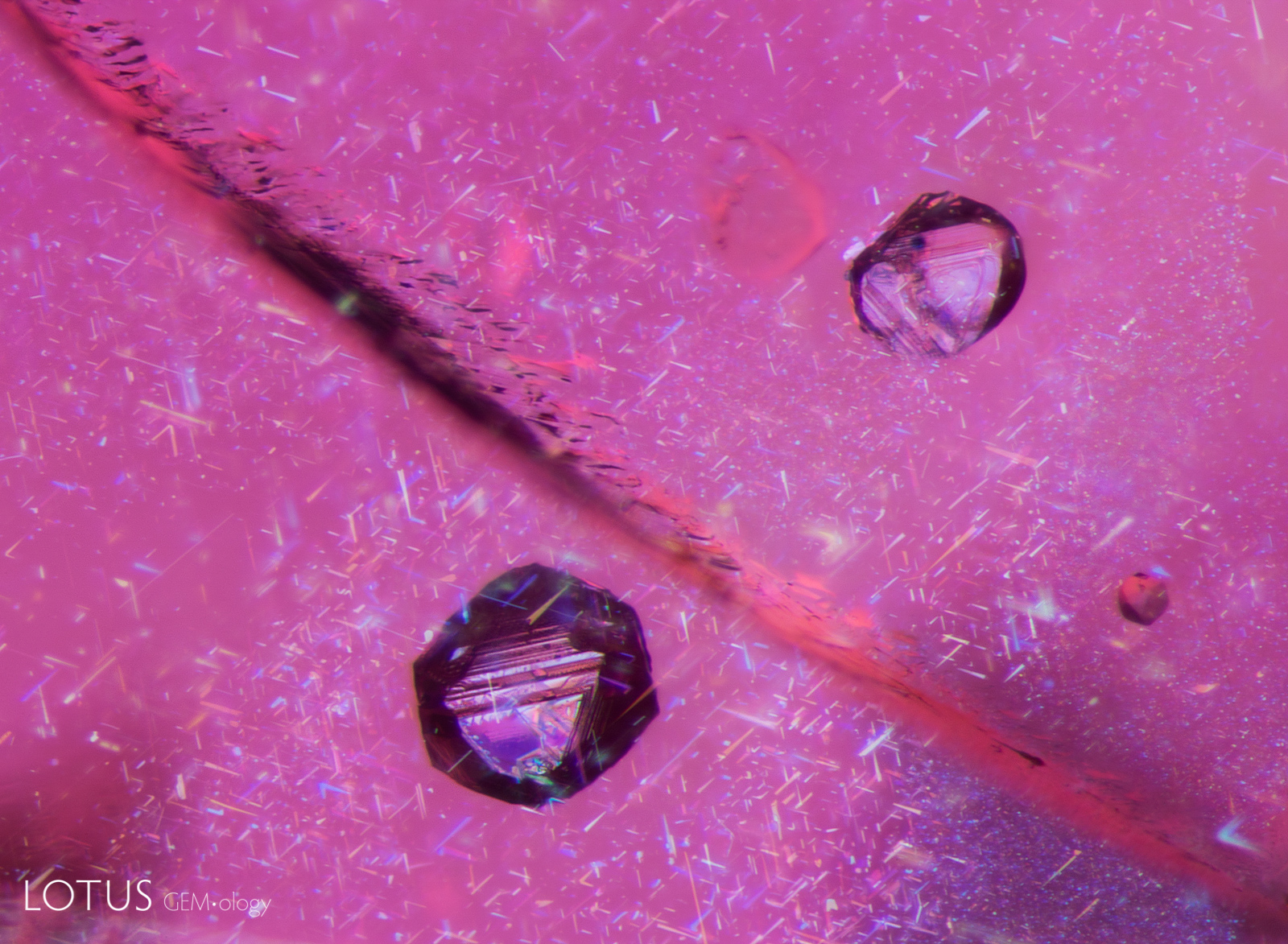
Two small transparent crystals are nestled in a dense cloud of rutile silk. Micro Raman identified the crystal on the left as apatite and the one on the right as titanite (sphene).
Natural Ruby •
Myanmar (Burma); Mogok/Namya •
Enhancements:
None Detected (None) •
Lighting Conditions:
Dark Field + Diffuse Fiber Optic
Photographer:
E. Billie Hughes •
Image Number:
A-004-1095-1
• Field of View = 1.5mm
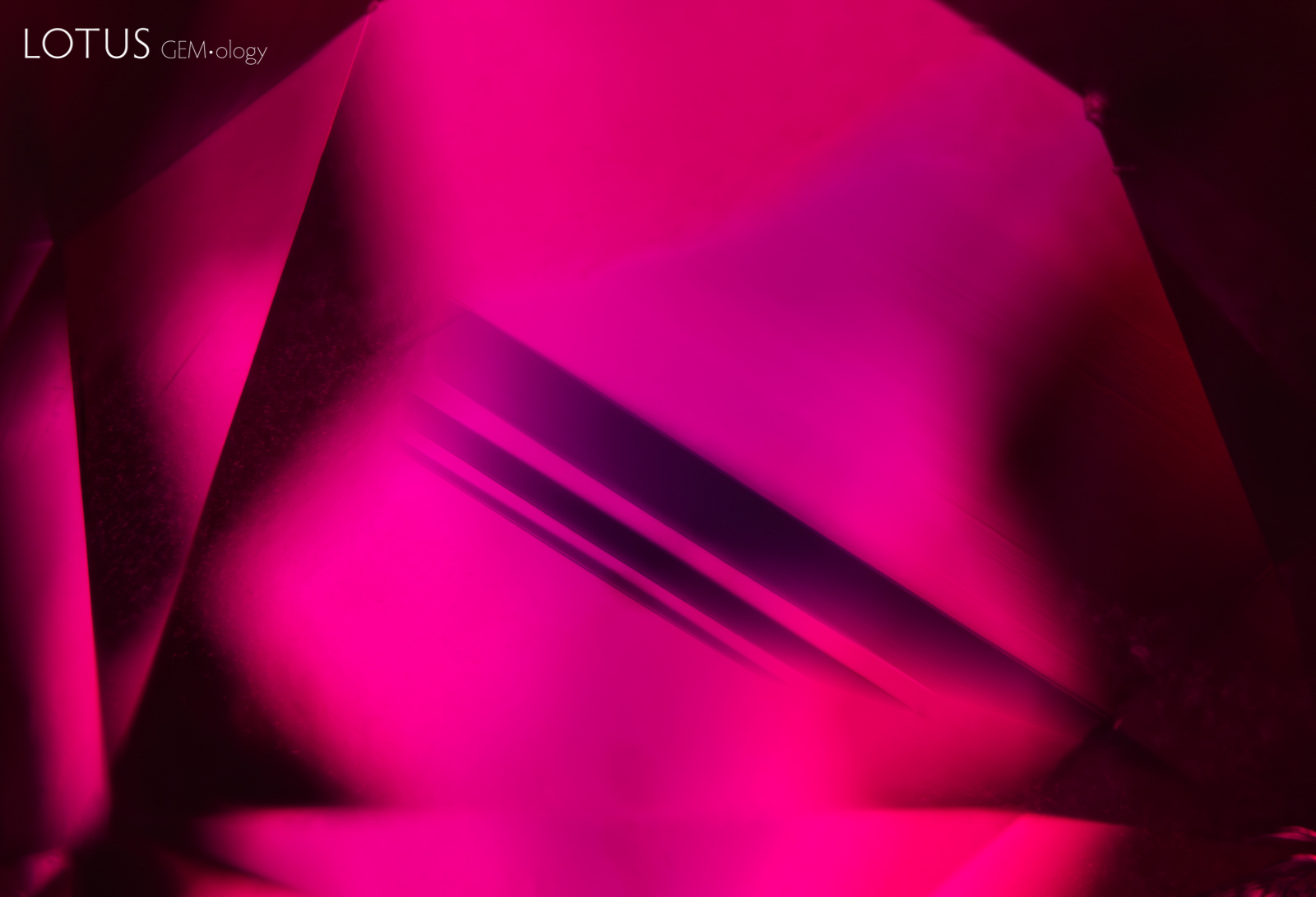
Like Mother Nature’s brush strokes, blue color zones are visible in this ruby from Mong Hsu, Myanmar (Burma).
Natural Ruby •
Myanmar (Burma); Mong Hsu •
Enhancements:
None Detected (None) •
Lighting Conditions:
Light Field (Transmitted Light)
Photographer:
E. Billie Hughes •
Image Number:
A-004-1096-1
• Field of View = 3.5mm
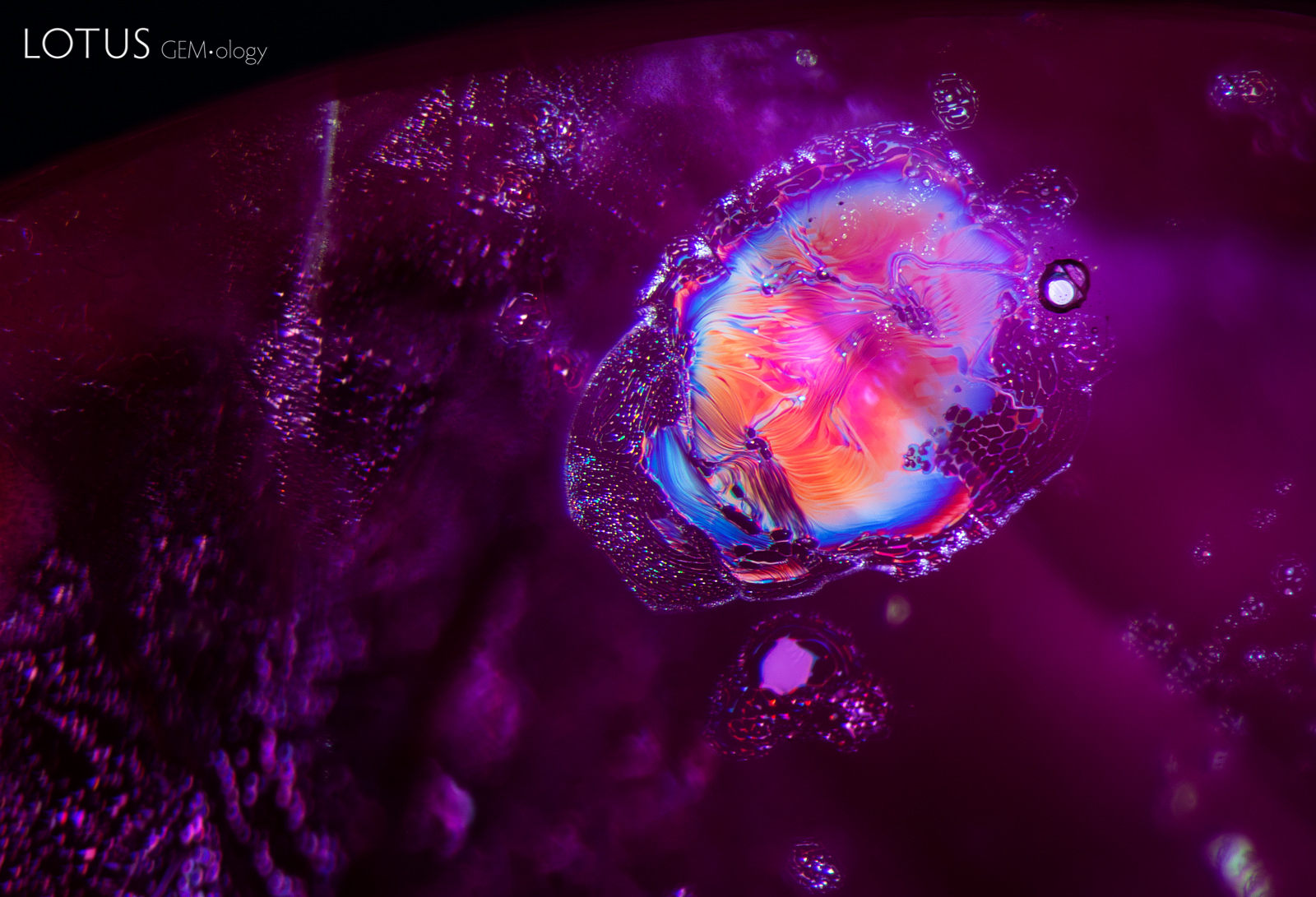
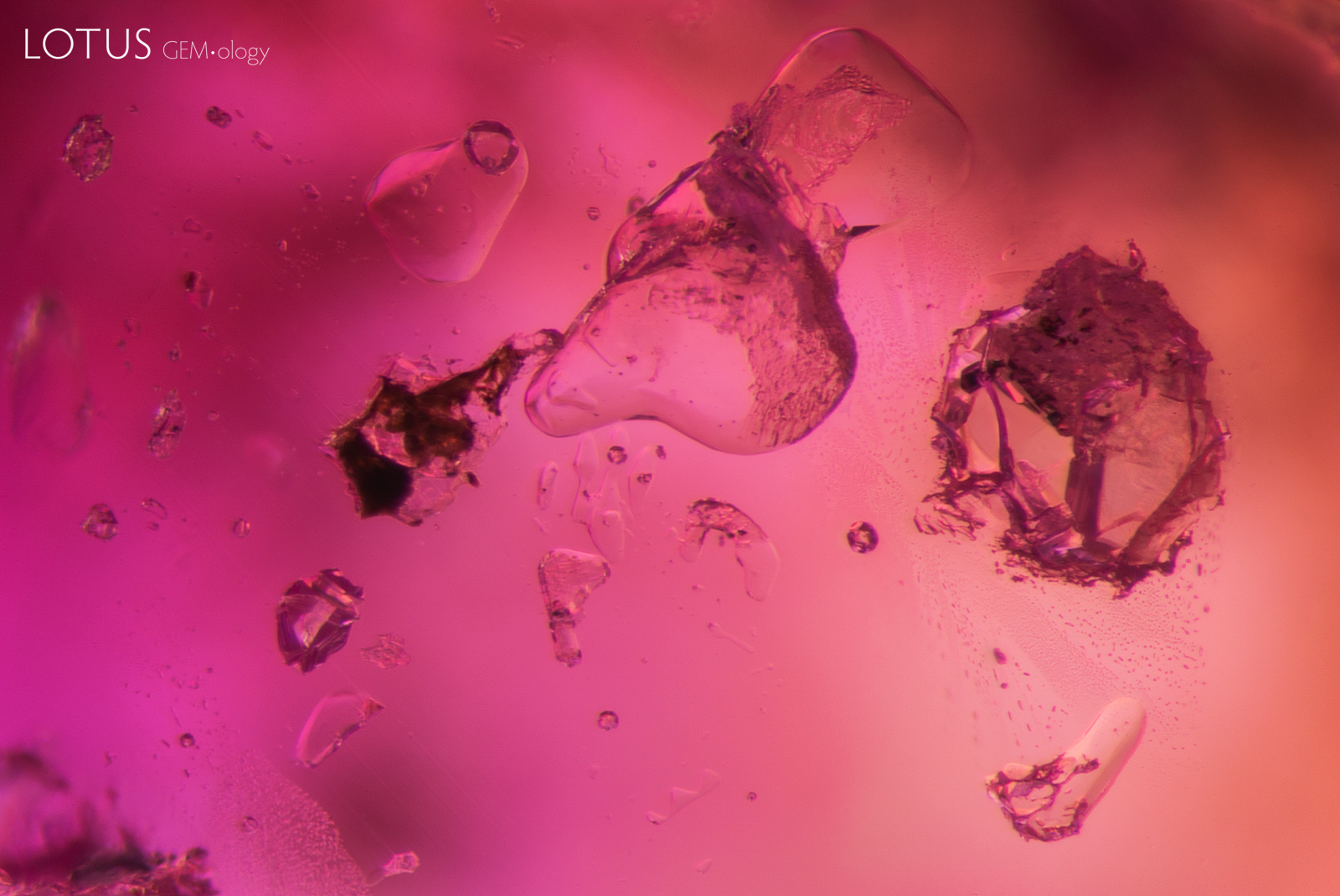
A small melted crystal and associated thin film inclusion dazzle with color when lit with fiber optic illumination. Inclusions like these are typical in Thai/Cambodian ruby.
Natural Ruby •
Thailand/Cambodia •
Enhancements:
Heat + Fissure Healing (H-FH) •
Lighting Conditions:
Fiber Optic: Diffuse Oblique
Photographer:
E. Billie Hughes •
Image Number:
A-004-1087-1
• Field of View = 2.5mm
A transparent zircon crystal stands out against a backdrop of undissolved rutile silk in this Mogok ruby.
Natural Ruby •
Myanmar (Burma); Mogok/Namya •
Enhancements:
None Detected (None) •
Lighting Conditions:
Dark Field
Photographer:
E. Billie Hughes •
Image Number:
R-001-5452-3
• Field of View = 2mm
Euhedral crystals are suspended amongst a cloud of rutile silk in this ruby from Myanmar’s Mogok stone tract.
Natural Ruby •
Myanmar (Burma); Mogok/Namya •
Enhancements:
None Detected (None) •
Lighting Conditions:
Dark Field
Photographer:
E. Billie Hughes •
Image Number:
R-001-5452-2
• Field of View = 2mm
Euhedral crystals are suspended amongst a cloud of rutile silk in this ruby from Myanmar’s Mogok stone tract.
Natural Ruby •
Myanmar (Burma); Mogok/Namya •
Enhancements:
None Detected (None) •
Lighting Conditions:
Diffuse Light Field + Fiber Optic
Photographer:
E. Billie Hughes •
Image Number:
R-001-5452-1
• Field of View = 2mm
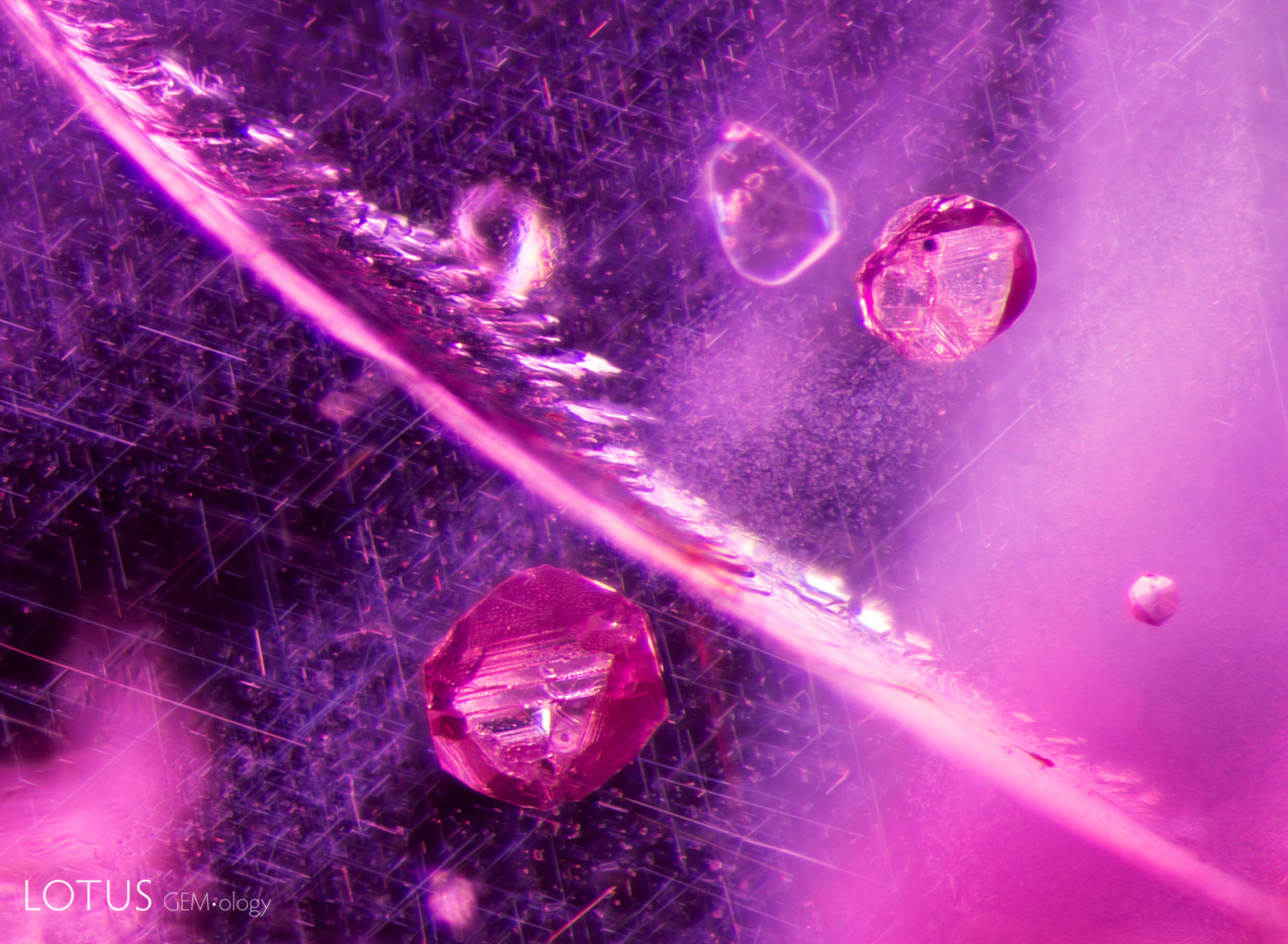
A variety of crystals can be spotted in this inclusion scene. On the left is a crystal containing diaspore, on the right are transparent spinel crystals, and the dark crystal at the bottom is primary rutile.
Natural Ruby •
Myanmar (Burma); Mogok/Namya •
Enhancements:
None Detected (None) •
Lighting Conditions:
Dark Field + Shadowing
Photographer:
E. Billie Hughes •
Image Number:
R-001-5456-1
• Field of View = 2mm
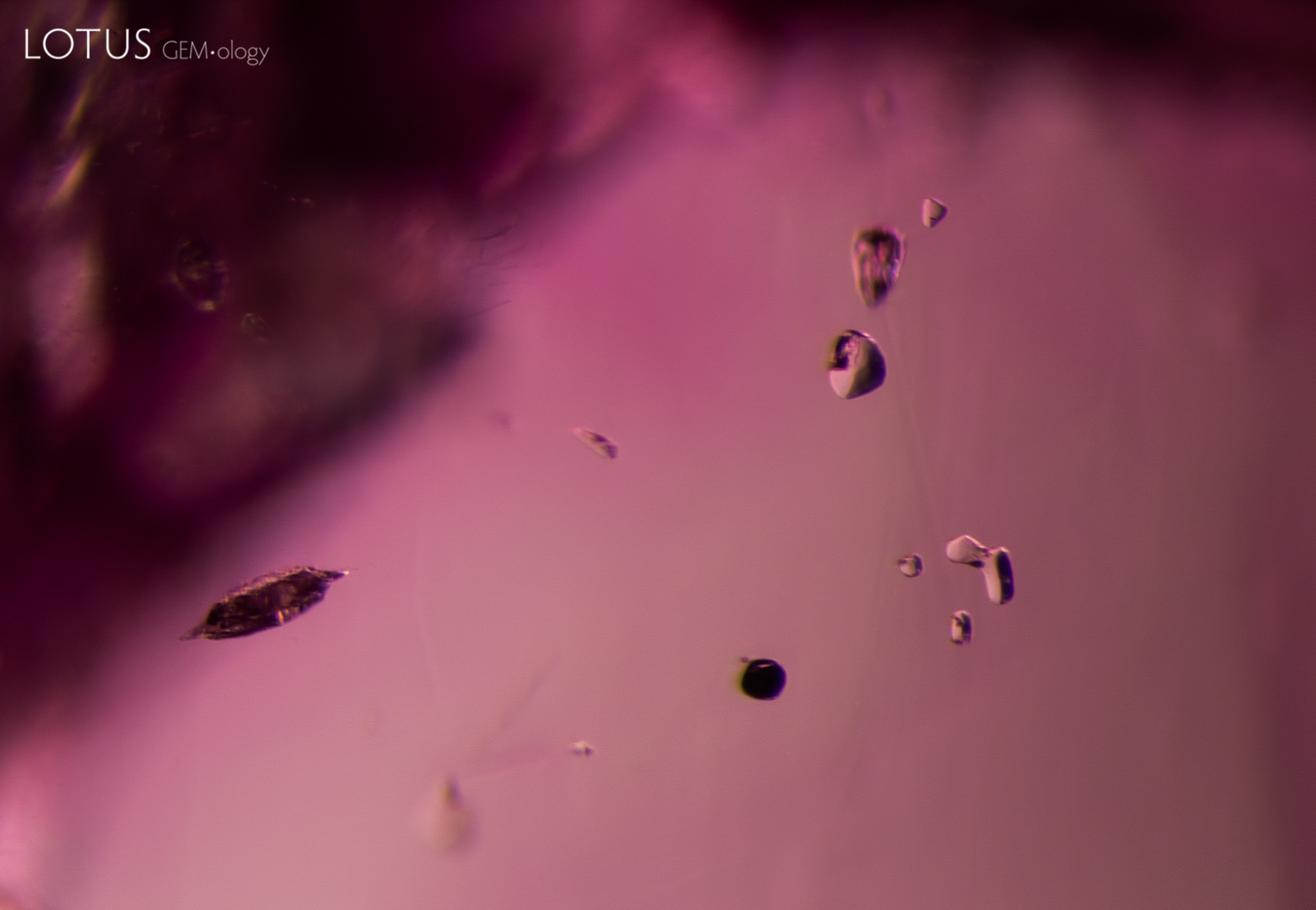
This scene contained spinel crystals as well as CO2 inclusions.
Natural Ruby •
Myanmar (Burma); Mogok/Namya •
Enhancements:
None Detected (None) •
Lighting Conditions:
Diffuse Light Field (Transmitted Light)
Photographer:
E. Billie Hughes •
Image Number:
R-001-5464-2
• Field of View = 2mm
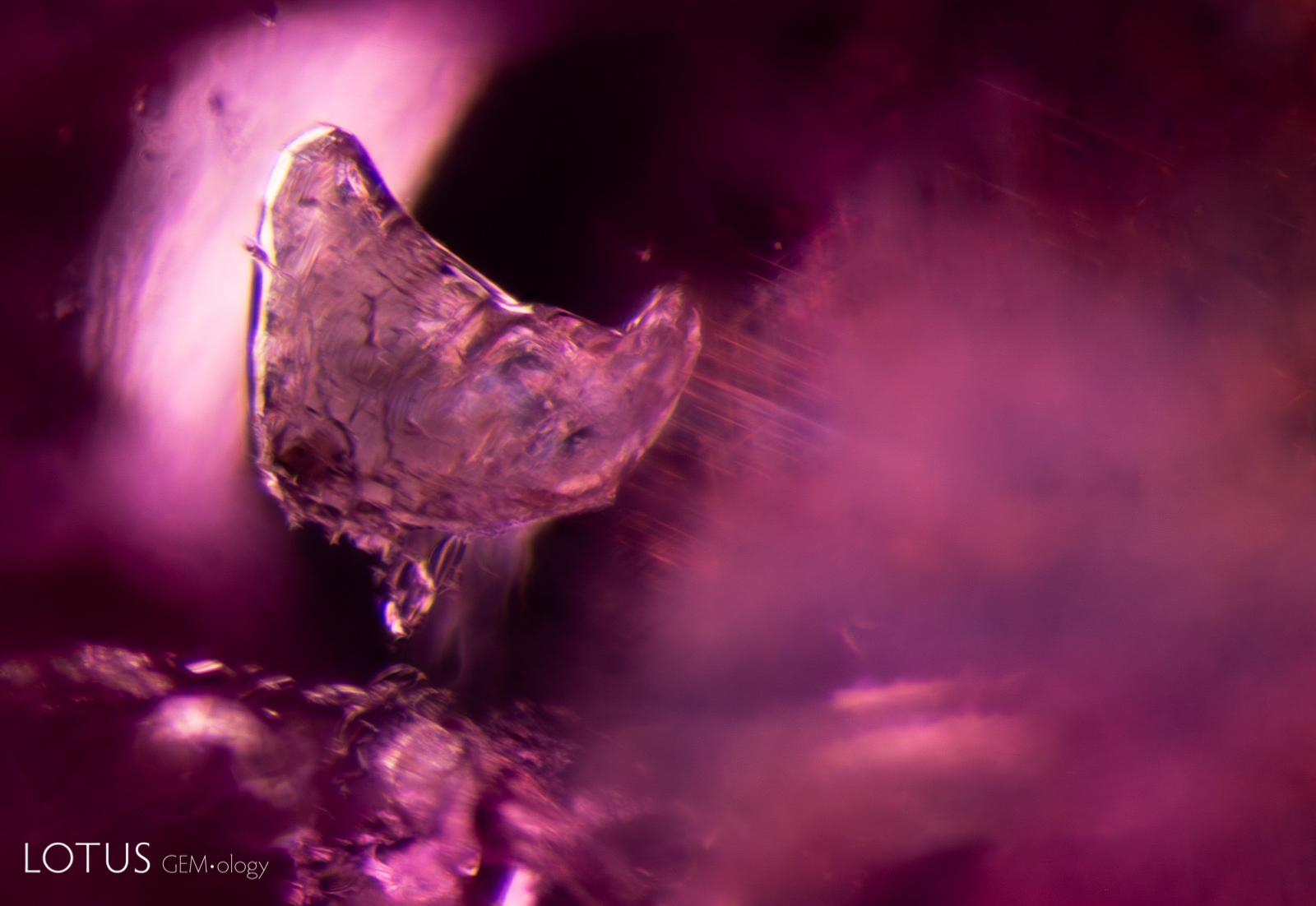
A croissant-shaped calcite crystal is suspended in this ruby from Mogok, Myanmar. Calcite is a common inclusion in rubies from this locality.
Natural Ruby •
Myanmar (Burma); Mogok/Namya •
Enhancements:
None Detected (None) •
Lighting Conditions:
Dark Field
Photographer:
E. Billie Hughes •
Image Number:
R-001-5464-1
• Field of View = 2mm
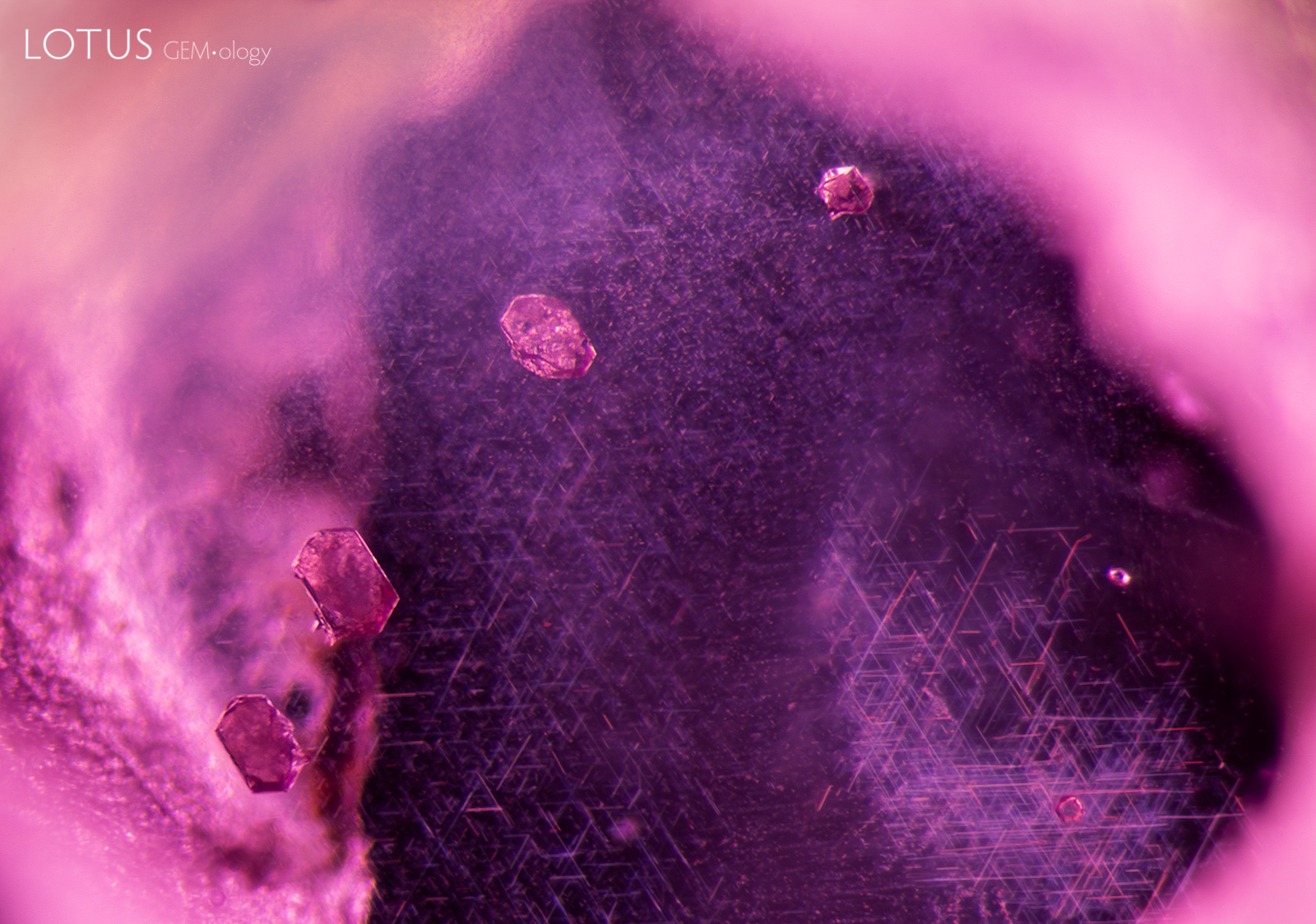
This Mogok ruby contained an interesting inclusion scene. The three crystals on the left are mica, and the top right is garnet. In the background we can see undissolved rutile silk needles, a hallmark of this type of material.
Natural Ruby •
Myanmar (Burma); Mogok/Namya •
Enhancements:
None Detected (None) •
Lighting Conditions:
Dark Field
Photographer:
E. Billie Hughes •
Image Number:
R-001-5459-1
• Field of View = 3mm
Natural ruby inclusions may include mineral crystals, rutile silk, healed fissures, fluid inclusions, negative crystals, color zoning and other features formed during or after crystal growth. Such features are important to gemologists because they can provide evidence useful in identifying ruby, understanding its geological history, recognizing treatment and, in some cases, determining geographic origin.
Natural Ruby Inclusion Photomicrographs
The Hyperion natural ruby gallery includes microscopic features found in rubies from major deposits around the world. Each entry is accompanied by descriptive information and, where available, references to the gemological literature.
What Inclusions Can Reveal About Natural Ruby
Inclusions are an important part of ruby identification. Their form, composition, orientation and alteration can help gemologists distinguish natural ruby from synthetic material, recognize evidence of heat treatment, and study the geological environment in which the ruby formed.
Hyperion combines inclusion photomicrography with supporting gemological information so that individual features can be compared with documented examples from known ruby deposits.
About Hyperion
Hyperion is the Lotus Gemology searchable inclusion database. It allows users to browse gemstone inclusions by gem type, geographic origin, treatment and keyword.