Natural Ruby Inclusions
Explore ruby inclusions in Hyperion, the Lotus Gemology inclusion database. Hyperion contains photomicrographs of inclusions and internal features in natural ruby, documented with information on geographic origin, treatment, lighting conditions, field of view, photographer and published references.
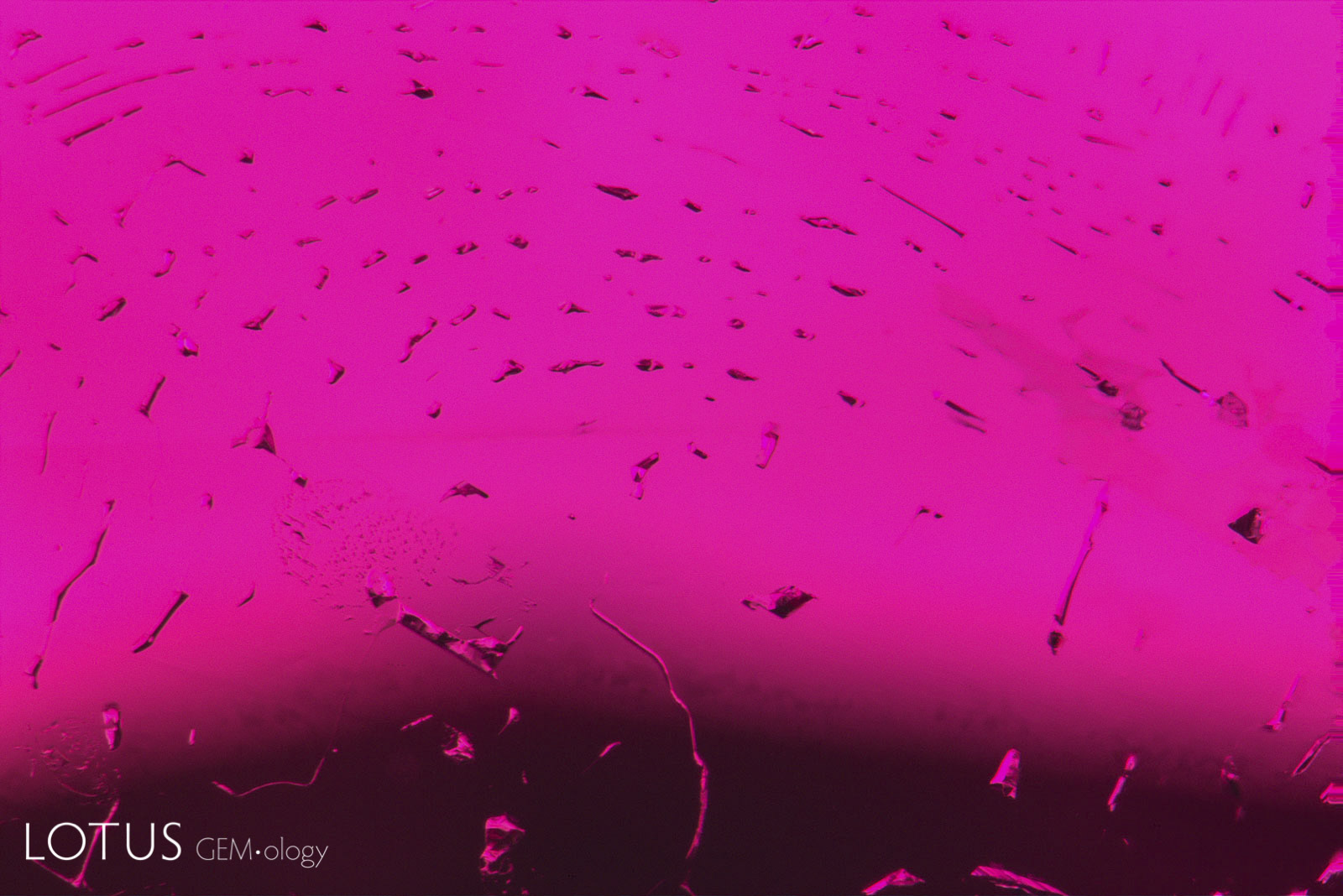
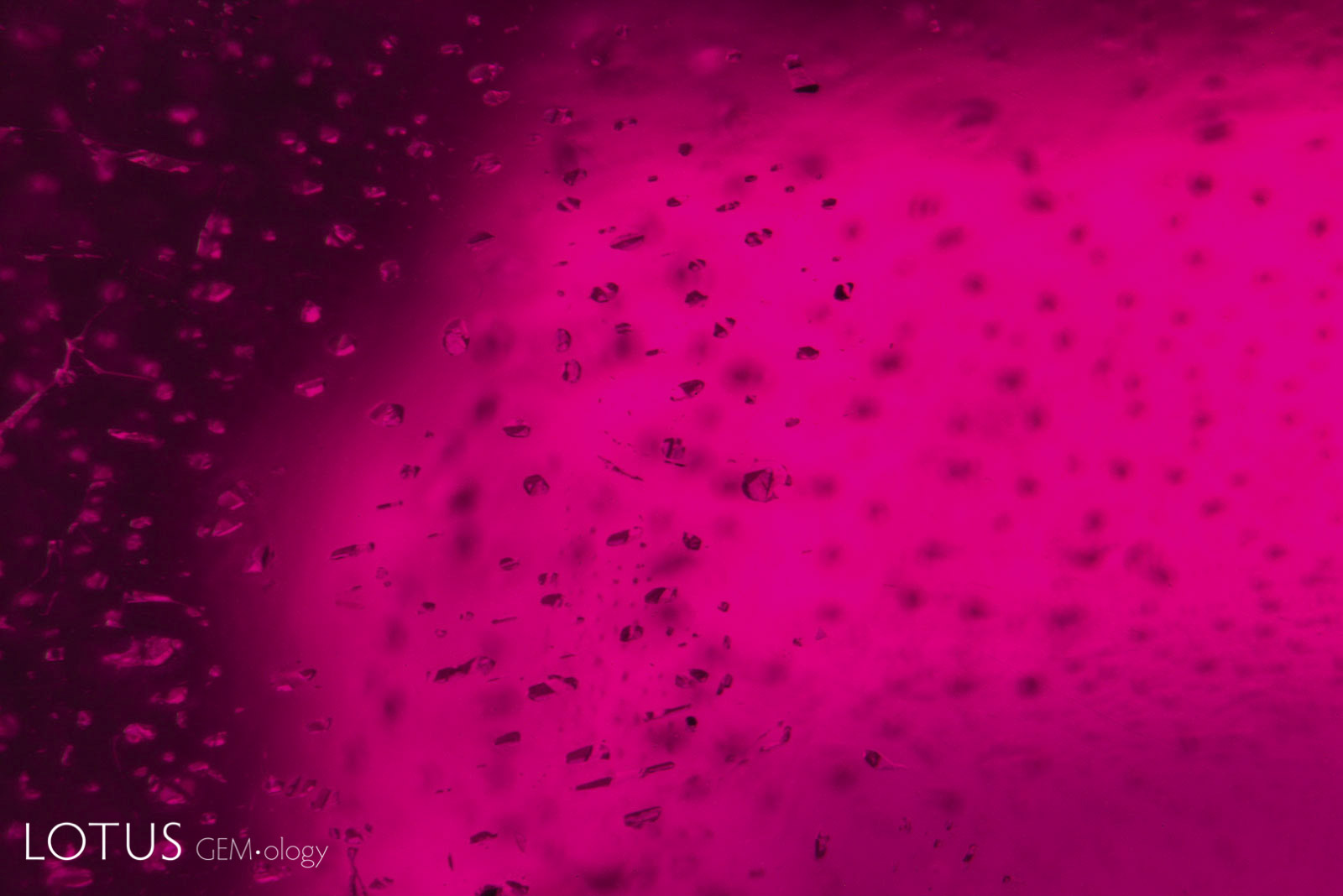
Tajik rubies often display well-healed fissures with coarse negative crystals, such as that seen here.
Natural Ruby •
Tajikistan; Snijnie •
Enhancements:
None Detected (None) •
Lighting Conditions:
Diffuse Light Field (Transmitted Light)
Photographer:
E. Billie Hughes •
Image Number:
A-001-3731-3
Sorokina, E.S., Litvinenko, A.K. et al. (2015) Rubies and Sapphires from Snezhnoe, Tajikistan. Gems & Gemology, Vol. 51, No. 2, pp. 160–175; RWHL.
Hughes, R.W., Pardieu, V. et al. (2006) Moon over the Pamirs: Chasing ruby and spinel in Tajikistan. LotusGemology.com, RWHL*.
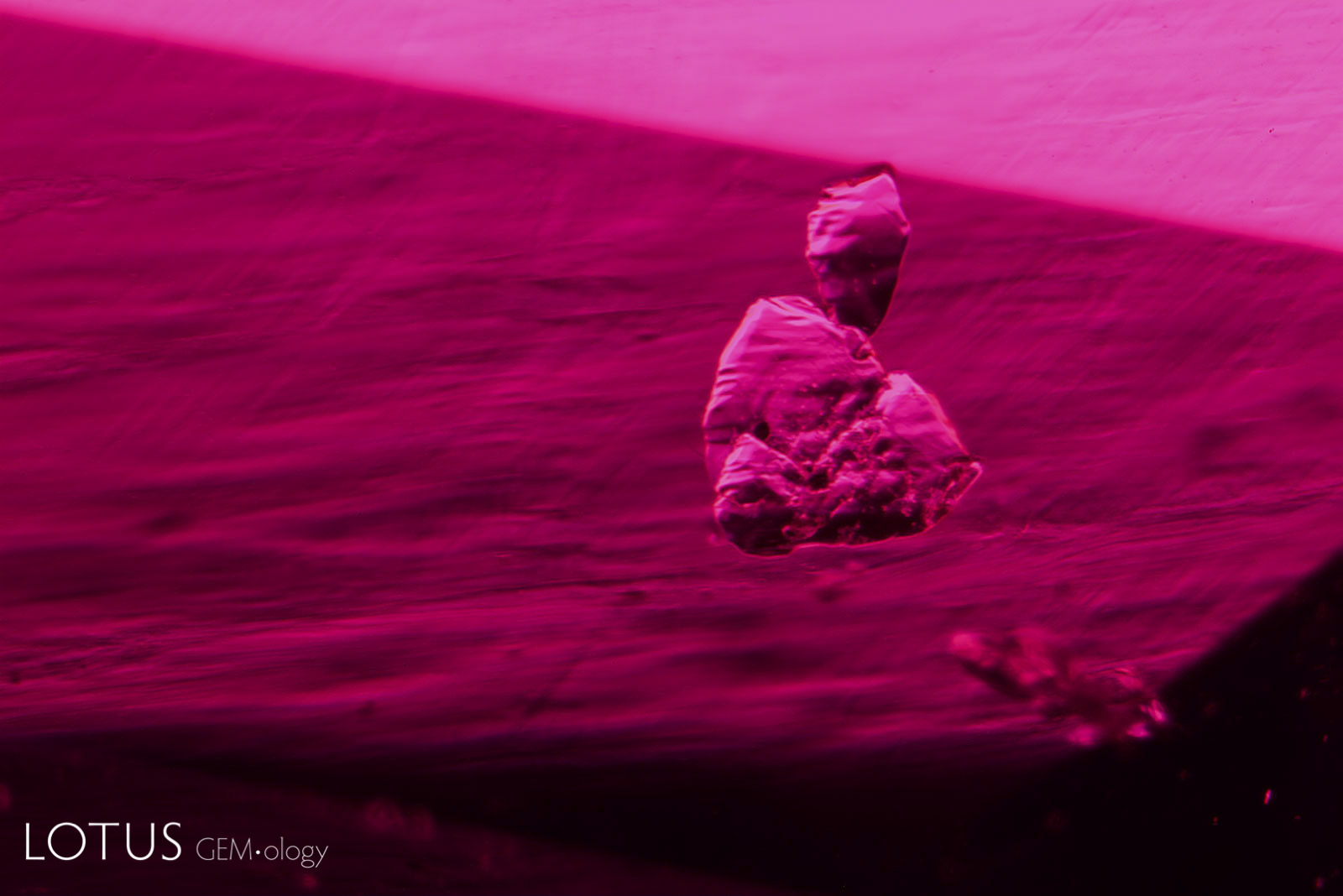
Tajik rubies often display well-healed fissures with coarse negative crystals, such as that seen here.
Natural Ruby •
Tajikistan; Snijnie •
Enhancements:
None Detected (None) •
Lighting Conditions:
Diffuse Light Field (Transmitted Light)
Photographer:
E. Billie Hughes •
Image Number:
A-001-3731-2
Sorokina, E.S., Litvinenko, A.K. et al. (2015) Rubies and Sapphires from Snezhnoe, Tajikistan. Gems & Gemology, Vol. 51, No. 2, pp. 160–175; RWHL.
Hughes, R.W., Pardieu, V. et al. (2006) Moon over the Pamirs: Chasing ruby and spinel in Tajikistan. LotusGemology.com, RWHL*.
Tajik rubies often display well-healed fissures with coarse negative crystals, such as that seen here.
Natural Ruby •
Tajikistan; Snijnie •
Enhancements:
None Detected (None) •
Lighting Conditions:
Diffuse Light Field (Transmitted Light)
Photographer:
E. Billie Hughes •
Image Number:
A-001-3731-1
Sorokina, E.S., Litvinenko, A.K. et al. (2015) Rubies and Sapphires from Snezhnoe, Tajikistan. Gems & Gemology, Vol. 51, No. 2, pp. 160–175; RWHL.
Hughes, R.W., Pardieu, V. et al. (2006) Moon over the Pamirs: Chasing ruby and spinel in Tajikistan. LotusGemology.com, RWHL*.
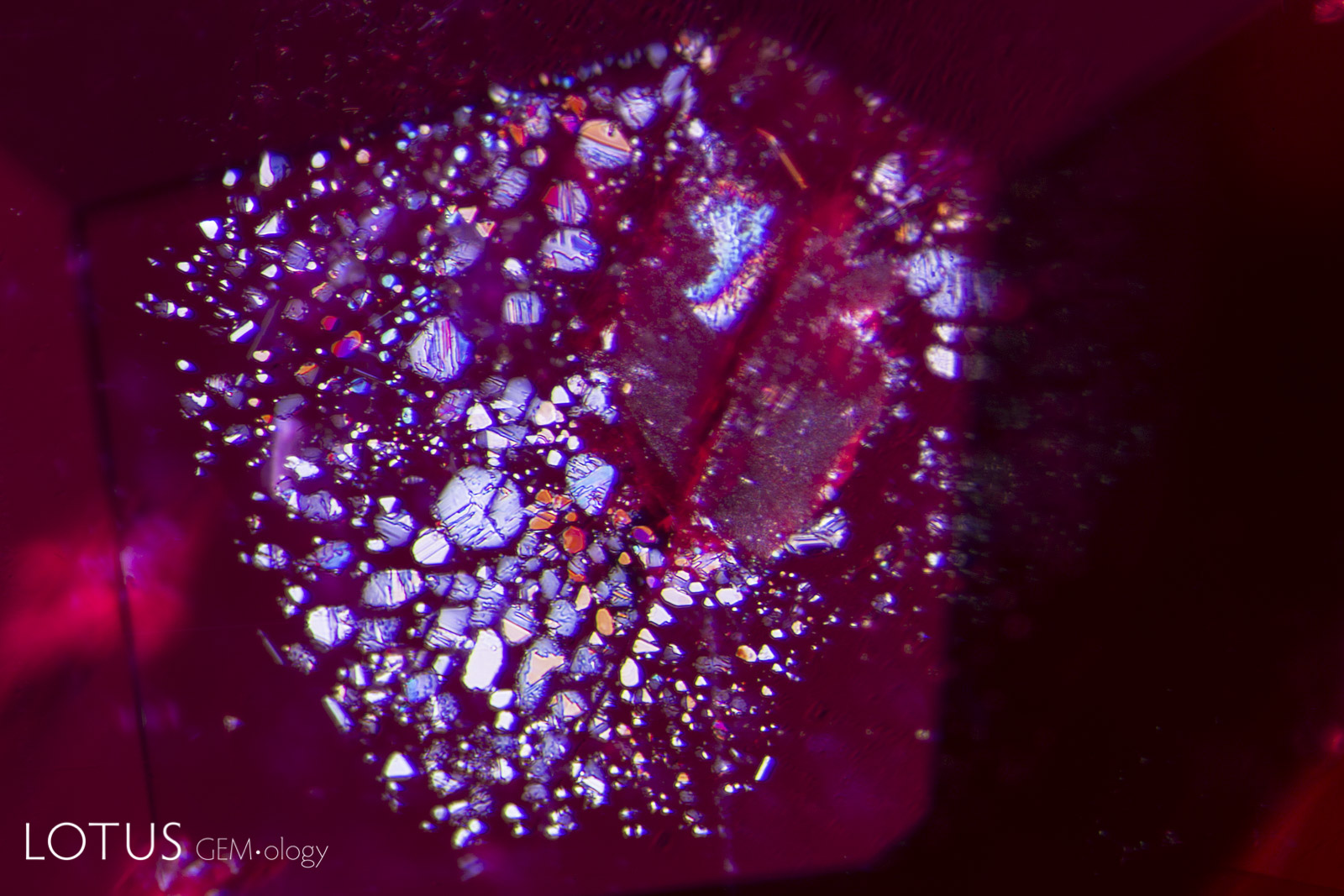
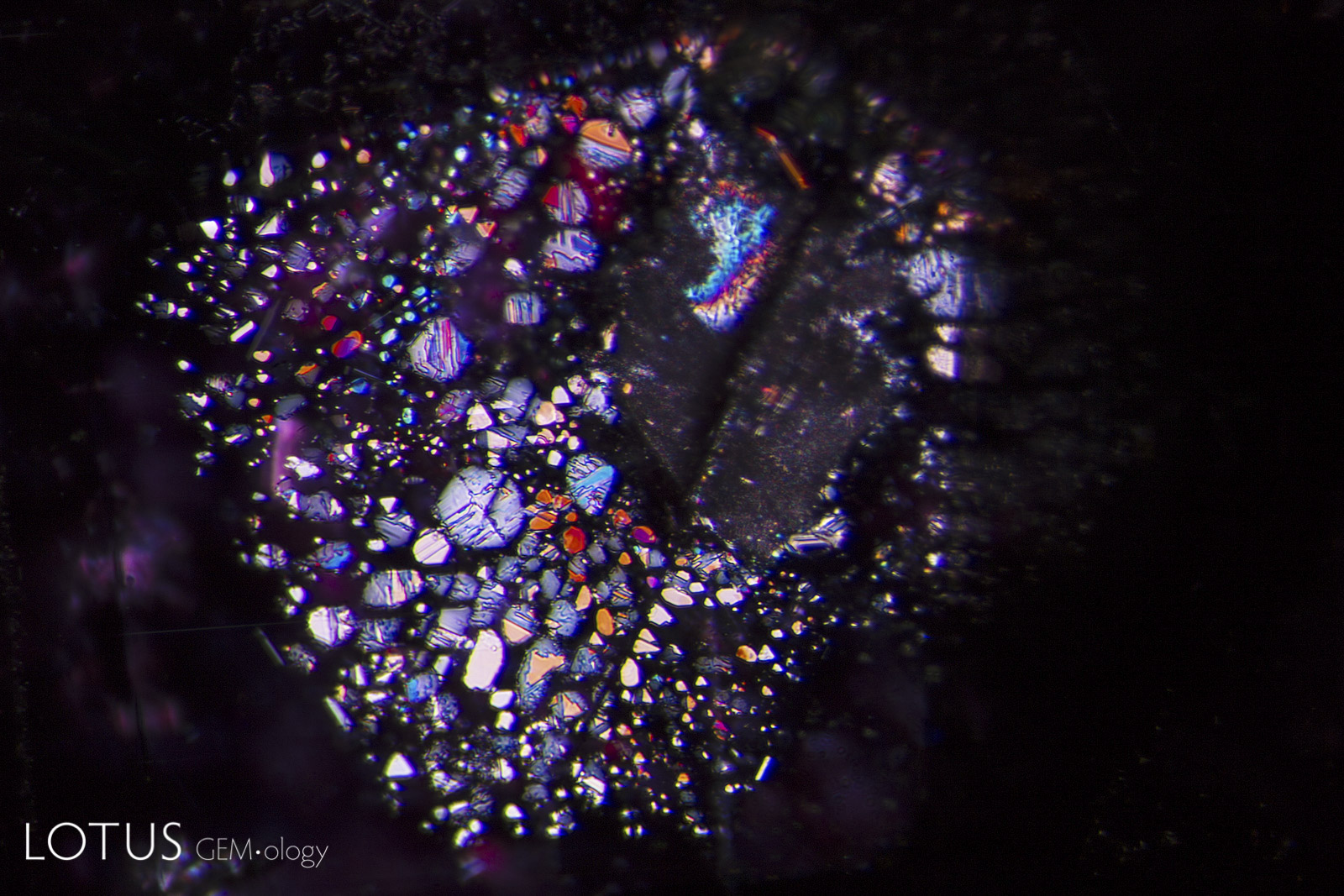
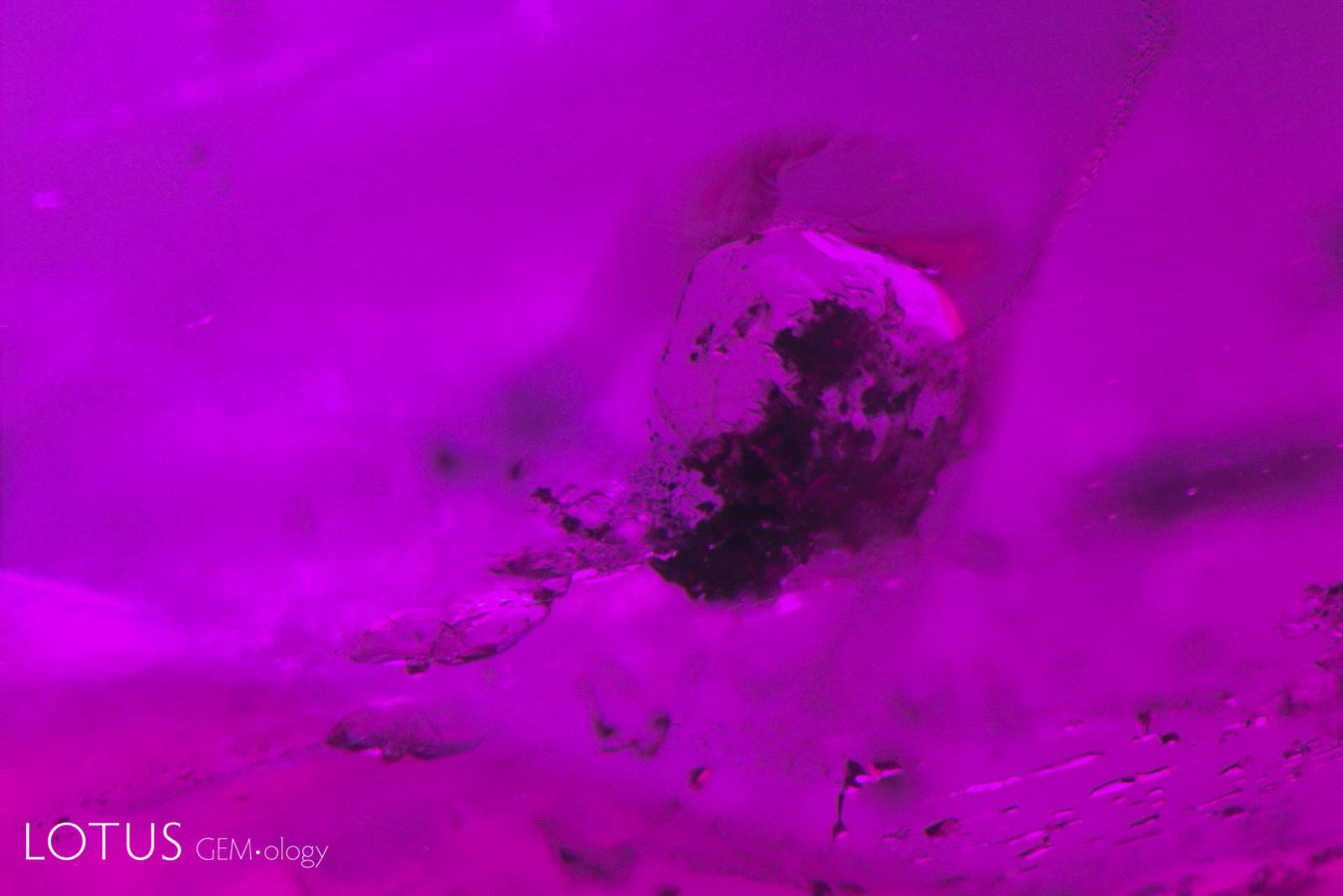
Unusual negative crystal with black flakes adhering to it in a ruby from Tajikistan’s Snijnie mines.
Natural Ruby •
Tajikistan; Snijnie •
Enhancements:
None Detected (None) •
Lighting Conditions:
Dark Field
Photographer:
E. Billie Hughes •
Image Number:
A-001-3735-1
Sorokina, E.S., Litvinenko, A.K. et al. (2015) Rubies and Sapphires from Snezhnoe, Tajikistan. Gems & Gemology, Vol. 51, No. 2, pp. 160–175; RWHL.
Hughes, R.W., Pardieu, V. et al. (2006) Moon over the Pamirs: Chasing ruby and spinel in Tajikistan. LotusGemology.com, RWHL*.
Unusual negative crystal with black flakes adhering to it in a ruby from Tajikistan’s Snijnie mines.
Natural Ruby •
Tajikistan; Snijnie •
Enhancements:
None Detected (None) •
Lighting Conditions:
Diffuse Light Field + Fiber Optic
Photographer:
E. Billie Hughes •
Image Number:
A-001-3736-1
Sorokina, E.S., Litvinenko, A.K. et al. (2015) Rubies and Sapphires from Snezhnoe, Tajikistan. Gems & Gemology, Vol. 51, No. 2, pp. 160–175; RWHL.
Hughes, R.W., Pardieu, V. et al. (2006) Moon over the Pamirs: Chasing ruby and spinel in Tajikistan. LotusGemology.com, RWHL*.
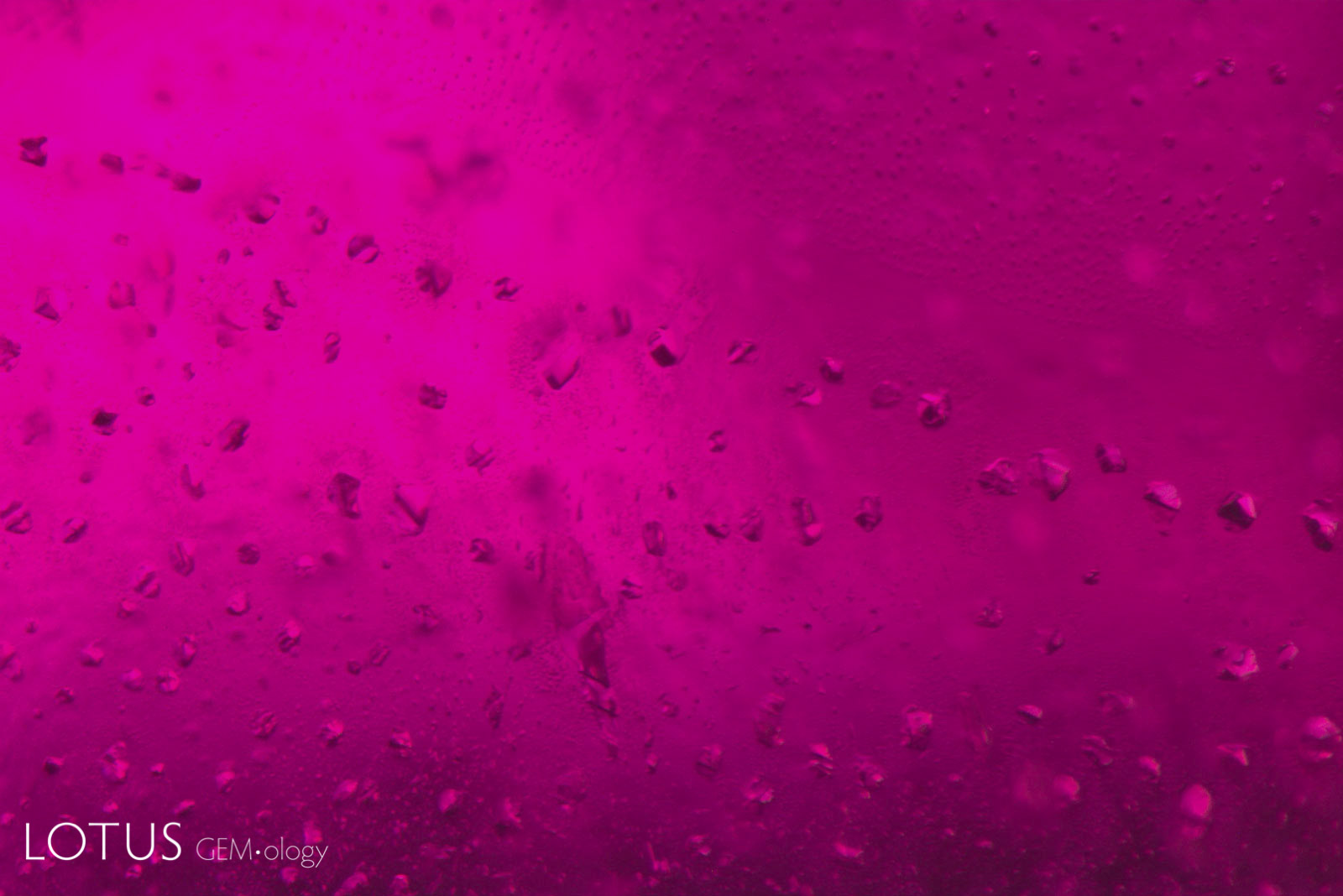
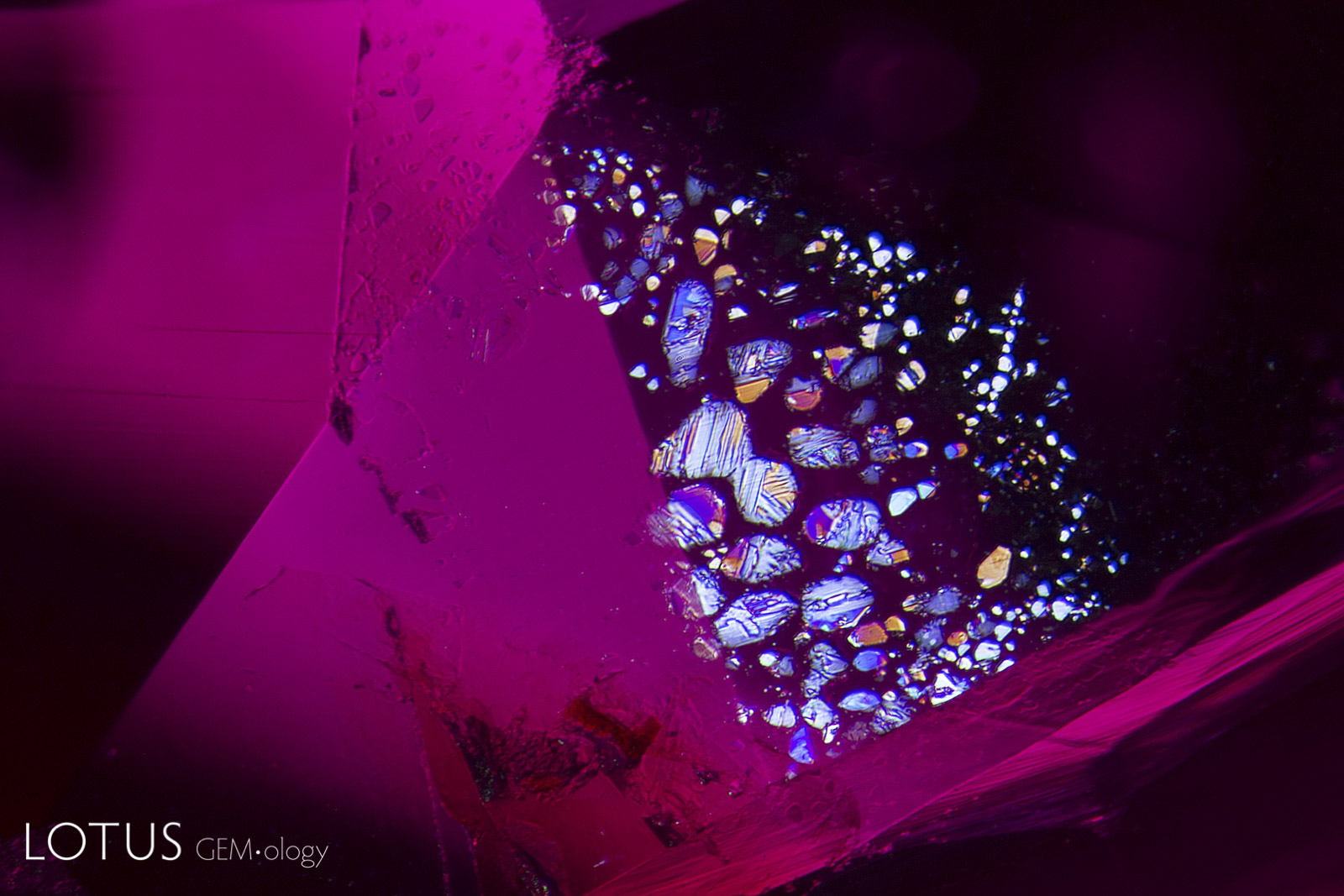
One of the hallmarks of Tajik rubies are these flat negative crystals with accretion halos.
Natural Ruby •
Tajikistan; Snijnie •
Enhancements:
None Detected (None) •
Lighting Conditions:
Dark Field + Diffuse Fiber Optic
Photographer:
E. Billie Hughes •
Image Number:
A-001-3732-1
Hughes, R.W., Pardieu, V. et al. (2006) Moon over the Pamirs: Chasing ruby and spinel in Tajikistan. LotusGemology.com, RWHL*.
Sorokina, E.S., Litvinenko, A.K. et al. (2015) Rubies and Sapphires from Snezhnoe, Tajikistan. Gems & Gemology, Vol. 51, No. 2, pp. 160–175; RWHL.
The fact that this hot pink ruby from Mozambique owes some of its beauty to artificial heat treatment is betrayed by the spall marks on a small natural on the pavilion. Like drops of frozen water, they cannot be scraped off with a dental pick, thus demonstrating that they are the result of heat treatment.
Natural Ruby •
Mozambique •
Enhancements:
Heat (H) •
Lighting Conditions:
Fiber Optic: Overhead
Photographer:
E. Billie Hughes •
Image Number:
A-001-4190-1
Pardieu, V., Saeseaw, S. et al. (2015) "Low temperature" heat treatment of Mozambique ruby: Results report. Gemological Institute of America, 16 April, 34 pp.; RWHL*.
Pardieu, V., Sturman, N. et al. (2010) FAPFH/GFF treated ruby from Mozambique: A preliminary report. Gemological Institute of America, 11 May, 18 pp.; RWHL*.
458 Total Images
Results: 265 – 276 | Page 23 of 39 Pages
Natural ruby inclusions may include mineral crystals, rutile silk, healed fissures, fluid inclusions, negative crystals, color zoning and other features formed during or after crystal growth. Such features are important to gemologists because they can provide evidence useful in identifying ruby, understanding its geological history, recognizing treatment and, in some cases, determining geographic origin.
Natural Ruby Inclusion Photomicrographs
The Hyperion natural ruby gallery includes microscopic features found in rubies from major deposits around the world. Each entry is accompanied by descriptive information and, where available, references to the gemological literature.
What Inclusions Can Reveal About Natural Ruby
Inclusions are an important part of ruby identification. Their form, composition, orientation and alteration can help gemologists distinguish natural ruby from synthetic material, recognize evidence of heat treatment, and study the geological environment in which the ruby formed.
Hyperion combines inclusion photomicrography with supporting gemological information so that individual features can be compared with documented examples from known ruby deposits.
About Hyperion
Hyperion is the Lotus Gemology searchable inclusion database. It allows users to browse gemstone inclusions by gem type, geographic origin, treatment and keyword.
Search the Complete Hyperion Database