Emerald Bibliography

Emerald Bibliography

Explore books, articles and historical sources on emerald in Four Treasures, the Lotus Gemology reference database. This bibliography brings together matching records from the collection, with publication details, abstracts and cover images where available.

Emerald References

The list below matches the terms emerald or emeralds in the database's searchable fields. Some references discuss emeralds as part of a broader subject.
681–700 of 851 matching references

Jade in America

Conference Paper
Wilson, T. (1900) Jade in America. Congrès International de Américanistes, Paris pp. 141–187.
Record No. 28503  |  Sinkankas/Born No.: 7274; NIB  |  RWHL
Sinkankas: One of the most valuable papers published in North America on jade and little known because of being embodied in a relatively obscure journal. Thomas Wilson commences with a review of all that was known of jade, its nomenclature, its sources, etc., from the earliest mentions that he could find in the literature, citing such authors as Pliny the Elder, Georgius Agricola, John Mandeville, Ulisse Aldrovandi and others, especially those who wrote of the jade of Mexico and the confusing terminology which was applied to green stones and therefore embracing nephrite, turquoise, and even emerald. The use of jades in Mexico is especially treated, and then, passing on to the jade of the Pacific Northwest & Alaska, we find a true bibliographical rarity indeed when Wilson states “No official report has been published [on Alaskan jade], but the following statement of the expedition, including the discovery of Jade Mountain, has been furnished me by Lieutenant-Commander George M. Stoney: … [p. 157–162].” In his account, Stoney tells of his travels in Alaska, his excursions up the Kobuk River, and his discovery of the deposits and collections of specimens, over a time span of three expeditions in 1881, 1883, and 1885–1886. For another account by Stoney, see elsewhere under his own name. Wilson then passes on to a discussion of nephrite and jadeite, then other places where nephrite occurs in Canada, citing George Mercer Dawson in this regard. From p. 171, Wilson now compares the two jades, their occurrences in Europe, the findings of Auguste Damour and Horace-Bénédict de Saussure, mineralogical composition, with a plate of thin-section photographs, and the great Jade Question or “Migration” as Wilson captions this section. An invaluable work which must be consulted by anyone researching the jades of the Western Hemisphere.

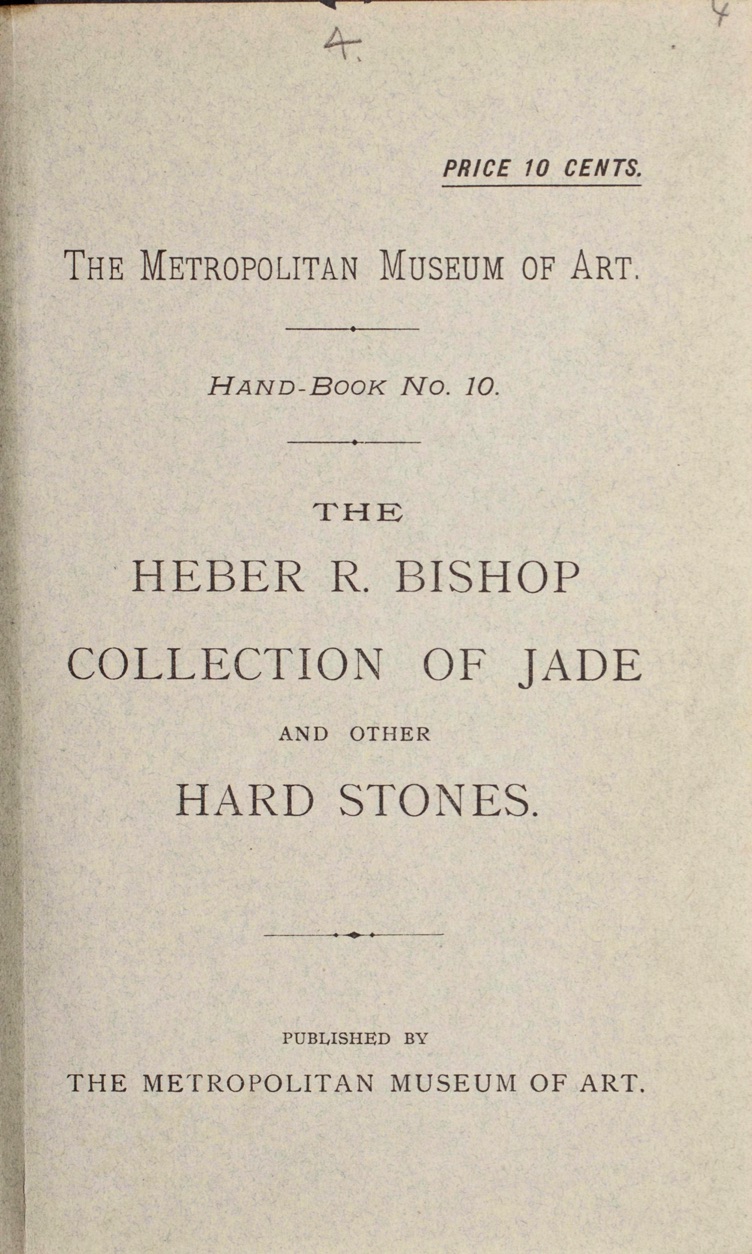
The Herber R. Bishop Collection of Jade and Other Hardstones
Book
Metropolitan Museum of Art (1900) The Herber R. Bishop Collection of Jade and Other Hardstones. New York, Metropolitan Museum of Art, 104 pp.
Record No. 3621  |  RWHL
Jade is a popular name for various tough, compact ornamental stones ranging in color from nearly white to deep green, long used in tools, ornaments, and decorative objects, but scientifically restricted to the minerals jadeite, nephrite, and the iron-rich jadeite variety chloromelanite. Though chemically distinct, jadeite and nephrite share many physical traits—both are hard, compact, usually fibrous, translucent, capable of high polish, and exhibit a characteristic sheen. Jadeite, a sodium-aluminum silicate of the pyroxene group, sometimes contains iron, calcium, and magnesium, with chloromelanite having up to 10% iron. Typically found as a massive aggregate of fibres or granules, jadeite has a hardness of about 7 and a specific gravity of 3.33, melting easily to a clear glass and resisting hydrochloric acid unless pre-fused. Its colors vary widely, though shades of white and green predominate, with prized tones like pale lavender and emerald green, the latter known as fei-ts’ui in Chinese. Nephrite, a calcium-magnesium silicate of the amphibole group, identical in composition to tremolite and actinolite but structurally different, is a dense mat of fine fibres, never found as discrete crystals. With a hardness of 6.5 and specific gravity around 3.0, it melts to a greenish glass and is acid-resistant. Its colors also vary but tend toward darker greens, with white more common than in jadeite, though rarely pure, and with occasional faint greenish, bluish, grayish, or pale yellow tones. The close resemblance between jadeite and nephrite has led to their common classification as jade, though accurate distinction often requires detailed chemical and microscopic analysis, especially when both occur together through metamorphic transformation. Despite jade’s ancient use, known in situ sources are few, with most material recovered from secondary deposits. The most studied jadeite locality is in Upper Burma’s Kachin region, while India and Tibet are said to contain jade but lack verifiable quarry evidence. Jadeite from Mesoamerica is distinctly different and may yet be found in situ. Nephrite is more widely distributed, with primary sources in the Kunlun Mountains of Turkistan, long known and studied, and occurrences in Siberia, Switzerland, France, Alaska, British Columbia, Washington, New Zealand, and New Caledonia. European finds have mostly been boulders, with confirmed in situ deposits only since the late 19th century. Jade’s toughness and beauty made it highly valued in prehistoric tools and ornaments worldwide, evident from finely made axes, adzes, and pendants found across Europe, Asia, and the Americas, with China, Central America, and New Zealand contributing iconic forms like the hei-tiki. China, above all, revered jade as the supreme precious material, used in ancient rituals and praised for its tactile and aesthetic qualities. The Chinese tradition emphasized carving, particularly in floral and symbolic motifs, often for imperial use, with designs reflecting strict sumptuary codes. India introduced the practice of embedding jade with gems, creating luxurious pieces during the Mongol empire, combining delicate carving with rubies, emeralds, and enamel. The artistic elegance of these and simpler forms highlights jade’s enduring appeal. Modern jade work continues, notably in Europe and Russia, with examples such as a Paris-cut paper knife from New Zealand nephrite and elaborate imperial Russian vases demonstrating the material’s ongoing artistic potential.

The emerald mines of northern Etbai

Journal Article
MacAlister, D.A. (1900) The emerald mines of northern Etbai. Geographical Journal, Vol. 16, No. 5, Nov., pp. 537–549.
Record No. 2583  |  Sinkankas/Born No.: NIS/NIB  |  RWHL
MacAlister describes the ancient emerald-mining district of northern Etbai in Egypt’s Eastern Desert, including its geography, geology, routes of access, water supply, and surviving mining remains. He discusses the principal workings and settlements associated with the emerald mines, the character of the host rocks and methods by which the deposits were exploited, and evidence for mining in antiquity. Particular attention is given to the difficult desert environment and the practical problems of reaching and working the mines. The paper provides an important late nineteenth-century account of Egypt’s historic emerald deposits, combining geographical observation with descriptions of the mines, ruins, and mineral occurrences.

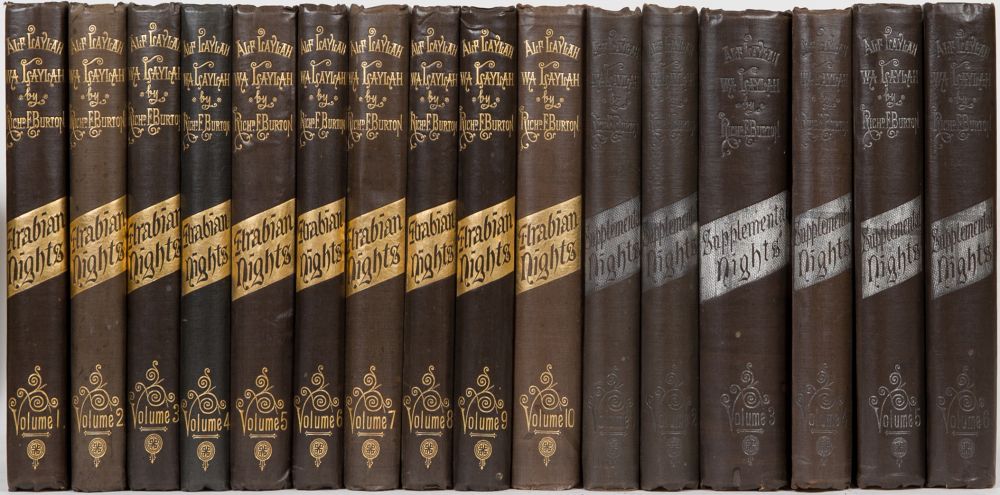
The Book of the Thousand Nights and a Night
Book
Burton, R.F. (1899) The Book of the Thousand Nights and a Night. Denver, CO, Burton Society of Denver, Vol. 5, pp. 340–343; Vol. 6, pp. 16–23, 64–69
Record No. 2724  |  Sinkankas/Born No.: NIS/NIB  |  RWHL
Burton’s The Book of the Thousand Nights and a Night, his translation of the Arabian Nights, contains numerous references to precious stones, jewelry, and fabulous treasures reflecting the luxury and gem lore of the medieval Islamic world. The cited passages in Vols. 5 and 6 include descriptions of gems and jeweled objects embedded in tales of merchants, rulers, magical adventures, and extraordinary wealth. Diamonds, rubies, emeralds, pearls, and other precious materials appear both as commodities of immense value and as components of magnificent ornaments and treasures, while some passages preserve traditional beliefs concerning the sources and properties of stones. Burton’s extensive notes supplement the tales with linguistic, historical, geographical, and ethnographic commentary, often explaining Arabic and Persian names for gems and contemporary practices connected with their trade and valuation. For gemological research, these passages are valuable primarily as literary and cultural evidence for the terminology, symbolism, commerce, and popular conceptions surrounding precious stones in the Arabic and Persian traditions transmitted through the Thousand Nights and a Night.

L'Émeraude de Bajazet II et la Médaille du Christ d'Innocent VIII
The Emerald of Bayezid II and the Medal of Christ of Innocent VIII
Journal Article
Mély, F.d.S., de (1898) L'Émeraude de Bajazet II et la Médaille du Christ d'Innocent VIII. [The Emerald of Bayezid II and the Medal of Christ of Innocent VIII] Gazette des Beaux-Arts, 1 June, pp. 487–493.
Record No. 29429  |  Sinkankas/Born No.: NIS/NIB  |  Language: in French  |  RWHL
In 1888, M. Bode, who had just acquired for the Berlin Museum a small painting representing a head of Christ, which he attributed to Jan van Eyck, sought, in the Zeitschrift für christliche Kunst, to determine the type to which this very regular profile should be related. He then published a medal, the obverse of which bore a head of Christ in profile and the reverse the following inscription: “Presentes figure ao (sic) similitudinem domini ihesu salvatoris nostri et apostoli pauli in amiraldo impresse per magni theucri predecessores antea singulariter observate misse suut ab ipso magno theucro s. d. n. pape innocencio octavo pro singulari dono ad hune finem ut suum fratrem captivum retineat.” M. Bode very rightly pointed out that this medal, half a century later than the painting, could not have been the immediate model copied by the Netherlandish artist, but that the latter must have attempted to reproduce, with the greatest possible fidelity, an ancient, traditional type derived from this emerald of Constantinople sent to Rome to Innocent VIII. “Such imitations,” he added, “appear to have reached the West as early as antiquity and to have served as a type for representations of the Savior.”

Precious stones

Book Section
Kunz, G.F. (1894) Precious stones. In: Mineral Resources of the United States | Calendar Year 1893, Washington: Govt. Printing Office, pp. 680–702.
Record No. 17007  |  Sinkankas/Born No.: 3608; NIB  |  RWHL
The value of rough gems produced in the U.S. decreased from $312,050 in 1892 to $264,041 in 1893, mainly due to financial depression. Notable discoveries include a 3+ carat diamond in Wisconsin and small rubies in North Carolina. American turquoise sales reached $143,136, surpassing Persian mines’ annual sales. Diamond Industry: Several diamond discoveries were made in the U.S., including a 3+ carat diamond in Wisconsin and small diamonds in North Carolina and California. Diamonds were found in meteorites, specifically the Canyon Diablo meteorite, confirming their presence through cutting experiments. The diamond-cutting industry in the U.S. employed 236 people in 1889, with significant importation of rough diamonds. Other Gemstones: Sapphires from Montana were actively sold, with efforts to introduce them into the London market. Rubies found in North Carolina were of good color and quality. Turquoise mining was highly successful, with significant production and sales. Tourmaline discoveries in Maine and California yielded valuable gems. Emerald mining in Colombia continued to be profitable, with significant production and export. Artificial Precious Stones: Experiments by Thomas Edison and the Cowles Electric Smelting and Aluminum Company to produce artificial rubies, sapphires, and diamonds were unsuccessful due to issues like bubbles and lack of genuine diamond production. Other Minerals: Moss agate, hydrolite, dumortierite, opal, staurolite, jadeite, lapis lazuli, labradorite, and other minerals were found and mined in various locations across the U.S., with varying degrees of success and market value. The report provides a comprehensive overview of the mineral and gemstone industry in the U.S. during 1893, highlighting significant discoveries, production data, and market trends.

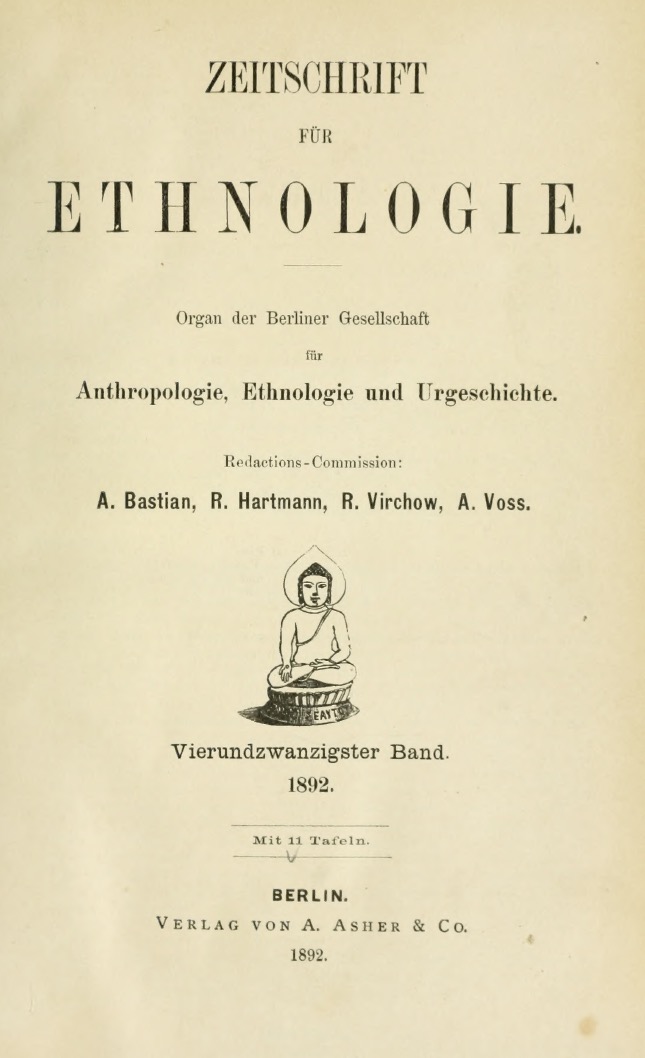
Der ägyptische Smaragd nebst einer vergleichenden mineralogischen Untersuchung der Smaragde von Alexandrien, vom Gebel Sabara und vom Ural
The Egyptian emerald together with a comparative mineralogical study of the emeralds of Alexandria, the Gebel Sabara and the Urals
Journal Article
Schneider, O. and Arzruni, A. (1892) Der ägyptische Smaragd nebst einer vergleichenden mineralogischen Untersuchung der Smaragde von Alexandrien, vom Gebel Sabara und vom Ural. [The Egyptian emerald together with a comparative mineralogical study of the emeralds of Alexandria, the Gebel Sabara and the Urals] Zeitschrift für Ethnologie, Vol. 24, pp. 41–100.
Record No. 8132  |  Sinkankas/Born No.: 5850; NIB  |  Language: in German  |  RWHL
Sinkankas: The discovery of the Alexandrian hoard of gemstones and other materials, including glasses, enamels, partly-worked, and finished gemstones during 1867–9, inspired the present study of Egyptian emeralds in a monograph of great historical and archaeological value, not to mention the numerous gleanings of pertinent information from ancient writers who mentioned Egyptian emerald. As a result of the discovery of the hoard, a controversy arose concerning the origin of the emeralds—were they from Egypt or were they from the Urals? Andreas Arzruni, the eminent European mineralogist, was called in to examine the specimens and compare them to emeralds from Gebel Sabara in Egypt and from the Urals. From his examinations, especially of inclusions, he concluded that the Alexandrian stones were from Gebel Sabara. In the course of his study, Schneider examined works by K.R. Lepsius (1810–1884), a German Egyptologist, Leo Africanus, Diodorus Siculus, Ptolemy Philadelphus, Solinus Polyhistor, Aelian, Lucian, Strabo, Olympiodorus, and other ancient writers, and took much from a treatise on gemstones by Masudi (Abu-al-Hasan Ali al-Masudi, d. 956 AD) and Achmed Teifaschi (13th c. Cairo gem dealer), not to mention much later accounts of travelers, explorers, and visitors to the Gebel Sabara emerald mines. Among the latter may be mentioned Frederic Cailliaud (1787–1869), whose account is referenced elsewhere in the present bibliography, and who rediscovered the emerald mines in 1816. [919] The present account by Schneider is of great importance but is rarely mentioned in the ordinary gemological bibliographies; it deserves translation into English and other languages. USGS Kunz Coll, GS 34-1005.

The Naulahka: A Story of West and East
Book
Kipling, R. and Balestier, C.W. (1892) The Naulahka: A Story of West and East. New York, MacMillan and Co.
Record No. 5237  |  RWHL
Kipling and Balestier’s novel follows Nicholas Tarvin, an ambitious American from the fictional town of Topaz, Colorado, who travels to the Indian state of Rhatore in pursuit both of his fiancée, Kate Sheriff, and of a fabulous jeweled necklace known as the Naulahka. Kate has gone to India to work as a nurse, while Tarvin hopes to obtain the necklace and use it to advance his commercial schemes at home. The story contrasts American enterprise and optimism with the authors’ portrayal of princely India, combining romance, adventure, political intrigue, and descriptions of court life. Of particular gemological interest is the Naulahka itself, a legendary state necklace composed of extraordinarily valuable diamonds, rubies, emeralds, and other gems, whose history, appearance, and attempted theft form a central element of the plot. The novel provides a late nineteenth-century literary portrayal of Indian royal jewels and the fascination they exercised upon Western observers.

Precious stones

Book Section
Kunz, G.F. (1890) Precious stones. In: Mineral Resources of the United States | Calendar Year 1888, Washington: Govt. Printing Office, pp. 580–585.
Record No. 17008  |  Sinkankas/Born No.: 3604; NIB  |  RWHL
The section on precious stones, authored by George F. Kunz, highlights notable discoveries and mining activities for various gemstones such as emeralds, diamonds, beryl, phenacite, topaz, garnet, epidote, agatized wood, fire opal, dumortierite, tourmaline, rhodonite, turquoise, gadolinite, fluorite, and amber. ​ It details specific finds, their locations, and the values of the stones, emphasizing the potential for future mining and commercial use. ​

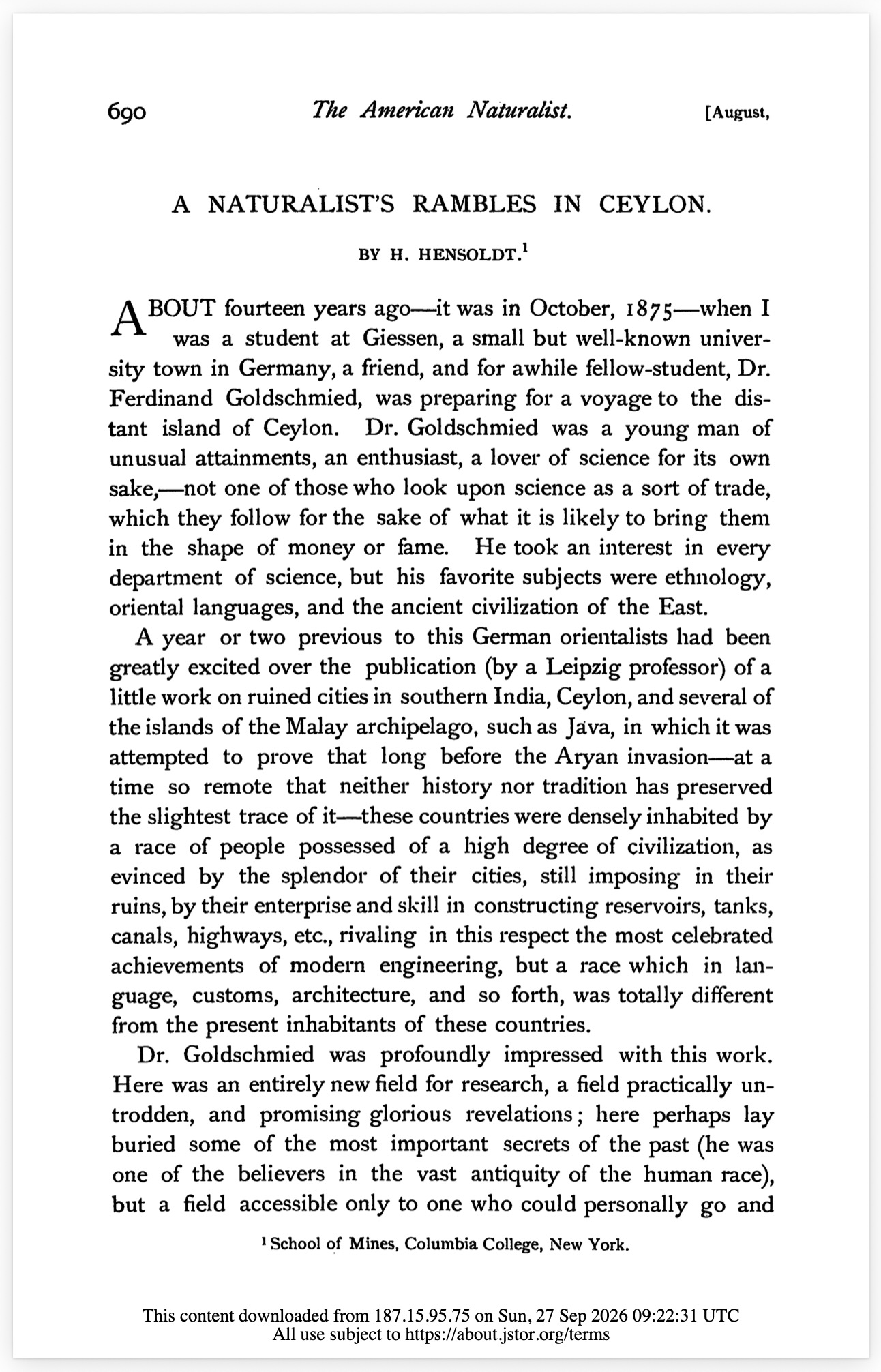
A naturalist's rambles in Ceylon

Journal Article
Hensoldt, H. (1889) A naturalist's rambles in Ceylon. American Naturalist, Vol. 23, No. 272, pp. 690–707.
Record No. 29898  |  Sinkankas/Born No.: NIS/NIB  |  RWHL
Hensoldt recounts observations made during two years of travel in Ceylon beginning in 1875, with particular attention to natural history, geology, religion, and the island’s gem deposits. He describes the central highlands as composed chiefly of ancient metamorphic rocks, including garnetiferous gneiss, and attributes the alluvial gem deposits to weathering of these rocks and subsequent transport by mountain streams. He identifies the Kalu Ganga and Ratnapura as the center of the native gem trade and describes the buried “gem gravel,” from which rubies, sapphires, topazes, cat’s-eyes, garnets, and cinnamon-stones were recovered; he states that diamond was unknown from the island. Hensoldt also provides an eyewitness description of the Temple of the Tooth at Kandy, including reliquaries decorated with large pearls, uncut rubies, sapphires and emeralds, and an enormous hollowed star sapphire said to have been found near Adam’s Peak. He discusses the contemporary gem trade and demand among Indian princes and records the reopening of the Puttalam pearl fishery, where more than 7,000 baskets of oysters were landed during a six-week season.

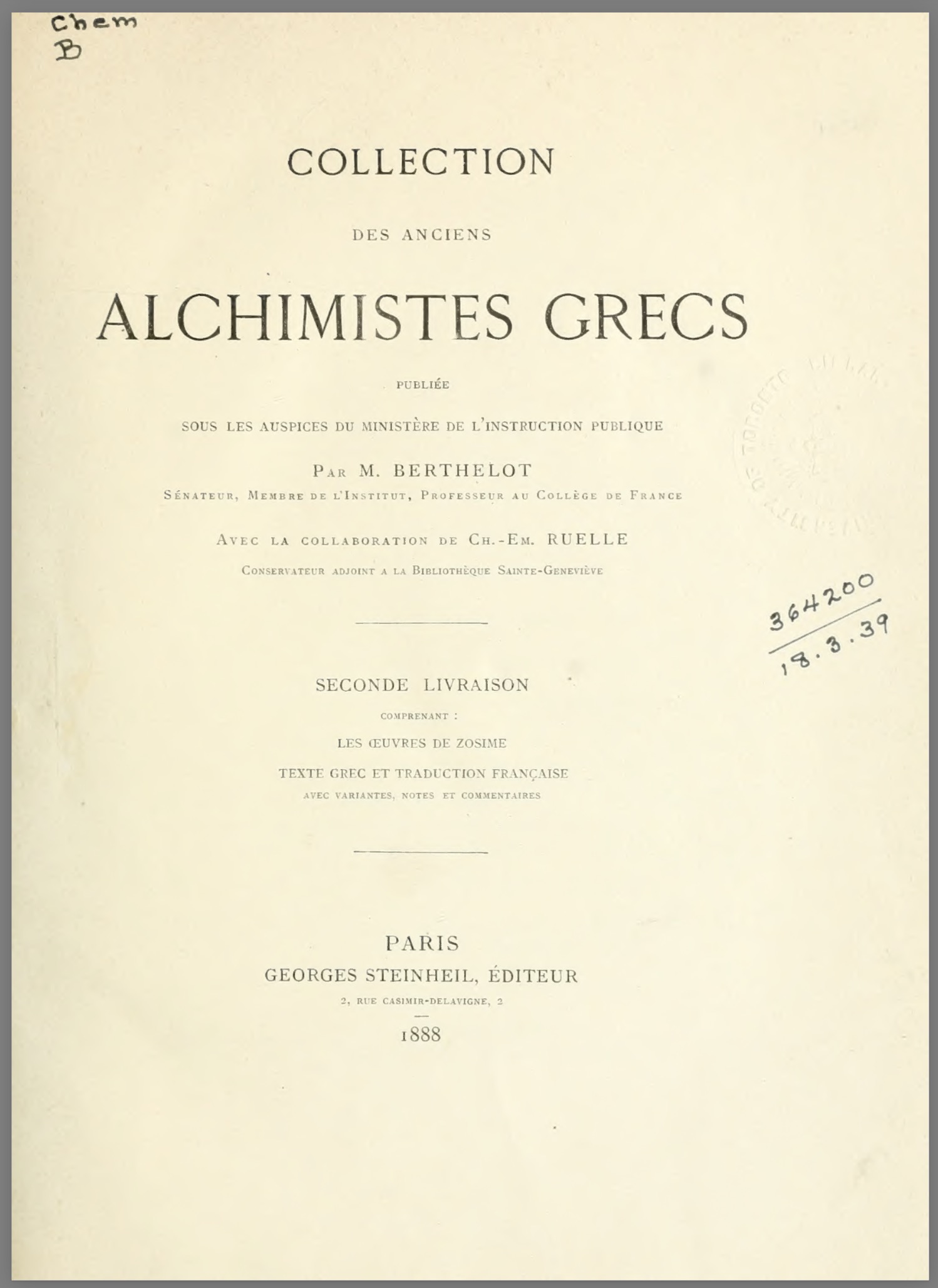
Colection des Anciens Alchimistes Grecs
Collection of the Ancient Greek Alchemists
Book
Berthelot, P.E.M. and Ruelle, C.-É. (1888) Colection des Anciens Alchimistes Grecs. [Collection of the Ancient Greek Alchemists] Paris, G. Steinheil, 3 Vols. + Index
Record No. 17295  |  Sinkankas/Born No.: NIS/NIB  |  Language: in French and Greek  |  RWHL
Berthelot and Ruelle assemble, edit, translate, and interpret the surviving Greek texts relating to ancient alchemy, providing one of the fundamental source collections for the history of early chemistry. The work includes Greek texts with French translations and extensive commentary on the techniques, substances, apparatus, and theories described by Greek and Byzantine alchemical writers. Of particular gemological interest are passages dealing with minerals, metals, coloring processes, and the artificial production or imitation of precious materials, including recipes intended to give stones the appearance and colors of emerald, ruby, sapphire, and other gems. The collection is especially important for documenting ancient methods of dyeing, staining, and otherwise altering stones and glass, and for tracing the relationship between practical craft recipes and the developing theoretical traditions of alchemy.

The ruby-mines of Burmah

Journal Article
Anonymous (1887) The ruby-mines of Burmah. Science, Vol. 9,, January 28 pp. 97–98.
Record No. 2637  |  Sinkankas/Born No.: NIS/NIB  |  RWHL
The article describes the ruby mines of Burma at a moment when British occupation had generated considerable interest in their potential value, drawing largely upon a contemporary account in the London Times together with earlier descriptions by Tavernier, Father D’Amato, and Bredemeyer. Tavernier located the principal workings at Kyat-pyen and reported rubies, spinels, sapphires, and other gems, while noting that fine large rubies were scarce and that the Burmese king reserved the best stones. D’Amato, who visited about 1830, described gem-bearing gravel reached by pits 20–30 feet deep, with mining hindered by water; rubies, sapphires, “topaz,” “oriental emeralds,” and abundant spinels were reported, while valuable stones belonged to the king and some were smuggled out through Chinese and Tartar merchants. More recent reports stated that most rubies weighed less than a quarter carat and that larger stones were generally flawed. Fine sapphires, although rare, were reportedly found weighing 9–13 carats, and the royal monopoly yielded about £15,000 annually in 1856. The Times correspondent remained skeptical that British control and improved mining machinery would necessarily make the deposits highly profitable, citing experience in India and Ceylon as grounds for caution. [97–98]

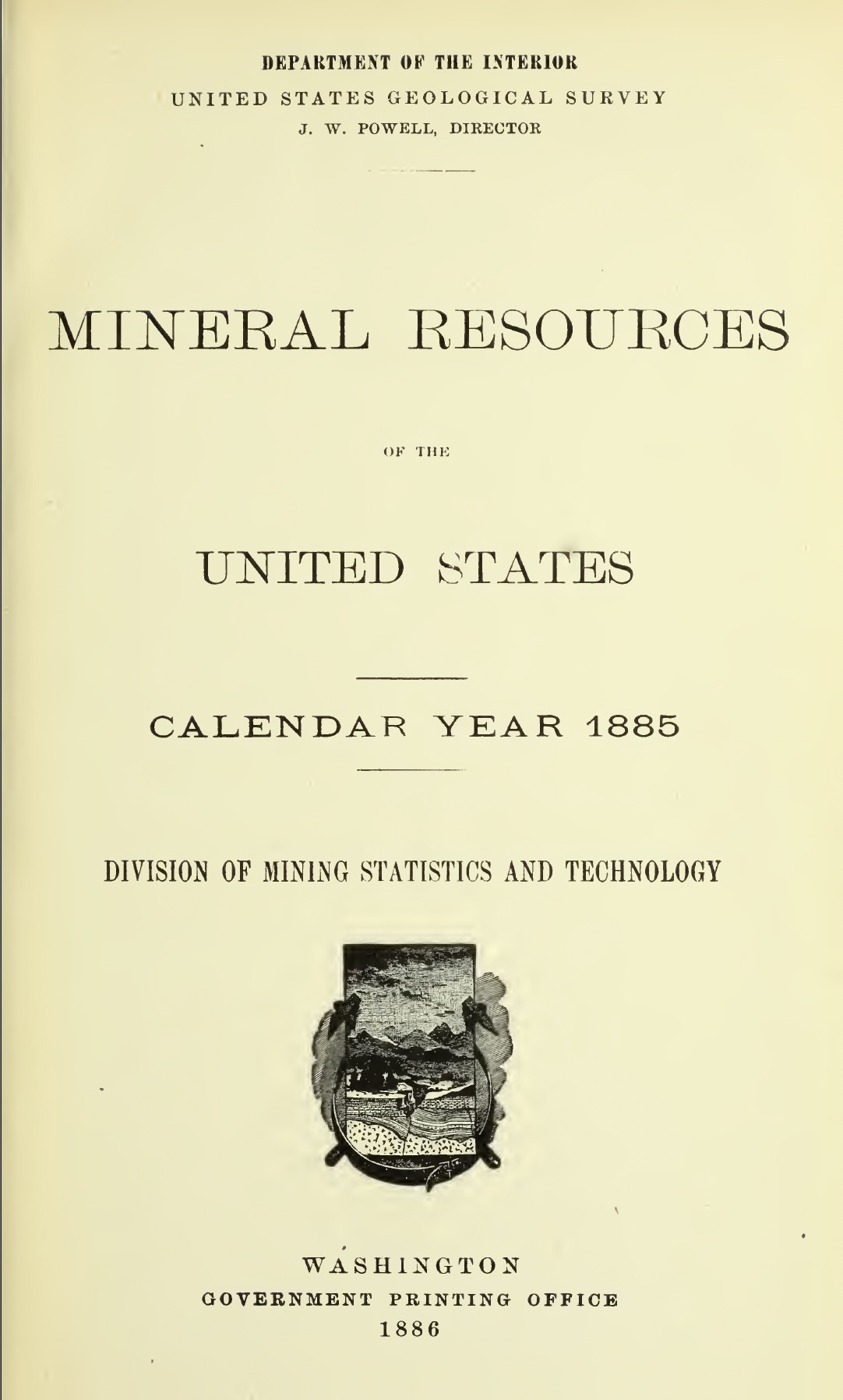
Precious stones

Book Section
Kunz, G.F. (1886) Precious stones. In: Mineral Resources of the United States | Calendar Year 1885, Washington: Govt. Printing Office, pp. 437–444.
Record No. 17010  |  Sinkankas/Born No.: 3601; NIB  |  RWHL
Detailed report by George F. Kunz on the progress in the field of precious stones during 1885, including notable finds and mining activities in various locations such as Maine, North Carolina, Colorado, New Hampshire, Connecticut, and others. It mentions specific discoveries of emeralds, hiddenite, quartz, agates, garnets, jasper, and other minerals. Production of Precious Stones: Estimated production values of various precious stones in the United States for the years 1883, 1884, and 1885, including diamonds, quartz, garnet, pyrite, amazonstone, pipestone, turquois, moss agate, amethyst, jasper, sunstone, fossil coral, and gold quartz. ​Imports: Data on diamonds and other precious stones imported into the United States from 1867 to 1885, including rough or uncut stones, stones not set, and those set in gold or other metals

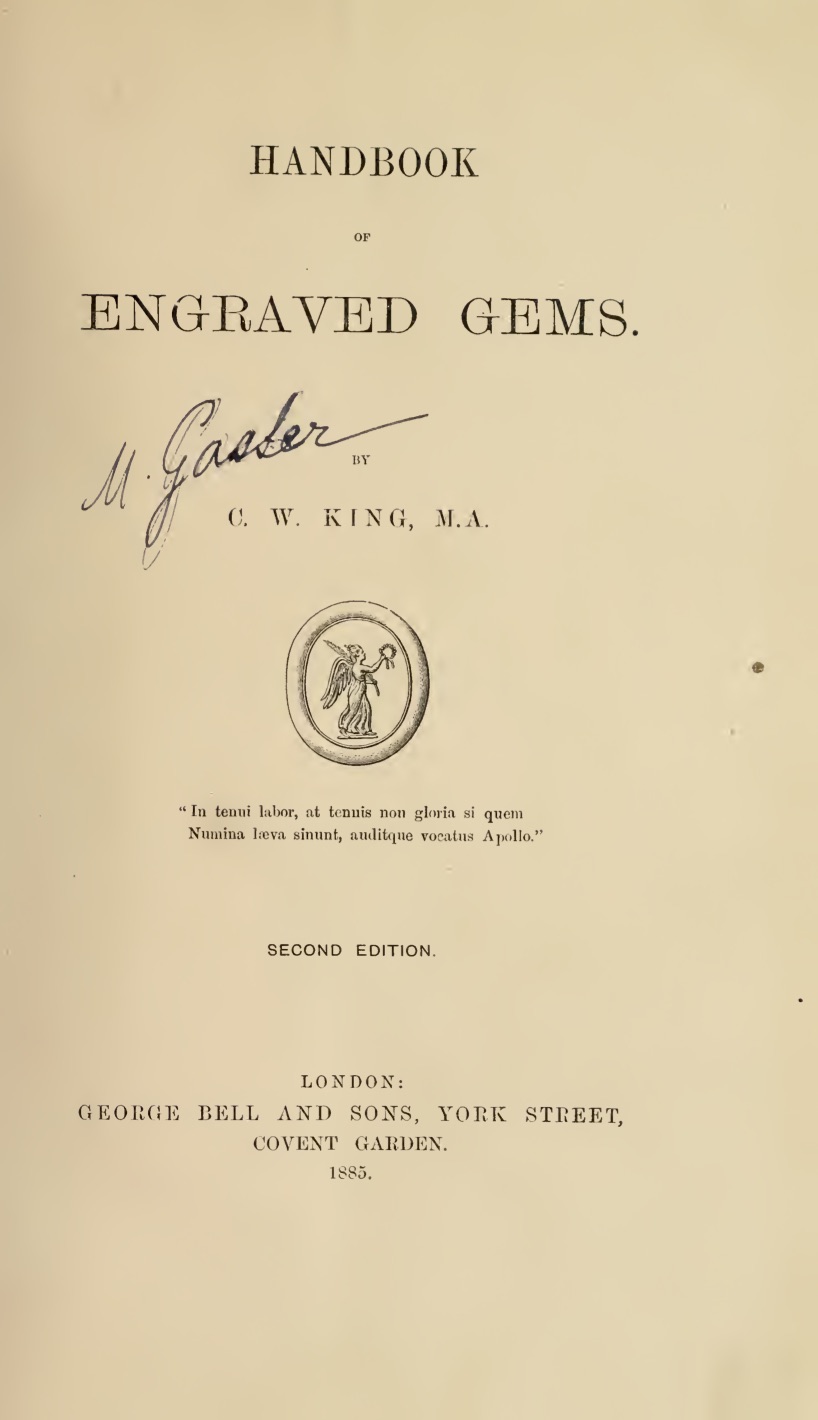
Handbook of Engraved Gems

Book
King, C.W. (1885) Handbook of Engraved Gems. London, George Bell and Sons, 286 pp.
Record No. 2803  |  Sinkankas/Born No.: 3404  |  RWHL
Sinkankas: As in the first edition, the history chapter (pp. 1–133) is the lengthiest. It is followed by sections on famous rings and signets, cabinets of gems, descriptions of plates, and the catalog of artists. There are many changes and additions: the poem of Christodorus is omitted; the plates are entirely new, although in most cases the same gems are illustrated, now classified as Assyrian, Parthian, Sassanian, Indo-Sassanian, Sassanian-Christian, Egyptian, Gnostic, Christian, Phoenician, Etruscan, Greek, etc., with plates illustrating the Apotheosis of Augustus cameo and several other very large cameos, as well as Roman, Medieval, and Renaissance gems. Among the plates are a cameo of jade from Mexico and the “Emerald Vernicle,” or representation of Christ. Another issue differed in omitting the folding frontispiece and substituting the plate formerly tipped in to face p. [1]; the text description, however, was not altered, and the plate itself still bears the note stating that it is to face that page. As usual, both versions appear most commonly in poor condition.

Leisure Hours Among the Gems

Book
Hamlin, A.C. (1884) Leisure Hours Among the Gems. Boston, James R. Good, 439 pp.
Record No. 29488  |  Sinkankas/Born No.: 2695: NIB  |  RWHL
Hamlin presents a broad popular survey of gemstones, combining mineralogical information with historical accounts, legends, famous specimens, mining localities, cutting, valuation, and use in jewelry. He discusses diamonds, rubies, sapphires, emeralds, tourmalines, topaz, garnets, opals, turquoise, pearls, and numerous other ornamental materials, describing their physical properties, colors, geographical sources, and notable examples. Particular attention is given to American gemstones and mineral localities, including the tourmalines of Maine, a subject on which Hamlin had previously written extensively. The work blends contemporary gemological knowledge with anecdotes and historical lore and provides a useful late-nineteenth-century account of popular and commercial attitudes toward precious stones in the United States.

El Gobierno Español fomentó la industria minera de los Estados Unidos de Colombia
The Spanish Government promoted the mining industry of the United States of Colombia
Journal Article
Restrepo, V. (1884) El Gobierno Español fomentó la industria minera de los Estados Unidos de Colombia. [The Spanish Government promoted the mining industry of the United States of Colombia] Revista Minera Metalúrgica, Vol. 35, No. 1.022, pp. 253–254.
Record No. 4270  |  Sinkankas/Born No.: NIS/NIB  |  Language: in Spanish  |  RWHL
Restrepo discusses measures taken by the Spanish government to encourage mining in the territory that later became the United States of Colombia. He draws attention to official efforts to develop mineral resources and promote mining activity, placing these initiatives within the historical development of the Colombian mining industry. The brief article provides contemporary historical commentary on Spanish colonial mining policy and its role in the exploitation of Colombia’s mineral wealth.

De la couleur bleue du saphir, de la lazulite et du lapis-lazuli; de la couleur verte de l’emeraude et la couleur pourpre de l’amthyste
On the blue color of sapphire, lazulite, and lapis lazuli; the green color of emerald, and the purple color of amethyst
Journal Article
Ross, W.A. (1882) De la couleur bleue du saphir, de la lazulite et du lapis-lazuli; de la couleur verte de l’emeraude et la couleur pourpre de l’amthyste. [On the blue color of sapphire, lazulite, and lapis lazuli; the green color of emerald, and the purple color of amethyst] Annales de Chimie et de Physique, Series 5, Vol. 27, pp. 532–536.
Record No. 16990  |  Sinkankas/Born No.: NIS/NIB  |  Language: in French  |  RWHL
Ross discusses the causes of color in sapphire, lazulite, lapis lazuli, emerald, and amethyst, considering the chemical constituents responsible for their characteristic blue, green, and purple hues. He examines contemporary explanations for gemstone coloration and relates color to the presence of small quantities of metallic compounds or other coloring substances within otherwise colorless mineral materials. Particular attention is given to the blue coloration of sapphire and lapis lazuli, the green of emerald, and the purple of amethyst. The paper represents an early attempt to explain gem coloration in chemical terms and illustrates late nineteenth-century ideas concerning the relationship between trace constituents and color in minerals.

Die Indischen Mineralien, Ihre Namen und die Ihnen Zugeschriebenen Kräfte
The Indian Minerals, Their Names and the Powers Attributed to Them
Book
Narahari (or Naraharipandita) and Garbe, R. (1882) Die Indischen Mineralien, Ihre Namen und die Ihnen Zugeschriebenen Kräfte. [The Indian Minerals, Their Names and the Powers Attributed to Them] Leipzig, Verlag Von S. Hirzel, 104 pp.
Record No. 2835  |  Sinkankas/Born No.: 4691; NIB  |  Language: in German  |  RWHL
Sinkankas: Richard von Garbe’s complete work is reproduced in facsimile, including the original title page, and centers on his discovery and translation of a significant Sanskrit treatise on minerals by the Kashmiri physician Narahari. Despite the general absence of Sanskrit monographs on minerals, Garbe uncovered Narahari’s work, a section of the larger encyclopedic text King of Dictionaries, written between 1235 and 1250 AD. The translated extracts are organized into three categories: metals, non-metals, and precious stones, the last of which spans pages 70 to 91 in the German edition. This section includes discussions on the nine classical gemstones of Indian tradition—ruby, pearl, coral, emerald, topaz, diamond, sapphire, hyacinth, and cat’s-eye—as well as other stones like rock crystal, sunstone, moonstone, lapis lazuli, and turquoise. Each entry provides Indian synonyms, medicinal uses, and notes on color and quality, along with astrological associations. Garbe relied extensively on Tagore’s Mani Mala, though he acknowledged its shortcomings and urged cautious use. His translation remains a valuable contribution to early Indian gemological literature and a crucial supplement to Tagore’s work.

A Paper on Corundum and its Gems

Book
Jenks, C.W. (1876) A Paper on Corundum and its Gems. Boston, Press of John Wilson and Son, 17 pp.
Record No. 2793  |  Sinkankas/Born No.: 3204; NIB  |  RWHL
A paper by Charles W. Jenks on corundum and its gem varieties, based largely on his personal observations of the corundum deposits of western North Carolina. Jenks discusses the historical use of corundum as an abrasive, compares its cutting power with emery and diamond, and describes contemporary experiments with manufactured corundum grinding wheels. Much of the paper concerns the North Carolina occurrence, where massive corundum and colored crystals were found together in chloritic veins associated with serpentine; he describes the mine workings, gangue minerals, crystal forms and several unusually large specimens. Jenks also discusses the corundum gem varieties then known under such names as “Oriental” sapphire, ruby, asteria, emerald, topaz and amethyst, and compares the American material with that from Ceylon, India and Burma. The paper is valuable as an early firsthand account of corundum mining in the United States and of the developing industrial and gemological uses of the mineral.

Further notes on “inclusions” in gems, etc.

Journal Article
Lea, I. (1876) Further notes on “inclusions” in gems, etc. Proceedings of the Academy of Natural Sciences of Philadelphia, May, pp. 98–107 (reprinted in Gems & Gemology, Winter, 1955, pp. 230–236, 254).
Record No. 1178  |  ISBN/ISSN: 0016626X  |  Sinkankas/Born No.: 3820; NIB  |  RWHL
A detailed continuation of Isaac Lea’s earlier studies of microscopic inclusions in gemstones and minerals. Drawing on an enlarged personal collection, Lea examines cavities, fluid inclusions and minute enclosed crystals in sapphire, ruby, spinel, emerald, beryl, zircon, moonstone and other gem materials. Of particular importance is his observation that fine sapphires commonly contain abundant acicular crystals and cavities; he relates the oriented needles directly to the intersecting bands that produce the star in asteriated corundum. He also describes inclusions in North Carolina corundum, Ceylon sapphires and spinels, emeralds containing fluid-filled cavities with enclosed cubic crystals, and other distinctive internal features, illustrating many of them on two plates. The paper is an important early contribution to gemstone microscopy and to the recognition of inclusions as diagnostic evidence of a gem’s internal structure and growth history.

Exploring the Literature of Emerald

Emerald literature spans gemology, mineralogy, deposits, identification, treatments, synthesis, history and the gem trade, with important sources covering deposits around the world.

For a curated guide to this subject, read Green Fire — Lotus Gemology's Guide to the Literature of Emerald.

About Four Treasures

Four Treasures is Lotus Gemology's freely accessible gemological reference database. Use the full database to search by author, title or keyword and explore literature on gemology, mineralogy, jewelry and related fields. Where available, hyperlinks on titles may lead directly to the full publication.

Search the Complete Four Treasures Database