Gemology Books Bibliography

Gemology Books Bibliography

Explore books on gems, gemology, jewelry and mineralogy in Four Treasures, the Lotus Gemology reference database. This bibliography brings together matching book records from the collection, with publication details, abstracts and cover images where available.

Gemology Book References

The list below matches books concerning gemology and related subjects in the database's searchable fields. Some works cover several branches of gems, jewelry or mineralogy.
2,541–2,560 of 3,454 matching references

Developments and highlights at GIA’s lab in New York: Flux-grown synthetic rubies
Journal Article
Crowningshield, G.R. (1970) Developments and highlights at GIA’s lab in New York: Flux-grown synthetic rubies. Gems & Gemology, Vol. 13, No. 4, Winter 1969–70, pp. 112–117.
Record No. 629  |  ISBN/ISSN: 0016626X  |  RWHL

Gemological Digests: Sapphires cause new mining boom
Journal Article
Anonymous (1970) Gemological Digests: Sapphires cause new mining boom. Gems & Gemology, Vol. 13, No. 5, Spring, pp. 166–169.
Record No. 311  |  ISBN/ISSN: 0016626X  |  RWHL

The Olmec World

Book
Bernal, I. (1969) The Olmec World. Berkeley, University of California Press, 273 pp.
Record No. 28547  |  ISBN/ISSN: 520028910  |  Sinkankas/Born No.: NIS/NIB  |  RWHL
This is a study of Mesoamerica—Mesoamerica as a whole. Like other great civilizations, it possesses its own history, and like other successful epics it is composed of a number of episodes, a climax, and an ending. We know a great deal about the last scene, and vast chapters have been written about the earlier episodes, but a complete study of its beginnings has never appeared. Hence the present history—fraught with perils since it is an attempt to gather all important (but isolated) data into a coherent whole; dangerous since the explorer is not only drawing a map of newly discovered islands but is forced to chart unknown seas. Archaeological exploration in Mesoamerica, together with other anthropological studies, is, at best, an incomplete map of a number of islands, large and small, in an uncharted ocean. At times, in fact, these isles can hardly be called islands; they seem to be no more than poorly illuminated rocks, jutting out from the depths of a murky sea—the past. Let us trust that there will be a minimum of errors in our factual material. My sources have been basically the reports of field archaeologists. Nevertheless, as Alfred Kroeber said, “No one can really examine all the evidence on any major problem; at least not at first hand. This puts us in a nice fix when, as so often happens, we claim to have reached valid conclusions after having examined and weighed ‘all the evidence.’ I would rather publish as fast as I can feel reasonably sure of my material, even at the risk of errors and uncertainties, so that it will be out where others can shoot at it. Nothing is worth much in any profession until it is published.”

African iron and the Classical world

Book Section
Williams, D. (1969) African iron and the Classical world. In: Africa in Classical Antiquity | Nine Studies, Ibadan, Nigeria: Ibadan University Press, pp. 62–80.
Record No. 26400  |  Sinkankas/Born No.: NIS/NIB  |  RWHL
The Classical Review: This volume brings together nine papers by scholars connected with the Department of Classics at Ibadan, aimed at Classical scholars, Africanists, and West African students. Several essays are general overviews intended to introduce students to modern research on contentious subjects or fields where source material is scarce—such as J. Ferguson’s discussions on early Christianity in North Africa and the influence of Greek thought on Islam. The papers reflect individual interests rather than a unified theme, though Ferguson’s “Classical Contacts with West Africa” naturally opens the collection, addressing a crucial question in the region’s prehistory: the extent of contact between West Africa and the classical Mediterranean. While Ferguson surveys linguistic and religious parallels and known Carthaginian trade along the Atlantic coast, much of the evidence remains fragmentary and speculative. The notable absence of Roman interest in West African gold, despite Carthaginian efforts, is highlighted, as is the importance of the Mogador site, with its layered Mediterranean connections from the 6th century BCE to the Roman period. Ferguson rightly emphasizes archaeology as the key to future discoveries. D. Williams’ “African Iron and the Classical World” explores the possible transmission of iron-smelting techniques, comparing Meroitic and Niger-area furnaces to Aegean and Celtic types, though he remains cautious about suggesting direct links. L. Thompson’s contribution outlines clear and sustained contact between eastern Africa and the Graeco-Roman world—especially via Egypt and the Nile—contrasting it with the sporadic and largely inconsequential trans-Saharan interactions in the west, where the desert posed a persistent barrier to lasting cultural or economic exchange.

Eastern Africa and the Graeco-Roman world (to A.D. 641)
Book Section
Thompson, L.A. (1969) Eastern Africa and the Graeco-Roman world (to A.D. 641). In: Africa in Classical Antiquity | Nine Studies, Ibadan, Nigeria: Ibadan University Press, pp. 26–61.
Record No. 26399  |  Sinkankas/Born No.: NIS/NIB  |  RWHL
The Classical Review: This volume brings together nine papers by scholars connected with the Department of Classics at Ibadan, aimed at Classical scholars, Africanists, and West African students. Several essays are general overviews intended to introduce students to modern research on contentious subjects or fields where source material is scarce—such as J. Ferguson’s discussions on early Christianity in North Africa and the influence of Greek thought on Islam. The papers reflect individual interests rather than a unified theme, though Ferguson’s “Classical Contacts with West Africa” naturally opens the collection, addressing a crucial question in the region’s prehistory: the extent of contact between West Africa and the classical Mediterranean. While Ferguson surveys linguistic and religious parallels and known Carthaginian trade along the Atlantic coast, much of the evidence remains fragmentary and speculative. The notable absence of Roman interest in West African gold, despite Carthaginian efforts, is highlighted, as is the importance of the Mogador site, with its layered Mediterranean connections from the 6th century BCE to the Roman period. Ferguson rightly emphasizes archaeology as the key to future discoveries. D. Williams’ “African Iron and the Classical World” explores the possible transmission of iron-smelting techniques, comparing Meroitic and Niger-area furnaces to Aegean and Celtic types, though he remains cautious about suggesting direct links. L. Thompson’s contribution outlines clear and sustained contact between eastern Africa and the Graeco-Roman world—especially via Egypt and the Nile—contrasting it with the sporadic and largely inconsequential trans-Saharan interactions in the west, where the desert posed a persistent barrier to lasting cultural or economic exchange.

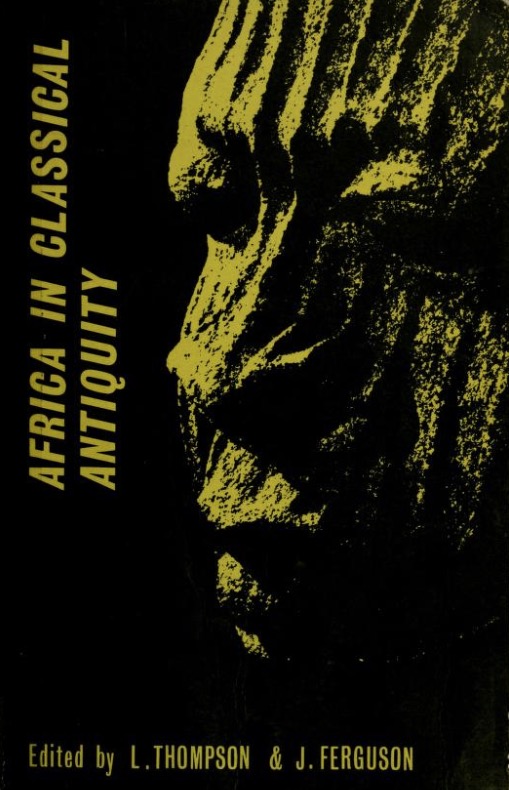
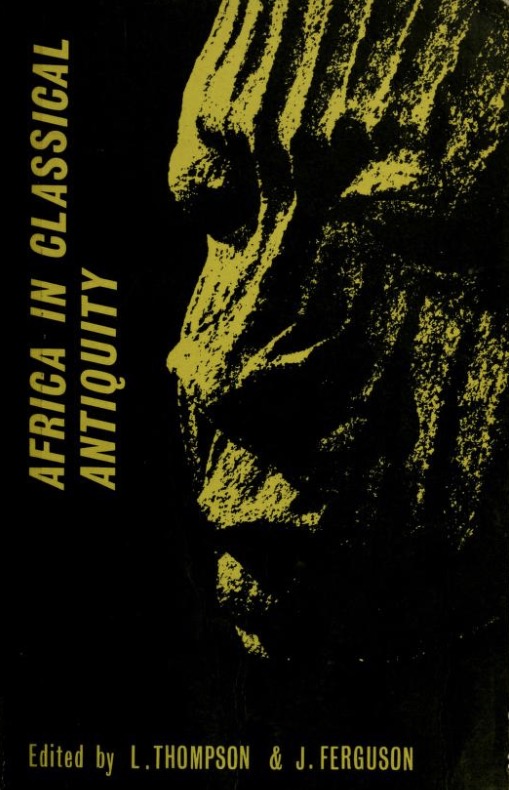
Africa in Classical Antiquity | Nine Studies
Edited Book
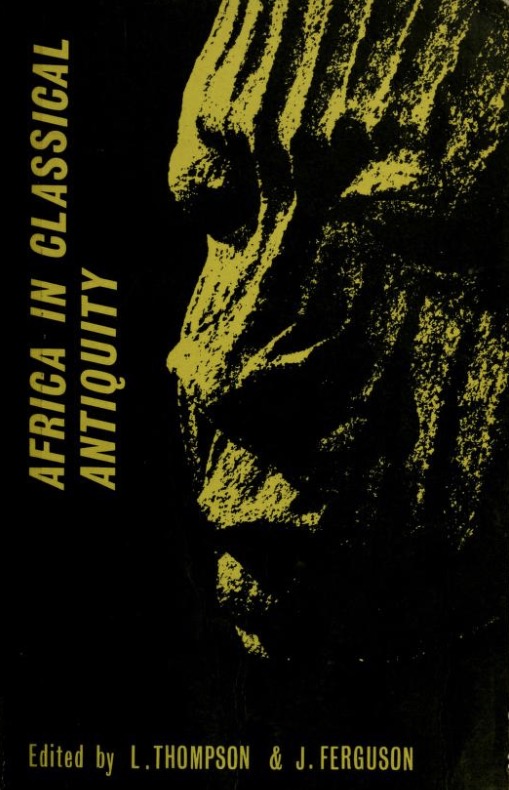
Ferguson, J. and Thompson, L.A., editor (1969) Africa in Classical Antiquity | Nine Studies.. Ibadan, Nigeria, Ibadan University Press, 221 pp..
Record No. 26398  |  Sinkankas/Born No.: NIS/NIB  |  RWHL
Classical Review: This volume brings together nine papers by scholars connected with the Department of Classics at Ibadan, aimed at Classical scholars, Africanists, and West African students. Several essays are general overviews intended to introduce students to modern research on contentious subjects or fields where source material is scarce—such as J. Ferguson’s discussions on early Christianity in North Africa and the influence of Greek thought on Islam. The papers reflect individual interests rather than a unified theme, though Ferguson’s “Classical Contacts with West Africa” naturally opens the collection, addressing a crucial question in the region’s prehistory: the extent of contact between West Africa and the classical Mediterranean. While Ferguson surveys linguistic and religious parallels and known Carthaginian trade along the Atlantic coast, much of the evidence remains fragmentary and speculative. The notable absence of Roman interest in West African gold, despite Carthaginian efforts, is highlighted, as is the importance of the Mogador site, with its layered Mediterranean connections from the 6th century BCE to the Roman period. Ferguson rightly emphasizes archaeology as the key to future discoveries. D. Williams’ “African Iron and the Classical World” explores the possible transmission of iron-smelting techniques, comparing Meroitic and Niger-area furnaces to Aegean and Celtic types, though he remains cautious about suggesting direct links. L. Thompson’s contribution outlines clear and sustained contact between eastern Africa and the Graeco-Roman world—especially via Egypt and the Nile—contrasting it with the sporadic and largely inconsequential trans-Saharan interactions in the west, where the desert posed a persistent barrier to lasting cultural or economic exchange.

Classical contacts with West Africa

Book Section
Ferguson, J. (1969) Classical contacts with West Africa. In: Africa in Classical Antiquity | Nine Studies, Ibadan, Nigeria: Ibadan University Press, pp. 1–25.
Record No. 26397  |  Sinkankas/Born No.: NIS/NIB  |  RWHL
Classical Review: This volume brings together nine papers by scholars connected with the Department of Classics at Ibadan, aimed at Classical scholars, Africanists, and West African students. Several essays are general overviews intended to introduce students to modern research on contentious subjects or fields where source material is scarce—such as J. Ferguson’s discussions on early Christianity in North Africa and the influence of Greek thought on Islam. The papers reflect individual interests rather than a unified theme, though Ferguson’s “Classical Contacts with West Africa” naturally opens the collection, addressing a crucial question in the region’s prehistory: the extent of contact between West Africa and the classical Mediterranean. While Ferguson surveys linguistic and religious parallels and known Carthaginian trade along the Atlantic coast, much of the evidence remains fragmentary and speculative. The notable absence of Roman interest in West African gold, despite Carthaginian efforts, is highlighted, as is the importance of the Mogador site, with its layered Mediterranean connections from the 6th century BCE to the Roman period. Ferguson rightly emphasizes archaeology as the key to future discoveries. D. Williams’ “African Iron and the Classical World” explores the possible transmission of iron-smelting techniques, comparing Meroitic and Niger-area furnaces to Aegean and Celtic types, though he remains cautious about suggesting direct links. L. Thompson’s contribution outlines clear and sustained contact between eastern Africa and the Graeco-Roman world—especially via Egypt and the Nile—contrasting it with the sporadic and largely inconsequential trans-Saharan interactions in the west, where the desert posed a persistent barrier to lasting cultural or economic exchange.

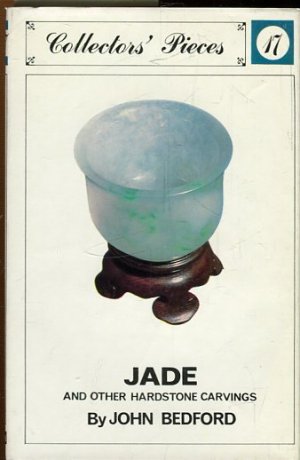
Jade and Other Hardstone Carvings

Book
Bedford, J. (1969) Jade and Other Hardstone Carvings., Littlehampton Book Services Ltd, 64 pp.
Record No. 3979  |  ISBN/ISSN: 9780300000000  |  Sinkankas/Born No.: 519; Born: pp. 70–71  |  RWHL
Bedford provides a concise introduction to jade and other hardstone carvings for collectors, discussing the materials employed, their identification, workmanship, dating, and appreciation. Particular attention is given to Chinese jade carving, including the distinction between nephrite and jadeite, characteristic forms and decorative motifs, and the changing styles of different periods. Other hardstones and related carved materials are considered alongside jade, with examples illustrating differences in material, technique, and artistic treatment. Written primarily as a collector’s guide rather than a technical gemological study, the book offers an introduction to assessing carved hardstones in their historical and artistic context.

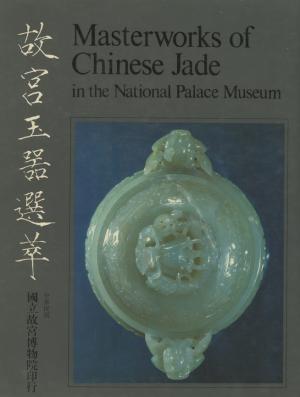
Masterworks of Chinese Jade in the National Palace Museum
Book
National Palace Museum (1969) Masterworks of Chinese Jade in the National Palace Museum. Taipei, National Palace Museum, 92 pp.
Record No. 3555  |  Sinkankas/Born No.: 4714; Born: p. 247  |  Language: in Chinese, Japanese, and English  |  RWHL
Sinkankas: Excellent color photographs illustrating 50 objects carved from nephrite, jadeite, several from agate and “black crystal,” with brief descriptions and dimensions in text. Summary in G. M. Born, 1982, [247], who attributes the work to Na Chih-liang; Yang [2062]; Journal of Gemmology, [13] (8), 1973, [333–4].

About our cover: 7825 ct. Jugoslavian purplish-pink ruby
Journal Article
Ruzic, R.H. (1969) About our cover: 7825 ct. Jugoslavian purplish-pink ruby. Lapidary Journal, Vol. 23, September, p. 786.
Record No. 1514  |  RWHL
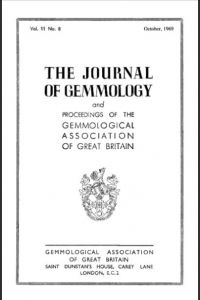
Ruzic describes an extraordinary 7,825-carat purplish-pink ruby from Yugoslavia featured on the cover of the Lapidary Journal. The brief note discusses the exceptionally large specimen, its color and appearance, and its significance as an unusual example of corundum from Yugoslavia. The article is primarily a description of the cover specimen rather than a detailed mineralogical or gemological study.

Corundum from Malawi

Journal Article
Rutland, E.H. (1969) Corundum from Malawi. Journal of Gemmology, Vol. 11, No. 8, October, pp. 320–323.
Record No. 1507  |  ISBN/ISSN: 221252  |  RWHL
Rutland describes gem-quality corundum from Chimwadzulu Hill in southern Malawi, where mining began in 1965 following earlier geological investigation. The corundum occurs in situ in epidotized amphibolite and in residual and eluvial concentrations produced by weathering; rounded crystals also occur in fine-grained granulary matrix within a dike-like body. The crystals are generally rhombohedral, commonly with basal parting and triangular growth figures, and range in color from pink through yellow and pale green to dark greyish green, with some showing pronounced color zoning. Cut stones examined included blue, pale bluish green, and red specimens, with refractive indices of approximately 1.760–1.770 and densities of 3.88–4.13. Dichroism, absorption spectra, and X-ray fluorescence analyses are reported; iron was prominent in the blue stones, while red material contained chromium. The stones showed no fluorescence under long-wave ultraviolet light, while some fluoresced under short-wave radiation. Rutland also reports that parcels cut in London produced attractive stones, some up to about 12 carats, although many contained veils and sharp internal flaws; the finest colors were described as a very fine rich blue and a dark iron blue, with pinks much smaller and red stones pale but of very good color reminiscent of good Siam material.

The largest gems in the crown jewels of Iran
Journal Article
Meen, V.B. (1969) The largest gems in the crown jewels of Iran. Gems & Gemology, Vol. 13, No. 1, Spring, pp. 2–14.
Record No. 1250  |  ISBN/ISSN: 0016626X  |  Sinkankas/Born No.: NIS/NIB  |  RWHL
Meen describes and documents the largest and most important gemstones in the Iranian Crown Jewels, drawing upon his examination of the collection in Tehran. Particular attention is given to exceptional diamonds, emeralds, rubies, sapphires, spinels, and other large gems, with discussion of their weights, dimensions, colors, forms, and settings. The article places these stones within the extraordinary accumulation of loose gems and jeweled objects assembled by successive Persian rulers and comments on problems of identification and nomenclature among historically celebrated stones. Illustrated with photographs of major specimens, the paper provides an important gemological record of outstanding stones in the Iranian treasury and complements the broader historical documentation of the Crown Jewels of Iran.

Developments and highlights at the Gem Trade Lab in Los Angeles: Montana sapphire doublets
Journal Article
Liddicoat, R.T. (1969) Developments and highlights at the Gem Trade Lab in Los Angeles: Montana sapphire doublets. Gems & Gemology, Vol. 13, No. 1, Spring, p. 24.
Record No. 1185  |  ISBN/ISSN: 0016626X  |  Sinkankas/Born No.: NIS/NIB  |  RWHL
Liddicoat reports an unusual assembled stone examined by the Gem Trade Laboratory in Los Angeles consisting of Montana sapphire used in a doublet. The brief laboratory note describes the construction and appearance of the composite and the features that permit its recognition under gemological examination. The specimen illustrates the variety of assembled stones encountered in the gem trade and emphasizes the importance of careful examination for junction planes and other evidence of composite construction when identifying apparently natural sapphire.

La minéralogie des gemmes à l’Université de Rangoon
The mineralogy of gemstones at the University of Rangoon.
Journal Article
Jobbins, E.A. (1969) La minéralogie des gemmes à l’Université de Rangoon. [The mineralogy of gemstones at the University of Rangoon.] Nature, Resources, France (UNESCO), Vol. 5, No. 3, pp. 19–20.
Record No. 1064  |  Sinkankas/Born No.: NIS/NIB  |  Language: in French  |  RWHL
Jobbins describes a UNESCO mission to the University of Rangoon in 1967–68 to establish and develop gemmological teaching, research, and collections in Burma, a country with a long history of ruby, jade, and other gemstone production. The project created a gem-testing laboratory equipped for student instruction and research, established systematic collections of gemstones and minerals, and introduced procedures for their identification, cataloguing, storage, and curation. Courses were planned for final-year geology students, postgraduate students, and research workers, with the curriculum based largely on the Diploma syllabus of the Gemmological Association of Great Britain and emphasizing mineralogy, crystallography, gemstone identification, and the geology and mineralogy of Burmese deposits. The programme also aimed to strengthen applied geology teaching at Rangoon Arts and Science University in such fields as geochemistry, geophysics, mining, advanced mineralogy, laboratory techniques, and curation. By the end of the mission, a well-equipped gemmological laboratory had been established and fifteen students, including three staff members, had been trained to professional level, providing Burma with a foundation for further gemmological education and research connected with the development of its gemstone resources.

On the nature of mineral inclusions in gemstones, parts I–II
Journal Article
Gübelin, E.J. (1969) On the nature of mineral inclusions in gemstones, parts I–II. Gems & Gemology, Vol. 13, No. 2, Summer, pp. 42–56, color plates A–D; No. 3, Fall, pp. 74–88, color plates E–H.
Record No. 890  |  ISBN/ISSN: 0016626X  |  Sinkankas/Born No.: NIS/NIB  |  RWHL
Gübelin examines the nature and gemological significance of mineral inclusions in gemstones, emphasizing that inclusions are integral records of the conditions under which their host crystals formed. The two-part article discusses the identification, morphology, and genetic relationships of included minerals and explains how their crystal form, orientation, alteration, and association with other internal features can provide evidence concerning the origin and geological history of a gemstone. Numerous photomicrographs, including color plates, illustrate characteristic mineral inclusions in important gem species. Particular attention is given to the value of inclusions in distinguishing natural gemstones and in determining geographic or geological origin where sufficiently diagnostic inclusion assemblages occur. The study demonstrates the importance of systematic inclusion microscopy both as a practical gemological tool and as a means of investigating gemstone genesis.

Developments and Highlights at the Gem Trade Lab in New York: X-ray bombarded sapphires
Journal Article
Crowningshield, G.R. (1969) Developments and Highlights at the Gem Trade Lab in New York: X-ray bombarded sapphires. Gems & Gemology, Vol. 13, No. 2, Summer, p. 57.
Record No. 628  |  ISBN/ISSN: 0016626X  |  RWHL
Crowningshield reports on sapphires subjected to X-ray bombardment and the resulting changes observed in their color. The note discusses irradiation as a cause of altered coloration in corundum and the gemological implications of such treatment, particularly the need to distinguish artificially induced color from natural coloration. As part of the Gem Trade Laboratory’s continuing series on unusual or noteworthy stones submitted for examination, the report documents experimental or treated sapphires encountered by the laboratory and draws attention to irradiation as a factor that must be considered when examining sapphire color.

Ransom and Gems: The DeLong Ruby Story
Book
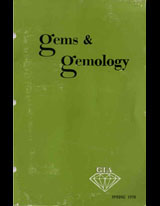
Antel, F.P. (1969) Ransom and Gems: The DeLong Ruby Story. Palm Beach, FL, Literary Investment Guild, 193 pp.
Record No. 380  |  Sinkankas/Born No.: 172; NIB  |  RWHL
Antel recounts the celebrated theft and recovery of the DeLong Star Ruby, one of the notable gems of the American Museum of Natural History, stolen from the J. P. Morgan Hall of Gems in New York in 1964 together with the Star of India and other valuable stones. The narrative follows the robbery, investigation, negotiations for the ruby’s return, and payment of a ransom that ultimately led to its recovery. Written as a true-crime account rather than a gemological study, the book provides a detailed contemporary history of the DeLong Ruby and the circumstances surrounding one of the most spectacular gemstone thefts of the twentieth century.

Kashan flux grown rubies

Journal Article
Anonymous (1969) Kashan flux grown rubies. Gems & Gemology, Vol. 13, No. 1, Spring, pp. 30–34.
Record No. 310  |  ISBN/ISSN: 0016626X  |  RWHL
Describes the Kashan synthetic rubies produced by the flux-growth process and examines the features by which they may be distinguished from natural ruby. The material shows the color and general appearance of fine natural ruby, making recognition potentially difficult without careful examination. Particular attention is given to characteristic internal features associated with flux growth, including residual flux and distinctive growth structures, and to their value in separating the synthetic stones from natural corundum. The article emphasizes the gemological importance of recognizing these diagnostic inclusions as flux-grown synthetic rubies became commercially available. One of the first references to Kashan synthetic rubies

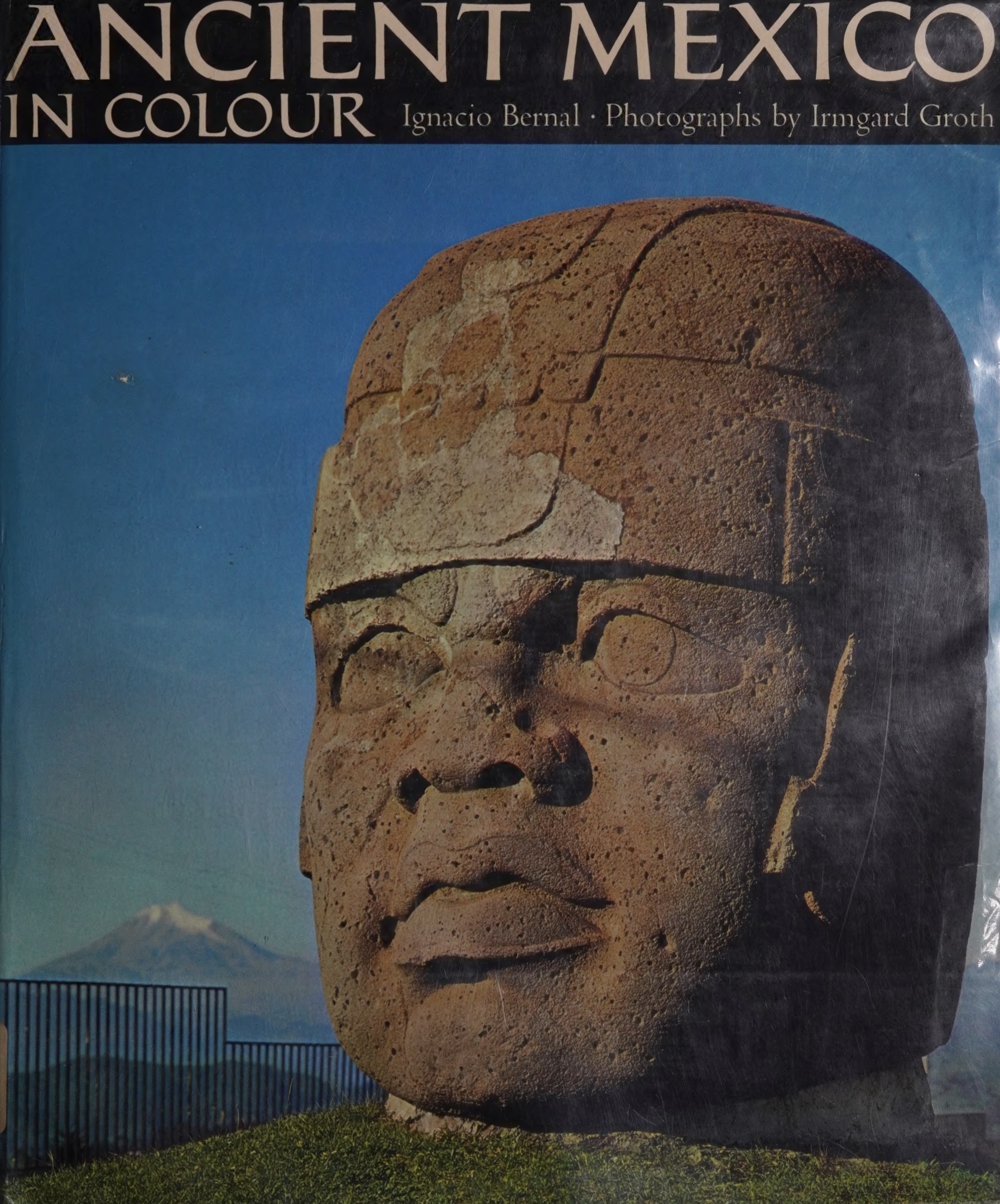
Ancient Mexico in Colour

Book
Bernal, I. (1968) Ancient Mexico in Colour. New York, McGraw-Hill, 159 pp.
Record No. 28504  |  Sinkankas/Born No.: NIS/NIB  |  RWHL
Until recent times we knew little about the remarkable heritage of the ancient Mexican civilizations. Now, thanks to the enthusiasm of pioneer explorers and the still continuing labors of archaeologists (including the author of this book), the art and architecture of the early inhabitants of Mexico and its neighboring regions have been reclaimed from the jungle and, after centuries of neglect, revealed to the modern world. The origins of these peoples, however, are still mysterious. The first settlers are believed to have travelled from Asia across the Bering Strait into America thousands of years ago, and to have spread southward. But it was not until the rise of the Olmecs (whose golden age was between 800 and 400 B.C.) that urban societies developed in the region. Dr. Bernal, who is Director of the National Museum of Anthropology in Mexico, therefore opens his historical account with the Olmecs; he ends with the extinction of their civilization in 1519, when the last Aztec emperor, Moctezuma, was tricked into submission by the Spanish invaders. Dr. Bernal explains how the artistic creations of these strange, sophisticated peoples are closely related to their social structure and to the religious beliefs which dominated their lives. The author has also written detailed commentaries on the magnificent photographs, whose subjects were chosen by him and which were taken by Mrs. Irmgard Groth, a gifted photographer whose special field is Mexican archaeology. In these plates we see the extraordinary sculpture of the Olmecs; the Pyramid of the Moon of Teotihuacan; the Maya temples of Palenque; the Pyramid of the Niches of Tajín on the Gulf Coast; the temples at the great city of Chichén Itzá; the gold ornaments of the Mixtecs at Monte Albán; the temple carved by the Aztecs out of the cliff side at Malinalco; and many other buildings and artifacts, the surviving testimonials—sometimes exquisite, sometimes awe-inspiring—to the greatness of a long-vanished culture.

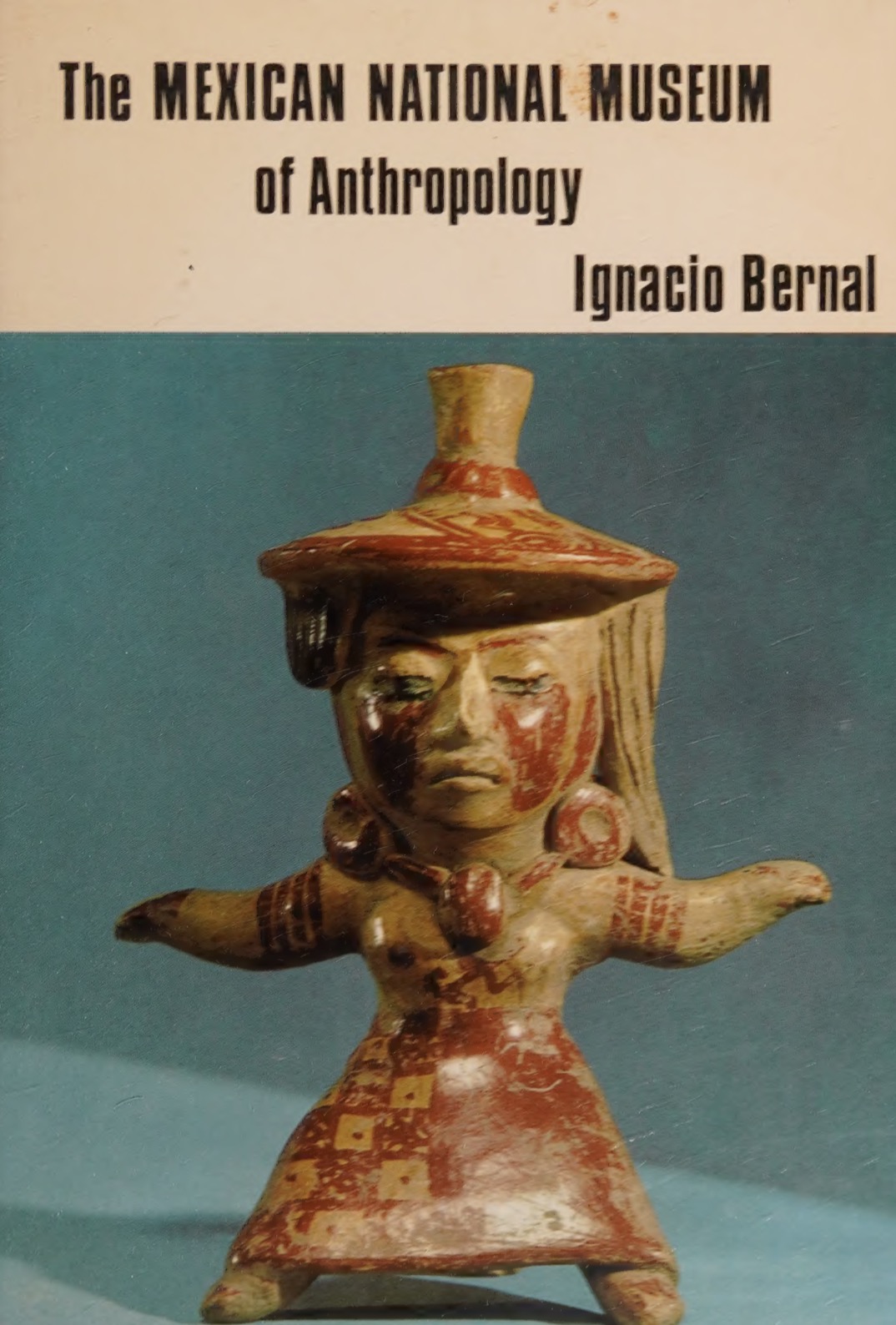
The Mexican National Museum of Anthropology

Book
Bernal, I. (1968) The Mexican National Museum of Anthropology. London, Thames and Hudson, 216 pp.
Record No. 28399  |  ISBN/ISSN: 9683801013  |  Sinkankas/Born No.: NIS/NIB  |  RWHL
The study of anthropology — although not yet known by that name — has been pursued in Mexico for many centuries. Soon after the Spanish conquest, friars, missionaries, conquerors and descendants of the indigenous nobility who had received a European-style education began recording their experiences, compiling grammars and vocabularies of the various languages spoken in Mesoamerica and writing histories of their ancestors. By the middle of the sixteenth century, enterprising scholars had begun assembling what they could of ancient myths and legends, customs and traditions, creating an exceptionally rich corpus of documents of many kinds. The most remarkable of these scholars, Fray Bernardino de Sahagún (c. 1499–1590), drew assiduously upon a wide variety of local sources and gathered so much material that he was able to compose a vast ethnological treatise on the region that, in my opinion, remains without equal. The purpose of this immense labour of investigation and preservation was not solely academic. For the Spaniards, it arose from the need to understand the conquered peoples upon whom the new colony was founded; for the indigenous population, it was a means of recalling past glories and at times obtaining favours and advantages from the new political authorities. By the beginning of the seventeenth century, however, this great intellectual movement had come to an end.

Building a Gemological Library

Gemological books range from general identification manuals and textbooks to specialized works on individual gems, mineralogy, jewelry, treatments, synthesis, history and gem-producing regions.

For a curated selection of particularly useful books, read The Gemologist's Core Library — Classic Books on Gemology, Jewelry and Mineralogy.

About Four Treasures

Four Treasures is Lotus Gemology's freely accessible gemological reference database. Use the full database to search by author, title or keyword and explore literature on gemology, mineralogy, jewelry and related fields. Where available, hyperlinks on titles may lead directly to the full publication.

Search the Complete Four Treasures Database