Gemology Books Bibliography

Gemology Books Bibliography

Explore books on gems, gemology, jewelry and mineralogy in Four Treasures, the Lotus Gemology reference database. This bibliography brings together matching book records from the collection, with publication details, abstracts and cover images where available.

Gemology Book References

The list below matches books concerning gemology and related subjects in the database's searchable fields. Some works cover several branches of gems, jewelry or mineralogy.
2,561–2,580 of 3,454 matching references

Lapis lazuli in early Egypt

Journal Article
Payne, J.C. (1968) Lapis lazuli in early Egypt. Iraq, Vol. 30, No. 1, Spring, pp. 58–61.
Record No. 27141  |  DOI: https://doi.org/10.2307/4199837  |  Sinkankas/Born No.: NIS/NIB  |  RWHL
There appears to be a striking resemblance between the use of lapis lazuli in Iraq and that in Egypt during the Predynastic period and the early dynasties. Lapis lazuli, among other exotic materials, is well-known during the Gerzean period in Egypt. There is hardly a cemetery of the period that has not produced lazuli beads, from Gerzeh itself, in the north, to Bahan, just south of the first cataract. It was, however, not in common use; at Naqada itself, where some 2000 graves make up the largest predynastic cemetery known, lapis lazuli was found in only II graves. Its first appearance dates from early in the Gerzean period, in Petrie's S.D. 40. Its associations during this period are interesting. Lapis lazuli beads were strung together with an imported Mesopotamian cylinder seal found in grave T29 at Naqada. Lazuli fly-amulets form another link with Iraq. Lazuli beads were found in grave 836 at Naqada (dating from the end of this period) with a copper dagger blade quite unlike the other predynastic specimens known; similar daggers dating from about this period have been found outside Egypt. Finally, it is often found in association with gold, but so far not with silver. The general impression is that lapis lazuli is found in richer graves, in association with other foreign elements.

The Indus Civilization

Book
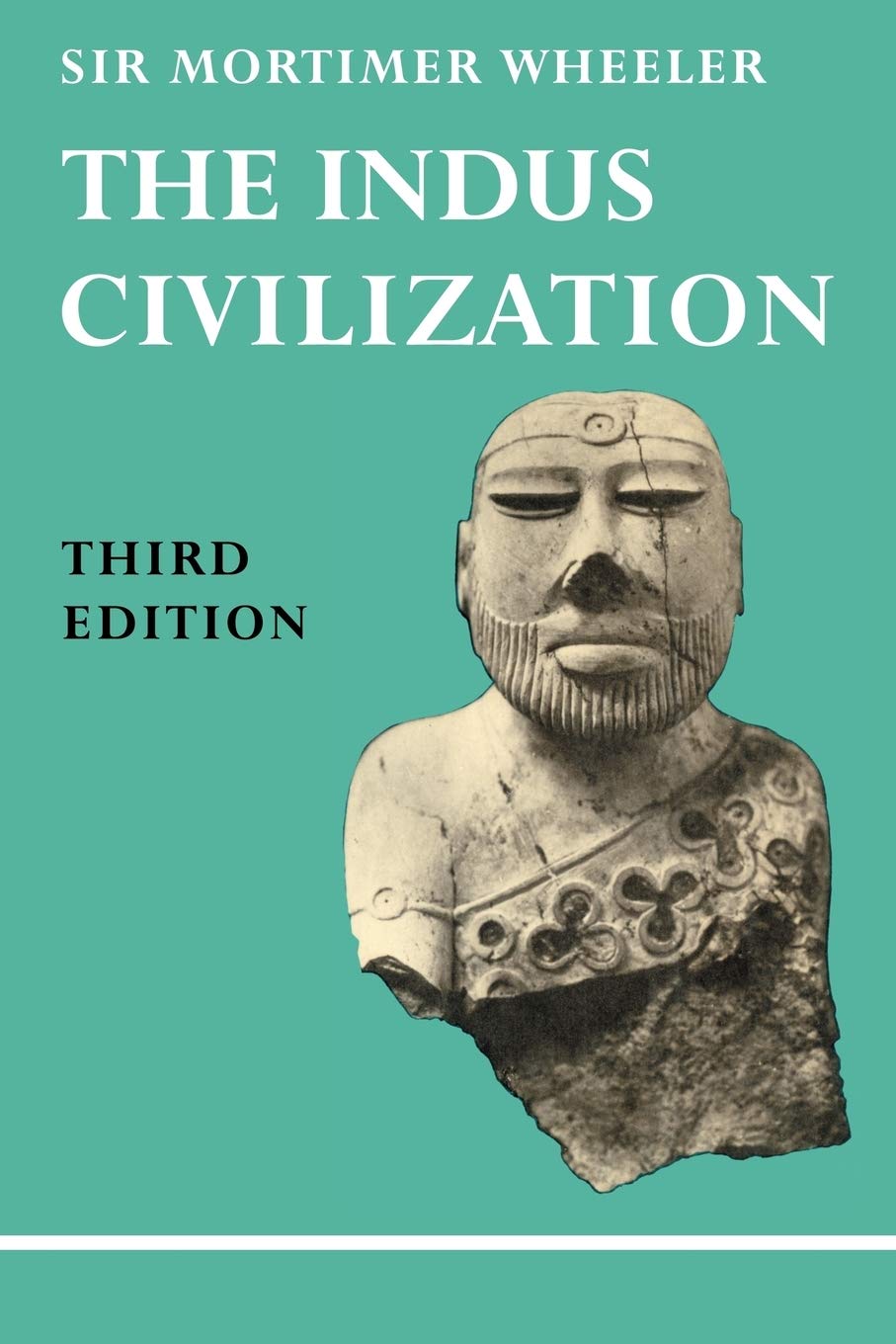
Wheeler, M. (1968) The Indus Civilization. Cambridge, Cambridge University Press, 156 pp.
Record No. 27113  |  ISBN/ISSN: 9780520000000  |  Sinkankas/Born No.: NIS/NIB  |  RWHL
In 1921 at Harappa, a small town in the Punjab, and in 1922 at Mohenjo-daro in Sind, evidence was discovered of an evolved urban culture nearly two thousand years older than any previously recognized in the Indo-Pakistan subcontinent. From the distribution of the sites first explored, the culture was named the Indus Valley civilization. This name it retains, although subsequent research has revealed elements of the civilization on the one hand westwards to the Makran coast and Saurashtra, and on the other hand eastwards into the valley of the Yamuna (Jumna). Thus amplified, the civilization is appreciably larger than its contemporaries in Iraq and Egypt. In this digital reprint of the 1968 third edition, Sir Mortimer Wheeler summarized other contributions to the study of the Indus civilization, and included discussions on climate and dating. The book includes well over 50 photographs of pottery, sculpture and sites.

Lapis lazuli: The early phases of its trade
Journal Article
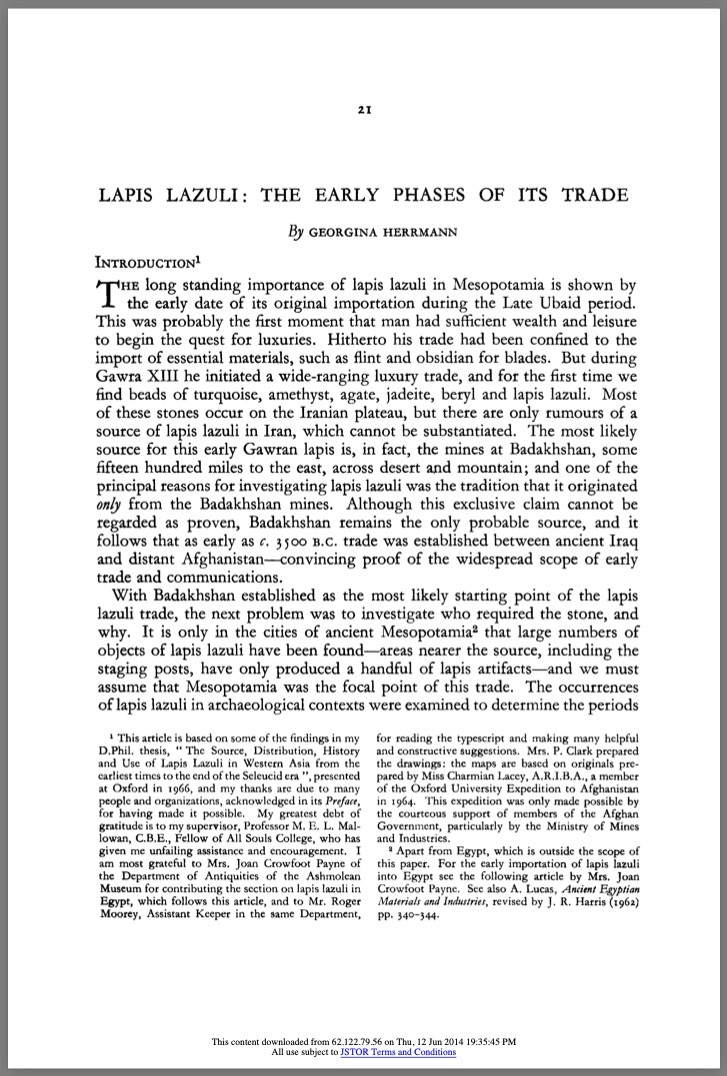
Herrmann, G. (1968) Lapis lazuli: The early phases of its trade. Iraq, Vol. 30, No. 1, pp. 21–57.
Record No. 17213  |  Sinkankas/Born No.: NIS/NIB  |  RWHL
The long-standing importance of lapis lazuli in Mesopotamia is evident from its early importation during the Late Ubaid period, likely marking the first time humans possessed the wealth and leisure to seek out luxury items. Prior to this, trade had been limited to essential materials like flint and obsidian for toolmaking. However, by the time of Gawra XIII, a broad luxury trade had begun, introducing beads made of turquoise, amethyst, agate, jadeite, beryl, and lapis lazuli. While most of these stones are found on the Iranian plateau, there is no confirmed source of lapis lazuli in Iran. The most plausible source of the early Gawran lapis is the Badakhshan mines, located approximately 1,500 miles east across deserts and mountains. One of the primary motivations for studying lapis lazuli has been the tradition that it originates solely from Badakhshan. Although this exclusive claim remains unproven, Badakhshan is still considered the only likely source. This suggests that as early as around 3500  B.C., trade routes connected ancient Iraq with distant Afghanistan, offering compelling evidence of the vast reach of early trade and communication networks.

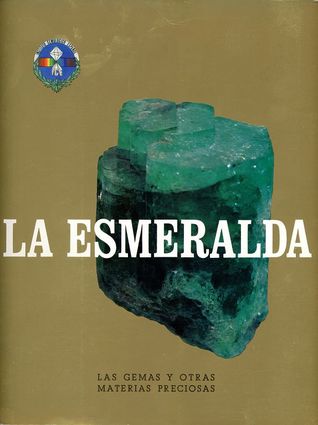
La Esmeralda: Las Gemas Y Otras Materias Preciosas
The Emerald: Gems And Other Precious Materials
Book
Santos Munsuri, A. (1968) La Esmeralda: Las Gemas Y Otras Materias Preciosas. [The Emerald: Gems And Other Precious Materials] Madrid, Instituto Gemológico Español, 123 pp.
Record No. 4281  |  Sinkankas/Born No.: 5723; NIB  |  Language: in Spanish  |  RWHL
Sinkankas: Very handsome, imaginatively designed book, with the unusual feature of the title being spread over three pages. Apparently this work was meant to be the first of a series of monographs on gemstone families but up to date (1988) no others have appeared. The first part treats emerald history, in the East, as known to Pliny, origin of the name, curious lore surrounding, famous emeralds, and the color and causes. The second part describes world emerald deposits with most space naturally devoted to the Colombian mines, type crystals, and a discussion of trapiche crystals. The third part provides property data, considerable detail on inclusions in emerald, doublets & imitations, and the methods of gemological investigation . Next appear four tables of constants of natural & synthetic emeralds, comparisons of emerald to other similarly-colored stones or imitations, and fluorescence of emeralds from various deposits. The bibliography, unfortunately, is replete with errors in contrast to the text which is relatively free of defects. The mostly high quality illustrations show natural specimens, minerals that could be mistaken for emerald, cut stones, a Russian postage stamp depicting Siberian emerald, jewelry set with emeralds, absorption spectra, and many photographs of inclusions but these last lack the quality of the other illustrations. Rev R K Mitchell, J Gemm, 11, 7, 1969, 272–3, notes errors in biblio & elsewhere.

The Queen’s Jewellery

Book
Young, S. (1968) The Queen’s Jewellery. London, Ebury Press, 119 pp.
Record No. 1902  |  Sinkankas/Born No.: 7387–7388; NIB  |  RWHL
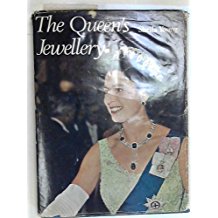
Young presents a popular illustrated account of the personal jewelry of Queen Elizabeth II, describing important pieces in the royal collection and the occasions and individuals associated with them. The book discusses tiaras, necklaces, brooches, bracelets, earrings, and other ornaments, including jewels inherited from earlier members of the royal family as well as gifts received by the Queen. Particular attention is given to diamonds, pearls, and major colored gemstones and to the historical provenance of notable pieces. Rather than serving as a technical gemological catalogue, the volume places the jewels within the history of the British royal family and their use at coronations, state occasions, official visits, and other ceremonial events.

Van Nostrand’s Standard Catalog of Gems
Book
Sinkankas, J. (1968) Van Nostrand’s Standard Catalog of Gems. Princeton, NJ, Van Nostrand, 286 pp.
Record No. 1605  |  Sinkankas/Born No.: 6100; NIB  |  RWHL
Sinkankas provides a comprehensive reference catalogue of gemstones intended for gemologists, jewelers, collectors, and mineral enthusiasts. The entries are arranged systematically and describe natural gem materials in terms of their mineralogical and gemological properties, including chemical composition, crystal system, hardness, specific gravity, refractive indices, optical character, color, cleavage, inclusions, and other diagnostic features. Discussions also cover important localities, occurrence, varieties, nomenclature, cutting and use, and methods of identification, with attention to materials that may be confused with one another. Synthetic stones, imitations, and less familiar ornamental materials are also considered where relevant. Designed for practical consultation rather than continuous reading, the volume brings together a large body of mineralogical and gemological data in a compact reference work for identifying and studying gem materials.

Mineral mining in Queensland

Journal Article
Norwood, V.G.C. (1968) Mineral mining in Queensland. Journal of Gemmology, Vol. 11, No. 2, April, pp. 31–35.
Record No. 1367  |  ISBN/ISSN: 221252  |  RWHL

An Olmec serpentine figure at Dumbarton Oaks
Journal Article
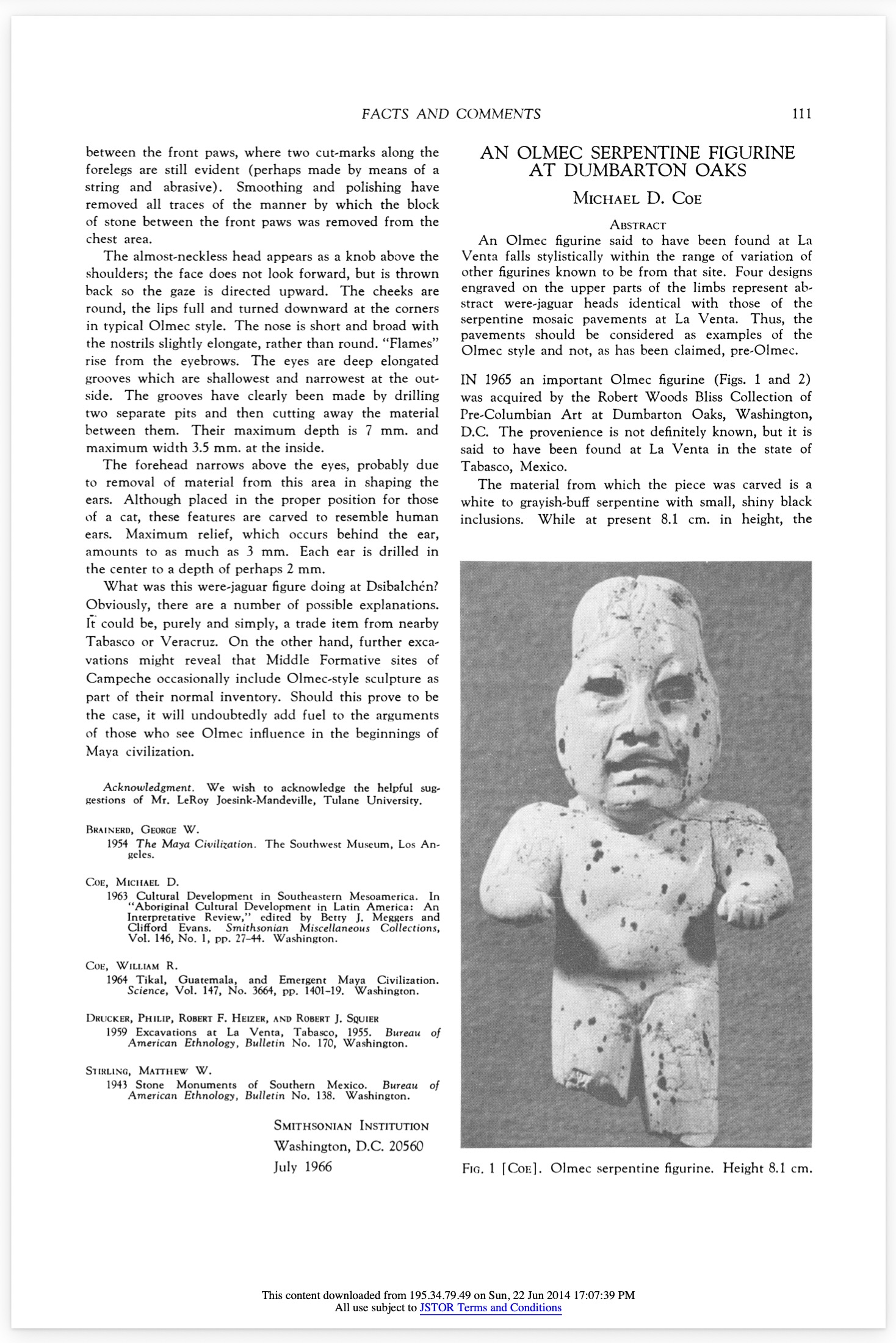
Coe, M.D. (1967) An Olmec serpentine figure at Dumbarton Oaks. American Antiquity, Vol. 32, No. 1, pp. 11–113.
Record No. 28556  |  DOI: https://doi.org/10.2307/278788  |  Sinkankas/Born No.: NIS/NIB  |  RWHL
An Olmec figurine said to have been found at La Venta falls stylistically within the range of variation of other figurines known to be from that site. Four designs engraved on the upper parts of the limbs represent abstract were-jaguar heads identical with those of the serpentine mosaic pavements at La Venta. Thus, the pavements should be considered examples of the Olmec style and not, as has been claimed, pre-Olmec. In 1965 an important Olmec figurine (Figs. 1 and 2) was acquired by the Robert Woods Bliss Collection of Pre-Columbian Art at Dumbarton Oaks, Washington, D.C. The provenience is not definitely known, but it is said to have been found at La Venta in the state of Tabasco, Mexico. The material from which the piece was carved is a white to greyish-buff serpentine with small, shiny black inclusions. While presently 8.1 cm in height, the figurine had been broken in ancient times, so that one foot is missing, as well as the lower part of the other leg. There has been no restoration, although a recent break across the left shoulder and the chin has been repaired. The material, workmanship, and patination all testify to its authenticity.

The Maya World

Book
Benson, E.P. (1967) The Maya World. New York, Thomas Y. Crowell, 172 pp.
Record No. 28544  |  Sinkankas/Born No.: NIS/NIB  |  RWHL
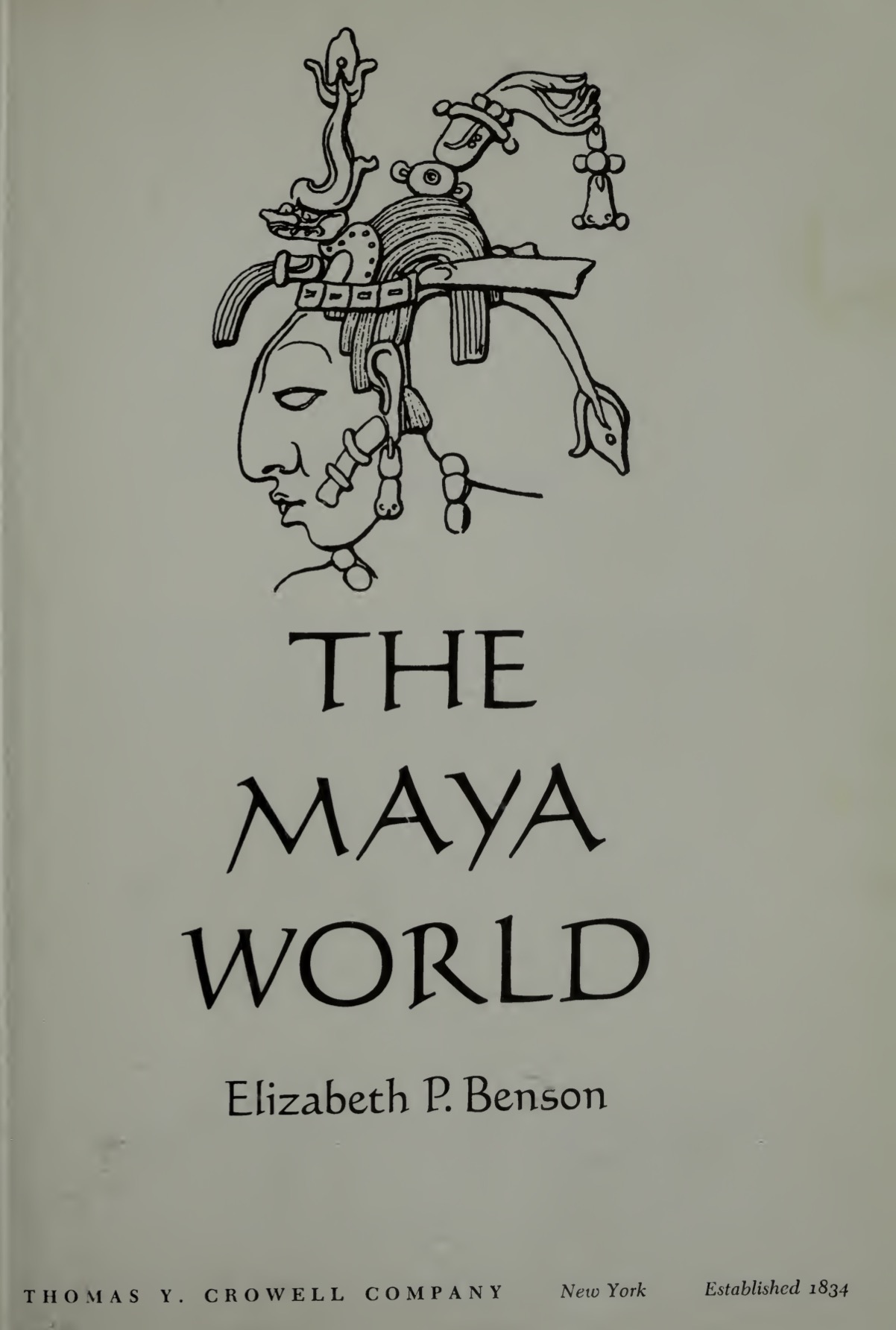
In the steaming rain forest of Mexico and Guatemala the ruins of the ancient Mayan empire bear silent witness of a civilization that flourished hundreds of years before Columbus came to America. More appealing to the modern mind than their Aztec and Inca contemporaries, the Maya Indians are also more mysterious and their way of life more paradoxical. Each year adds to the mass of published material about them, but the central riddle of their rise and decline remains unsolved. Miss Benson guides the reader into the Maya world with an infectious enthusiasm. Technologically a stone-age people, the Maya knew nothing of metal tools or weapons, and lacked both wheel and plow, yet they reached a high level of intellectual and aesthetic sophistication. By A.D. 600 these sociable agriculturalists who—unlike the Aztecs—did not practice mass human sacrifice, had conquered arithmetic, astronomy and calendric development. They had developed a form of writing, and they had a broad practical knowledge of medicine. Many modern sciences have helped to fill out our picture of the Maya world. Miss Benson takes the reader on a fascinating archaeological voyage, as she describes the collaboration of geologists, botanists, and biologists, linguistic experts, architects, and anthropologists; road builders and chicle gatherers have also contributed. In the deserted jungle center of Bonampak, found by chicleros in 1946, superb wall paintings show scenes of Maya life. At its height the empire, held together by a stable caste system, religious beliefs, and a lively trade in cacao, jade, rubber, cotton, and mahogany, stretched throughout the Yucatán Peninsula and the adjacent areas of Mexico and Guatemala. “A Maya city in its heyday,” writes Miss Benson, “must have been almost unbelievably impressive, with its temple-topped pyramids, its vast palaces raised on platforms, its terraces and towers and its rich display of sculptures.” The ruins of Chichén Itzá, in Yucatán, which boast a sacred pool and a ball court, are perhaps most famous. But the Department of Petén in Guatemala contains the heart of the Classic Maya area. Miss Benson locates the main sites of Maya ruins, and tells those hoping to visit them how to get there. Her absorbing account focuses on the Classic period of Maya culture, between A.D. 300 and 900, but it includes much information on the earlier life of the Maya and on their vicissitudes before and during the Spanish conquest.

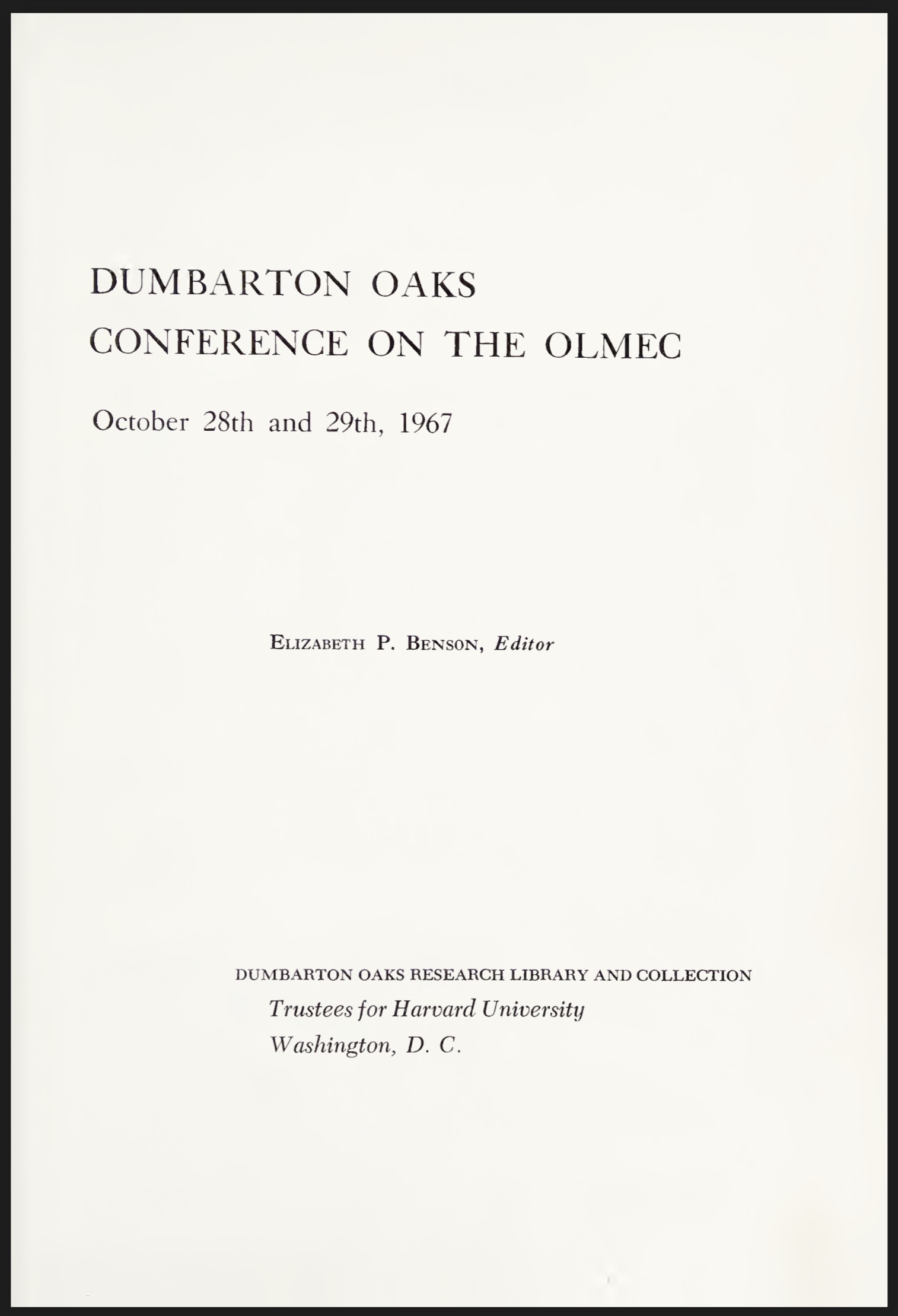
Early history of the Olmec problem

Conference Paper
Stirling, M.W. (1967) Early history of the Olmec problem. Dumbarton Oaks Conference on the Olmec, Washington, DC: Dumbarton Oaks Research Library and Collection, pp. 1–8.
Record No. 28299  |  Sinkankas/Born No.: NIS/NIB  |  RWHL
Before launching into my paper, I would like to give a sort of prologue which might be titled “The Impact of Olmec Art.” I have been struck by the number of individuals who, after becoming involved with a single fine specimen of Olmec art, spent the rest of their careers as Olmec enthusiasts. One example was Marshall Saville, who became intrigued by the Kunz Axe and spent years looking for related specimens. George Vaillant told me that he first went overboard on the Olmec when the Necaxa jade tigre arrived at the American Museum of Natural History in 1932. He put it in a drawer in his desk and for several weeks used to take it out daily to admire it and to feel it—for there is a tactile as well as a visual appeal to Olmec jades. I cannot say what particular specimen first caught the eye of Miguel Covarrubias, but he early segregated the Olmec style from other aspects of Pre-Columbian art and made it a love affair for life. Many of you here know that Mr. Bliss began his interest in Pre-Columbian art when he acquired in Paris an Olmec jade figure of a standing man. The ultimate result of that one acquisition is the magnificent collection in the adjacent room of this building. I speak with personal feeling on this subject because the bait that hooked me into a career of Olmec research was a small blue jade mask in the Berlin Museum. How many others may have had a similar experience I do not know, but all of these episodes took place before a concept of the Olmec had been clearly formulated, and the appeal was in the art style alone. I think all of us felt that it must have taken a remarkable culture to produce art objects with such a powerful effect and that something should be done to find out more about it.

The Geography of Strabo

Book
Strabo and Jones, H.L. (1967) The Geography of Strabo. Cambridge, MA, Harvard University Press, Vol. 8, Book 17 and General Index , 510 pp.
Record No. 27086  |  ISBN/ISSN: 9780670000000  |  Sinkankas/Born No.: NIS/NIB  |  RWHL
Strabo (ca. 64 BCE to ca. 25 CE), an Asiatic Greek of Amasia in Pontus, studied at Nysa and after 44 BCE at Rome. He became a keen traveller who saw a large part of Italy, various near eastern regions including the Black Sea, various parts of Asia Minor, Egypt as far as Ethiopia, and parts of Greece. He was a long time in Alexandria where he no doubt studied mathematics, astronomy, and history. Strabo's historical work is lost, but his most important Geography in seventeen books has survived. After two introductory books, numbers 3 and 4 deal with Spain and Gaul, 5 and 6 with Italy and Sicily, 7 with north and east Europe, 8–10 with Greek lands, 11–14 with the main regions of Asia and with Asia Minor, 15 with India and Iran, 16 with Assyria, Babylonia, Syria, and Arabia, 17 with Egypt and Africa. In outline he follows the great mathematical geographer Eratosthenes, but adds general descriptions of separate countries including physical, political, and historical details. A sequel to his historical memoirs, Geography is planned apparently for public servants rather than students—hence the accounts of physical features and of natural products. On the mathematical side it is an invaluable source of information about Eratosthenes, Hipparchus, and Posidonius.

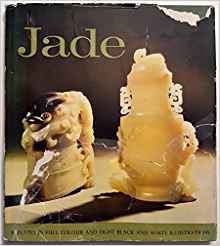
Jade

Book
Palmer, J.P. (1967) Jade. London, Spring Art Books, 44 pp. + 54 color plates
Record No. 2291  |  Sinkankas/Born No.: 4952; Born: pp. 266–268  |  RWHL
Sinkankas: The text is a short but adequate exposition of jade from the mineralogical viewpoint and as a material highly esteemed for its working properties in various cultures, i.e., China, Persia, India, New Zealand, and Pre-Columbian America. After the text are dynastic tables for China and the Mughal Empire, and a map showing sources of jades in Asia and the routes from deposits to points of consumption. Text notes and notes on the objects depicted are provided. The color plates, made in Czechoslovakia, are somewhat grainy but nevertheless notable for their faithfulness to the originals, and very few books can claim better color fidelity. Most specimens are from collections in the British Museum, Victoria & Albert Museum, and the Fitzwilliam Museum in Cambridge, in which the author is Assistant Keeper. Review in Journal of Gemmology, [10] (7), 1967, [245], “superb colour illustrations;” Gems & Gemology, [12] (8), 1967–68, [254–5]. G. M. Born, [266–8].

Solid inclusions in corundum and almandine garnet from Ceylon, identified by x-ray powder photographs
Journal Article
Zwaan, P.C. (1967) Solid inclusions in corundum and almandine garnet from Ceylon, identified by x-ray powder photographs. Journal of Gemmology, Vol. 10, No. 7, July, pp. 224–234.
Record No. 1924  |  ISBN/ISSN: 221252  |  RWHL

Determination of solid inclusions in gemstones
Journal Article
Schubnel, H.-J. (1967) Determination of solid inclusions in gemstones. Journal of Gemmology, Vol. 10, No. 6, April, pp. 189–193.
Record No. 1563  |  ISBN/ISSN: 221252  |  RWHL

Gemological Digests: World’s largest star sapphire
Journal Article
Anonymous (1967) Gemological Digests: World’s largest star sapphire. Gems & Gemology, Vol. 12, No. 5, Spring, p. 158.
Record No. 308  |  ISBN/ISSN: 0016626X  |  RWHL

A prospector’s guide to the Anakie sapphire fields
Journal Article
Anderson, O. (1967) A prospector’s guide to the Anakie sapphire fields. Gems & Gemology, Vol. 12, No. 6, Summer, pp. 173–178, 192.
Record No. 238  |  ISBN/ISSN: 0016626X  |  RWHL

Origins of the Science of Crystals

Book
Burke, J.G. (1966) Origins of the Science of Crystals. Berkeley, University of California Press, 198 pp.
Record No. 28384  |  Sinkankas/Born No.: NIS/NIB  |  RWHL
This book is designed for the first part of a modern course on the physics of solids. It has been written from the author’s lecture notes for the first semester of a three-semester sequence on solids offered by the Physics Department at the University of Illinois. This first course is taken mainly by graduate students who have had an introductory course in quantum mechanics and the standard background of undergraduate physics courses including thermodynamics and elementary statistical mechanics.

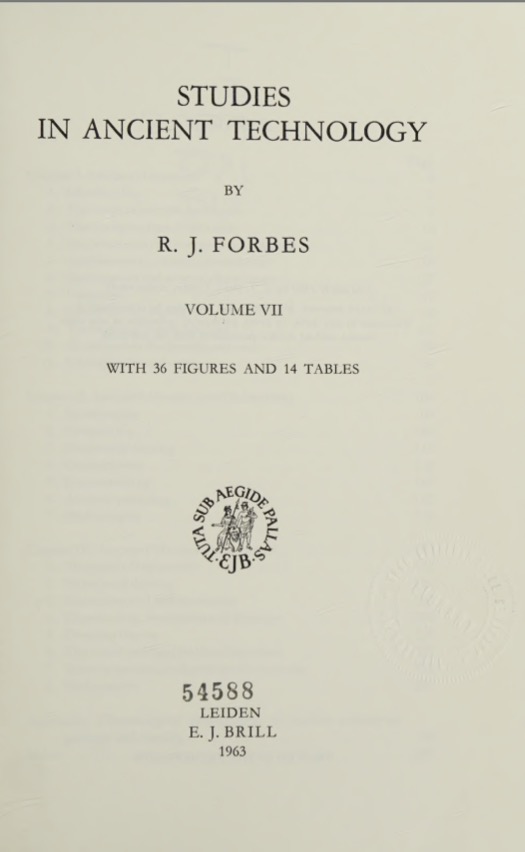
Studies in Ancient Technology

Book
Forbes, R.J. (1966) Studies in Ancient Technology. Leiden, Brill, 9 Vols., Vol. 7: Ancient Mining and Quarrying | Ancient Mining Techniques , 253 pp.
Record No. 26933  |  ISBN/ISSN: 9789000000000  |  Sinkankas/Born No.: NIS/NIB  |  RWHL
R. J. Forbes pointed out nearly 60 years ago that more gemological and mineralogical analysis on many more gems in the extant corpus of ancient glyptic was sorely needed. It still is. He observed how gem catalogues typically handled the materials and sources of gems when he wrote: The handbooks have shown less energy in trying to identify the stones mentioned than in repeating these ancient fables over and over again. Their stories are still too much an account of the follies and fancies of mankind rather than the tracing of the slow accumulation of scientific data and theories about such stones…." It must be pointed out that analytical studies have appeared more regularly in recent decades on gems of Classical antiquity, which contrasts a long tradition of such studies on the glyptic of Western and South Asia and the Near East."

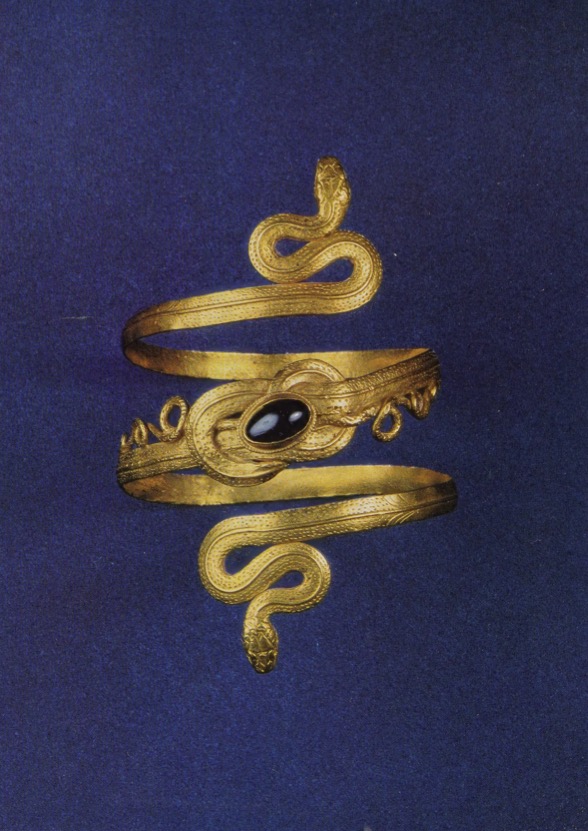
Greek Gold | Jewelry from the Age of Alexander

Book
Hoffman, H. and Davidson, P.F. (1966) Greek Gold | Jewelry from the Age of Alexander. Boston, Museum of Fine Arts, Boston, 312 pp.
Record No. 26519  |  ISBN/ISSN: LC: 6526949  |  Sinkankas/Born No.: NIS  |  RWHL
Until recently, our understanding of early Hellenistic jewelry relied almost entirely on the spectacular Greek gold finds made in South Russia during the nineteenth century, now housed in the Hermitage Museum. Between the two world wars, similar discoveries emerged in northern Greece—particularly in Thessaly and Macedonia—thanks to finds by local peasants. The most notable hoards, reportedly from Carpenisi and Demetrias, were divided between the Benaki and Stathatos collections in Athens, the latter now part of the National Museum. While the Hermitage’s holdings are primarily known through nineteenth-century publications and travel to Leningrad, the Benaki and Stathatos gold has been well documented in two exemplary catalogues. Nonetheless, knowledge of Greek jewelry from the Age of Alexander remained fragmented. In the past decade, however, this picture has changed dramatically. A wave of important discoveries—largely from clandestine excavations in northern Greece, Asia Minor, and other regions—has entered both private and institutional collections in Europe and America, while official excavations have also yielded substantial new material, much of which remains unpublished or entirely unknown. The exhibition Greek Gold from the Age of Alexander was conceived to bring together, for the first time, many of these remarkable works. Of the 148 groups of objects selected, 83 come from private collections, 68 are illustrated here for the first time, and three-quarters have never before been publicly exhibited. Dr. Herbert Hoffmann, drawing on his deep expertise and familiarity with European collections, assembled one of the most impressive displays of Greek jewelry ever seen. During a year at the University of Heidelberg’s Institute of Classical Archaeology, he traveled extensively across Europe to secure loans for the exhibition. Patricia F. Davidson, Research Associate at The Brooklyn Museum and a trained goldsmith, contributed her specialized knowledge of ancient techniques, reproducing methods based on her microscopic analyses using tools and materials believed to be historically accurate. She was assisted by William J. Young, Head of the Research Laboratory at the Museum of Fine Arts, Boston, who used X-ray fluorescence and other non-destructive tests to analyze alloy and inlay compositions. The catalogue addresses not only the stylistic, historical, and iconographic aspects of Hellenistic gold but also its technology, with schematic drawings by Suzanne E. Chapman of the MFA, Boston, some based on sketches by Helmut Prüickner of Heidelberg University.

Developments and Highlights at the Gem Trade Lab in New York: Unusual items encountered [sapphire with unusual fluorescence]

sapphire with unusual fluorescence
Journal Article
Crowningshield, G.R. (1966) Developments and Highlights at the Gem Trade Lab in New York: Unusual items encountered [sapphire with unusual fluorescence]. Gems & Gemology, Vol. 12, No. 3, Fall, p. 73.
Record No. 627  |  ISBN/ISSN: 0016626X  |  RWHL

Building a Gemological Library

Gemological books range from general identification manuals and textbooks to specialized works on individual gems, mineralogy, jewelry, treatments, synthesis, history and gem-producing regions.

For a curated selection of particularly useful books, read The Gemologist's Core Library — Classic Books on Gemology, Jewelry and Mineralogy.

About Four Treasures

Four Treasures is Lotus Gemology's freely accessible gemological reference database. Use the full database to search by author, title or keyword and explore literature on gemology, mineralogy, jewelry and related fields. Where available, hyperlinks on titles may lead directly to the full publication.

Search the Complete Four Treasures Database