Gemology Books Bibliography

Gemology Books Bibliography

Explore books on gems, gemology, jewelry and mineralogy in Four Treasures, the Lotus Gemology reference database. This bibliography brings together matching book records from the collection, with publication details, abstracts and cover images where available.

Gemology Book References

The list below matches books concerning gemology and related subjects in the database's searchable fields. Some works cover several branches of gems, jewelry or mineralogy.
2,581–2,600 of 3,454 matching references

Hydrothermal ruby

Journal Article
Anonymous (1966) Hydrothermal ruby. Journal of Gemmology, Vol. 10, No. 3, July, pp. 96–98.
Record No. 305  |  ISBN/ISSN: 221252  |  RWHL

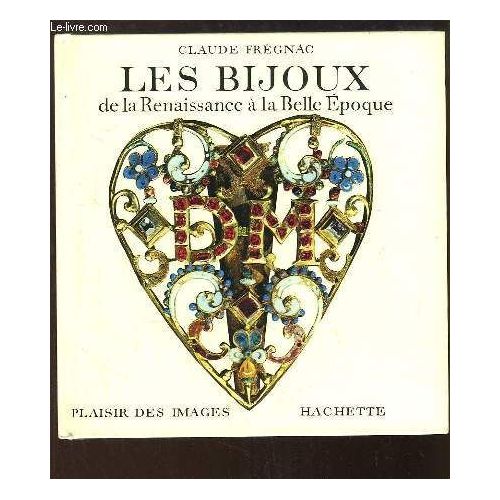
Les Bijoux de la Renaissance à la Belle Époque
Jewelry from the Renaissance to the Belle Époque
Book
Frégnac, C. (1966) Les Bijoux de la Renaissance à la Belle Époque. [Jewelry from the Renaissance to the Belle Époque] Frankfurt-am-Main, Plaisir des Images, Hachette, 128 pp.
Record No. 178  |  Sinkankas/Born No.: NIS  |  Language: in French  |  RWHL
Frégnac surveys European jewelry from the Renaissance through the Belle Époque, presenting jewels as expressions of changing artistic styles, fashions, craftsmanship, and social customs. Beginning with the Renaissance, the book follows the development of jewelry through the Baroque and Rococo periods, Neoclassicism, the nineteenth-century historicist revivals, and the innovations of the late nineteenth and early twentieth centuries. Particular attention is given to the relationship between jewelry and contemporary decorative arts, costume, portraiture, and court fashion, as well as to changing preferences in gemstones, precious metals, enameling, and methods of setting and mounting stones. Rings, necklaces, pendants, brooches, earrings, bracelets, tiaras, and other personal ornaments illustrate successive stylistic developments, while important surviving jewels and the work of notable designers and jewelers provide examples of each period. Richly illustrated, the volume offers a predominantly historical and artistic rather than gemological account of European jewelry over approximately four centuries.

Nephrite jade in Mariposa County

Journal Article
Evans, J.R. (1966) Nephrite jade in Mariposa County. CA Div. Mines Min. Info. Service, Vol. 19, No. 9, pp. 135–147.
Record No. 142  |  RWHL
Diamonds are said to be forever, but there are very few gemstone materials about which there has developed throughout the ages such a curious lore as there has about jade. In California, this lore has attracted statewide attention, principally because deposits containing the jade minerals, jadeite and nephrite, occur at several places throughout the state and because gem or lapidary quality jade has been recovered in substantial amounts from several of these localities. Many dense, fine-grained, green-colored rocks have mistakenly been called jade; but, from a gemological point of view, jade is a name given to the massive, gem-quality varieties of the two rock-forming minerals nephrite and jadeite. Nephrite is an amphibole, a silicate of calcium and magnesium that usually contains a small amount of iron. Jadeite, on the other hand, is a pyroxene and is a silicate of sodium and aluminum; usually, however, it contains variable amounts of two other pyroxene minerals, diopside (silicate of calcium and magnesium) and acmite (silicate of sodium and iron), which, when present in sufficient amounts, produce a dark green variety of jade called chloromelanite. It is true that nephrite and jadeite resemble each other very closely, but they can be distinguished by their different physical and chemical properties. Not only is jadeite harder than nephrite but it has a higher specific gravity. In general, the specific gravity of jadeite is 3.32 and that of nephrite is 2.98. Both of these minerals have a wide range of colors and color shades. Jade ranges in color from pure white, through every possible shade of green to amethyst, mauve, violet and light blue, yellow, orange and diverse tints of brown, red, and black. Because the colors in nephrite and jadeite usually are distributed unevenly, descriptive terms such as mutton fat, spinach green, and onion green have been employed to describe jade. Successful use of jadeite or nephrite as gem quality jade depends upon several important properties, such as desirable color, color pattern, and a certain degree of translucency. Because of this, the amount of jadeite and nephrite that is of gem quality is rather small in comparison to the amounts of these materials that are of mineralogical significance only. The occurrences of nephrite and jadeite, especially nephrite, are comparatively widespread and common in California. Most deposits of these interesting gemstone materials have been found only in or adjacent to bodies of serpentine, an association that seems to be characteristic of nephrite and jadeite occurrences throughout the world. Exceptions to this, however, are the unusual occurrences of nephrite associated with magnetite, epidote, chlorite and garnet in irregular contact metamorphic zones between granitic rocks and dolomitic limestone, near Victorville in San Bernardino County and in the western part of the Eagle Mountains in Riverside County. Many of the occurrences of nephrite and jadeite in California are well known to individuals and groups of amateur mineralogists but the several reports that follow, which have been prepared and published by the Division of Mines and Geology, describe in detail a few of the best known and most significant occurrences of nephrite and jadeite in California.

[Two gemstones—blue chalcedony and nephrite—from eastern Taiwan]
Two gemstones—blue chalcedony and nephrite—from eastern Taiwan
Journal Article
Huang, C.K. (1965) [Two gemstones—blue chalcedony and nephrite—from eastern Taiwan]. Taiwan Mining Industry, Vol. 17, pp. 58–65.
Record No. 28770  |  Sinkankas/Born No.: 3058 (not seen)  |  Language: in Japanese with English abstract  |  RWHL
Mineralogy of semi-precious gems, such as nephrite, tremolite cat's-eye, blue chalcedony and veined stones, from Taiwan are reviewed, supplemented with some data (Fig.1). Nephrite and cat's-eye tremolite occur at the contacts of graphite-sericite schist and serpentinite sills in association with asbestus, talc and diopside-dominant skarn near Hualien (Fig.2). Cat's-eye tremolite was formed evidently later than nephrite. Nephrite jade is spinach-green to yellowish green in color; translucent to opaque. H. : 6.5; G. : 3.007-3.014. It is composed of sub-parallel tufts of fibrous tremolite in interfelted base with nephritic texture, accompanied by minor chromite, magnetite, picotite, garnet and chlorite which give rise to black spots or streaks (Fig.3). α : 1.609-1.612, β : 1.620-1.621, γ : 1.631-1.633; γ-α : 0.021-0.022. Noteworthy is that the Taiwan jade is similar in mineralogy to the New Zealand jade. Tremolite cat's-eye varies in color, from greenish yellow to black; translucent to opaque. H : 6-7, G. : 3.000-3.045. It consists solely of fine, Ionger sub-parallel fibers of tremolite without nephritic texture. α : 1.612-1.613. β : 1.620-1.626, γ : 1.637=1.639; γ-α : 0.024-0.027. Both nephrite and cat's-eye are similar in X-ray data to tremolite from St. Gotthard, Switzerland (Table 1). Chemical analyses also revealed that no marked differences in cornposition exislt between nephrite jade and cat's-eye and between cat's-eyes of various colors, all showing about 10 % of the ferro-actinolite molecule (Tables 2 & 3). Minor uvarovite with 10% Cr_2O_3 and vesuvianite were first found in Taiwan (Tables 5 & 6). Blue chalcedony occurs as irregular small veins in andesitic agglomerate north of Taitung. It is deep sky-blue to greenish blue in color; opaque to translucent. H. : 7; G. : 2.581; n : 1.539. Traversed by veinlets of chalcedony-quartz and quartz-pyrite, it consists mainly of radial-fibrous aggregates of chalcedony, with minor chlorite, opal and iron hydroxides (Fig. 5). Veined stones are produced on the Penghu Islands as globular concentric aggregates chiefly of calcite, aragonite and siderite in the amygdaloidal cavities of olivine-augite basalt (Figs.5 & 6). H : 3-4; G. : 2.83-3.30. Some gemological features of these gem materials are also given (Fig.4).

The Jaguar's Children: Pre-Classic Central America
Book
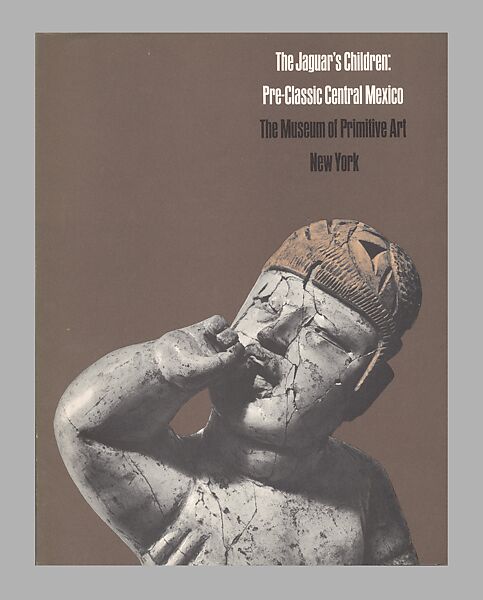
Coe, M.D. (1965) The Jaguar's Children: Pre-Classic Central America. New York, Museum of Primitive Art, 128 pp.
Record No. 28685  |  Sinkankas/Born No.: NIS/NIB  |  RWHL
The Jaguar’s Children: Pre-Classic Central Mexico has as its subject one of the most arresting topics of New World prehistory. The Olmec of Mexico—originators of the earliest great civilization in Middle America—produced an extraordinary art. Its impact on contemporary and subsequent Mexican developments was enormous. It is this impact on an area in the Central Highlands, parts of the states of Morelos, Puebla, and the Valley of Mexico, that is described here by Michael D. Coe of Yale University. Long a student of the Olmec era, Dr. Coe discusses the extensive site of Tlatilco, the transitional site of Tlapacoya, and the very important and previously unpublished site of Las Bocas. Problems of symbolism, iconography, and the close relation of Olmec art to religion are examined, as well as the relation of Olmec culture to that of Central Highland tradition. Illustrated by over 200 pieces, many published for the first time, the emphasis has been placed on material from Las Bocas. The most important “baby-face” figures of the period have come from that site. These are graphic and humanized representations of the major Olmec deity, a rain god whose shape was that of a were-jaguar, a fat, childlike creature with feline features. Believed to have been born of a jaguar father and a human mother, they are the Jaguar’s Children. Dr. Coe first published on Pre-Classic Middle America and the Olmec in 1957 and is the author of the important articles on them in the Handbook of Middle American Indians. His excavations at the early village site of La Victoria on the Pacific coast of Guatemala were reported in the Papers of the Peabody Museum of Archaeology and Ethnology, Harvard University (1961). He wrote the volume on Mexico (1962) in Praeger’s Ancient Peoples and Places series and was engaged in a work on the Maya to appear in the same series.

Traffic in stone axe and adze blades

Journal Article
Clark, G. (1965) Traffic in stone axe and adze blades. The Economic History Review, Vol. 18, No. 1, pp. 1–28.
Record No. 28554  |  ISBN/ISSN: 00130117, 14680289  |  DOI: https://doi.org/10.2307/2591871  |  Sinkankas/Born No.: NIS/NIB  |  RWHL
A basic condition for understanding the past is to avoid applying categories of thought and shades of meaning inappropriate to the period under review. This applies with special force to the study of the prehistoric past, by definition the phase of history most remote from the present and, for this very reason, most likely to be misunderstood. As Martin Jahn has well said, much of the controversy between those who write about prehistoric trade and those who deny its existence is semantic: it arises from the different meanings they attach to the word trade. If one takes a definition of trade proper to a society with an advanced division of labour and an economy based on money—if one chooses, for example, to define trade as an activity carried on by a class of traders for financial gain—it is understandable that no evidence for trade can be found in societies functioning at a simpler level, societies in which there is a bare minimum of specialization and to which the notion of profit, in the sense we understand it, may be quite foreign. Yet, if one sees it as, in the last resort, no more than the peaceful and systematic exchange of goods, one has no difficulty in recognizing that trade of a kind is practised among even the most primitive societies known to ethnologists; and, by implication, one is entitled to seek traces of it in the archaeological record of prehistory. The present contribution, offered to a scholar whose lively mind ranges widely but penetrates at all times to the physical realities of existence, will concentrate on the interpretation of a specific archaeological phenomenon in terms of primitive trade, namely the manufacture and distribution over extensive territories of the blades of axes and adzes made from particular kinds of stone. The evidence will be reviewed under two main headings: that from north-western and northern Europe between the fourth and second millennia B.C., and that from Australia, New Zealand, and Melanesia down to the nineteenth century, and even, in the case of New Guinea, to the mid-twentieth century A.D. In conclusion, some brief attempt will be made to collate these two sources of information and examine how the prehistoric data appear in the light of ethnography.

Developments and Highlights at the Gem Trade Lab in New York: Dyed nephrite jade
Journal Article
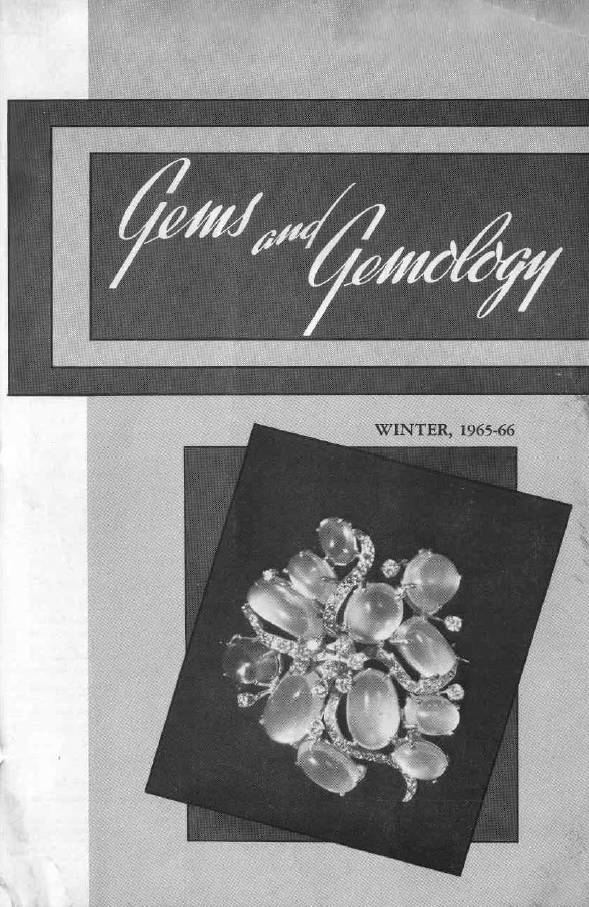
Crowningshield, G.R. (1965) Developments and Highlights at the Gem Trade Lab in New York: Dyed nephrite jade. Gems & Gemology, Vol. 11, No. 12, Winter, pp. 363–364.
Record No. 28105  |  Sinkankas/Born No.: NIS/NIB  |  RWHL
Since we first encountered dyed jadeite in 1956, we have expected the appearance of dyed nephrite, but until recently we had not seen or heard of any. Figure 13 is a photograph of a well-carved nephrite tablet with chrome-green mottling. Spectroscopic examination of the green areas proved to us that the color is due to dye. Possibly, nephrite does not take the dye uniformly; therefore, this accounts for the absence of dyed material in the trade.

La « Mummia di Grottarossa »

Journal Article
Scamuzzi, U. (1965) La « Mummia di Grottarossa ». Aegyptus, Vol. 45, No. 1/2, pp. 74–83.
Record No. 27554  |  Sinkankas/Born No.: NIS/NIB  |  RWHL
On February 5, 1964, during excavation work carried out on the outskirts of Rome, in an area known as the Tomb of Nero, specifically along the Via Cassia at the junction with Via di Grottarossa, a small but valuable marble sarcophagus came to light, containing the embalmed body, wrapped in bandages, of a little girl, estimated to be about seven years old and 1.20 meters tall. Newspapers of the time reported that the sarcophagus in question was not extracted with care: in fact, during the aforementioned excavation work, it was seized by a bulldozer, overturned, broken, and thrown amid the spoil earth. It was only later that the competent authorities, who arrived at the site, were able to recover the sarcophagus, the small mummy, and various objects belonging to her; a careful examination of the individual finds also allowed us to date the girl’s life to between 160 and 180 CE, as well as to propose the possibility that the girl herself was a descendant of the gens Cornelia, since she was found adorned, on the little finger of her left hand, with a large gold ring bearing an engraving on its bezel of the emblem of Winged Victory, a signum believed to have been exclusive to that gens.

Scales and Weights | A Historical Outline
Book
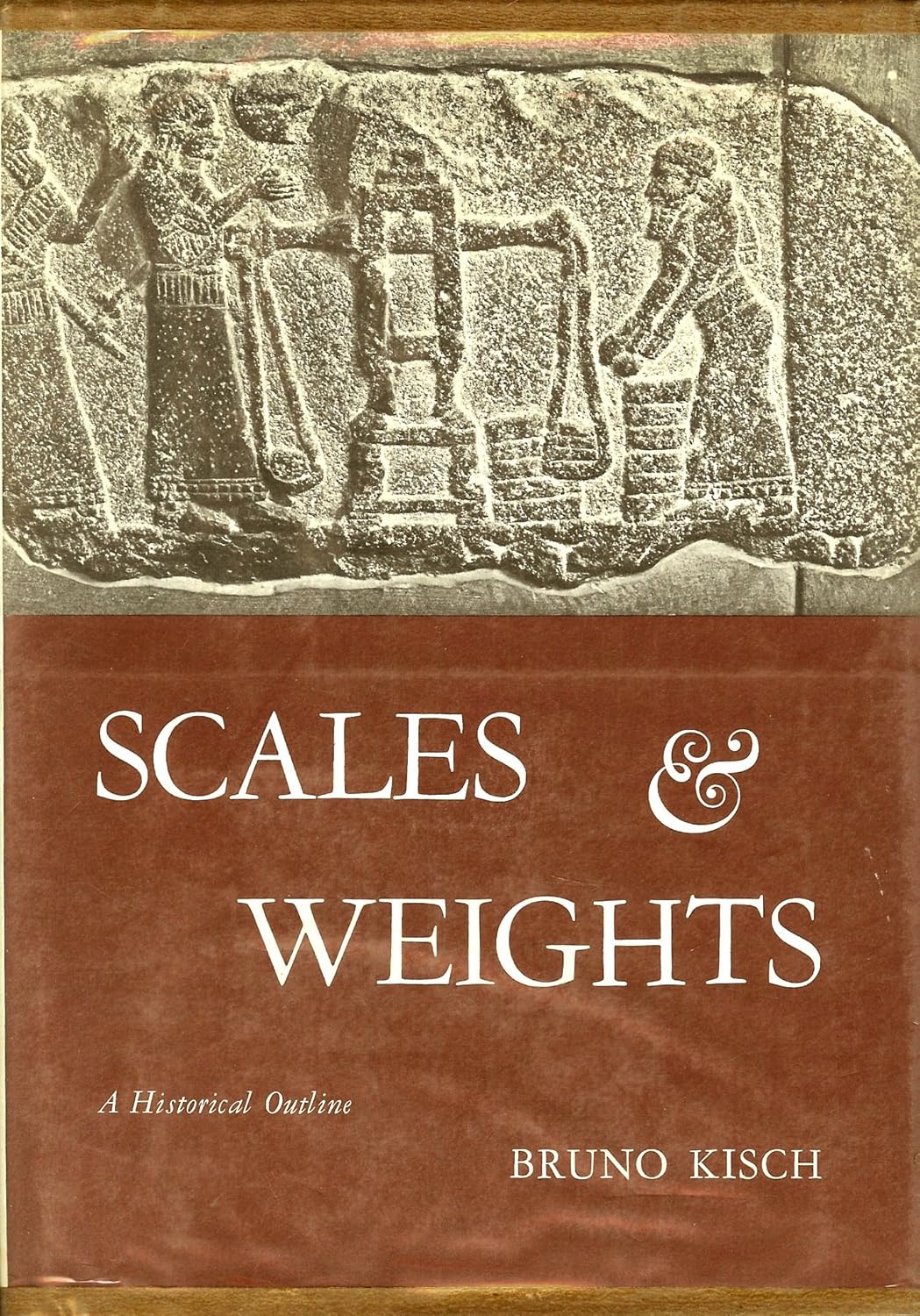
Kisch, B. (1965) Scales and Weights | A Historical Outline. New Haven, CT, Yale University Press, 297 pp.
Record No. 26819  |  ISBN/ISSN: 9780300000000  |  Sinkankas/Born No.: NIS/NIB  |  RWHL
This unique survey of the history of weighting and its instruments, from the earliest known examples in the millennia before Christ to the modern era, is generously illustrated with 98 plates depicting scales, weights, and containers from the great collections of the world. It includes the known hallmarks of the scale and weight makers of Western Europe and lists of the weights of the world and their metric equivalents, by country and by name of weight. [RWH: Like most Western works, this book completely ignores the tremendous work done by Arabic-language scholars like al-Bīrūnī and al-Khazinī, who were measuring specific gravity hundreds of years before European scholars.]

Developments and Highlights at the Gem Trade Lab in New York: Pre-1952 Synthetic Star Rubies
Journal Article
Crowningshield, G.R. (1965) Developments and Highlights at the Gem Trade Lab in New York: Pre-1952 Synthetic Star Rubies. Gems & Gemology, Vol. 11, No. 11, Fall, pp. 331–333.
Record No. 16790  |  ISBN/ISSN: 0016626X  |  RWHL

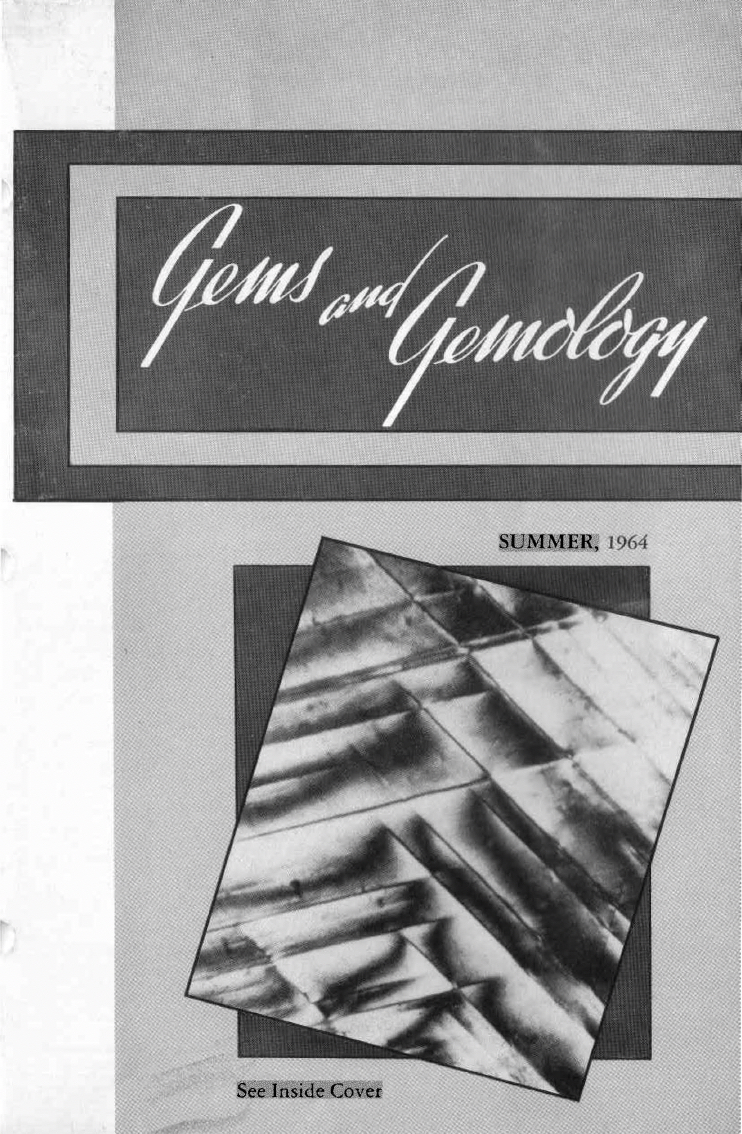
Developments and highlights at GIA’s Gem Trade Lab in Los Angeles: Dyed nephrite jade
Journal Article
Liddicoat, R.T. (1965) Developments and highlights at GIA’s Gem Trade Lab in Los Angeles: Dyed nephrite jade. Gems & Gemology, Vol. 11, No. 12, Winter, pp. 363–364.
Record No. 3643  |  ISBN/ISSN: 0016626X  |  RWHL

Developments and highlights at the Gem Trade Lab in Los Angeles: New type of jadeite triplet
Journal Article
Liddicoat, R.T. (1965) Developments and highlights at the Gem Trade Lab in Los Angeles: New type of jadeite triplet. Gems & Gemology, Vol. 11, No. 12, Winter, pp. 369–370.
Record No. 3642  |  ISBN/ISSN: 0016626X  |  RWHL

Maw-sit-sit proves to be jade-albite

Journal Article
Gübelin, E.J. (1965) Maw-sit-sit proves to be jade-albite. Journal of Gemmology, Vol. 9, No. 11, July, pp. 372–379.
Record No. 2256  |  ISBN/ISSN: 221252  |  RWHL

Developments and Highlights at the Gem Trade Lab in New York: Unusual 10–carat Montana sapphire
Journal Article
Crowningshield, G.R. (1965) Developments and Highlights at the Gem Trade Lab in New York: Unusual 10–carat Montana sapphire. Gems & Gemology, Vol. 11, No. 11, Fall, pp. 331–332.
Record No. 626  |  ISBN/ISSN: 0016626X  |  RWHL
Lab notes - NY. Note on 10 ct. stone (with photograph). Probably not Yogo (as it has rutile silk)

Maw-sit-sit: A new decorative gemstone from Burma
Journal Article
Gübelin, E.J. (1965) Maw-sit-sit: A new decorative gemstone from Burma. Journal of Gemmology, Vol. 9, No. 10, April, pp. 329–344.
Record No. 144  |  ISBN/ISSN: 221252  |  RWHL
Describes maw-sit-sit, a distinctive bright to dark green ornamental rock from northern Burma (Myanmar), occurring near the jadeite deposits of the Hpakan region. Gübelin examines its appearance, gemological properties, texture and mineralogical composition, distinguishing it from jadeite jade and other green ornamental materials. The material is characterized by an intimate mixture of contrasting green and dark minerals that produces its characteristic mottled appearance. Microscopic and mineralogical observations demonstrate that maw-sit-sit is not a single mineral but a complex rock composed of several constituents. The article documents its occurrence, properties and identification and represents one of the earliest detailed gemological descriptions of this unusual Burmese gem material. Also contains brief mention of the Naniazeik ruby/spinel mines.

El Pueblo del Jaguar (Los Olmecas Arqueológicos)
The People of the Jaguar (The Archaeological Olmecs)
Book
Piña Chan, R. and Covarrubias, L. (1964) El Pueblo del Jaguar (Los Olmecas Arqueológicos). [The People of the Jaguar (The Archaeological Olmecs)] Mexico City, Museo Nacional de Antropología, 68 pp. + many plates
Record No. 28588  |  Sinkankas/Born No.: NIS/NIB  |  Language: in Spanish  |  RWHL
On the coastal plain of southern Veracruz and northern Tabasco, humid, tropical, and swampy, there are archaeological sites such as La Venta, El Trapiche, Cerro de las Mesas, Tres Zapotes, and others, covered by a luxuriant jungle that contrasts in some areas with the flora characteristic of marshes and wetlands. In that hostile region, crowded with forests, waterways, and grasslands, certain human groups developed their culture to remarkable levels, considering the tropical jungle that hindered agricultural settlement, the heat and humidity that reduced the capacity for human labour, and the rudimentary technology of the time. Despite these highly adverse conditions, a vigorous artistic style originated there which, in the course of time, influenced many neighbouring peoples, left its mark even in distant places, and fostered the emergence of the great civilizations of pre-Hispanic Mexico. In archaeological terminology, the culture that created this artistic style is known as the Olmec culture and also as the Culture of La Venta, because it was at this site—the most thoroughly studied—that it reached its true florescence. Yet despite the extensive bibliography and research already devoted to this culture, its origin and development, its evolutionary phases and characteristics, as well as its interrelationships and antiquity, remain fascinating subjects for any investigator. Olmec means “inhabitant of Olman”; that is, an inhabitant of the land of rubber, of the tropical lowlands in general, and especially of the southern coast of the Gulf of Mexico, where the finest rubber was produced in pre-Hispanic times. This is the meaning given to the term by the chroniclers of the sixteenth century, who used it to designate several coastal groups occupying that region around the time of the conquest. In the historical sources, the Olmecs are almost always mentioned together with the Uixtotin, Nonohualcas, and other groups. These names mean respectively “people of the land of rubber,” “people of the salt flats,” and “those who do not speak Nahuatl.” As Gonzalo Aguirre Beltrán has pointed out, “rubber,” “salt flats,” and “a different language” are characteristics that aptly describe both the region and the inhabitants of the southern Gulf Coast.

Trade relations between the Maya Highlands and Lowlands
Journal Article
Thompson, J.E.S. (1964) Trade relations between the Maya Highlands and Lowlands. Estudios de Cultura Maya, Vol. 4,, 23-Aug pp. 13–19.
Record No. 28578  |  DOI: 10.19130/iifl.ecm.1964.4.229  |  Sinkankas/Born No.: NIS/NIB  |  RWHL
Jade, the most valued of all Maya products, is very scarce or does not occur in the Yucatán Peninsula. Foshag (1955, p. 11), in listing seven varieties of jade found in archaeological collections from Middle America, notes the intimate association of jade in situ with serpentine deposits and points out that they normally have an enveloping skin of albite in the process of conversion into jade. He observes that where there are deposits of serpentine there is a good possibility of finding jade, and lists the following known deposits: the Sierra de las Minas north of the middle Motagua, with an outlying spur south of San Agustín Acasaguastlán; the Sierra de Santa Cruz northwest of Lake Izabal; the Sierra de Chuacús in northern El Quiché north of the Río Negro and extending into adjacent Baja Verapaz; and a small area north of Huehuetenango. More recently, jade was actually found in situ near Manzanal in the Sierra de las Minas (Foshag and Leslie, 1955). Small deposits of serpentine are situated, according to Sapper, near Chimalapa in southern Chiapas, close to the Guatemala border. Of these areas—and it must be remembered that, except for Manzanal, jade had not been found anywhere; the rest were only potential sources—only the Sierra de Santa Cruz and perhaps the northeastern end of the Sierra de las Minas are in lowland territory. Whether there is jade in these two areas, and whether the Manche Chol who inhabited the region (they were called Toqueguas there but were of Chol speech) worked it if it existed there, are uncertainties. Pusilhá and Lubaantun, which were in Chol territory at the time of the Spanish conquest, have not shown much evidence of jade wealth, and the same is true of Quiriguá, which lies in territory probably occupied by the Chol in the sixteenth century. On the other hand, the relatively insignificant sites of Pomoná, Kendall, Camp 6, and the not very important Mountain Cow, to the east and west of the Maya Mountains in British Honduras, have yielded some very fine worked jades in the course of quite minor excavations. One is led to speculate whether there could be jade in that range.

Jadeita de Manzanal, Guatemala

Jadeite from Manzanal, Guatemala
Journal Article
McBirney, A., Bass, M.M. and Aoki, K.-i. (1964) Jadeita de Manzanal, Guatemala. [Jadeite from Manzanal, Guatemala] Anthropologia e Historia de Guatemala, Vol. 16, No. 2, pp. 13–16.
Record No. 28418  |  Sinkankas/Born No.: NIS/NIB  |  Language: in Spanish  |  RWHL
McBirney, Bass, and Aoki report the discovery and mineralogical study of a large detrital jadeite boulder from Manzanal in the Motagua Valley of Guatemala, found during a 1963 reconnaissance of the metamorphic and ultramafic rocks associated with the Motagua fault zone. The approximately 100 kg boulder was recovered from an alluvial terrace beside the Atlantic highway, about 100 m east of Manzanal. Although jadeite had previously been found as pebbles and detrital material in the Motagua drainage, no occurrence in situ was then known. From the distribution of jadeite fragments, the authors infer a nearby source in a zone of intense shearing where metamorphic rocks of the Chuacús Series—including amphibolites, garnet-biotite gneisses, and actinolite schists—are faulted against serpentinite. Associated rocks include assemblages of albite-actinolite, albite-white mica, dolomite-chalcedony-quartz, and albite-quartz with blue-green amphibole. Chemical, optical, and X-ray studies of carefully separated material establish jadeite as the principal pyroxene, while the mineralogical associations indicate formation under high-pressure metamorphic conditions related to the Motagua fault zone. The occurrence provides further geological evidence for a local Guatemalan source of the jadeite used by the pre-Columbian cultures of Mesoamerica.

Developments and Highlights at the Gem Trade Lab in New York: Stable color in dyed jadeite; plastic-coated and dyed jadeite; steam cleaning alters jadeite color
Journal Article
Crowningshield, G.R. (1964) Developments and Highlights at the Gem Trade Lab in New York: Stable color in dyed jadeite; plastic-coated and dyed jadeite; steam cleaning alters jadeite color. Gems & Gemology, Vol. 11, No. 6, pp. 181–183.
Record No. 28104  |  Sinkankas/Born No.: NIS/NIB  |  RWHL
We have commented on the variable fastness of the colors used in dyeing jadeite. We recently tested some dyed stones of excellent color. The owner stated that he had purchased them in 1955—a full year before we first encountered the stones in the course of our testing work. He further stated that to his recollection they had not faded. In another note, a necklace of round jade beads showed the treated spectrum and the normal jadeite absorption line at approximately 4370 Å, but the refractive index was approximately 1.55 by the spot method. Magnification revealed that the stones were plastic coated, in addition to being dyed; hence, the “wrong” refractive index for jadeite. And another note: Figure 3 illustrates a small, flat, oval cabochon of jadeite, one of a group that a manufacturer stated had altered radically in appearance following normal steam cleaning of finished jewelry. What had originally been evenly colored medium-green stones became mottled with numerous white, intersecting cracks. The only suggestion we could offer was that perhaps the stones had been oiled to camouflage the cracks before they reached the manufacturer.

The characterization of obsidian and its application to the Mediterranean region

Journal Article
Cann, J.R. and Renfrew, C. (1964) The characterization of obsidian and its application to the Mediterranean region. Proceedings of the Prehistoric Society, Vol. 30, No. 8, pp. 111–133.
Record No. 27315  |  DOI: http://dx.doi.org/10.1017/S0079497X00015097  |  Sinkankas/Born No.: NIS/NIB  |  RWHL
Evidence of contact between cultural groups is of great importance to the study of prehistory. Although the development of absolute dating methods has decreased our dependence on the discovery of such contacts for chronology, they are essential material when the origin and spread of culture is being studied. In the past, cultural contacts have generally been demonstrated by typological similarities of artifacts, but unfortunately many typological comparisons are open to discussion, and it can be exceedingly difficult to be certain of direct contact by this means alone. The importance in this respect of the study of raw materials used in places far from their place of origin and presumably deliberately imported has long been realized. Recently more attention has been paid to the careful characterization of such materials; the detection, that is, of properties of the specimen under study which are characteristic of material from particular sources. By this means it is often possible to assign a source to a given specimen. The petrological identification of British neolithic stone axes is perhaps the most comprehensive archaeological characterization study yet undertaken. Demonstrations of trading links made by such methods, if based on a sure identification and a comprehensive survey of possible sources, are not open to the criticism and doubt which may be directed at typological similarities. The variety of techniques now available for the analysis and identification of materials makes this field a promising one for the archaeologist.

Building a Gemological Library

Gemological books range from general identification manuals and textbooks to specialized works on individual gems, mineralogy, jewelry, treatments, synthesis, history and gem-producing regions.

For a curated selection of particularly useful books, read The Gemologist's Core Library — Classic Books on Gemology, Jewelry and Mineralogy.

About Four Treasures

Four Treasures is Lotus Gemology's freely accessible gemological reference database. Use the full database to search by author, title or keyword and explore literature on gemology, mineralogy, jewelry and related fields. Where available, hyperlinks on titles may lead directly to the full publication.

Search the Complete Four Treasures Database