Gemology Books Bibliography

Gemology Books Bibliography

Explore books on gems, gemology, jewelry and mineralogy in Four Treasures, the Lotus Gemology reference database. This bibliography brings together matching book records from the collection, with publication details, abstracts and cover images where available.

Gemology Book References

The list below matches books concerning gemology and related subjects in the database's searchable fields. Some works cover several branches of gems, jewelry or mineralogy.

2,601–2,620 of 3,454 matching references

The French synthetic emerald [Gilson]

Gilson
Journal Article
Webster, R. (1964) The French synthetic emerald [Gilson]. Journal of Gemmology, Vol. 9, No. 6, April, pp. 191–196.
Record No. 4285  |  ISBN/ISSN: 221252  |  RWHL
Description of Gilson synthetic emeralds.

Treated black opals

Journal Article
Gübelin, E.J. (1964) Treated black opals. Journal of Gemmology, Vol. 9, No. 6, April, 197–198.
Record No. 2080  |  ISBN/ISSN: 221252  |  RWHL
SEVERAL parcels of dyed black opals have recently been offered in the European market. I am indebted to Mr. Arthur A. Wirth of Sydney, Australia, who kindly enabled me to acquire a number of treated black opals of varying quality for investigation.

Black-treated opals

Journal Article
Gübelin, E.J. (1964) Black-treated opals. Gems & Gemology, Vol. 11, No. 5, Spring, pp. 157–159.
Record No. 2079  |  ISBN/ISSN: 0016626X  |  RWHL

Two new synthetic emeralds

Journal Article
Gübelin, E.J. (1964) Two new synthetic emeralds. Gems & Gemology, Vol. 11, No. 5, Spring, pp. 139–148.
Record No. 2078  |  ISBN/ISSN: 0016626X  |  RWHL

Sapphire from Rio Coxim, Mato Grosso, Brazil
Journal Article
Eppler, W.F. (1964) Sapphire from Rio Coxim, Mato Grosso, Brazil. Journal of Gemmology, Vol. 9, No. 6, April, pp. 199–204.
Record No. 718  |  ISBN/ISSN: 221252  |  RWHL
About four years ago, Professor J. E. de Souza Campos of the University of São Paulo, Brazil, reported on a new sapphire from Brazil. He mentioned strange inclusions, unknown until now in sapphire and resembling rounded gas bubbles so typical of synthetic corundum. At the author’s request, Professor de Souza Campos very kindly made available two cut stones of this sapphire and later some raw material, which could be tested more easily. The locality of these sapphires is quoted by de Souza Campos as Jauré and Quilombo, Rio Coxim, Mato Grosso. He found the refraction for sodium light to be nₒ = 1.770, nₑ = 1.762, and the birefringence 0.008. The dichroism for blue-coloured stones is o = blue to violet blue, e = green; for greenish-coloured stones o = green, e = yellow-green. With the hydrostatic balance he determined the specific gravity at 3.952 to 4.052. The stones exhibit a dark blue colour but, regrettably, the transparency is considerably reduced by many inclusions. At a first sight through the microscope, many of them indeed resembled rounded gas bubbles. But when using a higher magnification, it is seen that two kinds of inclusions are present: liquid and gas-filled discs, and negative crystals, many of them exhibiting rounded forms.

Handbook of the Robert Woods Bliss Collection of Pre-Columbian Art
Book
Benson, E.P. and Coe, M.D. (1963) Handbook of the Robert Woods Bliss Collection of Pre-Columbian Art. Washington, DC, Dumbarton Oaks,  170 pp.
Record No. 28749  |  Sinkankas/Born No.: 558  |  RWHL
Sinkankas: Historical note on the formation of the collection, its public exhibitions, and final resting place in a special building upon the Dumbarton Oaks grounds, Washington, D.C. The three sketch maps correspond with the collection & catalog arrangement, ie, artifacts from the three broad regions of Mesoamerica, Costa Rica-Colombia, and Andean region. There are 425 items, the largest portion of jadeite objects and other hard and soft stones, illustrated on the many excellent plates. Other classes of artifacts: ceramics, metals, textiles.

Técnicas lapidarias prehispanicas

Pre-Hispanic lapidary techniques
Thesis
Mirambell, L.E. (1963) Técnicas lapidarias prehispanicas. [Pre-Hispanic lapidary techniques]., Mexico City: Instituto Nacional de Antropología e Historia, 115 pp.
Record No. 28695  |  Sinkankas/Born No.: NIS/NIB  |  Language: in Spanish  |  RWHL
To their great amazement, the Spanish conquerors found that in Mexican eyes the most precious objects were not of gold, but rather were fashioned from various green stones which eventually came to be known as “jade.” As the author shows in her very useful summary of ethnohistoric sources on Aztec lapidary techniques, the workers in fine stones were organized into a guild, supposedly originating in Xochimilco. But Aztec lapidarians had in back of them no fewer than 25 centuries of experimentation, most of it carried out without the benefit of metal tools. Part II presents a brief summary of techniques; these were largely restricted to percussion, drilling with tubular and solid instruments, string abrasion, polishing, and burnishing. The advent of tubular copper drills, after A.D. 900, must have opened up all sorts of possibilities for stone cutting, to which the fine onyx bowls of Post-Classic Mexico testify. The most important section of the monograph is Part III, in which the author analyzes, by means of the binocular microscope, a variety of stone objects to discover their means of manufacture. For each artifact class (beads, ear spools, plaques, etc.) there are established discrete technical modes, which are presented for each site in tabular and graph form. Unfortunately, some of the graphs and tables have misprints, so that their usefulness is diminished. I suspect that the last word has not been said on the full range of lapidary techniques employed in ancient Mesoamerica. For instance, in spite of what the author says about the concave, hematite mirrors of the Olmec or the paper-thin obsidian earspool of Post-Classic Mexico, the ways that they were produced still remain a mystery. Perhaps it is not so much laboratory analysis, but actual experimentation in reproducing these marvelous objects that will throw light on some of these problems.

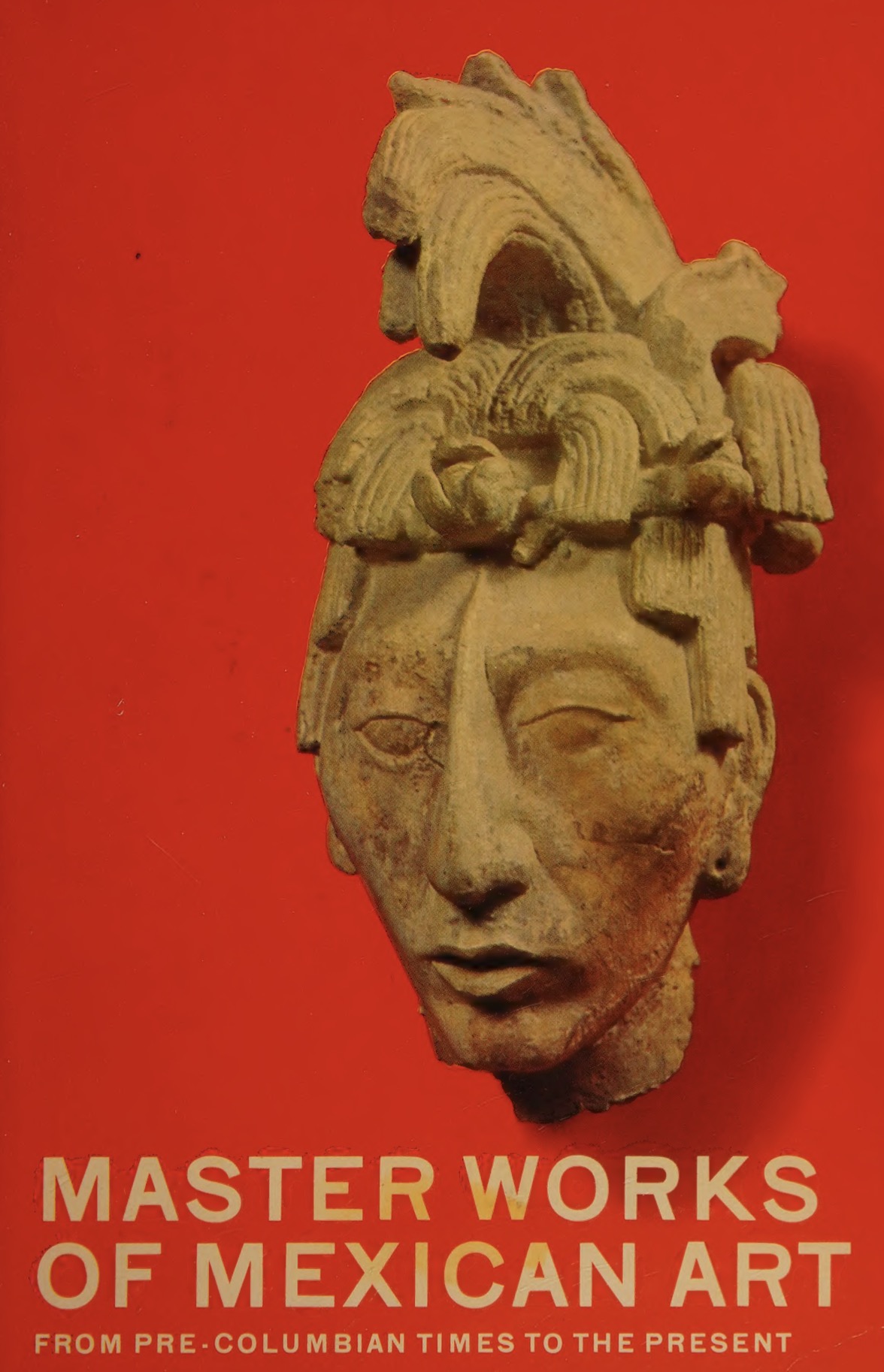
Master Works of Mexican Art — From Pre-Columbian Times to the Present
Book
Gamboa, F. (1963) Master Works of Mexican Art — From Pre-Columbian Times to the Present., Los Angeles County Museum of Art, 296 pp.
Record No. 28570  |  Sinkankas/Born No.: 2209  |  RWHL
Pre-Hispanic art, art of New Spain, modern art, folk art—these designations are more than aesthetic terminology; the periods they refer to are also stages in the formation of our national existence. The collection of sculpture, paintings, ritual objects and domestic tools, toys and ornaments which is now offered the American public represents a vertical section of Mexican life since its first beginnings until our time. We want to show, not only a number of remarkable works and objects, but also a truthful and varied picture of “Mexican man”, a picture in which the native and the European heritages merge. We wish to render the original character of Mexican art, which in its various historical periods, throughout three millennia, has always been closely connected with life. In this sense one can affirm that art has been necessary, even in its most fantastic manifestations, to the Indian creators, to the Baroque artists, and to the contemporary artists. The presence of man on American soil, where he probably came from Asia, can be traced back about 25,000 years. The oldest material vestiges suggest a stage corresponding to the ethnic groups of the earlier Stone Age. In central Mexico fossil remains about 11,000 years old have been found. The first inhabitants of the country were mammoth hunters. But the populations that we have been able to obtain information about lived much later: about 1,500 B.C. It is still a source of much speculation among specialists that already fully constituted societies, whose immediate antecedents we are even now unable to define, appeared at the same time. In this period the division into two zones, which remained the same in all essentials till the Spanish Conquest, took place: the northern zone, mainly populated by nomads, and the southern zone of agriculture, political organization, the great religions and the great epochs of artistic style. The latter zone covered a territory, bordering on the 23rd parallel to the north, and including Costa Rica to the south. These two zones are designated by the term Mesoamerica. In order to facilitate an understanding of the pre-Hispanic world we have preferred a disposition that emphasizes the interrelative connections of the various styles to a purely chronological or geographical one, without disrupting the continuity of the cultures.

Handbook of the Robert Woods Bliss Collection of Pre-Columbian Art
Book
Thacher, J.S. and Coe, M.D. (1963) Handbook of the Robert Woods Bliss Collection of Pre-Columbian Art. Washington, DC, Dumbarton Oaks, 78 pp., many plates
Record No. 28568  |  Sinkankas/Born No.: NIS/NIB  |  RWHL
Robert Woods Bliss’s Collection of Pre-Columbian Art was formed by the strong personal interest of a man deeply engaged in his subject. The Collection is most unusual in that its objects are not merely of archaeological interest but were chosen by Mr. Bliss for the intrinsic beauty of their craftsmanship and materials. Mr. Bliss’s first purchase was an Olmec sculpture in Paris in 1912 (Handbook no. 25). During the succeeding years, while he and Mrs. Bliss were forming their Byzantine Collection and establishing Dumbarton Oaks, Mr. Bliss also acquired pre-Columbian objects. He collected more intensively in the 1940s and 1950s, after Dumbarton Oaks had been conveyed to Harvard University, and continued to do so avidly until the time of his death in 1962. Mrs. Bliss always shared his interest in the Collection, and has recently added to it several objects which he no doubt would have selected himself. By the mid-forties, the Collection had assumed such importance as to be of public interest, and, in April 1947, it was placed on exhibition at the National Gallery of Art. There it remained, its size and area of installation expanding, until July 1962. Thus, during these sixteen years, many people were given the privilege of studying and enjoying the Collection. Mr. Bliss was eager to have the indigenous arts of the Americas represented permanently in the capital of this country. He made the happy decision to give his Collection to Dumbarton Oaks, and Philip Johnson was chosen to design a building for it. Mr. Johnson has created an original and beautiful setting where the objects are seen as works of art, arranged according to cultures. Except for the more recent accessions, largely generous gifts whose sources are noted in this handbook, the entire Collection was acquired by Mr. Bliss himself.

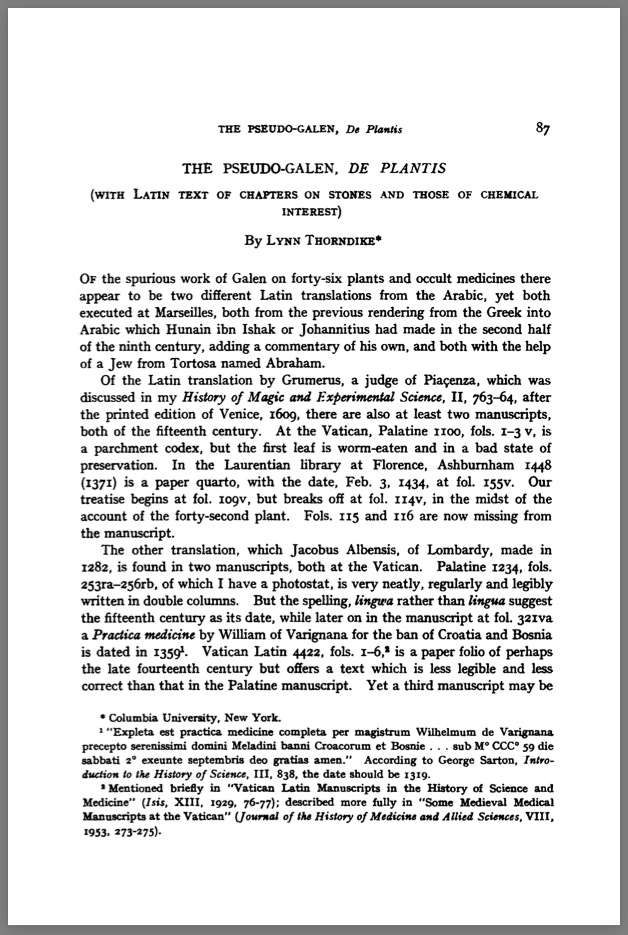
Developments and Highlights at the Gem Trade Lab in New York: Lavender-dyed jadeite
Journal Article
Crowningshield, G.R. (1963) Developments and Highlights at the Gem Trade Lab in New York: Lavender-dyed jadeite. Gems & Gemology, Vol. 11, No. 3, Fall, p. 82.
Record No. 28103  |  Sinkankas/Born No.: NIS/NIB  |  RWHL
Although we were aware that lavender-dyed jadeite is on the market, because we have purchased some for our collection, we have rarely been asked to identify it. Recently, we examined a bead necklace that proved to be pink-fluorescing, lavender-dyed jadeite showing a distinctive spectrum (Figure 7). The dyed stones in our collection do not show either reaction.

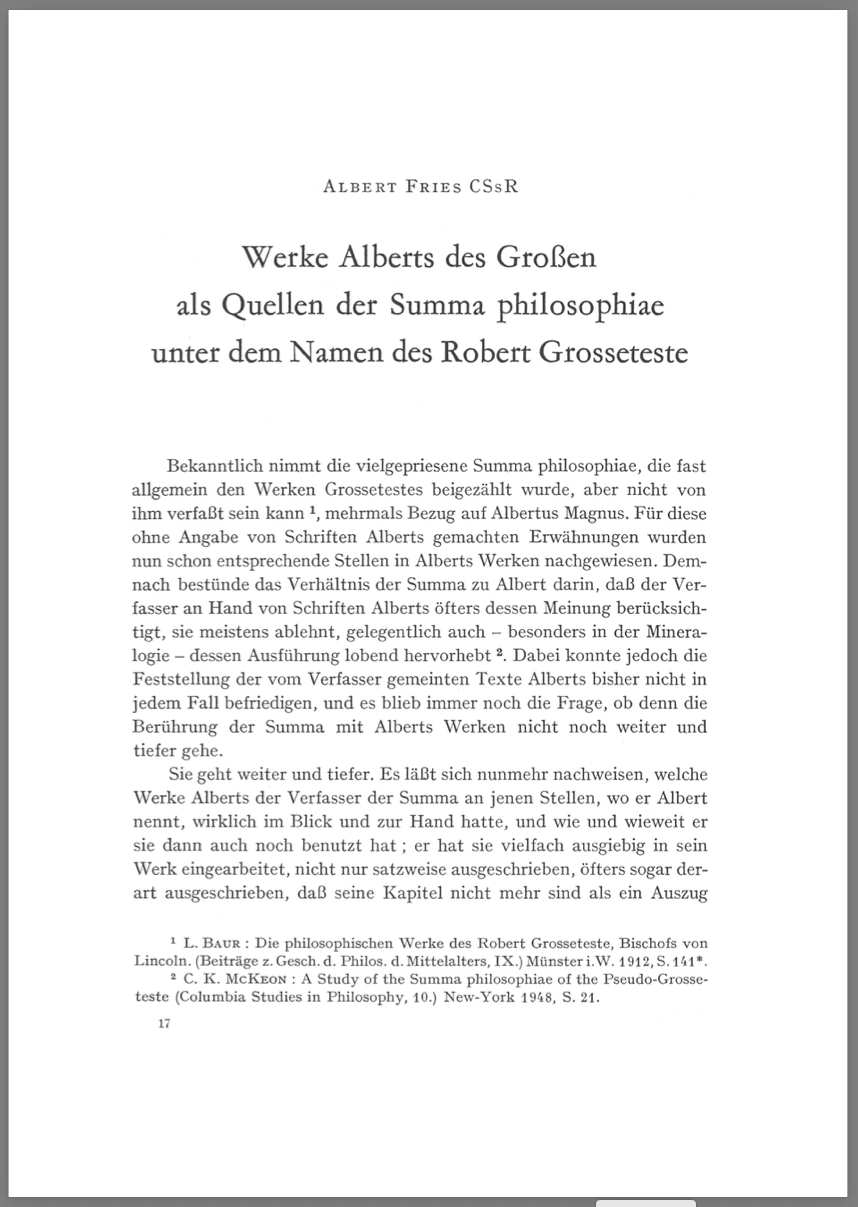
The Pseudo-Galen, De Plantis (with Latin text of chapters on stones and those of chemical interest)
Journal Article
Thorndike, L. (1963) The Pseudo-Galen, De Plantis (with Latin text of chapters on stones and those of chemical interest). Ambix, Vol. 11, No. 2, pp. 87–94.
Record No. 27978  |  ISBN/ISSN: 0002-6980  |  DOI: https://doi.org/10.1080/00026980.1963.11923896  |  Sinkankas/Born No.: NIS/NIB  |  RWHL
Of the spurious work of Galen on forty-six plants and occult medicines there appear to be two different Latin translations from the Arabic, yet both executed at Marseilles, both from the earlier rendering from the Greek into Arabic which Ḥunayn ibn Isḥāq (Johannitius) had made in the second half of the ninth century, adding a commentary of his own, and both with the help of a Jew from Tortosa named Abraham. Of the Latin translation by Grumerus, a judge of Piacenza, which was discussed in my History of Magic and Experimental Science, II, 763–64, after the printed edition of Venice, 1609, there are also at least two manuscripts, both of the fifteenth century. At the Vatican, Palatine 1100, fols. 1–3v, is a parchment codex, but the first leaf is worm-eaten and in a bad state of preservation. In the Laurentian Library at Florence, Ashburnham 1448 (1371) is a paper quarto, with the date Feb. 3, 1434, at fol. 155v. Our treatise begins at fol. 109v, but breaks off at fol. 114v, in the midst of the account of the forty-second plant. Fols. 115 and 116 are now missing from the manuscript.

Werke Alberts des Grossen als Quellen der Summa philosophiae unter dem Namen des Robert Grosseteste
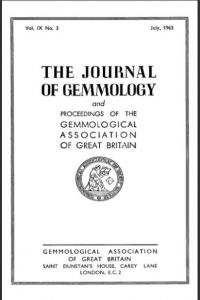
Works of Albert the Great as sources of the Summa philosophiae under the name of Robert Grosseteste
Journal Article
Fries, A. (1963) Werke Alberts des Grossen als Quellen der Summa philosophiae unter dem Namen des Robert Grosseteste. [Works of Albert the Great as sources of the Summa philosophiae under the name of Robert Grosseteste] Freiburger Zeitschrift für Philosophie und Theologie, Vol. 10, No. 3, pp. 257–290.
Record No. 27894  |  DOI: https://doi.org/10.5169/seals-761530  |  Sinkankas/Born No.: NIS/NIB  |  Language: in German  |  RWHL
As is well known, the much-praised Summa philosophiae, which was almost universally counted among the works of Grosseteste but cannot have been written by him, refers several times to Albertus Magnus. For these references—made without citing specific works by Albert—corresponding passages have already been identified in Albert’s writings. According to this, the relationship of the Summa to Albert consists in the fact that the author frequently considers Albert’s opinions based on his writings, generally rejects them, but occasionally—especially in mineralogy—praises his explanations. However, the identification of the texts by Albert meant by the author has not been fully satisfactory in every case, and the question remains whether the Summa’s engagement with Albert’s works might not go even further and deeper. It goes further and deeper. It can now be demonstrated which works of Albert the author of the Summa actually had in view and at hand in the passages where he refers to Albert, and how and to what extent he used them. He frequently incorporated them extensively into his own work—not merely quoting them sentence by sentence, but often copying them so fully that entire chapters are little more than extracts from a work by Albert. This order of presentation, however, does not reflect the order of discovery; in this case, recognition of dependency preceded the identification of the citations. The result will likely have less impact on the dating of the Summa than on its evaluation, which in the future will probably be more tempered than it has been up to now.

Fine zoning in Australian sapphire

Journal Article
Rutland, E.H. (1963) Fine zoning in Australian sapphire. Journal of Gemmology, Vol. 9, No. 3, July, p. 83.
Record No. 1506  |  ISBN/ISSN: 221252  |  RWHL

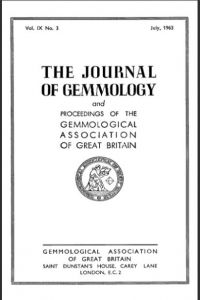
Corundum and amethyst from Tanganyika
Journal Article
Rutland, E.H. (1963) Corundum and amethyst from Tanganyika. Journal of Gemmology, Vol. 9, No. 4, October, pp. 132–135.
Record No. 1505  |  ISBN/ISSN: 221252  |  RWHL

Testing a ruby

Journal Article
Farn, A.E. (1963) Testing a ruby. Journal of Gemmology, Vol. 9, No. 3, July, pp. 75–82.
Record No. 737  |  ISBN/ISSN: 221252  |  RWHL

Zoisitamphibolit mit Rubin aus Tanganjika (Ostafrika)
Zoisite-amphibolite with ruby from Tanganyika (East Africa)
Journal Article
Bank, H. (1963) Zoisitamphibolit mit Rubin aus Tanganjika (Ostafrika). [Zoisite-amphibolite with ruby from Tanganyika (East Africa)] Zeitschrift der Deutschen Gesellschaft für Edelsteinkunde, No. 44, pp. 4–11.
Record No. 418  |  Language: In German  |  RWHL
Bank describes a ruby-bearing zoisite-amphibolite from Tanganyika (present-day Tanzania), a material that had recently attracted attention both mineralogically and as an ornamental stone. The rock consists principally of green zoisite and dark amphibole containing conspicuous red to purplish-red ruby crystals, producing the striking color contrast characteristic of the material. The constituent minerals and their physical and optical properties are examined, with particular attention to the ruby and zoisite, and the occurrence is considered in relation to its geological setting and mineral associations. The paper discusses the identification and gemological characteristics of the material and its suitability for cutting and polishing, documenting an unusual natural association in which ruby occurs embedded in a contrasting green zoisite-rich matrix.

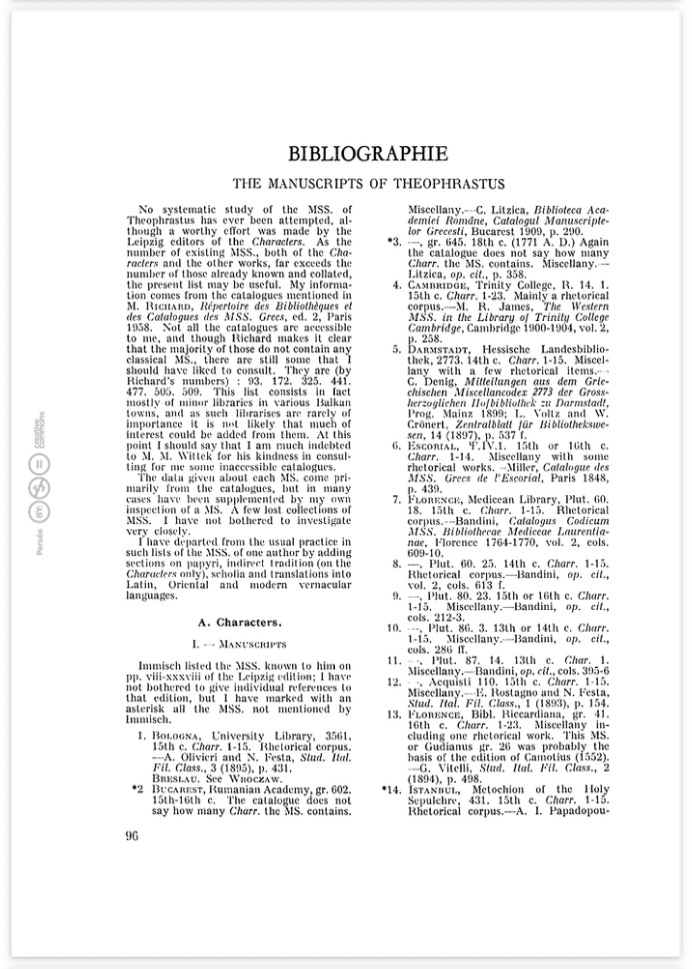
The Manuscripts of Theophrastus

Journal Article
Wilson, N.C. (1962) The Manuscripts of Theophrastus. Scriptorum, Vol. 16, No. 1, pp. 96–102.
Record No. 27697  |  Sinkankas/Born No.: NIS/NIB  |  RWHL
No systematic study of the manuscripts of Theophrastus has ever been attempted, though a worthy effort was made by the Leipzig editors of the Characters. As the number of existing manuscripts, both of the Characters and the other works, far exceeds the number of those already known and collated, the present list may be useful. My list comes from the catalogues mentioned in M. Richard, Répertoire des Bibliothèques et des Catalogues des MSS. Grecs, 2nd ed., Paris 1958. Not all the catalogues are accessible to me, and though Richard makes it clear that the majority of those do not contain any classical manuscripts, there are still some that I should have liked to consult. They are (by Richard’s numbers): 93, 172, 325, 441, 477, 505, 509. This list consists in fact mostly of minor libraries in various Balkan towns, and as such libraries are rarely of importance, it is not likely that much of interest could be added from them. At this point I should say that I am much indebted to M. M. Wittek for his kindness in securing for me some inaccessible catalogues. The data given about each manuscript come from the catalogues, but in many cases have been supplemented by my own inspection of a manuscript. A few lost collections of manuscripts I have not bothered to investigate very closely. I have departed from the usual practice in such lists of the manuscripts of one author by adding sections on papyri, indirect tradition (on the Characters only), scholia, and translations into Latin, Oriental, and modern vernacular languages.

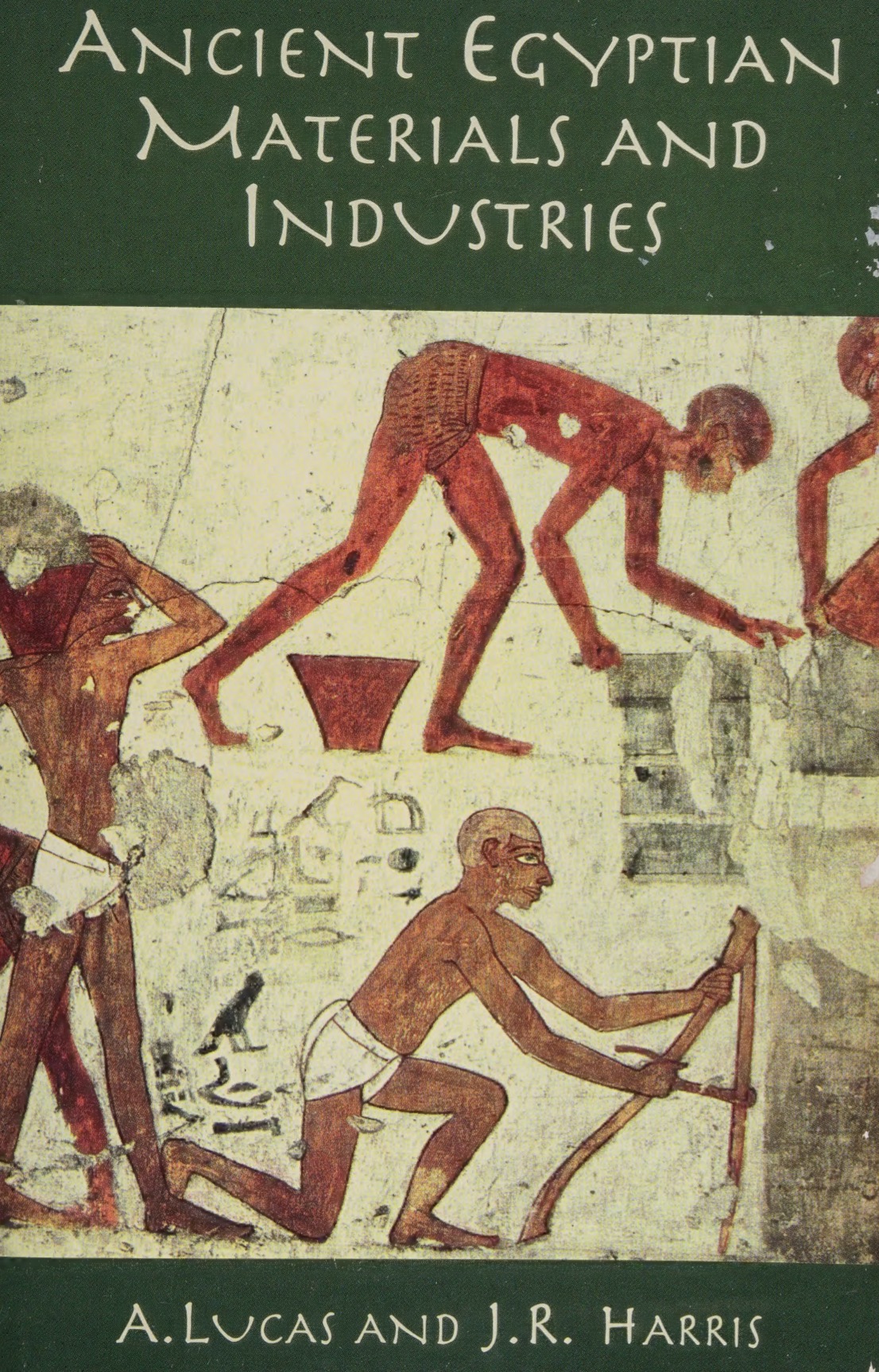
Ancient Egyptian Materials and Industries
Book
Lucas, A. and Harris, J.R. (1962) Ancient Egyptian Materials and Industries. Mineola, NY, Dover, 570 pp.
Record No. 26873  |  ISBN/ISSN: 486404463  |  Sinkankas/Born No.: 4059  |  RWHL
The majesty and splendor of ancient Egypt were largely due to the remarkably advanced technological skills developed by its artisans and craftsmen. This comprehensive and detailed study of ancient Egyptian technology meticulously documents how these workers, along with other Egyptians, exploited the land’s abundant resources. First published in 1926 and later revised and enlarged, this monumental work became a standard reference, unmatched in any other field of archaeology. The present volume reprints the fourth edition, thoroughly revised in light of more recent research and archaeological discoveries. Topics covered include a wide range of materials and techniques central to Egyptian life: the use of animal products, building materials, cosmetics, perfumes, incense, fibers, glazed ware, glass and its production, metals and alloys, painting materials, pottery, woodworking, precious and semi-precious stones, distillation of alcoholic beverages, and substances used in mummification. Profoundly erudite and rich in detail, Ancient Egyptian Materials and Industries is an indispensable reference for students of Egyptology and classical civilizations, and a vital resource for anyone interested in the long and remarkable history of technological innovation. Sinkankas: Drastically revised, rearranged: the substances now include beverages, animal products, building materials, cosmetics, perfumes & incense, ceramics & glass, fibers, metals & alloys, mummification materials, oils, fats, waxes, painting materials, pottery & its manufacture, gemstones, other stones, woods & woodworking, and a historical analysis. Ch 12, [335–54], on gemstones, among which now additionally appear coral, amber, malachite, and jade, while horn, ivory, nacre and tortoiseshell are described in Ch 2. Ornamental stones are treated in Ch 13, [355–75]. The author notes that “diamond, opal, ruby and sapphire were not known to the ancient Egyptians.” In his preface, Harris notes the inclusion of information taken from recent studies, with references added to the list in the previous edition. Much technological information is also added, with an appendix of reliable chemical analyses. “The most consistent modification has, however, been in matters of lexicography, in order to eliminate invalid evidence derived from inaccurate or disputed translations of Egyptian texts.” In this connection, see also Harris’ Lexicographical Studies in Ancient Egyptian Materials, 1961. In this edition, the following places are of gemological interest: beads, Ch 4, [41–7] (includes gemstone materials); inlaid gemstone eyes, Ch 7, [98–127] (many types & examples); gemstones in general, Ch 16, [386–405]; other stones, Ch 17, [406–28]. Lucas should always be consulted whenever one writes or lectures about Egyptian jewelry.

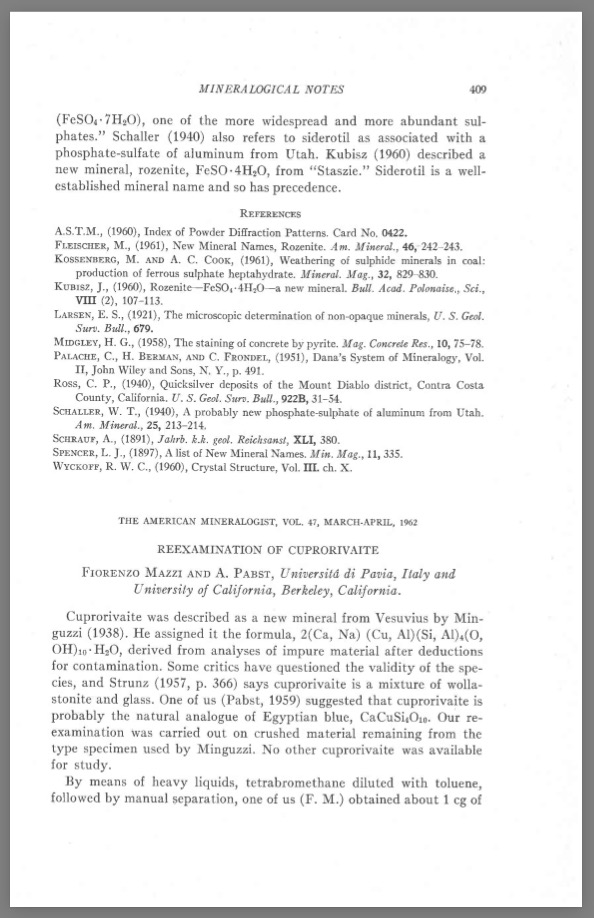
Reexamination of cuprorivaite

Journal Article
Mazzi, F. and Pabst, A. (1962) Reexamination of cuprorivaite. American Mineralogist, Vol. 47, March–April, pp. 409–411.
Record No. 26401  |  Sinkankas/Born No.: NIS/NIB  |  RWHL
Cuprorivaite was first described as a new mineral from Vesuvius by Minguzzi in 1938, who proposed the formula 2(Ca, Na)(Cu, Al)(Si, Al)₂(O, OH)₁₀·H₂O, based on analyses of impure material with adjustments for contamination. However, the validity of the species has been debated; Strunz (1957, p. 366), for instance, argued that cuprorivaite is merely a mixture of wollastonite and glass. One of the present authors, Pabst (1959), proposed instead that cuprorivaite is likely the natural analogue of Egyptian blue, CaCuSi₄O₁₀. A reexamination was conducted using crushed material from the original type specimen described by Minguzzi, as no other confirmed samples of cuprorivaite were available for further study.

Testing a sapphire

Journal Article
Farn, A.E. (1962) Testing a sapphire. Journal of Gemmology, Vol. 8, No. 6, April, pp. 224–227.
Record No. 736  |  ISBN/ISSN: 221252  |  RWHL

Building a Gemological Library

Gemological books range from general identification manuals and textbooks to specialized works on individual gems, mineralogy, jewelry, treatments, synthesis, history and gem-producing regions.

For a curated selection of particularly useful books, read The Gemologist's Core Library — Classic Books on Gemology, Jewelry and Mineralogy.

About Four Treasures

Four Treasures is Lotus Gemology's freely accessible gemological reference database. Use the full database to search by author, title or keyword and explore literature on gemology, mineralogy, jewelry and related fields. Where available, hyperlinks on titles may lead directly to the full publication.

Search the Complete Four Treasures Database