Explore books on gems, gemology, jewelry and mineralogy in Four Treasures, the Lotus Gemology reference database. This bibliography brings together matching book records from the collection, with publication details, abstracts and cover images where available.
Gemology Book References
The list below matches books concerning gemology and related subjects in the database's searchable fields. Some works cover several branches of gems, jewelry or mineralogy.
2,621–2,640 of 3,454 matching references
Fire marks on genuine sapphire
Journal Article
Eppler, W.F. (1962) Fire marks on genuine sapphire.Journal of Gemmology, Vol. 8, No. 5, Jan., pp. 167–170.
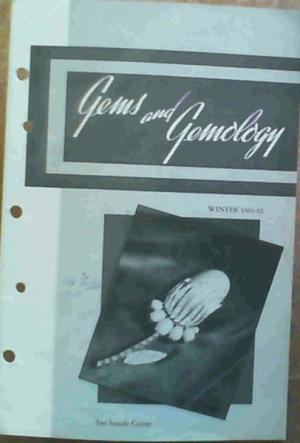
Developments and Highlights at the Gem Trade Lab in New York: Odd-color sapphires and rubies [from Tanzania]
from Tanzania
Journal Article
Crowningshield, G.R. (1962) Developments and Highlights at the Gem Trade Lab in New York: Odd-color sapphires and rubies [from Tanzania].Gems & Gemology, Vol. 10, No. 11, Fall, p. 340.
Record No. 625 | ISBN/ISSN: 0016626X | RWHL
Reference copied to clipboard!
corundum, Tanzania.12, gems
The gemstones of Brazil
Journal Article
Bastos, F.M. (1961) The gemstones of Brazil.Gems & Gemology, Vol. 10, pp. 195–201.
Record No. 29378 | Sinkankas/Born No.: NIS/NIB | RWHL
Oldfather, C.H. and Diodorus Siculus (1961)Diodorus of Sicily | Library of History. Cambridge, MA, Harvard University Press, 12 Vols., Vols. 1–4, Books 1–15
Record No. 17188 | Sinkankas/Born No.: NIS/NIB | RWHL
Reference copied to clipboard!
gems, history of gemology, history of mineralogy, Greek, Greece, Rome
Diodorus Siculus, Greek historian of Agyrium in Sicily (ca. 80–20 BC), wrote forty books of world history, called Library of History, in three parts: mythical history of peoples, non-Greek and Greek, to the Trojan War; history to Alexander's death (323 BC); history to 54 BC. Of this we have complete Books 1–5 (Egyptians, Assyrians, Ethiopians, Greeks) and Books 11–20 (Greek history 480–302 BC); and fragments of the rest. He was an uncritical compiler, but used good sources and reproduced them faithfully. He is valuable for details unrecorded elsewhere, and as evidence for works now lost, especially writings of Ephorus, Apollodorus, Agatharchides, Philistus, and Timaeus. The Loeb Classical Library edition of Diodorus Siculus is in twelve volumes.
Ekanite: Another new metamict gem from Ceylon
Journal Article
Gübelin, E.J. (1961) Ekanite: Another new metamict gem from Ceylon.Gems & Gemology, Vol. 10, No. 6, Summer, pp. 163–179, 191.
Sinkankas: Tentatively a calcium thorium silicate from the gem gravels of Ceylon, named after F. L. D. Ekanayake, who first drew attention to its remarkable properties. Essentially the same article was repeated in Zeitschrift der Deutschen Gesellschaft für Edelsteinkunde, 40, 1962, p. 29, and in The Gemmologist, 31, 1962, pp. 142–152, 165–169, 16 figures; not seen. Mineralogical Abstracts, 16(4), p. 358.
Corundum from Tanganyika
Journal Article
Webster, R. (1961) Corundum from Tanganyika.Gems & Gemology, Vol. 10, No. 7, Fall, pp. 202–205.
Record No. 1828 | ISBN/ISSN: 0016626X | RWHL
Reference copied to clipboard!
corundum, ruby, sapphire, Tanzania.12, East Africa.12, inclusions.5, gems
New star-stones and their antecedents
Journal Article
Pough, F.H. (1961) New star-stones and their antecedents.Journal of Gemmology, Vol. 8, No. 1, Jan., pp. 14–20.
Developments and Highlights at the Gem Trade Lab in New York: Sapphire with color change
Journal Article
Crowningshield, G.R. (1961) Developments and Highlights at the Gem Trade Lab in New York: Sapphire with color change.Gems & Gemology, Vol. 10, No. 8, Winter, p. 246.
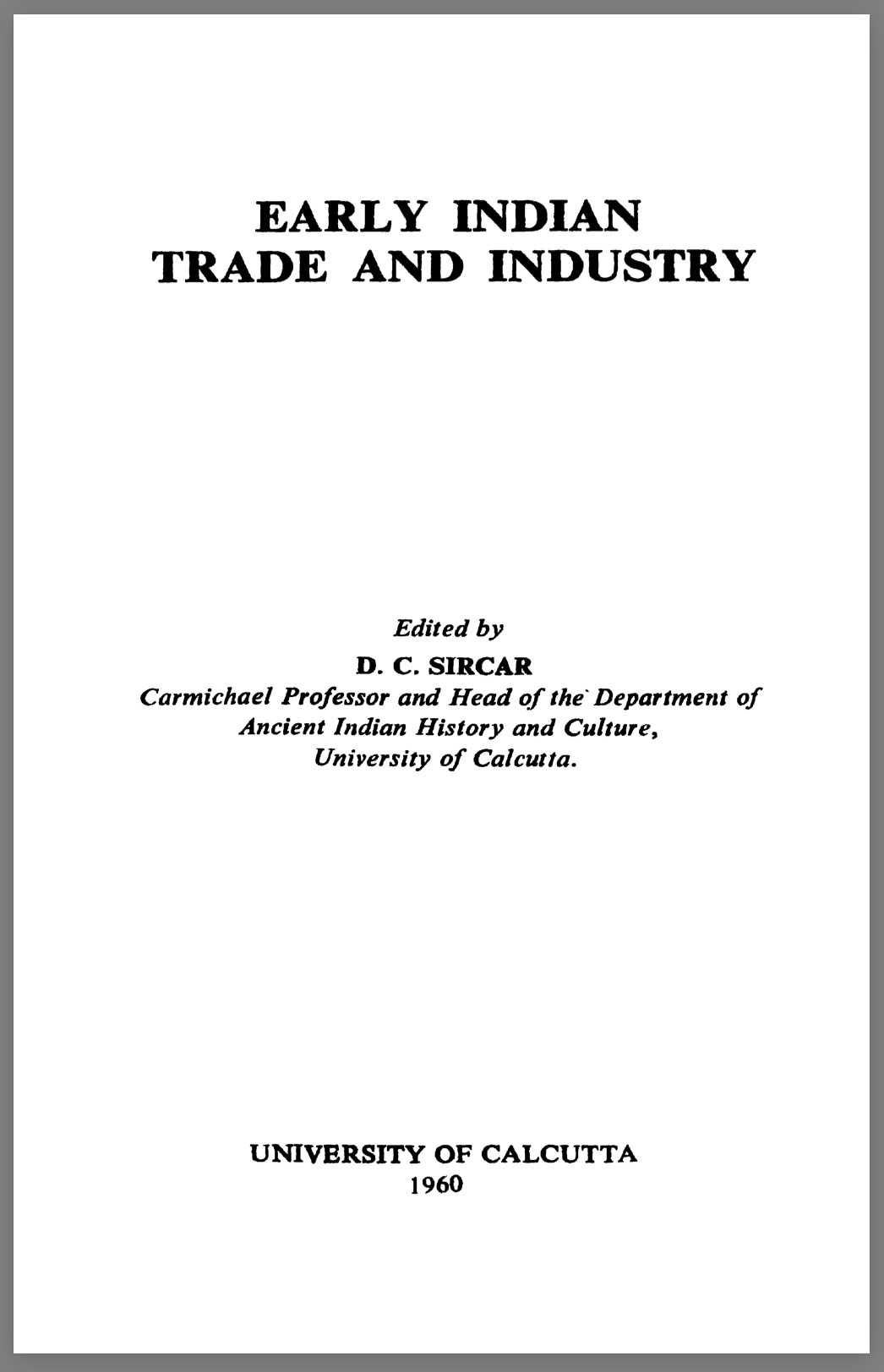
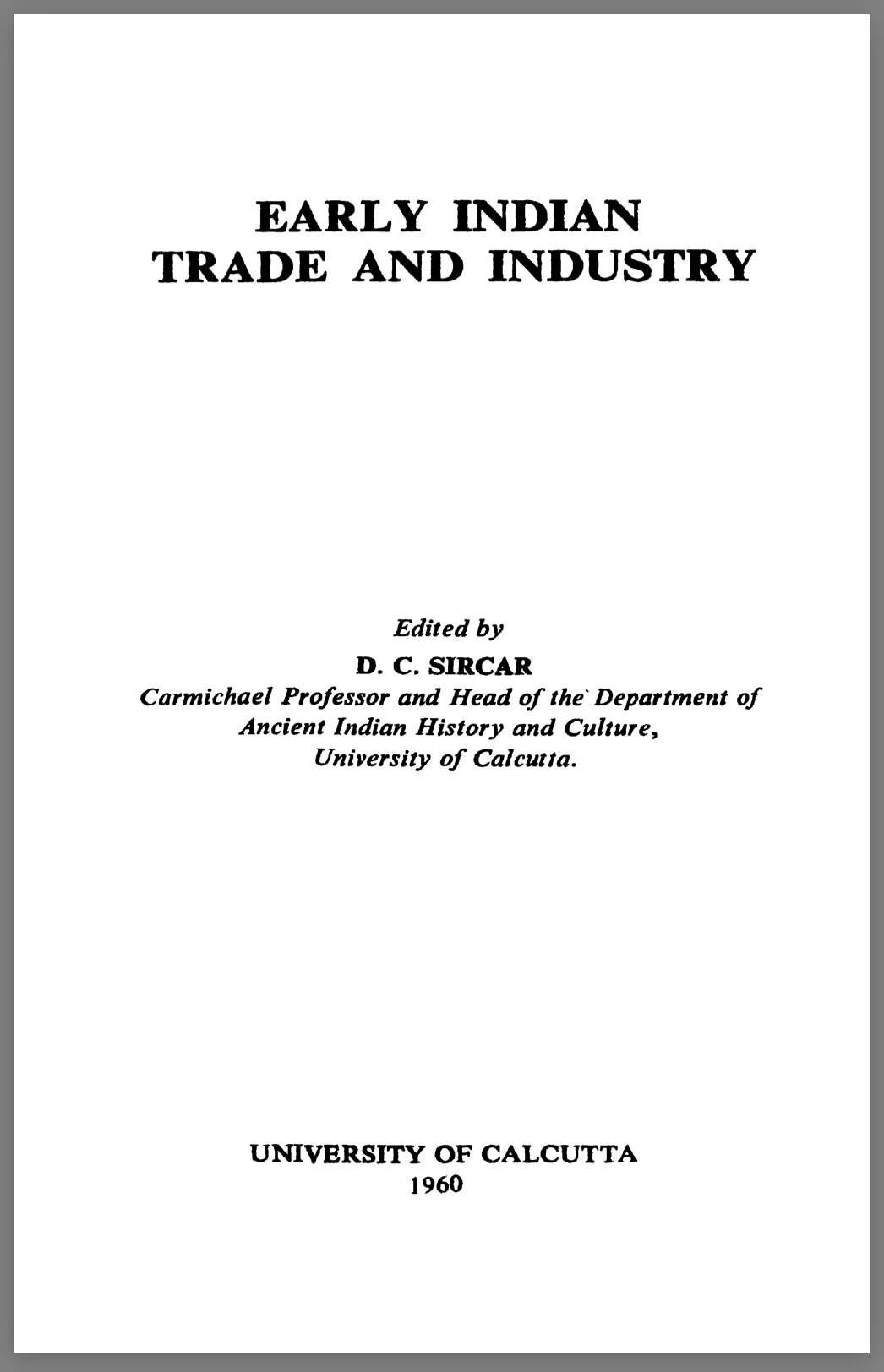
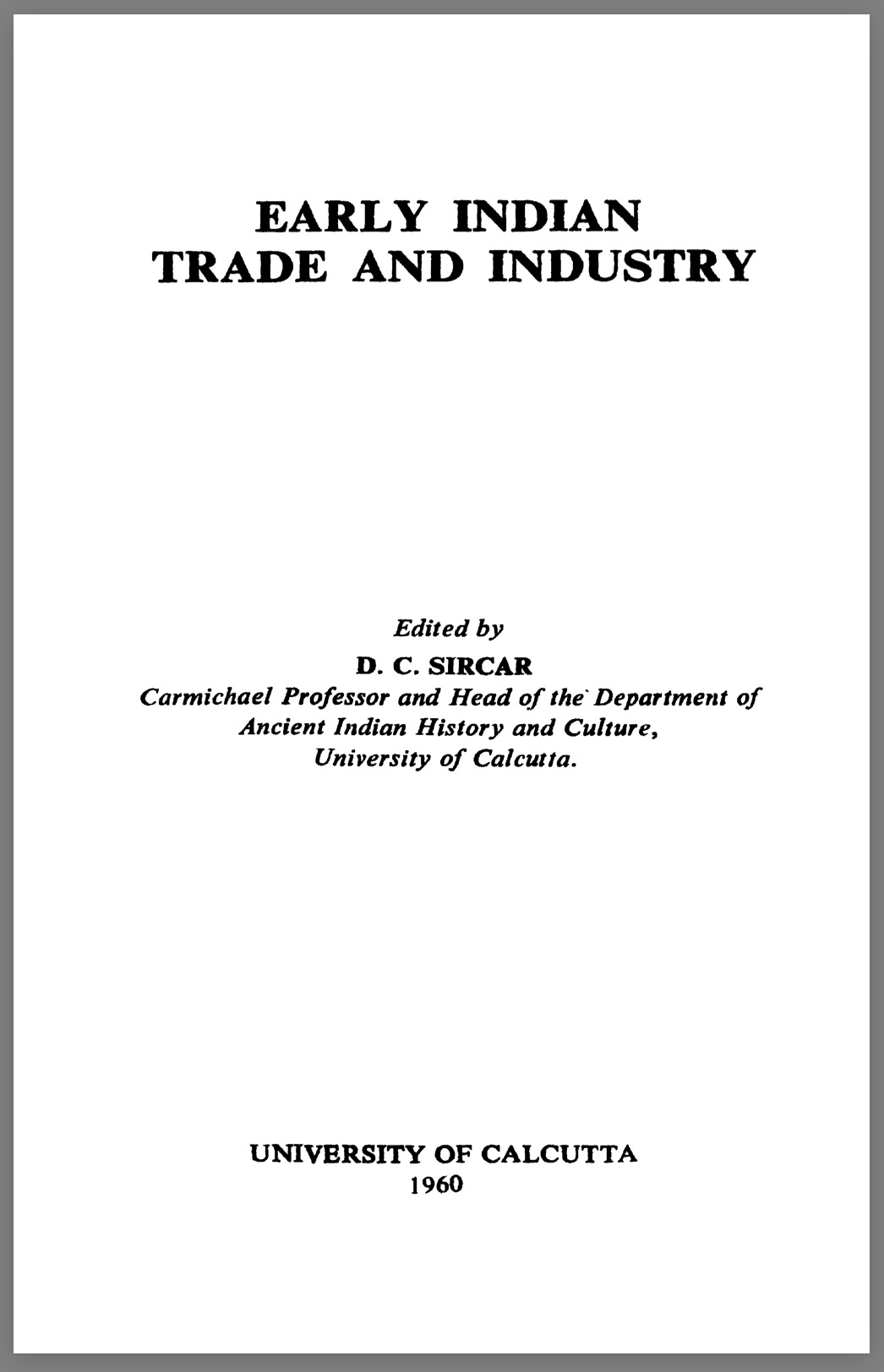
Acharya, N.N. (1960) The trade routes and means of transport in ancient India with special reference to Assam. In: Early Indian Trade and Industry, Calcutta: Calcutta University Press, pp. 36–45.
Record No. 26456 | Sinkankas/Born No.: NIS/NIB | RWHL
Reference copied to clipboard!
gems, ancient gemology, early gemology, ancient mineralogy, early trade, India
Indus Valley trade in the 3rd millennium B.C. Draws upon the literary reference Jatakas.
Chakravarti, A.K. (1960) Early Sino-Indian Maritime Trade and Fu-nan. In: Early Indian Trade and Industry, Calcutta: Calcutta University Press, pp. 101–117.
Record No. 26454 | Sinkankas/Born No.: NIS/NIB | RWHL
Reference copied to clipboard!
gems, ancient gemology, early gemology, ancient mineralogy, early trade, India, Han-Shu, Malay Peninsula, Sumatra
Fu-nan is the earliest Indianized state mentioned by the Chinese in the region now known as Cambodia. According to the History of the Souei and the New History of the T’ang, Fu-nan gradually lost its independence as it was annexed by its former vassal state, Tchen-la, under the rule of Bhavavarman and Citrasena Mahendravarman. The earliest recorded date for Bhavavarman’s reign over Fu-nan territory is 598 A.D., leading George Cœdès to conclude that the conquest likely began in the latter half of the sixth century A.D. Regardless of the precise timeline, Fu-nan’s decline occurred before the rise of Srivijaya in the seventh century. This study focuses on examining the role Fu-nan played in Sino-Indian maritime trade during the period preceding Srivijaya’s ascendancy.
Verma, O.P. (1960) Organisation and functions of some south Indian guilds. In: Early Indian Trade and Industry, Calcutta: Calcutta University Press, pp. 76–82.
Record No. 26453 | Sinkankas/Born No.: NIS/NIB | RWHL
Reference copied to clipboard!
gems, ancient gemology, early gemology, ancient mineralogy, early trade, India
In the complex economic structure of medieval South India, guilds played a vital role in the growth of trade and industry. They not only engaged in the exchange of various commodities and accumulated substantial profits but also contributed significantly to the state’s revenue, often providing crucial support to the ruling powers. While this dual function was typical of guilds throughout history, what stands out in the South Indian context is their autonomy and influence—they maintained their own militias and exercised considerable freedom in recovering dues from clients, often with the full approval of the feudal lords.
Krishnamurthy, C. (1960) Bead-making industry in South India. In: Early Indian Trade and Industry, Calcutta: Calcutta University Press, pp. 59–62.
Record No. 26452 | Sinkankas/Born No.: NIS/NIB | RWHL
Reference copied to clipboard!
gems, ancient gemology, early gemology, ancient mineralogy, early trade, India
Beads made from various materials are frequently found at ancient habitation and burial sites in South India, particularly from megalithic and early historic contexts, though terracotta beads were already known to Neolithic communities. The earliest Tamil texts, known as the Sangam literature, contain numerous references to the bead-making industry and the popularity of bead ornaments among both men and women. Sangam poets often described the beauty and youth of young women through vivid depictions of their adornments, including bead necklaces and other ornaments worn from head to toe. Notably, semi-precious stone beads, especially those made of beryl and manufactured in the Tamil region, attracted Roman interest during the early centuries of the Christian era. Tamil literature supports the historical export of such beads, along with pearls, which were sent to Rome in large quantities.
Chauhan, S.R.P. (1960) Ornament industry in ancient India. In: Ornament industry in ancient India, Calcutta: Calcutta University Press, pp. 46–53.
Record No. 26451 | Sinkankas/Born No.: NIS/NIB | RWHL
Reference copied to clipboard!
gems, ancient gemology, early gemology, ancient mineralogy, early trade, India
In ancient India, the love for ornaments was deeply rooted in society, and those who crafted them—jewellers and goldsmiths—held positions of high regard. Celebrated for their refined craftsmanship and aesthetic sensibility, Indian artisans, particularly the suvarnakaras (goldsmiths), enjoyed a respected status, with their work receiving wide appreciation. Kauṭilya’s Arthaśāstra highlights the importance of these craftsmen, noting qualities such as good family background, skill, and conduct. This study offers a broad survey of the ornament industry in India from the 6th century B.C. to the 3rd century A.D., drawing on literary sources including the Jatakas, Panini, Kauṭilya, Patanjali, and Hāla, alongside archaeological evidence from Taxila, to explore the nature and techniques of early Indian ornament production.
Keny, L.B. (1960) Magadha, a commercial centre in ancient India. In: Early Indian Trade and Industry, Calcutta: Calcutta University Press, pp. 25–35.
Record No. 26449 | Sinkankas/Born No.: NIS/NIB | RWHL
Reference copied to clipboard!
gems, ancient gemology, early gemology, ancient mineralogy, early trade, India
Magadha was a region and kingdom in ancient India, based in the eastern Ganges Plain. It was one of the sixteen Mahajanapadas during the Second Urbanization period. The region was ruled by several dynasties, which overshadowed, conquered, and incorporated the other Mahajanapadas. Magadha played an important role in the development of Jainism and Buddhism and formed the core of the Maurya Empire (ca. 320–185 BCE).
Highlights at the Gem Trade Lab in New York: [Sapphires: unusual spectra, yellow-sapphire fading, 12-rayed blue star]
Sapphires: unusual spectra, yellow-sapphire fading, 12-rayed blue star
Journal Article
Crowningshield, G.R. (1959) Highlights at the Gem Trade Lab in New York: [Sapphires: unusual spectra, yellow-sapphire fading, 12-rayed blue star].Gems & Gemology, Vol. 9, No. 10, Summer, p. 294.
Gemological books range from general identification manuals and textbooks to specialized works on individual gems, mineralogy, jewelry, treatments, synthesis, history and gem-producing regions.
Four Treasures is Lotus Gemology's freely accessible gemological reference database. Use the full database to search by author, title or keyword and explore literature on gemology, mineralogy, jewelry and related fields. Where available, hyperlinks on titles may lead directly to the full publication.

![Developments and Highlights at the Gem Trade Lab in New York: Odd-color sapphires and rubies [from Tanzania]](/media/publications/203904051202-12 at 19.23.52.jpg "Developments and Highlights at the Gem Trade Lab in New York: Odd-color sapphires and rubies [from Tanzania]")
![Highlights at the Gem Trade Lab in New York: [Sapphires: unusual spectra, yellow-sapphire fading, 12-rayed blue star]](/media/publications/1439595017 IMG - COVER SU59.jpg "Highlights at the Gem Trade Lab in New York: [Sapphires: unusual spectra, yellow-sapphire fading, 12-rayed blue star]")