Gemology Books Bibliography

Gemology Books Bibliography

Explore books on gems, gemology, jewelry and mineralogy in Four Treasures, the Lotus Gemology reference database. This bibliography brings together matching book records from the collection, with publication details, abstracts and cover images where available.

Gemology Book References

The list below matches books concerning gemology and related subjects in the database's searchable fields. Some works cover several branches of gems, jewelry or mineralogy.
2,781–2,800 of 3,454 matching references

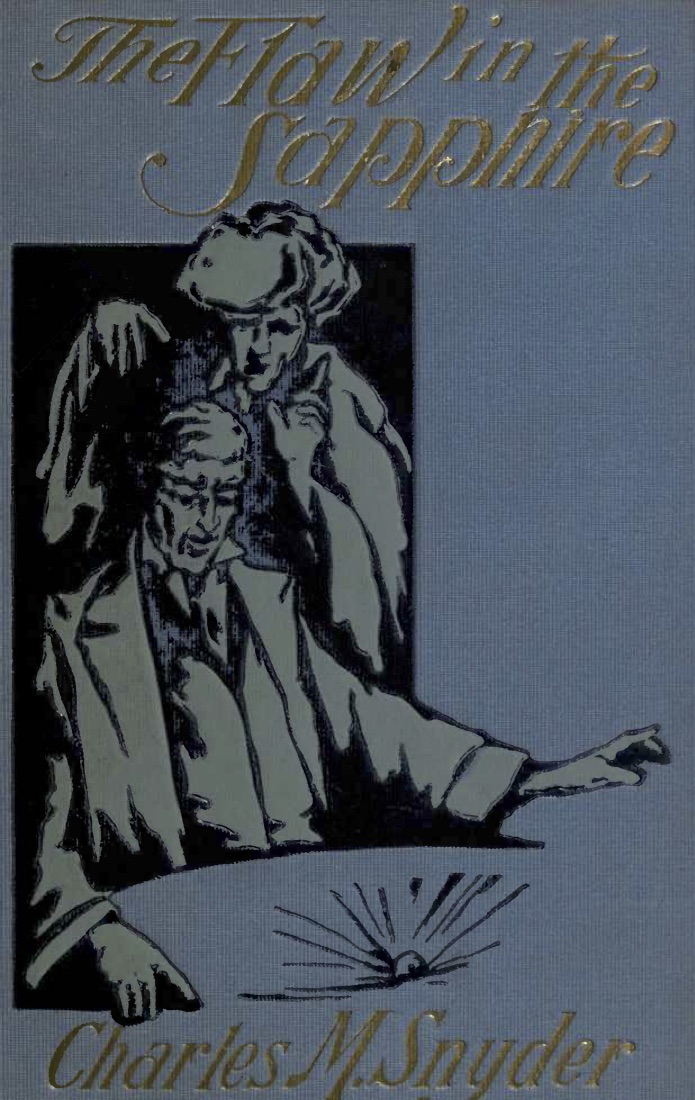
The Flaw in the Sapphire

Book
Snyder, C.M. (1909) The Flaw in the Sapphire. New York, Metropolitan Press, 311 pp.
Record No. 1622  |  Sinkankas/Born No.: NIS/NIB  |  RWHL
Snyder’s The Flaw in the Sapphire is a 1909 detective and mystery novel centered on Dennis Muldoon, a shrewd young Irish-American who leaves his father’s business and goes to New York, where he becomes involved in a series of unusual crimes and mysteries. The title episode concerns the apparent theft and substitution of a valuable sapphire under seemingly impossible circumstances: the gem has been kept in a concealed, securely protected compartment, yet is replaced without any obvious means of entry. The investigation emphasizes close observation, physical evidence, concealed spaces, and deductive reasoning, while the narrative combines crime, romance, humor, and social satire. The sapphire itself functions chiefly as the object around which the mystery is constructed rather than as the subject of mineralogical or gemological discussion.

General Report for 1908

Journal Article
Holland, T.H. (1909) General Report for 1908. Records, Geological Survey of India, Vol. 38, pp. 1–70.
Record No. 999  |  Sinkankas/Born No.: NIS/NIB  |  RWHL
Holland’s annual report summarizes the work of the Geological Survey of India during 1908, including administration, publications, museum and laboratory activities, mineralogy, petrology, palaeontology, stratigraphy, economic geology, and investigations throughout India and Burma. [3–70] Of particular gemological interest is the review of mineral production: the value of jadestone rose markedly from £49,643 in 1907 to £73,400 in 1908, while ruby, sapphire, and spinel fell from £98,258 to £47,954. Holland attributes the latter decline partly to the failure of the Kashmir sapphire workings to repeat the valuable discoveries of 1907, but chiefly to restricted sales from the Burma Ruby Mines district because of depressed gem markets in Europe and America. Diamond production similarly declined from £2,784 to £940, while amber fell slightly from £385 to £364.

Precious Stones

Book
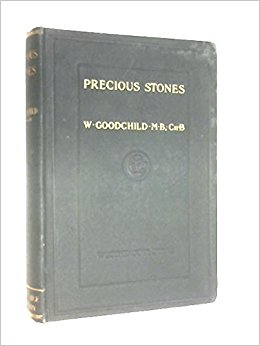
Goodchild, W. (1908) Precious Stones. London, Archibald Constable & Co., 309 pp.
Record No. 2777  |  Sinkankas/Born No.: 2439; NIB  |  RWHL
Sinkankas: The first third of this standard gemological text treats general matters, including historical notes on gemstones, their origin, properties, cutting, and imitations (by Dykes, Ch. 5, pp. 67–92), with the remainder being descriptive gemology. Here are treated diamond, fluorite and opal, corundum, spinel and chrysoberyl, calcite and feldspars, and other strange bedfellows. This odd lack of order is further compounded by the failure of the table of contents to list all of the species and varieties which may be found within the chapters, and one must refer to the index to find them. However, when the substance of the text is examined, it will be found to be good solid fare worthy of perusal. The illustrations show crystal forms, some cut gems, and numerous examples of rough. I have examined other copies of this work which are believed to be reprintings, e.g., medium and pale green cloth, stamped in black instead of gold, also in bright yellow-green of somewhat larger size, 21.5 × 14 cm (8 3/8 × 5 1/2 in), bottom edge trimmed.

Dan to Beersheba: Work and Travel in Four Continents
Book
Colquhoun, A.R. (1908) Dan to Beersheba: Work and Travel in Four Continents. London, William Heinmann, 348 pp.
Record No. 2738  |  Sinkankas/Born No.: NIS/NIB  |  RWHL
Colquhoun’s autobiographical travel narrative recounts a career spanning India, Burma, Siam, China, South Africa, the United States, and Central America, combining personal reminiscence with observations on colonial administration, commerce, transport, politics, and exploration. The early chapters describe his family background, his father’s service in India and Afghanistan, and Colquhoun’s own experiences in India and Lower Burma. Particularly important are his accounts of a mission to Siam in 1879, including Bangkok, King Chulalongkorn, the journey to Zimmay (Chiang Mai), the Shan States, Buddhism, missionary activity, and disputes concerning frontier forests. He subsequently explored southern China from Canton toward Yunnan and Bhamo and became a strong advocate of improved communications linking Burma, Siam, and China by caravan routes and railways. Later chapters cover his work as a correspondent during the Franco-Chinese conflict, his views on the annexation and administration of Upper Burma, service during the pacification of the country, and travels in South Africa associated with Cecil Rhodes and the early expansion into Mashonaland. Of particular gemological interest is his first-hand account of the Mogok Ruby Mines district after the British annexation of Upper Burma. He describes Mogok as an isolated mountainous mining region with a turbulent population and records the transfer of the mines to a syndicate headed by the London jeweller Edwin Streeter, together with problems of illicit ruby mining and smuggling and the administrative controversies surrounding the nearby Momeit district. The book thus provides valuable contemporary recollections of late nineteenth-century Burma and Siam as well as an eyewitness perspective on the political and commercial circumstances surrounding the early British administration of the Mogok ruby mines.

Mines and Minerals of the British Empire
Book
Stokes, R.S.G. (1908) Mines and Minerals of the British Empire. London, Edward Arnold, xx, 403 pp.
Record No. 1652  |  Sinkankas/Born No.: 6368; NIB  |  RWHL
Stokes presents a wide-ranging survey of the principal mining districts and mineral industries of the British Empire, based largely on extensive travel undertaken between 1906 and 1908. Rather than attempting an exhaustive catalogue of deposits, he concentrates on representative mining centres and their geology, methods of exploitation, labor conditions, production, transportation, organization, markets, and economic prospects. Coverage extends through India, Burma, Ceylon, the Malay States, Australia, New Zealand, South Africa, Canada, West Africa, and other colonial territories, embracing coal, gold, copper, tin, mica, manganese, lead, silver, diamonds, and other minerals. Of particular gemological interest are detailed accounts of the Mogok ruby mines of Burma; the alluvial gem fields around Ratnapura, Ceylon, including sapphire, ruby, chrysoberyl, zircon, and tourmaline; and the diamond industries of southern Africa. The numerous contemporary photographs and observations of mining practice make the volume an especially useful record of the organization and physical conditions of colonial mining at the beginning of the twentieth century.

The History of the Kingdom of Siam

Book
Turpin, M. (1908) The History of the Kingdom of Siam. Bangkok, American Presbyterian Mission Press, 233 pp.
Record No. 555  |  Sinkankas/Born No.: NIS/NIB  |  RWHL
Turpin’s History of the Kingdom of Siam, originally published in French in 1771 and here translated by B.O. Cartwright, presents an eighteenth-century European account of Siam from its early kings through the destruction of Ayutthaya and the rise of Phya Tak (Taksin). Drawing largely upon reports of Catholic missionaries and earlier European writers, it gives particular attention to the reign of King Narai, Constantine Phaulkon, Siam’s relations with France under Louis XIV, the Macassar revolt, the overthrow of Phaulkon and expulsion of the French, and subsequent persecution of Christians. The most important later sections describe Burmese invasions, the capture and destruction of Ayutthaya in 1767, the sufferings of its inhabitants and European residents, and the political fragmentation and recovery that followed under Phya Tak. The final chapters broaden into descriptions of Siam’s neighboring kingdoms and an argument for renewed French commercial involvement in the region. Of gemological interest are numerous contemporary statements on mineral resources and the precious-stone trade. Burma and Ava are described as producing exceptionally fine rubies and sapphires, while Pegu exported gold, silver and precious stones, with “rubies” used broadly to include topaz, sapphire, amethyst and other gems. Laos is said to possess a mine yielding rubies and emeralds, including a celebrated royal emerald reputedly the size of an orange; Cambodia is credited with amethyst, ruby, topaz, chrysolite, agate and bloodstone; and Siam itself is reported to contain agate, diamonds and pearls. The work is valuable both as a near-contemporary European narrative of the political upheavals that ended the Ayutthaya kingdom and as a record of eighteenth-century European beliefs concerning the geography, commerce and gem resources of mainland Southeast Asia.

The Imperial Gazetteer of India—Provincial Series—Burma
Book
Lowis, C.C. (1908) The Imperial Gazetteer of India—Provincial Series—Burma. Calcutta, Superintendent of Government Printing, 2 Vols., 466, 430 pp.
Record No. 130  |  Sinkankas/Born No.: NIS/NIB  |  RWHL
A comprehensive two-volume gazetteer of Burma under British rule, covering the province’s physical geography, geology, climate, population, ethnic groups, agriculture, forestry, trade, communications, administration, and individual districts and states. Of particular gemological interest is the detailed account of the Ruby Mines District and Mogok, including the operations of the Burma Ruby Mines Company, indigenous mining methods, labour and licensing arrangements, production and marketing of rubies, and minor occurrences such as tourmaline. The work provides an important contemporary administrative and economic record of Burma’s mineral resources and gemstone industry at the beginning of the twentieth century.

Ancient Khotan

Book
Stein, M.A. (1907) Ancient Khotan. Oxford, Clarendon Press, 2 Vols., xxiv, 621 pp.; vii + 119 plates, 1 map
Record No. 3468  |  RWHL
A monumental report on Stein’s first expedition to Chinese Turkestan in 1900–1901, presenting the archaeological, geographical and historical results of his explorations in the ancient kingdom of Khotan and surrounding regions. The first volume gives detailed accounts of sites such as Yotkan, Dandan-Uiliq, Niya, Endere and Rawak, together with descriptions of manuscripts, coins, sculptures, paintings, textiles and other antiquities; the second consists of photographic plates, plans and a large map of the Khotan territory. Of particular gemological interest are Stein’s observations on Khotan jade, including the recovery of nephrite from the Yurung-kash and Kara-kash rivers, traditional methods of searching the river gravels, and the historical importance of jade as one of Khotan’s principal exports to China. The work greatly expands upon the preliminary and popular accounts of his expedition and remains a fundamental source for the archaeology, geography, trade and material culture of the southern Tarim Basin, as well as for the historical setting of the celebrated Khotan jade deposits.

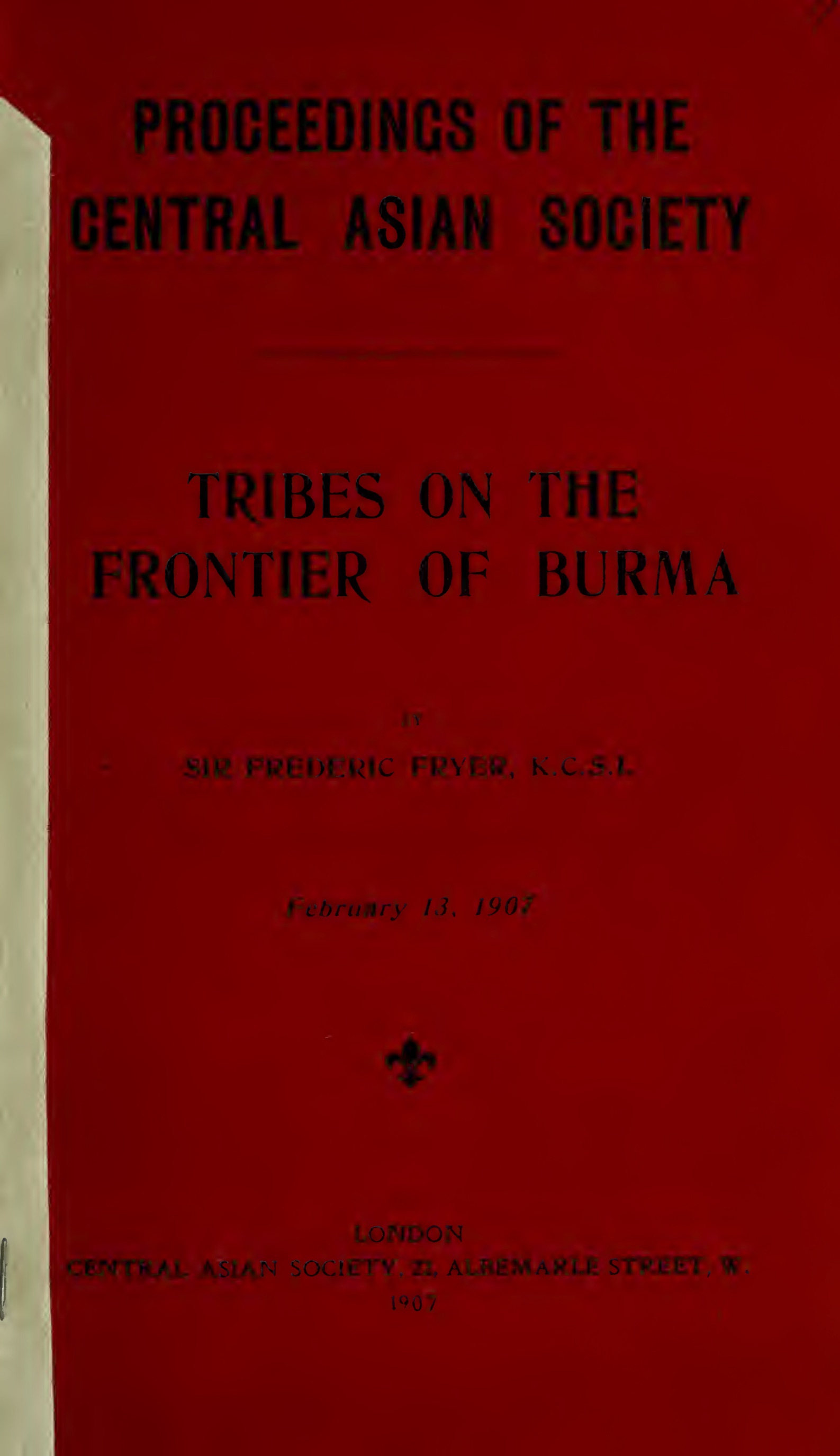
Tribes on the Frontier of Burma

Book
Fryer, F., Sir (1907) Tribes on the Frontier of Burma. London, Central Asian Society, 28 pp.
Record No. 2766  |  Sinkankas/Born No.: NIS/NIB  |  RWHL
A concise ethnographic and administrative survey of the peoples inhabiting the mountainous frontiers of Burma, based on Fryer’s long experience as Chief Commissioner and later Lieutenant-Governor of the province. He discusses the Talaings, Karens, Shans, Kachins, Chins, Palaungs, Was and other groups, describing their geographical distribution, languages, customs, religion, dress, political organization, migrations and relations with the Burmese state. Particular attention is given to the Kachins and Shans of Upper Burma and to the difficulties faced by the colonial administration in governing the extensive frontier regions following the annexation of Upper Burma. Although not specifically a gemological work, it provides useful contemporary background on the Kachin populations occupying the northern districts that included the jade-producing region, and thus helps place the Upper Burmese jade trade within its broader ethnographic and political setting. The paper was delivered before the Central Asian Society on 13 February 1907.

Mast and Sail in Europe and Asia

Book
Smyth, H.W. (1906) Mast and Sail in Europe and Asia. London, John Murray, xix + 448 pp.
Record No. 2624  |  Sinkankas/Born No.: NIS/NIB  |  RWHL
A wide-ranging study of traditional sailing craft in Europe and Asia, based largely on vessels Smyth had personally observed, sailed or examined during extensive travels. Rather than merely cataloguing boat types, he considers how hull form, rig, sail plan and construction evolved in response to local winds, waters, available materials and particular commercial requirements. The Asian sections are especially extensive, treating craft of India and the Indian Ocean, Burma, the Malay Peninsula, Siam, Indo-China and China, from small river and coastal boats to large rice boats and Chinese junks. Numerous drawings, plans and diagrams document construction and rigging, while Smyth frequently compares surviving Asian forms with ancient vessels and discusses their historical development. Although not specifically gemological, the work provides useful contemporary background on the indigenous transport systems and waterways through which commodities moved in South and Southeast Asia at the beginning of the twentieth century.

[Chapter on gemstones]

Chapter on gemstones
Book Section
Kunz, G.F. (1906–1932) [Chapter on gemstones]. In: The Mineral Industry… During…
Record No. 1144  |  Sinkankas/Born No.: 3599–3622  |  RWHL
Kunz’s long-running annual chapters provide a contemporary record of the gemstone industry during the first third of the twentieth century, combining reports on new discoveries and mining developments with information on production, prices, trade, cutting, jewelry fashions, and notable individual gems. Although strongly focused on the United States, the series ranges widely across the major gem-producing regions of the world and follows developments in diamonds, ruby and sapphire, emerald, pearl, tourmaline, beryl, topaz, turquoise, garnet, quartz varieties, jade and other ornamental materials. Individual installments commonly describe particular mines and deposits, changes in output and commercial importance, newly reported localities, unusual crystals and exceptional cut stones, and advances in lapidary practice and gem treatment. The early reports document the rapid growth of the American jewelry and diamond-cutting industries and the increasing demand for colored stones; for 1905, for example, Kunz records unprecedented U.S. precious-stone imports and vigorous demand across the gem trade. he series is also valuable for preserving contemporary geological observations and production statistics, including detailed accounts of South African diamonds, Burmese rubies, Colombian emeralds and numerous American gem deposits. Taken as a whole, these chapters constitute an unusually rich year-by-year chronicle of the transition of gemology from a largely descriptive and commercial field into an increasingly scientific and international discipline, while documenting the changing geography, technology and economics of the world gemstone trade.

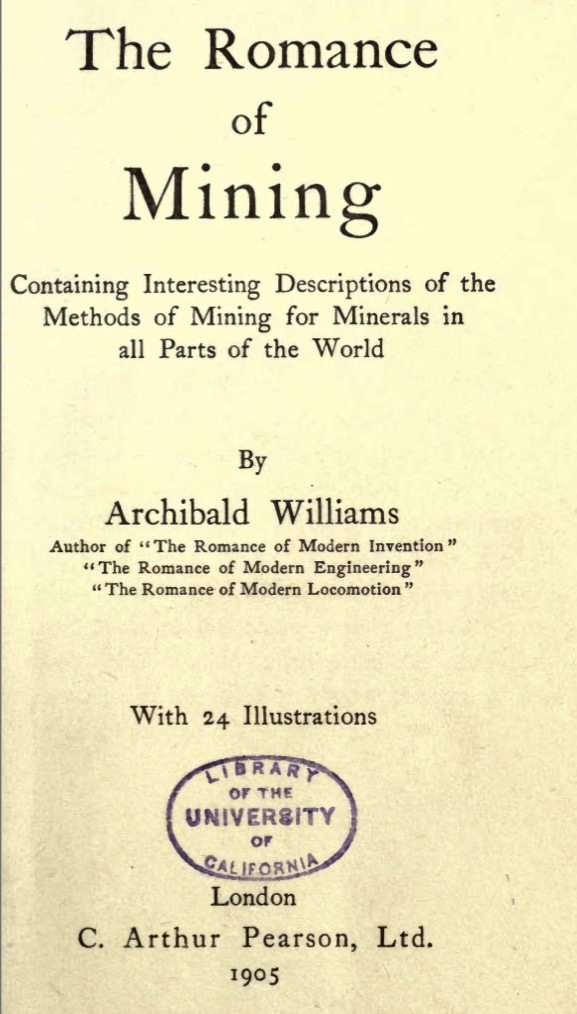
The Romance of Mining

Book
Williams, A. (1905) The Romance of Mining. London, C. Arthur Pearson, 402 pp.
Record No. 16841  |  Sinkankas/Born No.: NIS/NIB  |  RWHL
A popular survey of mining throughout the world, written for the general reader and describing the extraction of gold, silver, diamonds, coal, iron, copper, tin, mercury and other mineral resources. Of particular gemological interest is Chapter XXII, “The Burma Ruby Mines” (pp. 358–366), which summarizes the history of the Mogok ruby district and the methods then employed to recover rubies from the gem-bearing gravels. Williams describes both traditional workings and the more organized operations of the Burma Ruby Mines, Limited, including excavation, washing and sorting of the ruby-bearing material. The chapter provides a useful contemporary overview of Mogok at the beginning of the twentieth century and places ruby mining alongside the major mining industries of the period. The book is illustrated with 24 plates and is valuable as a readily accessible contemporary account of mining technology and practice worldwide.

The Life of the Marquis of Dufferin and Ava
Book
Lyall, A. (1905) The Life of the Marquis of Dufferin and Ava. London, John Murray, 2 Vols., 328, 339 pp.
Record No. 2823  |  Sinkankas/Born No.: NIS/NIB  |  RWHL
A two-volume biography of Frederick Temple Hamilton-Temple-Blackwood, Marquis of Dufferin and Ava, based extensively on his correspondence, diaries and official papers. Lyall follows Dufferin’s diplomatic and administrative career in Syria, Canada, Russia, Turkey, Egypt, India, Italy and France, with particularly detailed treatment of his tenure as Viceroy of India from 1884 to 1888. Of gemological interest is the account of the crisis preceding the British annexation of Upper Burma in 1885. Among the commercial and strategic issues troubling Dufferin were Burmese negotiations with French interests, including proposals involving concessions to the valuable royal ruby mines. The subsequent expedition to Mandalay, deposition of King Thibaw and annexation of Upper Burma brought the Mogok ruby district under British control, an important turning point in the modern history of the mines. The work is therefore useful for understanding the political setting in which Burma’s ruby resources passed from royal monopoly to colonial administration and, soon afterward, commercial exploitation by British interests.

The Journal of John Jordain, 1608–1617
Edited Book
Foster, W., editor (1905) The Journal of John Jordain, 1608–1617.. London, Hakluyt Society, Second Series, No. 16 , 394 pp.. Reprinted by Kraus, 1967.
Record No. 2764  |  Sinkankas/Born No.: NIS/NIB  |  RWHL
An edited account of John Jourdain’s travels during the English East India Company’s Fourth Voyage, describing his experiences between 1608 and 1617 in Arabia, India and the Malay Archipelago. Jourdain records local geography, customs, political conditions and, above all, the commodities and trading practices encountered at ports and commercial centers along his route. Of gemological interest is his description of a mountain near Sana’a where cat’s-eyes, agates, bloodstones and other stones “of better value” were found, and his account of Mocha as a major entrepôt receiving “precious stones of all sorts” from Indian shipping, which were purchased by merchants connected with Cairo and subsequently carried into the Mediterranean and Ottoman trading network. He also notes that the country associated with Dabhol produced diamonds in “great store of the new rock,” together with other stones of lesser value. Beyond these specific references, the journal provides valuable firsthand evidence for the commercial routes linking western India, Arabia and Southeast Asia during the formative years of English participation in the Asian trade. Foster’s edition includes extensive historical notes, contemporary supplementary narratives, maps and a bibliography.

Hakluytus Posthumas or Purchas His Pilgrimes
Book
Purchas, S. (1905) Hakluytus Posthumas or Purchas His Pilgrimes. Glasgow, James MacLehose and Sons, 20 Vols., Vol. 10: pp. 88–143, Caesar Fredericke of Venice (1563–1581); pp. 143–164, Gasparo Balbi, the Venetian jeweller (1579–1583); pp. 165–204, Ralph Fitch, the first English chronicler (1583–1591); pp. 222–318, John Huighen van Linschoten (1513); Vol. 11: pp. 394–400, Nicolo Di Conti (1444)
Record No. 1452  |  Sinkankas/Born No.: NIS/NIB  |  RWHL
A monumental collection of early travel narratives assembled by Samuel Purchas from manuscripts, printed sources, and materials associated with Richard Hakluyt, preserving many of the most important European accounts of Asia before the seventeenth century. Of particular gemological value are the narratives in Vol. 10 by Caesar Fredericke, Gasparo Balbi, Ralph Fitch, and Jan Huygen van Linschoten, which contain firsthand or near-contemporary observations on the gem-producing and trading regions of India, Ceylon, Pegu, and other parts of Southeast Asia. Fredericke and Fitch are especially important for their notices of rubies, sapphires, spinels, diamonds, pearls, and the commercial centers through which these stones passed, while Balbi’s account is notable because he was himself a Venetian jeweller and visited the court of Pegu. Linschoten provides extensive information on Asian trade, commodities, and maritime routes linking India and Southeast Asia with the Portuguese commercial world. Vol. 11 includes Nicolo di Conti’s fifteenth-century travels, one of the earlier European descriptions of India and the East. Taken together, these narratives constitute an exceptionally important body of primary source material for the history of Asian gemstones, their sources, terminology, trade routes, and European knowledge of the gem-producing regions before 1600. The MacLehose edition is a 20-volume reprint of Purchas’s 1625 work, issued in Glasgow in 1905–1907.

Review of the mineral production of India during the years 1898 to 1903
Journal Article
Holland, T.H. (1905) Review of the mineral production of India during the years 1898 to 1903. Records, Geological Survey of India, Vol. 32, Part 1, pp. 77–78, 105–109.
Record No. 998  |  Sinkankas/Born No.: NIS/NIB  |  RWHL
Holland reviews the mineral production of India from 1898 to 1903, summarizing the principal mineral industries and changes in output and value during the period. Of particular gemological interest are his discussions of precious stones, including diamonds, rubies, sapphires, and other gem materials. The ruby industry of Upper Burma receives attention, with production centered on the Mogok Stone Tract and conducted both through organized mining enterprises and native workings; Holland comments on production, values, and the difficulties of assessing an industry in which much material passed through private channels. Sapphire production in Kashmir is also discussed, including the famous deposits and their comparatively limited and irregular output. Diamond production remained small and was derived chiefly from traditional Indian workings. The review provides useful contemporary statistical and economic information on India’s gem-mining industries at the beginning of the twentieth century and places them within the broader mineral economy of British India.

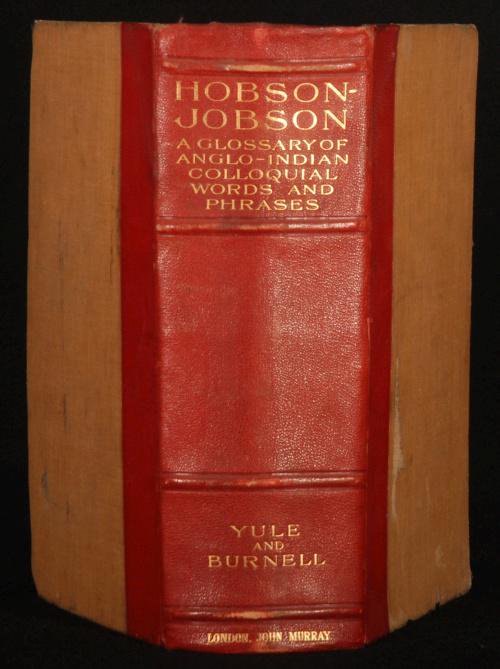
Precious Stones: A Book of Reference for Jewellers
Book
Catelle, W.R. (1903) Precious Stones: A Book of Reference for Jewellers. Philadelphia & London, J.B. Lippincott Co., 224 + 19 pp.
Record No. 16327  |  Sinkankas/Born No.: NIS/NIB  |  RWHL
Cattelle’s handbook was designed as a practical reference for jewelers rather than a systematic mineralogical treatise. It opens with general discussions of precious stones, famous gems, superstition and lore, desirable qualities, prices, cutting, weights and artificial coloring, followed by individual chapters on diamond and the principal colored stones. Particular attention is given to commercial qualities, sources, appearance, valuation and the distinctions useful to dealers, with less familiar gems included because of their growing importance in the American trade. Cattelle states that he drew heavily upon authorities including James D. Dana, George F. Kunz, Max Bauer and Edwin W. Streeter. The book reflects the concerns of the early twentieth-century jewelry trade, combining basic gemology with practical information on identification, manufacture, cutting and market value.

Hobson-Jobson

Book
Yule, H. and Burnell, A.C. (1903) Hobson-Jobson. London, Routledge & Kegan Paul, 1021 pp. (see Ava, pp. 40–41; Balass, p. 52; Capelan, p. 159; Ceylon, pp. 181–190; Coromandel, pp. 256–258; Corundum, p. 259; Tenasserim, p. 914)
Record No. 4674  |  Sinkankas/Born No.: NIS/NIB  |  RWHL
One of the most fascinating books about the Orient ever written. If you’ve ever wondered about the derivation of words like “pajamas,” “assassins” or “looters,” this is the book for you. A total classic and now quite scarce. A celebrated historical and etymological glossary of Anglo-Indian words, place names, and expressions, drawing extensively on early European and Asian travel literature. Of particular gemological interest are entries tracing the terminology and geography of the Asian gem trade. “Balass” is identified as the rose-red spinel and derived from Balakhshī/Badakhshī, referring to the celebrated spinel-producing region of Badakhshan on the upper Oxus; quotations from Ibn Battuta, Clavijo, Barbosa, Frederick, Hawkins, Fryer, and others document the term’s changing forms and usage. “Capelan” preserves early European accounts of the Burmese ruby-mining region, with quotations from Ca’ Masser, Varthema, Barbosa, and Tavernier showing the confused geographical knowledge surrounding the sources of Pegu and Ava rubies; the editors associate the name tentatively with the Mogok-area mines. The entry on “Corundum” discusses the Indian origin of the word, comparing Hindustani, Deccani, Telugu, Tamil, and Sanskrit forms and noting its historical use for non-gem corundum. Other entries on Ava, Ceylon, Coromandel, and Tenasserim provide detailed historical geography valuable for interpreting early accounts of the Southeast Asian gem trade; notably, Ceylon is discussed as the ancient Ratnadvīpa, “Isle of Gems,” and in Arabic tradition as an “Isle of Rubies.” The work remains an important source for understanding how gem names, mining localities, and trade terminology were transmitted and often distorted in European literature on India and Southeast Asia.

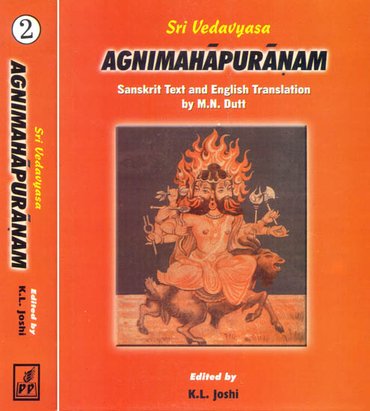
Agni Puranam

Edited Book
Dutt, M.N., editor (1903, 1904) Agni Puranam.. Calcutta, Elysium Press, 2 Vols., 676 pp..
Record No. 686  |  Sinkankas/Born No.: NIS/NIB  |  RWHL
The Agni Purana, (Sanskrit: अग्नि पुराण, Agni Purāṇa) is an English prose translation of one of the major Sanskrit Purāṇas and an encyclopedic compilation covering mythology, ritual, cosmology, medicine, architecture, statecraft, astronomy and numerous practical arts. Of particular gemological importance is the section on ratna-parīkṣā (“testing of gems”), which lists stones appropriate for royal use, including diamond, emerald, ruby, pearl, sapphire, lapis lazuli, crystal and several less readily identifiable materials. Good gems are characterized generally by internal lustre, purity and well-formed shape, while dull, cracked or included stones are rejected. Diamond is praised when pure, unbreakable, bright and exhibiting rainbow-like lustre; emerald should possess a parrot-green hue, gloss and radiance; rubies are classified partly according to their supposed sources and colors; and pearls are valued for roundness, whiteness, transparency and weight, with both naturalistic and legendary origins being recorded. Sapphire is described in terms of its strong color and lustre, while lapis lazuli is recommended for necklaces and other ornaments. The passage is valuable less as mineralogy in the modern sense than as evidence for early Indian systems of gem classification, quality assessment, auspiciousness and the close association of precious stones with kingship and personal fortune.

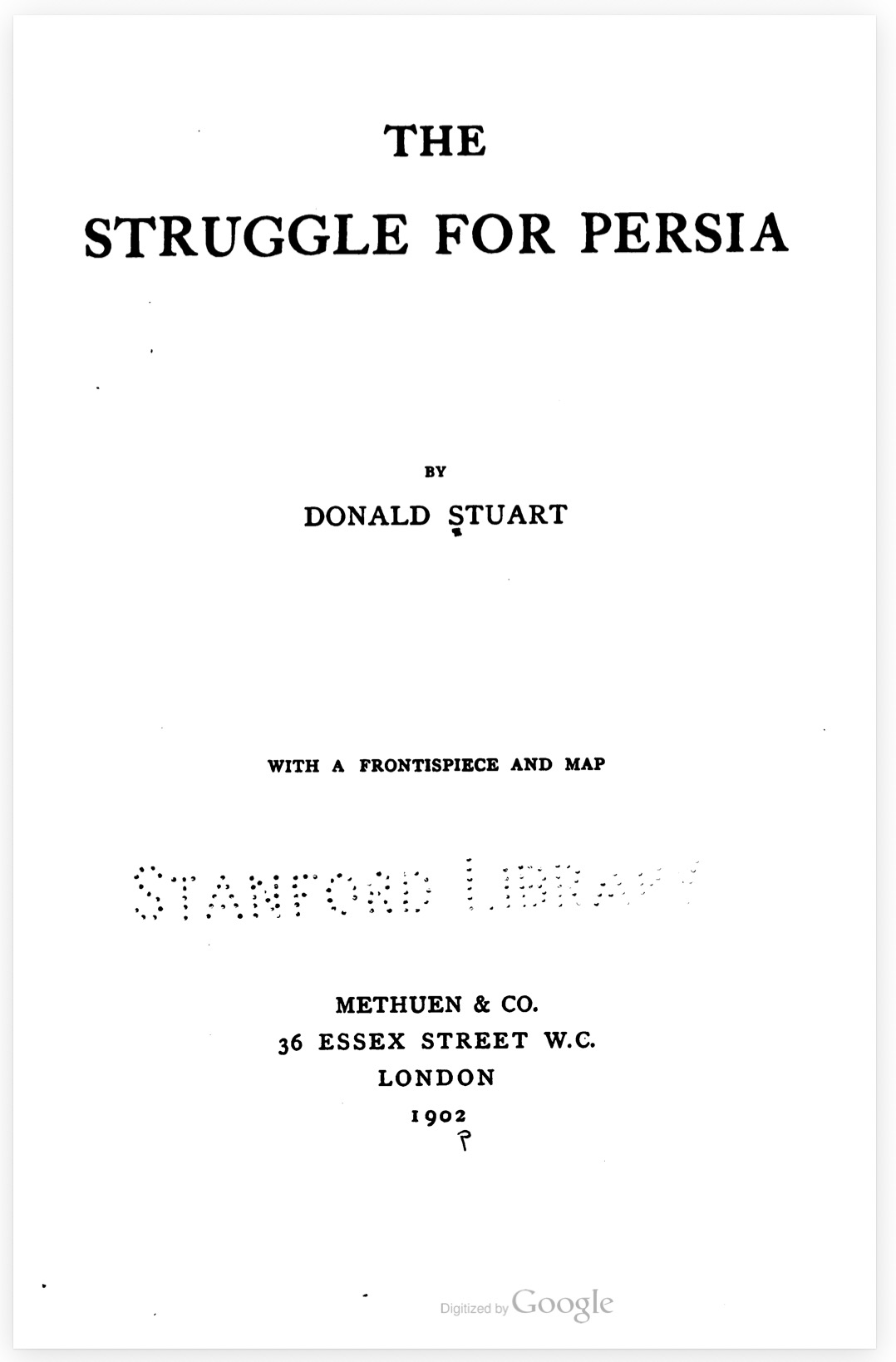
The Struggle for Persia

Book
Stuart, D. (1902) The Struggle for Persia. London, Methuen, 336 pp.
Record No. 29086  |  Sinkankas/Born No.: NIS/NIB  |  RWHL
Stuart devotes much of his chapter on Meshed and Bushire to a detailed description of the Nishapur turquoise mines, drawing explicitly on information supplied by General Schindler. He locates the mines in the Bâr-i-Meidan district northwest of Nishapur and describes their geography, villages, population, individual workings, mining conditions, production, classification, cutting, valuation, and trade. Numerous named mines are discussed, including workings that were dangerous, flooded, poorly ventilated, collapsed, or exhausted, together with differences in the quality and color stability of their turquoise. Of particular gemological interest is his description of material from the Sar-i-Reîsh and Anjîrî mines, which could possess an attractive color while moist but faded on drying, becoming greenish, spotted, or eventually nearly white. Such stones were reportedly shipped to Europe in damp earthenware vessels, and Stuart attributes declining European confidence in turquoise and falling prices partly to the influx of this unstable material. He contrasts these deposits with the Khâkî workings in accumulated mine debris and alluvium, which were then producing many of the finest stones, including valuable ring-quality turquoise. Mining employed picks, crowbars, and increasingly gunpowder, although blasting was considered detrimental because it shattered turquoise that older hand-working methods might have recovered intact. Stuart gives an unusually detailed contemporary classification of Nishapur turquoise into three commercial categories: Angushtarî, comprising fine, stable-colored stones suitable for rings and sold individually; Bârkhaneh, divided into grades and sold by weight; and Arabî, encompassing inferior pale, greenish, spotted, or otherwise undesirable material. Deep sky blue was most prized, but value also depended upon shape, freedom from flaws, permanence of color, and an indefinable quality termed zât, which Stuart compares with the “water” of a diamond or the luster of a pearl. He describes several traditional cuts, including the high peikânî form reserved for fine deep-colored stones, cabochons, and flat slabs, and notes the practice of disguising flaws in large stones with gold scrollwork or strategically positioned inscriptions. The account also traces the commercial chain from miners through village Rîsh-i-Safîds and commission agents to Meshed dealers and ultimately European markets, particularly Moscow, showing how a stone could increase enormously in value after cutting and successive resale. Annual production from the mines, mountains, and surface diggings is estimated at 25,000 tomans at mine value, perhaps tripling by the time the turquoise reached its final purchasers. Stuart’s chapter thus provides an exceptionally detailed early twentieth-century account of Nishapur turquoise mining, quality grading, color stability, cutting, valuation, marketing, and the economic organization of the trade.

Building a Gemological Library

Gemological books range from general identification manuals and textbooks to specialized works on individual gems, mineralogy, jewelry, treatments, synthesis, history and gem-producing regions.

For a curated selection of particularly useful books, read The Gemologist's Core Library — Classic Books on Gemology, Jewelry and Mineralogy.

About Four Treasures

Four Treasures is Lotus Gemology's freely accessible gemological reference database. Use the full database to search by author, title or keyword and explore literature on gemology, mineralogy, jewelry and related fields. Where available, hyperlinks on titles may lead directly to the full publication.

Search the Complete Four Treasures Database