Gemology Books Bibliography

Gemology Books Bibliography

Explore books on gems, gemology, jewelry and mineralogy in Four Treasures, the Lotus Gemology reference database. This bibliography brings together matching book records from the collection, with publication details, abstracts and cover images where available.

Gemology Book References

The list below matches books concerning gemology and related subjects in the database's searchable fields. Some works cover several branches of gems, jewelry or mineralogy.
2,981–3,000 of 3,451 matching references

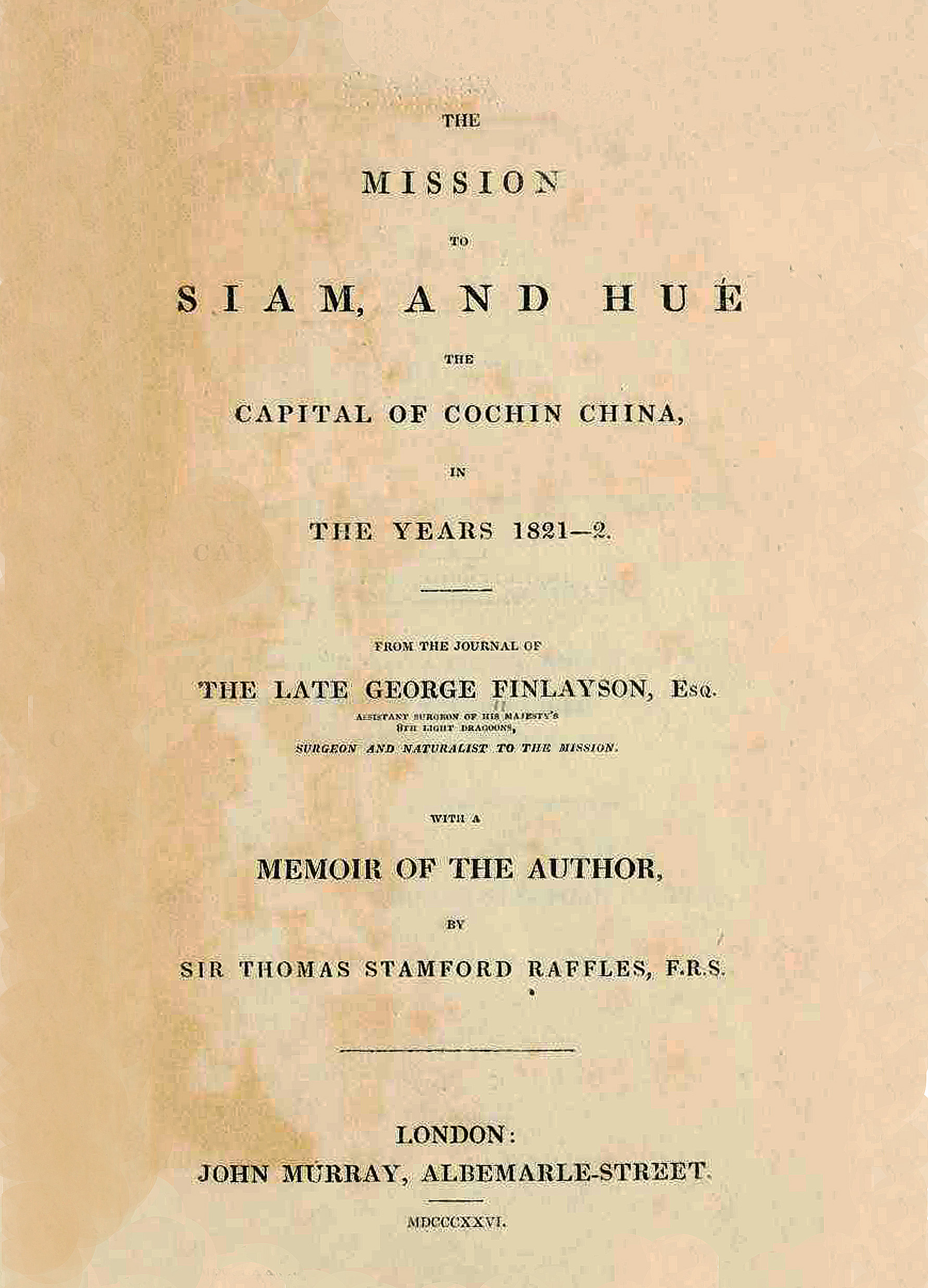
The Mission to Siam and Hue, the Capital of Cochin China, in the years 1821–2
Book
Finlayson, G. (1826) The Mission to Siam and Hue, the Capital of Cochin China, in the years 1821–2. London, Murray, xxxi + 427 pp.
Record No. 2759  |  Sinkankas/Born No.: NIS/NIB  |  RWHL
A firsthand narrative of a British diplomatic mission to Siam and Cochin China in 1821–1822, written from the journal of George Finlayson, who served as surgeon and naturalist to the mission, and published after his death with a memoir by Sir Stamford Raffles. The work combines travel narrative with observations on geography, natural history, commerce, customs and political conditions. Of particular gemological interest is Finlayson’s description of the province of Chantibond (Chanthaburi), which he calls one of the richest parts of Siam and notes as producing precious stones, including deposits on nearby islands, although he considered the stones generally of inferior quality. He also records jewelry set with diamonds, sapphires and other precious stones observed in Siam. The book is therefore an important early nineteenth-century source for the gem resources and material culture of southeastern Siam.

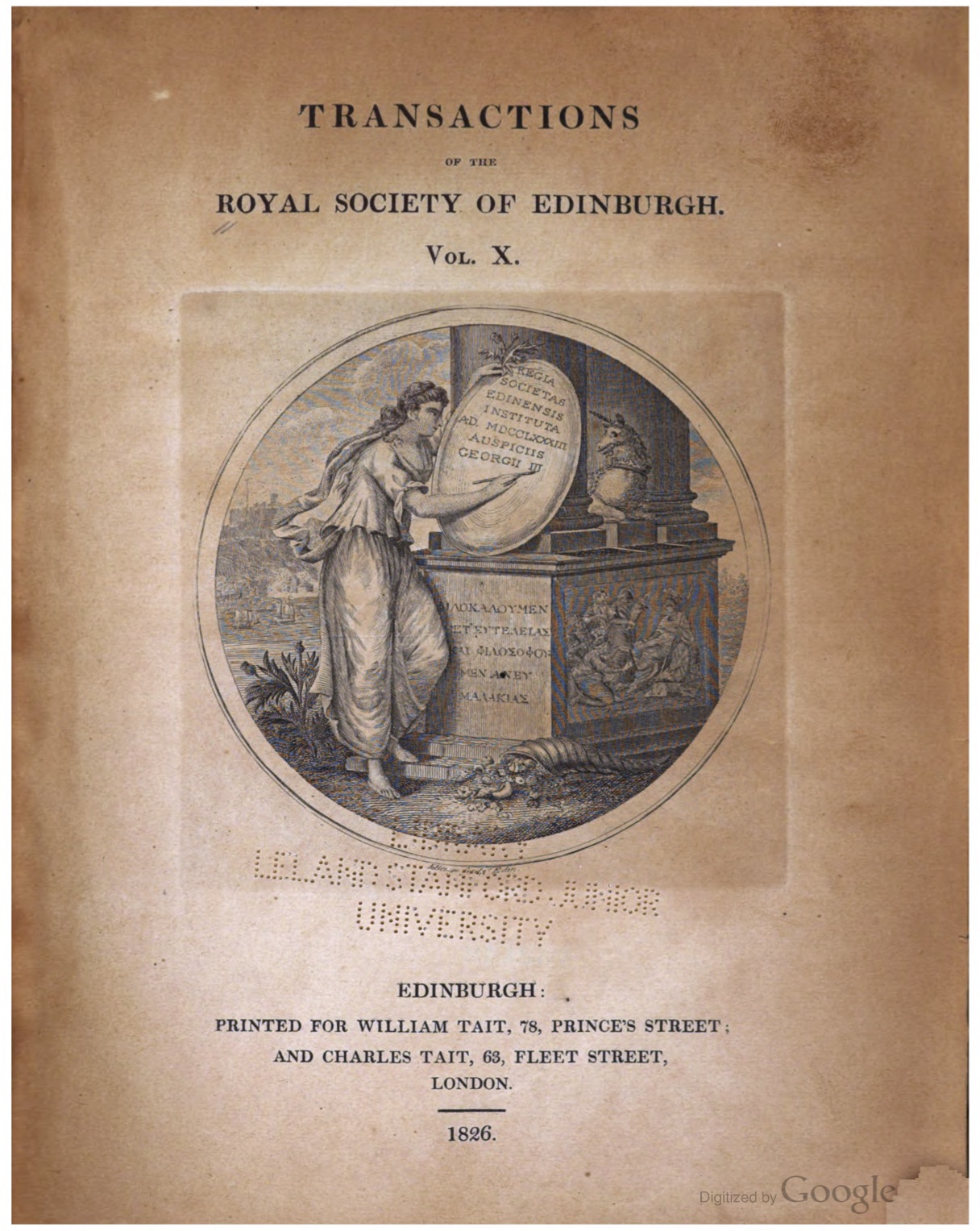
On the existence of two new fluids in the cavities of minerals, which are immiscible, and possess remarkable physical properties
Journal Article
Brewster, D. (1826) On the existence of two new fluids in the cavities of minerals, which are immiscible, and possess remarkable physical properties. Transactions of the Royal Society of Edinburgh, Vol. 10, Part 1, pp. 1–41, 2 plates.
Record No. 490  |  Sinkankas/Born No.: NIS/NIB  |  RWHL
An important early study by David Brewster of liquid inclusions enclosed within minerals. Brewster describes cavities containing two immiscible fluids with markedly different physical properties and examines their behavior under changes of temperature and pressure. Using microscopic observation and optical methods, he investigated the relative volumes, expansion and contraction of the enclosed fluids and the formation and movement of bubbles within the cavities. The paper is a major early contribution to the study of fluid inclusions and is especially important to gemology and mineralogy because such inclusions later became valuable evidence for mineral growth conditions, geological environment and, in some cases, geographic origin.

Travels in the Mogul Empire: AD 1656–1668
Book
Bernier, F. (1826) Travels in the Mogul Empire: AD 1656–1668. London, William Pickering, 2 Vols., 280, 280 pp.
Record No. 460  |  Sinkankas/Born No.: NIS/NIB  |  RWHL
Bernier recounts his travels and experiences in the Mughal Empire between 1656 and 1668, during which he served for several years as a physician at the imperial court and observed at close hand the reigns of Shah Jahan and Aurangzeb. He gives a detailed eyewitness account of the struggle for succession among Shah Jahan’s sons, the defeat of Dara Shikoh, and Aurangzeb’s accession, together with descriptions of the imperial court, army, administration, taxation, landholding, cities, commerce, crafts, and social and religious customs. His journeys include extensive observations on Delhi, Agra, Bengal, and Kashmir, whose landscape and products he describes at length. Of particular gemological interest are Bernier’s observations on the enormous wealth of the Mughal court, including diamonds, pearls, rubies, emeralds, and other precious stones displayed in imperial regalia and the celebrated Peacock Throne, as well as his discussion of the diamond mines and trade of Golconda. The work provides an important seventeenth-century European eyewitness account of the production, commerce, valuation, and conspicuous consumption of gems within the Mughal Empire.

The Modern Traveller: Brazil and Buenos Ayres
Book
Conder, J. (1825) The Modern Traveller: Brazil and Buenos Ayres. London, James Duncan, 2 Vols., Vol. 2 , 340 pp.
Record No. 29369  |  Sinkankas/Born No.: NIS/NIB  |  RWHL
A two-volume geographical, historical and topographical account of Brazil and Buenos Aires compiled by Josiah Conder as part of his extensive Modern Traveller series. Drawing on the published narratives of earlier travelers and explorers rather than on Conder’s own travels, the work describes the geography, cities, inhabitants, government, commerce and natural productions of Brazil and the Río de la Plata region. Of particular interest to mineralogical and gemological research are its notices of the mining districts and mineral wealth of Brazil, reflecting contemporary European knowledge of the country’s gold, diamonds and other valuable natural resources. The work provides a useful synthesis of early nineteenth-century travel literature on South America.

Ueber das Entstehen der grammatischen Formen und ihren Einfluss auf die Ideenentwicklung
On the Emergence of Grammatical Forms and their Influence on the Development of Ideas
Journal Article
Humboldt, W., von (1825) Ueber das Entstehen der grammatischen Formen und ihren Einfluss auf die Ideenentwicklung. [On the Emergence of Grammatical Forms and their Influence on the Development of Ideas] Abhandlungen der Königlichen Akademie der Wissenschaften zu Berlin, Vol. 3, Years 1822–1823, Gelesen in der Akademie der Wissenschaften am 17. Januar 1822, pp. 401–430.
Record No. 16565  |  Sinkankas/Born No.: NIS/NIB  |  Language: in German  |  RWHL
A linguistic essay by Wilhelm von Humboldt examining the origin and development of grammatical forms and their relationship to human thought. Humboldt argues that language is not merely a passive means of expressing ideas but actively shapes the way speakers organize and develop them. The paper discusses how grammatical structures arise, how languages differ in the ways they encode relationships and concepts, and how these structures influence intellectual development. It is an important early statement of Humboldt’s philosophy of language and comparative linguistics. The work has no direct gemological or mineralogical content; its relevance would be linguistic or historical rather than scientific.

Notice des monumens exposés dans le cabinet des médailles, antiques et pierres gravées de la bibliothèque du roi
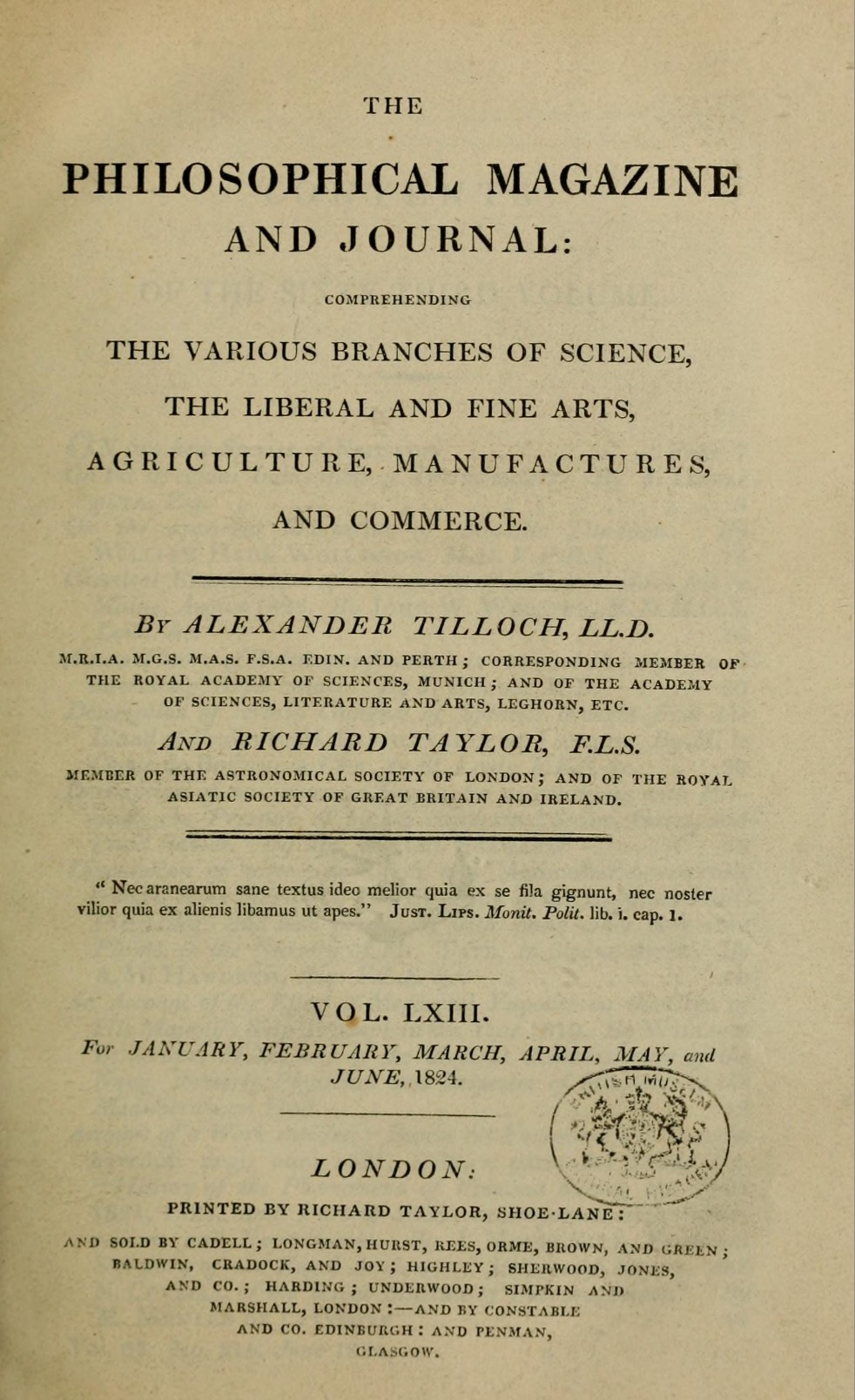
Catalogue of the Monuments Exhibited in the Cabinet of Medals, Antiquities, and Engraved Gems of the King’s Library
Book
Dumersan, J.M. (1824) Notice des monumens exposés dans le cabinet des médailles, antiques et pierres gravées de la bibliothèque du roi. [Catalogue of the Monuments Exhibited in the Cabinet of Medals, Antiquities, and Engraved Gems of the King’s Library] Paris, M. Journé, 88 pp., 42 plates
Record No. 28946  |  Sinkankas/Born No.: NIS/NIB  |  Language: in French  |  RWHL
A catalogue by Jean-Marie Dumersan of the antiquities, medals and engraved gems exhibited in the Cabinet des Médailles of the Bibliothèque du Roi in Paris. The work describes objects from the royal collection, including ancient coins, sculptures, antiquities, cameos and intaglios, and is illustrated with 42 plates. Of particular gemological and art-historical interest are the engraved stones, which are discussed as works of glyptic art and as evidence for classical iconography and antiquity. The volume is an important early nineteenth-century guide to one of Europe’s major collections of ancient engraved gems and documents the state of the French royal collection before its later reorganization as part of the Bibliothèque nationale.

Description of certain gangues of spinelle brought from the Island of Ceylon by M. Leschenault de Latour
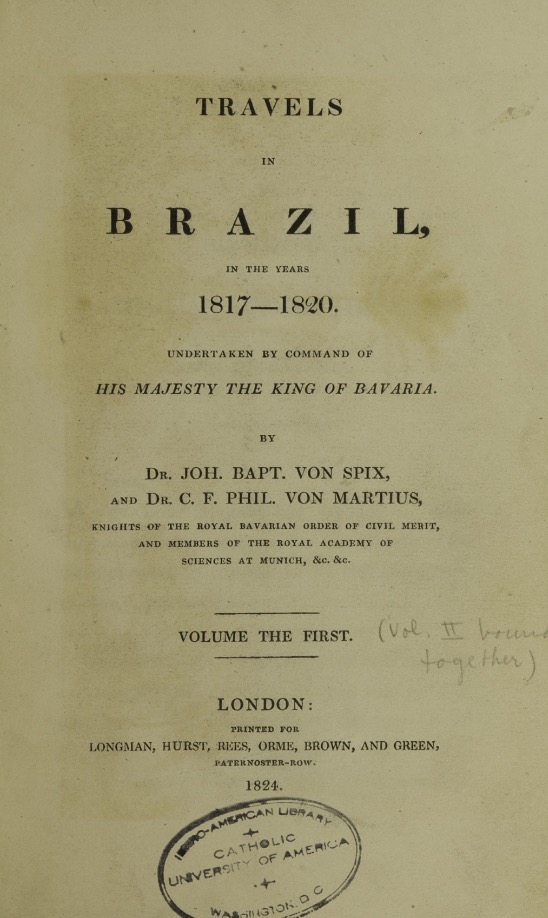
Journal Article
Bournon, J.-L., de (1824) Description of certain gangues of spinelle brought from the Island of Ceylon by M. Leschenault de Latour. Philosophical Magazine, Vol. 63, No. 309, pp. 30–36.
Record No. 8082  |  Sinkankas/Born No.: NIS/NIB  |  RWHL
A short mineralogical study by Jacques-Louis, Comte de Bournon, of spinel-bearing gangue material collected in Ceylon (Sri Lanka) by Jean-Baptiste Leschenault de la Tour. Bournon describes the mineral assemblages associated with the spinel and their physical and crystallographic characters, using the specimens to clarify the geological occurrence of Ceylon spinel. The paper is of particular gemological importance as an early study not merely of isolated gemstones but of the matrix and associated minerals in which spinel occurs, providing evidence concerning the natural setting of Sri Lankan gem deposits. It complements Bournon’s broader work on minerals collected by Leschenault in Ceylon and southern India.

Travels in Brazil, in the years 1817–1820
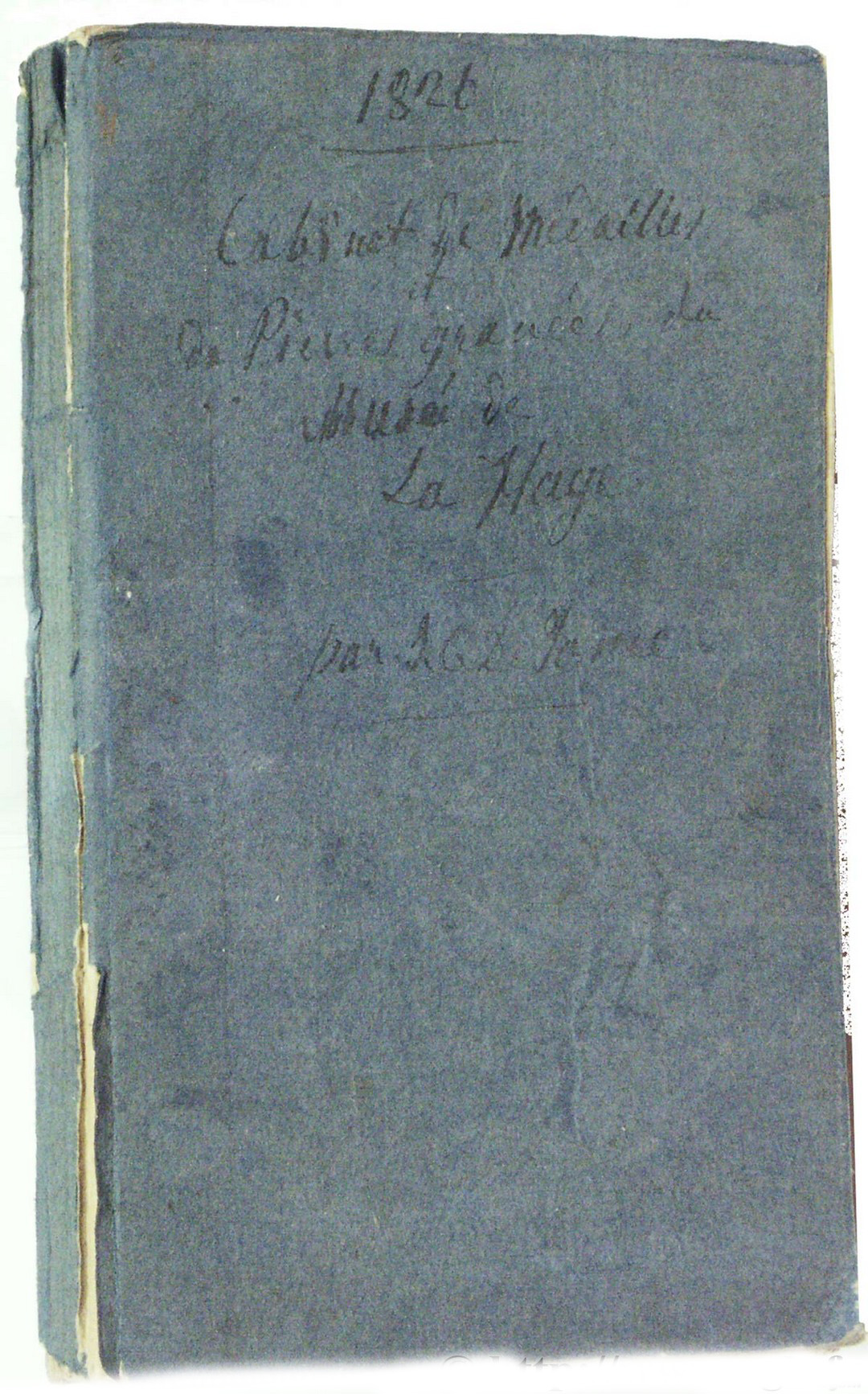
Book
Spix, J.B., von and Martius, C.F.P., von (1824) Travels in Brazil, in the years 1817–1820. London, Longman, Hurst, Rees, Orme, Brown, and Green, 2 Vols., 327, 298 pp.
Record No. 6859  |  RWHL
An account of the travels of the German naturalists Johann Baptist von Spix and Carl Friedrich Philipp von Martius through Brazil between 1817 and 1820, undertaken as part of the Austrian scientific expedition accompanying Archduchess Leopoldine to Brazil. The work describes their extensive journeys from Rio de Janeiro through Minas Gerais, São Paulo, Bahia, Pernambuco, Maranhão, Pará and the Amazon basin, combining a travel narrative with detailed observations on the country’s geography, geology, mineral resources, flora, fauna, Indigenous peoples, settlements, commerce and society. Of particular gemmological interest are descriptions of the mineral-rich districts of Minas Gerais, including observations on diamond and gold mining and occurrences of topaz and other gemstones.

Notice sur le Cabinet des Médaille et des Pierres Gravées de sa Majesté le Roi des Pays-Bas, Grand-Duc de Luxembourg
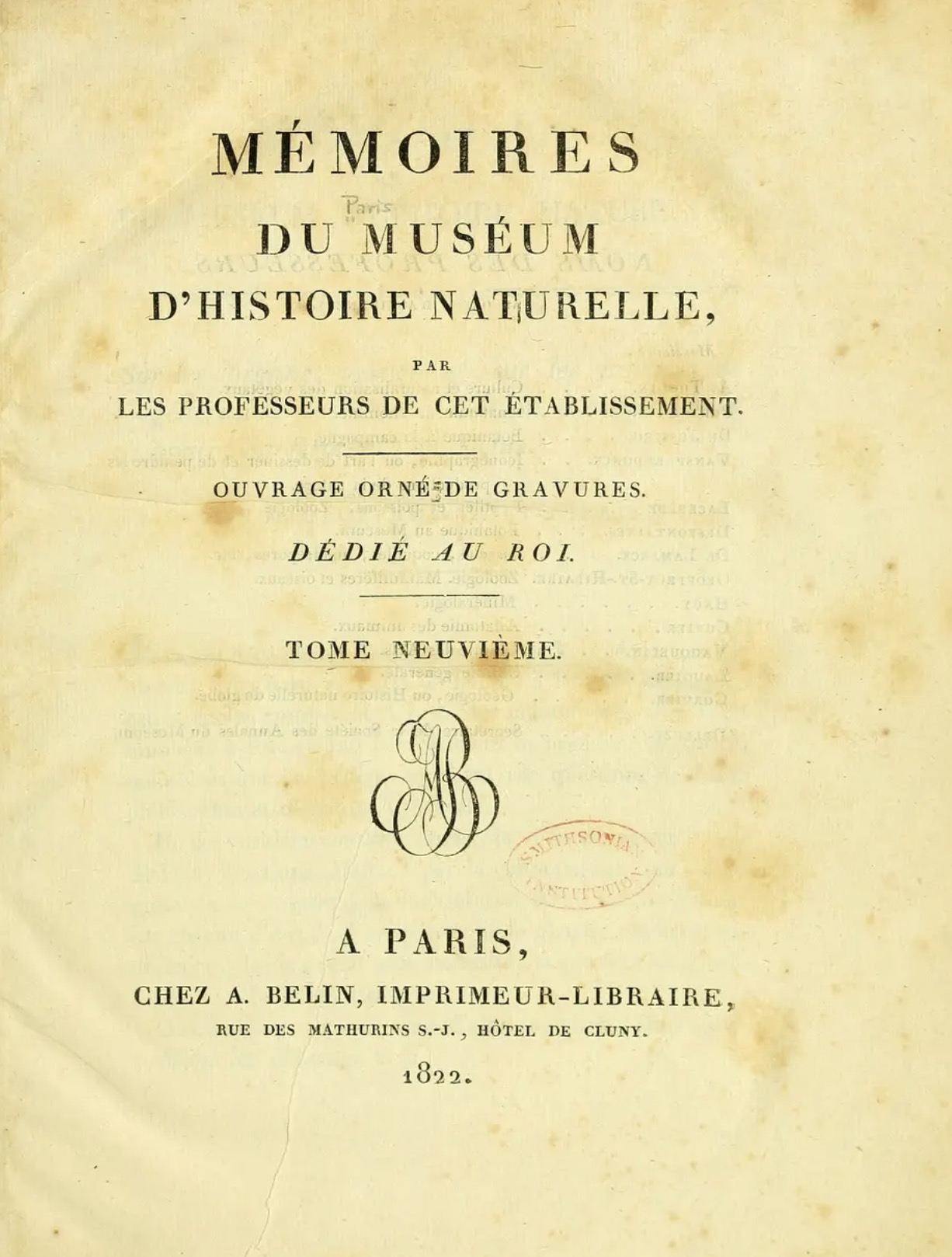
Notice on the Cabinet of Medals and Engraved Gems of His Majesty the King of the Netherlands, Grand Duke of Luxembourg
Book
de Jonge, J.C. (1823) Notice sur le Cabinet des Médaille et des Pierres Gravées de sa Majesté le Roi des Pays-Bas, Grand-Duc de Luxembourg. [Notice on the Cabinet of Medals and Engraved Gems of His Majesty the King of the Netherlands, Grand Duke of Luxembourg] Haije, Veuve Allart, 180 pp.
Record No. 29481  |  Sinkankas/Born No.: NIS/NIB  |  Language: in French  |  RWHL
A descriptive notice of the royal collection of medals and engraved gems belonging to King William I of the Netherlands, Grand Duke of Luxembourg. De Jonge discusses the formation, organization, and principal holdings of the cabinet, including ancient coins, medals, intaglios, cameos, and other engraved stones. Of particular gemological and art-historical interest is its documentation of the royal glyptic collection and the subjects, materials, workmanship, and historical significance of its engraved gems. The work provides a useful record of nineteenth-century European collecting and connoisseurship and of an important royal collection of ancient precious and ornamental stones.

Relation abrégée d’un voyage aux Indes Orientales
Abridged account of a voyage to the East Indies
Journal Article
de Latour, L. (1822) Relation abrégée d’un voyage aux Indes Orientales. [Abridged account of a voyage to the East Indies] Mémoires du Muséum d'histoire naturelle, Vol. 9, pp. 245–274.
Record No. 29499  |  Sinkankas/Born No.: NIS/NIB  |  Language: in French  |  RWHL
De Latour gives an account of a voyage to the East Indies, describing observations made on the natural history, products, and practices of the regions visited. Of particular gemological interest are his observations on precious stones and the indigenous methods employed in their working, including the lapidary wheel used for cutting gemstones in India. The paper provides an early nineteenth-century European eyewitness account of Indian lapidary technology and the treatment of gemstones.

On the state of water and aeriform matter in cavities found in certain crystals
Journal Article
Davy, H. (1822) On the state of water and aeriform matter in cavities found in certain crystals. Philosophical Transactions of the Royal Society of London, Vol. 112, pp. 367–376.
Record No. 658  |  Sinkankas/Born No.: NIS/NIB  |  RWHL
An important early study by Humphry Davy of fluid and gaseous inclusions enclosed within crystals. Davy examines cavities containing liquid and aeriform matter in several minerals and considers the physical state, composition and behavior of the enclosed substances when the crystals are heated or broken. The paper is significant in the history of mineralogy because it helped establish that crystals can trap fluids and gases during their formation, providing evidence about the conditions under which minerals crystallize. For gemology, it is an early contribution to the study of fluid inclusions, which later became important for understanding gemstone genesis, geological environment and, in some cases, geographic origin.

An Account of the Interior of Ceylon

Book
Davy, J. (1821) An Account of the Interior of Ceylon. London, Longman, Hurst, Rees, Orme, and Brown, pp. 1–35, 259–266, 335–349
Record No. 2750  |  RWHL
A detailed account of the interior of Ceylon (Sri Lanka) by the physician and naturalist John Davy, based on his residence on the island from 1816 to 1820. The work combines observations on geography, geology, natural history, climate, inhabitants, government and customs with a narrative of Davy’s travels through the interior. Of particular gemological interest are his descriptions of the island’s geology and mineral resources, including corundum, ruby, sapphire, cinnamon-stone, zircon and other minerals and gemstones, together with observations on their occurrences and localities. The work is an important early nineteenth-century source for the geology and gem minerals of Sri Lanka and reflects Davy’s firsthand scientific observations of the island.

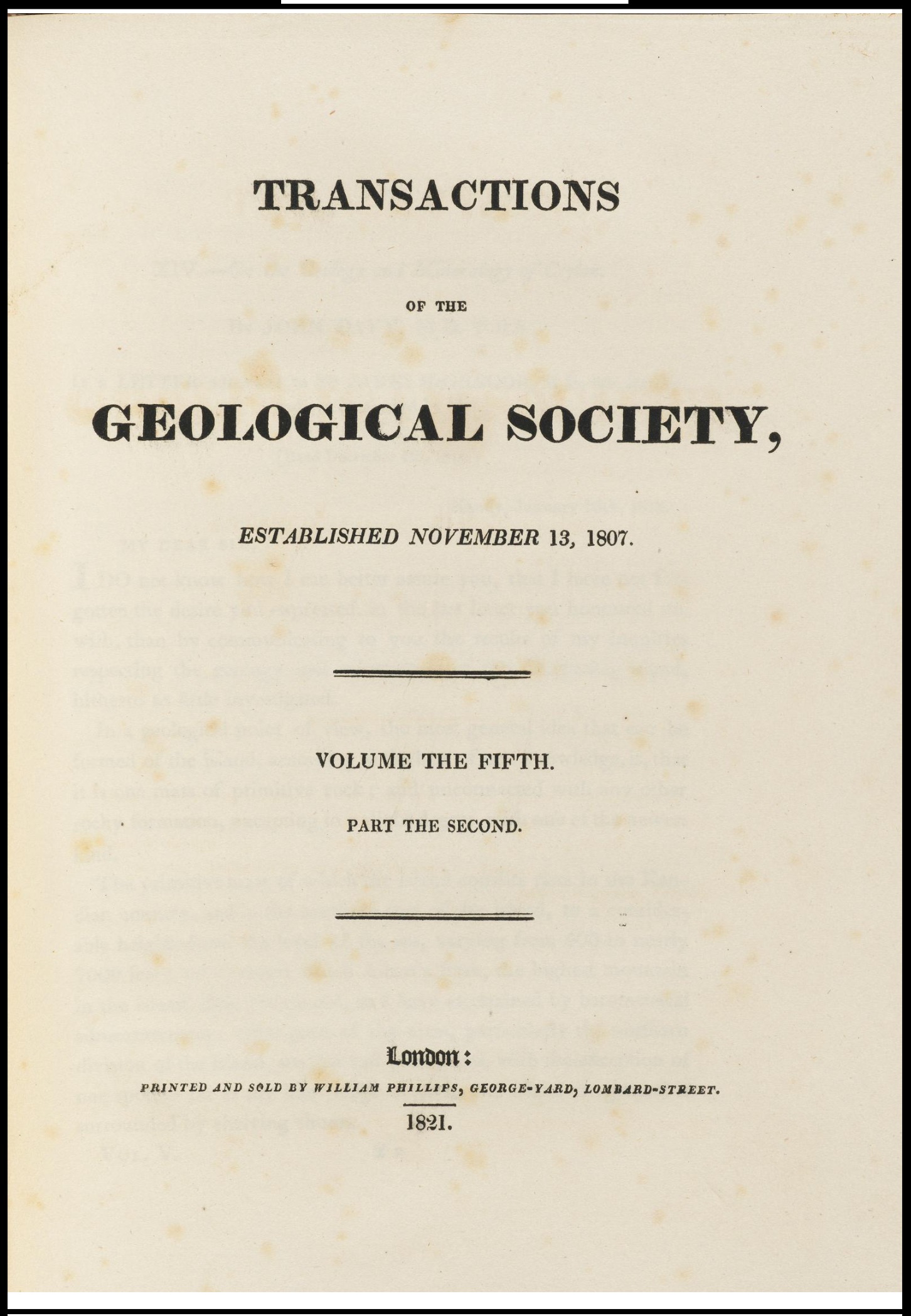
On the geology and mineralogy of Ceylon
Journal Article
Davy, J. (1821) On the geology and mineralogy of Ceylon. Transactions of the Geological Society [of London], Vol. 5, Part 2, pp. 311–327.
Record No. 657  |  Sinkankas/Born No.: NIS/NIB  |  RWHL
A concise geological and mineralogical account of Ceylon (Sri Lanka) by John Davy, based on his investigations while resident on the island. Davy describes Ceylon as consisting largely of ancient crystalline rocks, including gneiss and crystalline limestone, and records a variety of associated minerals. Of particular gemological interest are his observations on spinel, zircon, cinnamon-stone garnet, tourmaline, corundum and other gem minerals, together with their geological associations. The paper is an important early scientific account of the geology and mineralogy of Sri Lanka and one of the earliest attempts to relate its celebrated gemstones to the rocks in which they occur.

Essay on the turquoise and the calaite
Journal Article
Fischer, G. (1820) Essay on the turquoise and the calaite. The Asiatic Journal, Vol. 9, No. 49, pp. 23–30.
Record No. 29053  |  Sinkankas/Born No.: NIS/NIB  |  RWHL
An early mineralogical study by Gotthelf Fischer of two very different substances historically called turquoise. Fischer distinguishes “oriental turquoise,” which he regards as a true mineral, from “occidental turquoise” or turquoise odontolite, which he identifies as fossil tooth or bone colored by a copper compound. He proposes the name calaite for the mineral turquoise and discusses its occurrence, physical character and historical nomenclature, comparing it with Pliny’s descriptions of callais. Fischer notes that calaite occurs as rounded pieces in alluvial deposits rather than in a rocky matrix and discusses its resemblance to emerald and sapphire in ancient descriptions. The work is important in the history of gemology for its attempt to separate true mineral turquoise from odontolite and to reconcile contemporary mineralogical observations with the terminology of classical lapidary sources.

Gems

Book Section
Rees, A. (1819) Gems. In: The Cyclopædia; or Universal Disctionary of Arts, Sciences, and Literature, London: Longman, Hurst, Rees, Orme, & Brown, 39 Vols., Vol. 15 , see Gems.
Record No. 3144  |  RWHL
An encyclopedia entry on gems in Abraham Rees’s Cyclopædia; or, Universal Dictionary of Arts, Sciences, and Literature. The article surveys the principal precious stones known in the early nineteenth century, discussing their names, physical characters, varieties, relative value and uses, and reflecting contemporary attempts to reconcile traditional jewelers’ terminology with developing mineralogical classification. As part of Rees’s broad technical encyclopedia, the entry is useful for understanding how gemological knowledge was presented to educated English readers at the time and for tracing the transition from older lapidary descriptions toward more scientific treatments based on mineralogy and chemistry. Contains a note on peacock feather put under sapphire.

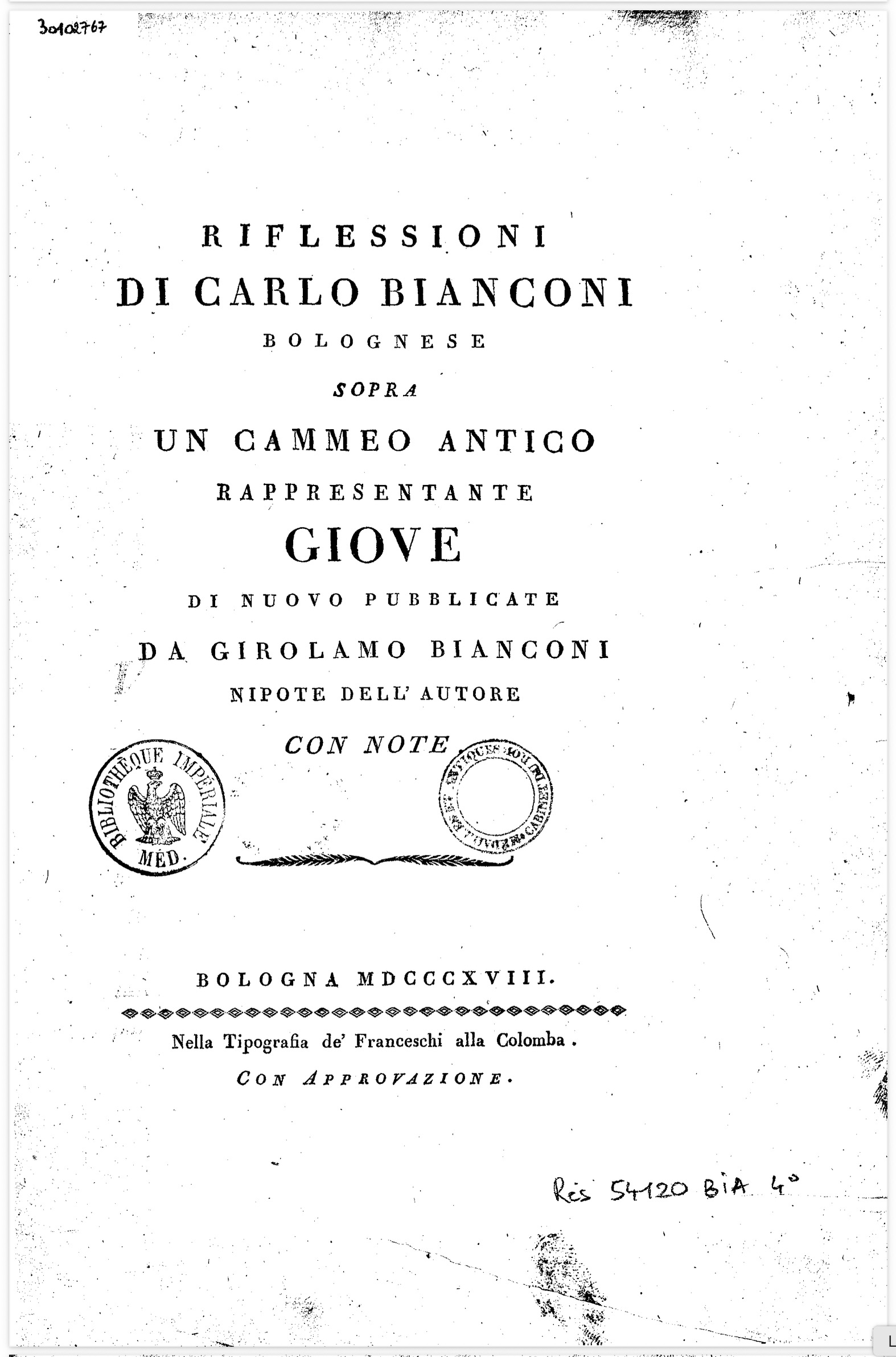
Riflessioni sopra un Cammeo Antico rappresentante Giove
Reflections on an Ancient Cameo Representing Jupiter
Book
Bianconi, C. (1818) Riflessioni sopra un Cammeo Antico rappresentante Giove. [Reflections on an Ancient Cameo Representing Jupiter] Bologna, Tipografia de’ Franceschi alla Colomba, 35 pp.
Record No. 28942  |  Sinkankas/Born No.: NIS/NIB  |  Language: in Italian  |  RWHL
A short antiquarian study by Carlo Bianconi devoted to an ancient cameo representing Jupiter. Bianconi examines the engraved gem’s subject and iconography, interpreting the figure through comparison with classical literature, mythology and ancient works of art. The work reflects the close relationship between glyptic studies, classical archaeology and connoisseurship in the early nineteenth century, when engraved gems were important evidence for understanding ancient religion and artistic imagery. It is of particular interest to gemology for its documentation and interpretation of an ancient cameo and to the history of collecting and the study of classical engraved gems.

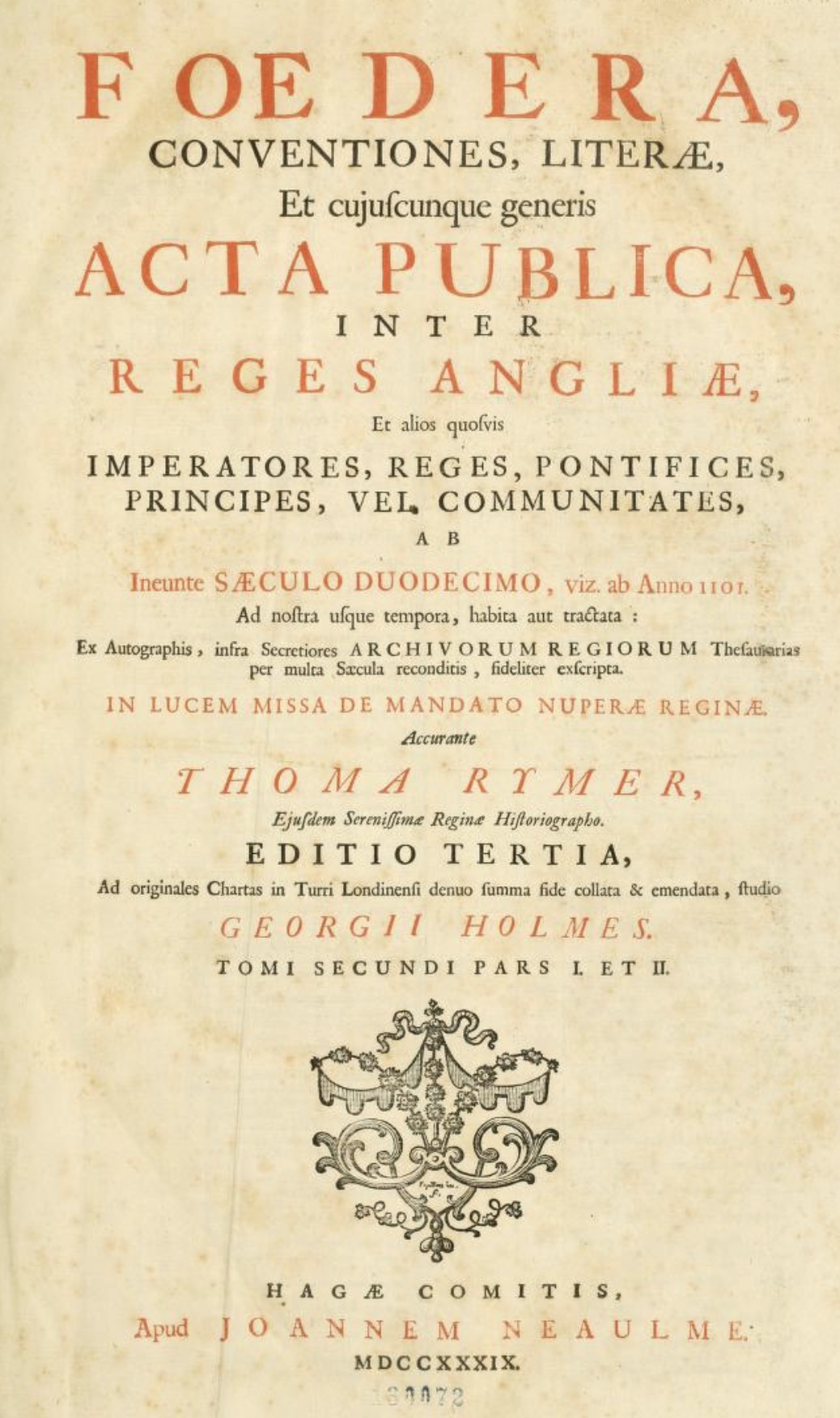
Foedera, Conventiones Litterae, et Cujuscunque Generis Acta Publica inter Reges Anglia
Treaties, Agreements, Letters, and Public Acts of any kind Between the Kings of England
Book
Rymer, T., Sanderson, R., Clarke, A. and Holbrooke, F. (1818) Foedera, Conventiones Litterae, et Cujuscunque Generis Acta Publica inter Reges Anglia. [Treaties, Agreements, Letters, and Public Acts of any kind Between the Kings of England] London, Eyre & Stahan, 10 Vols., Vol. 2 , 738 pp.
Record No. 17083  |  Sinkankas/Born No.: NIS/NIB  |  Language: in Latin  |  RWHL
A volume from the major documentary collection commonly known as Rymer’s Foedera, containing treaties, agreements, letters, charters and other official records relating to the English Crown and its dealings with foreign rulers, governments and institutions. Originally compiled by Thomas Rymer and continued by Robert Sanderson, the collection reproduces primary documents from the royal archives, many in Latin or French. Although not primarily concerned with gemstones, the records include inventories, diplomatic gifts, royal possessions, payments and transactions involving jewels, precious stones, pearls, gold and silver, making the collection an important primary source for the history of medieval and early modern royal jewelry and gem ownership. The 1818 volume belongs to the later edition prepared under the direction of Adam Clarke and Frederick Holbrooke.

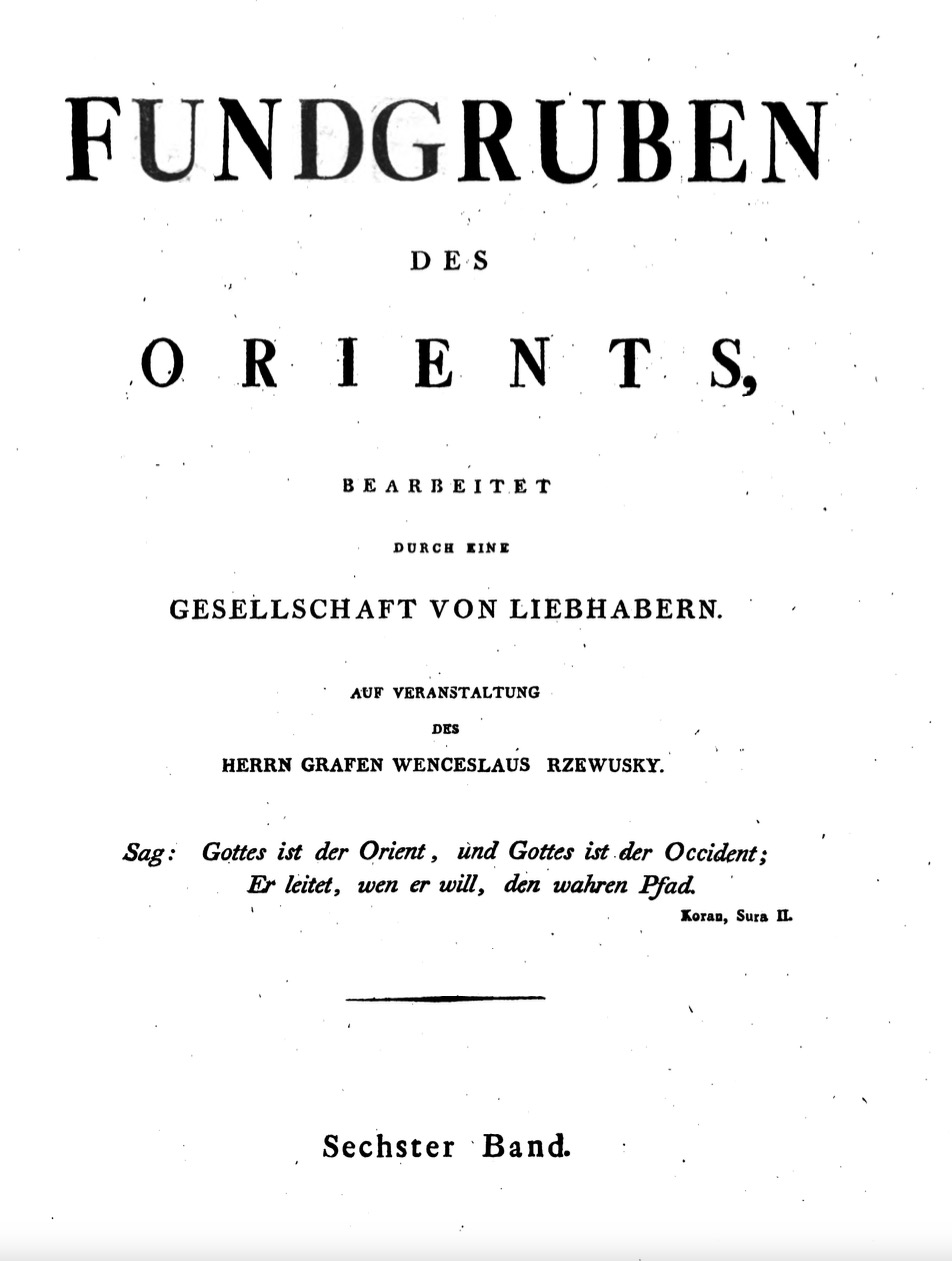
Auszüge aus dem persischen Werke ʿAjāʾib al-makhlūqāt wa gharāʾib al-mawjūdāt d. i. das Buch der Edelsteine, von Mohammed Ben Manssur
Extracts from the Persian Work ʿAjāʾib al-makhlūqāt wa gharāʾib al-mawjūdāt, i.e., The Book of Gems, by Mohammed ibn Mansur
Book Section
Hammer-Purgstall, V. (1818) Auszüge aus dem persischen Werke ʿAjāʾib al-makhlūqāt wa gharāʾib al-mawjūdāt d. i. das Buch der Edelsteine, von Mohammed Ben Manssur. [Extracts from the Persian Work ʿAjāʾib al-makhlūqāt wa gharāʾib al-mawjūdāt, i.e., The Book of Gems, by Mohammed ibn Mansur] In: Fundgruben des Orients [Treasures of the Orient], Vienna: Aton Schmid, K.K. Privil, and N.O. Landschfts-Buchdrucker, 6 Vols., Vol. 6 , pp. 126–142.
Record No. 16381  |  Language: in German and Arabic  |  RWHL
A German translation by Joseph von Hammer of selected portions of a medieval Persian lapidary by Muḥammad ibn Manṣūr, published in Fundgruben des Orients. The original work treats individual gemstones systematically under four headings: their physical characteristics, places of occurrence, value, and supposed occult or talismanic properties. Hammer deliberately translated principally the first two sections—description and sources—while omitting much of the material on prices and supernatural properties. The extracts discuss numerous precious stones and mineral substances and constitute an important early European presentation of medieval Persian gemological knowledge. The work is especially valuable for preserving information on historical gemstone terminology, characteristics and localities and for demonstrating the relationship between Persian and earlier Arabic lapidary traditions.

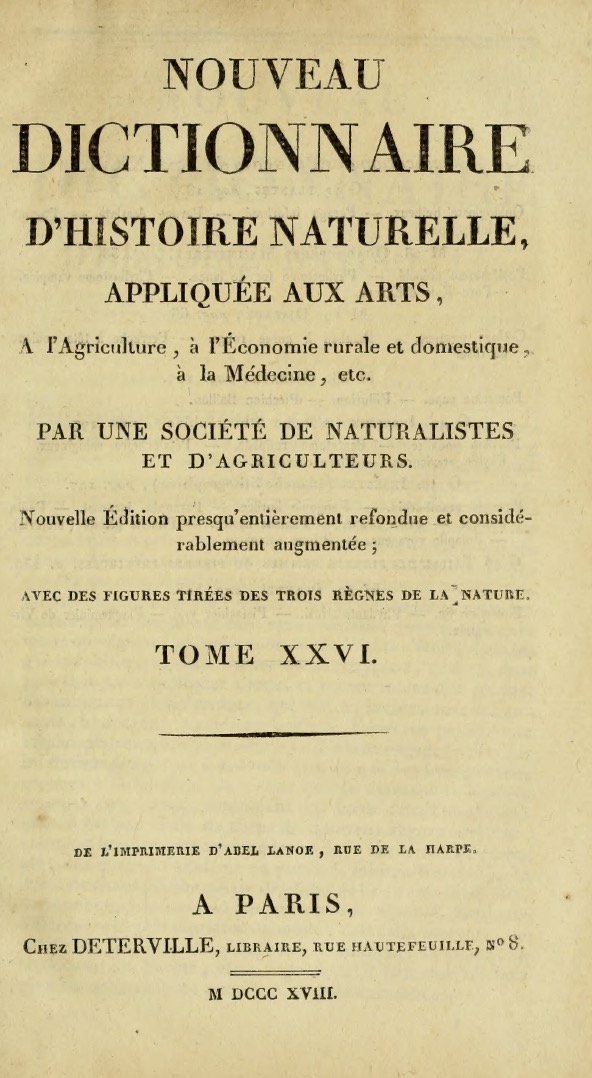
Nouveau Dictionnaire d’Histoire Naturelle, Appliquée aux Arts, etc.
New Dictionary of Natural History, Applied to the Arts, etc.
Book
Société de Naturalistes et d’Agricuteurs (1818) Nouveau Dictionnaire d’Histoire Naturelle, Appliquée aux Arts, etc. [New Dictionary of Natural History, Applied to the Arts, etc.] Paris, Deterville, Vol. 26
Record No. 7966  |  Sinkankas/Born No.: NIS/NIB  |  Language: in French  |  RWHL
A major multi-volume French encyclopedia of natural history, prepared by a large group of naturalists and physicians and published by Deterville. The Nouveau Dictionnaire d’Histoire Naturelle covers the animal, vegetable and mineral kingdoms, with particular attention to the practical application of natural substances in agriculture, commerce, medicine and the arts. Its mineralogical articles include numerous entries on precious stones, ornamental stones and minerals, discussing their physical properties, composition, localities, nomenclature and uses. The work is valuable for tracing early nineteenth-century French mineralogical and gemological terminology and for documenting contemporary knowledge during a period of rapid advances in chemistry and crystallography.

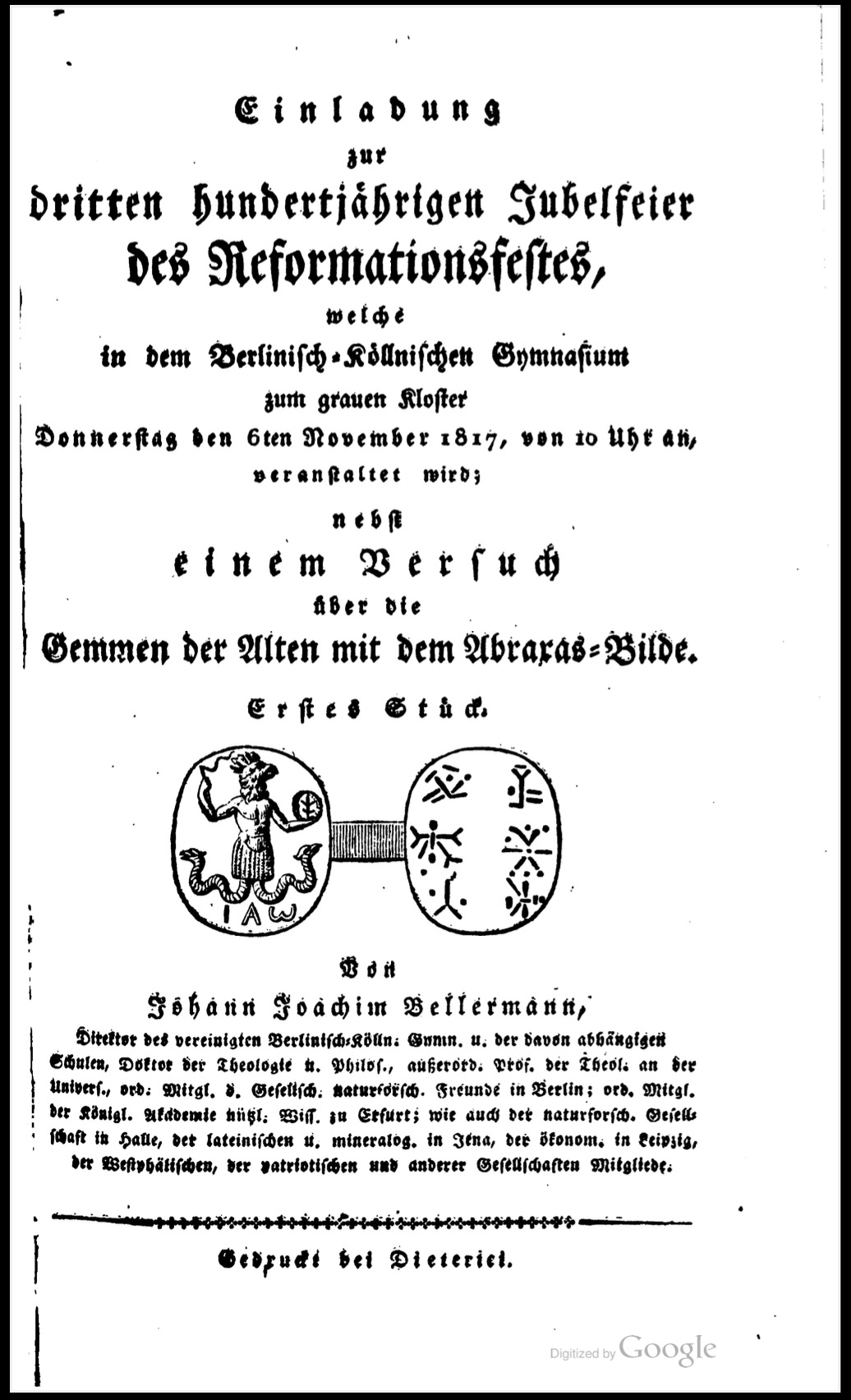
Einladung zur dritten hundertjährigen Jubelfeier des Reformationsfestes

Invitation to the Third Centennial Celebration of the Reformation Festival
Book
Bellermann, J.J. (1817, 1818, 1819) Einladung zur dritten hundertjährigen Jubelfeier des Reformationsfestes. [Invitation to the Third Centennial Celebration of the Reformation Festival] Berlin, Gedruct bei Dieterici, 200 112 pp.
Record No. 7087  |  Sinkankas/Born No.: NIS/NIB  |  Language: in German  |  RWHL
A three-part antiquarian study by Johann Joachim Bellermann, issued in connection with the third centenary of the Reformation. Despite its general title, the work contains Bellermann’s detailed investigation of the Urim and Thummim and the high-priestly breastplate described in the Hebrew Bible, including discussion of the twelve precious stones, their ancient Hebrew and Greek names, arrangement and possible identities. Bellermann compares biblical passages with classical and later authorities in an effort to reconcile ancient gemstone terminology with contemporary mineralogical knowledge. The work is of particular interest to the history of gemology and biblical lapidaries for its extensive treatment of the identification and symbolism of the gemstones of Aaron’s breastplate.

Building a Gemological Library

Gemological books range from general identification manuals and textbooks to specialized works on individual gems, mineralogy, jewelry, treatments, synthesis, history and gem-producing regions.

For a curated selection of particularly useful books, read The Gemologist's Core Library — Classic Books on Gemology, Jewelry and Mineralogy.

About Four Treasures

Four Treasures is Lotus Gemology's freely accessible gemological reference database. Use the full database to search by author, title or keyword and explore literature on gemology, mineralogy, jewelry and related fields. Where available, hyperlinks on titles may lead directly to the full publication.

Search the Complete Four Treasures Database