Gemstone Inclusions Bibliography

Gemstone Inclusions Bibliography

Explore books, articles and historical sources on inclusions in gemstones in Four Treasures, the Lotus Gemology reference database. This bibliography brings together matching records from the collection, with publication details, abstracts and cover images where available.

Gemstone Inclusion References

The list below matches the terms inclusion or inclusions in the database's searchable fields. Some references discuss inclusions as part of a broader subject.
41–60 of 1,123 matching references

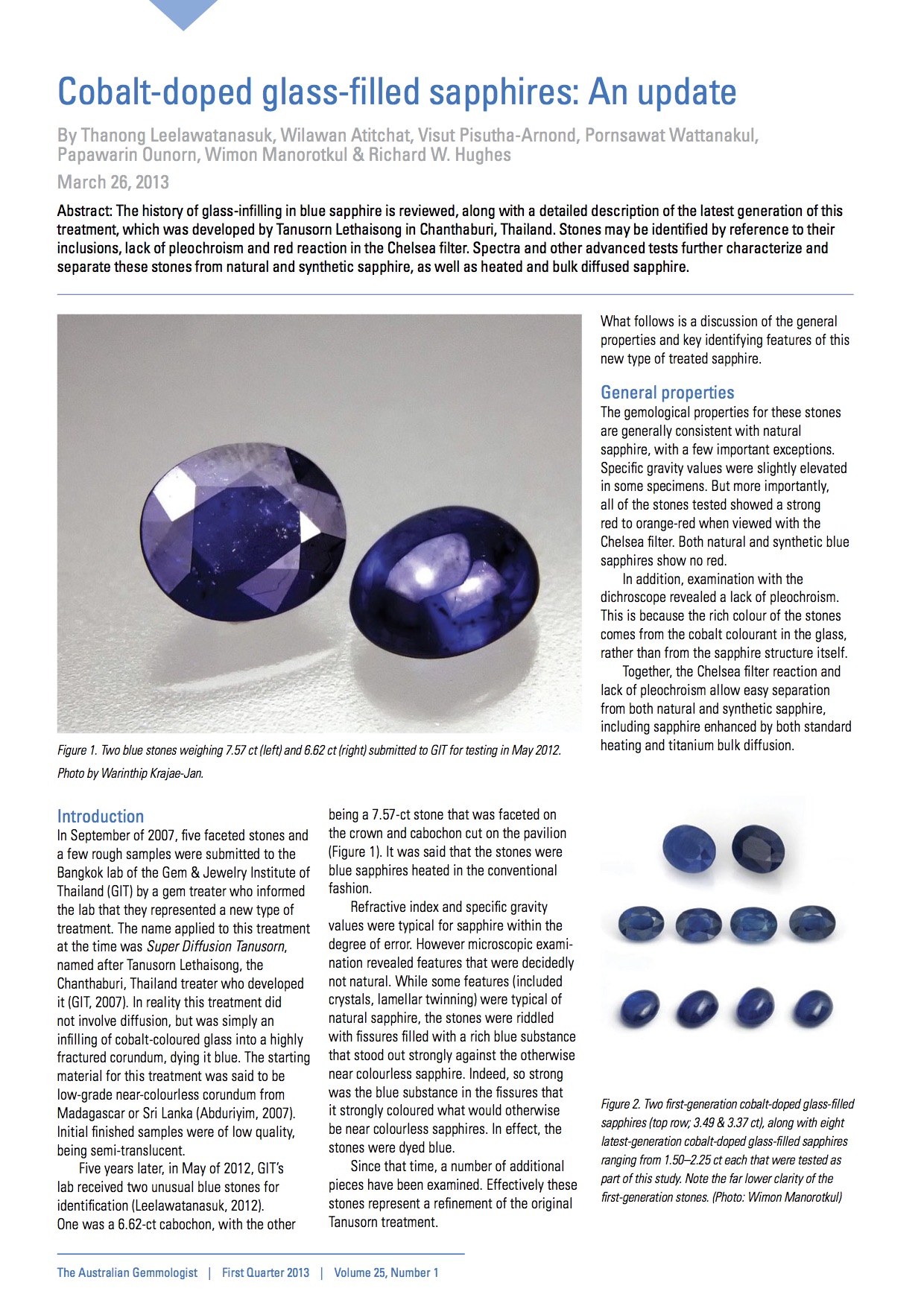
Cobalt-doped glass-filled sapphires: An update
Journal Article
Leelawatanasuk, T., Atichat, W., Pisutha-Arnond, V., Wattanakul, P., Ounorn, P., Manorotkul, W. and Hughes, R.W. (2013) Cobalt-doped glass-filled sapphires: An update. Australian Gemmologist, Vol. 25, No. 1, Jan.–Mar., pp. 14–20.
Record No. 5472  |  RWHL*
The history of glass-infilling in blue sapphire is reviewed, along with a detailed description of the latest generation of this treatment, which was developed by Tanusorn Lethaisong in Chanthaburi, Thailand. Stones may be identified by reference to their inclusions, lack of pleochroism and red reaction in the Chelsea filter. Spectra and other advanced tests further characterize and separate these stones from natural and synthetic sapphire, as well as heated and bulk diffused sapphire.

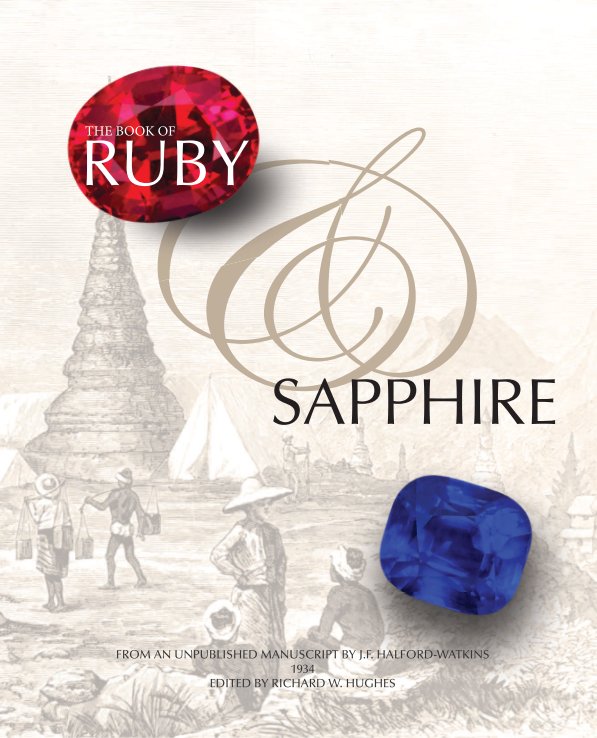
The Book of Ruby and Sapphire

Book
Halford-Watkins, J.F. and Hughes, R.W. (2012) The Book of Ruby and Sapphire. Hong Kong, RWH Publishing, 434 pp.
Record No. 9079  |  ISBN/ISSN: 964509702  |  Sinkankas/Born No.: NIS/NIB  |  RWHL*
Prior to the 1930s, ruby and sapphire were mysteries, arcane gems oft-confused with spinel and other look-alikes. Enter Col. J.F. Halford-Watkins. Living in Mogok for more than two decades, he penned several articles and an entire monograph on the subject of these rare gems. Sadly he passed away before it could be published. In 1994, Richard Hughes came across a reference to the manuscript. Patrick Streeter, grandson of G. Skelton Streeter, and great grandson of the famed London jeweler, Edwin Streeter, had mentioned the Halford-Watkins manuscript while writing his book, Streeter of Bond Street. Following up on that obscure reference Richard Hughes stumbled upon something truly fantastic, an undiscovered treasure of the gemological literature. Over ten years in the making, The Book of Ruby and Sapphire is the realization of Halford-Watkins’ vision. Professionally edited and illustrated, it represents a gemological tour de force.

Fluid inclusions confirm authenticity of Tibetan andesine
Journal Article
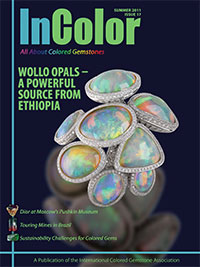
Peretti, A., Bieri, W., Hametner, K., Günther, D., Hughes, R.W. and Abduriyim, A. (2011) Fluid inclusions confirm authenticity of Tibetan andesine. InColor, No. 17, Summer, pp. 50–55.
Record No. 6339  |  RWHL
Analysis of Tibetan andesines collected by Richard Hughes and Dana Schorr in Tibet. Fluid inclusions with no heat damage demonstrate that there is natural red andesine in Tibet.

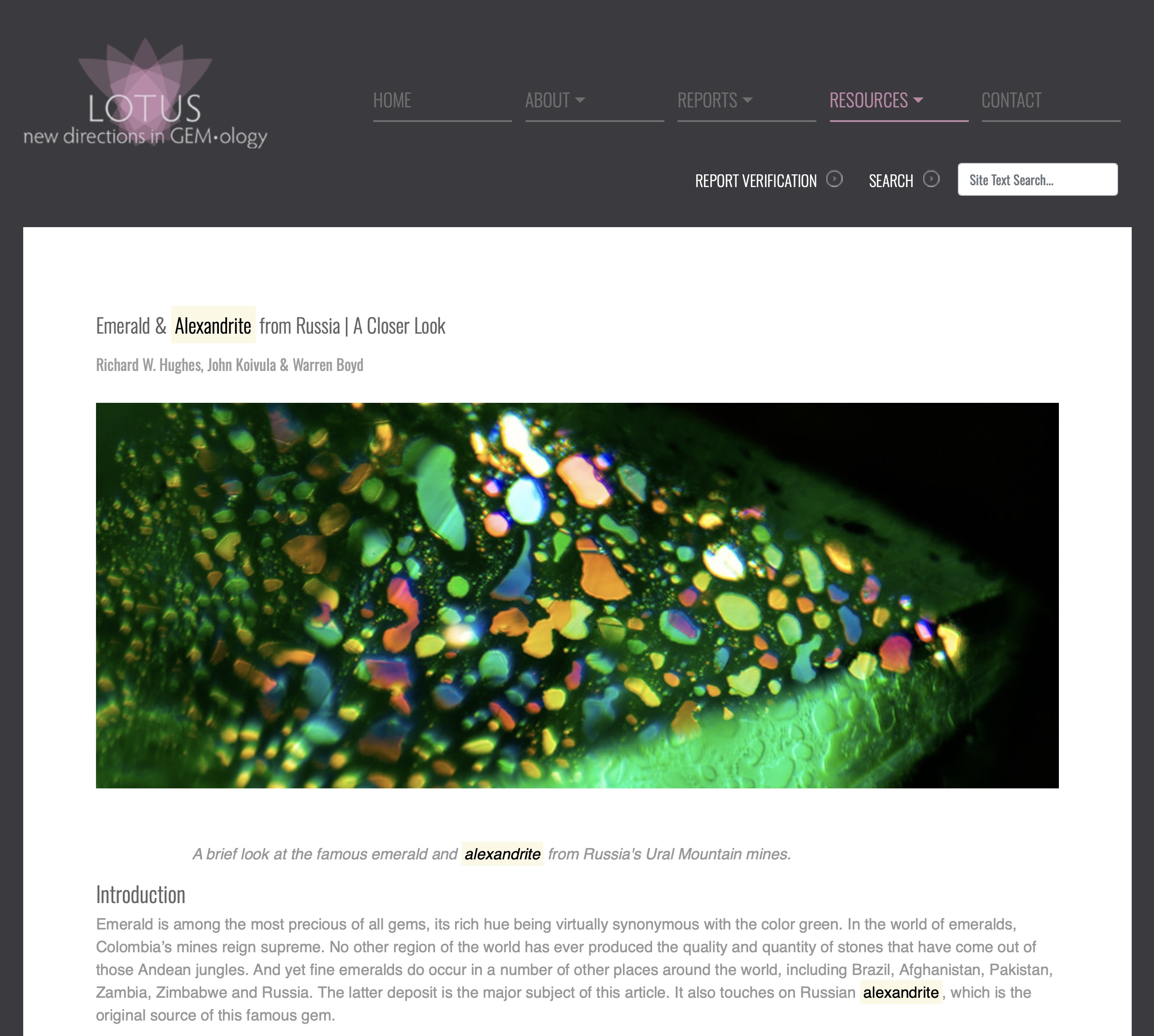
Emerald and alexandrite from Russia • A closer look
Web Page
Hughes, R.W., Koivula, J.I. and Boyd, W. (2006) Emerald and alexandrite from Russia • A closer look. LotusGemology.com, <https://lotusgemology.com/resources/articles/298-emeralds-from-russia-a-closer-look>
Record No. 7808  |  RWHL*
A brief look at the famous emerald and alexandrite from Russia's Ural Mountain mines.

Living in the Dark Ages: The fiber-optic light
Web Page
Koivula, J.I. and Hughes, R.W. (2005) Living in the Dark Ages: The fiber-optic light. Lotus Gemology, <https://www.lotusgemology.com/resources/articles/134-fiber-optic-light-in-gemology-living-in-the-dark-ages-lotus-gemology>
Record No. 5576  |  RWHL
A gemologist’s life would be far easier if gems were cut as parallel-sided plates. But they’re not. Facets are designed to reflect light back to the viewer, not transmit it. This means light entering the gemstone from behind (transmitted light) will typically not pass straight through. If we want to see inclusions, we must constantly change the light paths through the gemstone. This is done by changing the position of the gemstone relative to the light and changing the light relative to the gem. The most versatile and controllable method of doing this is with the fiber-optic light, an illumination technique “darker” than even darkfield. During a recent routine identification of a natural chrysoberyl a startling difference in two distinctly different types of illumination commonly used in the examination of gemstones was clearly revealed. These two methods are darkfield and fiber-optic illumination. When this chrysoberyl was studied in darkfield (Figure 1), only a fine linear growth band was seen. However, when fiber-optic lighting was directed in along the girdle plane, bundles of fine light-scattering silky needles extending at 90˚ from the linear growth band became abundantly clear. At the same time the linear growth band itself was also more clearly detailed (Figure 2). The difference in the amount of visual information provided by these two different lighting techniques was startling. In this instance darkfield was clearly inferior to fiber-optic illumination.

Following the Silk Road: Rutile in corundum
Web Page
Koivula, J.I. and Hughes, R.W. (2005) Following the Silk Road: Rutile in corundum. Lotusgemology.com, <https://www.lotusgemology.com/resources/articles/128-rutile-in-corundum-following-the-silk-road-lotus-gemology>
Record No. 5559  |  RWHL*
What follows is a love story. We admit it. Our heart is on our sleeves. We are smitten, head-over-heels in love with the exotic and beguiling internal lattice that gemologists call silk." How do we love thee? Let us count the ways. You are the one that lets some of our rubies and sapphires sparkle like the night sky, your asterism such a wonder of nature. Not to mention your beauty as you wink up at us when the light is just so. And finally, you are our guardian, our coalmine canary, a tiny thermometer in our gems, willing to sacrifice your own life to let us know when Man’s ego has grown so large that he thinks he can play God. For this alone, we sing your praises."

Inside Out: Inclusions and the symmetry of crystals

Web Page
Hughes, R.W. (2005) Inside Out: Inclusions and the symmetry of crystals. Lotus Gemology, <https://lotusgemology.com/resources/articles/135-inside-out-inclusions-and-the-symmetry-of-crystals>
Record No. 3356  |  RWHL
A discussion of how inclusion patterns mimic crystallographic symmetry in ruby and sapphire.
Tales from the Crypt – GQI lab news: Irradiated corundum; sapphire with CO2 inclusion
Tales from the Crypt – GQI lab news: Irradiated corundum; sapphire with CO2 inclusion

Journal Article
Hughes, R.W. (1999) Tales from the Crypt – GQI lab news: Irradiated corundum; sapphire with CO2 inclusion. GQ Eye, Vol. 2, No. 2, Spring, p. 8.
Record No. 2411  |  RWHL
Assorted lab notes on irradiated sapphire and sapphire with CO₂ inclusions.

Vietnamese rubies rock the market

Journal Article
Hughes, R.W. and Sersen, W.J. (1991) Vietnamese rubies rock the market. JewelSiam, Vol. 2, No. 2, p. 89.
Record No. 5101  |  seen
Discussion of the appearance in Thailand of large quantities of ruby from northern Vietnam.

Bangkok gem market review: Vietnamese ruby
Journal Article
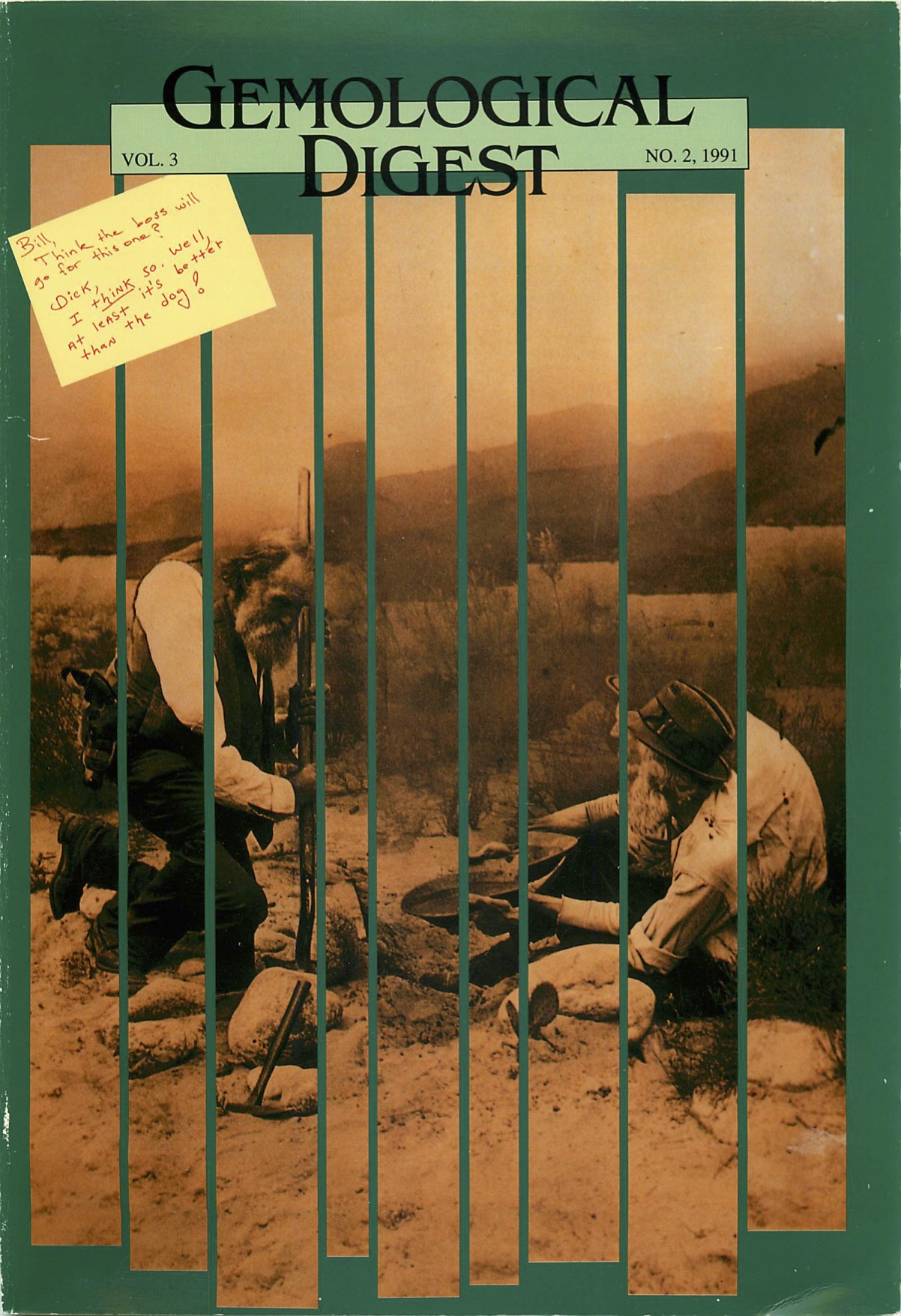
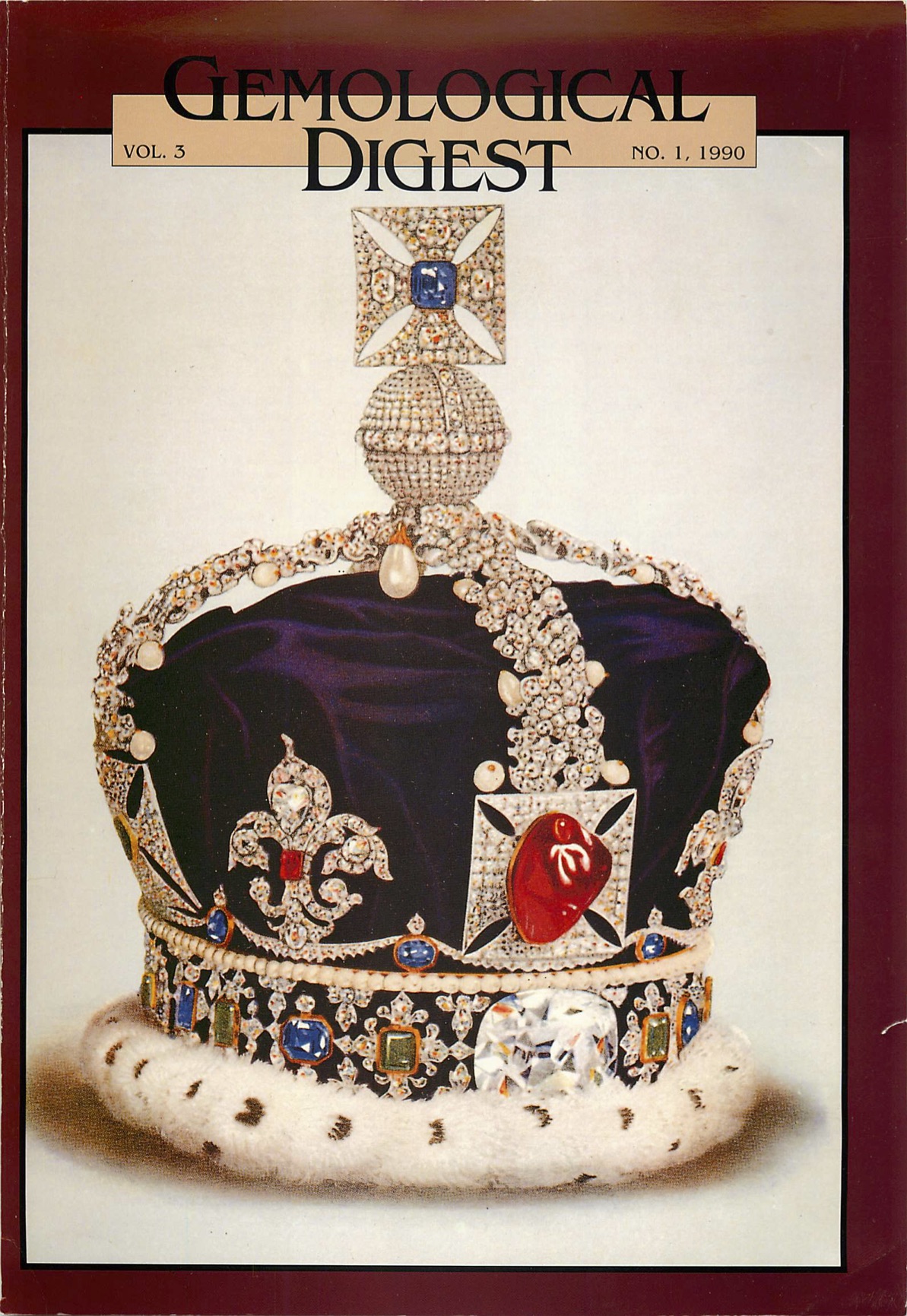
Hughes, R.W. and Sersen, W.J. (1991) Bangkok gem market review: Vietnamese ruby. Gemological Digest, Vol. 3, No. 2, pp. 68–70.
Record No. 5100  |  RWHL*
Review of events in the Bangkok gem market, including the appearance of large quantities of ruby from northern Vietnam.

A question of origin

Journal Article
Hughes, R.W. (1990) A question of origin. Gemological Digest, Vol. 3, No. 1, pp. 16–32.
Record No. 2341  |  RWHL*
No gemologist today would deny the importance of inclusions to the study of gemology. They are vital tools in separating synthetic gems from natural, and their importance will certainly increase along with the growing sophistication of treated gems. However, the question of inclusion-based country-of-origin reports does not find all gemologists and traders in agreement. Some support the practice; others do not. The following article takes a close look at the entire question of lab-issued origin reports, asking… a. are origin reports accurate within a reasonable degree of error using the current methods? b. even if origin reports are reasonably accurate, how are they being used in today's market? Do they provide useful collector information and protection to prospective customers, or are they merely a diversion for drawing the buyer's attention away from the stone's overall appearance and quality, to some ill-definable factor, such as origin? c. are origin reports akin to the authentication of a painting by a master artist, or do natural gems have only one artist Mother Nature? The purpose of this article is, thus, to explore objectively the arguments for and against lab origin reports. First the author explains why he believes origin reports are not totally reliable and definitely not in the best interests of the consumer. Supporters are then given the opportunity for rebuttal, explaining why they think Mr. Hughes has lost his mind. It is our hope that, out of the fray, readers, defenders of the faith, and opponents will better understand this question of origin.

Talkin’ ‘bout gem-testing instruments
Journal Article
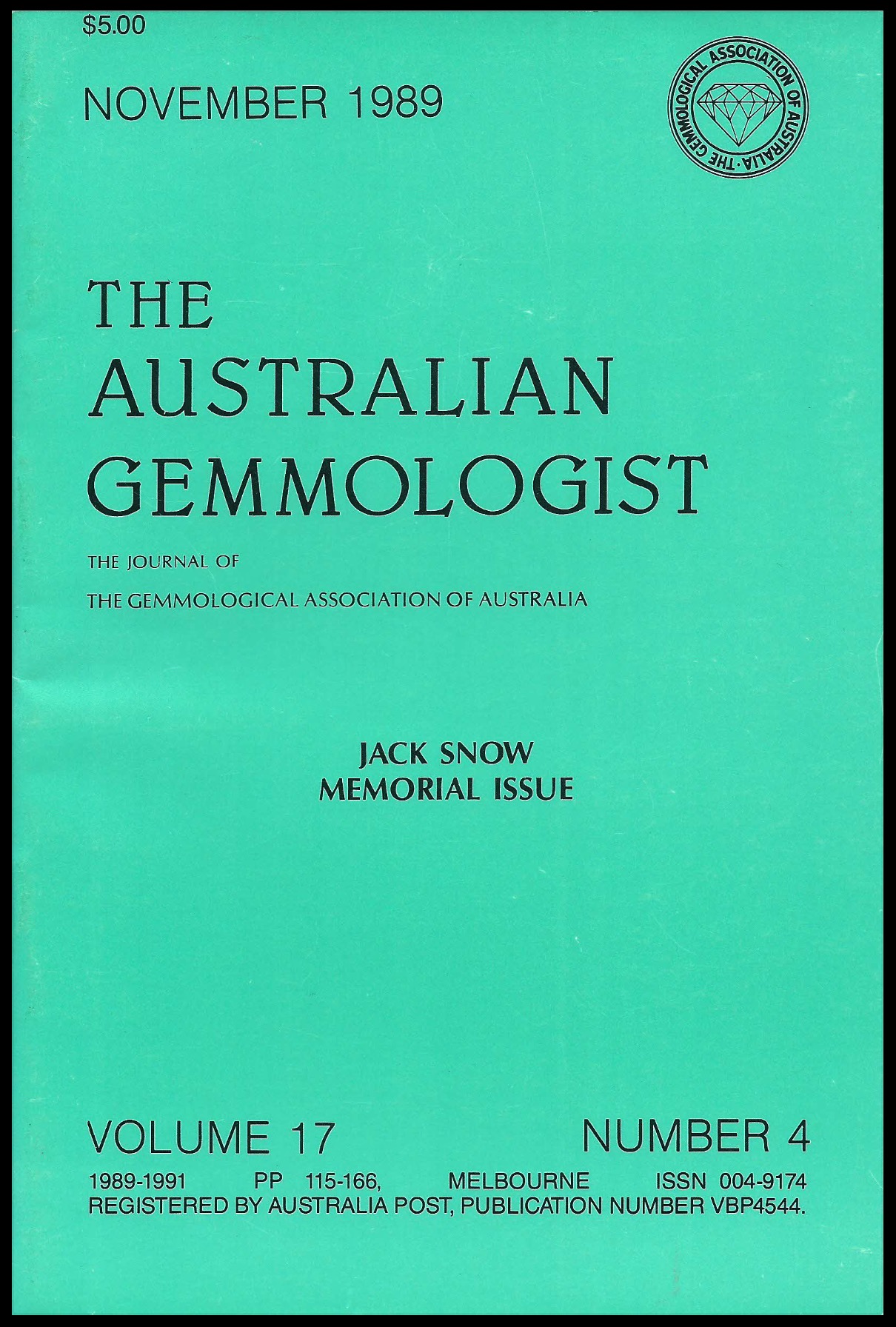
Hughes, R.W. (1989, 1990) Talkin’ ‘bout gem-testing instruments. Australian Gemmologist, Vol. 17, No. 4, pp. 159–164; No. 5, pp. 242–246.
Record No. 2340  |  RWHL
The author ruminates on the rather poor state of gemological instrument design and offers several suggestions for improvement.

The inclusions of Turkana sapphires

Journal Article
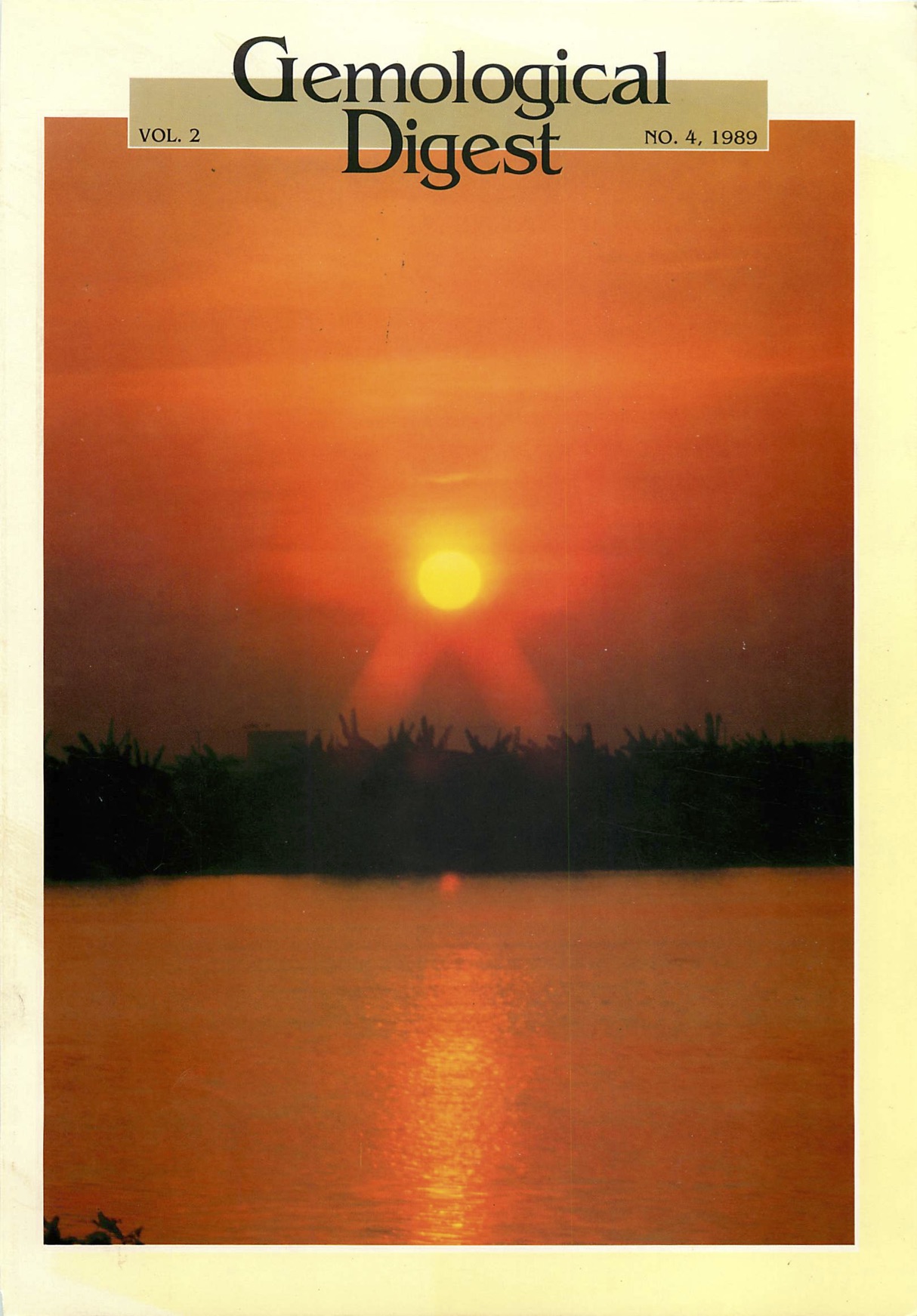
Hughes, R.W. (1989) The inclusions of Turkana sapphires. Gemological Digest, Vol. 2, No. 4, pp. 35–36.
Record No. 2338  |  RWHL
A brief inclusion study was done on a small sampling of Turkana sapphires provided by Ted Themelis. Perhaps the most distinctive feature throughout the lot of approximately 30 pieces was a slight cloudiness, or girasol," if you will. While in reflected light the stone might appear blue or green, in transmitted light an oily yellowish "diesel" appearance was seen (see Figure 1). This was found in virtually all specimens, except the one piece which had been heat treated. Heat treatment removed this cloudiness, as well as improving the color, suggesting that the cloudiness may be exsolved Ti and/or Fe compounds."

Identifying yellow sapphires—two important techniques
Journal Article
Hughes, R.W. (1988) Identifying yellow sapphires—two important techniques. Journal of Gemmology, Vol. 21, No. 1, January, pp. 23–25.
Record No. 2334  |  ISBN/ISSN: 221252  |  RWHL*
This article describes two techniques for identifying yellow sapphire. The first uses a blue filter to detect color zoning in natural and synthetic yellow sapphire. Second is how gently heating heat-treated yellow sapphires under a lamp will cause their color to temporarily darken. It can thus be used to separate heated yellow sapphires from natural yellow sapphires.

Agate — Quartz Phenomenon

Book
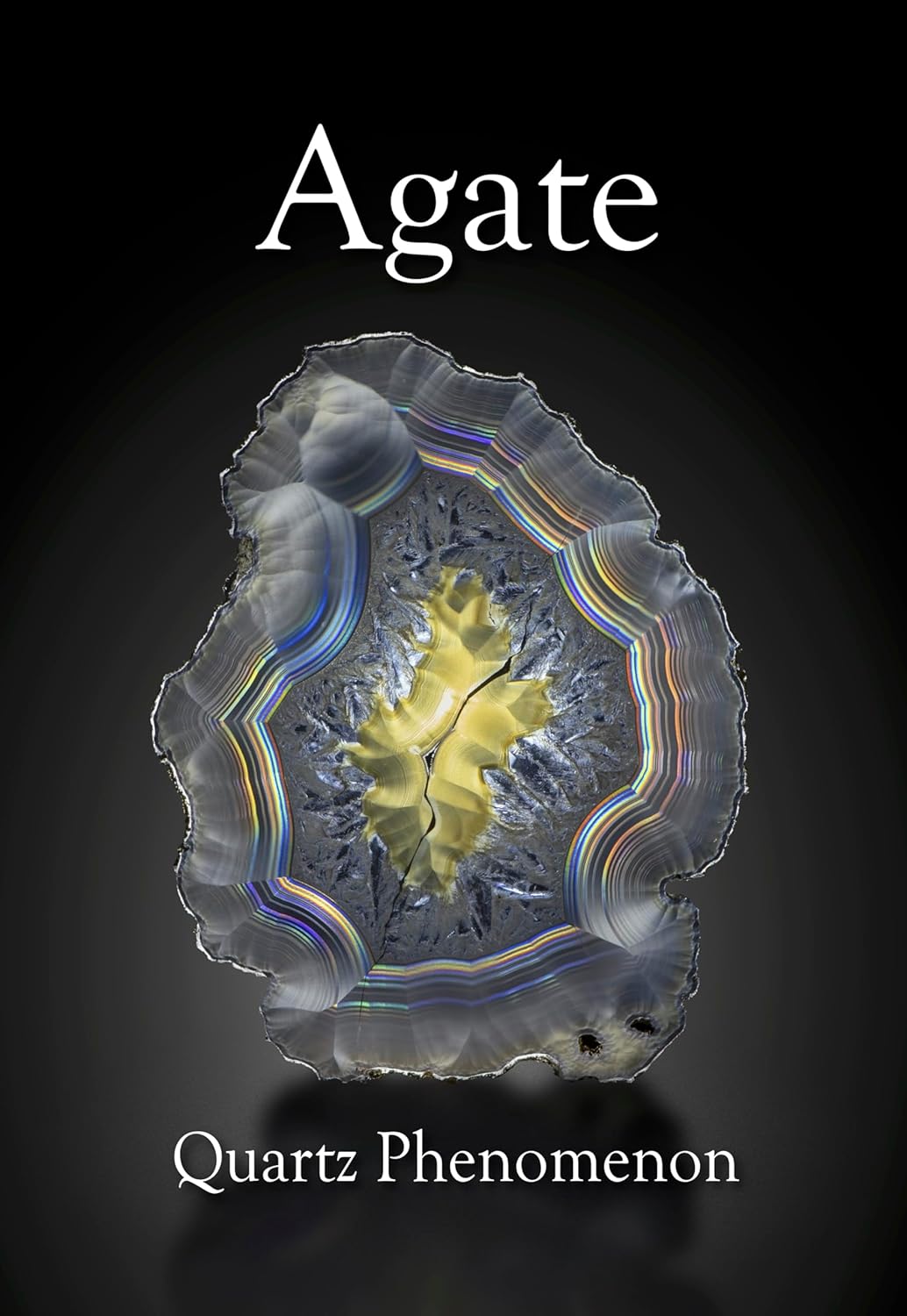
Cross, B.L., Frazier, A., Frazier, S., Heaney, P.J., Keller, P.C., Koivua, J.I., Megaw, P., Renfro, N., Rossman, G.R., Staebler, G.A. and Wilner, O.D. (2025) Agate — Quartz Phenomenon. Arvada, CO, Lithographie, 144 pp
Record No. 28185  |  ISBN/ISSN: 9781730000000  |  Sinkankas/Born No.: NIS/NIB  |  RWHL**
This superb volume is perhaps the best of all the extraLapis English series, which is saying a lot. Gossamer ribbons swirling with color and light, agate has a universal appeal. Unconstrained by any internal architecture: agate is a freeform expression of its ancestral fluids, which organize into complex patterns that echo the voids it fills. The effect is natural, balanced asymmetry — a wabi sabi, Zen aesthetic — which is perhaps what compels us to hold it as a memento, metaphor, talisman, curiosity, microcosm, or charm. Humans have interacted with agate since time immemorial; and although it minutely details the conditions under which it formed, agate has been the focus of relatively few studies — its code has yet to be cracked. Agate thus remains an enigmatic gemstone — a kaleidoscope of complex textures birthed of simple, common silica — that inspires a wide swath of people from to children to naturopaths to artists, scientists, and collectors. With articles on the history, art, science, and vocabulary of agates, our expert team of authors explore the niche between science and art occupied by this fascinating gem. Extraordinary imagery illuminates the story, enticing readers to get to know the irresistible Quartz Phenomenon — Agate.

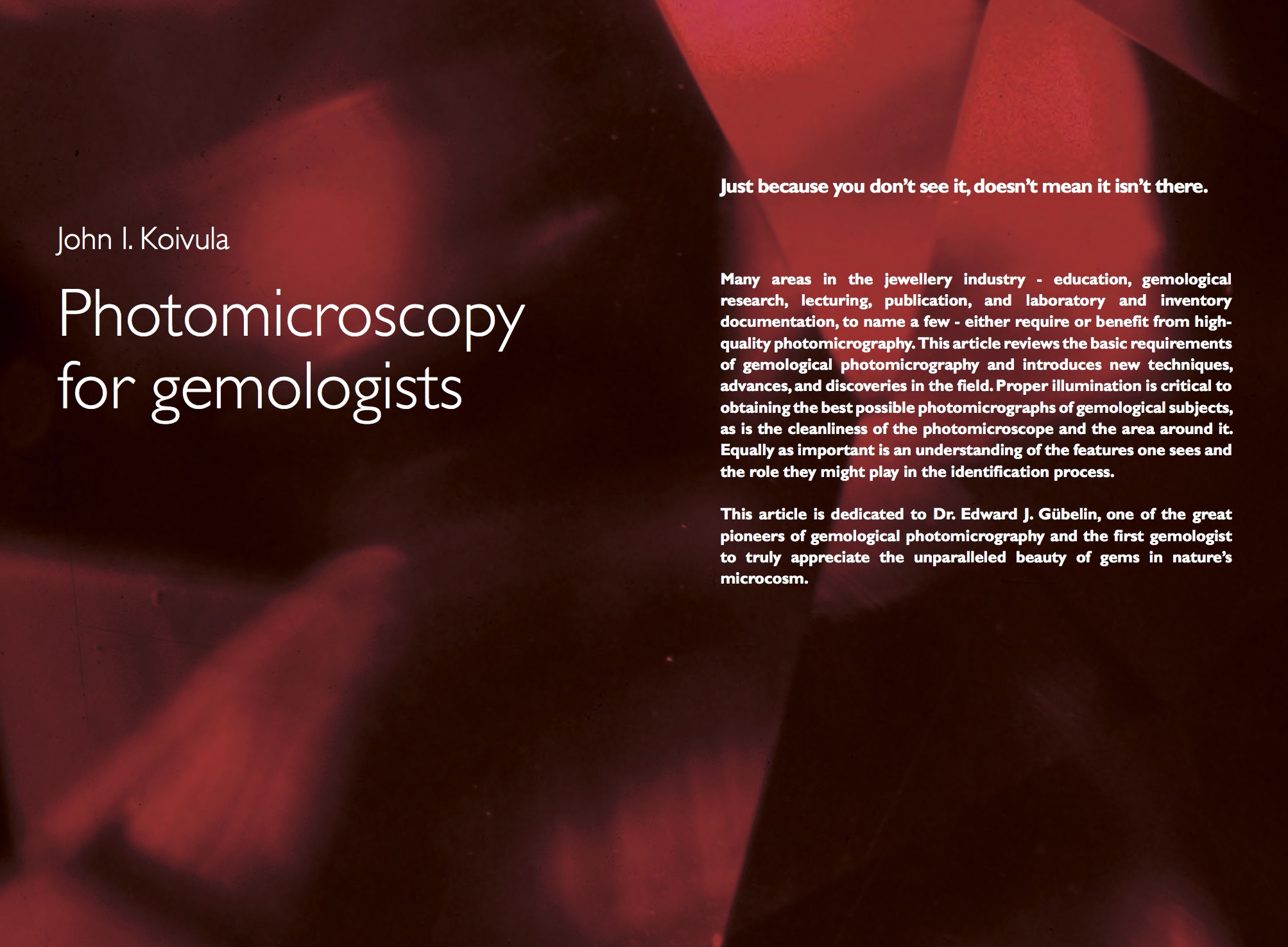
Photographing gems

Journal Article
Koivula, J.I. (2007) Photographing gems. InFocus, No. 7, September, pp. 24–59.
Record No. 3227  |  RWHL**
Without photomicrography, gemology as we know it would be virtually nonexistent. The photomicrographer explores the surfaces and interiors of gems with a microscope, and prepares images that record and convey information that is normally hidden from view. Today, nearly all professional gemological researchers take and publish their own photomicrographs. When researchers report the identifying features of new synthetics, treatments, and natural gems from new geographic localities, they include photomicrographs that are instrumental to the jeweller/gemologist in identifying these new materials. One needs only to look through issues of Gems & Gemology, or any of the various international gemological journals, to see how dependent gemology has become on these illustrations of the microscopic features of gems. Via the printed page, these photomicrographs instantly update the reader.

Gemology: An Annotated Bibliography

Book
Sinkankas, J. (1993) Gemology: An Annotated Bibliography. Metuchen, NJ, The Scarecrow Press, Inc., 2 Vols., 1179 pp.
Record No. 7378  |  ISBN/ISSN: 810826526  |  Sinkankas/Born No.: NIS/NIB  |  RWHL**
It is difficult to overstate the importance of this two-volume work, which was the product not just of John’s writing career, but also of his home business, Peri Lithon, which he operated for decades with his wife, Marge. No authors ever worked harder on a single work. Over 6,000 entries, virtually all of which are annotated. There is a limited edition in fake leather with a siipcase. My pick for the greatest gem book of all time.

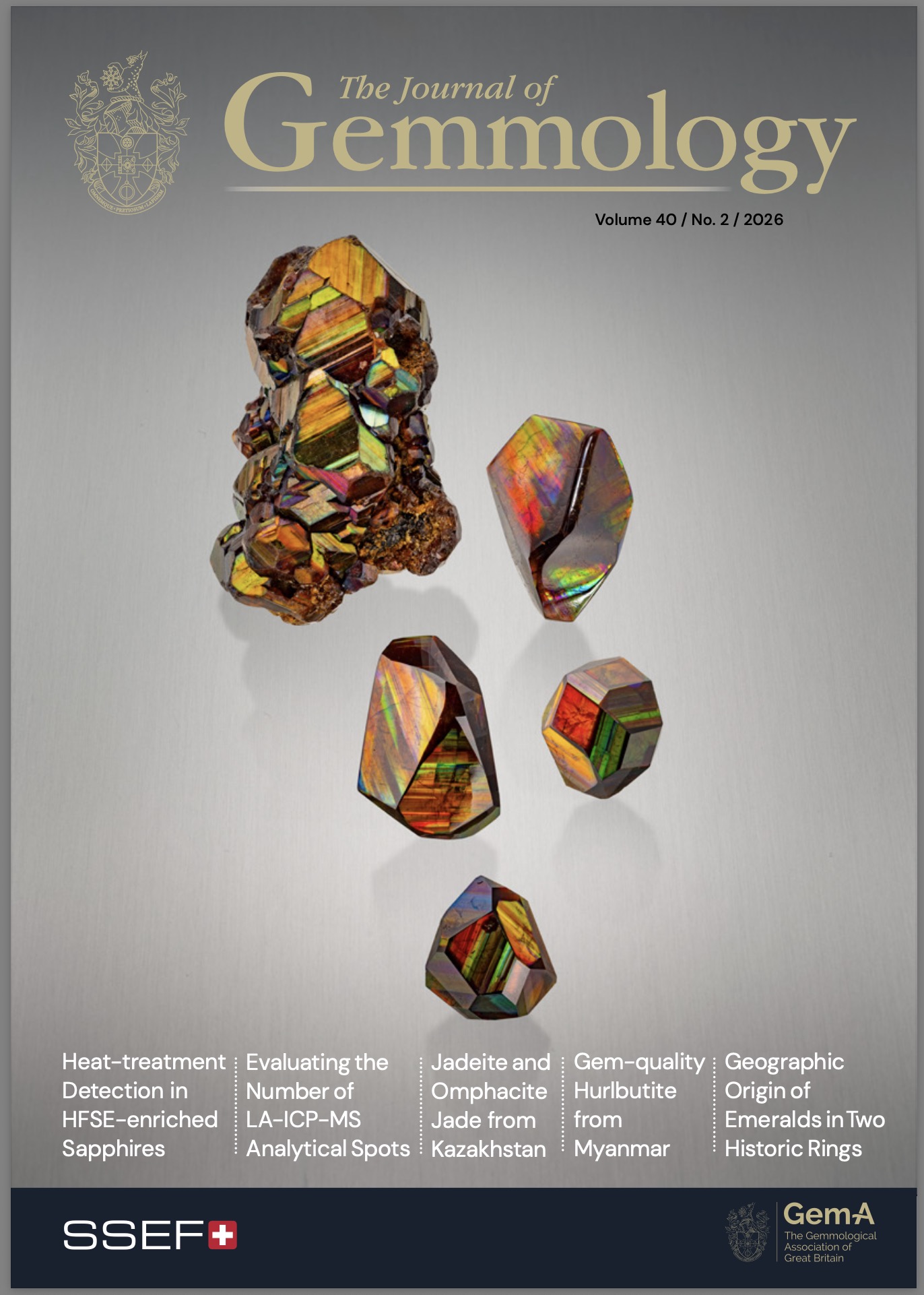
HFSE-enriched metamorphic blue sapphires: FTIR and trace-element study, and implications for heat-treatment detection
Journal Article
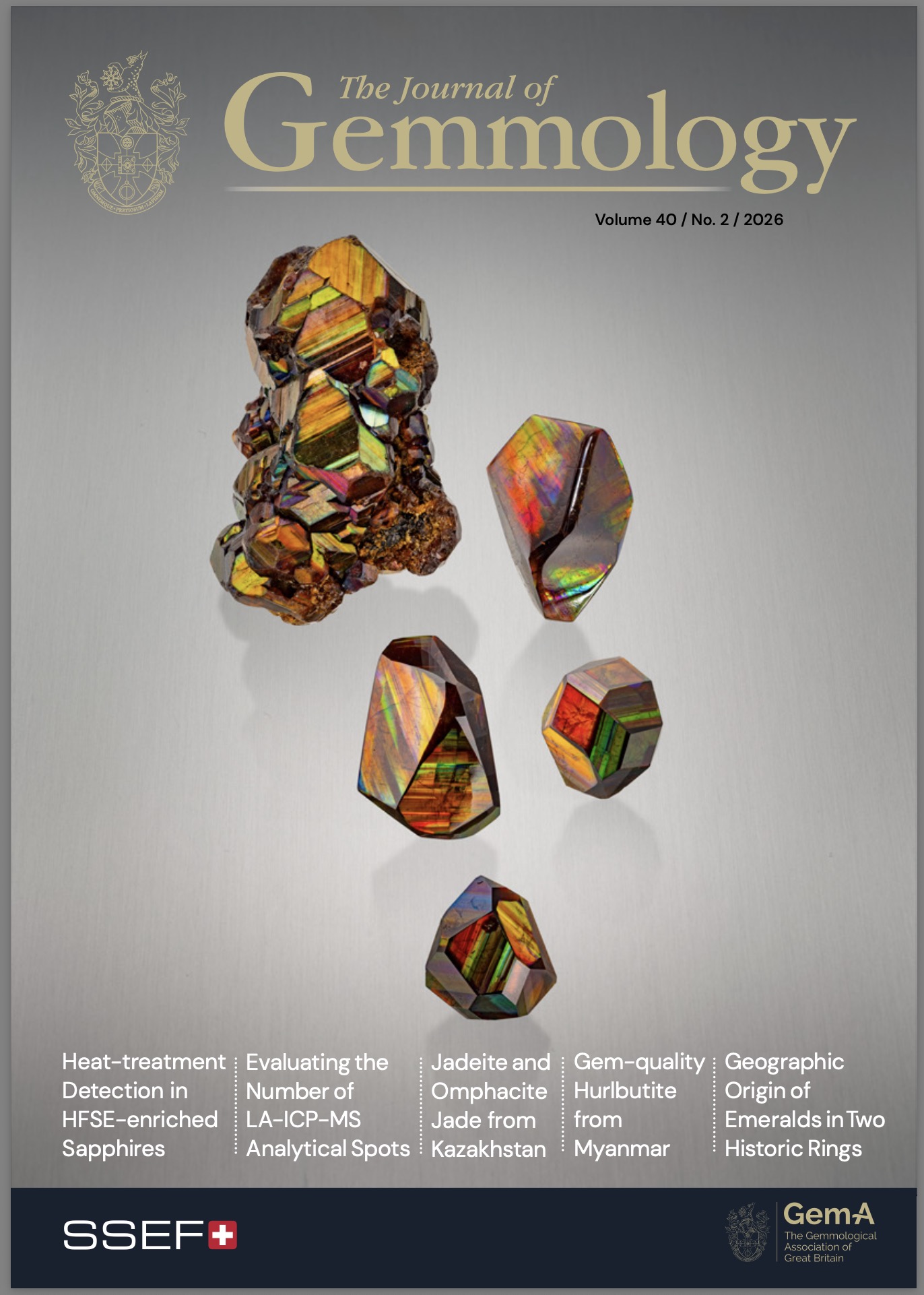
Hardman, M.F., Shigley, J.E., Sun, Z. and Palke, A.C. (2026) HFSE-enriched metamorphic blue sapphires: FTIR and trace-element study, and implications for heat-treatment detection. Journal of Gemmology, Vol. 40, No. 2, pp. 157–169.
Record No. 28987  |  DOI: https://doi.org/10.15506/JoG.2026.40.2.142  |  Sinkankas/Born No.: NIS/NIB  |  RWHL*
This study examines sapphires naturally enriched in high-field-strength elements (HFSE) from metamorphic origins in Sri Lanka and Madagascar. These sapphires display distinctive chemical inhomogeneities and microscopic growth features, as well as variable FTIR spectra, often including a broad absorption band near 3300 cm–1. Some of the studied samples also show FTIR spectral characteristics and short-wave UV luminescence typically associated with heat-treated stones, although all were unheated. Our findings demonstrate that commonly used indicators—such as specific FTIR band patterns (mainly the 3309 cm–1 triplet) and chalky bluish white short-wave UV fluorescence—are not always reliable for identifying heat treatment. Accurate distinction between heated and unheated sapphires requires detailed microscopic examination combined with advanced trace-element analysis and spectroscopic techniques, including Raman micro-spectroscopy of inclusions such as zircon, goethite and diaspore.

HFSE-enriched metamorphic blue sapphires: FTIR and trace-element study, and implications for heat-treatment detection
Journal Article
Krzemnicki, M.S., Cartier, L.E., Zhou, W., Lefèvre, P., Wälle, M., Wang, H.A.O. and Braun, J. (2026) HFSE-enriched metamorphic blue sapphires: FTIR and trace-element study, and implications for heat-treatment detection. Journal of Gemmology, Vol. 40, No. 2, pp. 142–156.
Record No. 28986  |  DOI: https://doi.org/10.15506/JoG.2026.40.2.142  |  Sinkankas/Born No.: NIS/NIB  |  RWHL*
This study examines sapphires naturally enriched in high-field-strength elements (HFSE) from metamorphic origins in Sri Lanka and Madagascar. These sapphires display distinctive chemical inhomogeneities and microscopic growth features, as well as variable FTIR spectra, often including a broad absorption band near 3300 cm–1. Some of the studied samples also show FTIR spectral characteristics and short-wave UV luminescence typically associated with heat-treated stones, although all were unheated. Our findings demonstrate that commonly used indicators—such as specific FTIR band patterns (mainly the 3309 cm–1 triplet) and chalky bluish white short-wave UV fluorescence—are not always reliable for identifying heat treatment. Accurate distinction between heated and unheated sapphires requires detailed microscopic examination combined with advanced trace-element analysis and spectroscopic techniques, including Raman micro-spectroscopy of inclusions such as zircon, goethite and diaspore.

Inclusions in quartz: A photomicrographic exploration beyond rutile

Journal Article
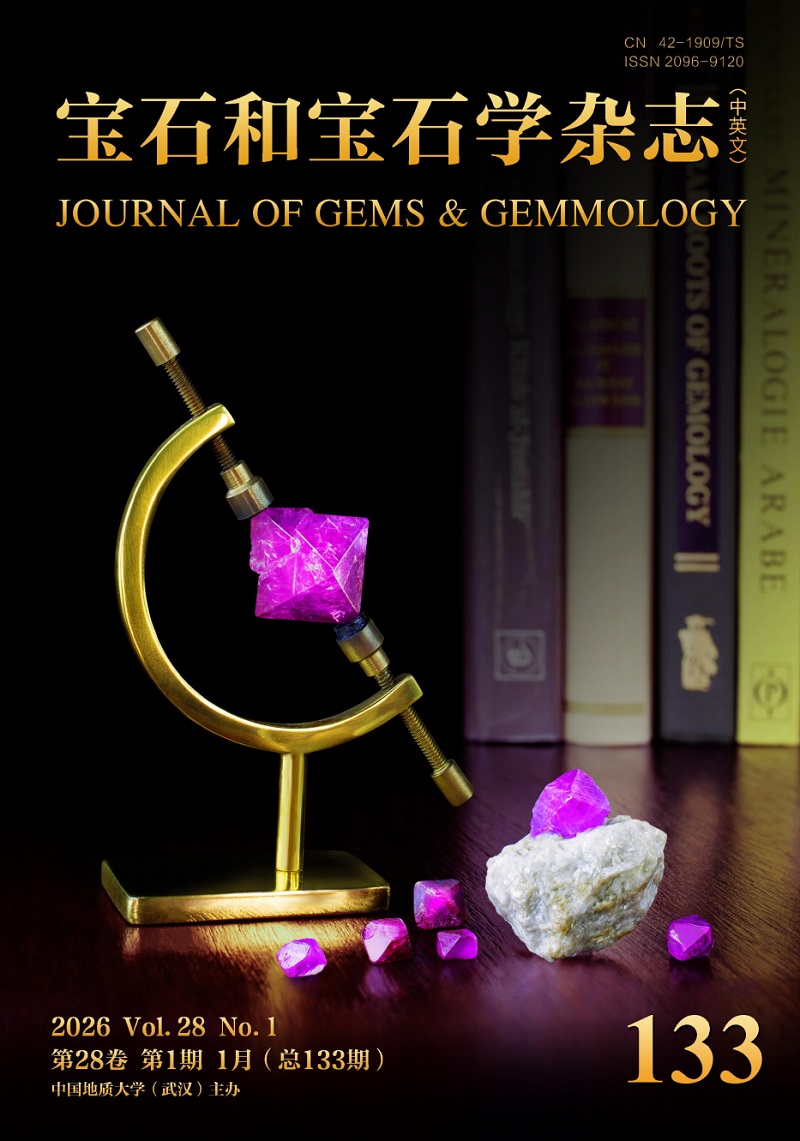
Koivua, J.I. and Renfro, N. (2026) Inclusions in quartz: A photomicrographic exploration beyond rutile. Journal of Gems & Gemmology, Vol. 28, No. 1, pp. 87–90.
Record No. 28535  |  DOI: https://dx.doi.org/10.15964/j.cnki.027jgg.2026.01.008  |  Sinkankas/Born No.: NIS/NIB  |  RWHL*
Throughout the history of gemology, quartz has been a main target of gemological microscopists. A detailed study of the wide variety of inclusions in quartz is as complex an earth-science related mental exercise as any gemologist would ever undertake. This is not surprising, as quartz occurs in a wider range of geologic environments than any other mineral species, and the inclusions it holds testify to this. The photomicrographs, pictured here with this study, provide the reader only a glimpse at the micro-world of quartz beyond rutile.

Exploring the Literature of Gemstone Inclusions

The literature of gemstone inclusions covers identification, origin determination, treatments, synthesis, mineral inclusions, fluid inclusions and other internal features of natural and synthetic gems.

For a curated selection of important sources, read Inclusions in Gemstones — Hyperion Literature Sources.

About Four Treasures

Four Treasures is Lotus Gemology's freely accessible gemological reference database. Use the full database to search by author, title or keyword and explore literature on gemology, mineralogy, jewelry and related fields. Where available, hyperlinks on titles may lead directly to the full publication.

Search the Complete Four Treasures Database