Burmese Ruby Inclusions
Explore Burmese ruby inclusions in Hyperion, the Lotus Gemology inclusion database. Hyperion contains photomicrographs of inclusions and internal features in natural rubies from Myanmar (Burma), documented with information on treatment, lighting conditions, field of view, photographer and published references.
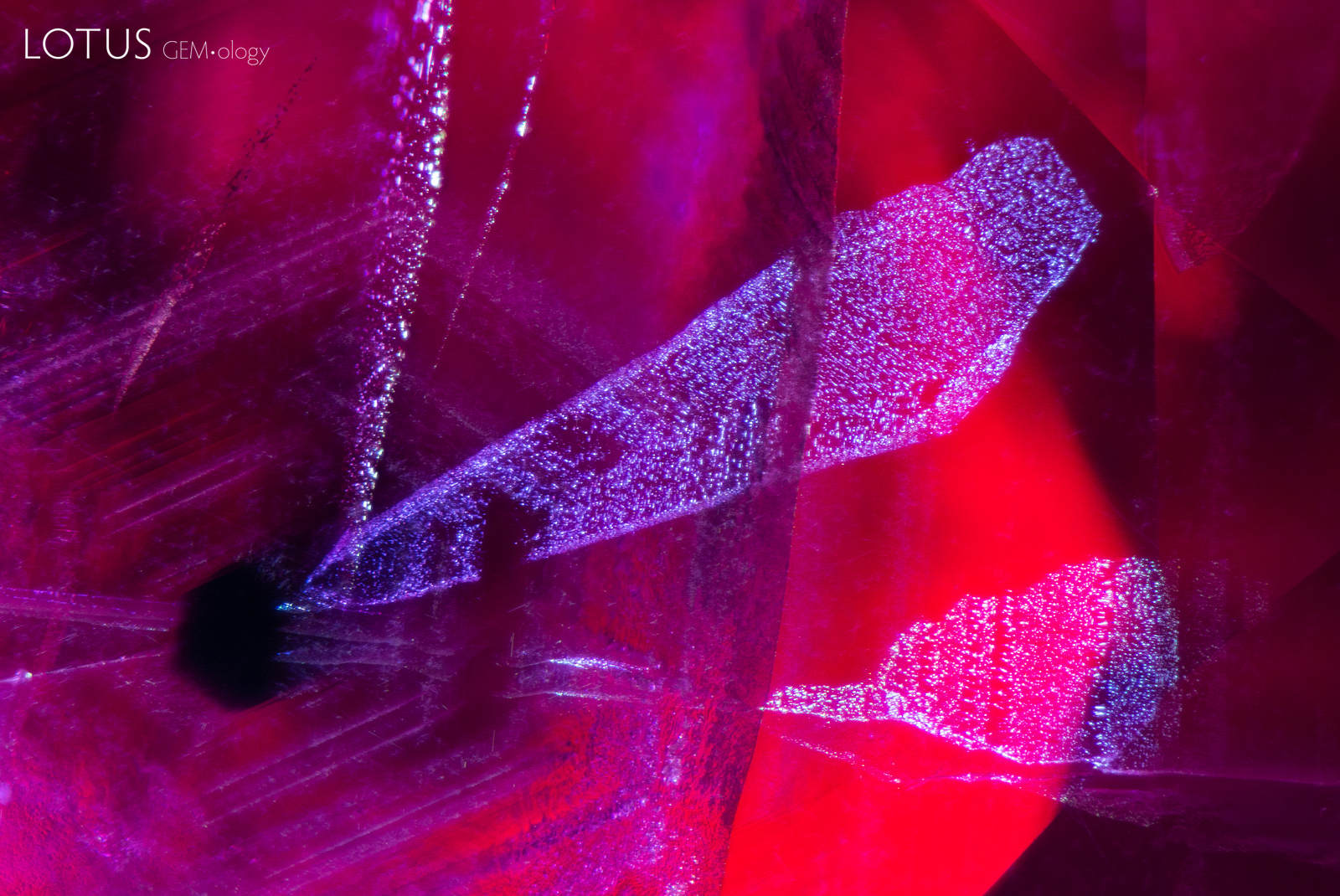
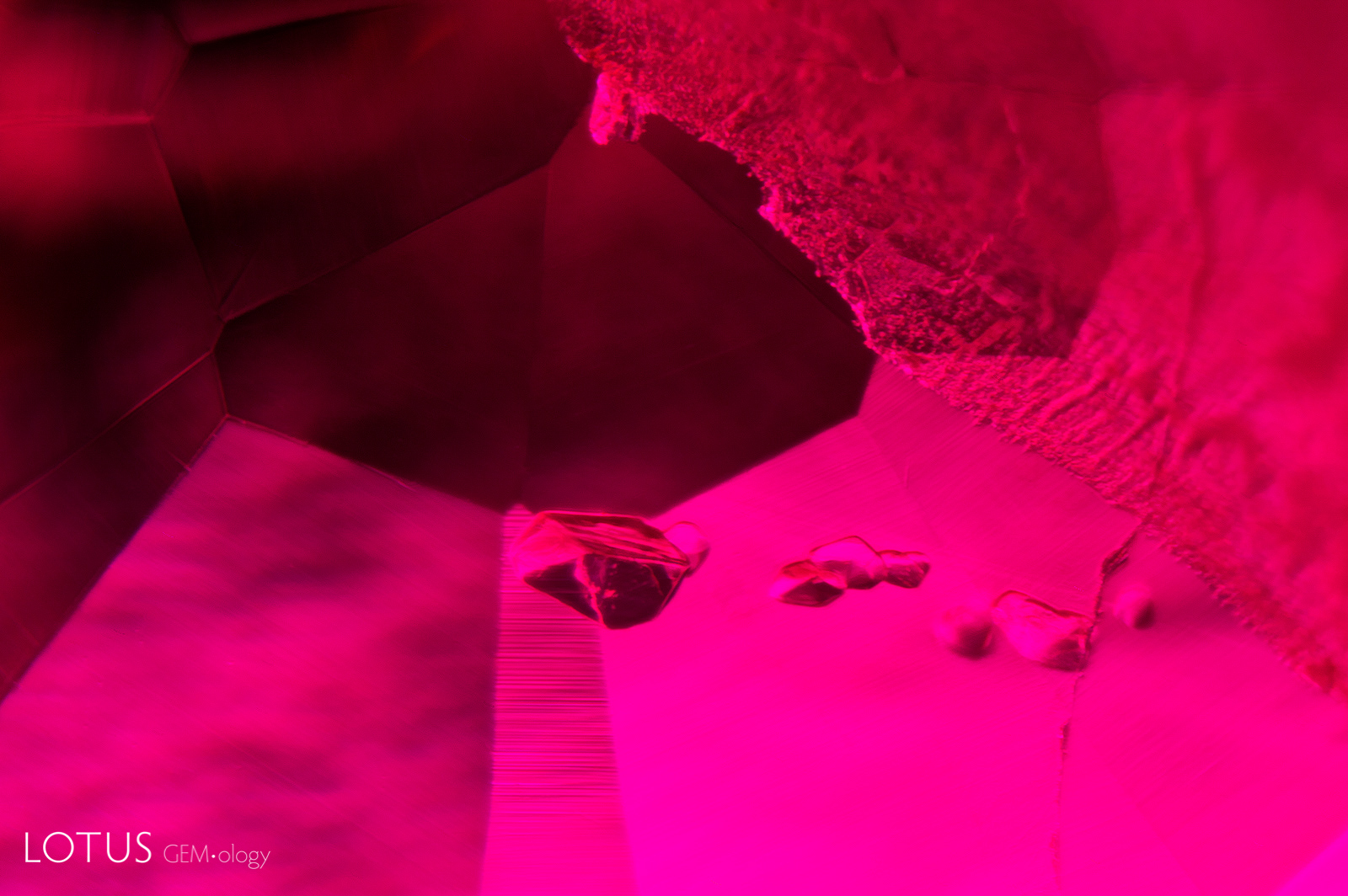
A pair of calcite crystals, identified with micro Raman, stand out against clouds of rutile silk in this ruby from Myanmar.
Natural Ruby •
Myanmar (Burma); Mogok/Namya •
Enhancements:
None Detected (None) •
Lighting Conditions:
Dark Field
Photographer:
E. Billie Hughes •
Image Number:
A-001-5440-1
• Field of View = 2mm
Phantom clouds, made up of small particles arranged in angular zones, create a striking appearance in this Mong Hsu ruby.
Natural Ruby •
Myanmar (Burma); Mong Hsu •
Enhancements:
None Detected (None) •
Lighting Conditions:
Dark Field + Diffuse Fiber Optic
Photographer:
E. Billie Hughes •
Image Number:
A-003-7978-2
• Field of View = 3mm
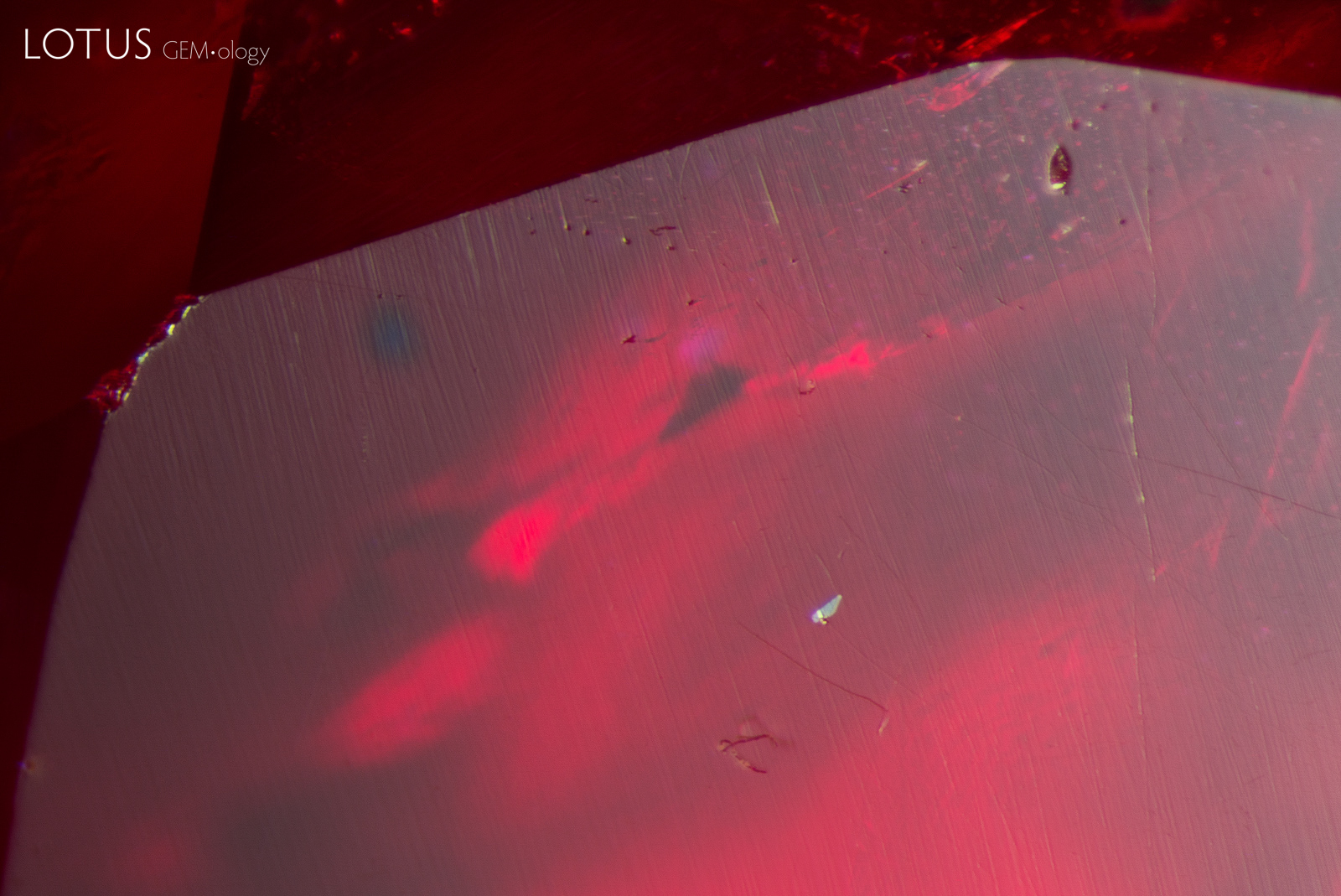
A tiny rutile crystal (identified with micro Raman) was cut through on the surface of this ruby. It is notable for its high luster which appears almost metallic in comparison with the surrounding corundum.
Natural Ruby •
Myanmar (Burma); Mong Hsu •
Enhancements:
None Detected (None) •
Lighting Conditions:
Dark Field + Diffuse Fiber Optic
Photographer:
E. Billie Hughes •
Image Number:
A-003-7983-1
• Field of View = 3mm
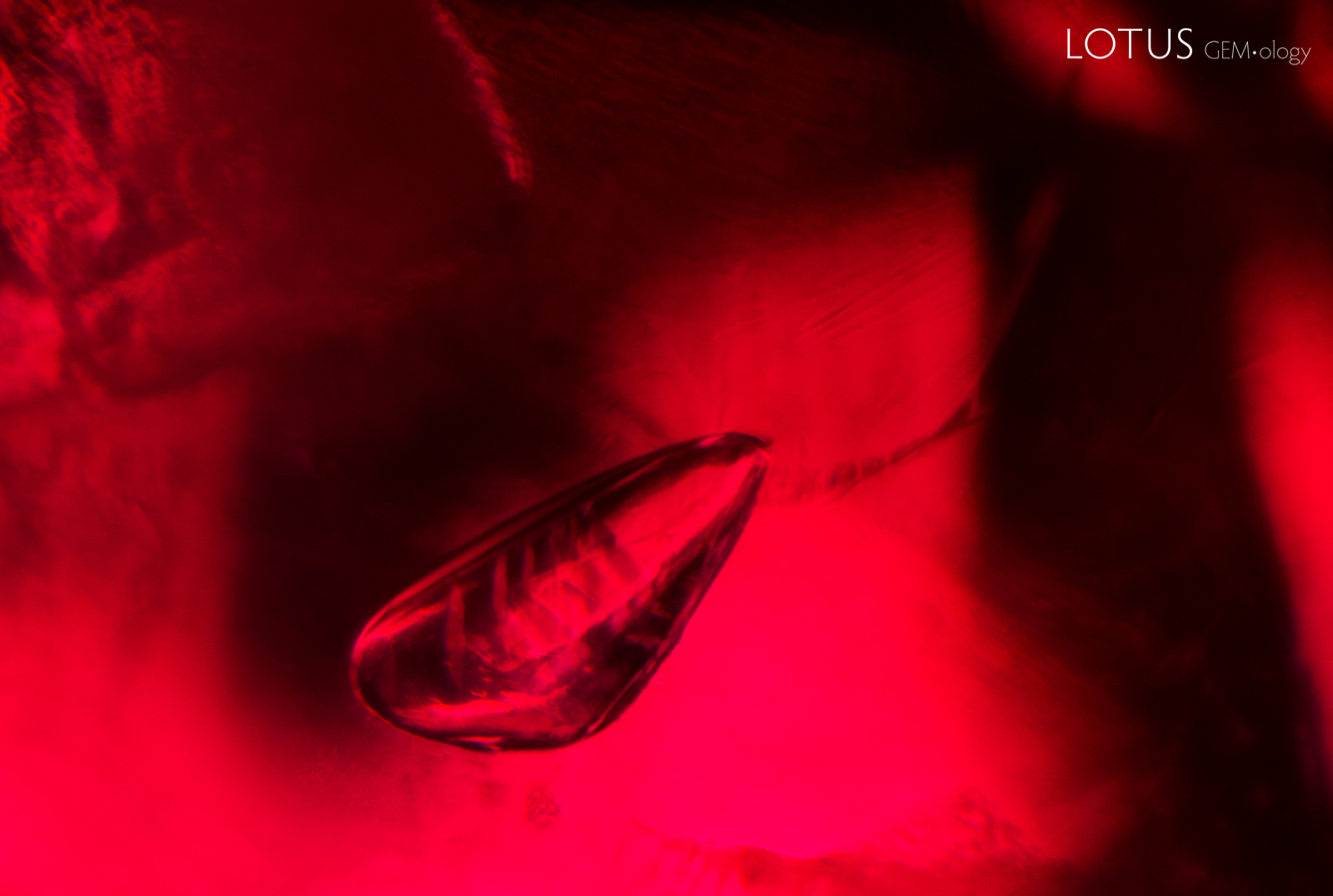
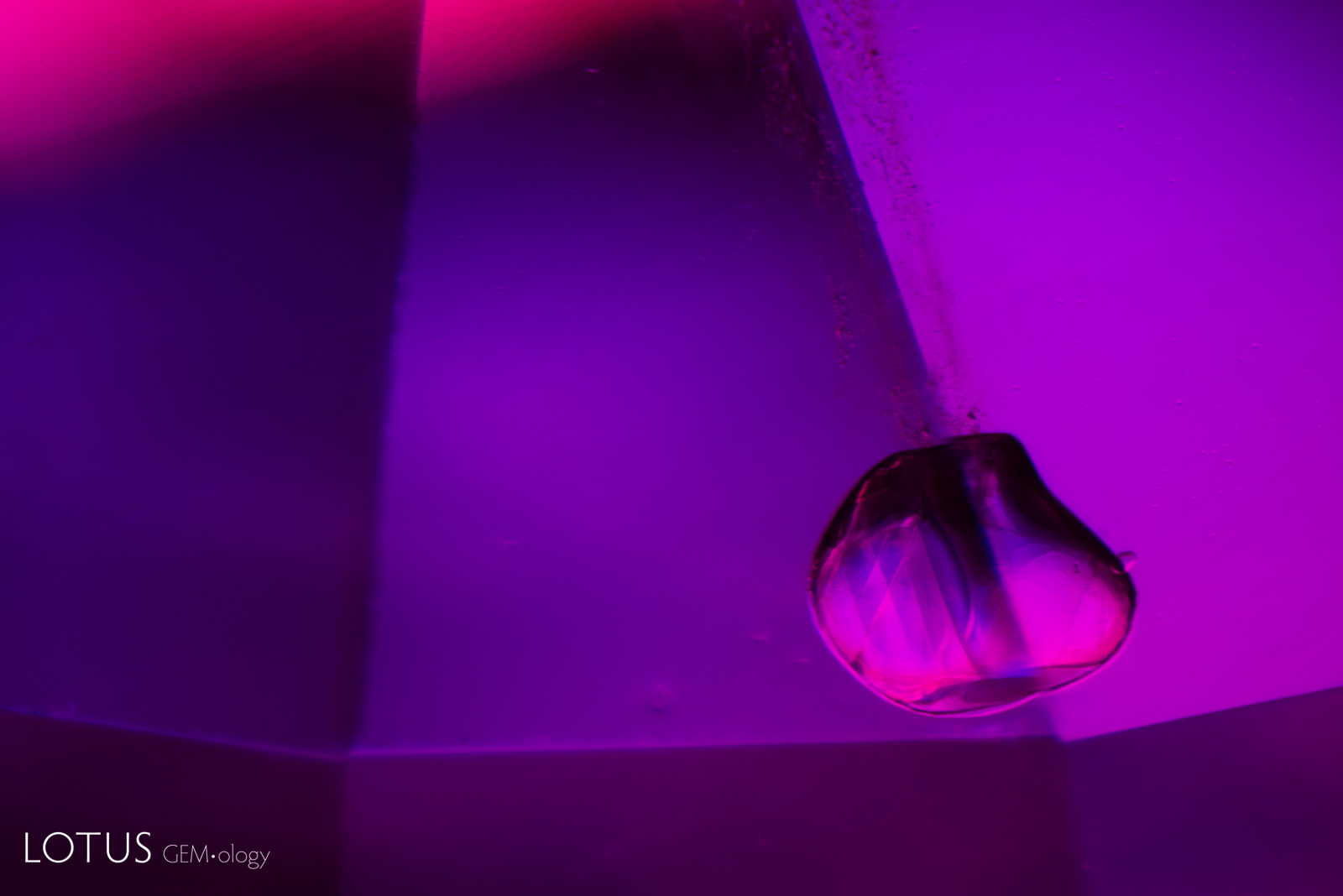
Twin planes are visible in this crystal that is suspended inside of a Mong Hsu ruby.
Natural Ruby •
Myanmar (Burma); Mong Hsu •
Enhancements:
None Detected (None) •
Lighting Conditions:
Dark Field
Photographer:
E. Billie Hughes •
Image Number:
A-003-8058-1
• Field of View = 2.5mm
This Mong Hsu ruby contained a couple mineral inclusions, which were identified with micro Raman. The triangular whitish one is mica, and the lower luster material cut through is diaspore.
Natural Ruby •
Myanmar (Burma); Mong Hsu •
Enhancements:
None Detected (None) •
Lighting Conditions:
Dark Field + Diffuse Fiber Optic
Photographer:
E. Billie Hughes •
Image Number:
A-003-8020-1
• Field of View = 1.5mm
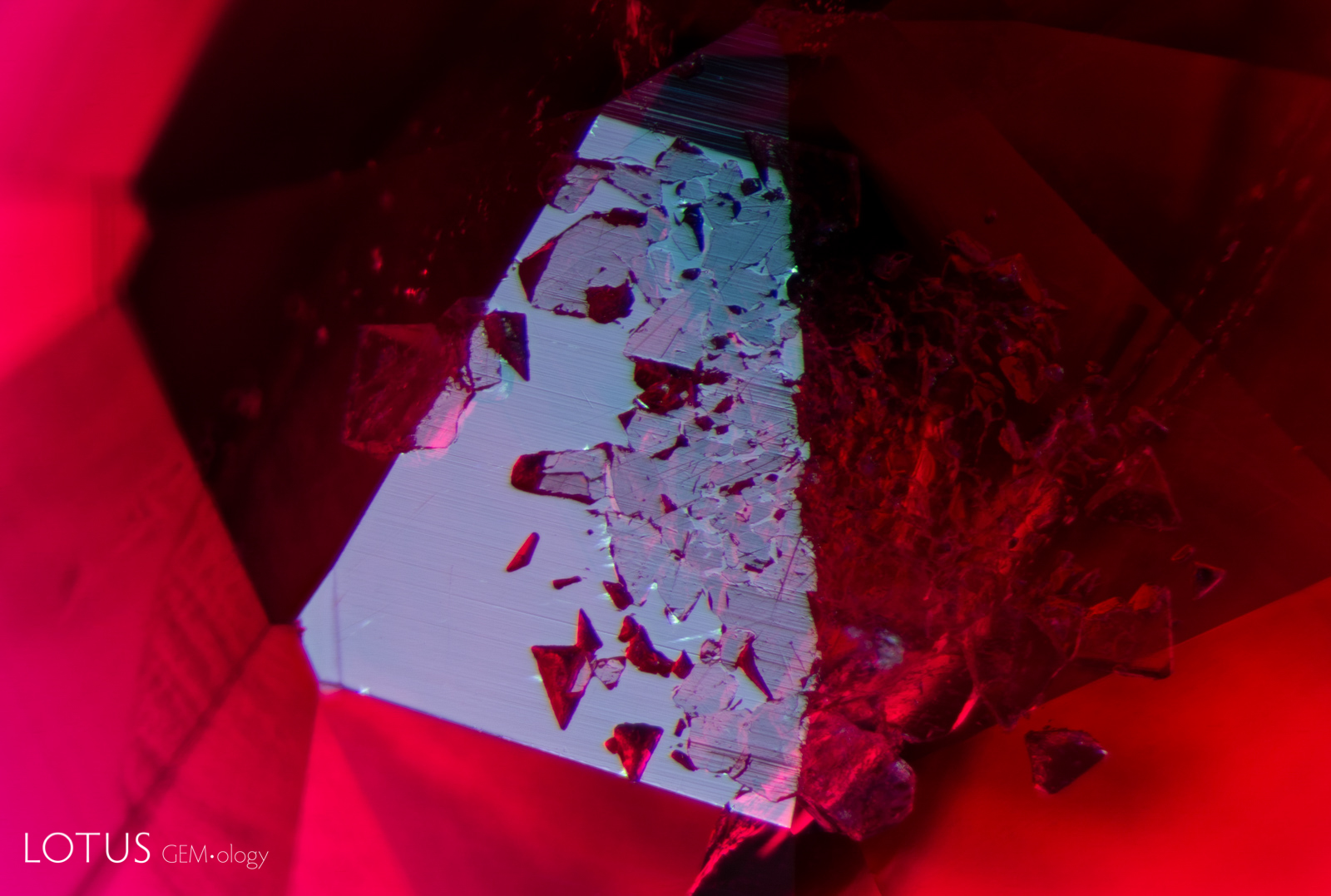
A cluster of mica crystals (identified with micro Raman) was cut through on the surface of this Mong Hsu ruby. Note the cottony diaspore silk that can be seen in the background, which is typical of material from this origin.
Natural Ruby •
Myanmar (Burma); Mong Hsu •
Enhancements:
None Detected (None) •
Lighting Conditions:
Dark Field + Diffuse Fiber Optic
Photographer:
E. Billie Hughes •
Image Number:
A-003-7973-1
• Field of View = 3mm
It is relatively uncommon to see solid inclusions in Mong Hsu ruby, but this stone had a small cluster of transparent crystals. Micro Raman identified them as dolomite.
Natural Ruby •
Myanmar (Burma); Mong Hsu •
Enhancements:
None Detected (None) •
Lighting Conditions:
Dark Field
Photographer:
E. Billie Hughes •
Image Number:
A-003-7956-1
• Field of View = 1.5mm
This cluster of crystals, cut through on the surface of this ruby from Mong Hsu, Myanmar, was identified as dolomite with Raman microscopy.
Natural Ruby •
Myanmar (Burma); Mong Hsu •
Enhancements:
None Detected (None) •
Lighting Conditions:
Dark Field + Diffuse Fiber Optic
Photographer:
E. Billie Hughes •
Image Number:
A-003-7978-1
• Field of View = 3mm
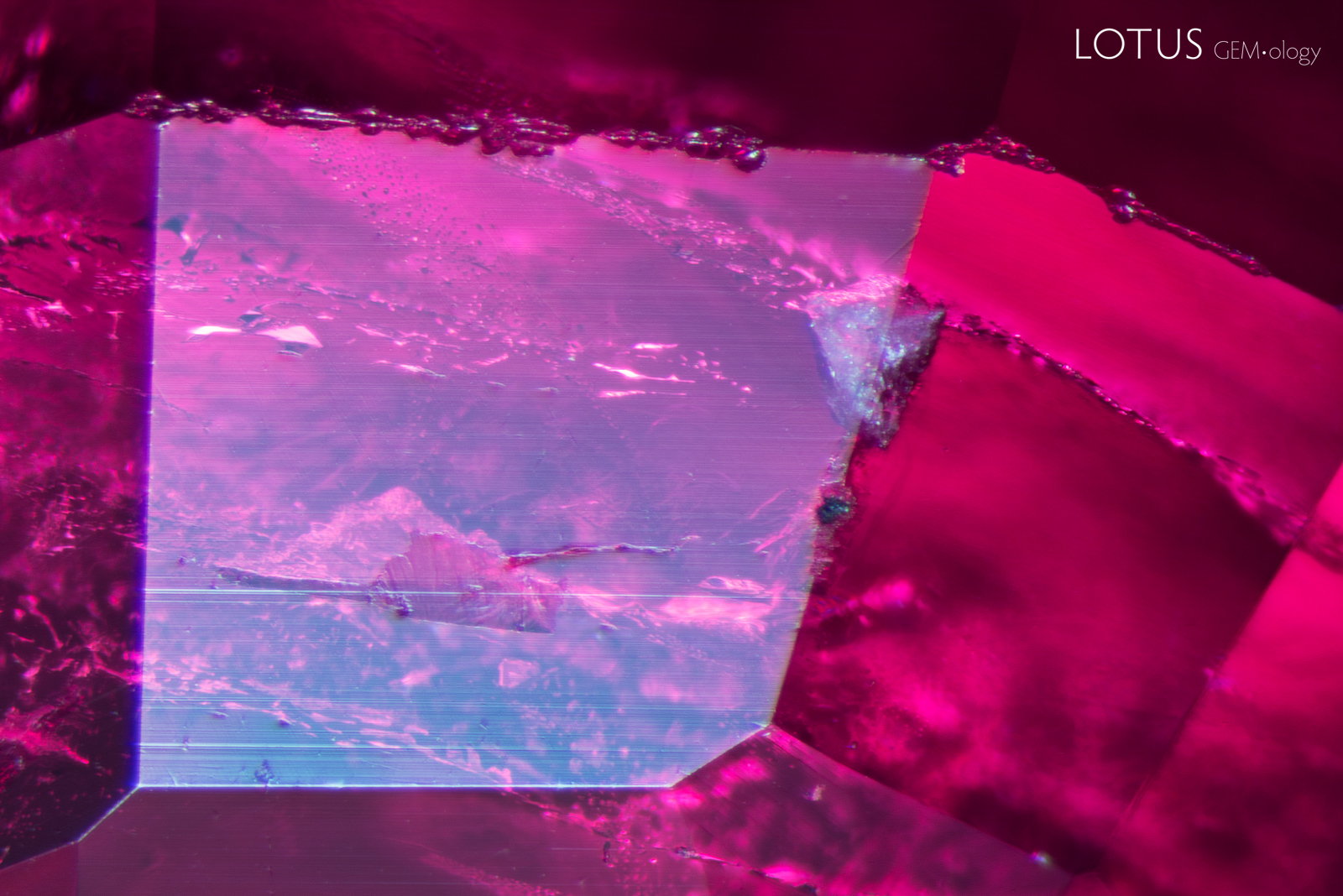
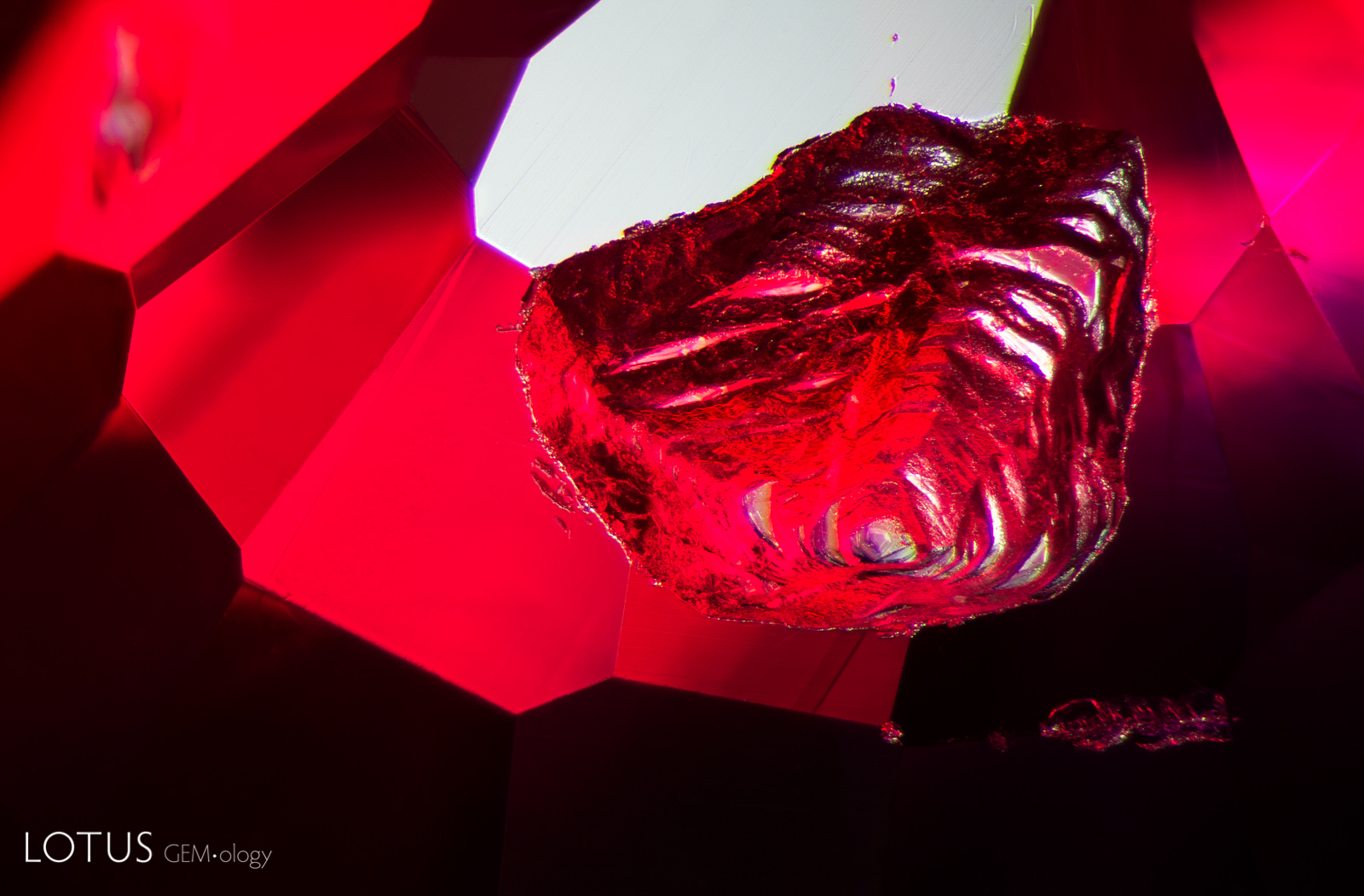
The natural on the pavilion of this ruby displayed a terraced appearance, reminiscent of a landscape.
Natural Ruby •
Myanmar (Burma); Mong Hsu •
Enhancements:
None Detected (None) •
Lighting Conditions:
Dark Field + Diffuse Fiber Optic
Photographer:
E. Billie Hughes •
Image Number:
A-003-8106-1
• Field of View = 3mm
In this ruby from Mong Hsu, Myanmar, we can see both short rutile needles and more irregular wispy diaspore type silk.
Natural Ruby •
Myanmar (Burma); Mong Hsu •
Enhancements:
None Detected (None) •
Lighting Conditions:
Dark Field + Oblique Fiber Optic
Photographer:
E. Billie Hughes •
Image Number:
A-003-8342-1
• Field of View = 2.5mm
When we spotted criss-crossing twin planes in this solid inclusion in a ruby from Mong Hsu, Myanmar, we thought it might be calcite. This was confirmed with Raman spectroscopy.
Natural Ruby •
Myanmar (Burma); Mong Hsu •
Enhancements:
None Detected (None) •
Lighting Conditions:
Dark Field + Diffuse Fiber Optic
Photographer:
E. Billie Hughes •
Image Number:
A-003-8188-1
• Field of View = 1.5mm
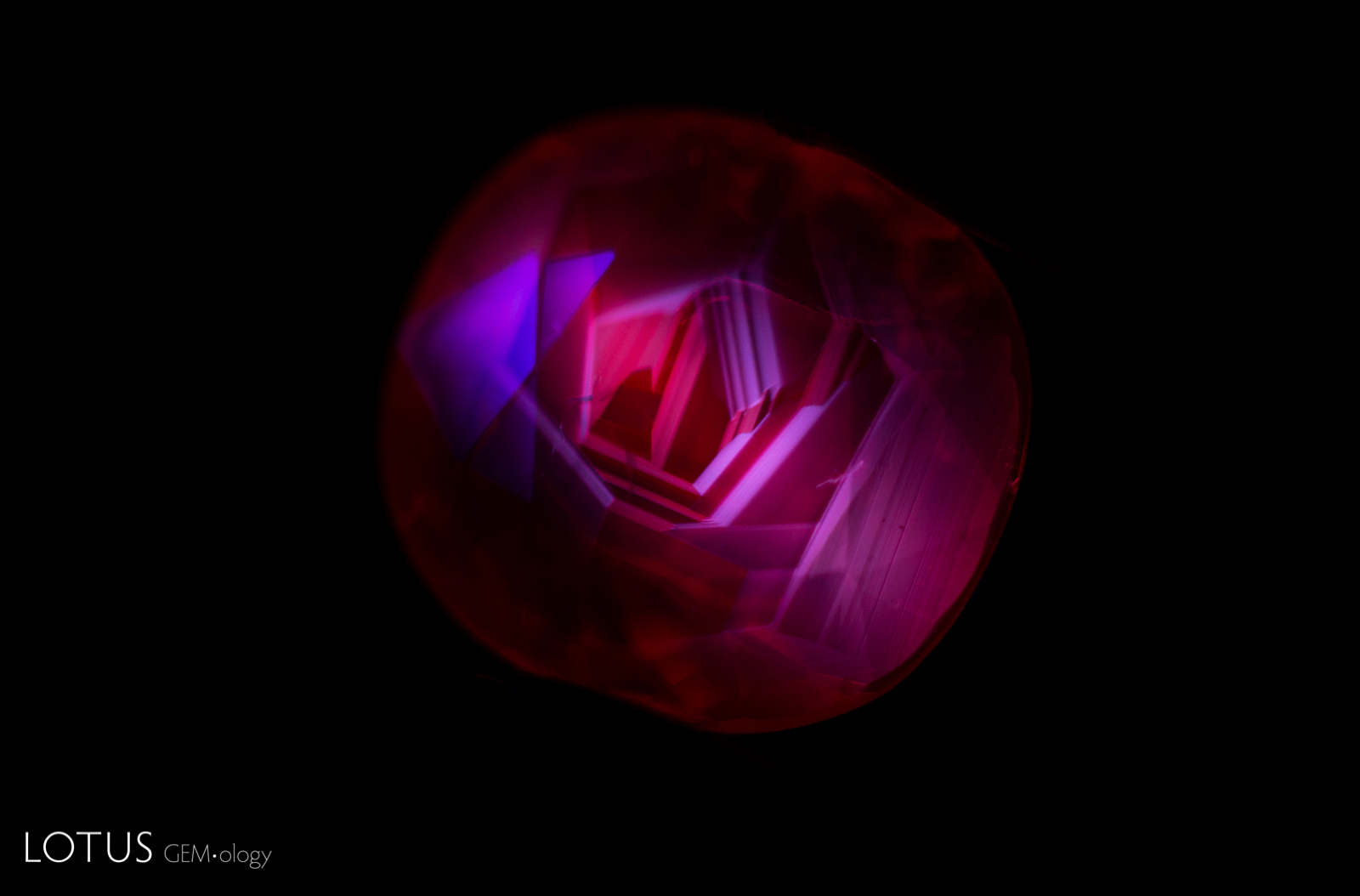
A chalky angular pattern, viewed here in shortwave UV illumination, is a strong sign of heat treatment. Many rubies from Mong Hsu, Myanmar, are heated to remove the blue zones that are often present in the natural material.
Natural Ruby •
Myanmar (Burma); Mong Hsu •
Enhancements:
Heat (H) •
Lighting Conditions:
Ultraviolet: Shortwave
Photographer:
E. Billie Hughes •
Image Number:
A-003-8110-1
Burmese ruby inclusions may include mineral crystals, rutile silk, healed fissures, fluid inclusions, negative crystals, growth features and other internal features formed during or after crystal growth. Such features are important to gemologists because they can provide evidence useful in identifying ruby and evaluating a possible Burmese origin.
Burmese Ruby Inclusion Photomicrographs
The Hyperion Burmese ruby gallery includes microscopic features documented in rubies from Myanmar (Burma). Each entry is accompanied by descriptive information and, where available, references to the gemological literature.
What Inclusions Can Reveal About Burmese Ruby
Inclusions are an important part of geographic origin determination in ruby. Their form, composition, orientation and associations can provide evidence that, when considered together with other gemological properties, may support or contradict a Burmese origin.
Hyperion combines inclusion photomicrography with supporting gemological information so that individual features can be compared with documented examples from Burmese rubies.
About Hyperion
Hyperion is the Lotus Gemology searchable inclusion database. It allows users to browse gemstone inclusions by gem type, geographic origin, treatment and keyword.