Treated Ruby Inclusions
Explore treated ruby inclusions in Hyperion, the Lotus Gemology inclusion database. Hyperion contains photomicrographs of inclusions and internal features in natural rubies that have undergone treatment, documented with information on geographic origin, treatment, lighting conditions, field of view, photographer and published references.
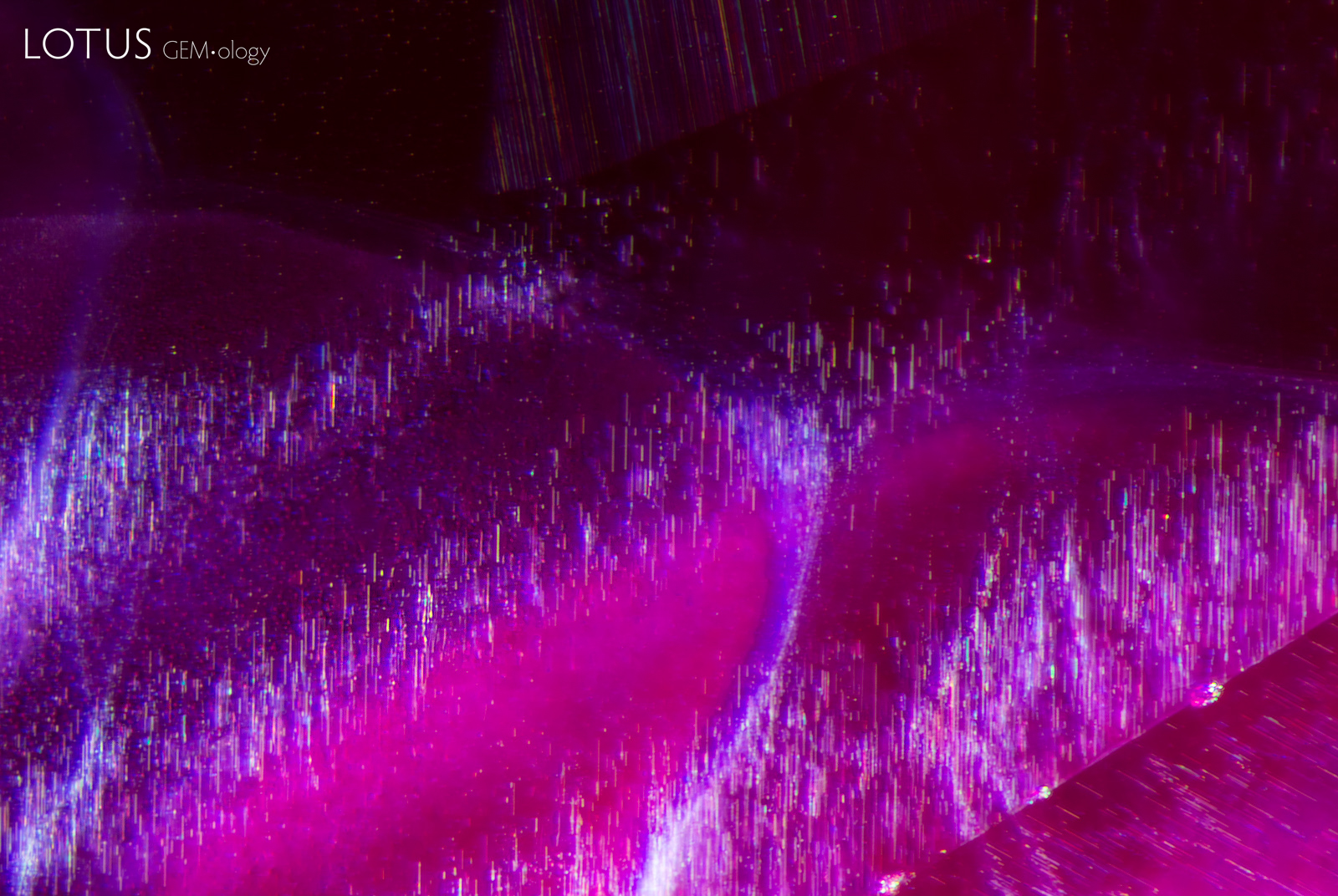
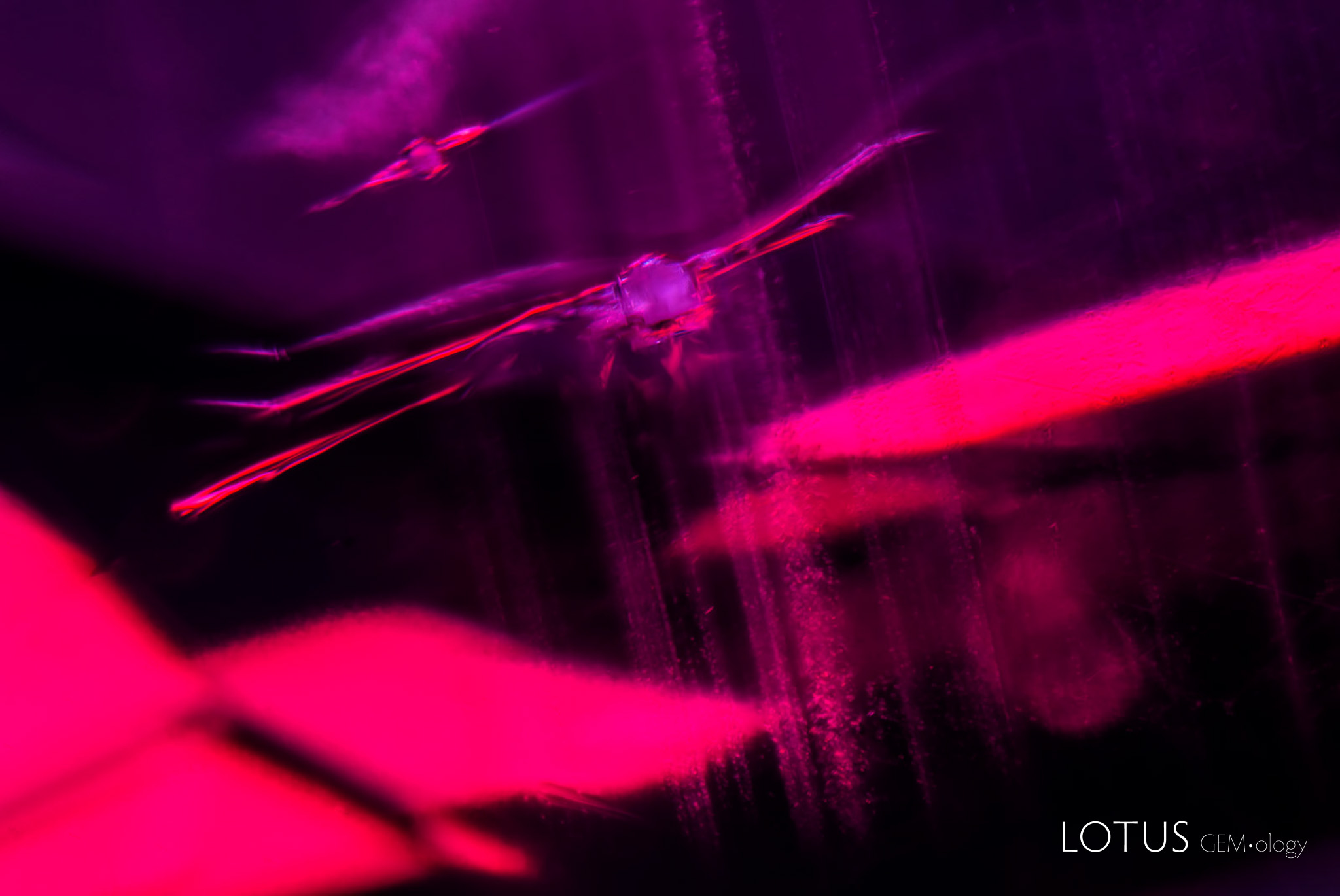
While superficially the rutile silk in this ruby may look intact, closer observation reveals that some of the needles have started to break down and develop gaps. Other evidence in the stone confirmed that this ruby was heated.
Natural Ruby •
Myanmar (Burma); Mogok/Namya •
Enhancements:
Heat (H) •
Lighting Conditions:
Fiber Optic: Diffuse Oblique
Photographer:
E. Billie Hughes •
Image Number:
A-005-8034-6
• Field of View = 3mm
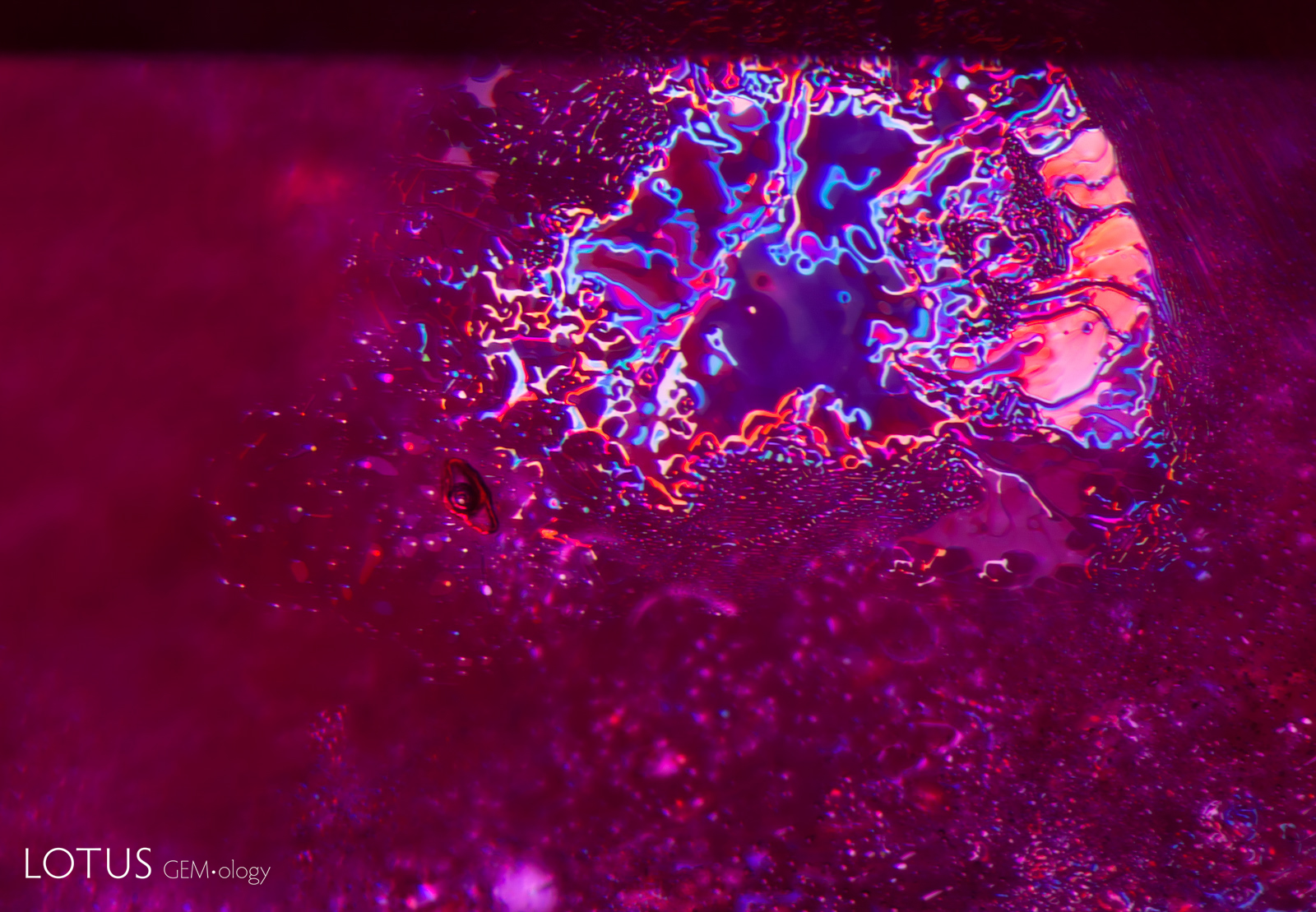
A melted fingerprint with drippy edges provides evidence that this ruby was heated.
Natural Ruby •
Myanmar (Burma); Mogok/Namya •
Enhancements:
Heat (H) •
Lighting Conditions:
Dark Field + Diffuse Fiber Optic
Photographer:
E. Billie Hughes •
Image Number:
A-005-8034-5
• Field of View = 1.8mm
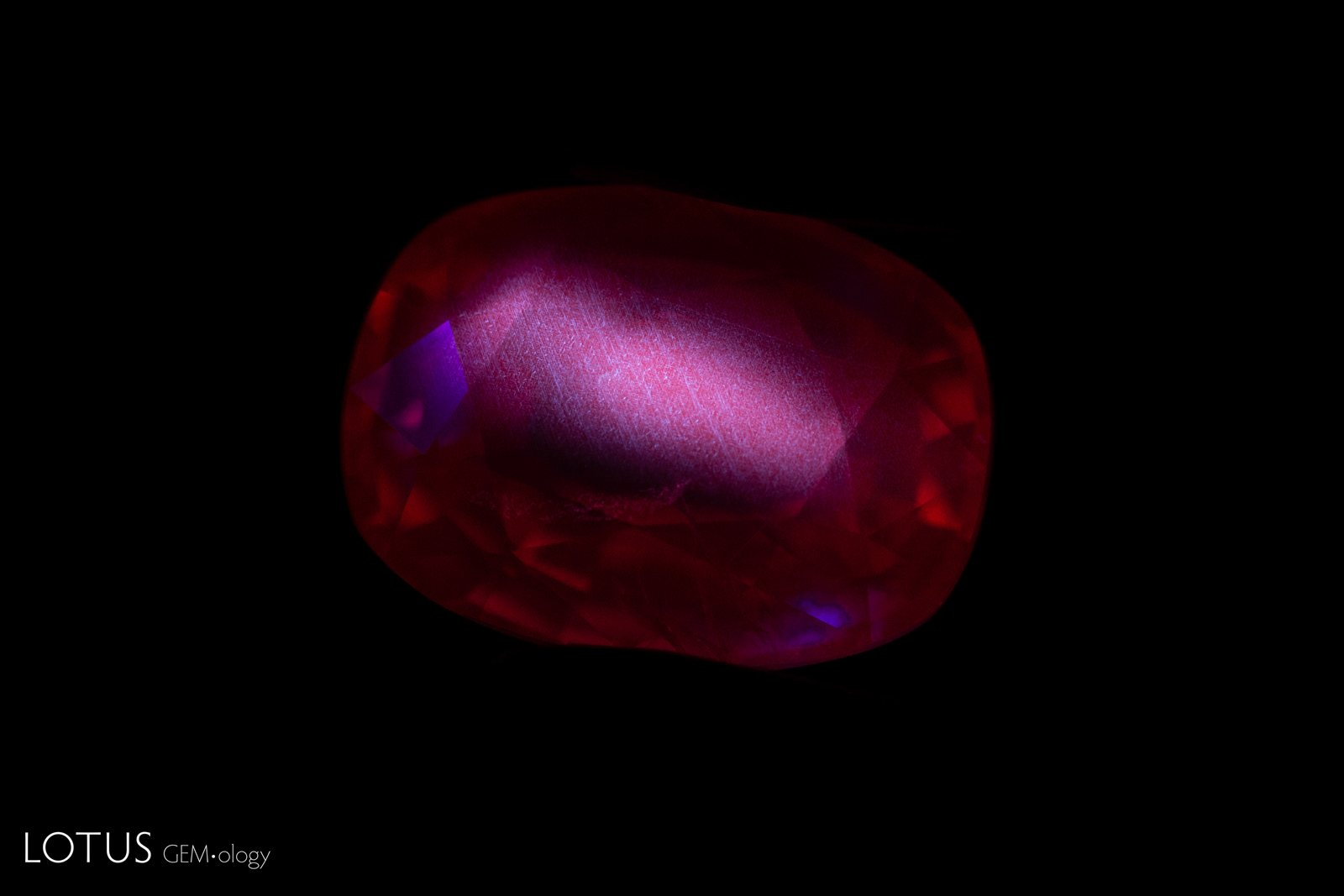
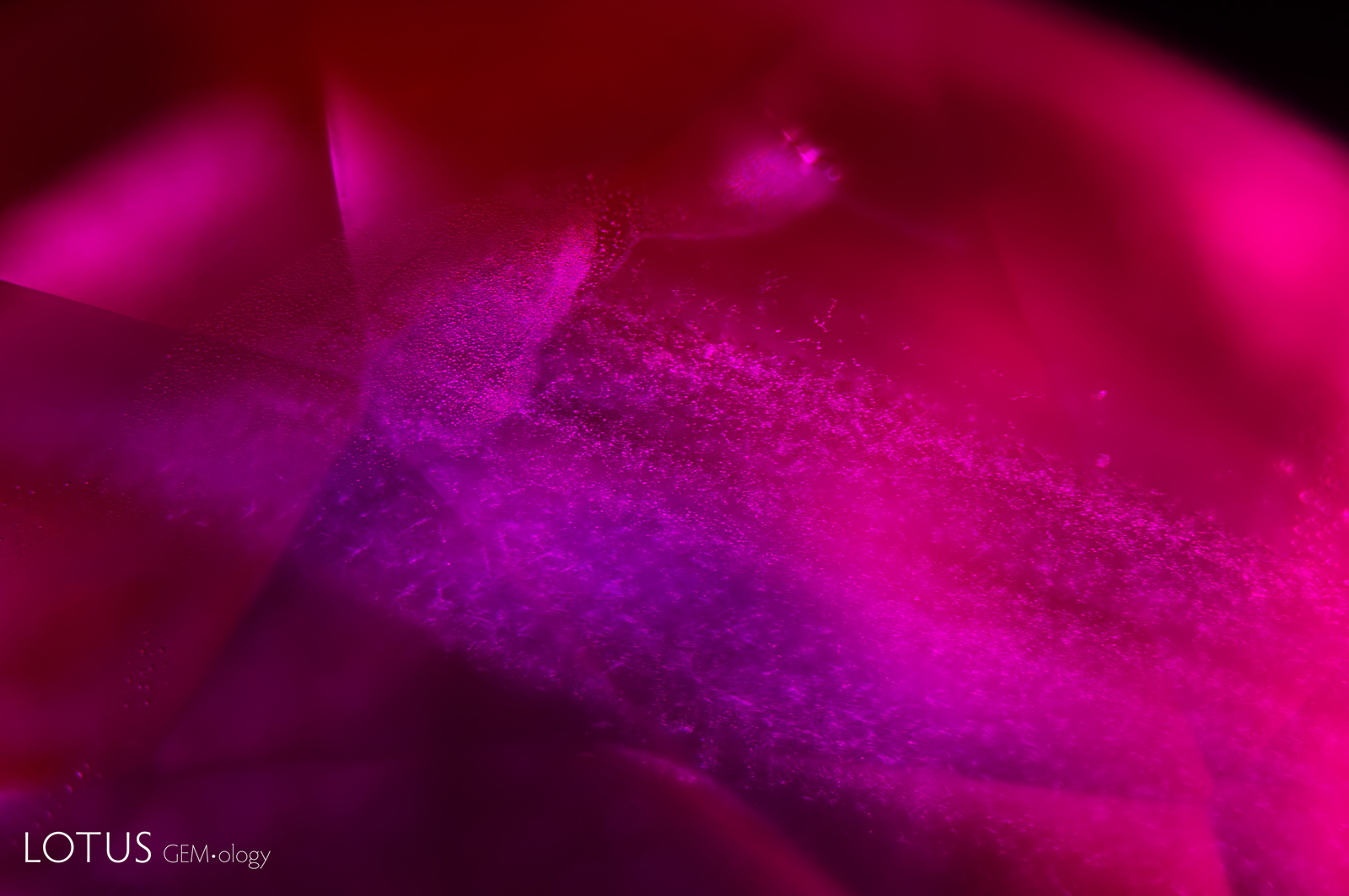
A chalky appearance can be observed in this heated ruby. Note that the chalky areas follow the pattern of silk.
Natural Ruby •
Myanmar (Burma); Mogok/Namya •
Enhancements:
Heat (H) •
Lighting Conditions:
Ultraviolet: Shortwave
Photographer:
E. Billie Hughes •
Image Number:
A-005-8034-1
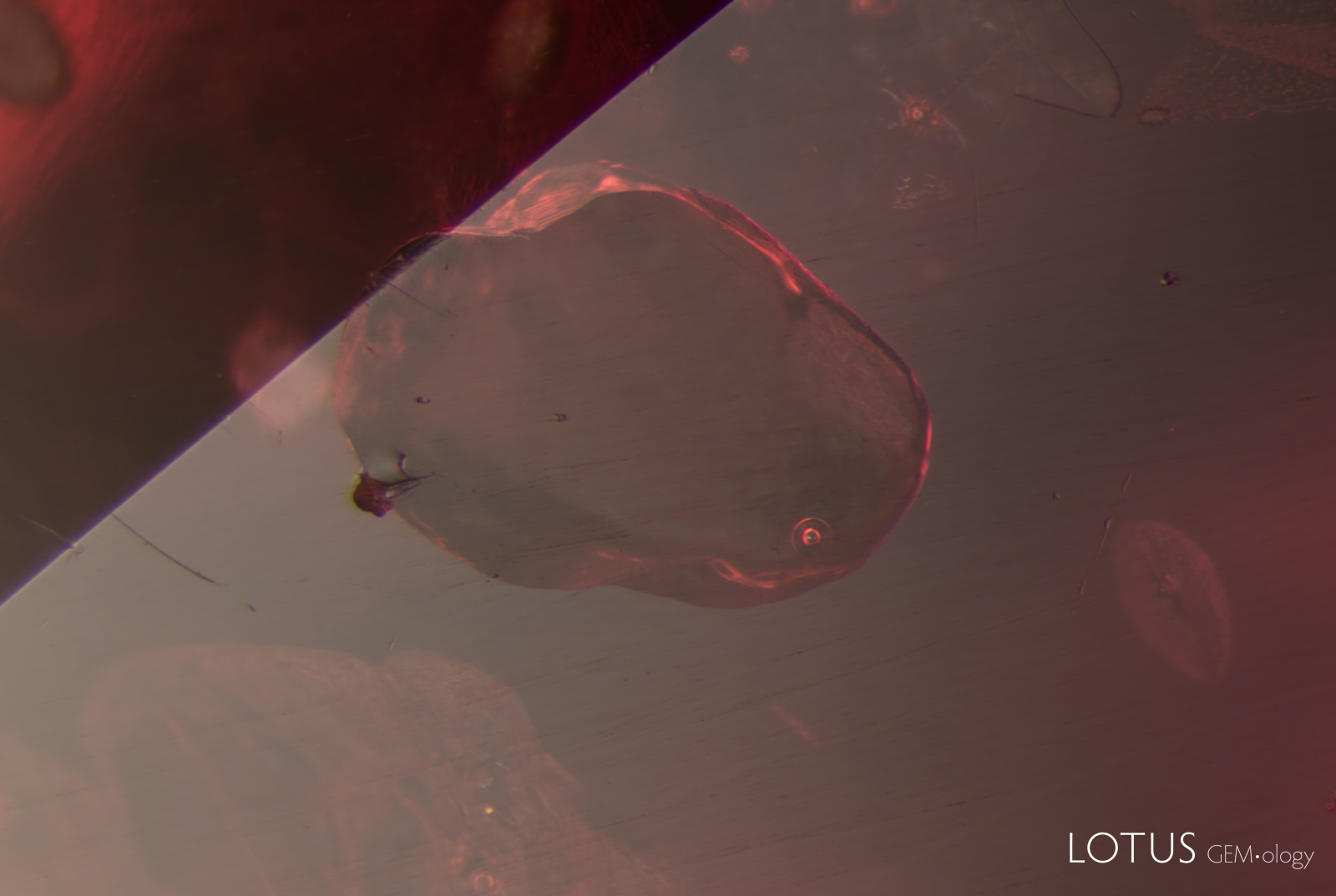
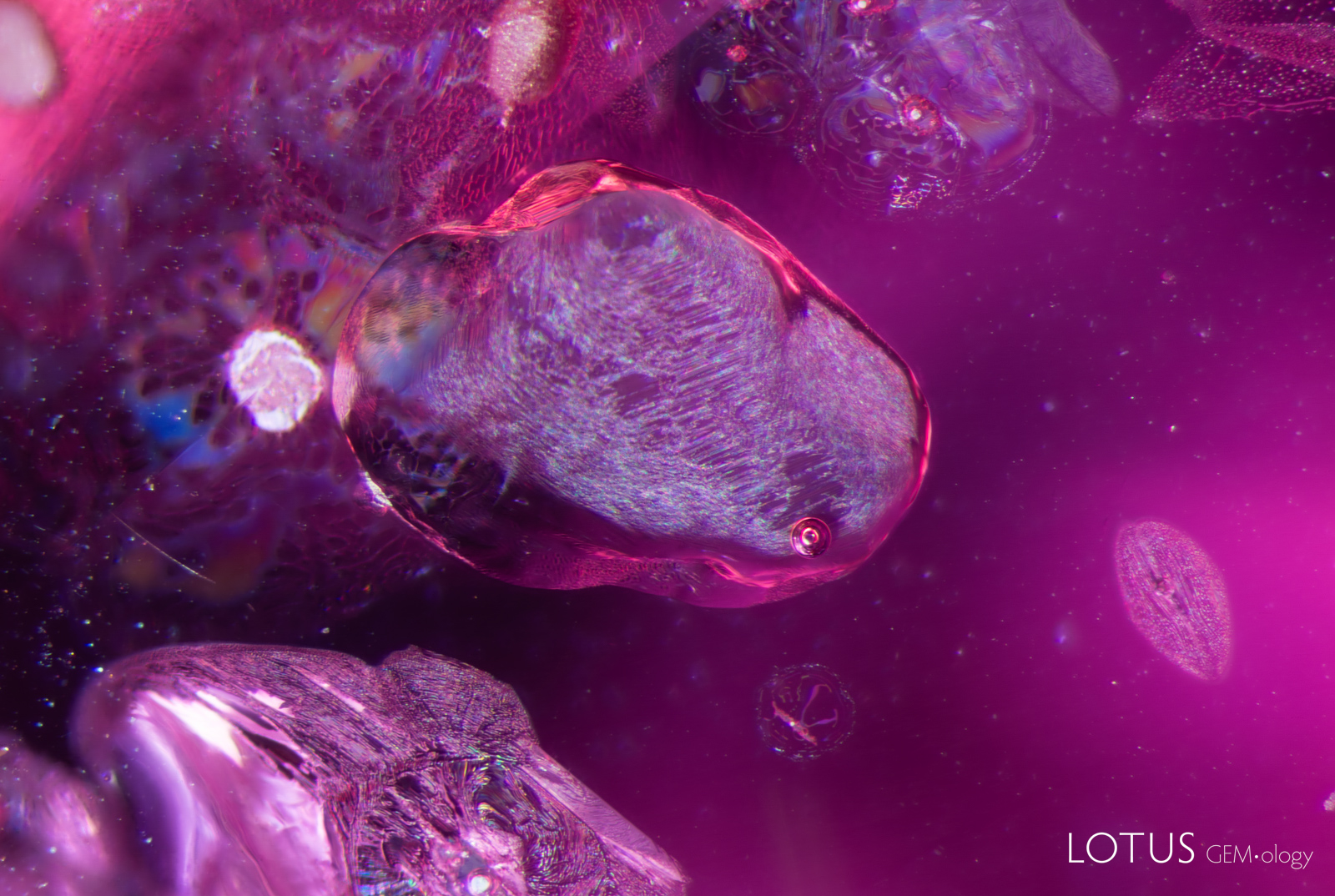
This Thai/Cambodian ruby displays thin films with drippy, irregular edges and a melted crystal inclusion featuring an immobile gas bubble. These features act as evidence that the stone has been heat treated.
Natural Ruby •
Thailand/Cambodia •
Enhancements:
Heat (H) •
Lighting Conditions:
Dark Field + Diffuse Fiber Optic
Photographer:
E. Billie Hughes •
Image Number:
A-005-6897-1
• Field of View = 1.8mm
When a gem is heated, it and everything contained in it expands, governed by each material’s coefficient of thermal expansion. Should an included crystal expand more than the host, the result is a tension fissure, such as this around a mica crystal in this heated Mozambique ruby.
Natural Ruby •
Mozambique •
Enhancements:
Heat (H) •
Lighting Conditions:
Fiber Optic: Oblique
Photographer:
Wimon Manorotkul •
Image Number:
A-005-0056-1
• Field of View = 2.7mm
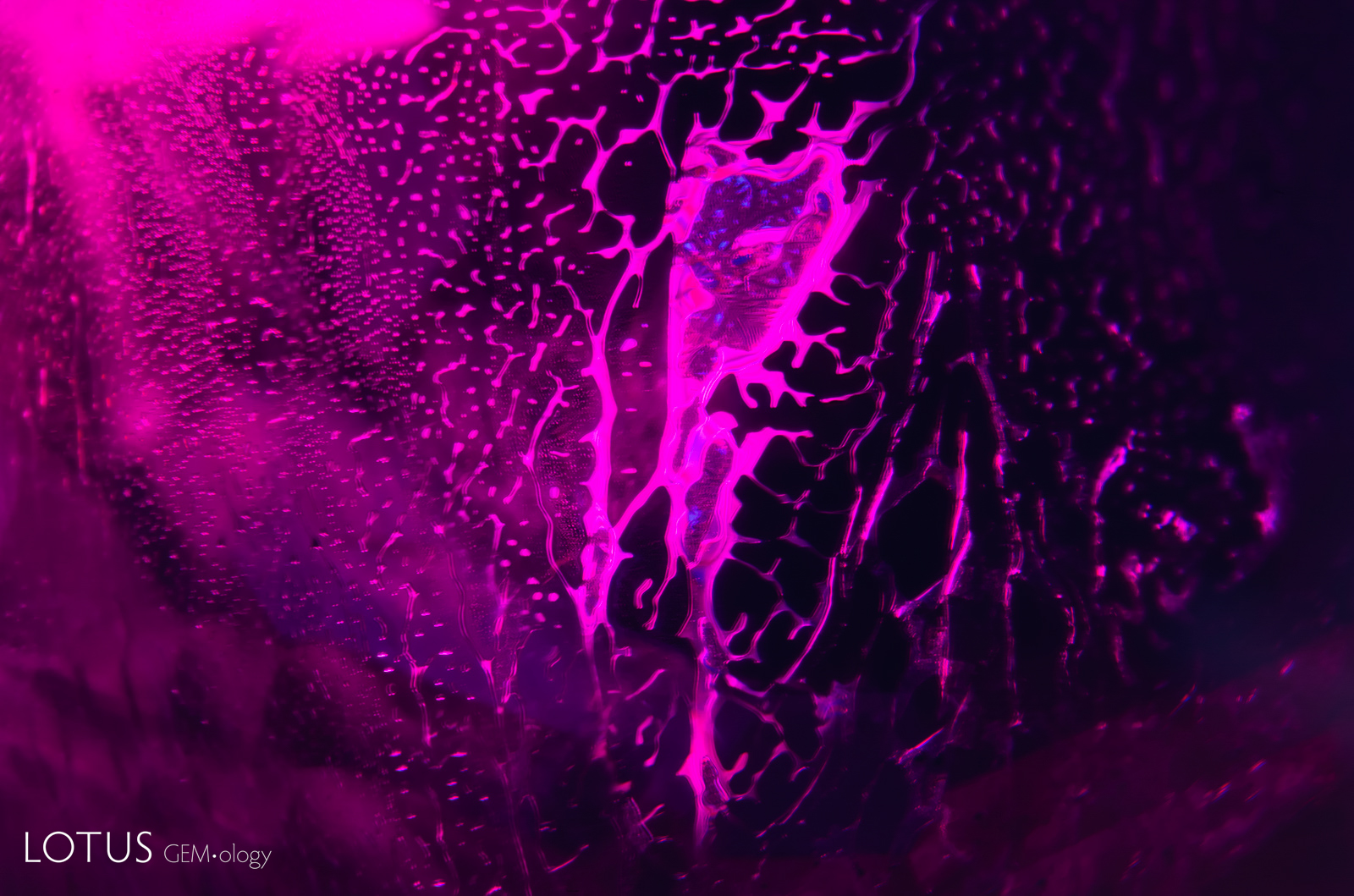
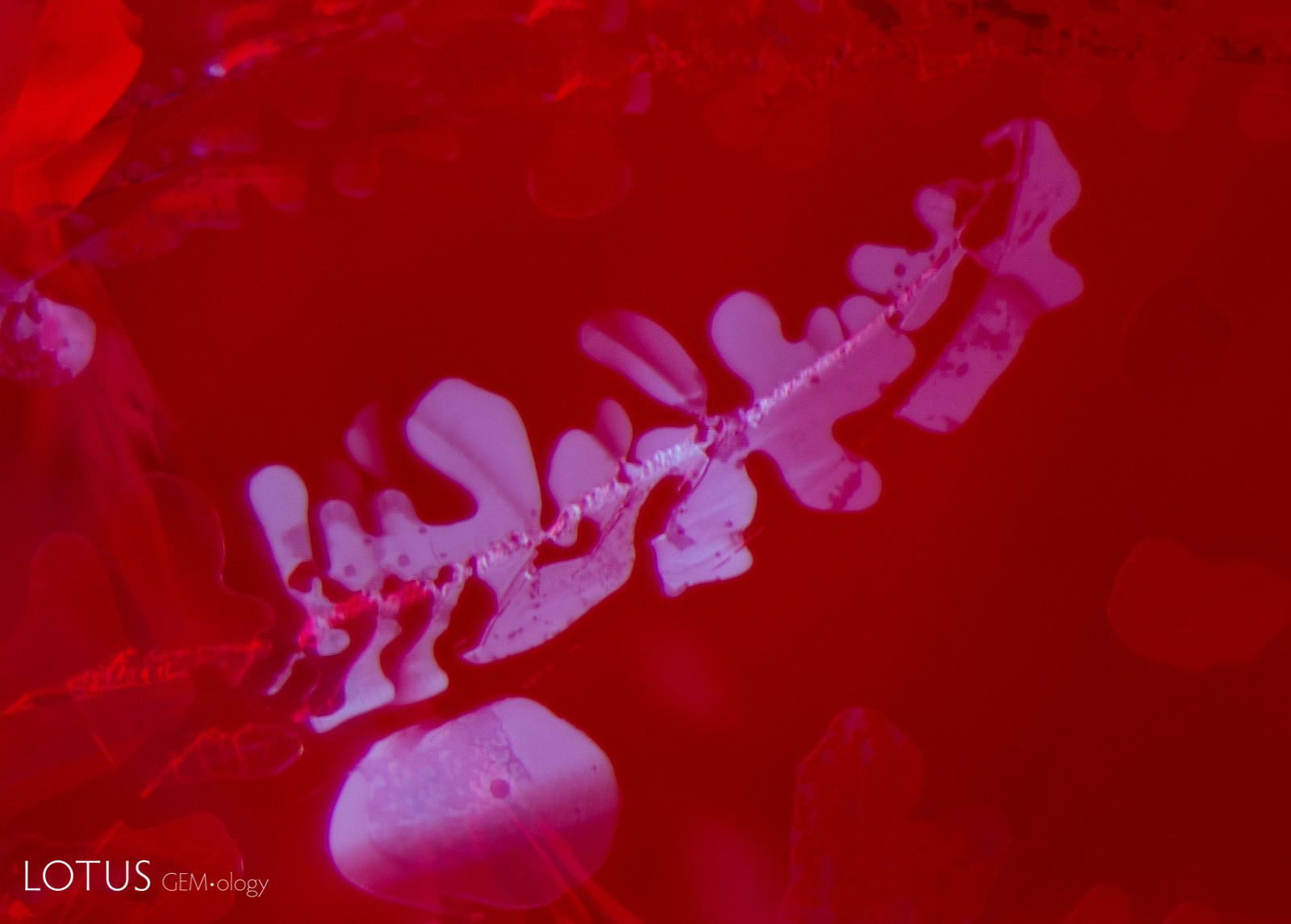
When a gem is heated, certain inclusion may dissolve or melt. In this case, it appears that the white crystals have dissolved/melted, creating a dendrite-like healing pattern in the surrounding fissure. Also visible are clusters of small crystals of what is probably zircon.
Natural Ruby •
Madagascar •
Enhancements:
Heat (H) •
Lighting Conditions:
Dark Field + Diffused Light
Photographer:
Wimon Manorotkul •
Image Number:
A-004-6703-1
• Field of View = 3mm
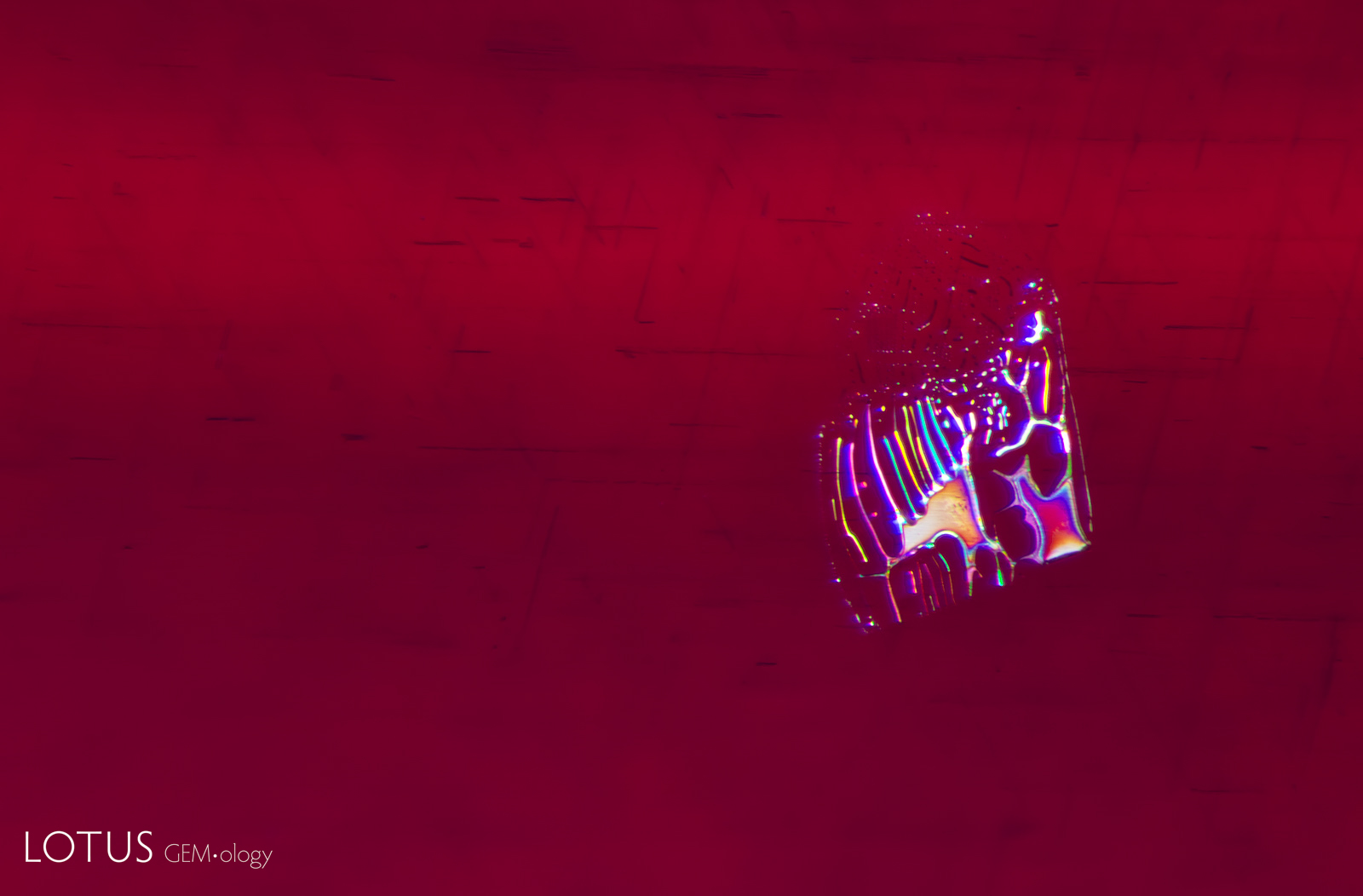
Cube-shaped white crystals with glassy fissures around them in a heated ruby. Crystals such as this with sharp, angular shapes will often produce fissures such as this when heated (moreso than a rounded crystal).
Natural Ruby •
Himalayan Arc •
Enhancements:
Heat (H) •
Lighting Conditions:
Diffuse Light Field + Fiber Optic
Photographer:
Wimon Manorotkul •
Image Number:
A-004-7079-1
• Field of View = 3mm
This Mong Hsu ruby contained very fine “silk” needles, likely rutile. These kinds of needles are seem extremely rarely in stones from Mong Hsu. Note that while the needles here are intact, the stone was heated at “low temperature.”
Natural Ruby •
Myanmar (Burma); Mong Hsu •
Enhancements:
Heat + Fissure Healing (H-FH) •
Lighting Conditions:
Fiber Optic: Oblique
Photographer:
E. Billie Hughes •
Image Number:
A-005-6609-4
• Field of View = 1.5mm
Wispy, cottony diaspore silk, as depicted here, is a common inclusion in rubies from Myanmar’s Mong Hsu mines.
Natural Ruby •
Myanmar (Burma); Mong Hsu •
Enhancements:
Heat + Fissure Healing (H-FH) •
Lighting Conditions:
Fiber Optic: Oblique
Photographer:
E. Billie Hughes •
Image Number:
A-005-6609-1
• Field of View = 2.8mm
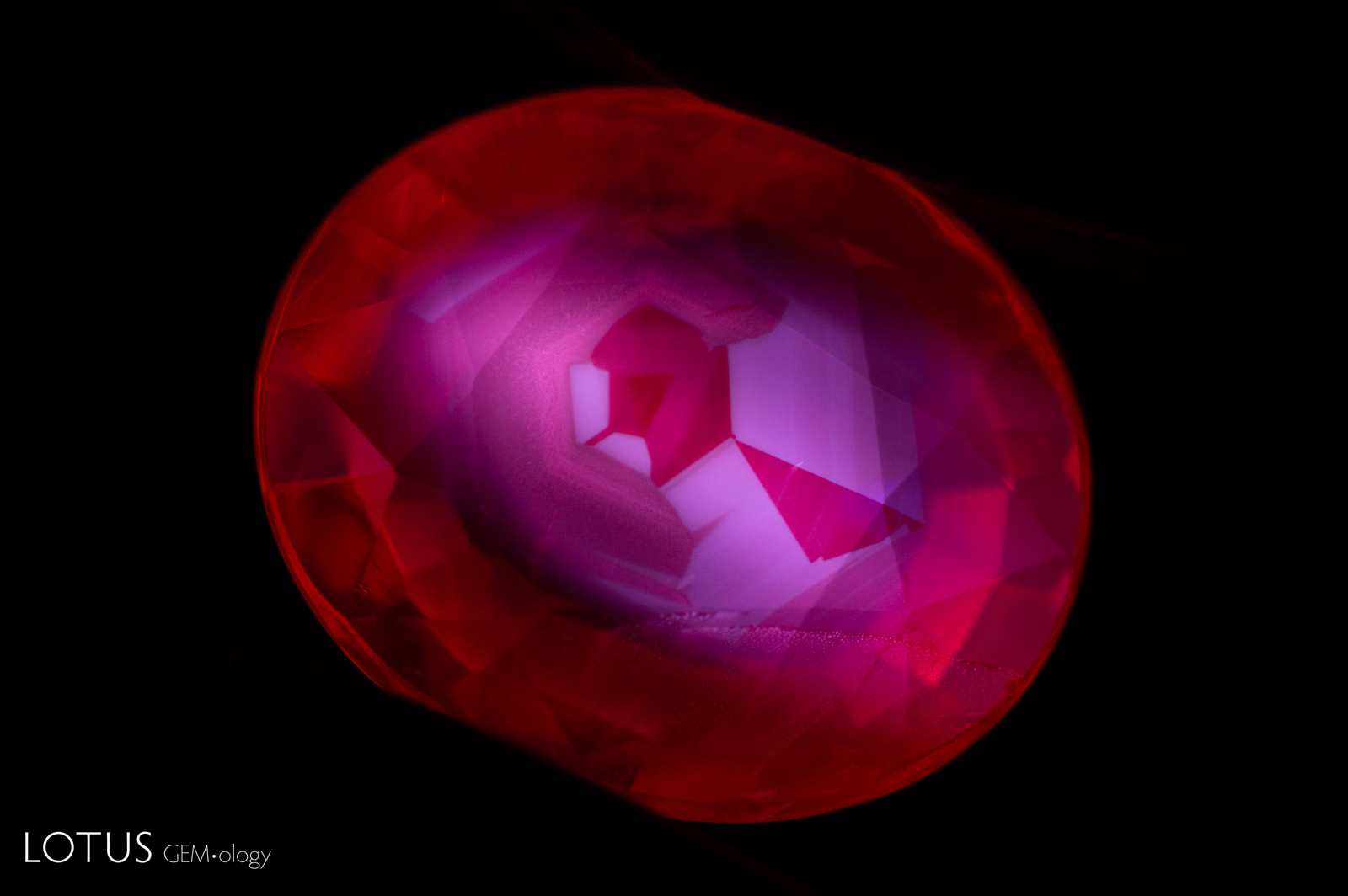
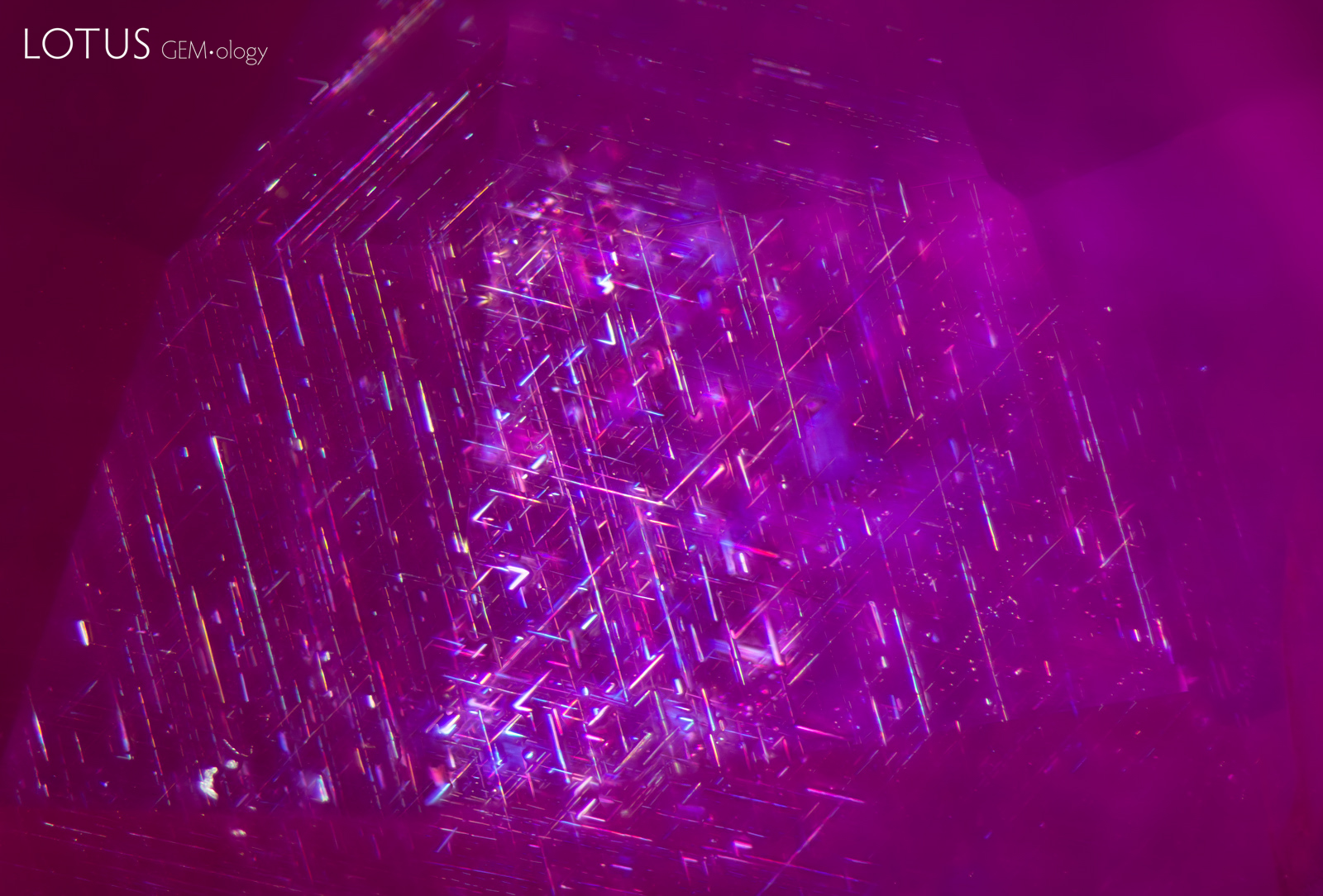
The hexagonal zones in this ruby display a characteristic chalky fluorescence in short wave UV. This is typical in heated Mong Hsu rubies. Prior to heat treatment, the hexagonal core of the crystal is typically blue. Heat treatment removes the blue cores, but also alters the exsolved diaspore particles, and changes the infrared spectrum, assisting detection.
Natural Ruby •
Myanmar (Burma); Mong Hsu •
Enhancements:
Heat + Fissure Healing (H-FH) •
Lighting Conditions:
Ultraviolet: Shortwave
Photographer:
E. Billie Hughes •
Image Number:
A-005-5296-1
A fingerprint, or partially healed fissure, in a heated Thai ruby. Note the rounded, slightly melted edges.
Natural Ruby •
Thailand/Cambodia •
Enhancements:
Heat (H) •
Lighting Conditions:
Fiber Optic: Diffuse Oblique
Photographer:
E. Billie Hughes •
Image Number:
A-005-4661-1
• Field of View = 3.6mm
When observed with reflected light, this cavity in a ruby displays a clear difference in luster when compared to the surrounding corundum. This lower luster and the gas bubble visible in the bottom right corner provide evidence that the stone has been glass filled.
Natural Ruby •
East Africa •
Enhancements:
Heat + Glass Cavity/Fissure Filling (H-GF3) •
Lighting Conditions:
Dark Field + Diffuse Overhead Fiber Optic
Photographer:
E. Billie Hughes •
Image Number:
A-005-1624-2
• Field of View = 2.3mm
Treatment can alter existing inclusions and produce new microscopic features in ruby. These may include changes to mineral inclusions, altered rutile silk, tension fractures, healed fissures, residues and other features associated with heating, fissure healing, glass filling and other treatment processes.
Treated Ruby Inclusion Photomicrographs
The Hyperion treated ruby gallery includes microscopic features documented in natural rubies subjected to treatment. Each entry identifies the recorded treatment and is accompanied by descriptive information and, where available, references to the gemological literature.
What Inclusions Can Reveal About Ruby Treatment
Microscopic examination is an important part of detecting treatment in ruby. The appearance and alteration of inclusions, fractures and growth features can provide evidence of treatment and, in some cases, information about the processes to which a ruby has been subjected.
Hyperion combines inclusion photomicrography with supporting gemological information so that treatment-related features can be compared with documented examples in natural ruby.
About Hyperion
Hyperion is the Lotus Gemology searchable inclusion database. It allows users to browse gemstone inclusions by gem type, geographic origin, treatment and keyword.