Treated Ruby Inclusions
Explore treated ruby inclusions in Hyperion, the Lotus Gemology inclusion database. Hyperion contains photomicrographs of inclusions and internal features in natural rubies that have undergone treatment, documented with information on geographic origin, treatment, lighting conditions, field of view, photographer and published references.
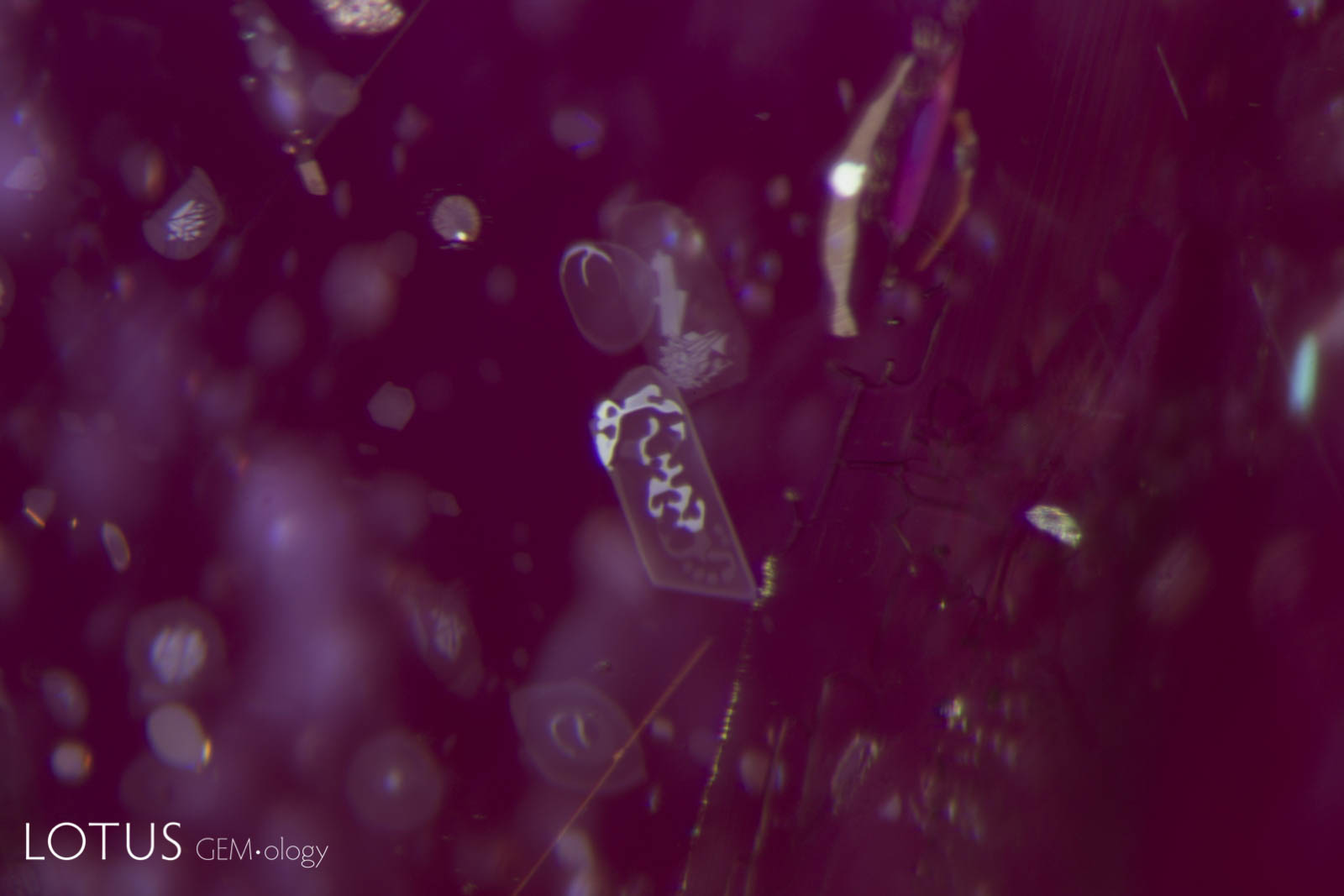
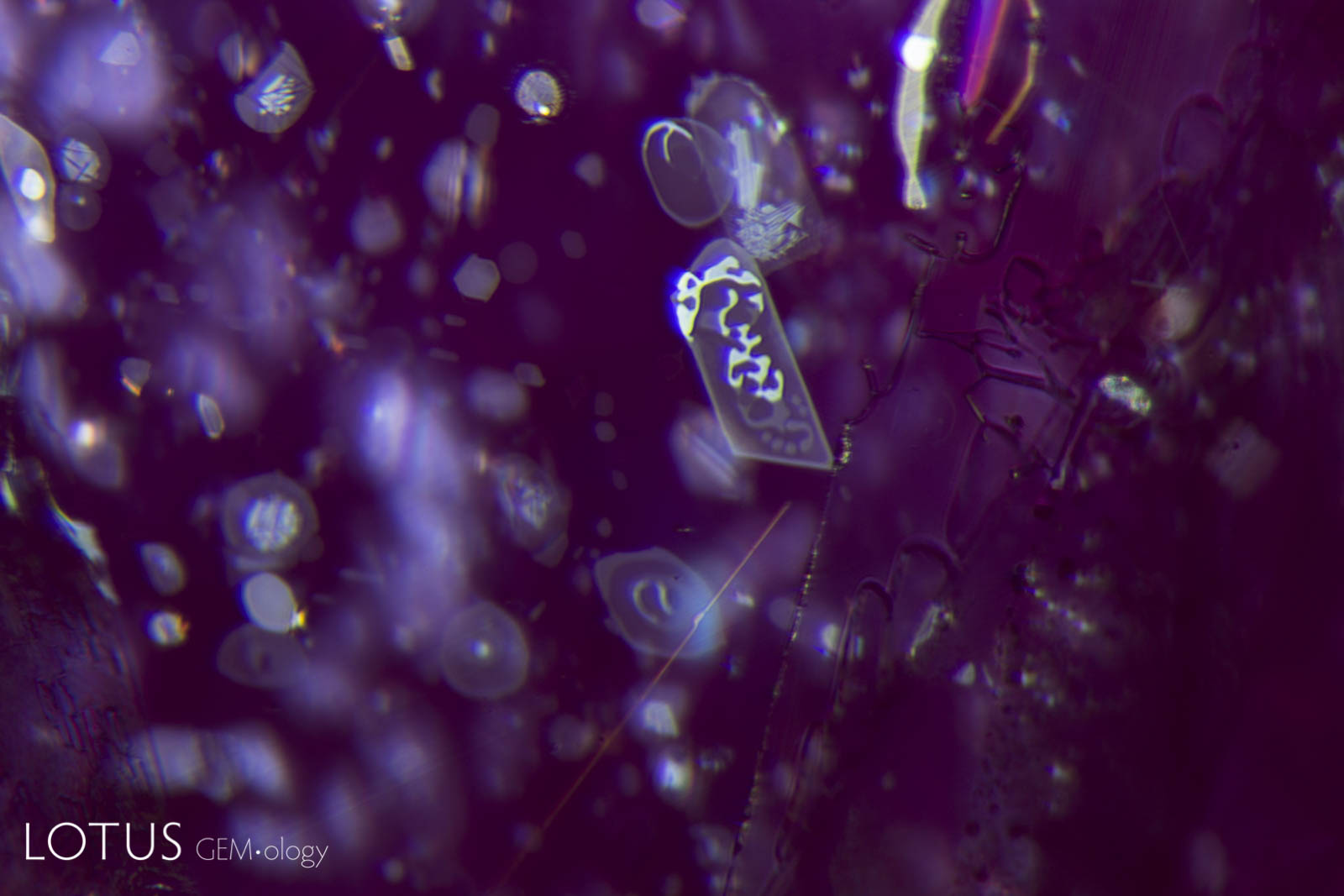
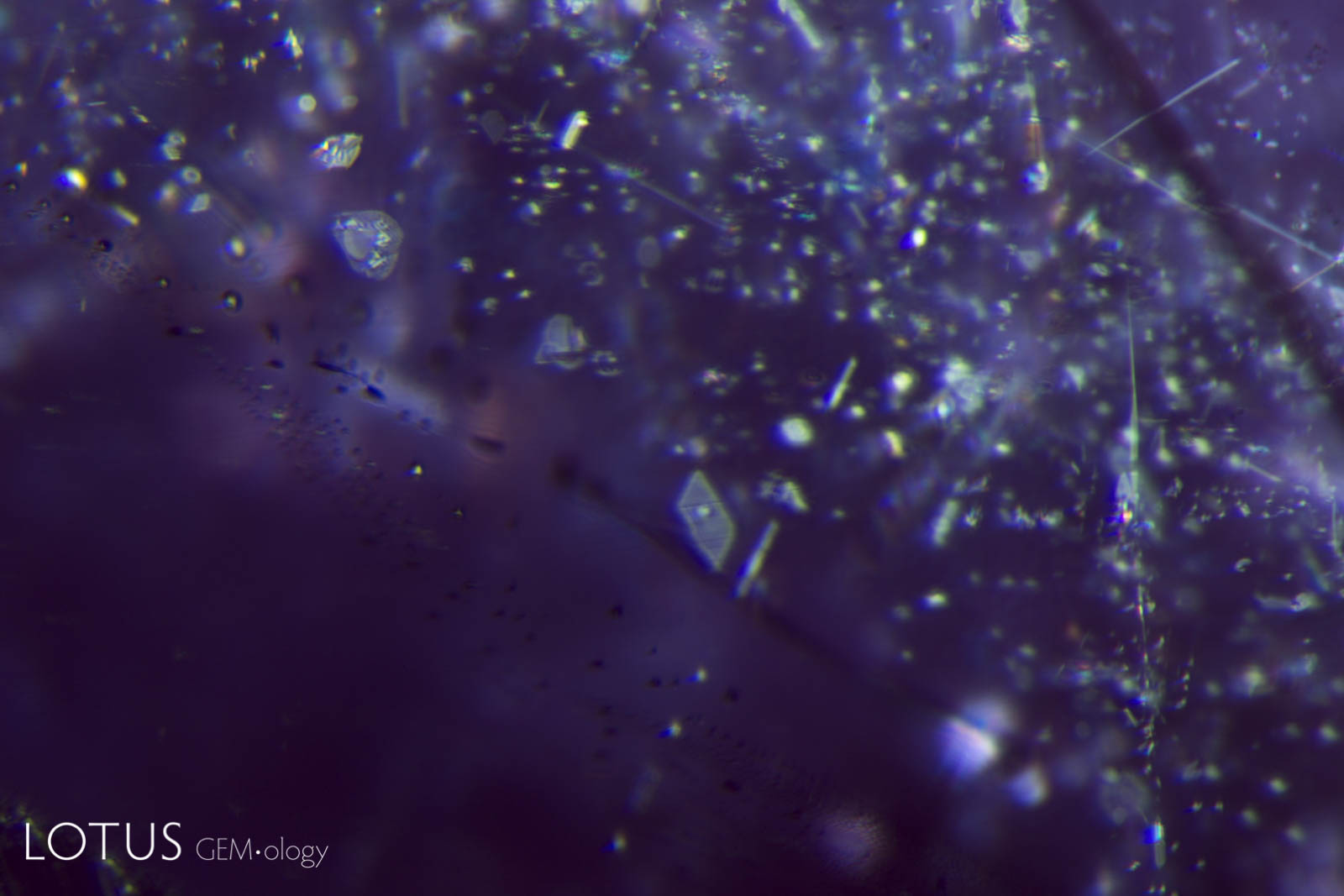
Rutile silk (high relief) with daughter crystals (lower relief) at the broad ends is a common feature of Mozambique rubies. Heat treatment often produces a breakdown, creating white spots or bubbles within the daughter crystals, as well as a rim developing on the outside edge, as seen here.
Natural Ruby •
Mozambique •
Enhancements:
Heat + Fissure Healing (H-FH) •
Lighting Conditions:
Fiber Optic: Diffuse Overhead
Photographer:
E. Billie Hughes •
Image Number:
A-001-0780-2
Rutile silk (high relief) with daughter crystals (lower relief) at the broad ends is a common feature of Mozambique rubies. Heat treatment often produces a breakdown, creating white spots or bubbles within the daughter crystals, as well as a rim developing on the outside edge, as seen here.
Natural Ruby •
Mozambique •
Enhancements:
Heat + Fissure Healing (H-FH) •
Lighting Conditions:
Fiber Optic: Diffuse Overhead
Photographer:
E. Billie Hughes •
Image Number:
A-001-0780-1
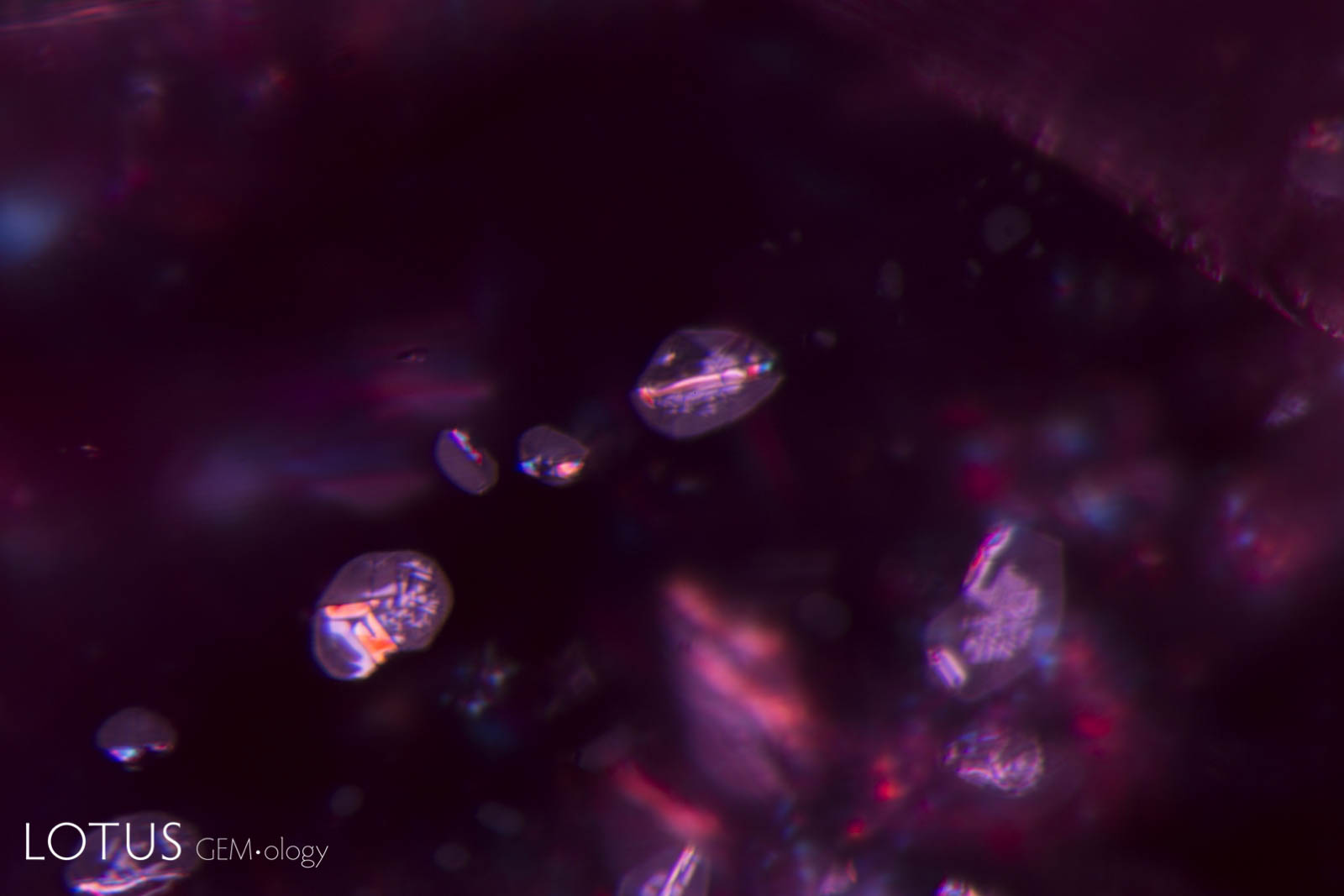
Rutile silk (high relief) with daughter crystals (lower relief) at the broad ends is a common feature of Mozambique rubies. Heat treatment often produces a breakdown, creating white spots or bubbles within the daughter crystals, as can be seen here.
Natural Ruby •
Mozambique •
Enhancements:
Heat + Fissure Healing (H-FH) •
Lighting Conditions:
Fiber Optic: Diffuse Overhead
Photographer:
E. Billie Hughes •
Image Number:
A-001-0840-3
Rutile silk (high relief) with daughter crystals (lower relief) at the broad ends is a common feature of Mozambique rubies. Heat treatment often produces a breakdown, creating white spots or bubbles within the daughter crystals, as can be seen here.
Natural Ruby •
Mozambique •
Enhancements:
Heat + Fissure Healing (H-FH) •
Lighting Conditions:
Fiber Optic: Diffuse Overhead
Photographer:
E. Billie Hughes •
Image Number:
A-001-0840-2
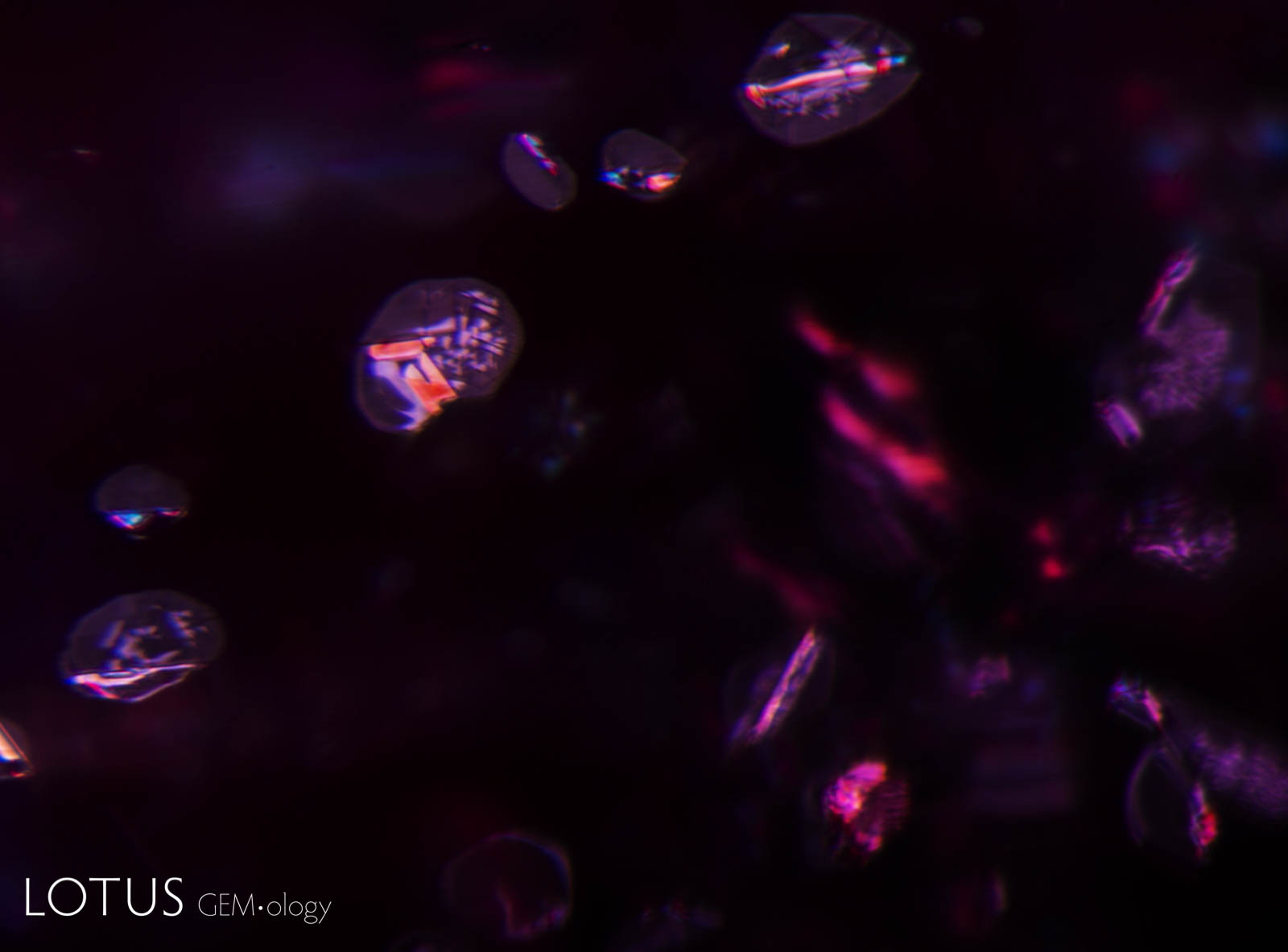
Rutile silk (high relief) with daughter crystals (lower relief) at the broad ends is a common feature of Mozambique rubies. Heat treatment often produces a breakdown, creating white spots or bubbles within the daughter crystals, as can be seen here.
Natural Ruby •
Mozambique •
Enhancements:
Heat + Fissure Healing (H-FH) •
Lighting Conditions:
Fiber Optic: Diffuse Overhead
Photographer:
E. Billie Hughes •
Image Number:
A-001-0840-1
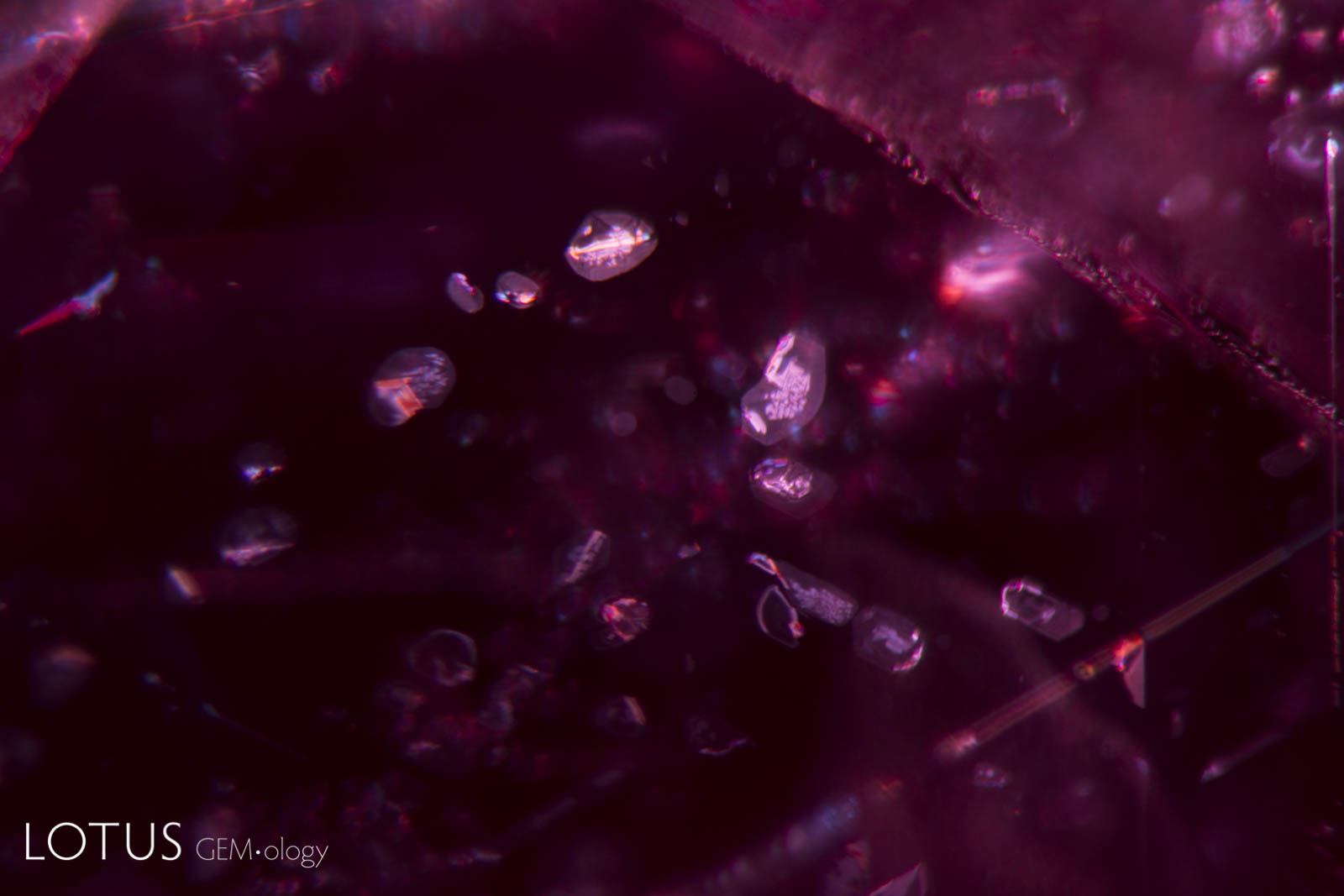
Rutile silk (high relief) with daughter crystals (lower relief) at the broad ends is a common feature of Mozambique rubies. Heat treatment often produces a breakdown, creating white spots or bubbles within the daughter crystals.
Natural Ruby •
Mozambique •
Enhancements:
Heat + Fissure Healing (H-FH) •
Lighting Conditions:
Fiber Optic: Diffuse Overhead
Photographer:
E. Billie Hughes •
Image Number:
A-001-0835-1
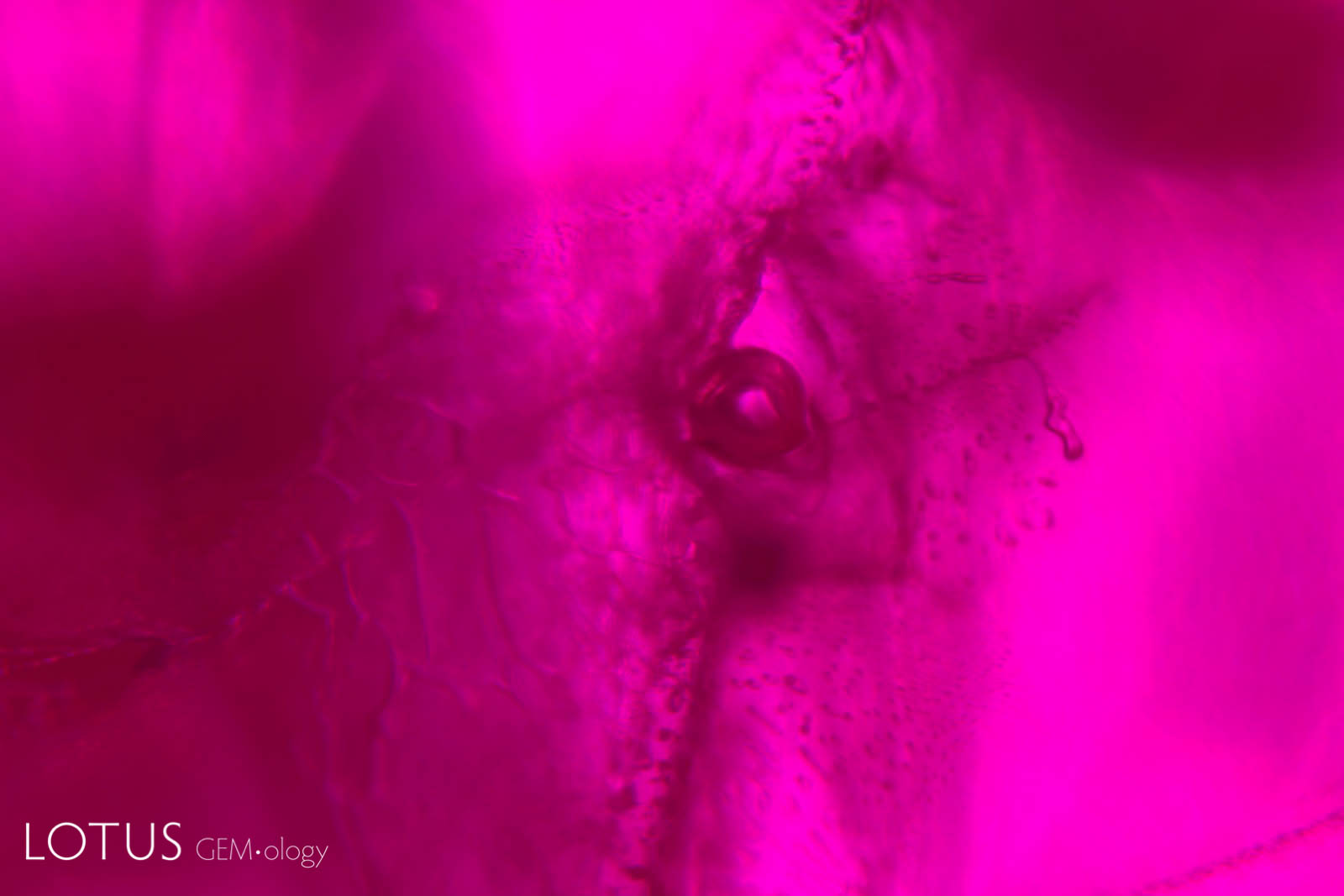
A large gas bubble trapped within the glass filling a large cavity of this treated Mozambique ruby. Flux-healed fingerprints can also be seen nearby.
Natural Ruby •
Mozambique •
Enhancements:
Heat + Fissure Healing (H-FH) •
Lighting Conditions:
Fiber Optic: Oblique
Photographer:
E. Billie Hughes •
Image Number:
A-001-0836-3
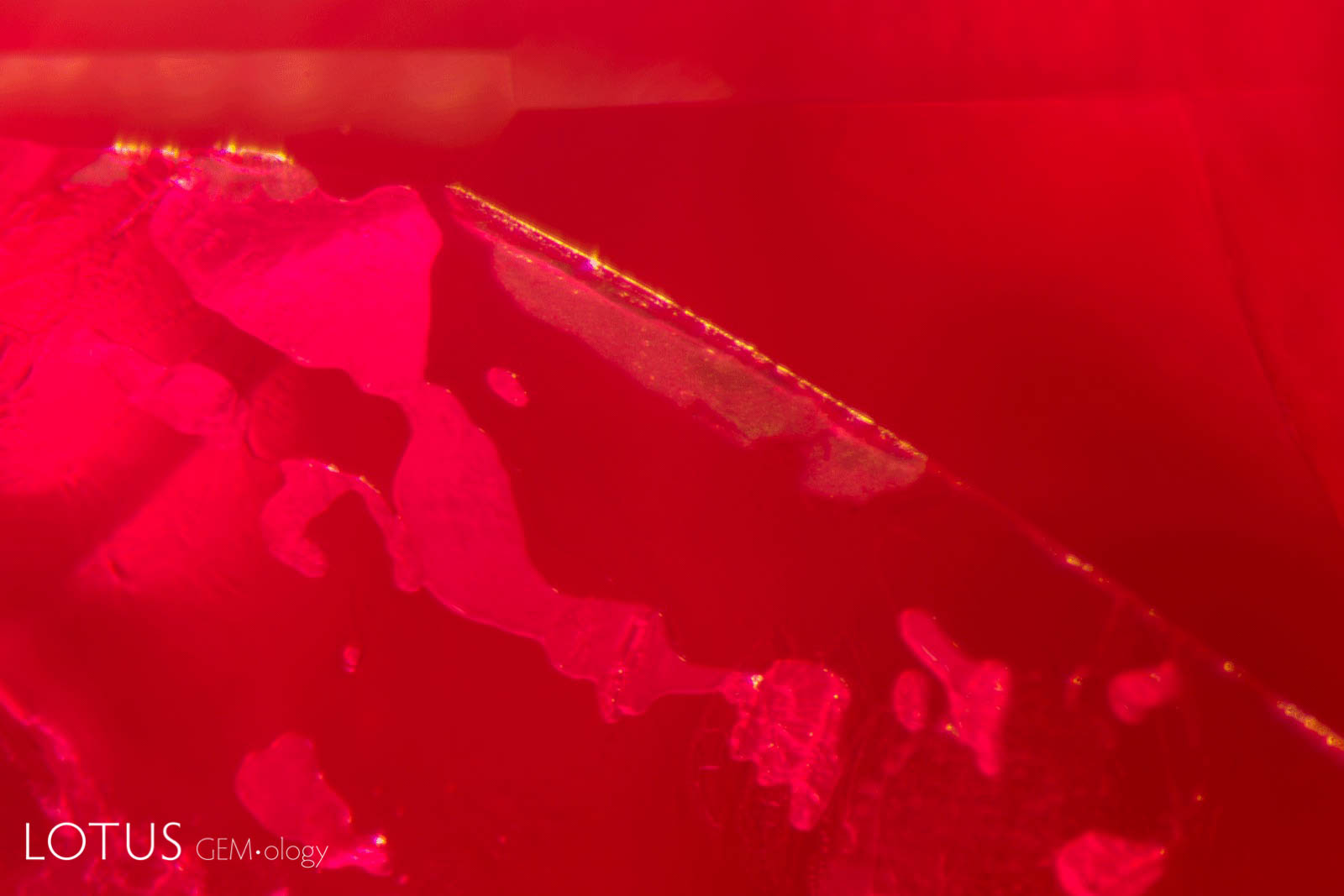
Flattened gas bubbles within a glass-filled fissure of a treated Mozambique ruby.
Natural Ruby •
Mozambique •
Enhancements:
Heat + Fissure Healing (H-FH) •
Lighting Conditions:
Fiber Optic: Oblique
Photographer:
E. Billie Hughes •
Image Number:
A-001-0836-2
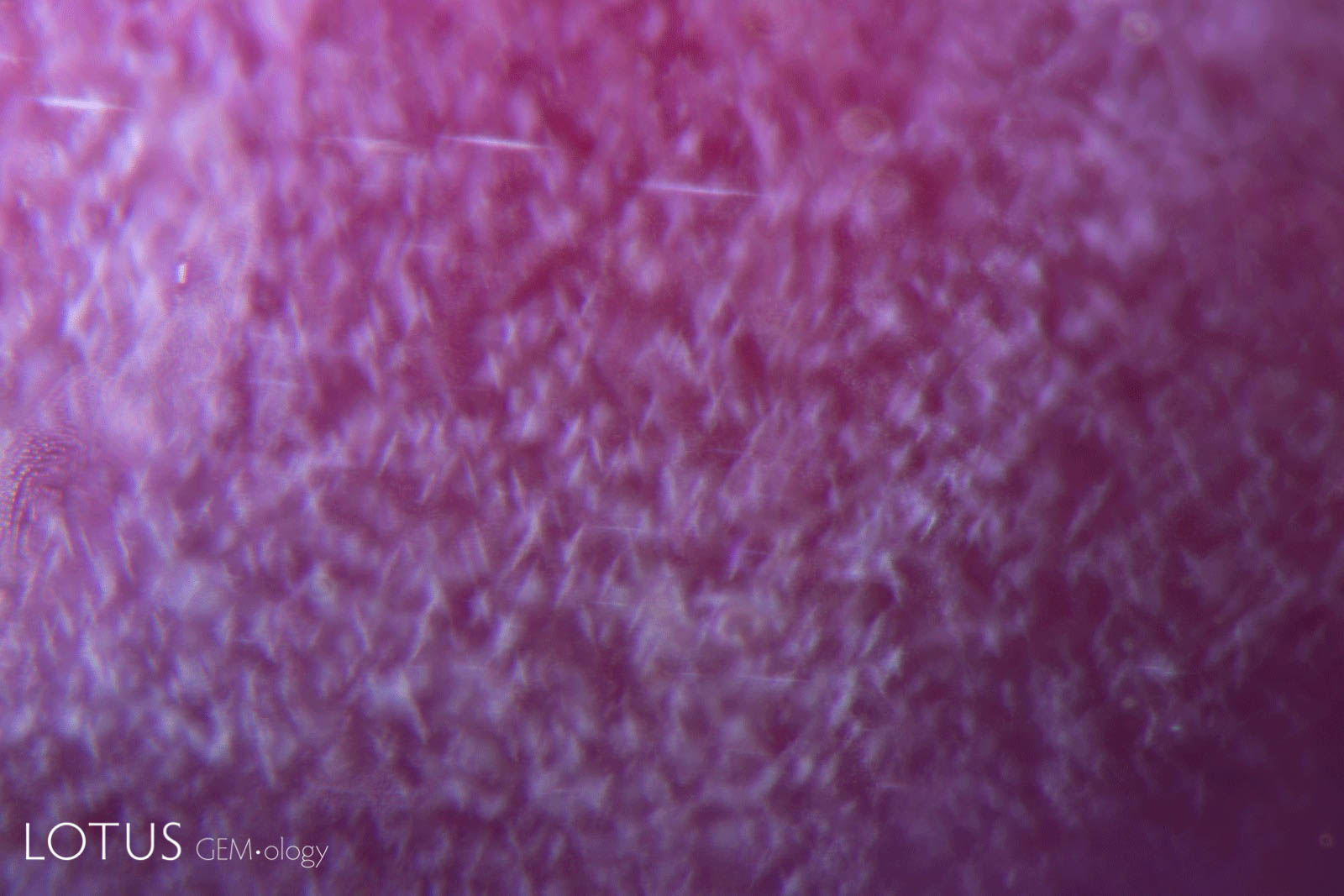
Rubies from Myanmar’s Mong Hsu region only rarely feature rutile silk. Instead, the silk-like exsolved particles are composed tiny particles of the mineral diaspore—α-AlO(OH). Diaspore gets its name from the Greek word “to scatter,” in allusion to its propensity to decrepitate (audibly pop) when heated. Diaspore silk is extremely heat sensitive and its alteration can help identify heat treatment.
Natural Ruby •
Myanmar (Burma); Mong Hsu •
Enhancements:
Heat + Fissure Healing (H-FH) •
Lighting Conditions:
Fiber Optic: Oblique
Photographer:
Richard W. Hughes •
Image Number:
A-001-0765-3
Mong Hsu rubies are generally heat treated to remove the blue cores that darken their color. In addition, most contain open fissures that disfigure the gems. Treaters use fluxes like borax to heal the fissures with microscopic amounts of synthetic ruby, which recrystallizes in the cracks. This photo shows a flux-healed fissure, accompanied by a cottony cloud of diaspore silk.
Natural Ruby •
Myanmar (Burma); Mong Hsu •
Enhancements:
Heat + Fissure Healing (H-FH) •
Lighting Conditions:
Fiber Optic: Oblique
Photographer:
Richard W. Hughes •
Image Number:
A-001-0765-2
Rubies from Myanmar’s Mong Hsu region only rarely feature rutile silk. Instead, the silk-like exsolved particles are composed tiny particles of the mineral diaspore—α-AlO(OH). Diaspore gets its name from the Greek word “to scatter,” in allusion to its propensity to decrepitate (audibly pop) when heated. Diaspore silk is extremely heat sensitive and its alteration can help identify heat treatment.
Natural Ruby •
Myanmar (Burma); Mong Hsu •
Enhancements:
Heat + Fissure Healing (H-FH) •
Lighting Conditions:
Fiber Optic: Oblique
Photographer:
Richard W. Hughes •
Image Number:
A-001-0765-1
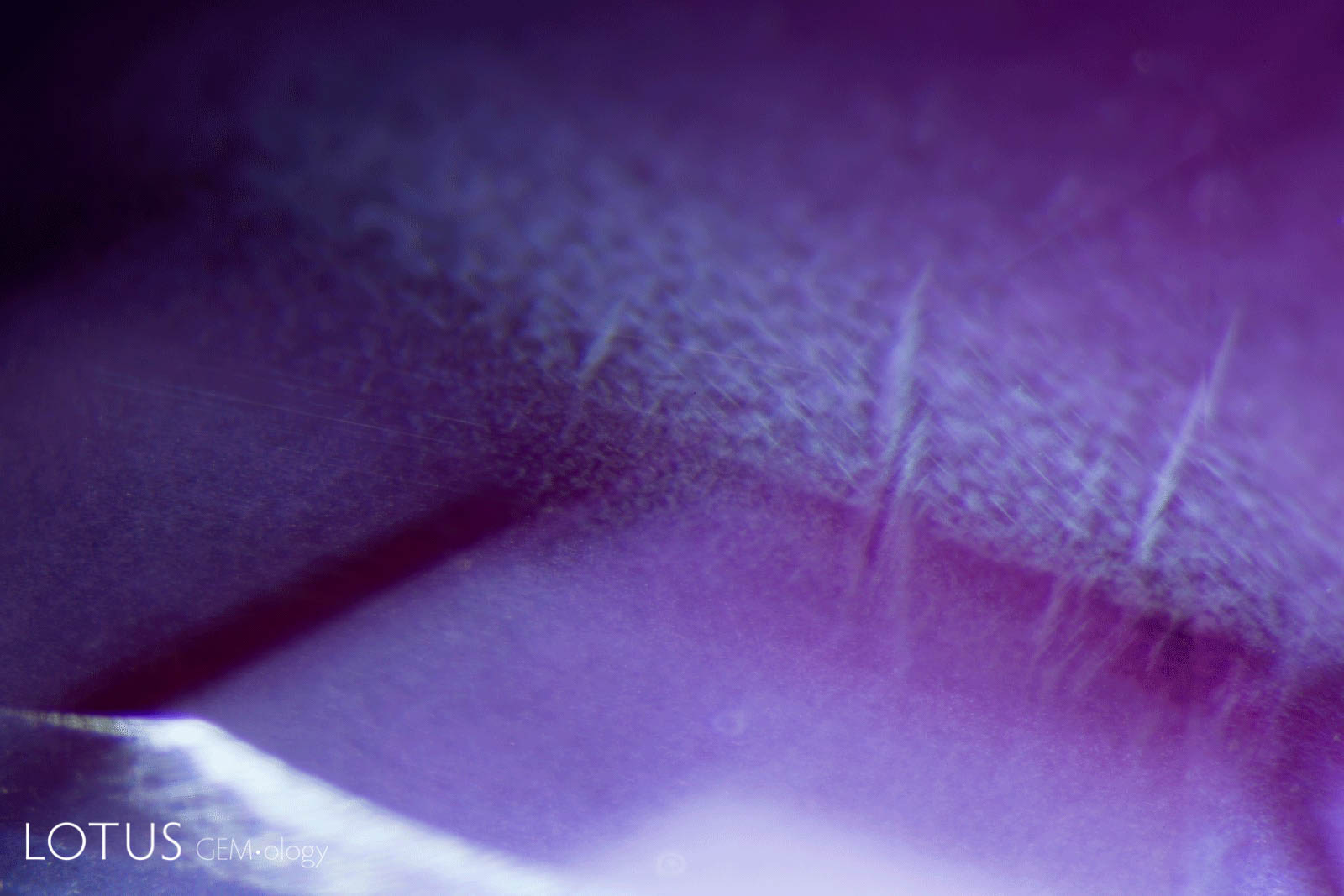
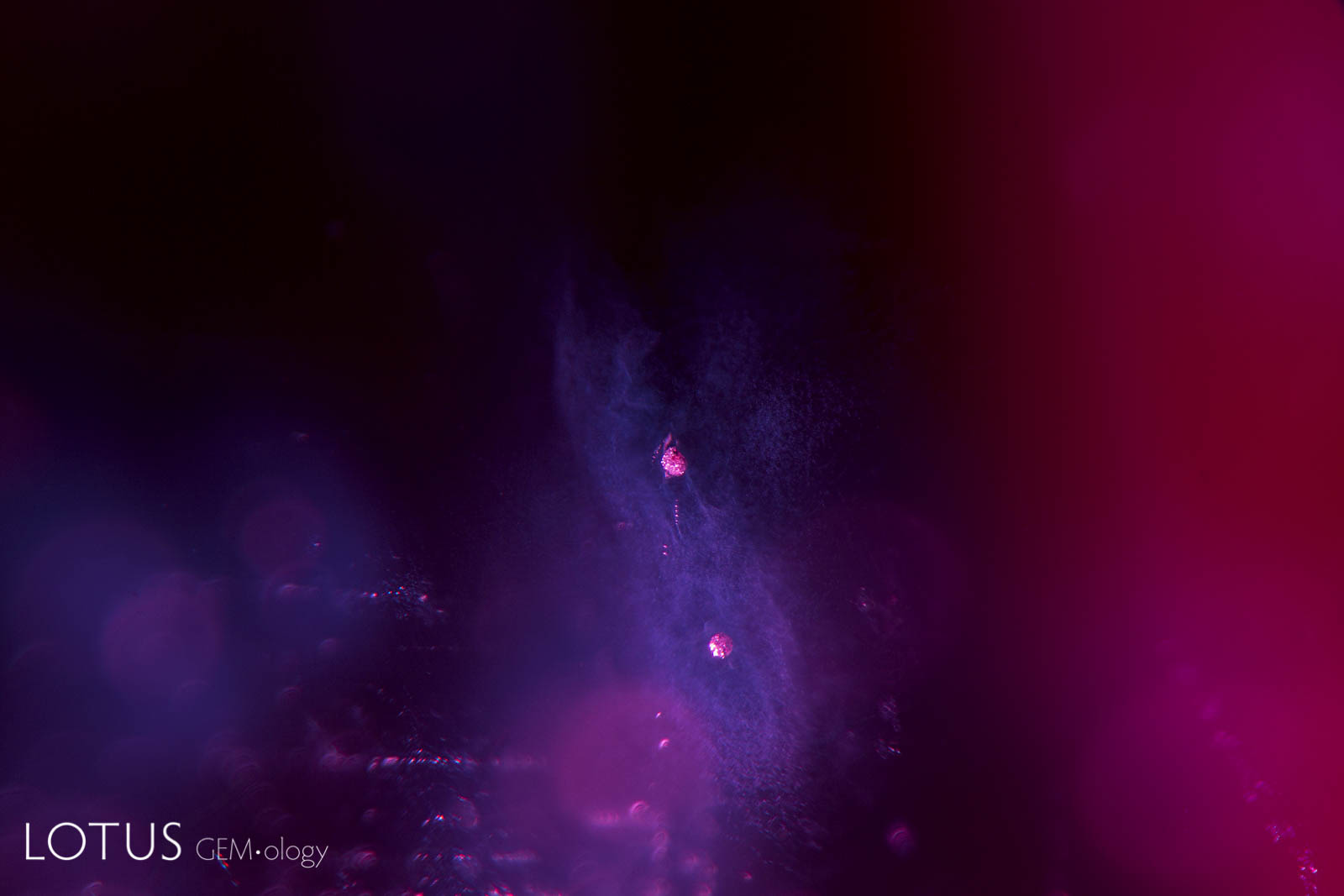
Unusual clouds in a heat-treated ruby said to be from Madagascar. The bluish color is created by Tyndall scattering, light scattering from particles in a fine suspension. Tyndall scattering is also responsible for the blue irises of the human eye and the blue color of opalescent glass.
Natural Ruby •
Madagascar •
Enhancements:
Heat (H) •
Lighting Conditions:
Dark Field + Oblique Fiber Optic
Photographer:
Richard W. Hughes •
Image Number:
P-10058-1
Treatment can alter existing inclusions and produce new microscopic features in ruby. These may include changes to mineral inclusions, altered rutile silk, tension fractures, healed fissures, residues and other features associated with heating, fissure healing, glass filling and other treatment processes.
Treated Ruby Inclusion Photomicrographs
The Hyperion treated ruby gallery includes microscopic features documented in natural rubies subjected to treatment. Each entry identifies the recorded treatment and is accompanied by descriptive information and, where available, references to the gemological literature.
What Inclusions Can Reveal About Ruby Treatment
Microscopic examination is an important part of detecting treatment in ruby. The appearance and alteration of inclusions, fractures and growth features can provide evidence of treatment and, in some cases, information about the processes to which a ruby has been subjected.
Hyperion combines inclusion photomicrography with supporting gemological information so that treatment-related features can be compared with documented examples in natural ruby.
About Hyperion
Hyperion is the Lotus Gemology searchable inclusion database. It allows users to browse gemstone inclusions by gem type, geographic origin, treatment and keyword.