Treated Ruby Inclusions
Explore treated ruby inclusions in Hyperion, the Lotus Gemology inclusion database. Hyperion contains photomicrographs of inclusions and internal features in natural rubies that have undergone treatment, documented with information on geographic origin, treatment, lighting conditions, field of view, photographer and published references.
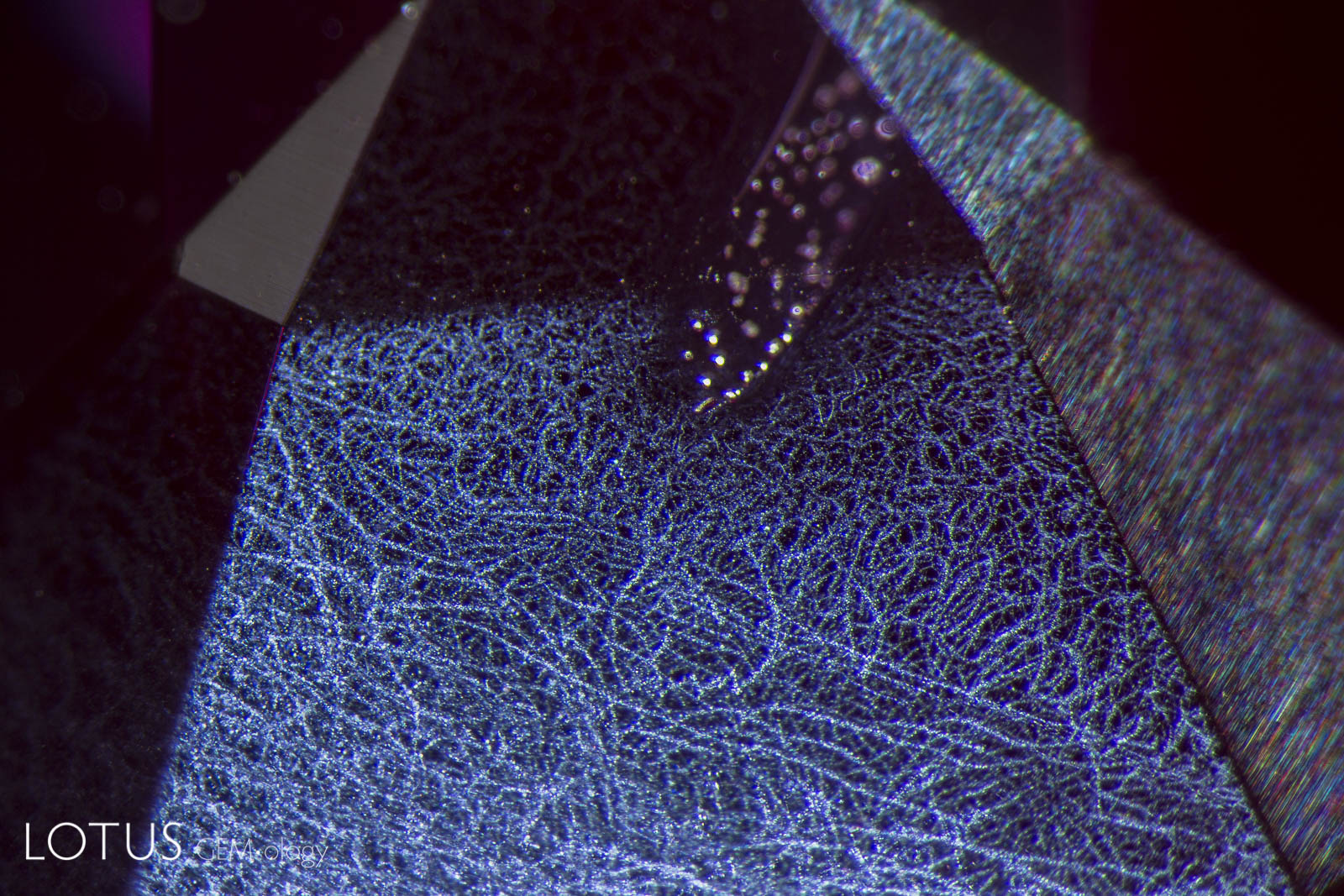
Bizarre spider's web clouds just beneath the surface of this ruby that proved to be beryllium treated.
Natural Ruby •
Not Determinable •
Enhancements:
Heat + Diffusion of external coloring agents (H-D) •
Lighting Conditions:
Fiber Optic: Oblique
Photographer:
Richard W. Hughes •
Image Number:
A-001-0619-3
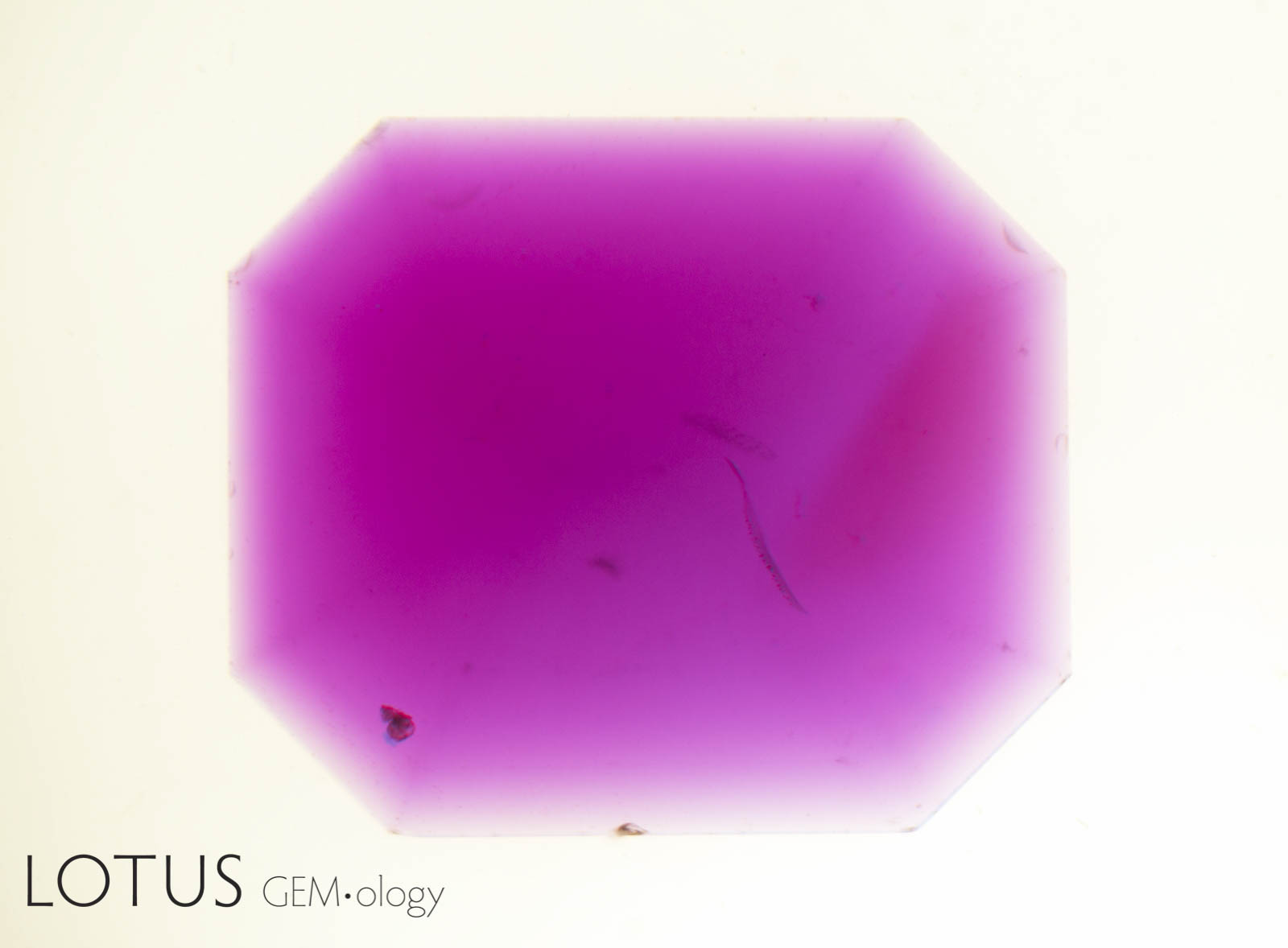
Color zoning with an orange zone in an unusual beryllium-treated ruby.
Natural Ruby •
Not Determinable •
Enhancements:
Heat + Diffusion of external coloring agents (H-D) •
Lighting Conditions:
Diffuse Light Field (Transmitted Light)
Photographer:
Richard W. Hughes •
Image Number:
A-001-0619-2
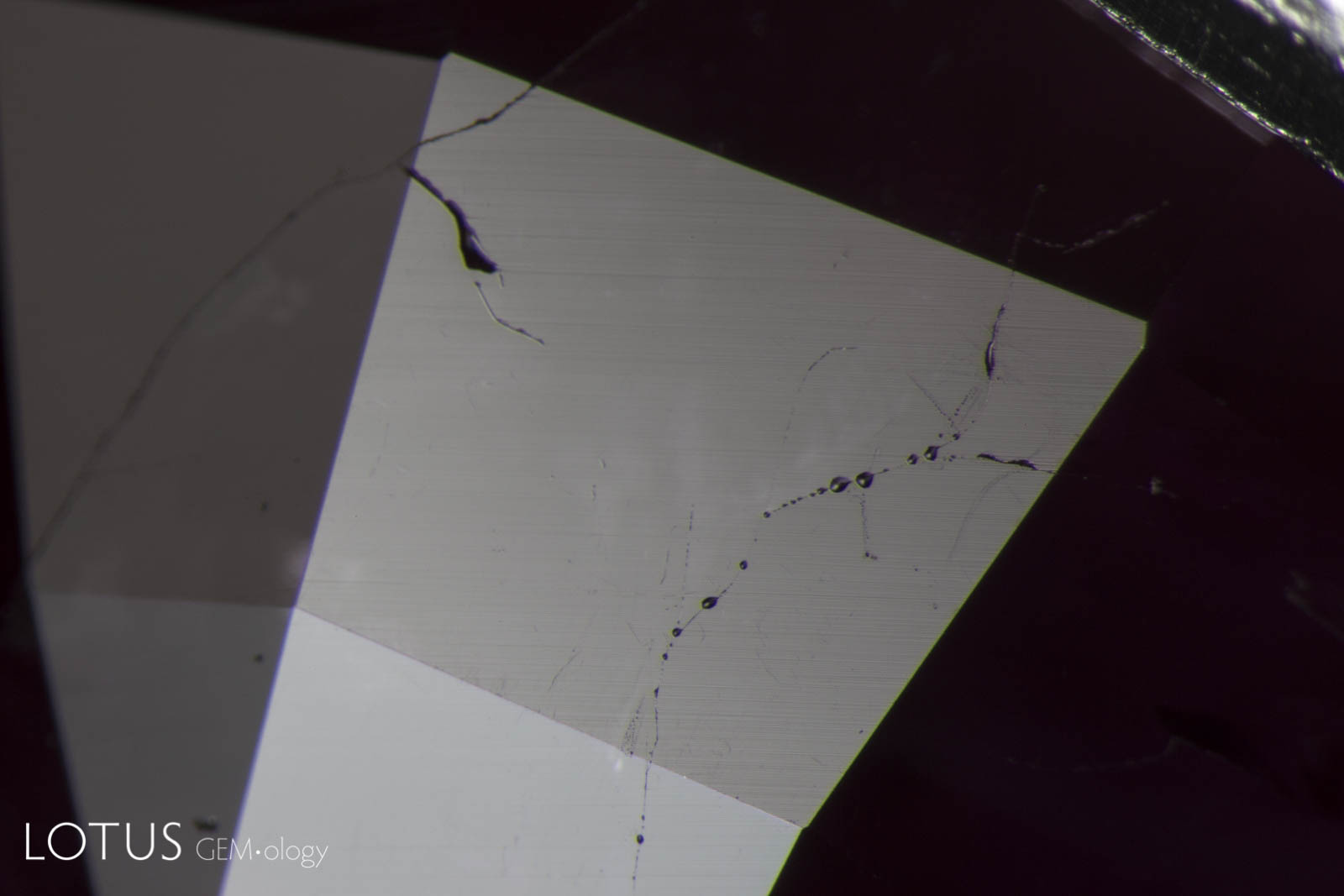
Many gems entering the market from Burma have been found to be oiled in an attempt to conceal their fissures. This fraud can often be unmasked by using the hot point, which may cause oil drops to leak from fissures.
Natural Ruby •
Myanmar (Burma); Mogok/Namya •
Enhancements:
Fissure Filling with colorless Oil/resin (FF-O1) •
Lighting Conditions:
Diffuse Overhead
Photographer:
Richard W. Hughes •
Image Number:
A-001-0422-1
Lotus Gemology (2015) Lotus Gemology Lab Alert for Oiled Gems. Bangkok, LotusGemology.com, RWHL*.
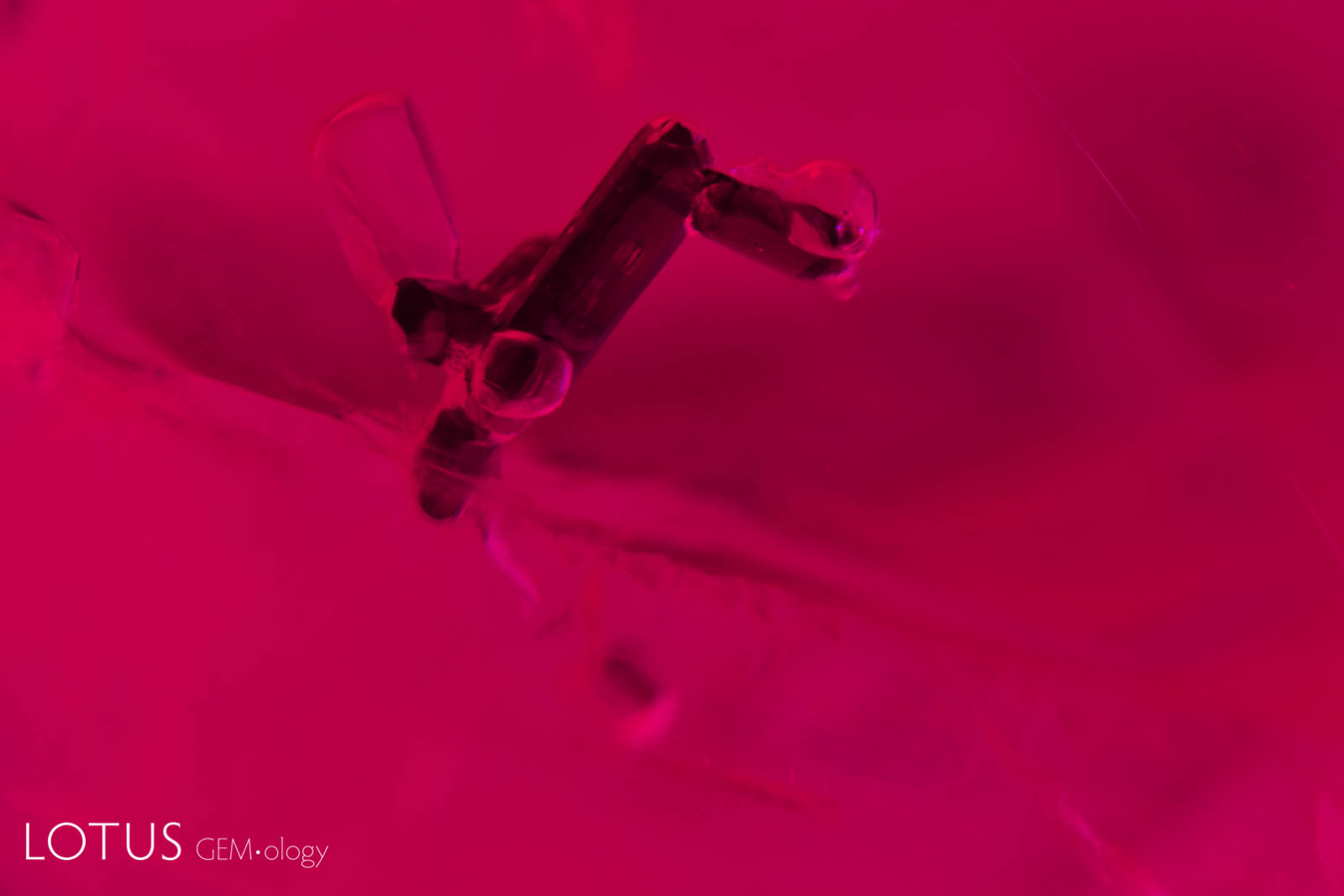
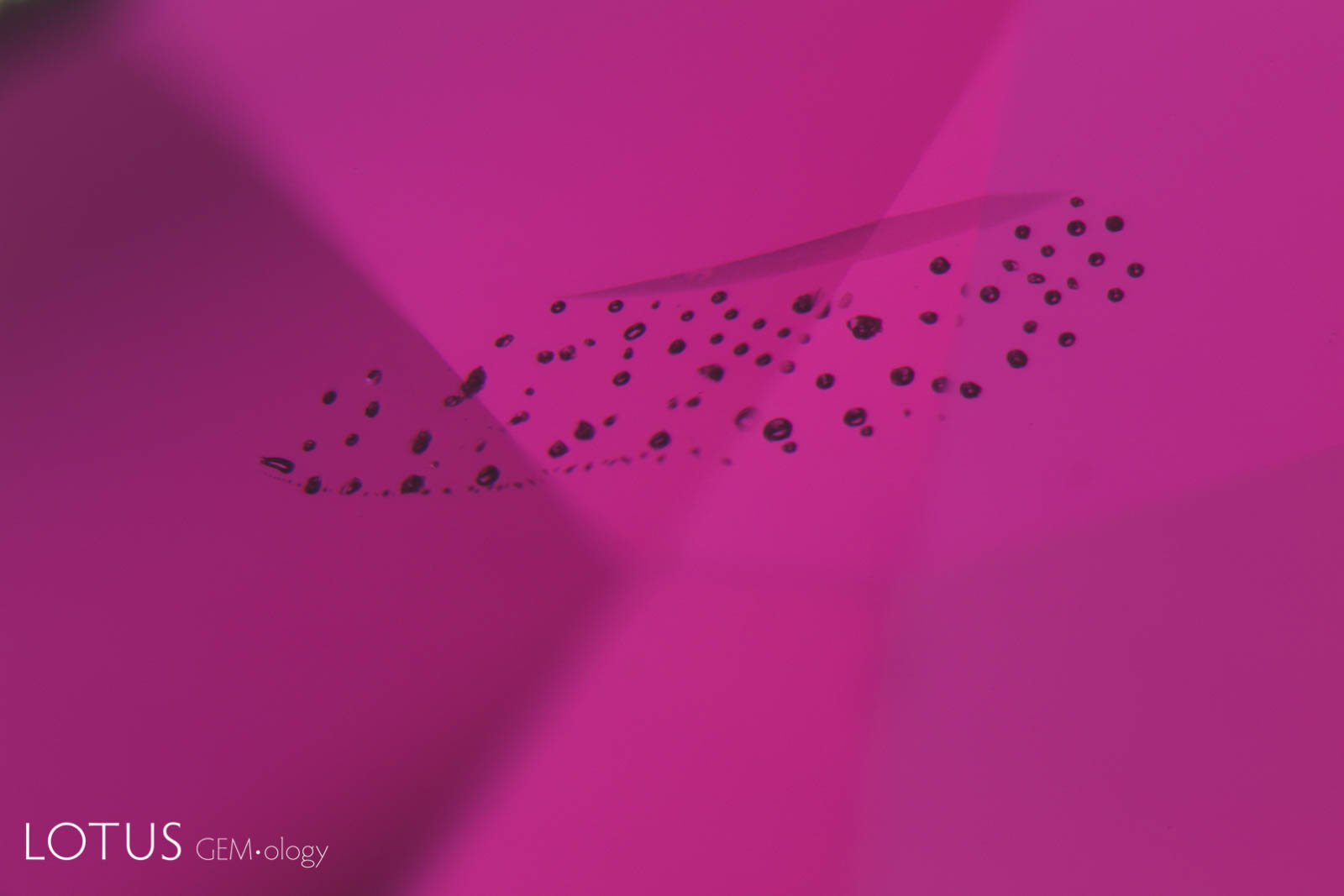
Some inclusions in Mozambique rubies are thermally sensitive. Here we find small crystals that have melted. The melted crystal (glass) occupies less volume than the original crystal, resulting in a frozen contraction bubble. A small fingerprint surrounds each melted crystal.
Natural Ruby •
Mozambique •
Enhancements:
Heat (H) •
Lighting Conditions:
Fiber Optic: Transmitted
Photographer:
Richard W. Hughes •
Image Number:
A-001-0443-1
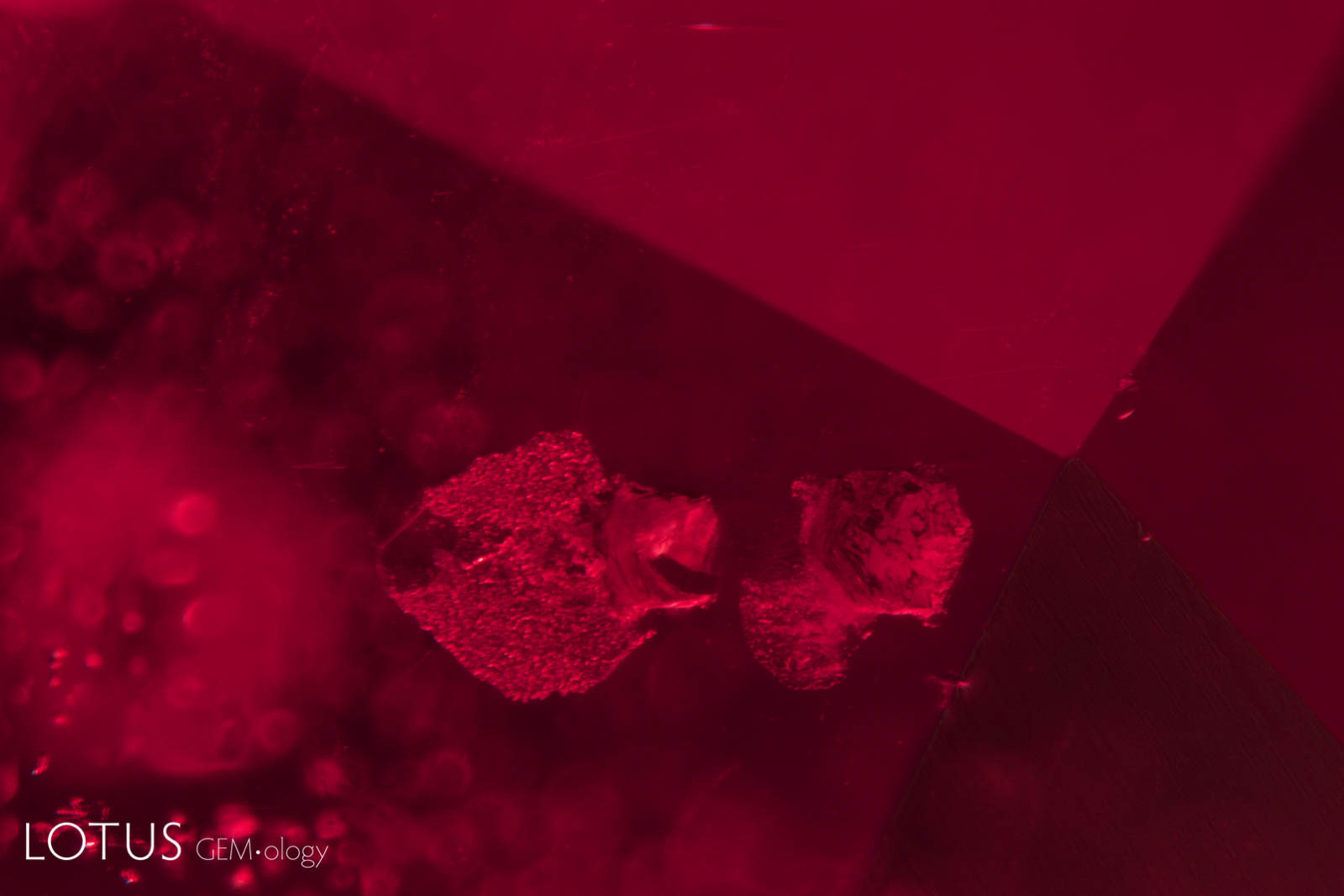
Glass filling in a surface-reaching cavity in a Mozambique ruby. Note the conchoidal fracture on the glass filling.
Natural Ruby •
Mozambique •
Enhancements:
Heat (H) •
Lighting Conditions:
Diffuse Overhead
Photographer:
E. Billie Hughes •
Image Number:
A-010-0250-1
Hughes, R.W. (1984) Repaired surfaces found on rubies. Jewellery News Asia, No. 6, pp. 1, 33; RWHL*.
Scarratt, K. (1984) Notes from the laboratory. Journal of Gemmology, Vol. 19, pp. 98–124; RWHL.
This Mozambique ruby has been heat treated, causing an included crystal to melt. The resulting glass occupies less space than the previous crystal, resulting in a frozen gas bubble.
Natural Ruby •
Mozambique •
Enhancements:
Heat (H) •
Lighting Conditions:
Fiber Optic: Transmitted
Photographer:
Richard W. Hughes •
Image Number:
A-001-1317-1
Primary rutile crystals dance with transparent colorless partners in this ruby from Myanmar’s Mogok Stone Tract.
Natural Star Ruby •
Myanmar (Burma); Mogok •
Enhancements:
Fissure Filling with colorless Oil/resin (FF-O2); No indications of heating (No indications of heating) •
Lighting Conditions:
Fiber Optic: Transmitted
Photographer:
Richard W. Hughes •
Image Number:
A-001-1205-2
Primary rutile crystals dance with transparent colorless partners in this ruby from Myanmar’s Mogok Stone Tract.
Natural Star Ruby •
Myanmar (Burma); Mogok •
Enhancements:
Fissure Filling with colorless Oil/resin (FF-O2); No indications of heating (No indications of heating) •
Lighting Conditions:
Fiber Optic: Transmitted
Photographer:
Richard W. Hughes •
Image Number:
A-001-1205-1
Included crystals in a ruby from Montepuez, Mozambique.
Natural Ruby •
Mozambique •
Enhancements:
Fissure Filling with colorless Oil/resin (FF-O2) •
Lighting Conditions:
Fiber Optic: Oblique
Photographer:
Richard W. Hughes •
Image Number:
A-001-0688-1
A small heat-altered fingerprint in an unusual, beryllium-treated ruby.
Natural Ruby •
Not Determinable •
Enhancements:
Heat + Diffusion of external coloring agents (H-D) •
Lighting Conditions:
Fiber Optic: Transmitted
Photographer:
Richard W. Hughes •
Image Number:
A-001-0619-1
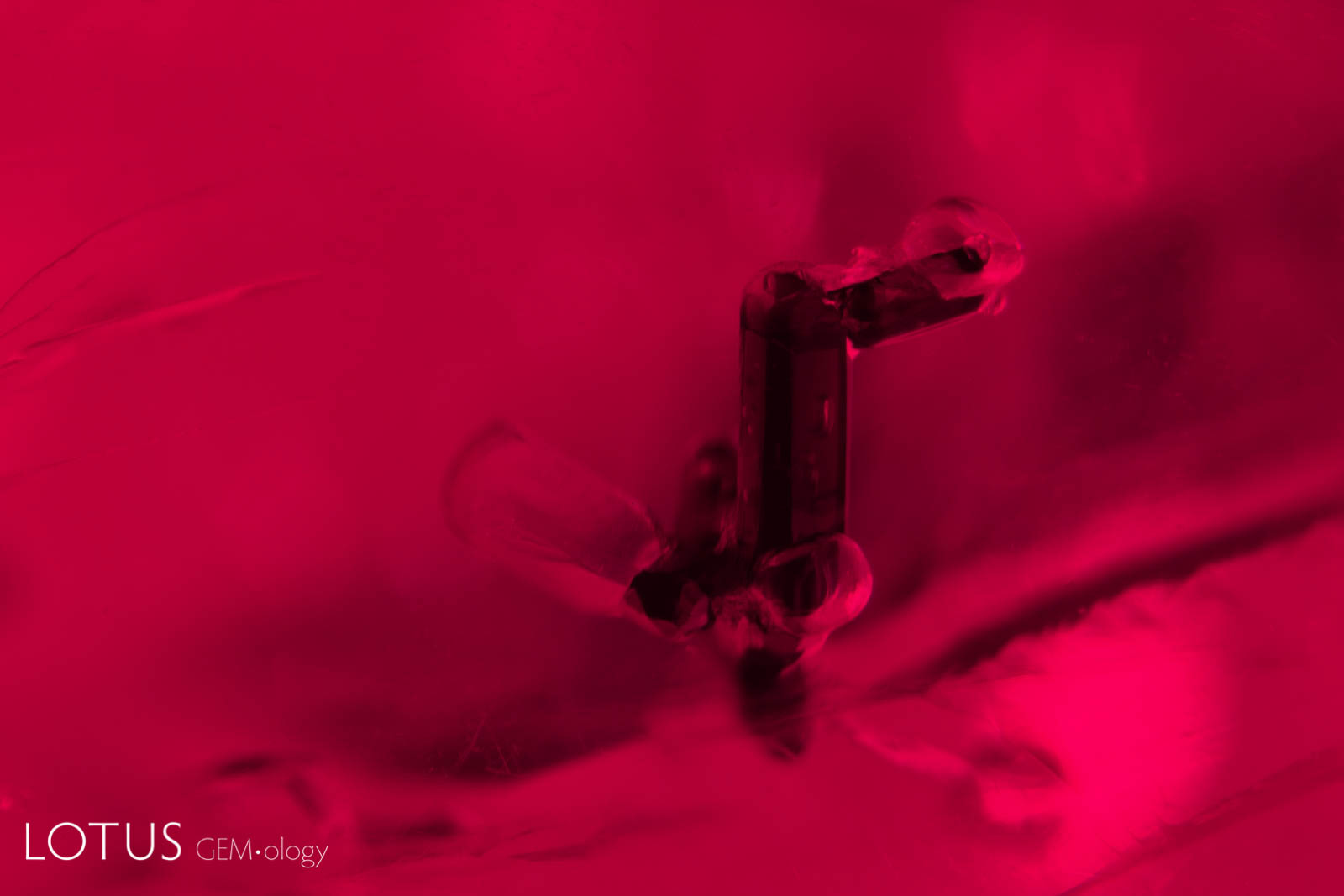
When a gem is heat treated, solid inclusions may melt. This photo illustrates two different examples. In the foreground a crystal has melted and cooled into a glass. Because the glass takes up less volume than the earlier crystal, the difference results in a bubble in the glass. Looking further in the background we can see small blue dots. These are the remnants of rutile silk. Heat treatment alters the rutile, sending titanium into solid solution in the corundum. The result is blue “ink spots” surrounding the partially dissolved rutile.
Natural Ruby •
Mozambique •
Enhancements:
Heat (H) •
Lighting Conditions:
Fiber Optic: Transmitted
Photographer:
Richard W. Hughes •
Image Number:
A-001-0607-1
Shortwave ultraviolet can often reveal heat treatment even at relatively low temperatures. Low-iron rubies, padparadschas and blue sapphires will often display a zoned chalky fluorescence following heat treatment. It is generally the colorless areas of the stone that show this. The presence of chalky SW fluorescence is a strong indication of heat treatment.
Natural Ruby •
Myanmar (Burma); Mogok/Namya •
Enhancements:
Heat + Glass Cavity/Fissure Filling (H-GF1) •
Lighting Conditions:
Ultraviolet: Shortwave
Photographer:
Richard W. Hughes •
Image Number:
A-001-0579-3
Treatment can alter existing inclusions and produce new microscopic features in ruby. These may include changes to mineral inclusions, altered rutile silk, tension fractures, healed fissures, residues and other features associated with heating, fissure healing, glass filling and other treatment processes.
Treated Ruby Inclusion Photomicrographs
The Hyperion treated ruby gallery includes microscopic features documented in natural rubies subjected to treatment. Each entry identifies the recorded treatment and is accompanied by descriptive information and, where available, references to the gemological literature.
What Inclusions Can Reveal About Ruby Treatment
Microscopic examination is an important part of detecting treatment in ruby. The appearance and alteration of inclusions, fractures and growth features can provide evidence of treatment and, in some cases, information about the processes to which a ruby has been subjected.
Hyperion combines inclusion photomicrography with supporting gemological information so that treatment-related features can be compared with documented examples in natural ruby.
About Hyperion
Hyperion is the Lotus Gemology searchable inclusion database. It allows users to browse gemstone inclusions by gem type, geographic origin, treatment and keyword.