Emerald Bibliography

Emerald Bibliography

Explore books, articles and historical sources on emerald in Four Treasures, the Lotus Gemology reference database. This bibliography brings together matching records from the collection, with publication details, abstracts and cover images where available.

Emerald References

The list below matches the terms emerald or emeralds in the database's searchable fields. Some references discuss emeralds as part of a broader subject.
241–260 of 851 matching references

The Santa Terezinha de Goiás emerald deposit
Journal Article
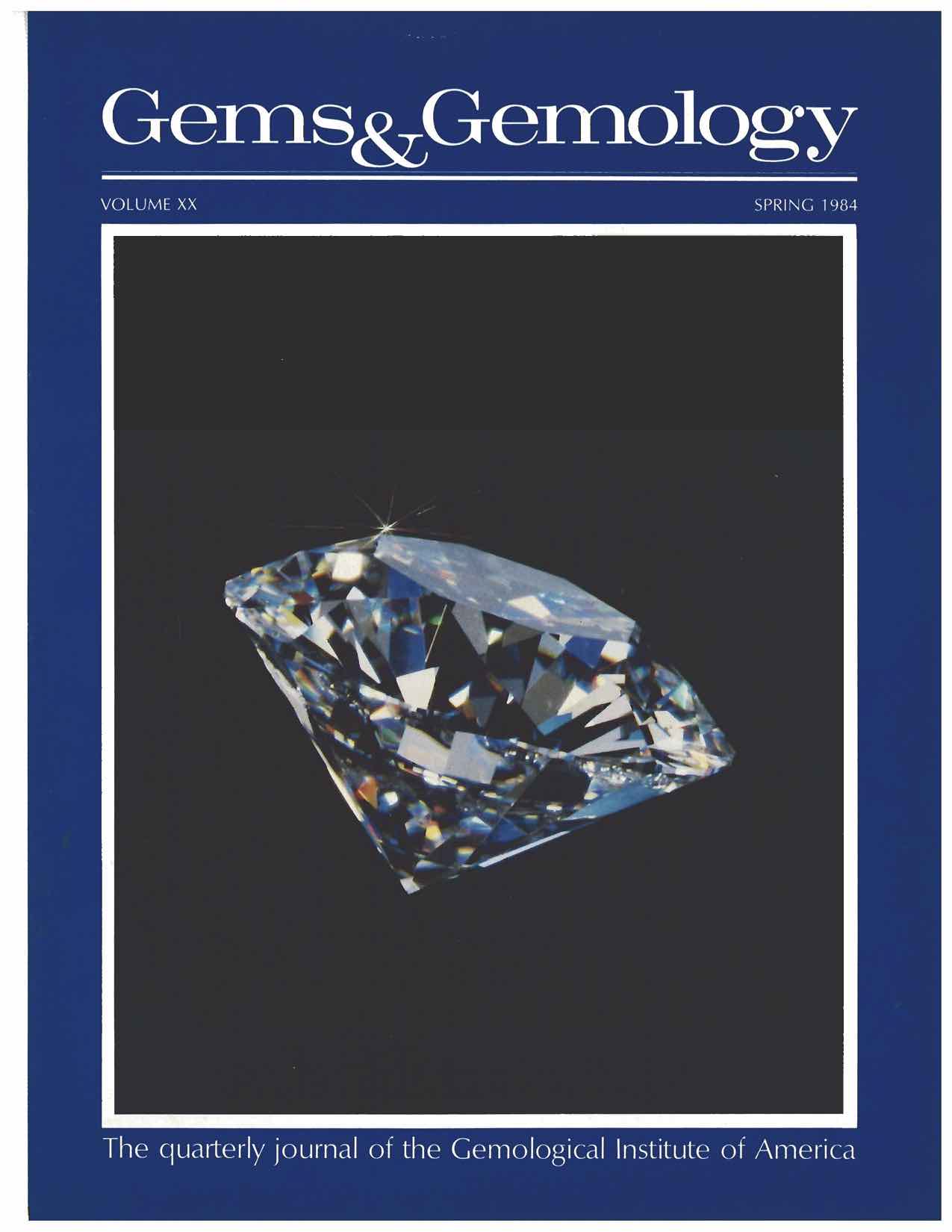
Cassedanne, J.P. and Sauer, D.A. (1984) The Santa Terezinha de Goiás emerald deposit. Gems & Gemology, Vol. 20, No. 1, Spring, pp. 4–13.
Record No. 6057  |  ISBN/ISSN: 0016626X  |  RWHL*
The Santa Terezinha de Goias emerald deposit, currently the most important source of emeralds in Brazil, lies northwest of Brasilia, in the State uf Goias. The emeralds, most of which are stones of a carat or Jess, occm in a talc schist layer intersected by pegmatite. The emeralds are recovered by independent miners via trenches, pits, and tunnels at two prospects: Trecho Novo and Trecho Velho. The grade of the ore is: l to 6 parts of emeralds to 10,000 parts of ore. The density of the gems is 2.70; the refrnctive indexes are 1.580 and 1.588, with greenish dark blue/yellowish pale green pleochroism. The spectrum is typical, with two strong lines and two partial absorption bands; there is no fluorescence; pyrite and chromite are the most typical inclusions, with calcite crystals present in minor amounts.

Australia’s first emeralds

Journal Article
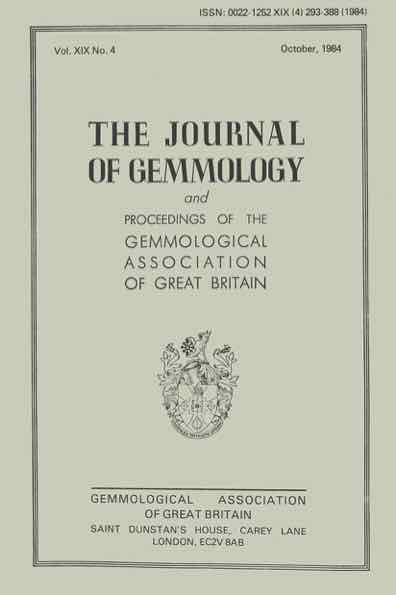
Brown, G. (1984) Australia’s first emeralds. Journal of Gemmology, Vol. 19, No. 4, October, pp. 320–335.
Record No. 4202  |  ISBN/ISSN: 221252  |  RWHL*

The oil treatment of emeralds in Bogotá, Colombia
Journal Article
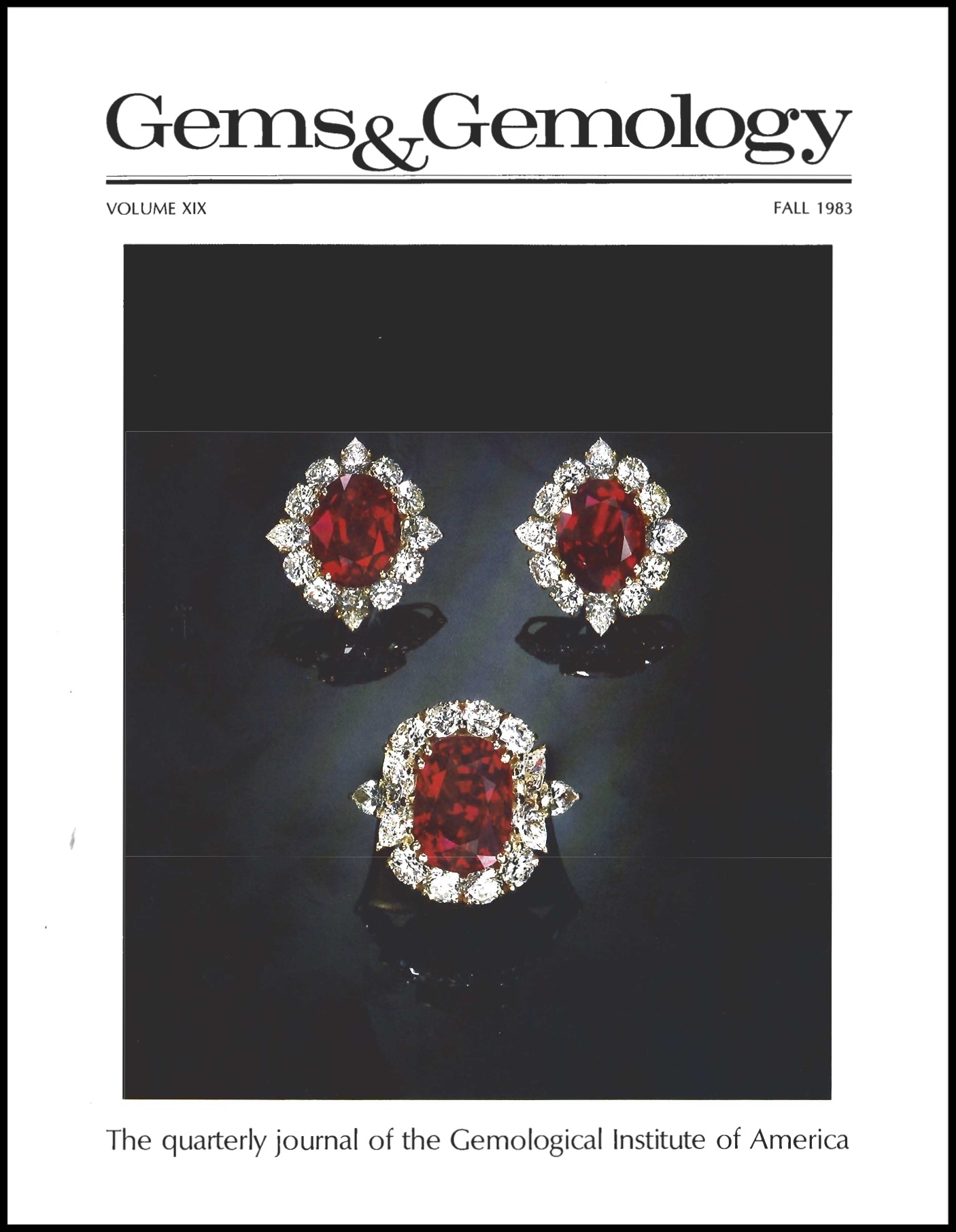
Ringsrud, R. (1983) The oil treatment of emeralds in Bogotá, Colombia. Gems & Gemology, Vol. 19, No. 3, Fall, pp. 149–156.
Record No. 16984  |  ISBN/ISSN: 0016626X  |  Sinkankas/Born No.: NIS/NIBq  |  RWHL*
It is well known in the trade that most emeralds on the market today are oiled. This article focuses on Colombian emeralds and gives a detailed explanation of the oiling process as observed by the author. Sophisticated laboratory procedures are compared with common back porch" methods. The methods used often vary from parcel to parcel, and the success of the treatment depends in part on the experience of the treater, although the process itself appears to be relatively permanent. Observations are also presented on methods of detecting oiling as well as on the use of colored oils."

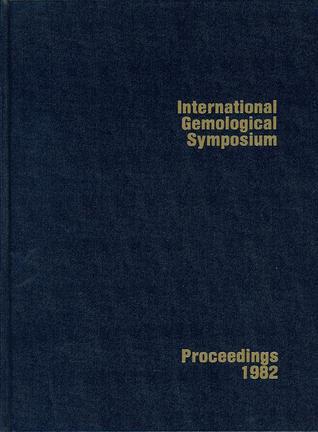
International Gemological Symposium Proceedings
Edited Book
Eash, D.M., editor (1982) International Gemological Symposium Proceedings.. Santa Monica, CA., Gemological Institute of America, 568 pp..
Record No. 28077  |  ISBN/ISSN: 9780870000000  |  Sinkankas/Born No.: 3128; NIB  |  RWHL*
This substantial volume collects the papers presented at the Gemological Institute of America’s 1982 International Gemological Symposium, bringing together research and practical observations from gemologists, mineralogists, scientists, dealers, and other specialists. The proceedings provide a broad survey of gemology at the beginning of the 1980s, covering natural and synthetic gemstones, gemstone identification, inclusions and microscopy, treatments and their detection, diamond research, colored stones, pearls, mining and geographic sources, instrumentation, cutting, and developments affecting the gem trade. Particular attention is given to the rapidly developing problems created by synthetic and treated materials and to the analytical and observational techniques required to distinguish them from their natural counterparts. Individual contributions also document important gem deposits and varieties and demonstrate the increasing application of mineralogical, chemical, spectroscopic, and microscopic methods to practical gem identification. As a whole, the proceedings provide a useful snapshot of the state of gemological research and laboratory practice in the early 1980s and record a period in which treatment detection, synthetic gem identification, and increasingly sophisticated scientific instrumentation were becoming central concerns of professional gemology.

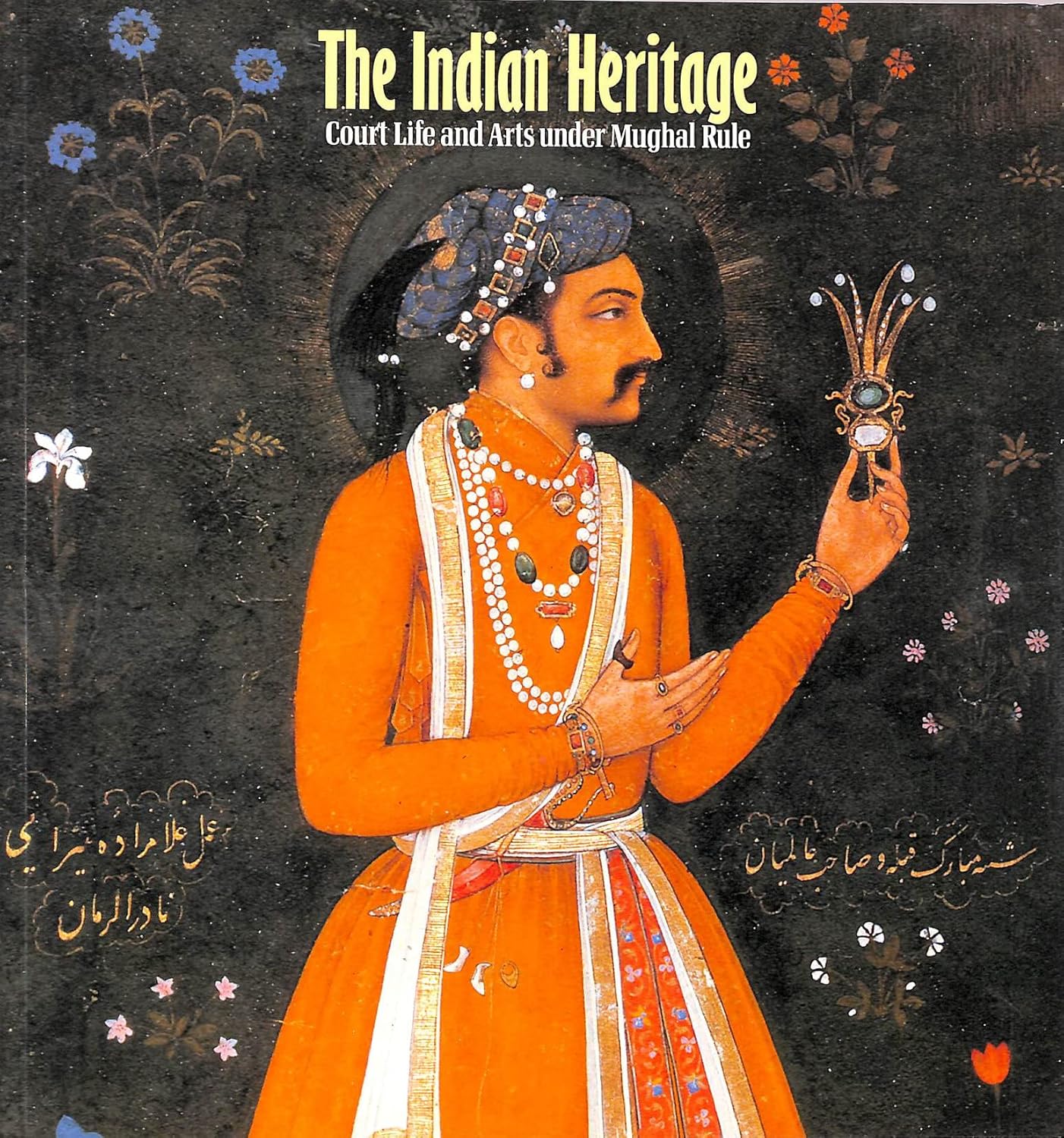
The Indian Heritage: Court Life and Arts under Mughal Rule
Edited Book
Skelton, R., editor (1982) The Indian Heritage: Court Life and Arts under Mughal Rule.. London, Victoria and Albert Museum, 176 pp..
Record No. 27829  |  ISBN/ISSN: 9780910000000  |  Sinkankas/Born No.: NIS/NIB  |  RWHL*
In the mind even of the art-lover of the West, India’s Taj Mahal takes its place with the Parthenon and Chartres as one of the great monuments of human thought in stone; the smaller objects of the decorative arts contemporary with it have not so far been given equal attention. This book, with a foreword by Sir Roy Strong, is a lasting record of the exhibition organized by the Victoria & Albert Museum, London, which brought together nearly 600 of these artefacts made under the patronage of the Mughal dynasty and other members of the Indian nobility between 1526 and 1858. Ten scholars and experts in the field, headed by Robert Skelton, Keeper of the Indian Department of the Museum, contribute specialist essays or write detailed entries on each item in the exhibition, nearly half of which are illustrated here in colour or black and white. Separate sections cover architectural decoration, paintings and the arts of the book, carpets and other textiles, jewellery, glass and hard-stone carvings in jade, agate and rock crystal, arms and armour and other metalwork, coins and insignia, ivory and woodcarving. From them a general picture emerges of how the most refined craftsmanship was practised under the aegis of princes, maharajahs, and nawabs who were fabulously wealthy, and yet who prized a single flower as much as the richest gem in the pursuit of their ‘cult of the exquisite’. In this period the decorative arts in India took a new direction that was open to Renaissance as well as Near Eastern Islamic influences and, incidentally, came eventually in the nineteenth century to serve as one of the oriental sources of our own Arts and Crafts Movement in England, Europe, and America. Mughal art was eventually brought to an end by the influence of colonial European taste, and this is reflected in the late works. This is the first time that such a wide array of objects have been considered in their historical perspective.

Ein Smaragdvorkommen in Madagaskar

An emerald deposit in Madagascar
Journal Article
Hänni, H. and Klein, H.H. (1982) Ein Smaragdvorkommen in Madagaskar. [An emerald deposit in Madagascar] Zeitschrift der Deutschen Gemmologischen Gesellschaft, Vol. 31, No. 1/2, pp. 71–77.
Record No. 6050  |  Language: in German  |  RWHL*
Emeralds from a new deposit in Madagascar are described. The emeralds originating from a mica schist in the south-east of the island are sim ilar to Zambian emeralds, mainly as to their blue-green colour and optical constants. However, mlnor chemlcal dlfferences and the observation of incluslons may allow a dlstinction. The worklng of thls new deposit is at present sporadlcal and carrled out wlth only simple technical means.

Gemstones of Pakistan: Emerald, ruby and spinel
Journal Article
Gübelin, E.J. (1982) Gemstones of Pakistan: Emerald, ruby and spinel. Gems & Gemology, Vol. 18, No. 3, Fall, pp. 123–129.
Record No. 3183  |  ISBN/ISSN: 0016626X  |  RWHL*
Only during the last few years have the gem riches of Pakistan become known to the rest of the world. This article reports on three gem materials currently being mined: emerald, corundum (most importantly, ruby), and spinel. Intensely colored emerald crystals occur in dolomitic talc schists in the Swat Valley. Unusually high optical properties and density serve to distinguish these emeralds from those found elsewhere. Numerous gas-liquid inclusions are also typical. In the Hunza Valley, specimen-and gem-quality crystals of corundum and spinel occur in beds of marble enclosed in gneisses and mica schists. The gemological properties of the Pakistan rubies and sapphires vary only slightly within normal limits.

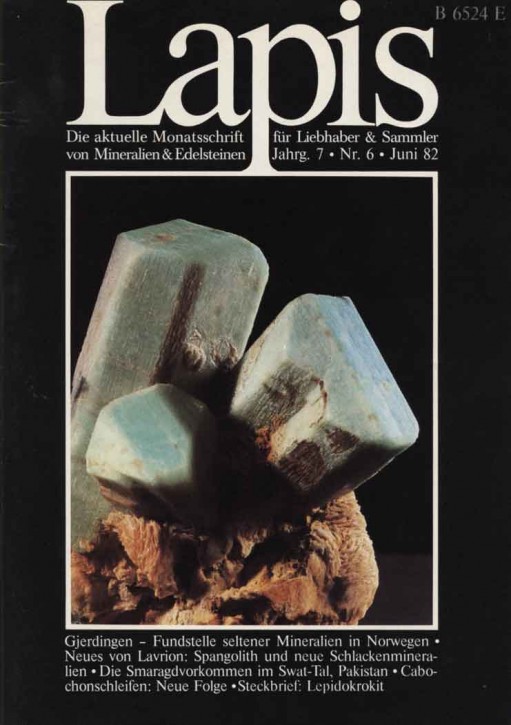
Die Edelstein-Vorkommen Pakistans: 2. Die Smaragde aus dem Swattal
The gemstone deposits of Pakistan: 2. The emeralds from the Swat Valley
Journal Article
Gübelin, E.J. (1982) Die Edelstein-Vorkommen Pakistans: 2. Die Smaragde aus dem Swattal. [The gemstone deposits of Pakistan: 2. The emeralds from the Swat Valley] Lapis, Vol. 7, No. 6, Juni, pp. 19–26.
Record No. 2163  |  Sinkankas/Born No.: 2591; NIB  |  Language: in German  |  RWHL*
Gübelin describes the emerald deposits of the Swat Valley in northern Pakistan, the second part of his survey of Pakistan’s gemstone occurrences. He discusses the geological setting and occurrence of the emeralds and examines their gemological properties and characteristic internal features. The Swat emeralds occur in metamorphic rocks and are notable for their rich green color. Microscopic examination reveals characteristic mineral and fluid inclusions useful in distinguishing the material from emeralds of other sources. The article considers the quality and appearance of the emeralds as well as the nature of the deposits and their significance as a Pakistani gemstone resource.

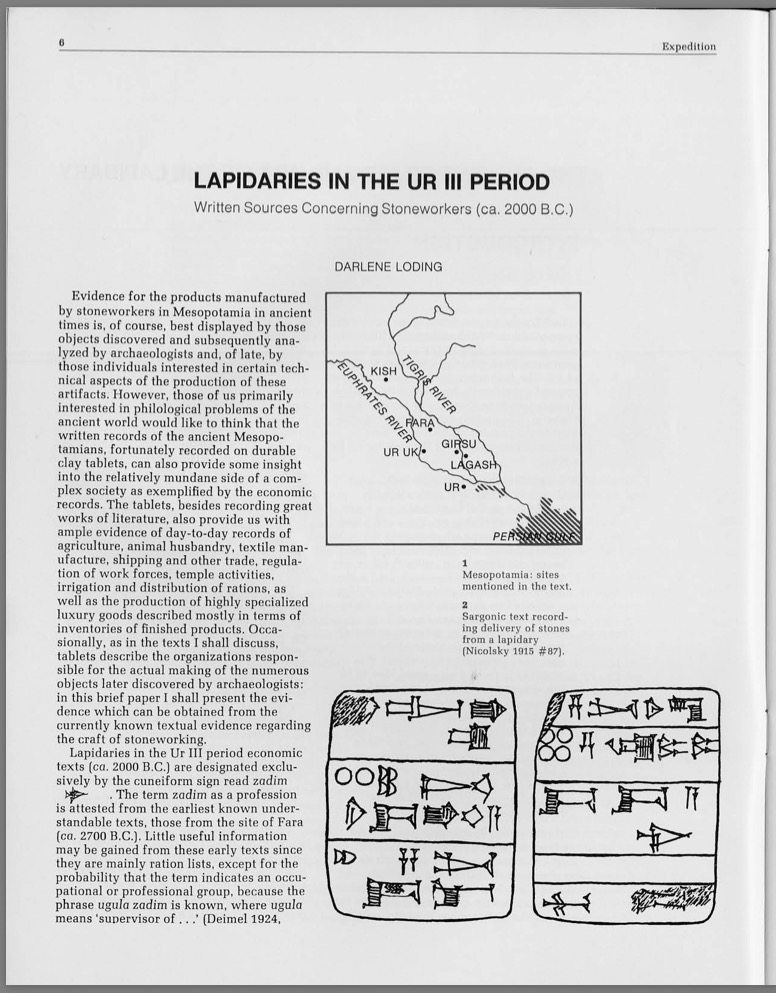
Lapidaries in the Ur III period. Written sources concerning stoneworkers, (ca. 2000 B.C.)
Journal Article
Loding, D. (1981) Lapidaries in the Ur III period. Written sources concerning stoneworkers, (ca. 2000 B.C.). Expedition, Vol. 23, No. 4, Summer, pp. 6–14.
Record No. 26651  |  Sinkankas/Born No.: NIS/NIB  |  RWHL*
Evidence for the products manufactured by stoneworkers in Mesopotamia in ancient times is, of course, best displayed by those objects discovered and subsequently ana­lyzed by archaeologists and, of late, by those individuals interested in certain tech­nical aspects of the production of these artifacts. However, those of us primarily interested in philological problems of the ancient world would like to think that the written records of the ancient Mesopo­tamians, fortunately recorded on durable clay tablets, can also provide some insight into the relatively mundane side of a com­plex society as exemplified by the economic records. The tablets, besides recording great works of literature, also provide us with ample evidence of day-to-day records of agriculture, animal husbandry, textile man­ufacture, shipping and other trade, regula­tion of work forces, temple activities, irrigation and distribution of rations, as well as the production of highly specialized luxury goods described mostly in terms of inventories of finished products. Occa­sionally, as in the texts I shall discuss, tablets describe the organizations respon­sible for the actual making of the numerous objects later discovered by archaeologists: in this brief paper I shall present the evi­dence which can be obtained from the currently known textual evidence regarding the craft of stoneworking. Lapidaries in the Ur III period economic texts (ca. 2000 B.C.) are designated exclu­sively by the cuneiform sign read zadim. The term zadim as a profession is attested from the earliest known under­standable texts, those from the site of Fara (ca. 2700 B.C.). Little useful information may be gained from these early texts since they are mainly ration lists, except for the probability that the term indicates an occu­pational or professional group, because the phrase ugula zadim is known, where ugula means ‘supervisor of .. (Deimel 1924, #71). A slightly later text provides some­what more useful information (Hackman 1958, #64): This text mentions zadim-za, literally ‘stoneworker in stone.’ Other texts from the same period indicate only that the zadim is classified with that group of work­men called gis-kin-ti ‘artisans.’ The best example of this is a list of rations of emmer wheat for the men who have the profes­sions of smith, carpenter, leather worker, lapidary, reed worker and rope maker, end­ing with the summary that they are all craftsmen (Hussey 1912, #5). Further establishment of the meaning of the term is provided by a text from the fol­lowing Sargonic period (i.e. 2330-2200 B.C.), (Nicolsky 1915, #87). In this text amounts of steatite, carnelian, and other types of stone are described as a delivery from a man with the title of zadim.

Sweat of the Sun, Tears of the Moon: Gold and Emerald Treasures of Colombia
Book
Furst, P.T. and Natural History Museum of Los Angeles County. (1981) Sweat of the Sun, Tears of the Moon: Gold and Emerald Treasures of Colombia. Los Angeles, CA, Natural History Museum Alliance of Los Angeles County, 96 pp.
Record No. 7439  |  ISBN/ISSN: 960651403  |  RWHL*
Essays by Peter T. Furst ... [et al.] ; introduction by Luis Duque Gómez ; plate captions by Warwick M. Bray ; color photography by Harold and Erica Van Pelt. ill. ; 28 cm. Natural History Museum of Los Angeles County, July 4-September 6, 1981." Published in conjunction with the exhibition of the same title, held at the Natural History Museum of Los Angeles County, July 4-Sept. 6, 1981."

Emeralds of Colombia

Journal Article
Keller, P.C. (1981) Emeralds of Colombia. Gems & Gemology, Vol. 17, No. 2, Summer, pp. 80–92.
Record No. 2580  |  ISBN/ISSN: 0016626X  |  RWHL*
There has been more activity in emerald mining in Colombia in the last few years than at any other time in the four centuries since the Spanish first discovered the deposits. This article combines a comprehensive review of the literature on the history and geology of Colombian emeralds with the author's own insighis into the current niarkeiing and mining of these stones. Ofparticular concern are the harsh nieihods now being used to extract the emeralds and the impact these methods will have on future production in Colombia. The past, however, has yielded many fabulous gems, the most famous of which are also described here and placed i n historical perspective.

Emerald and Other Beryls

Book
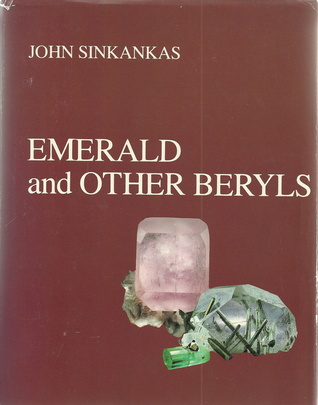
Sinkankas, J. (1981) Emerald and Other Beryls. Radnor, PA, Chilton Book Co., 665 pp.
Record No. 1606  |  ISBN/ISSN: 9780800000000  |  Sinkankas/Born No.: 6110  |  RWHL*
One of the finest books ever written on a single gem species. A masterpiece of gemological scholarship and, with Kunz' “Book of the Pearl,” one of the two major inspirations for Richard Hughes’ books on ruby and sapphire. The only complaint is that there are only a handful of color plates. The Butterworth Gem Series book on beryl is a shortened version. Get the original 1981 edition. A rare, leather-bound limited edition also exists.

Synthetic gemstone developments in the 1970’s
Journal Article
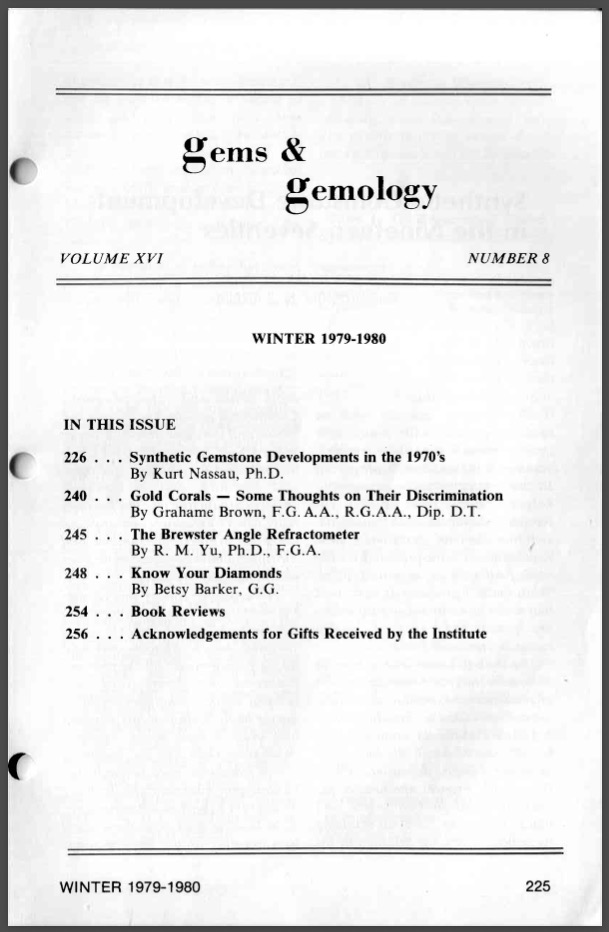
Nassau, K. (1980) Synthetic gemstone developments in the 1970’s. Gems & Gemology, Vol. 16, No. 8, pp. 226–239.
Record No. 26753  |  Sinkankas/Born No.: NIS/NIB  |  RWHL*
The nineteen seventies were an exciting period, with many new developments in the field of synthetic gemstones. It was a difficult period for the gem expert as he struggled to keep up with a series of new synthetics, imitations, and treatments. For the user of gemstones these developments have provided a wide variety of new or improved, albeit “man-made,” products at costs well below the ever increasing inflationary prices and rarity of quality natural gemstones. The decade began with a bang in 1970 with the first successful growth of gemstone-size synthetic diamonds, as well as with the introduction of YAG as a diamond imitation; this rapidly superseded all the older materials. Soon thereafter, Pierre Gilson of France announced his synthetic opal in both white and black forms, as well as synthetic turquoise, later to be followed by his lapis lazuli and coral products. Commercial production of synthetic citrine and synthetic amethyst began in the USSR, while in the USA Linde discontinued its synthetic star ruby, star sapphire, and its synthetic emerald production (the last has been reactivated by another company). An authentic synthetic alexandrite and Slocum’s imitation opal have been additional new products. Towards the end of this decade, the most significant development was the meteoric rise of synthetic cubic zirconia, which almost overnight displaced essentially all the previous diamond imitations. Newly developed testing techniques are making the identification of this diamond look-alike a little easier. Another development has been the continuing rise of treatments used to “improve” natural gem materials; this includes irradiation as well as impregnations. In looking back over these rapid developments of the last ten years, one suspects that the next decade will not be quite so hectic; a period to digest and utilize more fully these advances may, perhaps, be anticipated.

Gems Made by Man

Book
Nassau, K. (1980) Gems Made by Man. Radnor, PA, Chilton, 364 pp.
Record No. 2386  |  Sinkankas/Born No.: 4699  |  RWHL*

Maya jade: Source location and analysis
Book Section
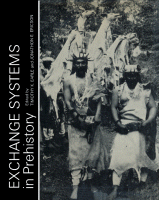
Hammond, N.A., Spinall, A., Feather, S., Hazeldon, J., Gazard, T. and Agrell, S. (1977) Maya jade: Source location and analysis. In: Exchange Systems in Prehistory, New York: Academic Press, pp. 35–67.
Record No. 5075  |  Sinkankas/Born No.: NIS/NIB  |  RWHL*
Jade was a mineral of peculiar significance for the peoples of pre-Columbian Mesoamerica and especially for the Maya, whose civilization flourished in the Yucatán Peninsula through most of the first millennium A.D., to whom it was “the precious stone of grace, the first infinite grace,” its green color making it an allegorical metaphor of young corn, of flowing water, of life itself (Thompson 1950). At the time of Conquest, jade was also important to the Aztecs, who distinguished several types (Foshag 1955): chalchihuitl, which may be translated “herb-green jewel-stone,” referring to ordinary grades of jade; quetzalitztli, from the iridescent green tail-feathers of the quetzal, a bird of the Maya highlands, probably denoting the finest translucent emerald-green jade; tlilayotic, which may refer to the dark green chloromelanite or to omphacite; and iztaccichalchihuitl, white chalchihuitl, which is most likely to be albitic jadeite. The first European contact with the material seems to have been in the sixteenth century, when it was noted as being used for axes in Amazonia, and the word itself is of Spanish etymology, from piedra de ijada—“colic stone”—because of its reputed medicinal properties among some groups of Indians in South America. The term “nephrite” for one mineralogical variety of jade was coined from this by Latinization. After the exhaustion of the current stock of precious jades in Mesoamerica following the conquest, the stone ceased to have any importance for the Spaniards; and the jade best known to later European society was the nephrite from Sinkiang worked in China from Han times onwards and, latterly, Burmese jadeite. Mesoamerican jade sources have remained unworked and mainly unknown to the present day, although the rising value of the raw material is leading to renewed exploitation.

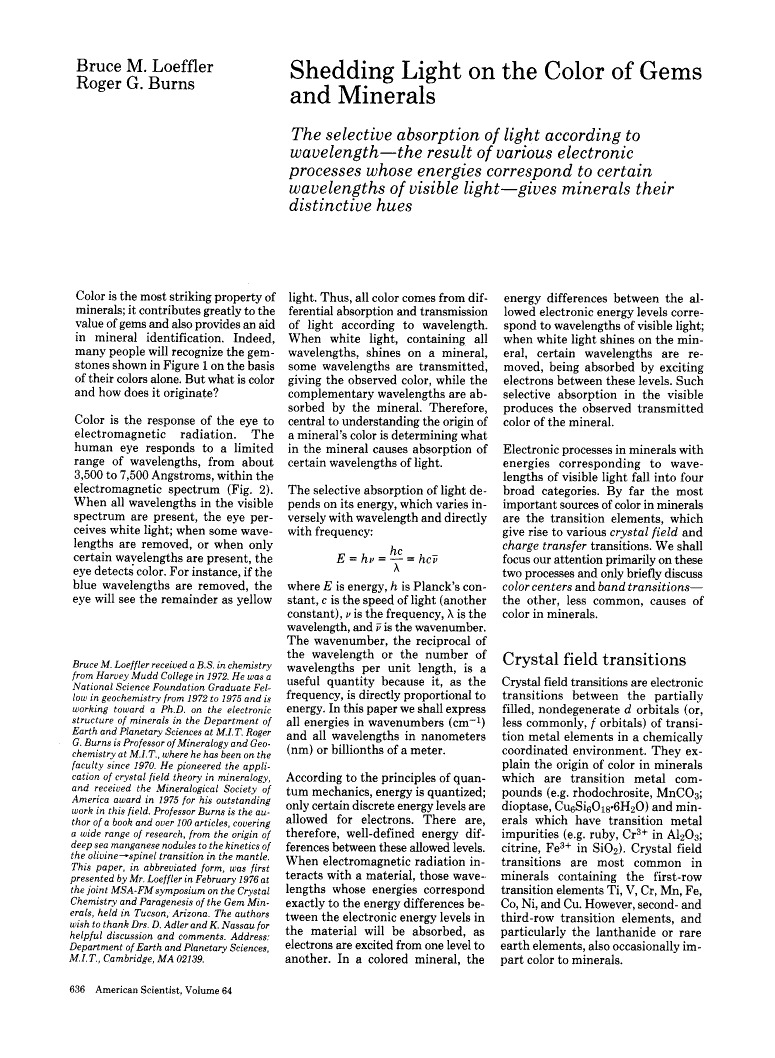
Shedding light on the color of gems and minerals: The selective absorption of light according to wavelength—the result of various electronic processes whose energies correspond to certain wavelengths of visible light—gives minerals their distinctive hues
Journal Article
Loeffler, B.M. and Burns, R.G. (1976) Shedding light on the color of gems and minerals: The selective absorption of light according to wavelength—the result of various electronic processes whose energies correspond to certain wavelengths of visible light—gives minerals their distinctive hues. American Scientist, Vol. 64, No. 6, November–December, pp. 636–647.
Record No. 28167  |  Sinkankas/Born No.: NIS/NIB  |  RWHL*
An excellent summary of the causes of color in gems presented in a digestable format, including useful spectra and diagrams to assist understanding. Highly recommended for students of gemology.

History of crystal growth from solutions
Book Section
Scheel, H.J. (1975) History of crystal growth from solutions. In: Crystal Growth from High-Temperature Solutions, London: Academic Press, pp. 20–58.
Record No. 16946  |  DOI: https://doi.org/10.1016/S0022-0248(99)00780-0  |  RWHL*
The father of crystal fabrication technology is A. Verneuil with his flame-fusion growth method 1902. His principles of nucleation and growth control are adapted in most later growth methods from melt. The Czochralski method was essentially developed by Teal, Little and Dash. The multidisciplinary nature of crystal growth and epitaxy technology and the complex multiparameter processes, and also the scaling problem, have impeded the scientific development of this important area. Only recently it was possible to solve the striation problem and to understand the control of epitaxial growth modes for achieving structurally perfect layers of GaAs and high-Tc superconductors with atomically flat surfaces. The formation of crystal growth and epitaxy engineers and scientists as well as centers of excellence are necessary in order to develop crystal and epilayer fabrication technologies required for development of highest-efficiency white light-emitting diodes and photovoltaic solar cells for energy-saving lighting and as alternative source of energy. Also laser-fusion energy and other high technologies have to wait for progress in crystal growth technology.

Edelsteinkundlisches Handbuch

Handbook of Gemology
Book
Chudoba, K. and Gübelin, E. (1974) Edelsteinkundlisches Handbuch. [Handbook of Gemology] Bonn, Germany, Wilhelm Stollfuss Verlag, 409 + 32 pp.
Record No. 6084  |  Sinkankas/Born No.: 1348; NIB  |  Language: in German  |  RWHL*
The new edition of this well-known text follows familiar lines. The first 160 pages are occupied by a glossary including cross-references to later sections of the book and details of synonyms, incorrect names and constants. Following this section is an account of the crystal systems and other physical and chemical data. The section on absorption spectra is expanded and improved in this edition with clear diagrams of spectra pertaining to the newer synthetics. As may be expected in a book by these authors, the chapters on inclusions are comprehensive. Although illustrations in the text would have been useful here (and generally throughout the work), there is a booklet of black-and-white photographs of inclusions in a pocket at the end of the book. A chapter on synthetics includes such unlikely candidates as BaF2 and MgF2, the first of which is slightly water-soluble; but there is no mention here or anywhere in the book of gadolinium gallium garnet, now on the market as a cut diamond simulant, nor of Gilson synthetic opal. This section is, however, very well written and comprehensive. A reading of Linde for Gilson on p. 340 is one of the rare misprints. For a book of this size and scope the coloured illustrations are not worthy and the world map of gemstone deposits is too crowded. A more serious criticism is the presence of material in the body of the book which appears neither in the glossary section nor in the short index. However, the usefulness of the work is considerable. Reviewed by Michael O’Donoghue

Indian precious stones in the ancient east and west
Journal Article
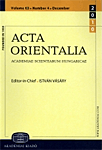
Wojtilla, G. (1973) Indian precious stones in the ancient east and west. Acta Orientalia Hungaricae, Vol. 27, No. 2, pp. 211–224.
Record No. 1880  |  RWHL*
From ancient times, India has been renowned as a land of jewels and the principal source of precious stones. This paper seeks to explore, through ancient Indian sources, the extent of knowledge Indians possessed about precious stones in antiquity—the types of gems mentioned in these texts, and how such knowledge traveled beyond India’s borders to other parts of the ancient world, ultimately reaching the classical authors who have preserved it into modern times. A preliminary question arises: what qualifies as a “precious stone” in these contexts? While there is no universally fixed definition, stones have traditionally been classified based on qualities such as color, brilliance, hardness, durability, and rarity—though these criteria have evolved over time. A select group of more valuable minerals came to be known simply as precious stones (gemmae), while those similar in nature but of lesser value were labeled semi-precious (lapides pretiosi). Diamonds, emeralds, sapphires, and rubies typically fall into the precious category, while opals, topaz, hyacinth, and others—known in both Latin and Sanskrit—are usually considered semi-precious.

Trapiche emeralds from Chivor and Muzo, Colombia

Journal Article
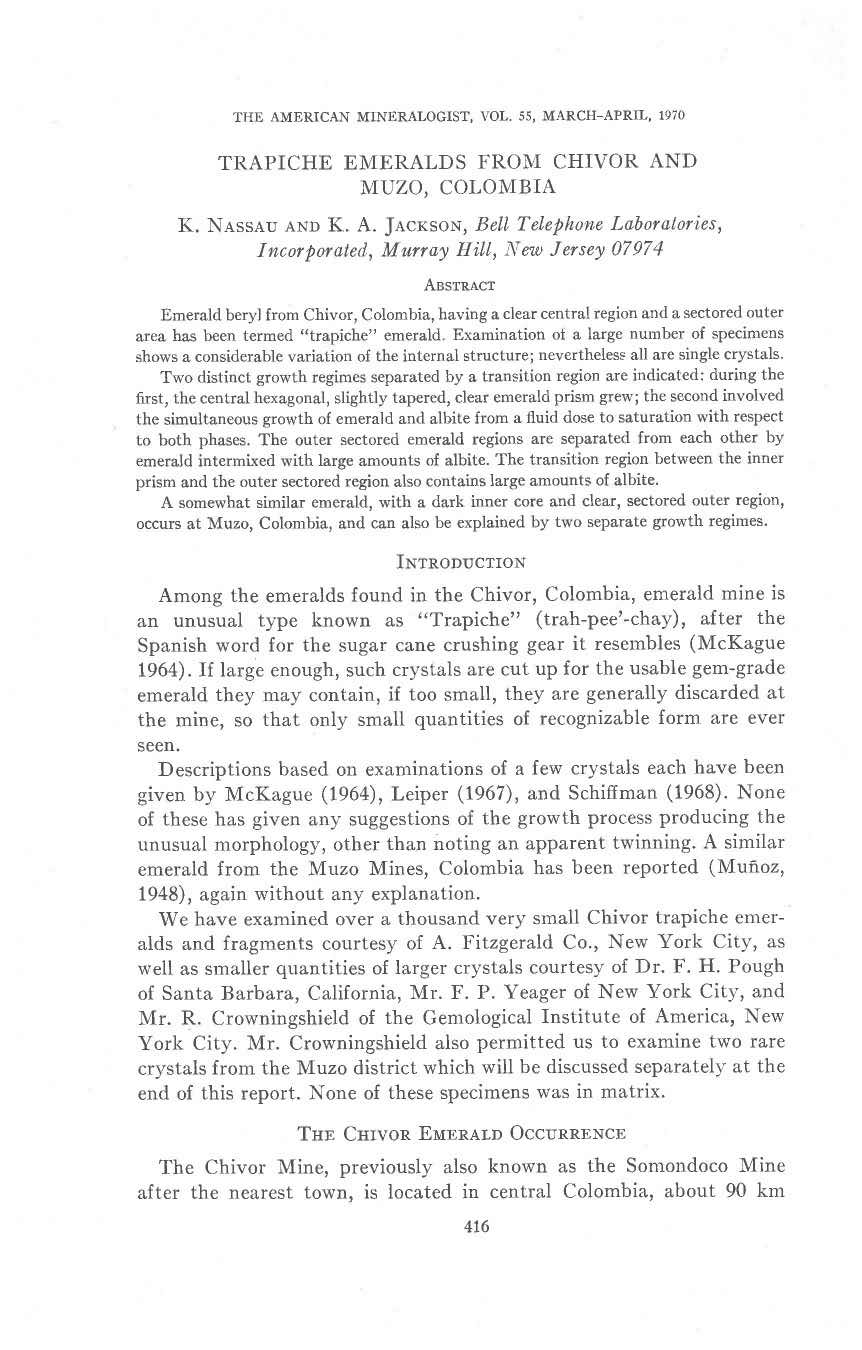
Nassau, K. and Jackson, K.A. (1970) Trapiche emeralds from Chivor and Muzo, Colombia. American Mineralogist, Vol. 55, March–April, pp. 416–427.
Record No. 6103  |  Sinkankas/Born No.: 4705  |  RWHL*
Emerald beryl from Chivor, Colombia, characterized by a clear central region and a sectored outer area, is known as “trapiche” emerald. Examination of numerous specimens reveals significant variation in internal structure, yet all are single crystals. These crystals exhibit two distinct growth regimes separated by a transition zone: the first produced a central hexagonal, slightly tapered, clear emerald prism, while the second involved the simultaneous growth of emerald and albite from a fluid nearly saturated with both phases. The outer sectored emerald regions are divided by emerald mixed with large amounts of albite, and the transition region between the inner prism and the outer zones also contains abundant albite. A similar pattern is observed in emeralds from Muzo, Colombia, where a dark inner core and clear, sectored outer region also suggest two separate growth phases.

Exploring the Literature of Emerald

Emerald literature spans gemology, mineralogy, deposits, identification, treatments, synthesis, history and the gem trade, with important sources covering deposits around the world.

For a curated guide to this subject, read Green Fire — Lotus Gemology's Guide to the Literature of Emerald.

About Four Treasures

Four Treasures is Lotus Gemology's freely accessible gemological reference database. Use the full database to search by author, title or keyword and explore literature on gemology, mineralogy, jewelry and related fields. Where available, hyperlinks on titles may lead directly to the full publication.

Search the Complete Four Treasures Database