Emerald Bibliography

Emerald Bibliography

Explore books, articles and historical sources on emerald in Four Treasures, the Lotus Gemology reference database. This bibliography brings together matching records from the collection, with publication details, abstracts and cover images where available.

Emerald References

The list below matches the terms emerald or emeralds in the database's searchable fields. Some references discuss emeralds as part of a broader subject.
261–280 of 851 matching references

Characteristics of synthetic emeralds
Journal Article
Flanigen, E.M., Breck, D.W., Mumbach, N.R. and Tailor, A.M. (1967) Characteristics of synthetic emeralds. American Mineralogist, Vol. 52, No. 5–6, May–June, pp. 744–772.
Record No. 16789  |  ISBN/ISSN: 0003004X  |  RWHL*
Large single crystals of synthetic emerald have been grown by both hydrothermal and molten flux techniques. The synthetic hydrothermal emeralds are of excellent quality comparable to the finest natural gemstones from Colombia and the Ural Mountains.

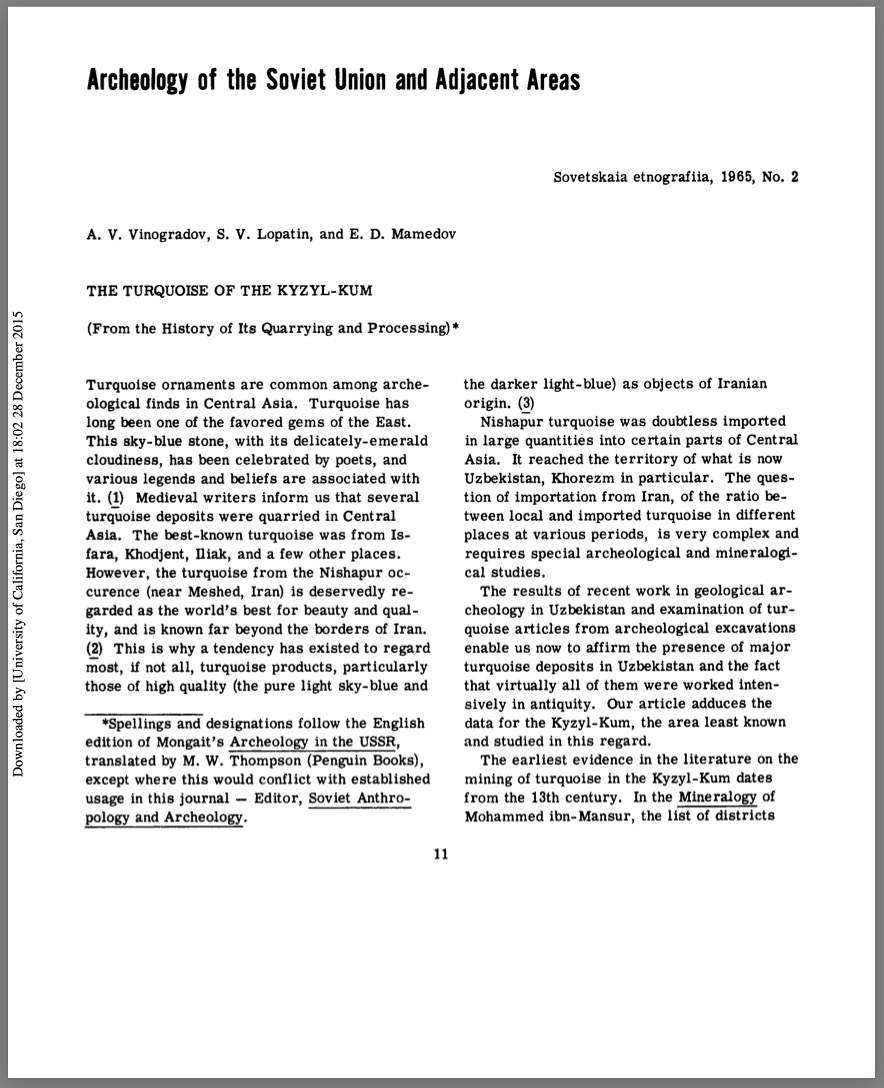
The turquoise of the Kyzyl-Kum

Journal Article
Vinogradov, V., Lopatin, S.V. and Mamedov, E.D. (1966) The turquoise of the Kyzyl-Kum. Soviet Anthropology and Archeology, Vol. 4, No. 4, pp. 11–28.
Record No. 27753  |  DOI: https://doi.org/10.2753/AAE1061-1959040411  |  Sinkankas/Born No.: NIS/NIB  |  RWHL*
Turquoise ornaments are common among archeological finds in Central Asia. Turquoise has long been one of the favored gems of the East. This sky-blue stone, with its delicately-emerald cloudiness, has been celebrated by poets, and various legends and beliefs are associated with it. (1) Medieval writers inform us that several turquoise deposits were quarried in Central Asia. The best-known turquoise was from Isfara, Khodjent, Iliak, and a few other places. However, the turquoise from the Nishapur occurence (near Meshed, Iran) is deservedly regarded as the world's best for beauty and quality, and is known far beyond the borders of Iran. (2) This is why a tendency has existed to regard most, if not all, turquoise products, particularly those of high quality (the pure light sky-blue and the darker light-blue) as objects of Iranian origin.

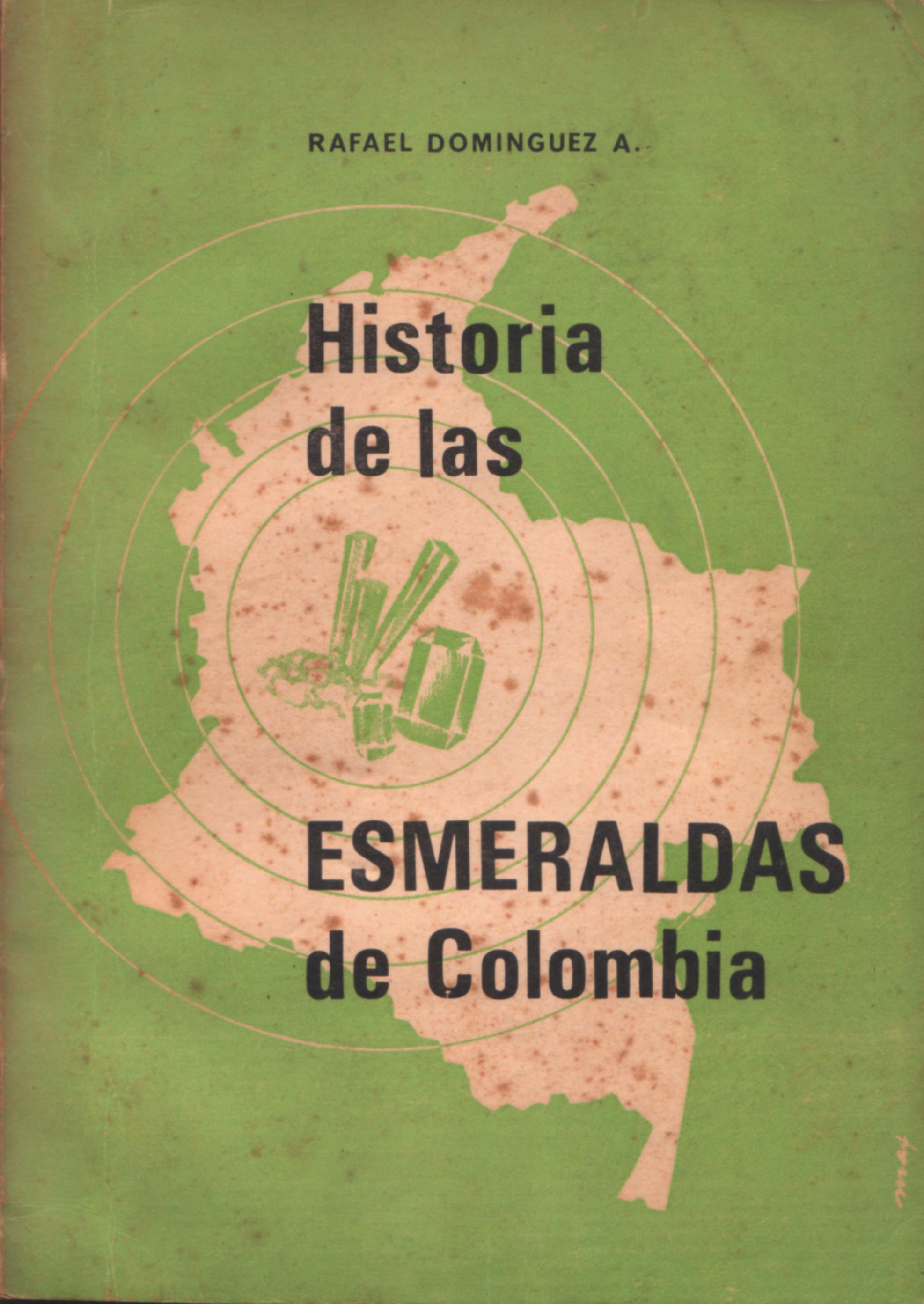
Historia de las Esmeraldas de Colombia

History of the Emeralds of Colombia
Book
Domínguez A, R.A. (1965) Historia de las Esmeraldas de Colombia. [History of the Emeralds of Colombia] Bogotá, Gráficas Ducal, 297 pp.
Record No. 7443  |  Sinkankas/Born No.: 1750; NIB  |  Language: in Spanish  |  RWHL*
Sinkankas: The text is in four parts, with the first treating legends and lore and much on the emerald as it was known to the pre-Conquest Indians in the Muzo region, emeralds elsewhere in the world, famous jewels and gems employing emerald, including remarks on the famous “Patricia” crystal now in the American Museum of Natural History in New York, and other generalities. The second part is a chronology of events from the first appearance of Spaniards on the scene, their attempts to find the deposits, subsequent discoveries and mining, and further events into the present. Part three describes the administration of the mines by the Banco de la República from the 1940s up to now, with much information on the mines, decrees, regulations, production statistics, etc., on Muzo and other emerald mines in Colombia. Also in this part is material on synthetic emeralds, properties and values of same, beryllium resources in Colombia, drawings of emerald crystal forms and cutting styles, properties of cut gems, the formation of emerald, composition, “gemelos” or “trapiches,” the lapidary industry, etc. The last part reproduces important geological and mineralogical documents concerning the deposits, including some by Miguel Gutierrez, Robert Scheibe, Peter W. Rainier, Miguel Alvarez Uribe, Roberto Wokittel, H. Bürgl, E. Hubach, Hernan Restropo, and E. Nicholls. Works by Scheibe, Rainier, Restropo, and Wokittel are described under their names. The text also gives short biographies of Scheibe, Wokittel, Fritz Klein, and Barriga Villalba. The author was in a position of authority in the Banco de la República which enabled him to construct with unparalleled accuracy historical portions of the present work with the best yet information on the Colombian emerald mining industry. Unfortunately, not as much attention has been paid to assembling information on the mineralogy and parageneses noted in the deposits nor to compare views on the vexing problem of their origin.

Abu-r-Rajchan Muchammed ibn Achmed al-Biruni. Sobraine svendenij dlja poznanija dragocennostej (Mineralogija). Stat’i i primečanija [Абу-р-Раджан Мухаммед ибн Ахмед аль-Бируни. Собрание сведений для познания драгоценностей (Минералогия). Статьи и примечания.]
Abu-r-Rajchan Muhammad ibn Ahmed al-Biruni. Collected Works for the Knowledge of Precious Stones (Mineralogy). Articles and Notes.
Book
Lemmlejn, G.G., Baranov, K.K. and Dolinina, A.A. (1963) Abu-r-Rajchan Muchammed ibn Achmed al-Biruni. Sobraine svendenij dlja poznanija dragocennostej (Mineralogija). Stat’i i primečanija [Абу-р-Раджан Мухаммед ибн Ахмед аль-Бируни. Собрание сведений для познания драгоценностей (Минералогия). Статьи и примечания.]. [Abu-r-Rajchan Muhammad ibn Ahmed al-Biruni. Collected Works for the Knowledge of Precious Stones (Mineralogy). Articles and Notes.] Moscow, Academy of Sciences of the USSR, 330 pp.
Record No. 16441  |  ISBN/ISSN: 9785430000000  |  Sinkankas/Born No.: NIS/NIB  |  Language: in Russian  |  RWHL*
Lemmlejn, Baranov, and Dolinina present a Russian edition of al-Biruni’s Kitāb al-Jamāhir fī maʿrifat al-jawāhir (Book of the Collective Knowledge of Precious Stones), one of the most important medieval Islamic works on gemstones, minerals, and metals. Written by al-Biruni in the eleventh century, the work combines information derived from Greek, Arabic, Persian, and Indian sources with the author’s own observations and measurements. It discusses numerous precious and ornamental stones, including ruby, sapphire, emerald, diamond, pearl, turquoise, garnet, lapis lazuli, and various forms of quartz, treating their names, varieties, colors, properties, geographic sources, methods of testing, relative values, imitations, and commercial uses. Particular importance attaches to al-Biruni’s quantitative approach: he reports specific-gravity determinations for gemstones and metals obtained by hydrostatic methods and compares materials on the basis of experimentally determined physical properties. The text also preserves extensive information on mining, trade, prices, terminology, and beliefs concerning gems in the medieval Islamic world and neighboring regions. This Soviet edition supplements the Russian translation with scholarly articles and notes addressing al-Biruni, his sources, terminology, mineralogical identifications, and the scientific significance of the work, making it an important modern edition of a fundamental source for the history of mineralogy and gemology.

Natural History, Books 36–37

Book
Pliny the Elder and Eichholz, D.E. (1962) Natural History, Books 36–37. Cambridge, MA, Harvard University Press, Volume X , 344 pp.
Record No. 3305  |  Sinkankas/Born No.: NIS/NIB  |  Language: parallel Latin and English texts  |  RWHL*
This volume contains Books 36 and 37 of Pliny the Elder’s Natural History, with the Latin text and D. E. Eichholz’s English translation on facing pages. Book 36 deals principally with stones and their uses in architecture and sculpture, including celebrated works in marble, notable buildings and monuments, obelisks, pyramids, and accounts of various building and ornamental stones. Book 37 is devoted largely to gemstones and other precious materials and is particularly important for the history of gemology. Pliny discusses the origins, properties, varieties, uses, values, and supposed virtues of numerous gems, including rock crystal, amber, diamond (adamas), emerald (smaragdus), beryl, opal, sardonyx, amethyst, carbuncle and other stones, while also recording methods of testing, imitating, and falsifying gems. He draws extensively upon earlier Greek and Roman authorities and combines observations of trade, mining, craftsmanship, collecting, and connoisseurship with the mineralogical and medicinal beliefs of antiquity. Book 37 concludes the Natural History and provides one of the most extensive surviving ancient accounts of gemstones, making it a fundamental primary source for the study of gemology and the gem trade in the classical world. Book 1: table of contents of the others and of authorities; 2: mathematical and metrological survey of the universe; 3–6: geography and ethnography of the known world; 7: anthropology and the physiology of man; 8–11: zoology; 12–19: botany, agriculture, and horticulture; 20–27: plant products as used in medicine; 28–32: medical zoology; 33–37: minerals (and medicine), the fine arts, and gemstones.

The Chivor emerald mine

Journal Article
Johnson, P.W. (1961) The Chivor emerald mine. Journal of Gemmology, Vol. 8, No. 4, October, pp. 1–27.
Record No. 4273  |  ISBN/ISSN: 221252  |  Sinkankas/Born No.: 3244  |  RWHL*

Reconocimiento de las minas de esmeraldas de Muzo, Departmento de Boyaca
Recognition of the emerald mines of Muzo, Department of Boyaca
Journal Article
Restrepo, H. (1961) Reconocimiento de las minas de esmeraldas de Muzo, Departmento de Boyaca. [Recognition of the emerald mines of Muzo, Department of Boyaca] Boletin Geologico, Vol. 7, Nos. 1–3, pp. 61–84.
Record No. 4208  |  Sinkankas/Born No.: NIS/NIB  |  Language: in Spanish  |  RWHL*
Restrepo presents a reconnaissance study of the Muzo and Coscuez emerald mines in Boyacá, intended to provide a basis for more detailed geological investigation and systematic prospecting. The emerald-bearing rocks are described as strongly folded Lower Albian black pyritic shales cut by numerous fractures, chiefly filled with crystalline to white calcite, within the fault-bounded Muzo–Coscuez horst. Emerald and other beryl are regarded as primary minerals occurring within calcite-filled fractures and druses; emerald-bearing fractures are generally 2–10 cm wide, and emerald constitutes less than 1% by weight of their contents. Restrepo considers three possible origins for the mineralizing solutions: magmatic pegmatitic solutions, solutions produced by ultrametamorphism or anatexis, and pneumatolytic-metasomatic solutions, without selecting one conclusively. He proposes a paragenetic sequence in which quartz, feldspar, beryl (emerald and morralla), possible parisite, apatite, fluorite, and mica are primary, followed by secondary replacement minerals including calcite, dolomite, barite, and pyrite, and later oxidation products. Published measurements of Muzo emeralds are reviewed, including refractive indices ranging approximately from 1.564 to 1.598 and chemical analyses, while chromium and vanadium are discussed as possible causes of the green color. The report also describes contemporary open-pit mining and hand recovery of emeralds, considers the possibility of recovering microscopic beryl from waste by flotation, and recommends detailed geological, mineralogical, petrological, structural, and mining investigations to improve exploration of the Muzo–Coscuez district.

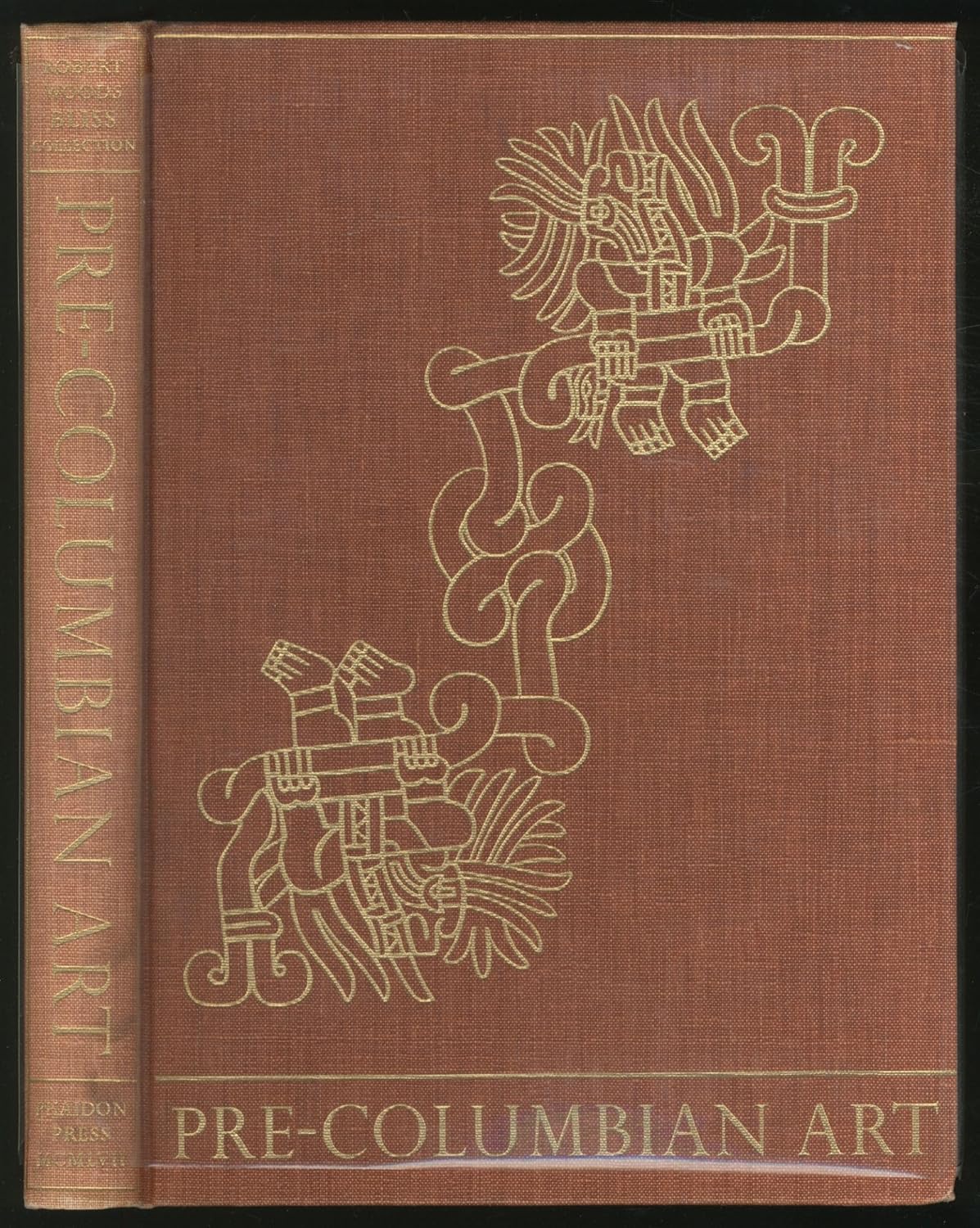
Robert Woods Bliss Collection: Pre-Columbian Art
Book
Lothrop, S.K., Foshag, W.F. and Mahler, J. (1957) Robert Woods Bliss Collection: Pre-Columbian Art. London, Phaidon, 287 pp.
Record No. 28552  |  Sinkankas/Born No.: 4047; NIB  |  RWHL*
Sinkankas: This splendidly illustrated and authoritative work is fundamentally the annotated catalog of the Robert Woods Bliss collection placed on exhibit-loan in the National Gallery of Art, Washington, DC, from 1947 onwards. It is introduced by articles as follows: “Cultures and styles,” and “New World metallurgy,” by Lothrop, “Mineralogical attributions,” by Foshag, and “Textiles,” by Mahler. The collection includes terra cottas, gold objects, fabrics, and stone sculptures, especially a large number of outstanding jadeite carvings, many illustrated in the excellent photographs which form so valuable a feature of this book. Foshag’s article deals mainly with jades, that is, jadeite, diopside-jadeite, chloromelanite, and nephrite, but also discusses turquoise, obsidian, emerald, prehnite, soapstone, rock crystal, onyx marble, and several types of compact rock. In preparation for this work, Foshag (pers. comm. 1955–6), commenced his detailed mineralogical studies on Central American stone artifacts and here provides a valuable contribution to same. A popular guide: “Indigenous art of the Americas, Collection of Robert Woods Bliss,” by the Gallery, 1947, 159 p, many photos (col), and fold sketch map, was sold by the Gallery (see BLISS, R. W.).

The emerald from Habachtal

Journal Article
Gübelin, E.J. (1956) The emerald from Habachtal. Gems & Gemology, Vol. 8, No. 10, Summer, pp. 295–309.
Record No. 2045  |  ISBN/ISSN: 0016626X  |  Sinkankas/Born No.: 2563  |  RWHL*

Green Fire

Book
Rainier, P.W. (1953) Green Fire. New York, Bantam Books, 274 pp.
Record No. 169  |  Sinkankas/Born No.: 5316  |  RWHL*
These memoirs of Peter W. Rainier document his time in Colombia from the late 1920s throughout the 1930s. He managed and developed the world's two largest emerald mines, Chivor and Muzo. Along the way, he encountered bandits, prospects for a gold mine, and yellow fever. He and his wife also began Colombia's first commercial tea plantation.

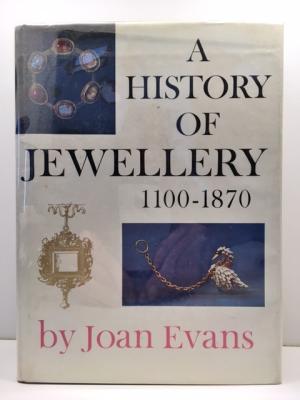
A History of Jewellery 1100–1870

Book
Evans, J. (1953) A History of Jewellery 1100–1870. London, Faber & Faber, 240 pp., many plates
Record No. 121  |  Sinkankas/Born No.: NIS  |  RWHL*
The history of jewelry has closely paralleled the history of mankind. Used as amulets to protect against harm and worn for ceremonial occasions, jewels also signaled wealth, power, and position. This engrossing scholarly study by a noted English antiquarian offers a splendid account of jewelry styles over a 700-year period — from the early Middle Ages and Gothic period, through the Renaissance as well as the seventeenth, eighteenth, and nineteenth centuries. Drawing on a number of vital sources — museums and private collections, evidence given by portrait painters, surviving designs for jewels and others — the author gives us not only a comprehensive chronicle of the jewels themselves but also their relation to costume and fashion and their reflection of changing social values. Enhancing the meticulously detailed narrative are 400 photographs and illustrations depicting, among scores of other pieces, a gold heart-shaped brooch inscribed with You are my earthly joy," dating from the fifteenth century; a gold brooch set with sapphires, emeralds, and pearls; a diamond and topaz necklace (c. 1760); a gold padlock, set with cornelian and pearls (c. 1800); a gilt bronze clasp (c. 1200); the silver Loch Buy Brooch, set with rock crystals and pearls (sixteenth century), and a thirteenth-century reliquary pendant of the Holy Thorn. For anyone interested in the long and fascinating history of handcrafted jewelry, here is a superb sourcebook of extremely rare ornamentation, a rich and detailed study that will also appeal to fashion and costume historians, collectors, and lovers of antiques."

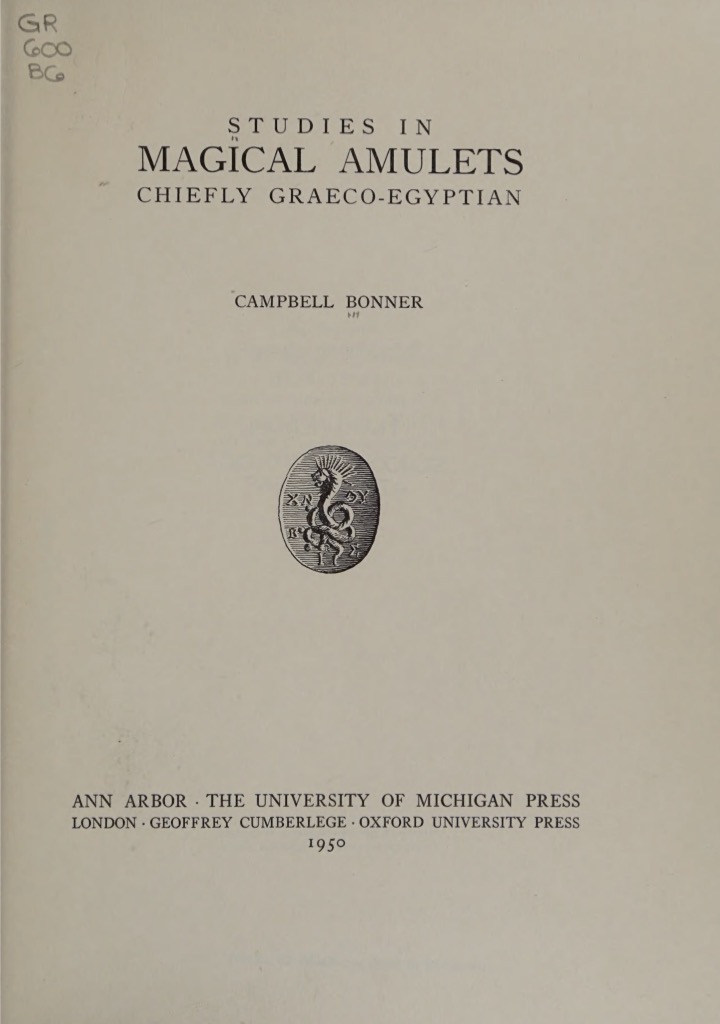
Studies in Magical Amulets, Chiefly Graeco-Egyptian
Book
Bonner, C. (1950) Studies in Magical Amulets, Chiefly Graeco-Egyptian. Ann Arbor, University of Michigan Press
Record No. 26859  |  Sinkankas/Born No.: 771  |  RWHL*
Sinkankas: Scholarly, virtually unique in its thesis, this work pursues and documents the argument that many engraved gems of antiquity were actually magical amulets and not Gnostic or religious gems as formerly believed by a number of authorities—for example, C.W. King, whose Gnostics and Their Remains, 2nd edition (1887), receives sharp criticism. Of this work, the author further states that “taken as a whole… [it] is a book from which a modern investigator can draw little profit” (p. 45). The introduction discusses amulets and their supposed virtues in various cultures, offers remarks on the materials from which they were made, and in the main text, systematically surveys the classes of amulets believed to confer protection to the wearer in regard to health, personal attractiveness, and beyond. The text is richly detailed and abundantly footnoted; this work is referenced in later treatises on engraved gems and amulets.

The diagnostic importance of inclusions in gemstones

Journal Article
Gübelin, E.J. (1950) The diagnostic importance of inclusions in gemstones. Journal of Gemmology, Vol. 2, No. 7, July, pp. 281–303.
Record No. 2037  |  ISBN/ISSN: 221252  |  RWHL*

Esmeraldas de Colombia

Emeralds of Colombia
Book
Muñoz, G.O. and Barriga Villalba, A.M. (1948) Esmeraldas de Colombia. [Emeralds of Colombia] Bogotá, Banco de la República, 133 pp.
Record No. 5443  |  Sinkankas/Born No.: 4650; NIB  |  Language: in Spanish  |  RWHL*
Otero Muñoz and Barriga Villalba provide a combined historical and scientific study of Colombia’s emeralds, published by the Banco de la República on its twenty-fifth anniversary. The first part, “Leyenda e Historia,” by Otero Muñoz, traces the history of the Colombian emerald deposits, particularly Muzo, from pre-Hispanic occupation and the Spanish conquest through successive systems of government and private exploitation, incorporating accounts of the Muzo people, early mining, and the later administration of the deposits. The second part, “Estudio Científico,” by Barriga Villalba, examines Colombian emeralds mineralogically and crystallographically, with discussion of their physical properties, crystal forms, internal structure, geological occurrence, and the Muzo workings. Of particular gemological interest is his treatment of unusual trapiche emeralds, which he interpreted as aragonite-type cyclic twins, and his observations on the internal gem-quality cores of Muzo crystals. Illustrated with photographs, diagrams, and a geological sketch of the Muzo mine, the volume is an important mid-twentieth-century synthesis of the history, geology, mineralogy, and exploitation of Colombian emeralds.

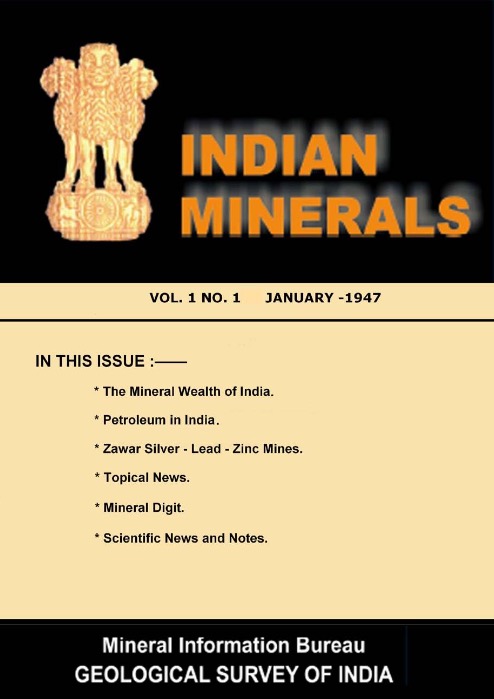
Emeralds in Mewar

Journal Article
Crookshank, H. (1947) Emeralds in Mewar. Indian Minerals, Vol. 1, No. 1, January, pp. 28–30.
Record No. 26339  |  Sinkankas/Born No.: NIS/NIB  |  RWHL*
During World War II, an intensive search was conducted in Rajputana for high-quality beryl and mica. Among those actively involved was Sir Bhagchand Soni, a prominent banker and financier in Ajmer, who financed prospecting parties across a considerable area in north-western Mewar. Although both mica and beryl were found, the deposits ultimately proved commercially disappointing. However, prospectors sent some small green beryl crystals to Sir Bhagchand, who forwarded them to the Mica Production Section of the Geological Survey of India in Ajmer for analysis. While the report could have dismissed the crystals as ordinary green beryl of little value unless found in large quantities, it happened that the Officer-in-Charge had recently seen boxes of crude Russian emeralds unpacked by a major lapidary firm in Jaipur. Recognizing that the Mewar crystals matched the quality of the Russian specimens, he identified them as beryl of the emerald variety and recommended that Sir Bhagchand secure a mining lease for the area. This is the first documented occurrence of emerald in India and thus an important paper.

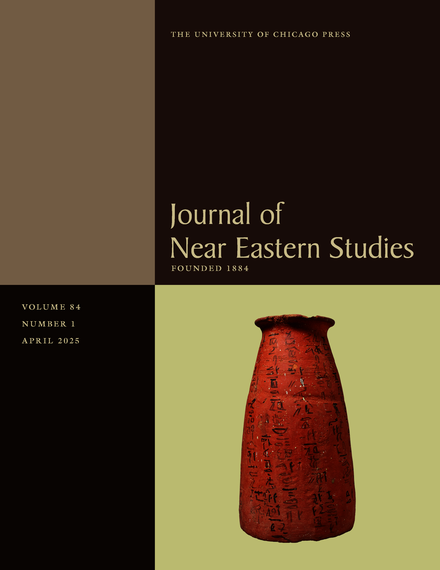
The origin of the term mīnā and its meanings
Journal Article
Aga-Oglu, M. (1946) The origin of the term mīnā and its meanings. Journal of Near Eastern Studies, Vol. 5, No. 4, pp. 241–256.
Record No. 28076  |  DOI: https://doi.org/10.1086/370797  |  Sinkankas/Born No.: NIS/NIB  |  RWHL*
Excellent review of the word “mīnā” and how it is related to the word “emerald” in Persian languages and how it is derived from the original meaning “paradise”. Also details mythical folklore of how emerald was formed.

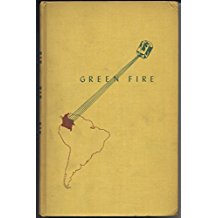
Some historical notes on spectacles and on beryllus
Journal Article
Doesschate, G.T. (1946) Some historical notes on spectacles and on beryllus. British Journal of Ophthalmology, Vol. 30, No. 11, pp. 660–664.
Record No. 27928  |  Sinkankas/Born No.: NIS/NIB  |  RWHL*
In classical literature, mention is sometimes made of the magnifying power of transparent media, but it is improbable that magnifying glasses were known in Europe before the 13th century. Ptolemy, who lived at Alexandria around A.D. 150, gives some details concerning lenses and discusses the course of rays of light passing from one medium into another, but as the last part of his famous treatise on optics is lost, one cannot tell how extensive his knowledge was. It was the Arab Alhazen (circa A.D. 1000) who wrote on magnifying glasses. He describes how objects, when seen through a segment of a sphere with an index of refraction greater than that of the surrounding air (“grossius aere”), appear larger than they are in reality. This optical effect of lenses is not described in European literature before the 13th century. It is generally held that Roger Bacon (c. 1214–1294) was the first European scholar to mention the practical utility of lenses. In his Opus maius (written 1266–1267), he describes how to magnify writing by placing a segment of a glass sphere on the text with its plane side down. But, as shown elsewhere, there was another Englishman, Robert Grosseteste (1175?–1253), Bishop of Lincoln, who anticipated Bacon. In his treatise De iride seu de iride et speculo there is a passage which can be translated thus: “…it will be perfectly clear… how far and how large and in what shape a body, of which the distance, size, and place are known, will appear to the eye, when there is a diaphanous body, of which the distance, size, and place are also known; and it is clear in what manner transparent bodies must be moulded, so that they may receive the visual rays, emanating from the eye, under an angle as wide as they wish it, and how they may collect the rays on the visible objects, whether those objects are big or small, far or near; and so they may see each visible object wherever and in any size they wish; and they may operate, so that very long objects appear to be short and, in contrast, that very small and far objects are clearly visible.” As far as I know, Robert Grosseteste was the first scholar in Western Europe who wrote on optics, and so he deserves well of science. There was a third Englishman who had great merits in connection with optics—John Peckham (1228–1294), Archbishop of Canterbury, renowned for Perspectiva communis, a book which appeared in subsequent centuries in several printed editions.

Green Fire

Book
Rainier, P.W. (1942) Green Fire. Garden City, NY, Blue Ribbon Books, 216 pp.
Record No. 1959  |  RWHL*
These memoirs of Peter W. Rainier document his time in Colombia from the late 1920s throughout the 1930s. He managed and developed the world's two largest emerald mines, Chivor and Muzo. Along the way, he encountered bandits, prospects for a gold mine, and yellow fever. He and his wife also began Colombia's first commercial tea plantation.

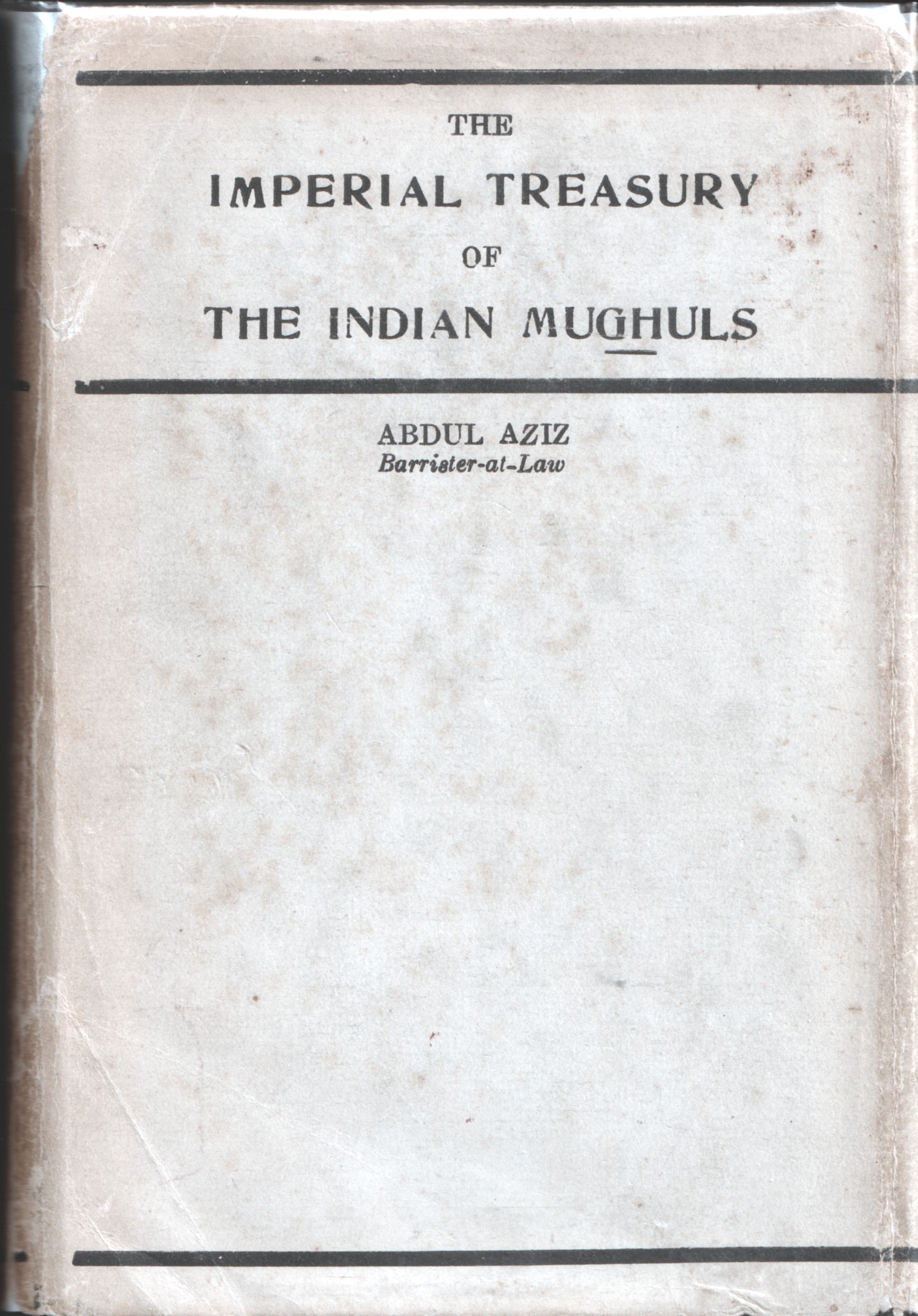
The Imperial Treasury of the Indian Mughuls

Book
Aziz, A. (1942) The Imperial Treasury of the Indian Mughuls. Lahore, privately published, 572 pp.
Record No. 398  |  RWHL*
Aziz’s The Imperial Treasury of the Indian Mughuls examines the extraordinary wealth accumulated by the Mughal emperors and the organisation and contents of the imperial treasury. Drawing on contemporary chronicles, travellers’ accounts and other historical sources, the work describes the vast quantities of gold, silver, jewels and precious stones held by the Mughal court, together with jewelled ornaments, ceremonial objects and other valuables. Particular attention is given to diamonds, rubies, emeralds, pearls and other gems, including celebrated stones associated with the emperors and the ways in which such treasures were acquired, valued, stored and displayed. The study also places the treasury within the wider setting of Mughal court life, where gemstones and jewellery served not merely as stores of wealth but as important symbols of sovereignty, rank and imperial magnificence.

Smaragde unter dem Urwald: Meine Entdeckungs- Und Erlebnisreisen in Latein-Amerika

Smaragde unter dem Urwald: Meine Entdeckungs- Und Erlebnisreisen in Latein-Amerika
Book
Klein, F. (1941) Smaragde unter dem Urwald: Meine Entdeckungs- Und Erlebnisreisen in Latein-Amerika. [Smaragde unter dem Urwald: Meine Entdeckungs- Und Erlebnisreisen in Latein-Amerika] Berlin, Oswald Arnold Verlag, 285 pp.
Record No. 4223  |  Sinkankas/Born No.: 3456; NIB  |  Language: in German  |  RWHL*
Klein recounts his travels and prospecting adventures in Latin America in search of gemstones, with particular emphasis on the emerald deposits of Colombia. Written as a personal travel and exploration narrative rather than a technical mineralogical treatise, the book describes the difficulties of reaching remote mining districts, local mining conditions, dealings with miners and traders, and the practical realities of searching for emeralds in tropical terrain. Of particular importance is his account of the Chivor emerald region and his discovery of the celebrated approximately 650-carat emerald crystal that he named “Patricius.” The volume combines firsthand observations on emerald mining and the gem trade with descriptions of landscape, travel, and encounters in Latin America, and is illustrated with numerous photographic plates. It is therefore valuable both as a contemporary account of Colombian emerald mining and as a record of the activities of an Idar-Oberstein gem cutter and prospector working in South America before the Second World War.

Exploring the Literature of Emerald

Emerald literature spans gemology, mineralogy, deposits, identification, treatments, synthesis, history and the gem trade, with important sources covering deposits around the world.

For a curated guide to this subject, read Green Fire — Lotus Gemology's Guide to the Literature of Emerald.

About Four Treasures

Four Treasures is Lotus Gemology's freely accessible gemological reference database. Use the full database to search by author, title or keyword and explore literature on gemology, mineralogy, jewelry and related fields. Where available, hyperlinks on titles may lead directly to the full publication.

Search the Complete Four Treasures Database