Emerald Bibliography

Emerald Bibliography

Explore books, articles and historical sources on emerald in Four Treasures, the Lotus Gemology reference database. This bibliography brings together matching records from the collection, with publication details, abstracts and cover images where available.

Emerald References

The list below matches the terms emerald or emeralds in the database's searchable fields. Some references discuss emeralds as part of a broader subject.
281–300 of 851 matching references

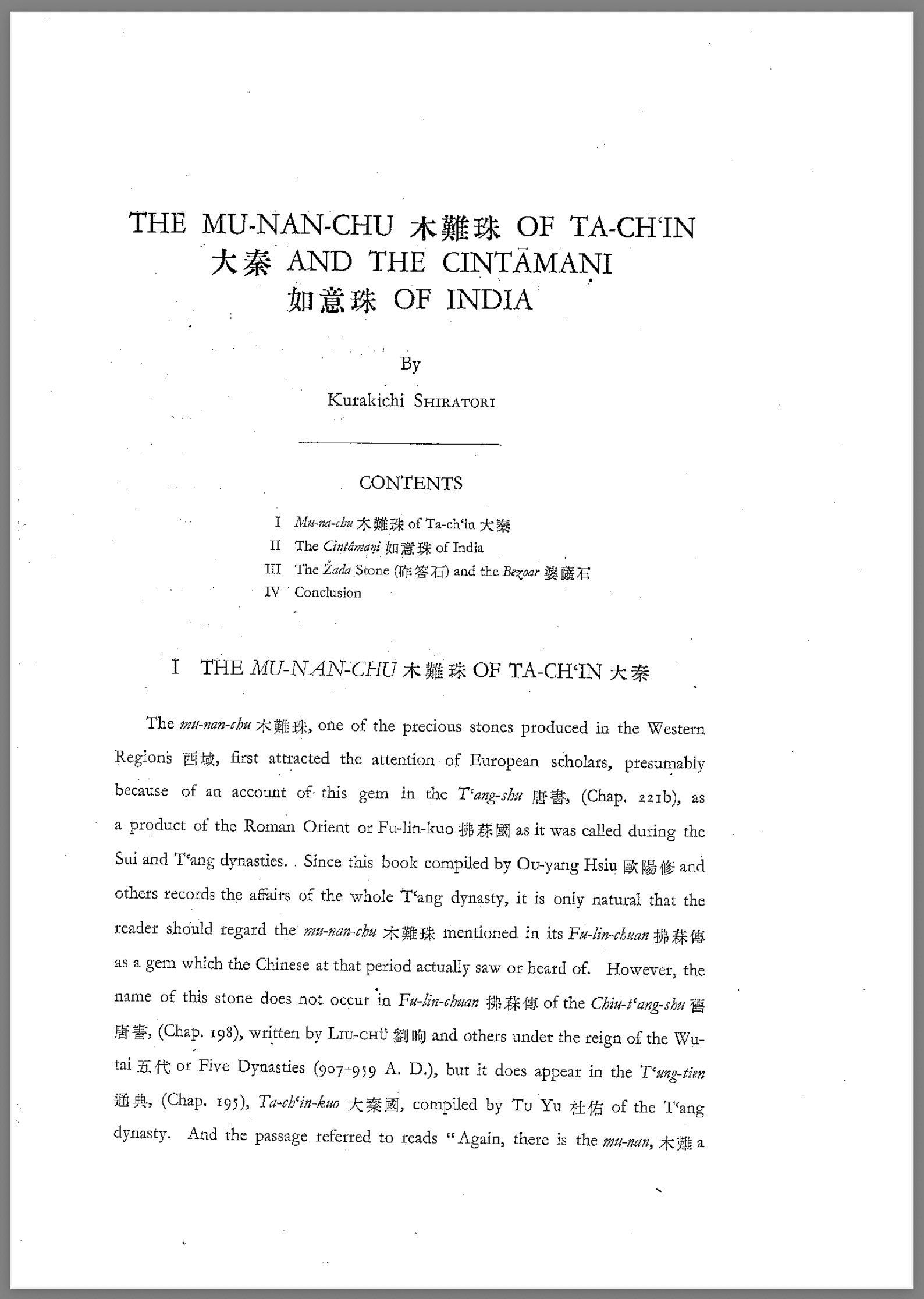
The Mu-nan-chu 木難珠 of Ta-chin 大秦 and the Cintāmaṇi 如意珠 of India

Journal Article
Shunatori, K. (1939) The Mu-nan-chu 木難珠 of Ta-chin 大秦 and the Cintāmaṇi 如意珠 of India. Memoirs of the Research Department of the Toyo Bunko, Vol. 11, pp. 1–54.
Record No. 28074  |  Sinkankas/Born No.: NIS/NIB  |  Language: in English  |  RWHL*
The mu-nan-chu 木難珠, one of the precious stones produced in the Western Regions 西域, first attracted the attention of European scholars, presumably because of an account of this gem in the T’ang-shu 唐書, (Chap. 221b), as a product of the Roman Orient or Fu-lin-kuo 拂菻國 as it was called during the Sui and T’ang dynasties. Since this book compiled by Ou-yang Hsiu 歐陽修 and others records the affairs of the whole T’ang dynasty, it is only natural that the reader should regard the mu-nan-chu 木難珠 mentioned in its Fu-lin-chuan 拂菻傳 as a gem which the Chinese at that period actually saw or heard of. However, the name of this stone does not occur in Fu-lin-chuan 拂菻傳 of the Chiu-t’ang-shu 舊唐書, (Chap. 198), written by Liu-chü 劉恕 and others under the reign of the Wu-tai 五代 or Five Dynasties (907–959 A.D.), but it does appear in the T’ung-tien 通典, (Chap. 195), Ta-ch’in-kuo 大秦國, compiled by Tu Yu 杜佑 of the T’ang dynasty. And the passage referred to reads “Again, there is the mu-nan, 木難 a green stone which is a condensation of the saliva formed in the beak of the chin-chih bird 金翅鳥. The natives value it.” Now if Fu-lin and Ta-ch’in referred at the same time to one and the same province, no doubt whatever would arise. However, if there should be any difference in the times or regions the two terms referred to, it would seem more proper to consider the mu-nan-chu 木難珠 a product of Ta-ch’in rather than one of Fu-lin. According to my research, during the earlier years of the Hou-han 後漢 dynasty and down to the later period of the Tung-Chin 東晉, the Roman Orient whose centre was Alexandria in Egypt, extended to the extreme east of the Western Regions, and was known by the Chinese term Ta-ch’in 大秦. Towards the beginning of the Six Dynasties Ta-ch’in province had become a kind of fairy-land and even its locality had been lost sight of. Then a line of communication was again opened to that region and its proper name came to be accurately known as Fu-lin. In the documents of the Six Dynasties, the name was spelt Pu-lan 普蘭, Fu-lu-lin 伏盧尼, Fan-lin 泛淋, or Fu-lin 弗林, but in the Sui and T’ang dynasties the name came to be spelt Fu-lin 拂菻 invariably.
Das kleine Buch der Edelsteine

Das kleine Buch der Edelsteine

The Little Book of Gemstones
Book
Lang, H. and Schnack, F. (1938) Das kleine Buch der Edelsteine. [The Little Book of Gemstones] Leipzig, Insel-Verlag, 40 pp.
Record No. 29423  |  Sinkankas/Born No.: 3766; NIB  |  Language: in German  |  RWHL*
Sinkankas: Beautiful watercolor drawings by Lang, a professional artist, showing cut and/or rough gemstones, and forming the main attraction of this booklet. The text by Schnack is brief and stresses attraction & lore of gems. Rev. B.W. Anderson, The Gemm., 8, 94, 1937, 164–5.

Informe geológico sobre la mina de esmeraldas de Muzo (Presentado por el autor al Gobierno Nacional en el año de 1916)

Geological report on the Muzo emerald mine (Presented by the author to the National Government in 1916)
Book Section
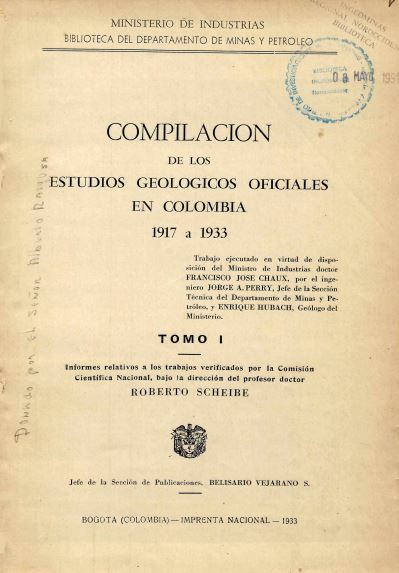
Scheibe, R. (1933) Informe geológico sobre la mina de esmeraldas de Muzo (Presentado por el autor al Gobierno Nacional en el año de 1916). [Geological report on the Muzo emerald mine (Presented by the author to the National Government in 1916)] In: Compilacion de los Estudios Geologicos Oficiales en Colombia 1917 a 1933, Bogotá: Imprenta Nacional, Vol. 1, No. 4 [incorporates ‘Las Llamadas Maclas Multiples de Esmeralda de Muzo y sus Anomalias Opticas’ by F. Bernauer en Charlottenburg and Scheibe’s ‘Informe Sobre las Esmeraldas de Nemocon’] , pp. 169–228.
Record No. 4217  |  Sinkankas/Born No.: 5780; NIB  |  Language: in Spanish  |  RWHL*
Scheibe presents the results of his 1916 geological investigation of the Muzo emerald mine, describing the regional geology, structure of the deposit, emerald-bearing veins, associated minerals, and contemporary mining operations. The emerald deposits occur in black Cretaceous shales traversed by mineralized veins and fractures containing calcite, dolomite, pyrite, albite, quartz, and other minerals. Scheibe examines the relationships between these veins and the surrounding rocks and discusses the processes responsible for emerald formation, including alteration and mineralization of the country rock. Considerable attention is given to the occurrence and distribution of emerald within the workings, the characteristics of productive and barren veins, and the practical implications of the geology for exploration and mining. The volume also incorporates F. Bernauer’s study of the unusual multiple or mimetic emerald crystals from Muzo and their optical anomalies, as well as Scheibe’s report on emerald occurrences at Nemocón, extending the discussion beyond Muzo to the relationship between emerald mineralization and Colombia’s salt-bearing formations. Together these studies constitute an important early scientific investigation of Colombian emerald geology, mineralogy, crystallography, and genesis.
The Chivor-Somondoco emerald mines of Colombia
The Chivor-Somondoco emerald mines of Colombia

Journal Article
Rainier, P.W. (1931) The Chivor-Somondoco emerald mines of Colombia. Transactions, AIME, Vol. 96, pp. 204–223.
Record No. 1958  |  RWHL*

Minas de esmeraldas, apuntes históricos

Emerald mines, historical notes
Journal Article
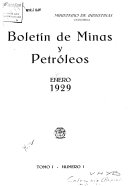
Codazzi, R.L. (1929) Minas de esmeraldas, apuntes históricos. [Emerald mines, historical notes] Boletín de Minas y Petróleos, Vol. 1, No. 6, pp. 114–143, 5 maps, 2 sketches.
Record No. 16987  |  Sinkankas/Born No.: 1398; NIB  |  Language: in Spanish  |  RWHL*
Codazzi provides a substantial historical, geological, mineralogical, and practical account of Colombia’s emerald deposits, concentrating particularly on Muzo but also treating Coscuez, La Chapa, Tambrias, Alumbral, Camancha, Chivor, and the wider Somondoco region. He begins with the Spanish attempts to penetrate Muzo territory from 1539 onward, the discovery of emerald-bearing veins at Itoco in 1564, subsequent colonial exploitation, and the renewed demand following the early twentieth-century “green fever.” He reviews earlier investigations by Villegas y Avendaño, d’Elhúyar, José Ignacio París, Lewy, Roberto Scheibe, and Joseph E. Pogue, regarding Scheibe’s geological work as particularly important. The western Boyacá deposits are described as occurring principally in black bituminous shales of the Villeta formation, cut by veins composed chiefly of calcite, dolomite, pyrite, and quartz, with emerald accompanied by parisite, fluorite, apatite, albite, barite, and numerous other minerals. Codazzi describes in detail the miners’ characteristic units and terminology, including the cambiado, cama, cenicero, guarruceros, and jardín, and discusses three successive generations of vein mineralization. Following Scheibe and Pogue, he interprets the Muzo emerald mineralization as pneumatolytic and related to deep-seated igneous activity, citing albitization, pegmatitic veins, feldspathization, and contact minerals as evidence. A lengthy mineralogical section describes emerald and its associated minerals, including crystallography, physical properties, occurrence, and chemical analyses; Muzo emeralds are noted for their intense green color, with the finest commercial grade termed gota de aceite, while Chivor stones commonly have a more bluish tint. Codazzi distinguishes the geology of Chivor from that of Muzo and Coscuez, describing emeralds at Chivor in association with albite, barite, and quartz near the contact between conglomerate and overlying black siliceous schists. The article concludes with a valuable description of mining practice at Muzo: the deposits are worked by open cuts, water is used to remove waste rather than to wash emerald-bearing earth, the veins are broken and taken to the machacadero, and emeralds are principally recovered by careful dry sorting. The five maps and sketches include plans of the Mina Real de Muzo, Coscuez, La Chapa, Peña Blanca–Tambrias, and Chivor.
The Chivor-Somondoco Emerald Mines of Colombia, with Appendixes by Charles Mentzel and C. Kendrick MacFadden
The Chivor-Somondoco Emerald Mines of Colombia, with Appendixes by Charles Mentzel and C. Kendrick MacFadden

Journal Article
Rainier, P.W. (1929) The Chivor-Somondoco Emerald Mines of Colombia, with Appendixes by Charles Mentzel and C. Kendrick MacFadden. The American Institute of Mining, Metallurgical, and Petroleum Engineers, Class H, Non-metallic Minerals, No. 11, Vol. 96, 21 pp..
Record No. 4206  |  Sinkankas/Born No.: 5312  |  RWHL*
The Chivor emerald field is situated on the eastern slope of the Andes in the Department of Boyacá, at an elevation of about 8000 ft. above sea level. It overlooks the Llanos (plains) of the Orinoco and is watered by many streams flowing into the Rio Meta, the Orinoco's largest tributary. The Rio Meta is navigable from the Orinoco to a point within about 50 miles of the Chivor district and may eventually prove to be the reasonable outlet for the future development of this part of the country. The topography of the district is extremely rugged and mountainous (Fig. 1), the difference in elevation between two points on a mining claim 1 km. square being sometimes as much as 4000 ft. The ground is covered with dense forest growth and the available timber is suitable and sufficient for mining purposes, but it is becoming gradually depleted by Indian clearings as the country around the mines becomes settled. The many streams combined with the rough topography give good possi-bilities for hydroelectric power. The center of population nearest to Chivor is Bogotá, the capital of the republic and a city of some 300,000 inhabitants; the distance is two and one-half days' travel. The first stage of the journey from Bogota, is accomplished by rail to Chocont·, some 4 hr. travel. From Chocont· the journey is made in the saddle, one night being spent in Guateque. The latter is a small town and the nearest post office to the mines, being some 10 hr. ride distant. The roads are mere bridle paths, in parts hazardous and almost impassable in the wet season. All supplies brought to the mines, other than those produced locally, are carried by pack mule; mule freight from Chocontá costs 3 centavos1 per pound. The climate of the Chivor district is healthful and bracing. The wet season begins in March and concludes in November, the remaining months being dry. The annual precipitation is about 150 in. The temperature throughout the year is nearly constant, varying from about 45∞ F. to about 65∞ F. shade temperature. The rains are cold and unpleasant, and for the greater part of each day in the wet season the country is shrouded in dense mist. A fire can with comfort be kept burning in a living room all the year round.

Die Edelsteinindustrie Siams

The gemstone industry of Siam
Journal Article
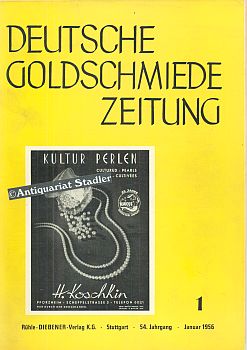
Eppler, W.F. (1928) Die Edelsteinindustrie Siams. [The gemstone industry of Siam] Deutsche Goldschmiede-Zeitung, Vol. 31, No. 7, 11 February, pp. 68–70.
Record No. 713  |  Sinkankas/Born No.: NIS/NIB  |  Language: in German  |  RWHL*
Eppler gives a detailed contemporary account of the gemstone cutting industry of Siam, centered in Bangkok’s Sampeng district, prompted particularly by the excellent cutting and polish seen on blue zircon exported from Siam. He describes the complete cutting process, from preforming rough stones with carborundum to faceting on small lead laps and final fine grinding and polishing on steel laps charged with diamond powder. He emphasizes the Siamese use of a clamp resembling that employed by diamond cutters, which permits more accurate placement and flatter, more symmetrical facets than the largely freehand German method. [68] Eppler describes in detail the preparation of the steel lap and the use of only about 0.30–0.40 carat of diamond powder, compared with as much as six carats on the copper laps then used in the German colored-stone industry. Separate grinding and polishing rings are maintained on the steel lap, with a diamond “Anreiber” used repeatedly to work and apparently further reduce the diamond powder; Eppler attributes the exceptionally fine Siamese polish partly to this procedure. He considers the Siamese method faster, more economical, and capable of producing flatter facets and a superior polish, explicitly urging the German gemstone industry to improve its techniques. [69–70] He also describes heat treatment of zircon in Bangkok, where stones are heated in a crucible over charcoal to produce colorless zircon, and illustrates the simple furnace employed. Zircon deposits are placed in the old gem-producing province of Chantabun (Chanthaburi), with newer mines thought to extend northeastward toward the French frontier near Pailin. Eppler further reports sapphire cutting in Bangkok, particularly emerald cuts intended for the North American market, and states that sapphires from the vicinity of Kanburi, west of Bangkok, may reach 15–20 ct and commonly possess a rich cornflower-blue color; he regarded their color as generally superior to that of Ceylon sapphires. He also personally records the occurrence in Siam of spinel, tourmaline, rock crystal, amethyst, and fluorite, although specimens he saw were unsuitable for the gem trade. [70] While it has long been believed that a Dutch diamond cutter named Zerner first brought modern cutting to Thailand c. WWII, the photos of Thai cutting equipment here predate Zerner and so would suggest otherwise.

Persian Literature: A Bio-bibliographical Survey
Book
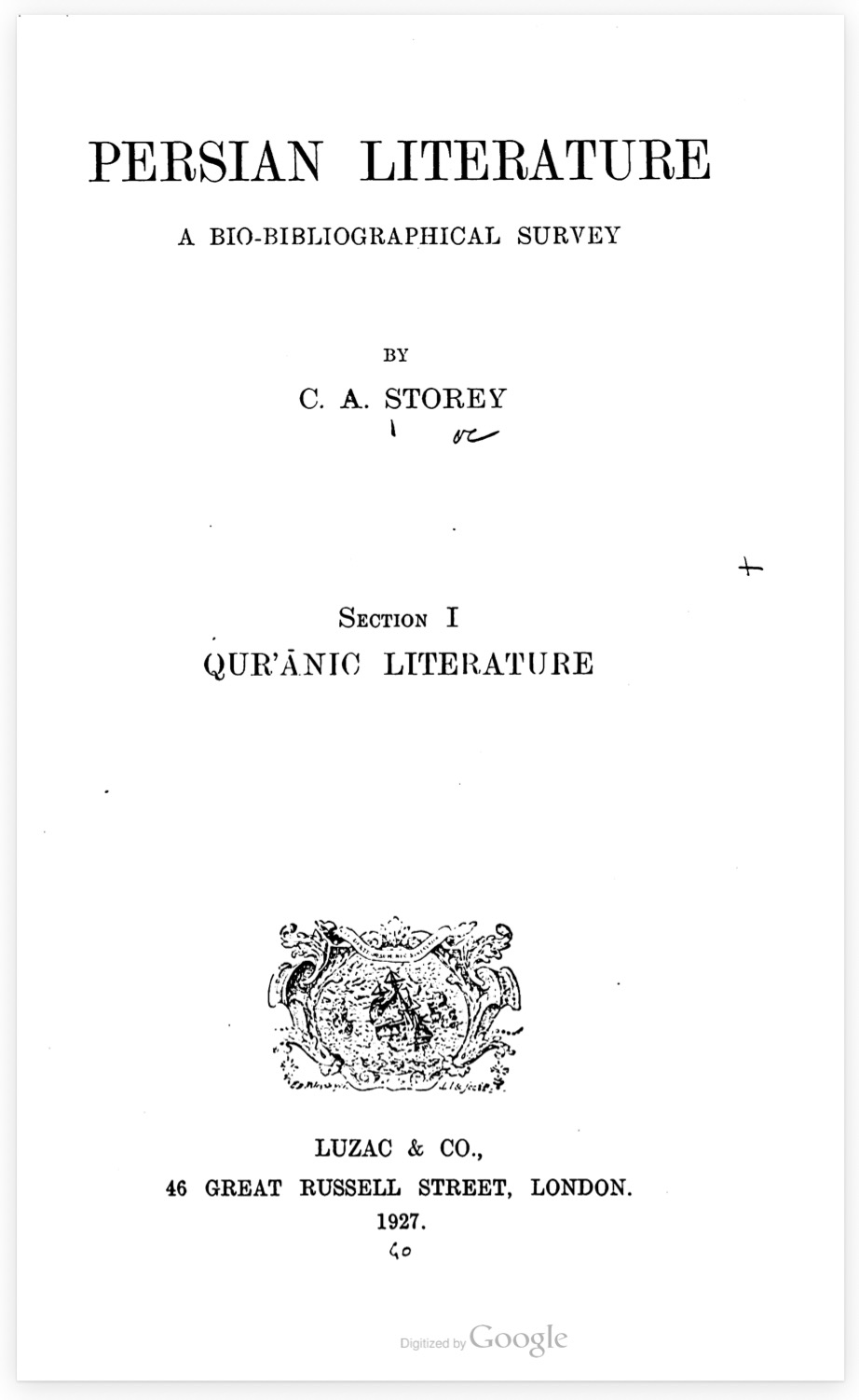
Storey, C.A. and de Blois, F. (1927) Persian Literature: A Bio-bibliographical Survey. London, Luzac & Co., 6 Vols.
Record No. 29518  |  Sinkankas/Born No.: NIS/NIB  |  RWHL*
Storey’s Persian Literature: A Bio-bibliographical Survey is a monumental reference work devoted to Persian writings and their authors, arranged principally by subject and providing biographical information, titles and descriptions of works, manuscript locations, editions, translations, and secondary literature. Rather than a history of Persian literature in narrative form, it functions as an extensive bibliographical guide to the surviving Persian literary tradition, including history, biography, geography, travel, mathematics, astronomy, medicine, the natural sciences, religion, poetry, and related subjects. Of particular relevance to the history of gemology are its references to Persian scientific and mineralogical literature, including works dealing with precious stones, minerals, metals, and associated technical traditions, and its documentation of manuscripts and editions through which these texts are known. The survey is especially valuable for identifying variant titles, authorship and chronology, locating manuscripts in European and Asian collections, and tracing earlier scholarship. Originally begun by Charles Ambrose Storey and subsequently continued and substantially expanded by François de Blois, it remains an important bibliographical tool for the study of Persian manuscripts and the transmission of scientific and technical literature. The entire work is available online at Storey Online.

Native American jades

Journal Article
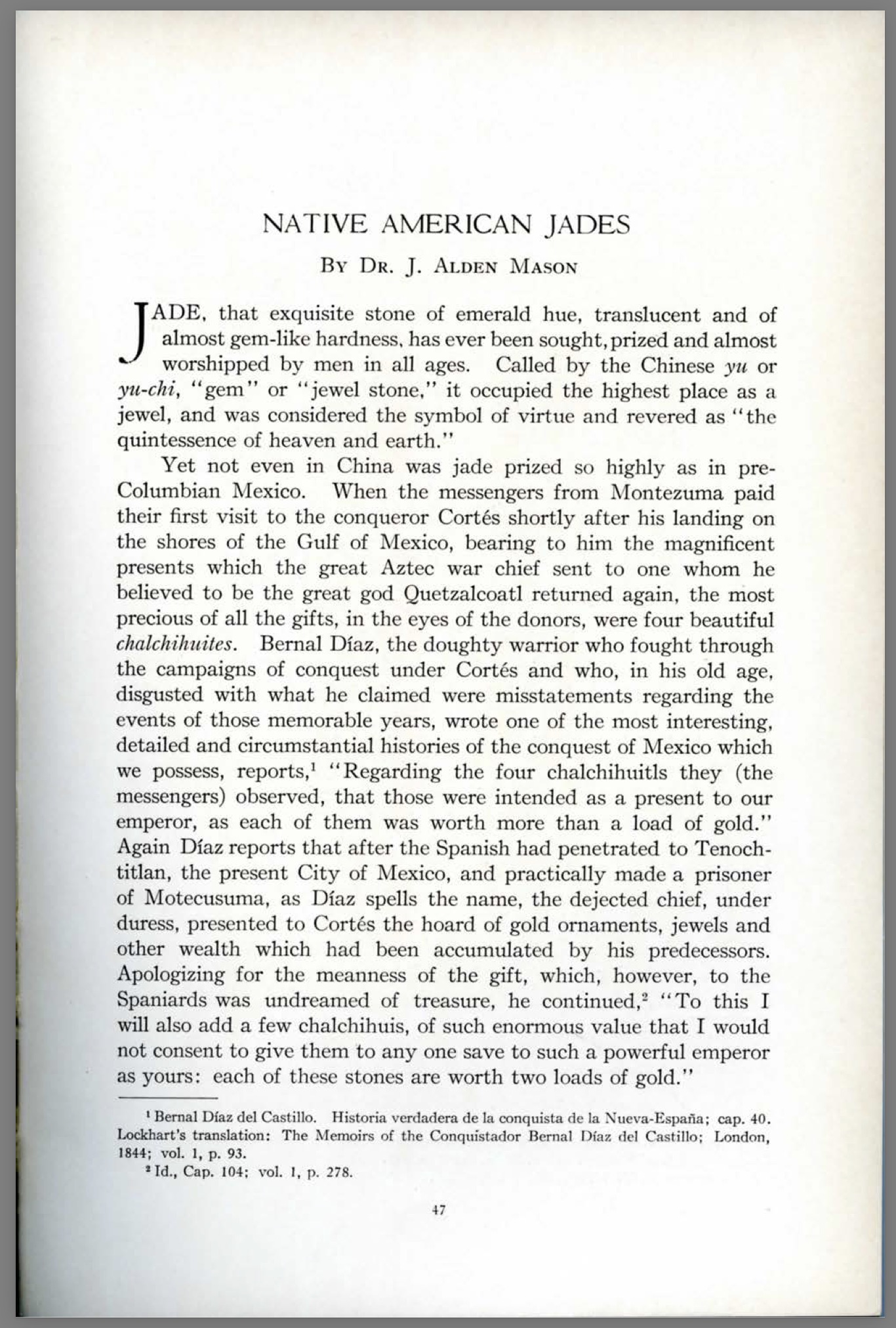
Mason, J.A. (1927) Native American jades. Museum Journal, Vol. 18, No. 1, pp.  47–73.
Record No. 8018  |  Sinkankas/Born No.: NIS/NIB  |  RWHL*
JADE, that exquisite stone of emerald hue, translucent and of almost gem-like hardness, has ever been sought, prized and almost worshipped by men in all ages. Called by the Chinese yu or yu-chi, “gem” or “jewel stone,” it occupied the highest place as a jewel, and was considered the symbol of virtue and revered as “the quintessence of heaven and earth.” Yet not even in China was jade prized so highly as in pre-Columbian Mexico. When the messengers from Montezuma paid their first visit to the conqueror Cortés shortly after his landing on the shores of the Gulf of Mexico, bearing to him the magnificent presents which the great Aztec war chief sent to one whom he believed to be the great god Quetzalcoatl returned again, the most precious of all the gifts, in the eyes of the donors, were four beautiful chalchihuites.

Die Smaragdlagerstätte von Muzo (Kolumbien) und ihre nahere Umgebung
The emerald deposit of Muzo (Colombia) and Its immediate surroundings
Journal Article
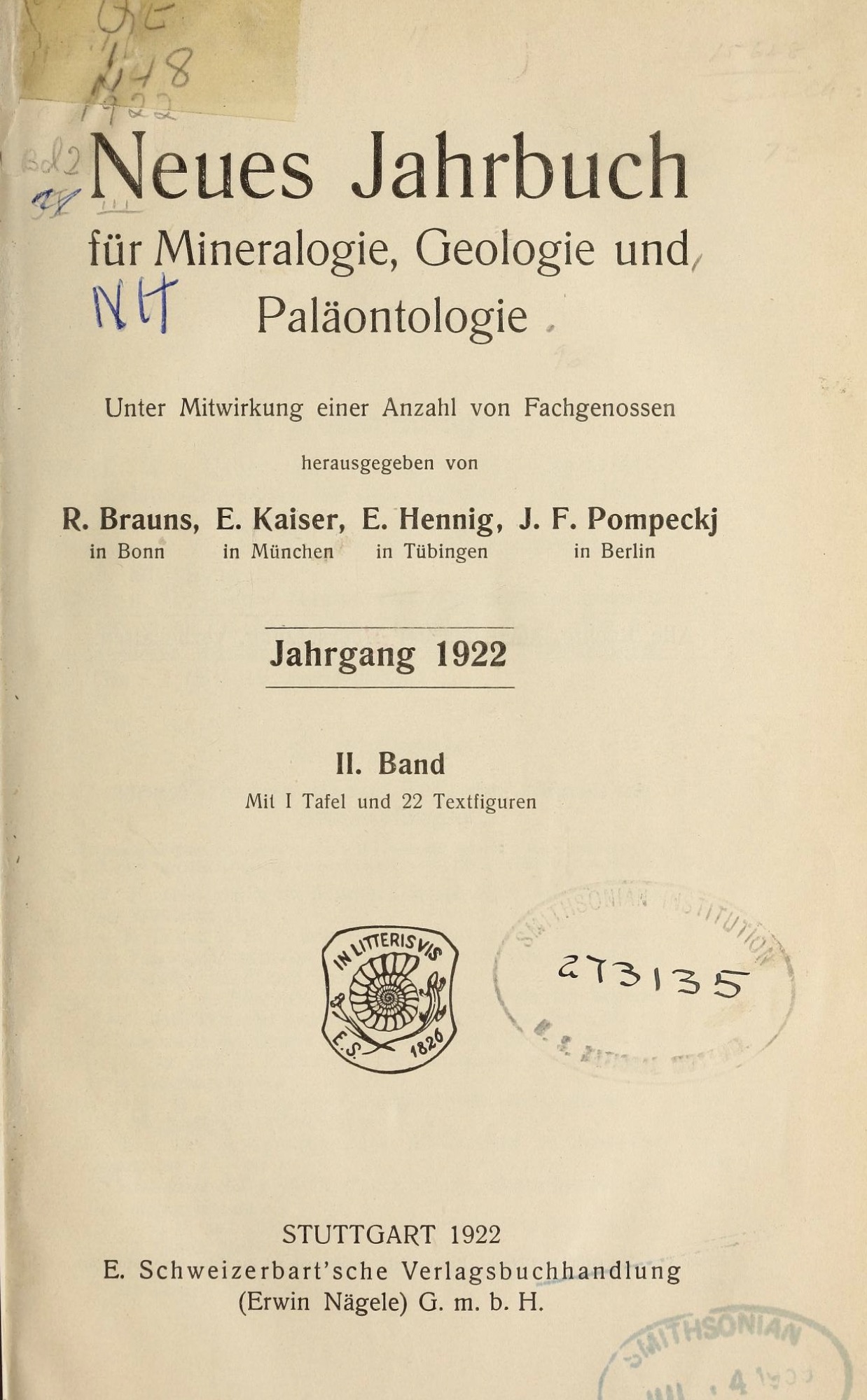
Scheibe, R. (1926) Die Smaragdlagerstätte von Muzo (Kolumbien) und ihre nahere Umgebung. [The emerald deposit of Muzo (Colombia) and Its immediate surroundings] Neues Jahrbuch für Mineralogie, Geologie und Paläontologie, Beilage-Band 54, Series B, No. 3, pp. 419–447.
Record No. 16986  |  Sinkankas/Born No.: 5777; NIB  |  Language: in German  |  RWHL*
Sinkankas: Part of O. Stutzer, “Beiträge zur Geologie und Mineralogie von Kolumbien.” This work is based on the scientific material left by the late Robert Scheibe. It includes observations made by the author during a month-long visit to Muzo in 1914–1915. Published by Ernst Albrecht Scheibe in Bogotá, 1925. Translated from the original Spanish. The study covers geography, geology, and petrology in great detail, with a focus on formations immediately associated with or penetrated by emerald-bearing veins. It discusses the distribution of mineralogy, associated minerals within veins and adjoining rocks, economic considerations, emerald crystals, and their hallmarks of value. Includes bibliographic entries. Pages 445–446 feature 12 plates showing scenes and views of rock structures. A large map illustrates areal geology, mine workings, buildings, and several geological profiles. Additionally, a minor but unimportant emerald occurrence at Nemocón, Colombia, was described by Robert Scheibe in this journal.

Metals and stones as treated in Laufer's 'Sino-Iranica'
Journal Article
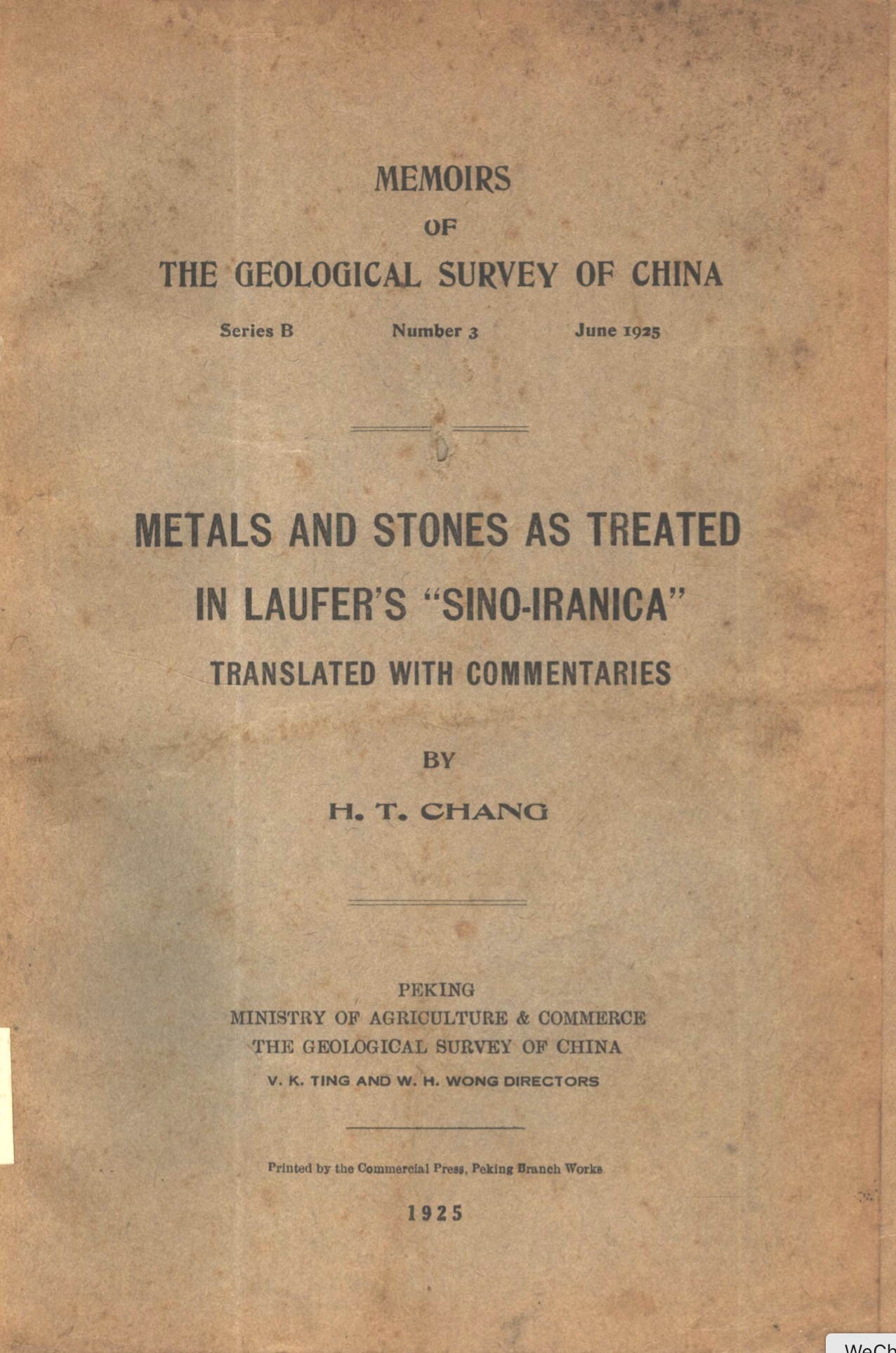
Laufer, B., Zhang, H. and Wêng, W.n. (1925) Metals and stones as treated in Laufer's 'Sino-Iranica'. Memoirs of the Geological Survey of China, Series B, No. 3, 120 pp..
Record No. 7784  |  Sinkankas/Born No.: NIS/NIB  |  Language: in Chinese and English; translated with comments by H.T. Chang  |  RWHL*
Professor Zhang Hongzhao provides a translation and commentary of Laufer’s Sino-Iranica, underscoring that good translations of Chinese works require an exceptional knowledge of the language in order to avoid errors. Laufer’s Metals and Stones as Treated in Laufer’s “Sino-Iranica” is a Chinese translation, with commentary, of the portions of Berthold Laufer’s Sino-Iranica dealing with minerals, metals, gemstones, and related substances exchanged between China and Iran and other regions of western and central Asia. The work examines the history and terminology of mineral substances through Chinese texts, Iranian and other Asian languages, and evidence for their transmission along ancient trade routes. Particular attention is given to precious and ornamental stones and metals, including jade, lapis lazuli, turquoise, ruby, spinel, emerald, diamond, coral, amber, gold, silver, and various mineral products. Laufer repeatedly uses philology to test proposed identifications, comparing Chinese transcriptions and names with Iranian, Sanskrit, Arabic, Turkic, and other terms, while also drawing on early Chinese geographical, historical, and pharmacological literature. The sections concerning jade are especially important for the history of Chinese mineralogy: Laufer discusses the sources of jade in Central Asia, particularly Khotan, and the movement of the material into China, while distinguishing historical Chinese concepts and terminology from modern mineralogical classifications. The discussions of lapis lazuli, turquoise, ruby, spinel, and other colored stones similarly combine textual references to their geographic sources with the history of their names and trade. Zhang Hongzhao's translation and comments make Laufer’s extensive linguistic and historical arguments accessible to Chinese readers, while the bilingual treatment provides a useful reference for comparing Chinese mineral names with the terminology employed in Sino-Iranica.

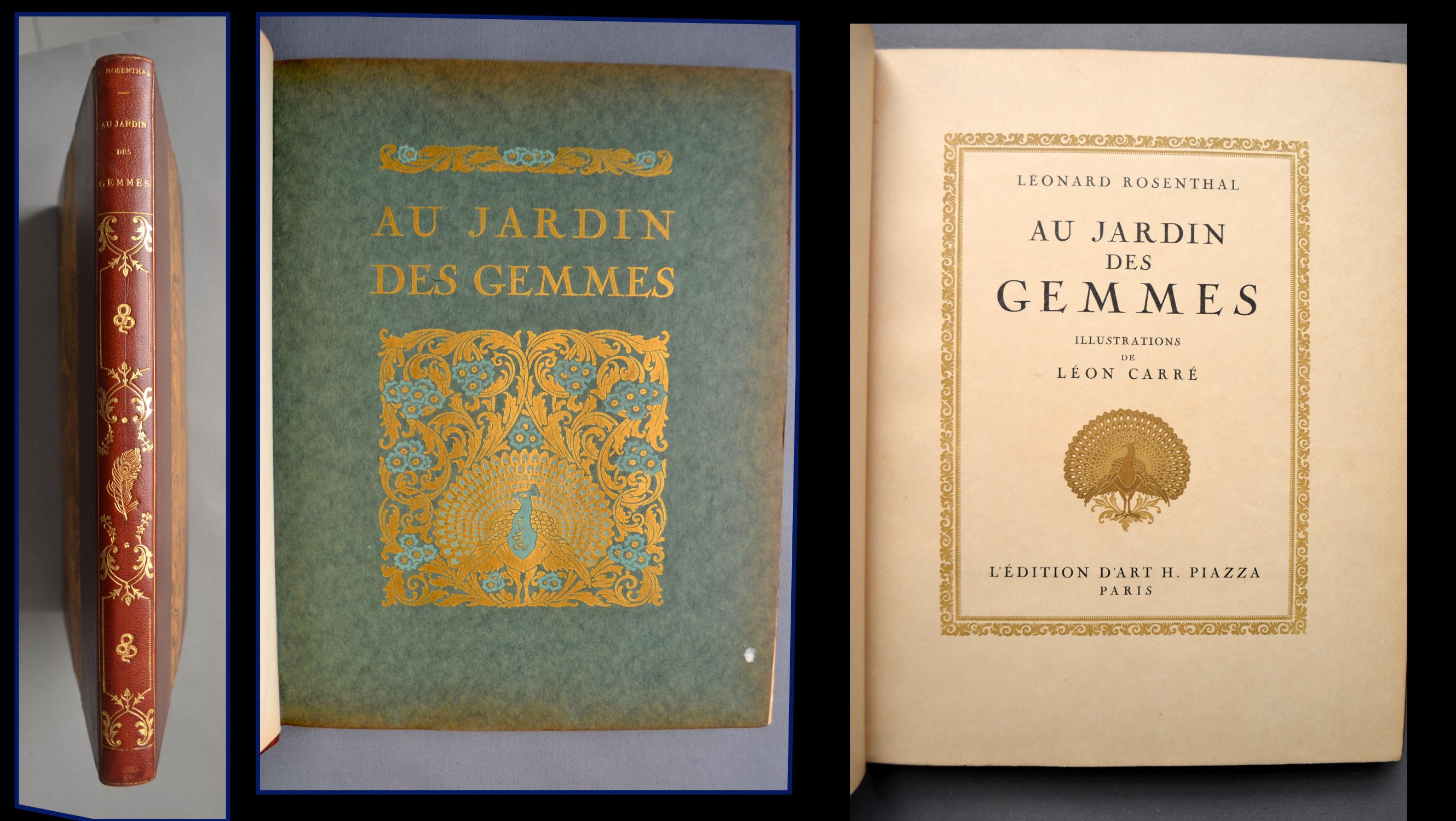
Au Jardin des Gemmes

The Garden of Gems
Book
Rosenthal, L. (1924) Au Jardin des Gemmes. [The Garden of Gems] Paris, Payot, 249 pp
Record No. 3300  |  Sinkankas/Born No.: 5561–5562; NIB  |  Language: in French  |  RWHL*
Sinkankas: An assemblage of interesting information and anecdote on gems and jewels, rich in references to ancient as well as modern works on gems, jewels, and lore. The first chapter discusses jewels and superstitions connected with them, and is followed by chapters on emerald, ruby & sapphire, and other gemstones, also with a few scientific details but stressing romance and lore. There are remarks on engraved gems and magical stones, and the fates and fortunes of gems in world markets as a result of the rise and influence of Bolshevism, ending with a few statistics on recent values of gems in France. States a popular book, for lighter moments, treating the fancies, rather than the facts, relating to gem-stones, with especial regard to emerald, ruby, and sapphire. While the present work, presumably the first edition & issue, reappears later in similar small size but with colour plates added, another publisher obtained rights to it and proceeded to create an elaborate and beautiful piece as described below. The text is identical to the previous edition but is now entirely reset and elaborately ornamented throughout and with the splendid coloured plates of Leon Carré, dated 1922–23, inserted in the text at appropriate places. The plates illustrate legends recounted in the text, often in fanciful representations of taste and beauty. Also issued in specially bound copies in one-third red or green leather, marbled bds & endp, with 5 bound-in blank ff ahead and after the bound-in wraps, and with a set of 12 duplicate plates inserted after the text. 29.8 × 23.1 cm (11¾ × 9⅛ in). Needless to say such issues are rare.

Selections from Oriental Objects of Art Collected by Worcester Reed Warner most of which have been presented to the Cleveland Museum of Art
Book
Warner, W.R. (1921) Selections from Oriental Objects of Art Collected by Worcester Reed Warner most of which have been presented to the Cleveland Museum of Art. Tarrytown, NY, privately published, 135 pp.
Record No. 29536  |  Sinkankas/Born No.: NIS/NIB  |  RWHL*
A privately printed catalogue illustrating selections from Worcester Reed Warner’s collection of Oriental art, most of which had been presented to the Cleveland Museum of Art. The collection includes Chinese and Korean pottery, bronzes, sculpture, lacquer, paintings, and other decorative arts, with a substantial section devoted to Chinese jades and crystals. Warner notes that jade was ranked by the Chinese as the most precious of stones, valued for its natural color, texture, and supposed magical and curative properties. He distinguishes nephrite (“kidney stone”) from jadeite (“emerald green jade”), describing their use for precious vessels, insignia of rank, votive offerings, and gifts, and also discusses the Chinese working of quartz and rock crystal. [55] The numerous illustrated objects include green and white jade incense burners, vases, bowls, disks, carvings, and a Mandarin necklace combining white and green jade with coral. [56–79] Rock crystal receives similar attention, including an exceptionally fine Ch’ien-lung vase described as being of flawless material and elaborately carved and undercut with dragons, lions, rocks, and flowers. [80]

The emerald deposits of Muzo, Colombia
Journal Article
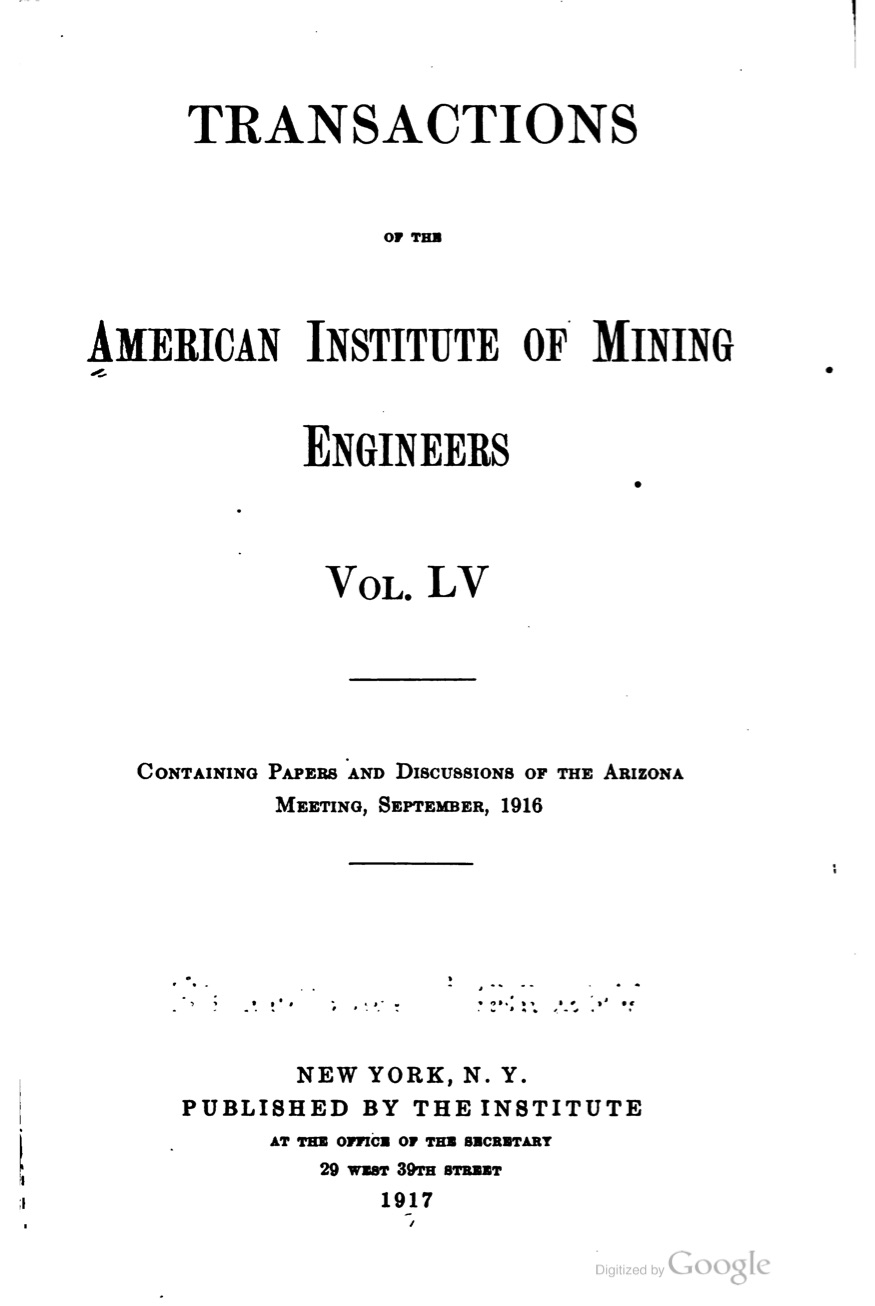
Pogue, J.E. (1917) The emerald deposits of Muzo, Colombia. Transactions of the American Institute of Mining Engineers, Vol. 55, pp. 810–834..
Record No. 2579  |  Sinkankas/Born No.: 5178  |  RWHL*
Invaluable,constantly referenced eyewitness account ofa visit to the mines in July, 1915. Several sketch maps locate the mines while other photographic illustrations show the open cuts and methods of mining and sorting emeralds.Topics: geography, history, geology, deposits, mineralogy, age, origin, mining methods, production, comments upon other emerald deposits in Colombia.

The emerald in Spanish America

Journal Article
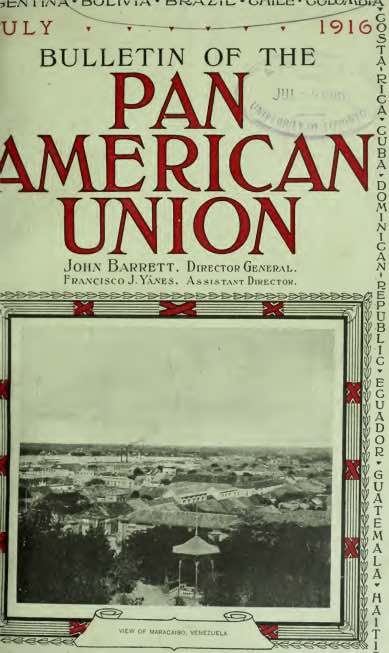
Pogue, J.E. (1916) The emerald in Spanish America. Bulletin of the Pan American Union, Vol. 43, July–December, pp. 706–720.
Record No. 4253  |  Sinkankas/Born No.: 5179  |  RWHL*
History of emerald, discovery in New World, Indian legends, exploitation of deposits, Muzo, crystallographic notes, production.

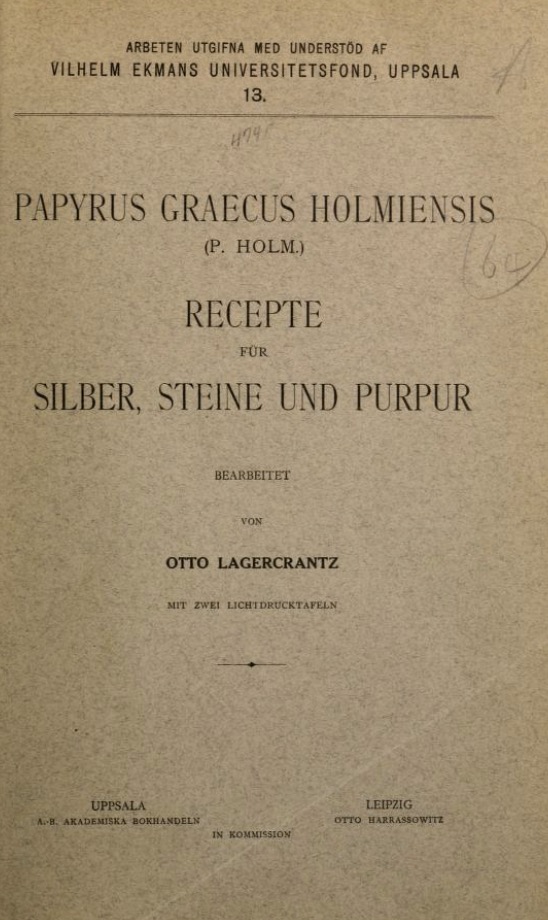
Papyrus Graecus Holmiensis (P. Holm.): Recepte Für Silber, Steine und Purpur
Papyrus Graecus Holmiensis (P. Holm.): Recipes for Silver, Stones, and Purple Dye
Book
Lagercrantz, O. (1913) Papyrus Graecus Holmiensis (P. Holm.): Recepte Für Silber, Steine und Purpur. [Papyrus Graecus Holmiensis (P. Holm.): Recipes for Silver, Stones, and Purple Dye] Uppsala, Almqvist & Wiksells Boktryckeri-A.-B., 247 pp.
Record No. 26650  |  Sinkankas/Born No.: 3749; NIB  |  Language: in Greek and German  |  RWHL*
The Papyrus Graecus Holmiensis (also known as the Stockholm Papyrus) is a collection of craft recipes compiled in Egypt c. 300 AD. It is written in Greek. The Stockholm Papyrus has 154 recipes for dyeing, coloring gemstones, cleaning (purifying) pearls, and imitation gold and silver.[1] Certain of them may derive from the Pseudo-Democritus. Zosimos of Panopolis, an Egyptian alchemist of c. 300 AD, gives similar recipes. Some of these recipes are found in medieval Latin collections of technological recipes, notably the Mappae clavicula. Leyden Papyrus X derives from the same (or very similar) sources, and is written in a similar (possibly the same) hand, using chemically identical ink.[2][3] The Stockholm papyrus and Leyden Papyrus X were both found in Thebes by Giovanni Anastasi, who donated the Leyden Papyrus to the Dutch government in 1828 and the Stockholm Papyrus to the Swedish government in 1832. The Stockholm papyrus was first published by Otto Lagercrantz in 1913. Whereas Leyden papyrus X deals with metallurgy, the Stockholm papyrus deals with gems, pearls and textile dyeing. Sinkankas: The extensively annotated papyrus manuscript here may be as old as the end of the third or the beginning of the fourth century BC; it is in the Swedish Academy of Antiquities, Stockholm, and is believed to be the companion to another papyrus of the Johann d’Anastasy collection in Leyden, entitled P. Leid. X. The present papyrus, called Papyrus Graecus Holmiensis or P. Holm., consists of 15 leaves and that portion of the text, p. 157–200, consisting of about 70 recipes for cleansing pearls and manufacturing a variety of gemstones, is of greatest interest here to show how advanced the arts of deception had become at so early a stage in gemological history. Among the gemstones to be “manufactured” by various means are carnelian, lapis lazuli, emerald, pearl, ruby, “green stones,” beryl, amethyst, chrysolite, and chrysoprase, and also “lychnis,” jasper, sunstone, procedures for purifying rock crystal and pearls, etching or corroding gemstones, altering their color, or softening them, and removing color. Unfortunately, Lagercrantz provides no useful commentary on the technological merits of the recipes, but it is obvious from merely reading these recipes that most treatments are by far superficial or even cosmetic, and, in some instances, not only ineffective but actually destructive, e.g., to pearls. In several recipes which claim to change one gemstone into another, usually rock crystal into emerald or the like, the formulas call for pigmenting agents which penetrate fissures in the quartz and impart superficial coloration. K. Nassau, Gemstone Enhancement, p. 81–112, provides an extended commentary with extracts from this work.

Zur Mineralogie im Islam

On mineralogy in Islam
Journal Article
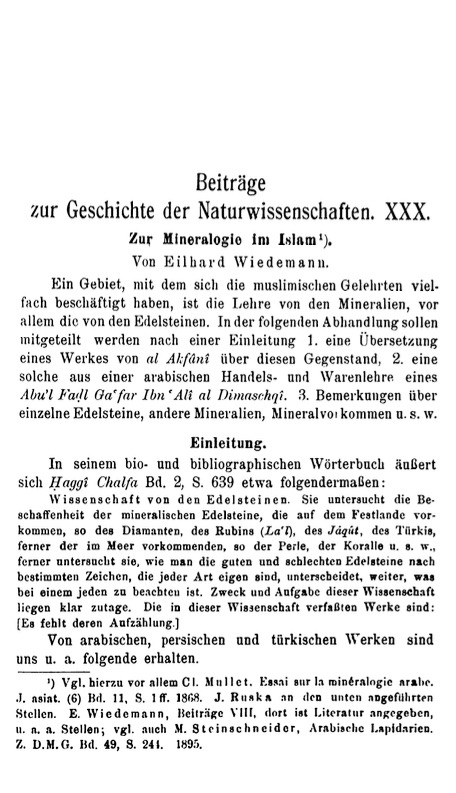
Wiedemann, E. (1912) Zur Mineralogie im Islam. [On mineralogy in Islam] Sitzungsberichte der Physikalisch-Medizinischen Sozietät zu Erlangen, Vol. 44, pp. 205–256.
Record No. 8134  |  Sinkankas/Born No.: 7187; NIB  |  Language: in German  |  RWHL*
Sinkankas: A translation of the mineralogical section of al-Akfānī’s work (see AKFANI), covering pages 835–853, is followed by another translation (pages 853–859) of an ancient Arabic manual that offers practical guidance on the buying and selling of gemstones, including how their quality is evaluated and other valuable observations. At the end of the chapter, a commentary discusses various gems—specifically ruby, spinel, garnet, pearl, emerald, turquoise, coral, onyx, and carnelian. The sources from which this material is drawn are listed at the beginning of the chapter.

Emeralds: Their mode of occcurrence and methods of mining and extraction in Colombia
Journal Article
Olden, C. (1912) Emeralds: Their mode of occcurrence and methods of mining and extraction in Colombia. Transactions of the Institution of Mining & Metallurgy, Vol. 21, pp. 193–209.
Record No. 7577  |  Sinkankas/Born No.: 4857; NIB  |  RWHL*
Olden gives a detailed account of Colombia’s emerald deposits and the methods employed in working them, with particular attention to the government-owned mines at Muzo. He describes the geological occurrence of emerald in calcite veins traversing black carbonaceous shale, the character of the emerald-bearing workings, and the practical difficulties imposed by the terrain, rainfall, and removal of waste. Mining methods are discussed in detail, including open-cut excavation, the use of water to break down and wash material, and the subsequent hand-searching of debris for emeralds. The paper also considers production, recovery, and administration of the mines and provides an important early twentieth-century technical account of Colombian emerald mining.

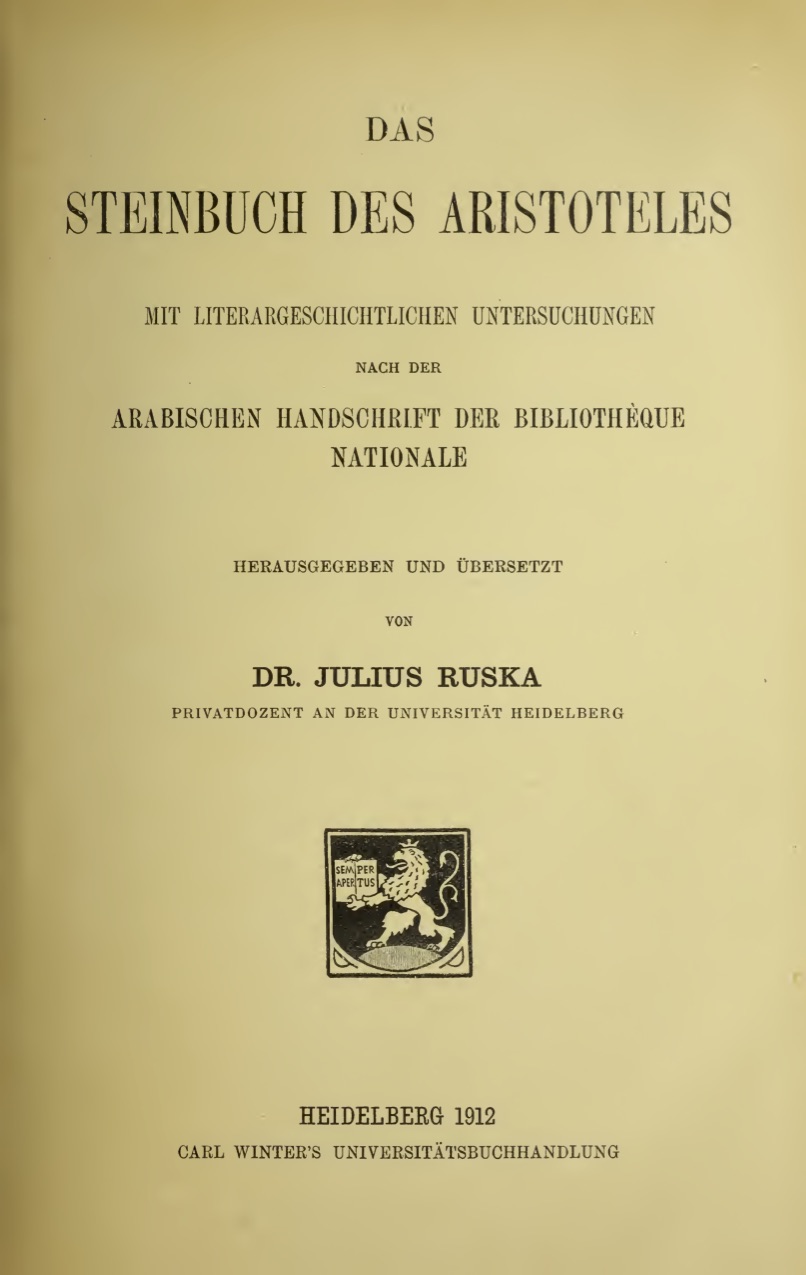
Das Steinbuch des Aristoteles

The Stone Book of Aristotle
Book
Ruska, J. (1912) Das Steinbuch des Aristoteles. [The Stone Book of Aristotle] Heidelberg, Carl Winter’s Universitätsbuchhandlung, 208 pp.
Record No. 4958  |  Sinkankas/Born No.: 5639; NIB  |  Language: in German  |  RWHL*
From Sinkankas: A translation and intensive study of an Arabic manuscript lapidary in the National Library, Paris, and comparison with mss in Hebrew and Latin of similar treatises preserved in other libraries. While the supposed author is said to be Aristotle" it is clear that the writing cannot be attributed to him but to an unknown author who derived his information from ancient Greek sources. The substance of the lapidary is compared by Ruska to that contained in Theophrastus' Peri lithon and the mineralogical matter in Dioscorides, along with other comparisons to writings of the Alexandrian School, the gem book of Teifaschi, and that of Mohammed Ben Mansur. An important section provides a description of the stones from the lapidary of Al-Kazwini. The mss studied by Ruska is Codex Paris 2772 and its translation appears on p 126–82, embracing 72 stones, among them, pearl, emerald, garnet, carnelian, malachite, bezoar, diamond, turquoise and lapis lazuli. See Thorndike, History of Magic, etc, 2, 260–2 for discussion of this work which is only a small portion of his entire chapter devoted to Pseudo-Aristotle, p 246–78."

The jewel of great grace

Journal Article
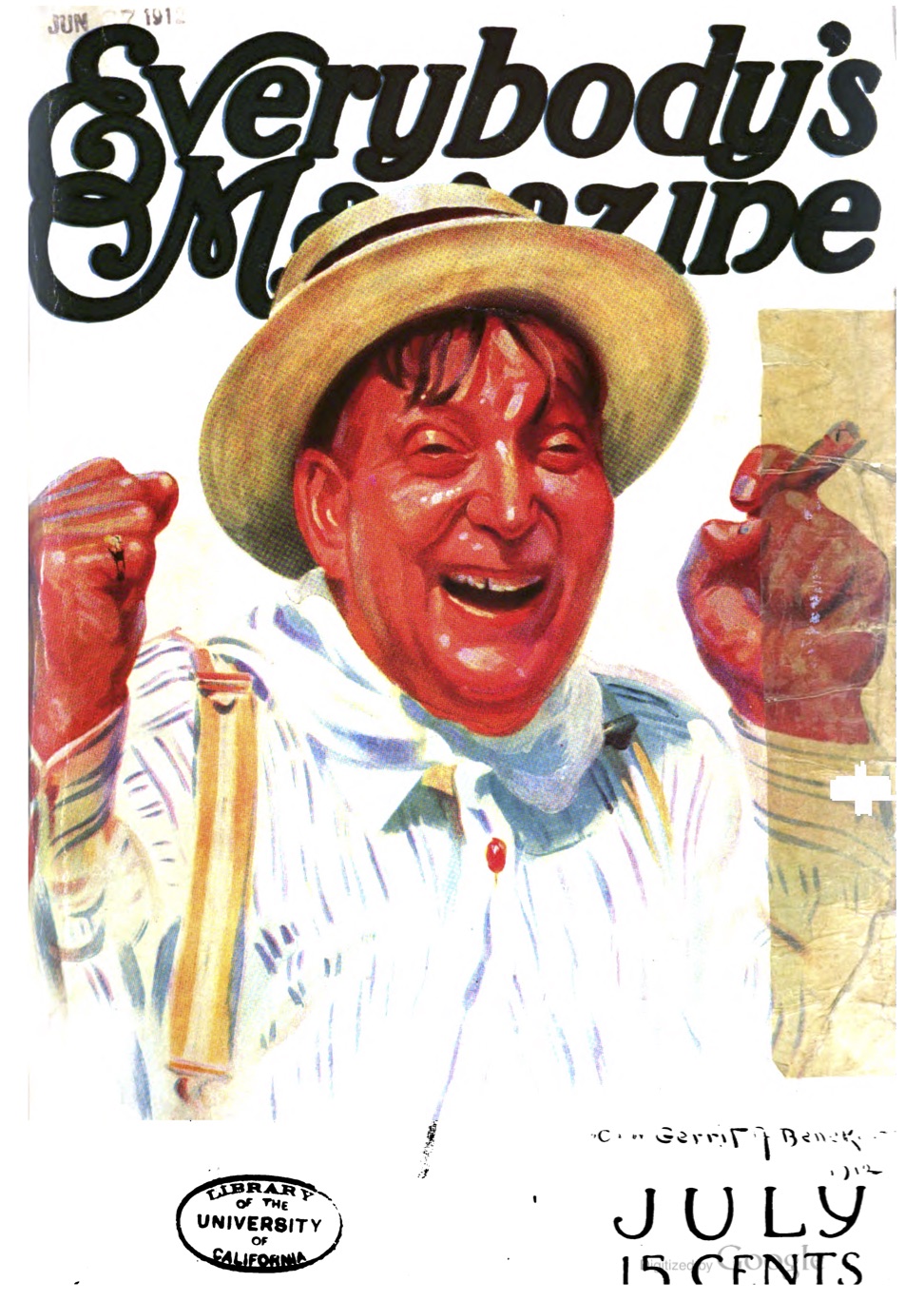
Clarkin, F. (1912) The jewel of great grace. Everybody's Magazine, Vol. 27, No. 3, September, pp. 365–377, photos.
Record No. 2631  |  Sinkankas/Born No.: NIS/NIB  |  RWHL*
Clarkin presents a wide-ranging popular account of the ruby, describing its appeal to collectors, exceptional rarity and value, historical associations, production, identification, and the contemporary ruby trade. He discusses prominent collectors including E. H. Harriman, James J. Hill, William Astor, and the Gaekwar of Baroda; compares the ruby’s value with emerald and diamond; and describes natural, reconstructed, and synthetic rubies, including oxyhydrogen-flame production and the use of the dichroscope, hardness, and brilliance in distinguishing stones. Considerable attention is devoted to Burma’s Mogok ruby district, illustrated with photographs of the native ruby market, cutting, mining, and gem-bearing gravels; the article recounts the British conquest of Upper Burma, G. Skelton Streeter’s participation in the expedition, and the subsequent exploitation of the mines by the Burma Ruby Mines Company associated with Rothschild. Clarkin concludes with the ruby’s long reputation as a talisman of courage, victory, love, and good fortune, recounting historical and legendary rubies associated with European royalty and other celebrated figures.

Exploring the Literature of Emerald

Emerald literature spans gemology, mineralogy, deposits, identification, treatments, synthesis, history and the gem trade, with important sources covering deposits around the world.

For a curated guide to this subject, read Green Fire — Lotus Gemology's Guide to the Literature of Emerald.

About Four Treasures

Four Treasures is Lotus Gemology's freely accessible gemological reference database. Use the full database to search by author, title or keyword and explore literature on gemology, mineralogy, jewelry and related fields. Where available, hyperlinks on titles may lead directly to the full publication.

Search the Complete Four Treasures Database