Emerald Bibliography

Emerald Bibliography

Explore books, articles and historical sources on emerald in Four Treasures, the Lotus Gemology reference database. This bibliography brings together matching records from the collection, with publication details, abstracts and cover images where available.

Emerald References

The list below matches the terms emerald or emeralds in the database's searchable fields. Some references discuss emeralds as part of a broader subject.
361–380 of 851 matching references

Esmeraldas en Colombia: Estado, guerras e ilegalidad
Emeralds in Colombia: State, wars and illegality
Book
Barón, J.G., Jiménez, J.P. and Larrotta, Á.N.J. (2024) Esmeraldas en Colombia: Estado, guerras e ilegalidad. [Emeralds in Colombia: State, wars and illegality] Tunja – Boyacá, Universidad Pedagógica y Tecnológica de Colombia, 148 pp.
Record No. 29517  |  ISBN/ISSN: 9789590000000  |  Sinkankas/Born No.: NIS/NIB  |  Language: in Spanish and English  |  RWHL
Within the set of regional violence affecting Colombia, the case of the emerald region stands out for its forms, contents and relations with national phenomena such as smuggling, armed subversion, drug trafficking, paramilitarism and criminal organizations. In an area close to Bogotá, an illegal market grew from the 1960s onwards, linked to the trafficking and smuggling of emeralds, thanks to which certain groups accumulated large surpluses. The accumulation of capital around the illegal emerald market was an essential element in the configuration of the social, economic, political, and sociocultural dynamics of the department of Boyacá and the country, and at the same time created an economic circuit that fed back into the State through its institutions, making it difficult to demarcate between the legal and the illegal. The State enthroned the power of mafias, political and economic groups that redirected governmental action in favor of their interests. This book seeks to elucidate how this intertwining between the power of the State and the power of the actors in society manifested itself through the strategies to which they resorted. The book provides an analysis of the violent strategies deployed by the actors in the emerald zone, the municipalities of the region and cities such as Chiquinquirá and Bogotá. The tactics and methods used: murder, massacre, assault, and other forms characterized by cruelty, led to the creation of a scenario of terror and fear. The open struggle for territorial control, where the market materializes, generates a space of confrontation that drags not only the actors involved, but also the population of the region. This scenario is only possible under the understanding of the illegal economy and its mafia-like practices, a weak state that with its actions promoted the conflict. Social relations based on loyalty, subjective relations with the territory, the formation of power structures and relations of domination.

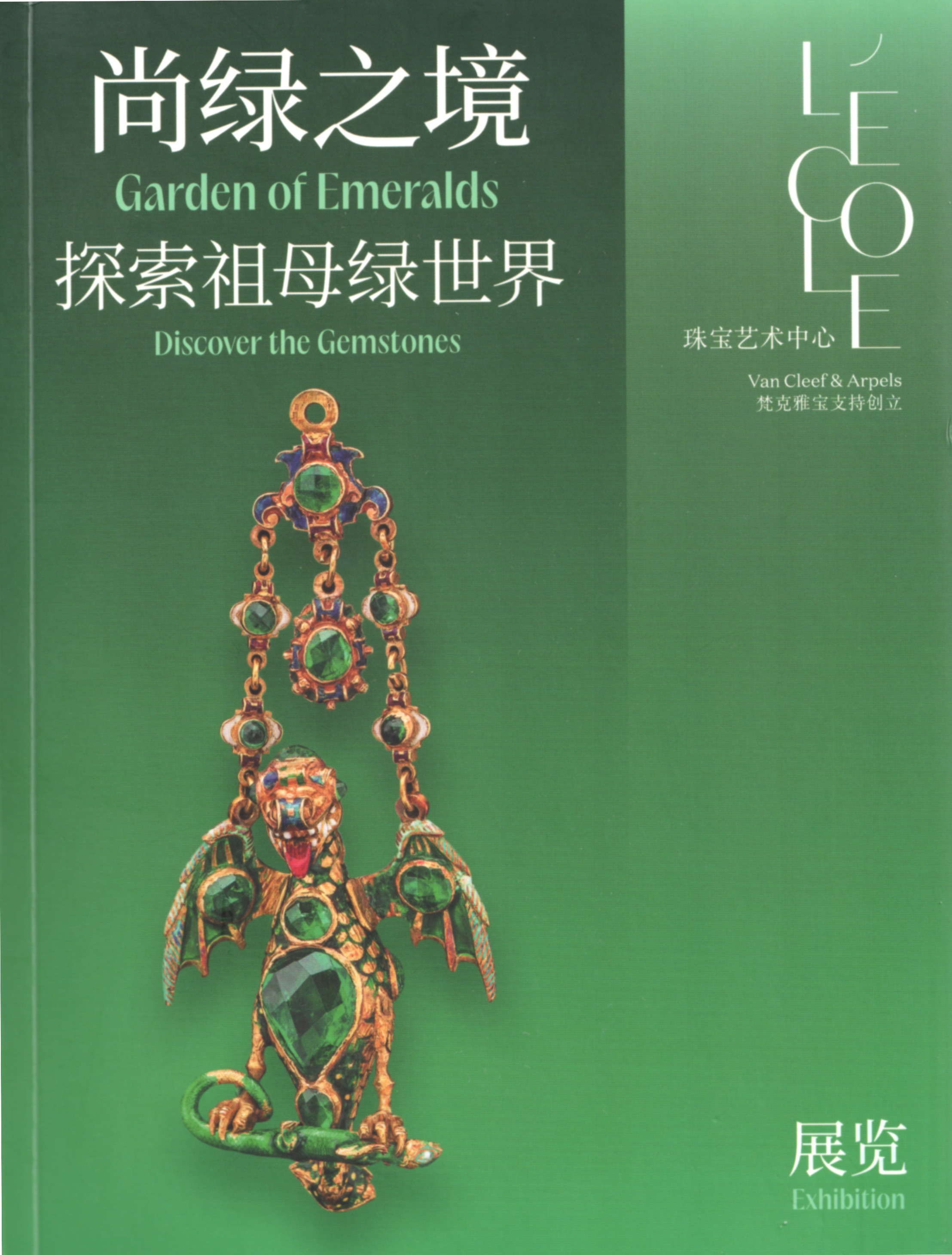
From trials to treasures: The emeralds from China
Book Section
Yu, X. (2024) From trials to treasures: The emeralds from China. In: Garden of Emeralds Exhibition, Shanghai: L’École | Van Cleef & Arpels, pp. 112–117.
Record No. 26394  |  Sinkankas/Born No.: NIS/NIB  |  RWHL
History of the discovery of emerald in China at Davdar (Xinjiang) and Yunnan.

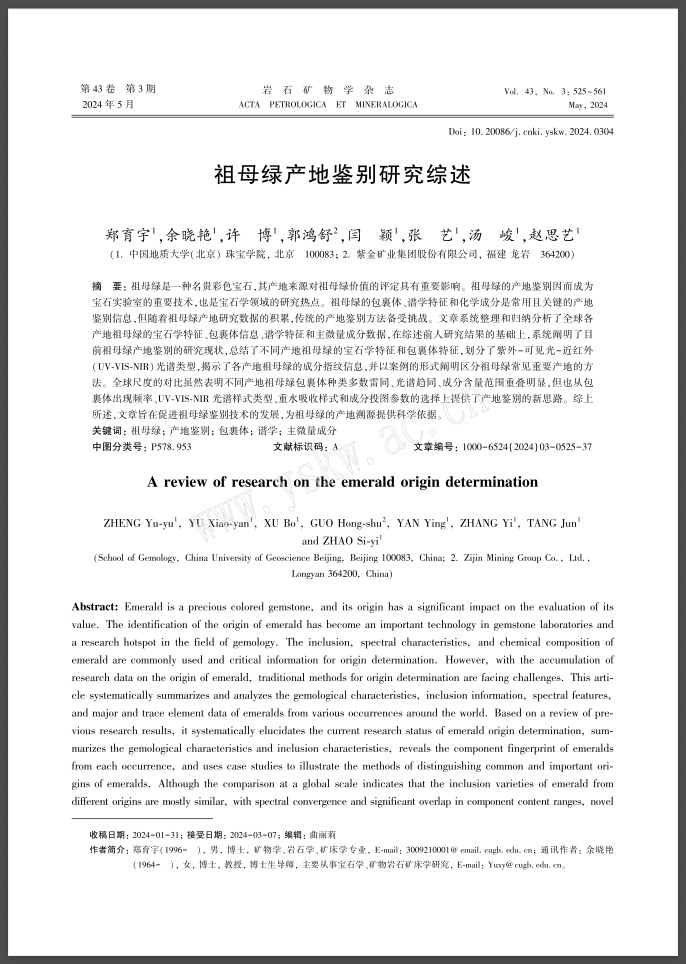
A review of research on the emerald origin determination
祖母绿产地鉴别研究综述
Journal Article
Zheng, Y., Yu, X., Xu, B., Guo, H., Yan, Y., Zhang, Y., Tang, J. and Zhao, S. (2024) A review of research on the emerald origin determination. [祖母绿产地鉴别研究综述] Acta Petrologica et Mineralogica [岩石矿物学杂志], Vol. 43, No. 3, pp. 525–561.
Record No. 26154  |  Sinkankas/Born No.: NIS/NIB  |  Language: in Chinese with English abstract  |  RWHL
Emerald is a precious colored gemstone, and its origin has a significant impact on the evaluation of its value. The identification of the origin of emerald has become an important technology in gemstone laboratories and a research hotspot in the field of gemology. The inclusion, spectral characteristics, and chemical composition of emerald are commonly used and critical information for origin determination. However, with the accumulation of research data on the origin of emerald, traditional methods for origin determination are facing challenges. This article systematically summarizes and analyzes the gemological characteristics, inclusion information, spectral features, and major and trace element data of emeralds from various occurrences around the world. Based on a review of previous research results, it systematically elucidates the current research status of emerald origin determination, summarizes the gemological characteristics and inclusion characteristics, reveals the component fingerprint of emeralds from each occurrence, and uses case studies to illustrate the methods of distinguishing common and important origins of emeralds. Although the comparison at a global scale indicates that the inclusion varieties of emerald from different origins are mostly similar, with spectral convergence and significant overlap in component content ranges, novel approaches for origin determination are proposed based on inclusion frequency, UV–VIS–NIR spectral patterns, absorption patterns of HDO and D₂O, and the parameter selection of compositional diagrams.

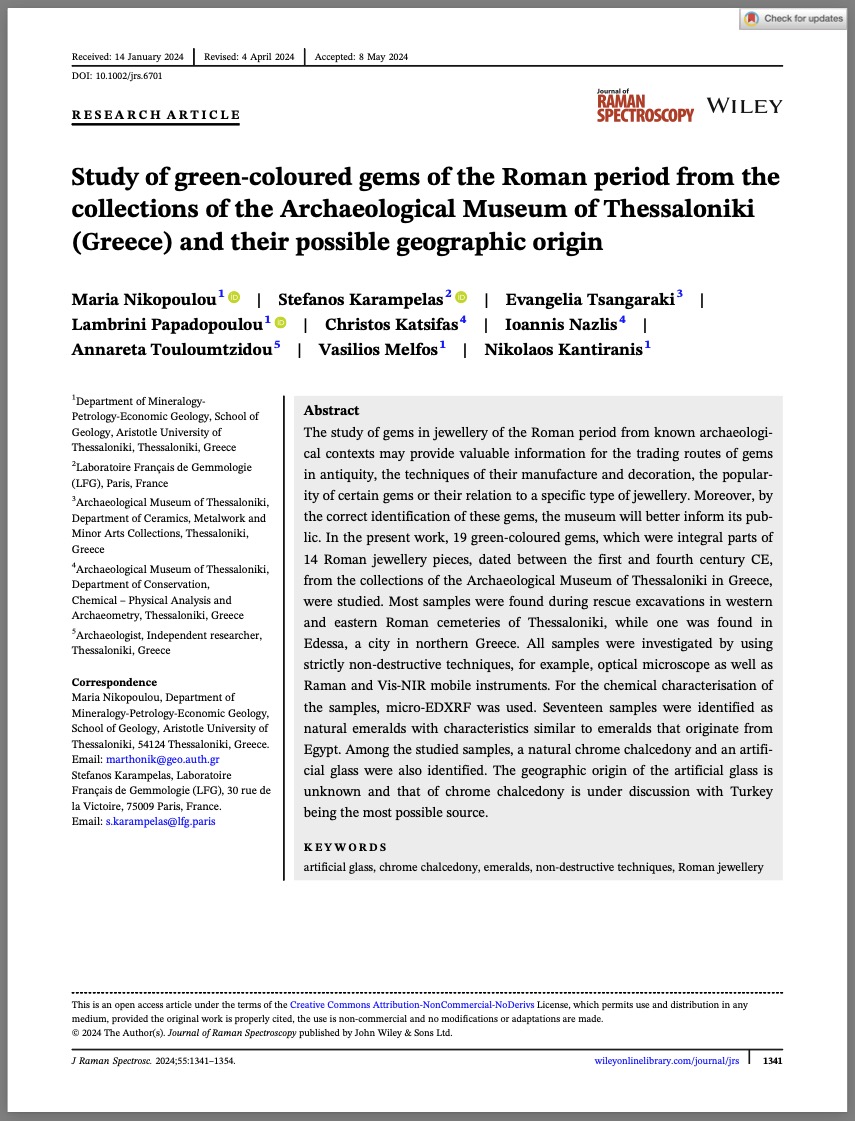
Review of emerald origin determination
祖母绿产地鉴别研究综述
Journal Article
Zheng, Y., Yu, X., Xu, B., Guo, H., Yan, Y., Zhang, Y., Tang, J. and Zhao, S. (2024) Review of emerald origin determination. [祖母绿产地鉴别研究综述] Acta Petrologica et Mineralogica [岩石矿物学杂志], Vol. 43, No. 3, pp. 525–561.
Record No. 17170  |  Sinkankas/Born No.: NIS/NIB  |  Language: in Chinese with English abstract  |  RWHL
Emerald is a precious colored gemstone, and its origin has a significant impact on the evaluation of its value. The identification of the origin of emerald has become an important technology in gemstone laboratories and a research hotspot in the field of gemology. The inclusion, spectral characteristics, and chemical composition of emerald are commonly used and critical information for origin determination. However, with the accumulation of research data on the origin of emerald, traditional methods for origin determination are facing challenges. This article systematically summarizes and analyzes the gemological characteristics, inclusion information, spectral features, and major and trace element data of emeralds from various occurrences around the world. Based on a review of previous research results, it systematically elucidates the current research status of emerald origin determination, summarizes the gemological characteristics and inclusion characteristics, reveals the component fingerprint of emeralds from each occurrence, and uses case studies to illustrate the methods of distinguishing common and important origins of emeralds. Although the comparison at a global scale indicates that the inclusion varieties of emerald from different origins are mostly similar, with spectral convergence and significant overlap in component content ranges, novel approaches for origin determination are proposed based on inclusion frequency, UV-VIS-NIR spectral patterns, absorption patterns of HDO and D₂O, and the parameter selection of compositional diagrams.

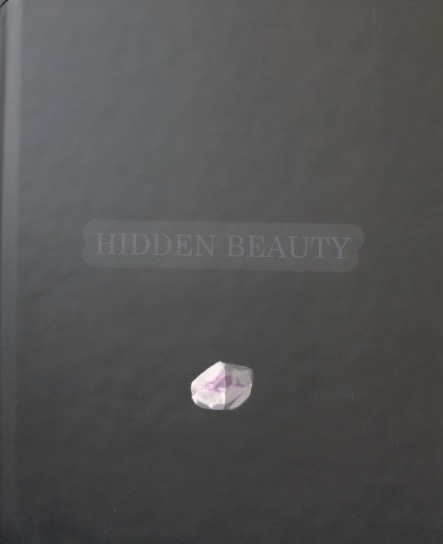
Study of green-coloured gems of the Roman period from the collections of the Archaeological Museum of Thessaloniki (Greece) and their possible geographic origin
Journal Article
Nikopoulou, M., Karampelas, S., Tsangaraki, E., Papadopoulou, L., Katsifas, C., Nazlis, I., Touloumtzidou, A., Melfos, V. and Kantiranis, N. (2024) Study of green-coloured gems of the Roman period from the collections of the Archaeological Museum of Thessaloniki (Greece) and their possible geographic origin. Journal of Raman Spectroscopy, No. 55, pp. 1341–1354.
Record No. 17107  |  DOI: https://doi.org/10.1002/jrs.6701  |  RWHL
The study of gems in Roman-period jewellery from known archaeological contexts offers valuable insights into ancient gem trading routes, manufacturing and decoration techniques, and the popularity or association of specific gems with certain jewellery types. Accurate identification of these gems also enhances the museum’s ability to inform the public. In this study, 19 green-coloured gems embedded in 14 Roman jewellery pieces—dated between the first and fourth centuries CE and held by the Archaeological Museum of Thessaloniki in Greece—were examined. Most of the pieces were discovered during rescue excavations in Roman cemeteries in western and eastern Thessaloniki, with one originating from Edessa in northern Greece. Non-destructive techniques such as optical microscopy, Raman spectroscopy, and Vis-NIR spectroscopy were employed, along with micro-EDXRF for chemical analysis. Seventeen of the samples were identified as natural emeralds resembling those from Egypt, while the remaining two were identified as a natural chrome chalcedony and an artificial glass. The origin of the artificial glass remains unknown, while the chrome chalcedony is tentatively linked to Turkey.

Hidden Beauty

Book
Hyman, J.M. (2024) Hidden Beauty. no city, self-published, unpaginated
Record No. 16592  |  ISBN/ISSN: 9788330000000  |  Sinkankas/Born No.: NIS/NIB  |  RWHL
Self-published book on inclusions in gems.

Additions to the composition of the ural beryls and inclusions of syngenetic minerals in them
Journal Article
Popova, V.I., Popov, V.A. and Rassomakhin, M. (2023) Additions to the composition of the ural beryls and inclusions of syngenetic minerals in them. МИНЕРАЛОГИЯ [Mineralogy (Russia)], Vol. 9, No. 4, pp. 5–16.
Record No. 28149  |  ISBN/ISSN: ISSN 2313-545X (print); ISSN 2782-2044 (online)  |  DOI: 10.35597/2313-545X-2023-9-4-1  |  Sinkankas/Born No.: NIS/NIB  |  Language: in Russian  |  RWHL
In addition to the data of predecessors, the chemical composition of zoned or zoned-sectorial beryl crystals from pegmatites of the Mariinsky and Kvartalny deposits of the Urals emerald mines in the Central Urals, granitic pegmatite of mine no. 242 of the Ilmeny State Reserve and Svetlinsky pegmatite quarry in the South Urals is characterized using scanning electron microscopy and energy-dispersive analysis. The light peripheral zones of prism and pinacoid in crystal sections differ in variations in Al, Fe and Mg contents from the inner zones or areas. The presence of fractures and regenerated fragments of early beryl indicates synmineralization tectonics. In beryl from the Mariinsky deposit, the previously unknown syntactic ingrowths of bavenite and zones of parallel columnar aggregates of co-crystallization of beryl and bavenite, as well as late pyrite, fluorite, gismondine-Ca and tobermorite, are identified. Beryls from mine no. 242 of the Ilmeny State Reserve are yellowish-greenish and bluish with a peripheral white zone and syntactic microingrowths of annite and syngenetic inclusions of columbite and Ta-Nb rutile. Muddy bluish-white beryl regenerated by colorless beryl from the Svetlinsky quarry hosts numerous syntactic inclusions of muscovite, gahnite, calcite, quartz and quartz-muscovite microaggregates with pyrite, chalcopyrite, sphalerite, galena, siderite, calcite, and micropores. The syntaxy of mica, quartz and gahnite with beryl is revealed for the first time. Keywords: beryl, zoning, composition, syntaxy, mineral inclusions, granitic pegmatites, Urals emerald mines, Ilmeny Reserve, Svetlinsky pegmatite quarry, Russia.

Results of the 2022 Season in the Beryl Mining Area of Wadi Sikait: Excavations in Sikait and Documentation of the Emerald Mines
Journal Article
Guzmán, J.O., García-Dils De la Vega, S., Abella, D.F., Carrasco, J.M., Gilg, H.A., Maestro, D.E., Pérez, A.M. and García, E.M. (2023) Results of the 2022 Season in the Beryl Mining Area of Wadi Sikait: Excavations in Sikait and Documentation of the Emerald Mines. Thetis, Vol. 27, pp. 7–12,
Record No. 27733  |  Sinkankas/Born No.: NIS/NIB  |  RWHL
The 2022 season of the Sikait Project in the Egyptian Eastern Desert allowed for further increase of our knowledge about the traces of the extraction and trade of beryl in ancient times. The present paper offers an overview of the work done, including excavation, consolidation and restoration activities in the settlement of Sikait, as well as survey and documentation of the emerald mining areas of Wadi Sikait and surroundings.

Historical ecclesiastic jewelry from 18th century Sicily: non-invasive gemological investigation
Conference Paper
Spironello, M., Caggiani, M.C., Fugazzotto, M., Barone, G., Mazzoleni, P., Raimondi, F. and Spampinato, G. (2023) Historical ecclesiastic jewelry from 18th century Sicily: non-invasive gemological investigation. 19–21 September, Potenza: Società Geologica Italiana, Roma 2023, p. 548.
Record No. 27609  |  DOI: https://doi.org/10.3301/ABSGI.2023.02  |  Sinkankas/Born No.: NIS/NIB  |  RWHL
Monstrances, jewelries and ex voto represent the core of the ecclesiastic historical patrimony. Most of them, coming from the 18th century, are now stored and exposed in numerous Diocesan and Sacred Art Museum, which boast centuries of history and the property of unique objects. Refined designs, golden finishing and set gemstones give these objects a very precious appearance. But are these objects really valuable? Does the nature of the gemstones really correspond to the declared one? Often, the identification of a gem in this context is assigned according to autoptic observations and historical documents. No scientific studies are usually performed. Traditional techniques, indeed, do not allow to analyze set gems, which could be studied only with non-invasive instruments, better if portable directly in situ. Raman spectroscopy, coupled with portable X-ray Fluorescence (pXRF) could be considered well-suited analytical techniques for this purpose, but few are the examples of their application on these kinds of art and historical remains. With the aim of deepening the knowledge about the Sicilian production of ecclesiastic objects, confirming or not the declared gemstones identifications, a set of objects from the Diocesan Museums of Catania and Caltagirone (Italy) were studied by in situ portable Raman spectroscopy (with 785 nm excitation wavelength) and portable X-ray Fluorescence (XRF). The series of objects investigated included different monstrances with stylistic similarities and set gemstones, dated back to the 18th century; bishop’s adornments, as a miter with differently coloured gems, a pastoral ring with a large green stone surrounded by colourless ones (supposed to be an emerald and little diamonds) and a pectoral cross with light orange centimetric stones surrounded by colourless little ones (supposed to be topazes and diamonds). Furthermore, an ex voto ornament, used for the Immaculate Conception statue for a religious ritual in Caltagirone, was also extensively analysed. It is an elegant combination of jewellery parures sewn together on a textile bustier. Numerous reddish and pinkish gemstones are set, together with small colourless ones; moreover, a cameo appears at the centre of the jewel. According to a kind of traditional Sicilian production of European derivation in vogue, especially in the 18th century, the gems mentioned were supposed to be rubies and diamonds. Interesting results emerged from the analytical investigations. In some cases, precious gemstones, such as rubies, emeralds and diamonds, are detected together with quartz or garnet, while in some others the presence of precious gems must be discredited due to the identification of glass.

G&G Microworld: Tourmaline in emerald
Journal Article
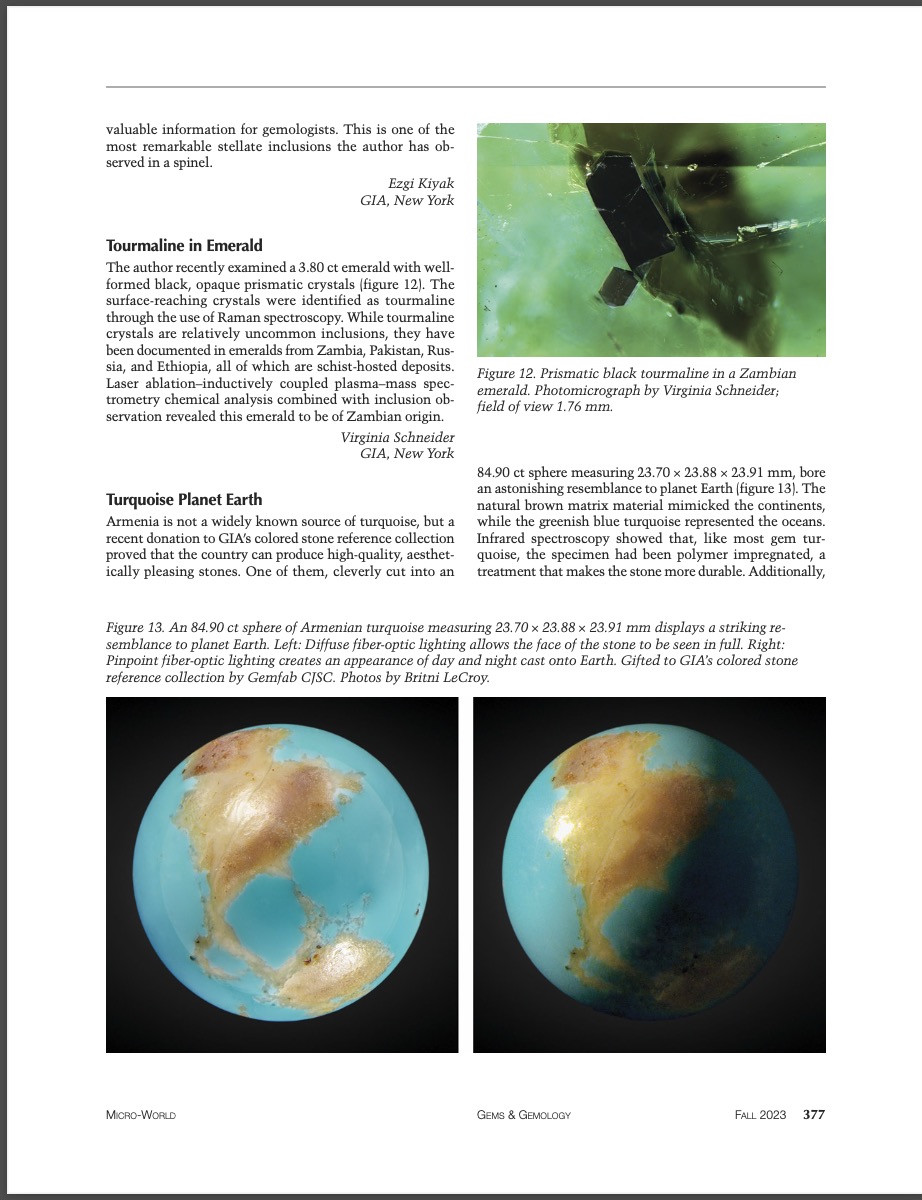
Schneider, V. (2023) G&G Microworld: Tourmaline in emerald. Gems & Gemology, Vol. 59, No. 3, p. 377.
Record No. 16321  |  ISBN/ISSN: 0016626X  |  RWHL

Rare mineralization from quartz-plagioclase veins of the Mariinsky deposit (Ural emerald mines)
Journal Article
Popov, M.P., Rassomakhin, M.A. and Demina, L.A. (2023) Rare mineralization from quartz-plagioclase veins of the Mariinsky deposit (Ural emerald mines). News of the Ural State Mining University, Vol. 71, No. 3, pp. 25–31.
Record No. 8097  |  DOI: https://doi.org/10.21440/2307-2091-2023-3-25-31  |  Sinkankas/Born No.: NIS/NIB  |  RWHL
A mineralogical study was carried out and the chemical composition of sulfide mineralization rare for the Ural emerald mines was studied. Previously, zinc greenockite and matildite were not described, so this is the first find of these minerals at the Mariinsky deposit.

Inclusions and gemological characteristics of emeralds from Kamakanga, Zambia
Journal Article
Zhang, Y. and Yu, X.-Y. (2023) Inclusions and gemological characteristics of emeralds from Kamakanga, Zambia. Minerals, Vol. 13, No. 3,
Record No. 7589  |  ISBN/ISSN: 2075163X  |  DOI: https://dx.doi.org/10.3390/min13030341  |  RWHL
Currently, Zambia is one of the world’s major emerald-producing countries. In this study, emerald samples from Kamakanga, Zambia, were systematically analyzed by standard gemological tests, microscopic observation, Raman spectroscopy test of mineral inclusions, and fluid inclusions. The study found Kamakanga emeralds have higher RI (refractive index) and SG (specific gravity) than average. The common inclusions in Kamakanga emeralds are pseudo-hexagonal, dark green, brownish, or oval platelet phlogopite; red spot or skeletal hematite; black spot, platelet, or dendritic oxide inclusions (pyrolusite, magnetite, ilmenite); or schorl. The common paragenetic mineral is schorl. Other mineral inclusions are fluorapatite, tremolite, and calcite. All Kamakanga emeralds contain at least two kinds of common mineral inclusions that are described above, and the characteristic mineral inclusions are pseudo-hexagonal dark green platelet phlogopite and a large quantity of fluorapatite. The fluorapatite inclusions with colorless transparent rims and greyish hazy interiors are reported for the first time. Most fluid inclusions in Kamakanga emeralds are rectangular two- or three-phase inclusions, containing gas phase (CO₂ + CH₄ + H₂O or CO₂), aqueous fluid, and sometimes solid phase (carbonate). A small number of hexagonal three-phase fluid inclusions can be seen in Kamakanga emeralds, containing gas phase (CO₂ + CH₄), aqueous fluid, and daughter crystals (siderite).

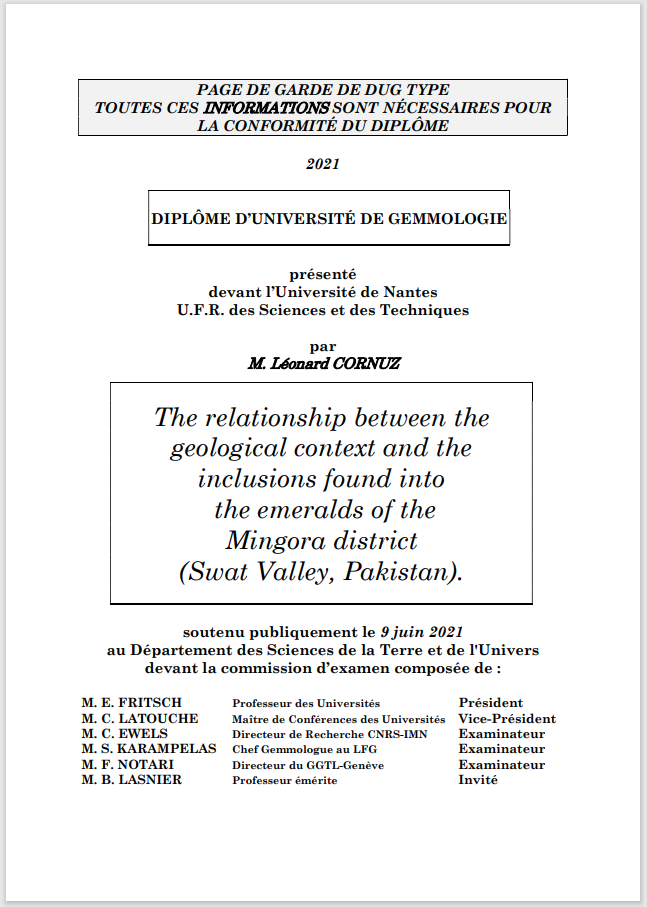
Emerald with bertrandite-phlogopite veins resembling fracture fillings
Journal Article
Zellagui, R. (2022) Emerald with bertrandite-phlogopite veins resembling fracture fillings. Journal of Gemmology, Vol. 38, No. 3, pp. 216–217.
Record No. 8096  |  ISBN/ISSN: 221252  |  RWHL

The relationship between the geological context and the inclusions found into the emeralds of the Mingora district (Swat Valley, Pakistan)
Thesis
Cornuz, L.M. (2021) The relationship between the geological context and the inclusions found into the emeralds of the Mingora district (Swat Valley, Pakistan)., Nantes, France: Université de Nantes, 97 pp.
Record No. 29556  |  Sinkankas/Born No.: NIS/NIB  |  RWHL
Thesis study on the emeralds of Swat, Pakistan and how their inclusions relate to their geological formation. Nice inclusion photos.

The discovery and naming of alexandrite and phenakite: Separating fact from fiction
Journal Article
Schmetzer, K. and Burlakov, E.V. (2021) The discovery and naming of alexandrite and phenakite: Separating fact from fiction. Journal of Gemmology, Vol. 37, No. 5, pp. 496–513.
Record No. 29545  |  Sinkankas/Born No.: NIS/NIB  |  RWHL
Alexandrite was discovered in 1833 in the emerald mines of the Ural Mountains, Russia. Since then, numerous legends have been told about the discovery and naming of this first colour-change gem material. Key figures in these stories were L.A. Perovskii, vice president of the appanage department of the Russian Tsar and minister of Internal Affairs of the Russian Empire, and N.G. Nordenskiöld, superintendent of mines in Finland. Phenakite was also discovered in the Uralian emerald mines in the early 1830s, with the same two people involved. Based upon extant letters written by both individuals—Perovskii and Nordenskiöld—as well as the published literature, this article critically evaluates the facts about the discoveries and the initial descriptions of alexandrite and phenakite. Our research shows that a third individual, Y.V. Kokovin, who at that time was director of the Ekaterinburg lapidary works, actually discovered both gem materials, and soon after samples of each were distributed via Perovskii to various mineralogists for examination. The name phenakite was suggested by Nordenskiöld in late 1832 or early 1833, ignoring the local use of the already-existing name kokovinite. Nordenskiöld suggested the name alexandrite, in honour of the Russian Crown Prince, almost a decade later—in 1842—after Kokovin’s death.

New evidence regarding emerald production in Roman Egypt at Wadi Sikait (Eastern Desert).
Journal Article
Guzmán, J.O., Abella, D.F., Pita, V.T., Casas, O.A. and García-Dils De la Vega, S. (2021) New evidence regarding emerald production in Roman Egypt at Wadi Sikait (Eastern Desert). Journal of Near Eastern Studies, Vol. 80, No. 1, pp. 123–142.
Record No. 27684  |  Sinkankas/Born No.: NIS/NIB  |  RWHL
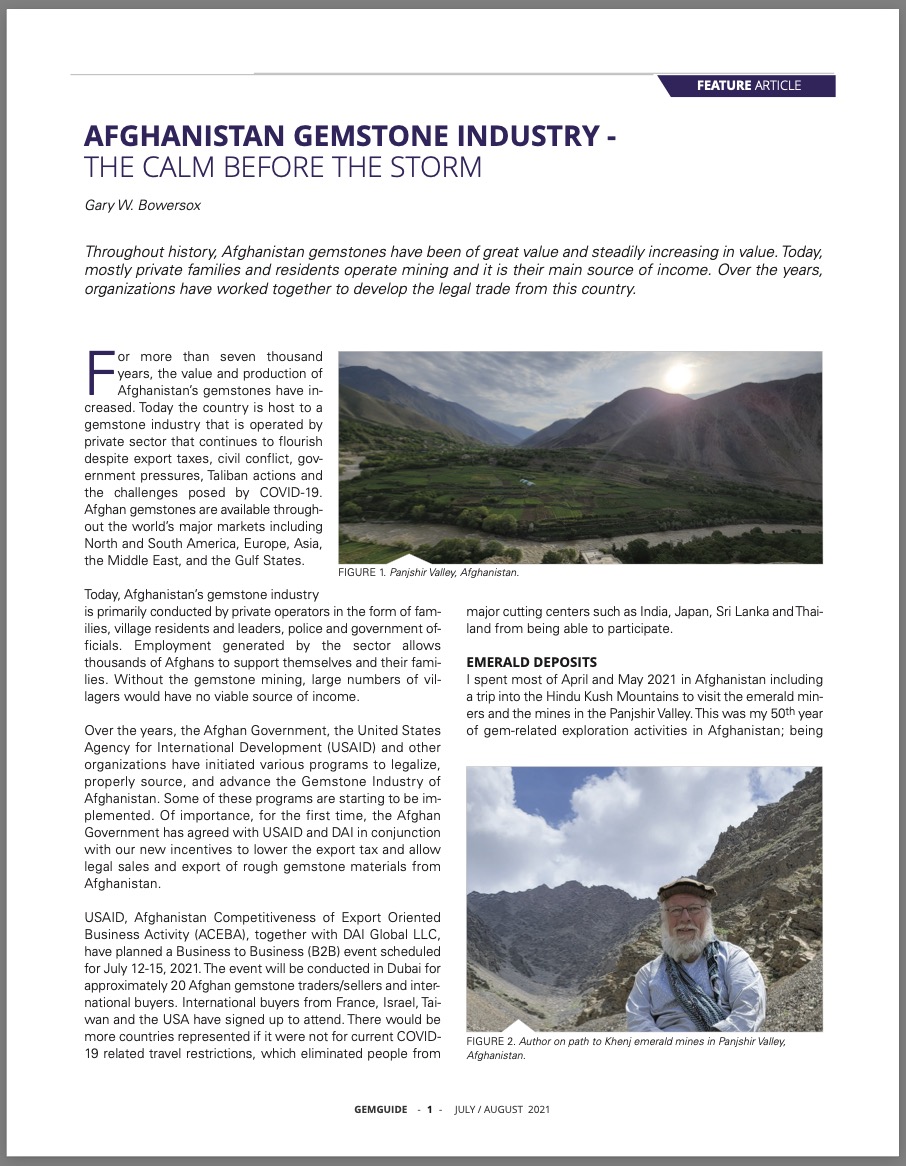
Emeralds were one of the most appreciated mineral resources obtained from the Egyptian Eastern Desert in Roman times. Classical sources inform us about these emeralds and about how they were extracted: authors such as Strabo (Geog. 17.1.45), Pliny the Elder (HN 37.17.65, 37.18.69), Claudius Ptolemy (Geog. 4.5.8), Olympiodorus (frag. 53.2), the fourth-century monk and bishop Epiphanius (De Gemmis 40Vh and 88Ra), and the sixth-century monk Cosmas Indicopleustes (Topography 11.339), all provide details regarding emerald mining in this region. These sources located the mines in the Eastern Desert, near the Red Sea, in a productive region named “Mons Smaragdus.” It was not until the rediscovery of these emerald mines in the 19th century by the French mineralogist Frédéric Cailliaud that modern scholars started to focus their interest on knowing how the mines were organized and exploited. Despite this, until the last years of the 20th century, there was no long-term archaeological project working at Mons Smaragdus. Therefore, during the 1990s a team from the Berenike Project headed by S. E. Sidebotham started to survey the area and conducted the first excavations, focusing on the main site identified, Sikait (Fig. 1). This work continued until the beginning of the 21st century, documenting an extensive network of mining sites and deepening our knowledge of the social and economic framework of the population that worked them. After a hiatus of some years, a new archaeological project was initiated to resume archaeological research in the Mons Smaragdus area (Fig. 2). This new project had its first archaeological season in Sikait during January of 2018, with a second season in January of 2020. This paper presents the results of these first seasons and offers some new hypotheses regarding the site of Sikait and emerald mining in Roman Egypt.

Afghanistan: The calm before the storm
Journal Article
Bowersox, G.W. (2021) Afghanistan: The calm before the storm. GemGuide, Vol. 53, July/August, pp. 1–3.
Record No. 27407  |  Sinkankas/Born No.: NIS/NIB  |  RWHL
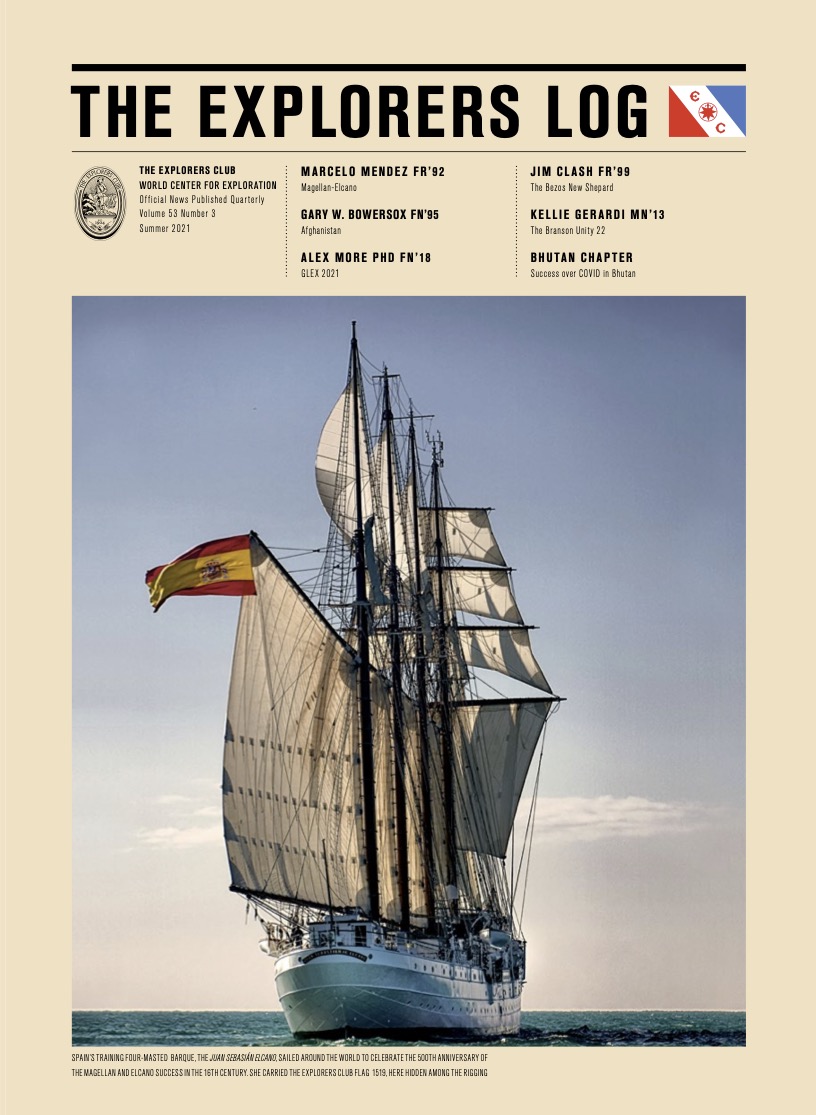
Exploring Afghanistan in 2021 has become increasingly difficult. Just read the State Department guidelines before departure: “Do not travel to Afghanistan due to COVID-19, crime, terrorism, civil unrest, kidnapping, and armed conflict.” And now we have withdrawn. At the time of this travel, the advice included: “ON APRIL 27, 2021, THE DEPARTMENT ORDERED THE DEPARTURE FROM U.S. EMBASSY KABUL OF U.S. GOVERNMENT EMPLOYEES WHOSE FUNCTIONS CAN BE PERFORMED ELSEWHERE. TRAVEL TO ALL AREAS OF AFGHANISTAN IS UNSAFE… TERRORIST AND INSURGENT GROUPS CONTINUE PLANNING AND EXECUTING ATTACKS IN AFGHANISTAN… AT LOCATIONS FREQUENTED BY U.S. CITIZENS AND OTHER FOREIGN NATIONALS. THE U.S. EMBASSY’S ABILITY TO PROVIDE ROUTINE AND EMERGENCY SERVICES TO U.S. CITIZENS IN AFGHANISTAN IS SEVERELY LIMITED, PARTICULARLY OUTSIDE OF KABUL.” I know you’re asking yourselves why anyone would go to Afghanistan. For me, it’s an affection for the people of Afghanistan. I’ve been traveling there and exploring the remote mines for 50 years and have a strong attachment to the gem mining industry. I have a three-year contract with USAID/DAI “to advance the gemstone industry of Afghanistan and increase its exports of gemstones.” However, like scenes from a James Bond movie, I was met at the Kabul airport by armed guards and driven in an armored vehicle to a fortified compound where I stayed and worked for two weeks. If I was to go rogue and head to the emerald mines in the Hindu Kush Mountains, it had to be unofficial and on my own. Doing so was a sleight of hand transition. Upon my departure from the heavily guarded compound, I was escorted by guards in an armored vehicle back to the Kabul airport. Inside the airport my USAID/DAI mission was completed, and we said our “goodbyes.” Moments after they left, an Afghan friend drove up in his dusty vehicle, and we were off to the Hindu Kush Mountains.

Afghanistan: The calm before the storm
Journal Article
Bowersox, G.W. (2021) Afghanistan: The calm before the storm. The Explorers Log, Vol. 53, No. 3, Summer, pp. 22–25.
Record No. 27406  |  Sinkankas/Born No.: NIS/NIB  |  RWHL
Exploring Afghanistan in 2021 has become increasingly difficult. Just read the State Department guidelines before departure: “Do not travel to Afghanistan due to COVID-19, crime, terrorism, civil unrest, kidnapping, and armed conflict.” And now we have withdrawn. At the time of this travel, the advice included: “ON APRIL 27, 2021, THE DEPARTMENT ORDERED THE DEPARTURE FROM U.S. EMBASSY KABUL OF U.S. GOVERNMENT EMPLOYEES WHOSE FUNCTIONS CAN BE PERFORMED ELSEWHERE. TRAVEL TO ALL AREAS OF AFGHANISTAN IS UNSAFE… TERRORIST AND INSURGENT GROUPS CONTINUE PLANNING AND EXECUTING ATTACKS IN AFGHANISTAN… AT LOCATIONS FREQUENTED BY U.S. CITIZENS AND OTHER FOREIGN NATIONALS. THE U.S. EMBASSY’S ABILITY TO PROVIDE ROUTINE AND EMERGENCY SERVICES TO U.S. CITIZENS IN AFGHANISTAN IS SEVERELY LIMITED, PARTICULARLY OUTSIDE OF KABUL.” I know you’re asking yourselves why anyone would go to Afghanistan. For me, it’s an affection for the people of Afghanistan. I’ve been traveling there and exploring the remote mines for 50 years and have a strong attachment to the gem mining industry. I have a three-year contract with USAID/DAI “to advance the gemstone industry of Afghanistan and increase its exports of gemstones.” However, like scenes from a James Bond movie, I was met at the Kabul airport by armed guards and driven in an armored vehicle to a fortified compound where I stayed and worked for two weeks. If I was to go rogue and head to the emerald mines in the Hindu Kush Mountains, it had to be unofficial and on my own. Doing so was a sleight of hand transition. Upon my departure from the heavily guarded compound, I was escorted by guards in an armored vehicle back to the Kabul airport. Inside the airport my USAID/DAI mission was completed, and we said our “goodbyes.” Moments after they left, an Afghan friend drove up in his dusty vehicle, and we were off to the Hindu Kush Mountains.

A brief account of the emerald and its magico-medical and symbolic-religious qualities against the Black Death
Journal Article
Bombini, R. (2021) A brief account of the emerald and its magico-medical and symbolic-religious qualities against the Black Death. Ceræ: An Australasian Journal of Medieval and Early Modern Studies, Vol. 8, pp. 66–72.
Record No. 16459  |  RWHL
When the Black Death started to spread throughout Europe following its arrival in 1347, the medical responses, looking for answers to the death and desolation that fell upon the people, were rapid. One of the first medical treatises written on the plague in this period was the Compendium on the epidemic by the college of the Faculty of Parisian Physicians (Compendium de epidemia per collegium Facultatis Medicorum Parisius). It was produced in October 1348, at the request of King Philip VI (1293 – 1350), by physicians from the University of Paris as a collective work explaining the etiology of the disease and proposing prevention and cure regimens, which were largely composed of the consumption of medicines.

A gemmological study of the reliquary crown of Namur, Belgium

Journal Article
Bruni, Y., Hatert, F., George, P., Cambier, H. and Strivay, D. (2021) A gemmological study of the reliquary crown of Namur, Belgium. European Journal of Mineralogy, Vol. 33, No. 2, pp. 221–232.
Record No. 6316  |  ISBN/ISSN: 16174011  |  DOI: https://dx.doi.org/10.5194/ejm-33-221-2021  |  Sinkankas/Born No.: NIS/NIB  |  RWHL
The reliquary crown, hosted in the diocesan museum of Namur, was produced during the beginning of the 13th century to shelter a fragment of the holy crown of thorns. This beautiful piece of goldsmithery is made of eight gold plates, topped by round lobes, and connected to each other by hinges blocked with a pin decorated by a pearl. The crown is decorated by filigrees, flowers, and approximately 400 pearls and coloured (green, reddish pink, turquoise, red, blue) stones showing simple cutting with various sizes and shapes. Raman and portable X-ray fluorescence spectrometer (pXRF) techniques have been used to determine the nature and sources of all samples, as well as the composition of filigrees. Analyses have identified emeralds from Pakistan, reddish pink spinels from Tajikistan, red almandine garnets from India, turquoise from Iran, blue sapphires from Sri Lanka or Myanmar, and European pearls. The filigrees contain approximately 86 wt % Au, 7 wt % Ag, and 7 wt % Cu, thus confirming a gold-rich composition. The gemstones, contemporary with the crown, probably arrived in Europe by the silk trade road.

Exploring the Literature of Emerald

Emerald literature spans gemology, mineralogy, deposits, identification, treatments, synthesis, history and the gem trade, with important sources covering deposits around the world.

For a curated guide to this subject, read Green Fire — Lotus Gemology's Guide to the Literature of Emerald.

About Four Treasures

Four Treasures is Lotus Gemology's freely accessible gemological reference database. Use the full database to search by author, title or keyword and explore literature on gemology, mineralogy, jewelry and related fields. Where available, hyperlinks on titles may lead directly to the full publication.

Search the Complete Four Treasures Database