
Emerald Bibliography

Emerald Bibliography

Explore books, articles and historical sources on emerald in Four Treasures, the Lotus Gemology reference database. This bibliography brings together matching records from the collection, with publication details, abstracts and cover images where available.

Emerald References

The list below matches the terms emerald or emeralds in the database's searchable fields. Some references discuss emeralds as part of a broader subject.
381–400 of 851 matching references

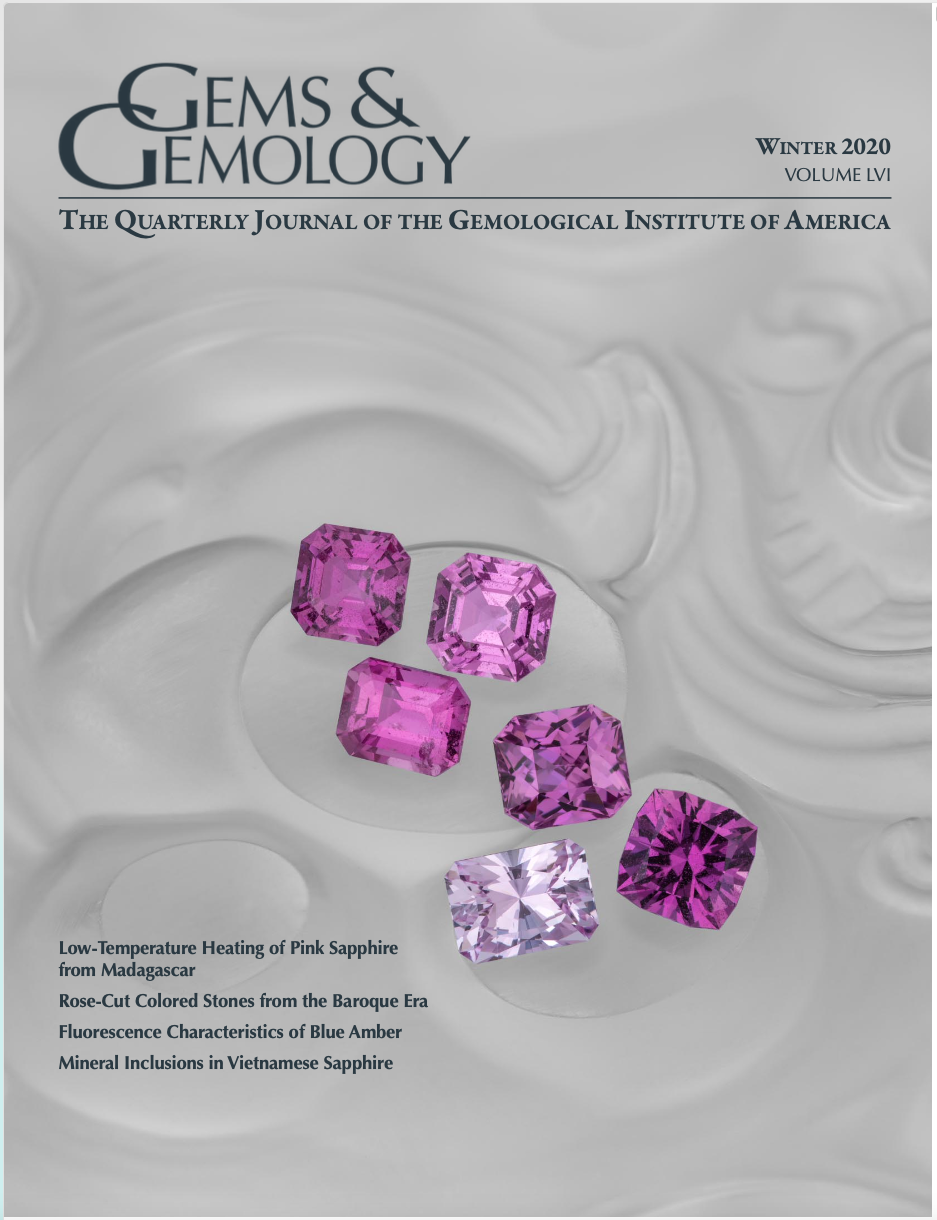
Gem News International: New emerald locality in Southern California
Journal Article
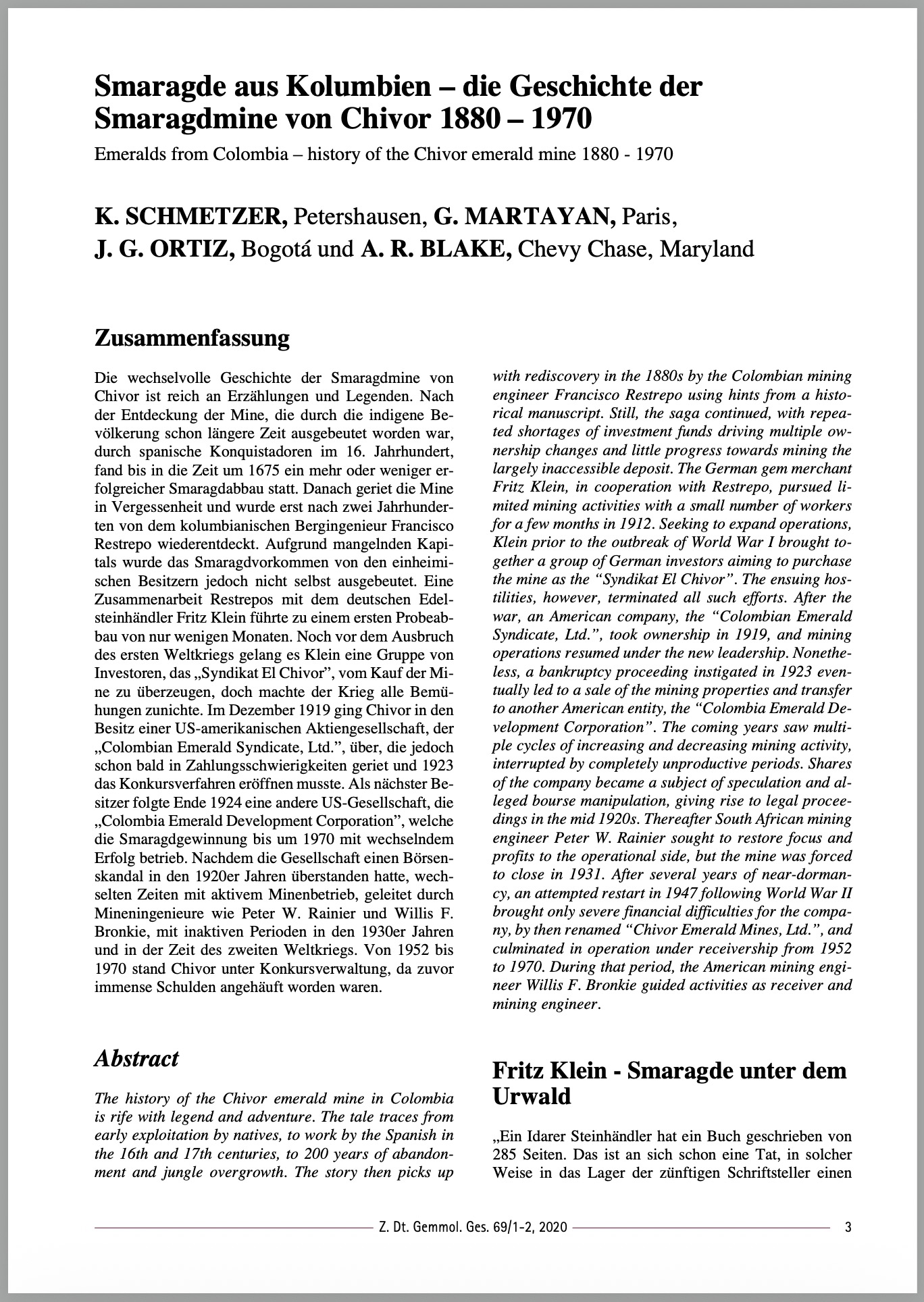
Celestian, A.J. and Edley, R. (2020) Gem News International: New emerald locality in Southern California. Gems & Gemology, Vol. 56, No. 4, Winter, pp. 534–535.
Record No. 29975  |  ISBN/ISSN: 0016-626X  |  Sinkankas/Born No.: NIS/NIB  |  RWHL
Located about 60 miles east of San Diego in the Julian Mining District, a new emerald deposit embedded in biotite schist has been discovered near the surface by author RE and Bruce Edley. While the area is known for pegmatites and hydrothermal deposits, emeralds had not been produced here previously; the recovered single crystals are mostly translucent dark green with inclusions and under 2 cm, alongside a few light-colored green beryl crystals from a nearby pegmatite.

Smaragde aus Kolumbien – die Geschichte der Smaragdmine von Chivor 1880–1970
Emeralds from Colombia – history of the Chivor emerald mine 1880-1970
Journal Article
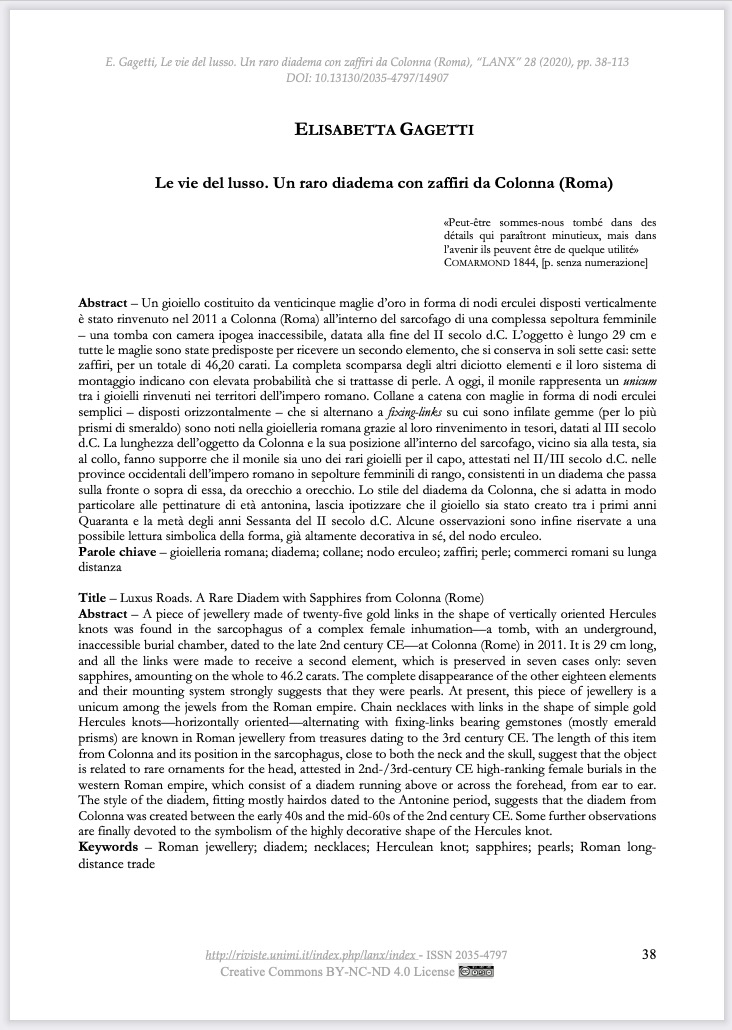
Schmetzer, K. (2020) Smaragde aus Kolumbien – die Geschichte der Smaragdmine von Chivor 1880–1970. [Emeralds from Colombia – history of the Chivor emerald mine 1880-1970] Zeitschrift der Deutschen Gemmologischen Gesellschaft, Vol. 69, No. 1–2, pp. 3–46.
Record No. 29544  |  Sinkankas/Born No.: NIS/NIB  |  RWHL
The history of the Chivor emerald mine in Colombia is rife with legend and adventure. The tale traces from early exploitation by natives, to work by the Spanish in the 16th and 17th centuries, to 200 years of abandonment and jungle overgrowth. The story then picks up with rediscovery in the 1880s by the Colombian mining engineer Francisco Restrepo using hints from a historical manuscript. Still, the saga continued, with repeated shortages of investment funds driving multiple ownership changes and little progress towards mining the largely inaccessible deposit. The German gem merchant Fritz Klein, in cooperation with Restrepo, pursued limited mining activities with a small number of workers for a few months in 1912. Seeking to expand operations, Klein prior to the outbreak of World War I brought together a group of German investors aiming to purchase the mine as the “Syndikat El Chivor”. The ensuing hostilities, however, terminated all such efforts. After the war, an American company, the “Colombian Emerald Syndicate, Ltd.”, took ownership in 1919, and mining operations resumed under the new leadership. Nonetheless, a bankruptcy proceeding instigated in 1923 eventually led to a sale of the mining properties and transfer to another American entity, the “Colombia Emerald Development Corporation”. The coming years saw multiple cycles of increasing and decreasing mining activity, interrupted by completely unproductive periods. Shares of the company became a subject of speculation and alleged bourse manipulation, giving rise to legal proceedings in the mid-1920s. Thereafter South African mining engineer Peter W. Rainier sought to restore focus and profits to the operational side, but the mine was forced to close in 1931. After several years of near-dormancy, an attempted restart in 1947 following World War II brought only severe financial difficulties for the company, by then renamed “Chivor Emerald Mines, Ltd.”, and culminated in operation under receivership from 1952 to 1970. During that period, the American mining engineer Willis F. Bronkie guided activities as receiver and mining engineer.

Le vie del lusso. Un raro diadema con zaffiri da Colonna (Roma)
Luxus Roads. A Rare Diadem with Sapphires from Colonna (Rome)
Journal Article
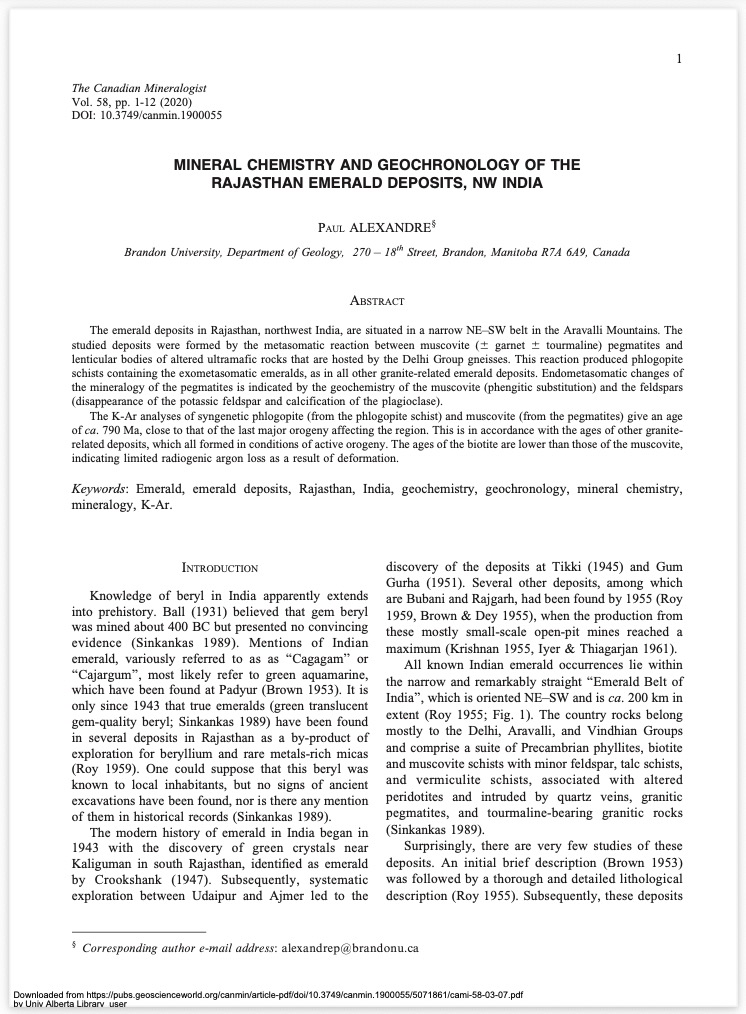
Gagetti, E. (2020) Le vie del lusso. Un raro diadema con zaffiri da Colonna (Roma). [Luxus Roads. A Rare Diadem with Sapphires from Colonna (Rome)] LANX. Journal of the Scuola di Specializzazione in Beni Archeologici - Università degli Studi di Milano, No. , pp. 38–113.
Record No. 27686  |  DOI: https://doi.org/10.13130/2035-4797/14907  |  Sinkankas/Born No.: NIS/NIB  |  Language: in Italian with English abstract  |  RWHL
A piece of jewelry consisting of twenty-five gold links in the form of Herculean knots arranged vertically was discovered in 2011 at Colonna (Rome) inside the sarcophagus of a complex female burial—a tomb with an inaccessible hypogeal chamber, dated to the late 2nd century CE. The object is 29 cm long, and all the links were designed to receive a secondary element, which survives in only seven cases: seven sapphires, totaling 46.20 carats. The complete absence of the other eighteen elements and their mounting system strongly suggests that they were pearls. To date, this ornament is unique among jewelry found in the territories of the Roman Empire. Chain necklaces with links in the form of simple Herculean knots—arranged horizontally—alternating with fixing-links strung with gems (mostly emerald prisms) are known in Roman jewelry thanks to their discovery in hoards dated to the 3rd century CE. The length of the object from Colonna and its position within the sarcophagus, near both the head and neck, suggest that it is one of the rare head ornaments attested in the 2nd/3rd century CE in the western provinces of the Roman Empire in high-status female burials, consisting of a diadem worn across or above the forehead, from ear to ear. The style of the diadem from Colonna, which particularly suits Antonine-era hairstyles, suggests that the piece was created between the early 140s and the mid-160s CE. Some final remarks are reserved for a possible symbolic interpretation of the form—already highly decorative in itself—of the Herculean knot.

Mineral chemistry and geochronology of the Rajasthan emerald deposits, NW India
Journal Article
Alexandre, P. (2020) Mineral chemistry and geochronology of the Rajasthan emerald deposits, NW India. The Canadian Mineralogist, Vol. 58, No. 3, June, pp. 335–346.
Record No. 27207  |  DOI: https://doi.org/10.3749/canmin.1900055  |  Sinkankas/Born No.: NIS/NIB  |  RWHL
The emerald deposits of Rajasthan, in northwest India, are located within a narrow NE–SW-trending belt in the Aravalli Mountains. These deposits formed through metasomatic reactions between muscovite (± garnet ± tourmaline) pegmatites and lenticular bodies of altered ultramafic rocks hosted within the Delhi Group gneisses. This process produced phlogopite schists containing exometasomatic emeralds, consistent with other granite-related emerald occurrences. Endometasomatic alteration of the pegmatites is reflected in muscovite geochemistry (phengitic substitution) and in feldspar alteration (disappearance of potassic feldspar and calcification of plagioclase). K–Ar dating of syngenetic phlogopite from the phlogopite schists and muscovite from the pegmatites yields an age of approximately 790 Ma, corresponding to the final major orogenic event in the region. This age aligns with the formation timing of other granite-related emerald deposits, all of which are associated with active orogenic settings. Biotite yields younger ages than muscovite, suggesting minor radiogenic argon loss due to deformation.

HPHT synthesis and characterization of NaAlSi₂O₆ jadeite doped with different oxides
不同氧化物掺杂体系下硅酸铝钠硬玉的高温高压合成与表征
Thesis
Zhao, L. (2020) HPHT synthesis and characterization of NaAlSi₂O₆ jadeite doped with different oxides. [不同氧化物掺杂体系下硅酸铝钠硬玉的高温高压合成与表征]., Changchun: Jilin University, 105 pp.
Record No. 26425  |  Sinkankas/Born No.: NIS/NIB  |  Language: in Chinese  |  RWHL
Jadeite, commonly known as jade, is a rare gemstone composed primarily of sodium aluminosilicate with the chemical formula NaAlSi₂O₆. Its physical and chemical properties are closely tied to geological processes, making it a key subject in both gemological and geological research. This dissertation investigates the high-temperature and high-pressure (HTHP) synthesis of sodium aluminosilicate jadeite, including systems doped with various oxides, in an effort to simulate natural jadeite formation environments. By studying the experimental conditions and the mineralogical and physical characteristics of synthetic jadeite, the work aims to explore the mechanisms of natural jadeite formation and its coloration process. The color and texture of jadeite are closely related to its crystallinity and internal structure. Key to producing gem-quality synthetic jadeite is enhancing the conversion of amorphous glass material to jadeite, maximizing transparency, and enabling coloring ions to enter the jadeite crystal lattice for stable coloration. This study optimized the synthesis assembly and processing of sodium aluminosilicate jadeite, successfully producing samples doped with different oxides and yielding several innovations: (1) An optimized experimental chamber for HTHP synthesis was designed, using a sodium chloride–zirconia composite as the pressure-transmitting medium. This ensured pressure and temperature stability while preventing sample breakage due to sticking with the medium. (2) The preparation process for doped glass was improved by mixing metaaluminate and sodium silicate nonahydrate with trace oxide colorants. Multiple quenching steps produced high-quality doped glass, effectively eliminating the common “black spots” and “color patches” seen in synthetic jadeite. (3) Jadeite synthesis was carried out under various pressures, establishing the pressure-temperature ranges required for HTHP synthesis. As pressure increased, the necessary synthesis temperature also rose. Undoped samples exhibited uniform, dense textures and no cracking, with a homogeneous white appearance, a pure jadeite composition, and typical silicate chain morphology and vibrational characteristics. (4) By doping with 0.4 wt.% of TiO₂, V₂O₅, Cr₂O₃, MnO, Fe₂O₃, CoO, NiO, and CuO, jadeite samples with gray, apple green, emerald green, pink-purple, light yellow-green, cobalt blue, yellow, and sky blue colors were successfully synthesized. XRD analysis confirmed that all samples were composed primarily of jadeite. When doped with 1.0 wt.% MnO, the jadeite turned bluish-purple, with synthesis possible at pressures as low as 2.5 GPa. (5) Microstructure, Raman, and infrared spectroscopy of the high-quality doped jadeite samples showed that those synthesized at higher pressures exhibited a fibrous woven texture resembling natural jadeite. At 5.0 GPa and 1450 °C, samples doped with 0.4 wt.% TiO₂, MnO, Cr₂O₃, and Fe₂O₃ exhibited strong Si–O tetrahedral vibrational peaks at 373 cm⁻¹ and 698 cm⁻¹, identical to those of natural jadeite, with no extraneous peaks. Infrared spectra confirmed typical jadeite absorption features. (6) Elemental and UV–Vis spectral analysis of the doped jadeite samples indicated elemental compositions consistent with natural jadeite. The concentrations of color-causing ions matched the doping levels, suggesting effective incorporation into the crystal lattice. UV–Vis absorption spectra showed distinct ion absorption peaks corresponding to each dopant, consistent with the mechanism of coloration through ion-based color centers.

Gem News International: Update on inclusions in emeralds from Davdar, China
Journal Article
Cui, D., Liao, Z., Qi, L. and Zhou, Z. (2020) Gem News International: Update on inclusions in emeralds from Davdar, China. Gems & Gemology, Vol. 56, No. 4, Winter, pp. 543–545.
Record No. 6252  |  ISBN/ISSN: 0016626X  |  RWHL
Brief article on the inclusions in Davdar, China emeralds.

Update on emeralds from the Mananjary-Irondro area, Madagascar
Journal Article
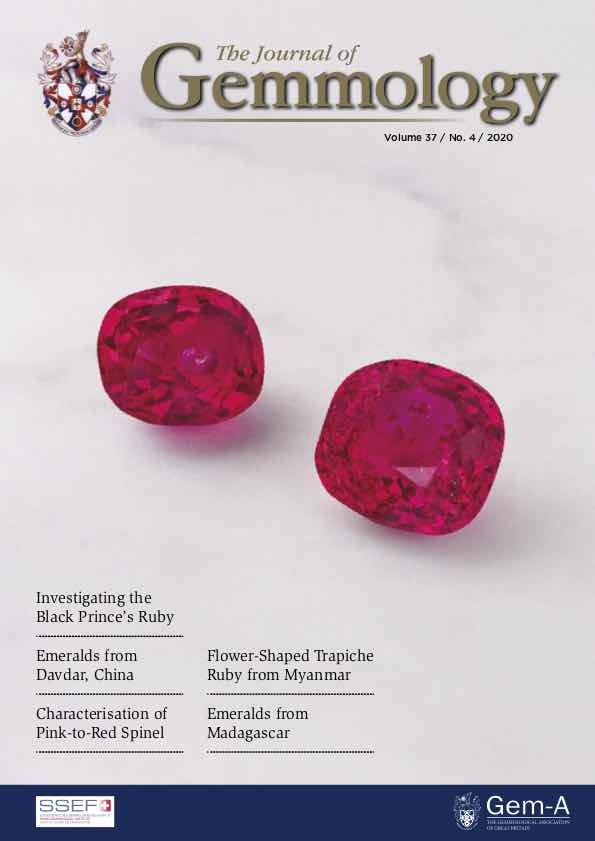
Pardieu, V., Sangsawong, S., Cornuz, L., Raynaud, V. and Luetrakulprawat, S. (2020) Update on emeralds from the Mananjary-Irondro area, Madagascar. Journal of Gemmology, Vol. 37, No. 4, pp. 416–425.
Record No. 6171  |  ISBN/ISSN: 221252  |  DOI: https://doi.org/10.15506/JoG.2020.37.4.416  |  RWHL
Emerald deposits in eastern Madagascar near Mananjary were discovered in the 1970s by Jeannot Andrianjafy and have yielded some high-quality emeralds. There are currently a few mining sites being worked by Andrianjafy’s children. This article characterises emerald samples that were collected in 2019 at two of the deposits—Ambodivandrika and Ambatomaneno, in the northern and southern parts of the area, respectively—where the mineralisation occurs in schist associated with pegmatites. The samples from each deposit showed some significant differences in their internal features and trace-element composition (i.e. alkalis and others such as Mn, Zn and Ga). Emeralds from both mines share many characteristics with those from other schist-type deposits, such as in Zambia, Brazil and elsewhere.

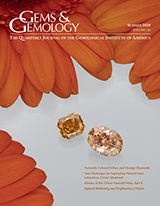
A study of emeralds from Davdar, North-Western China
Journal Article
Cui, D., Liao, Z., Qi, L., Zhong, Q. and Zhou, Z. (2020) A study of emeralds from Davdar, North-Western China. Journal of Gemmology, Vol. 37, No. 4, pp. 374–392.
Record No. 6168  |  ISBN/ISSN: 221252  |  RWHL
At the Davdar mine in Xinjiang, north-western China, emeralds are hosted mainly by carbonate, quartz–carbonate and quartz veins cutting metasedimentary rocks, and are associated with minerals such as hematite, dolomite, quartz, orthoclase and albite. Sixteen rough emeralds obtained during the authors’ visit to the mining area in 2019 were studied by standard gemmological techniques and various spectroscopic methods (FTIR, Raman, UV–Vis–NIR and EPR), as well as LA-ICP-MS chemical analysis. The analysed samples were mostly coloured by Cr, and showed a wide range of Fe, V, Mg and alkali contents, along with relatively low Cs, Rb and Sc. UV–Vis–NIR spectra showed features at 370 nm (Fe³⁺), 430 nm (Cr³⁺ with contributions from V³⁺ and possibly Fe³⁺), 580–630 nm (Cr³⁺ and V³⁺), 638 and 683 nm (Cr³⁺), and 850 nm (Fe²⁺ and possibly Fe²⁺–Fe³⁺ interactions). In addition, the more V-rich emeralds displayed a distinct V³⁺ absorption band at about 385–395 nm. Notably, the chemical composition of Davdar emeralds shows significant overlap with those from Panjshir, Afghanistan.

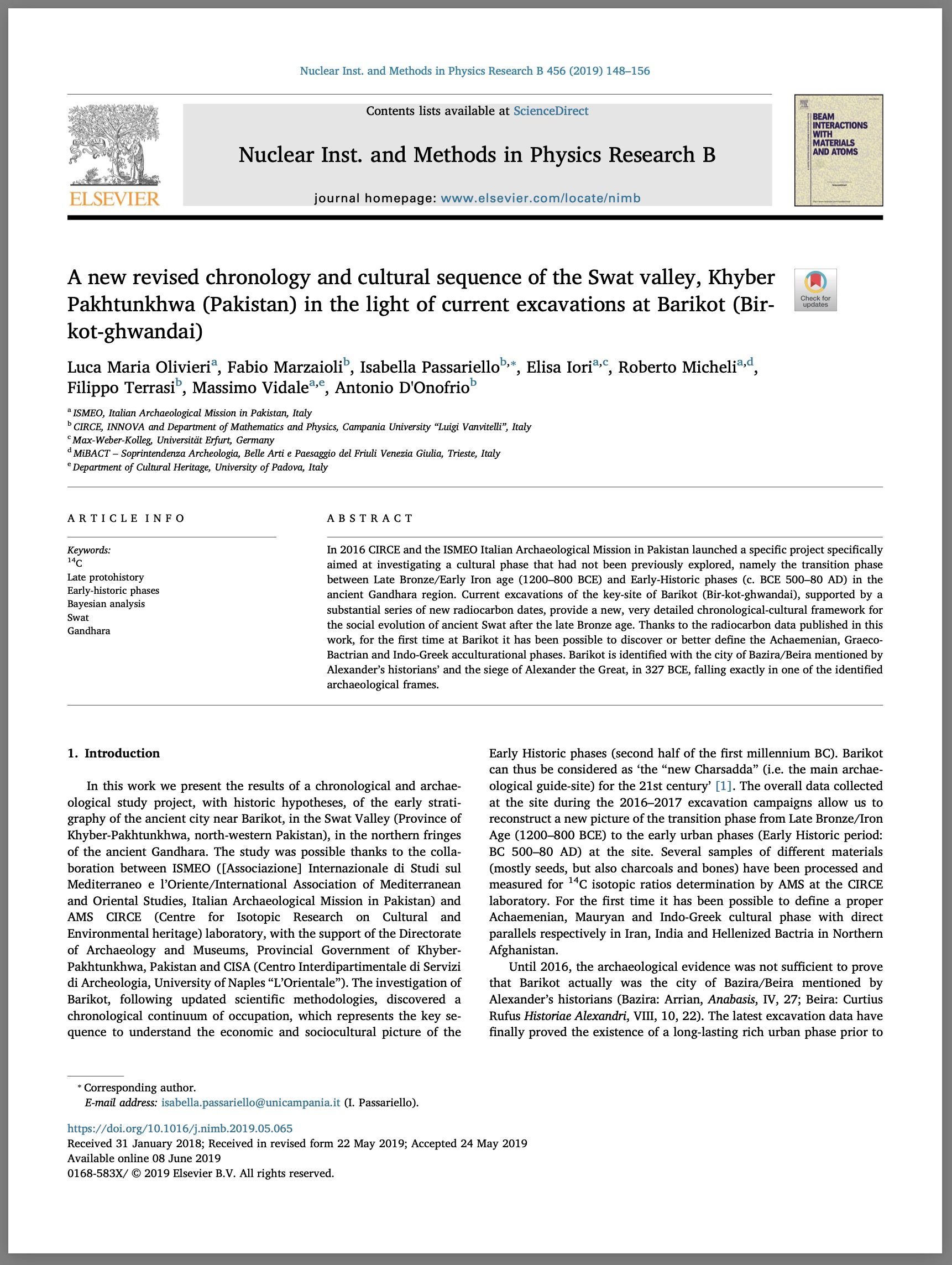
G&G Micro-World: Unusually shaped rutile crystal inclusions in Russian emerald
Journal Article
Khowpong, C. (2020) G&G Micro-World: Unusually shaped rutile crystal inclusions in Russian emerald. Gems & Gemology, Vol. 56, No. 2, Summer, p. 294.
Record No. 4332  |  ISBN/ISSN: 0016626X  |  RWHL
Russian emeralds have been mined since the mid-nineteenth century near Yekaterinburg in the Ural Mountains. They are classified as schist-related emeralds, meaning they formed in the reaction zone of a pegmatite intruding into schists. Similar emeralds are found in Zambia, Brazil, and Ethiopia. All of these deposits can show a similar inclusion scene (S. Saeseaw et al., “Geographic origin determination of emerald,” Winter 2019 G&G, pp. 614–646). A 1.489 ct Russian emerald crystal collected by GIA at the Mariinsky Priisk mine showed several interesting included crystals. The crystals appeared as long yellowish brown rods (figure 6). In some cases, they appeared as a group of disordered coarse needles (figure 7). They were identified by Raman spectroscopy as rutile. Although rutile crystal inclusions are common in schist-related emeralds, this crystal morphology is unusual and has not previously been mentioned in the literature. Therefore, this inclusion might be unique and different from the other schist-related emerald sources. These unusual patterns could potentially be an indicator of Russian origin.

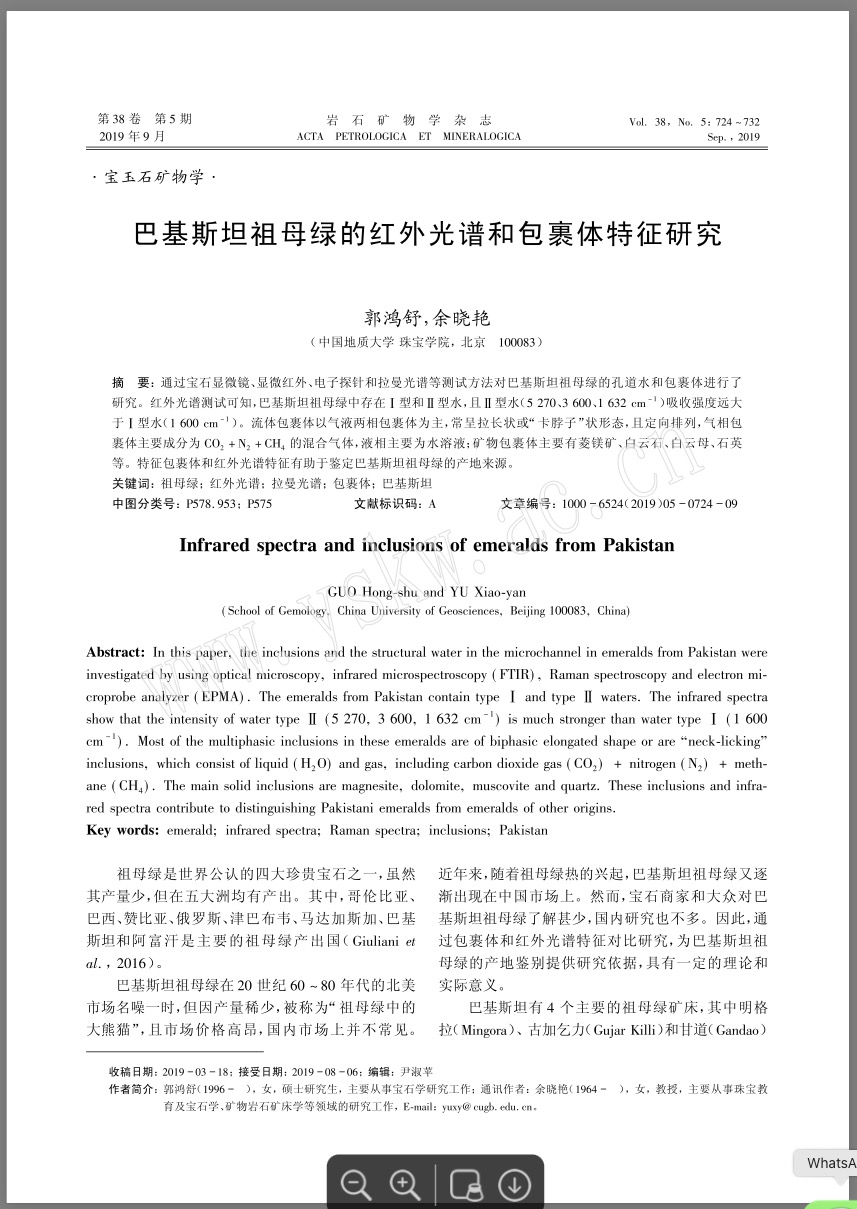
A new revised chronology and cultural sequence of the Swat valley, Khyber Pakhtunkhwa (Pakistan) in the light of current excavations at Barikot (Bir-kot-ghwandai)
Journal Article
Olivieri, L.M., Fabio Marzaioli, F., Passariello, I., Iori, E., Micheli, R., Terrasi, F., Vidale, M. and D’Onofrio, A. (2019) A new revised chronology and cultural sequence of the Swat valley, Khyber Pakhtunkhwa (Pakistan) in the light of current excavations at Barikot (Bir-kot-ghwandai). Nuclear Instruments and Methods in Physics Research B, Vol. 456, 1 October, pp. 148–156.
Record No. 27601  |  DOI: https://doi.org/10.1016/j.nimb.2019.05.065  |  Sinkankas/Born No.: NIS/NIB  |  RWHL
In 2016 CIRCE and the ISMEO Italian Archaeological Mission in Pakistan launched a specific project specifically aimed at investigating a cultural phase that had not been previously explored, namely the transition phase between Late Bronze/Early Iron age (1200–800 BCE) and Early-Historic phases (c. BCE 500–80 AD) in the ancient Gandhara region. Current excavations of the key-site of Barikot (Bir-kot-ghwandai), supported by a substantial series of new radiocarbon dates, provide a new, very detailed chronological-cultural framework for the social evolution of ancient Swat after the late Bronze age. Thanks to the radiocarbon data published in this work, for the first time at Barikot it has been possible to discover or better define the Achaemenian, Graeco-Bactrian and Indo-Greek acculturational phases. Barikot is identified with the city of Bazira/Beira mentioned by Alexander’s historians’ and the siege of Alexander the Great, in 327 BCE, falling exactly in one of the identified archaeological frames.

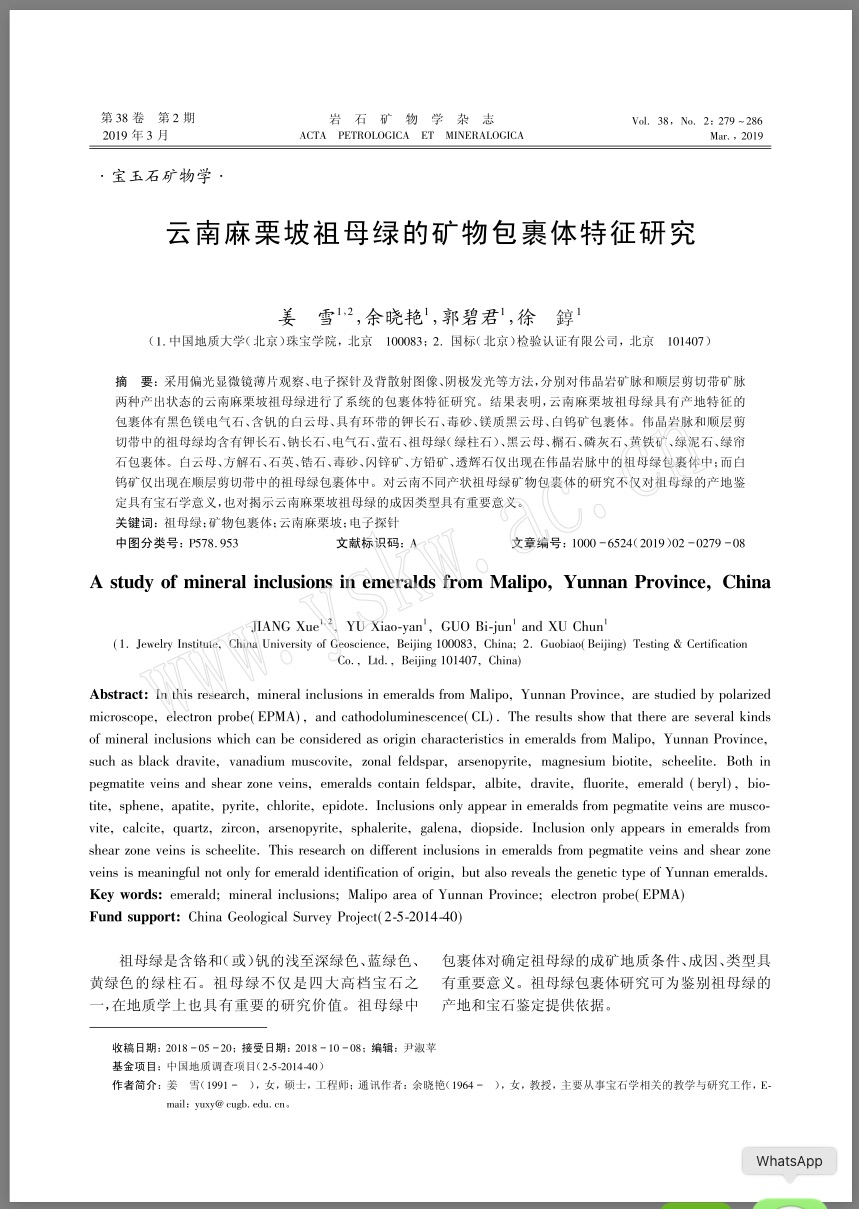
Infrared spectra and inclusions of emeralds from Pakistan
巴基斯坦祖母绿的红外光谱和包裹体特征研究
Journal Article
Guo, H. and Yu, X. (2019) Infrared spectra and inclusions of emeralds from Pakistan. [巴基斯坦祖母绿的红外光谱和包裹体特征研究] Acta Petrologica et Mineralogica [岩石矿物学杂志], Vol. 38, No. 5, pp. 724–732.
Record No. 17171  |  Sinkankas/Born No.: NIS/NIB  |  Language: in Chinese with English abstract  |  RWHL
In this paper, the inclusions and the structural water in the microchannel in emeralds from Pakistan were investigated by using optical microscopy, infrared microspectroscopy (FTIR), Raman spectroscopy, and electron microprobe analyzer (EPMA). The emeralds from Pakistan contain type I and type II waters. The infrared spectra show that the intensity of water type II (5270, 3600, 1632 cm⁻¹) is much stronger than water type I (1600 cm⁻¹). Most of the multiphasic inclusions in these emeralds are of biphasic elongated shape or are “neck-licking” inclusions, which consist of liquid (H₂O) and gas, including carbon dioxide gas (CO₂) + nitrogen (N₂) + methane (CH₄). The main solid inclusions are magnesite, dolomite, muscovite, and quartz. These inclusions and infrared spectra contribute to distinguishing Pakistani emeralds from emeralds of other origins.

A study of mineral inclusions in emeralds from Malipo, Yunnan Province, China
Journal Article
Jiang, X., Yu, X., Guo, B. and Xu, C. (2019) A study of mineral inclusions in emeralds from Malipo, Yunnan Province, China. Acta Petrologica Et Mineralogica, Vol. 38, No. 2, pp. 279–286.
Record No. 17168  |  Sinkankas/Born No.: NIS/NIB  |  Language: in Chinese with English abstract  |  RWHL
In this research, mineral inclusions in emeralds from Malipo, Yunnan Province, are studied by polarized microscope, electron probe(EPMA), and cathodoluminescence(CL). The results show that there are several kinds of mineral inclusions which can be considered as origin characteristics in emeralds from Malipo, Yunnan Province, such as black dravite, vanadium muscovite, zonal feldspar, arsenopyrite, magnesium biotite, scheelite. Both in pegmatite veins and shear zone veins, emeralds contain feldspar, albite, dravite, fluorite, emerald (beryl), biotite, sphene, apatite, pyrite, chlorite, epidote. Inclusions only appear in emeralds from pegmatite veins are muscovite, calcite, quartz, zircon, arsenopyrite, sphalerite, galena, diopside. Inclusion only appears in emeralds from shear zone veins is scheelite. This research on different inclusions in emeralds from pegmatite veins and shear zone veins is meaningful not only for emerald identification of origin, but also reveals the genetic type of Yunnan emeralds.

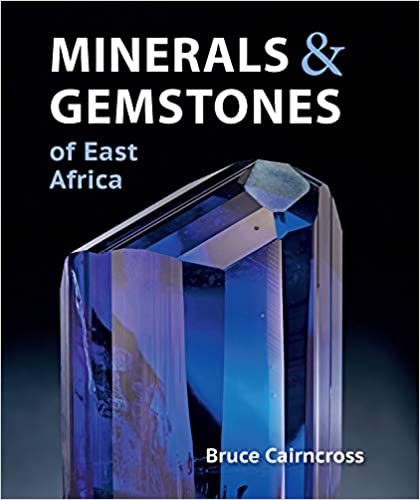
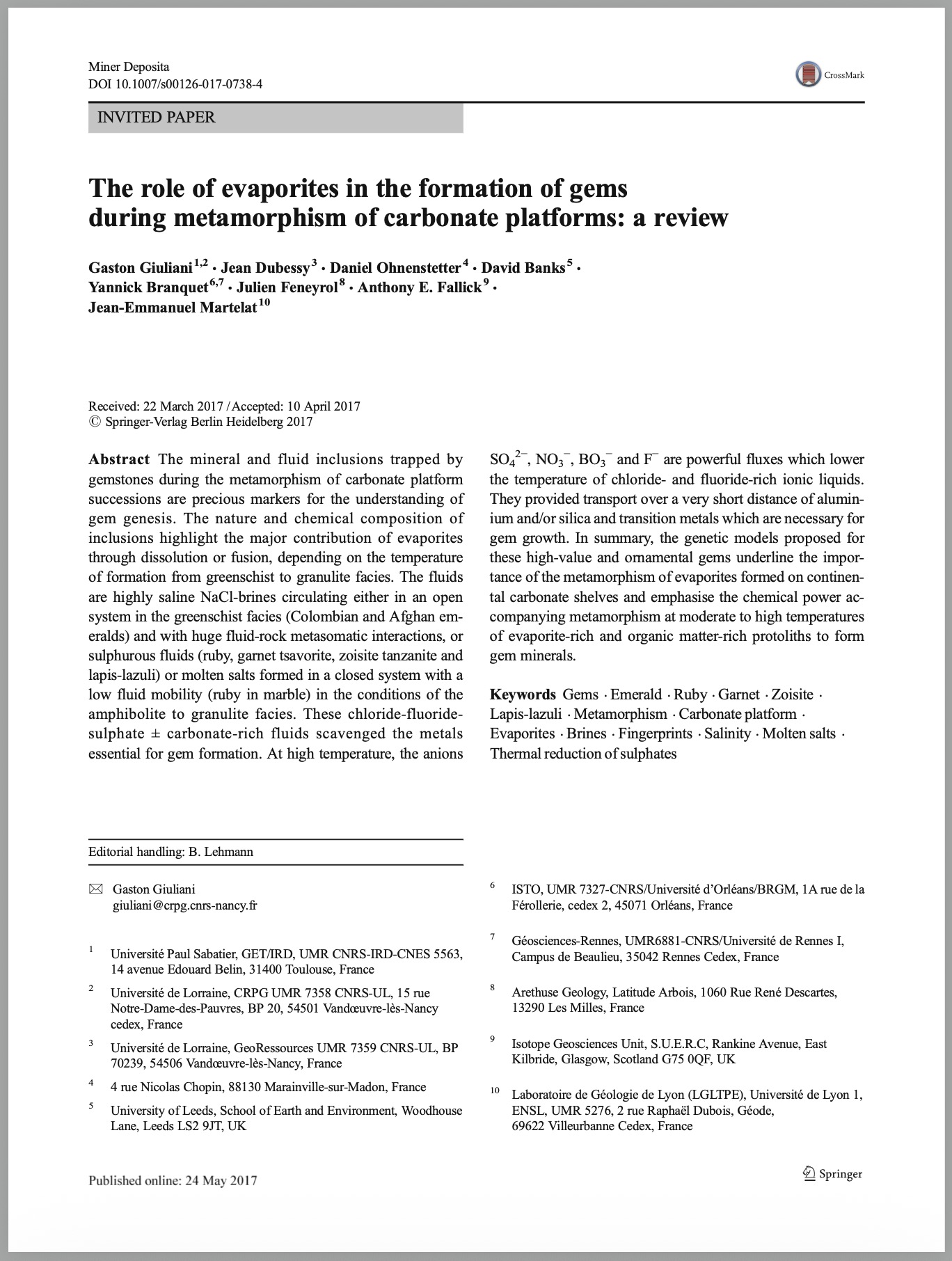
Minerals & Gemstones of East Africa: Burundi, Kenya, Rwanda, Tanzania and Uganda
Book
Cairncross, B. (2019) Minerals & Gemstones of East Africa: Burundi, Kenya, Rwanda, Tanzania and Uganda. Cape Town, Struik Nature, 144 pp.
Record No. 4240  |  ISBN/ISSN: 9781780000000  |  Sinkankas/Born No.: NIS/NIB  |  RWHL
A focus on the minerals and gemstones of the East African region. A comprehensive introduction unpacks the topic and the regional geology; it is followed by an A to Z of minerals and gemstones, incorporating detailed text and multiple images for each specimen. The large format allows for a superb selection of photographs – pre-cut and polished specimens (and images to portray uses and jewelry where relevant) – to bring the subject alive.

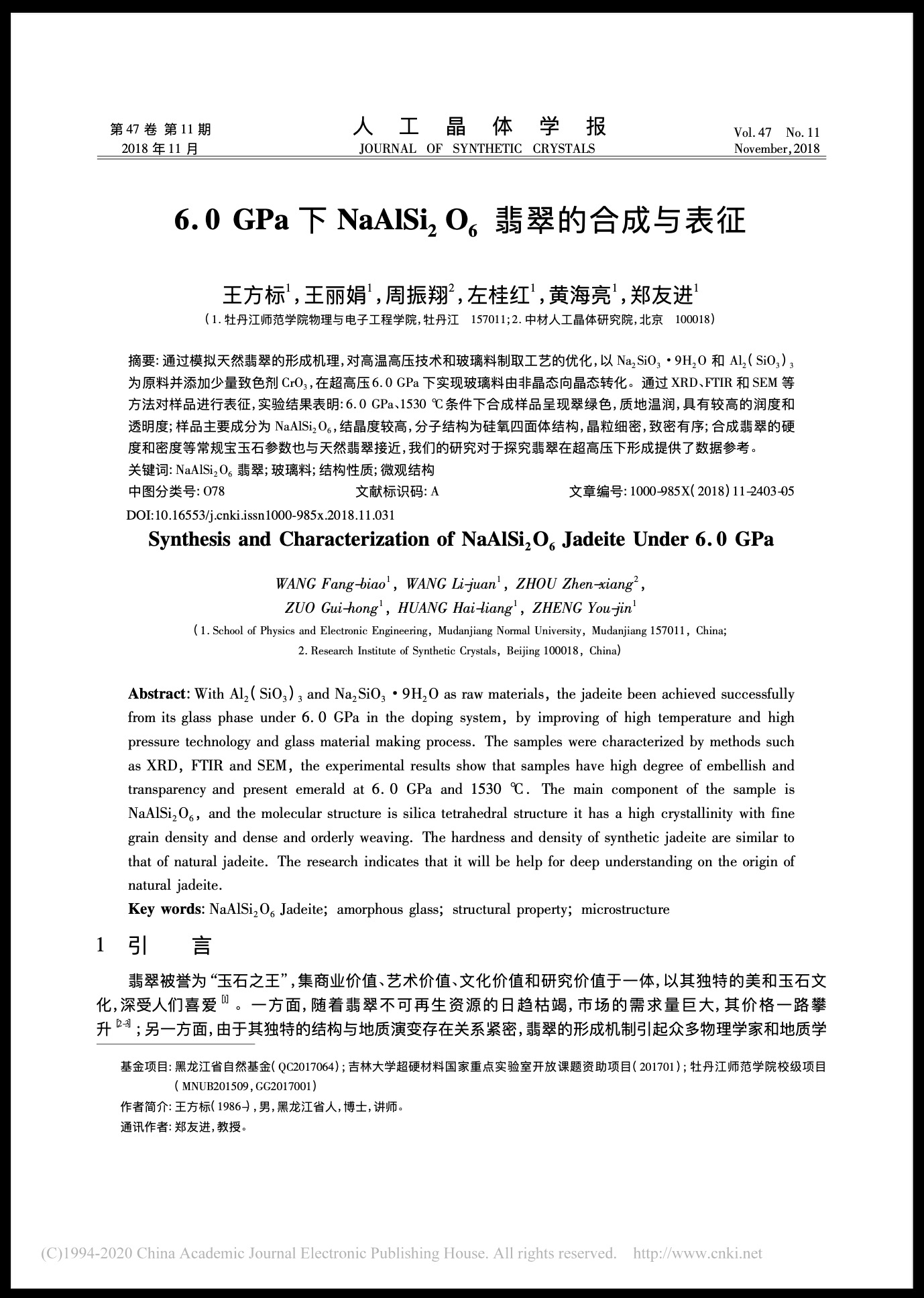
The role of evaporites in the formation of gems during metamorphism of carbonate platforms: a review
Journal Article
Guiliani, G., Dubessy, J., Ohnenstetter, D., Banks, D., Branquet, Y., Feneyrol, J., Fallick, A.E. and Martelat, J.-E. (2018) The role of evaporites in the formation of gems during metamorphism of carbonate platforms: a review. Mineralium Deposita, Vol. 53, No. 1, pp. 1–20.
Record No. 27279  |  ISBN/ISSN: 264598  |  DOI: https://doi.org/10.1007/s00126-017-0738-4  |  Sinkankas/Born No.: NIS/NIB  |  RWHL
The mineral and fluid inclusions trapped by gemstones during the metamorphism of carbonate platform successions are precious markers for the understanding of gem genesis. The nature and chemical composition of inclusions highlight the major contribution of evaporites through dissolution or fusion, depending on the temperature of formation from greenschist to granulite facies. The fluids are highly saline NaCl-brines circulating either in an open system in the greenschist facies (Colombian and Afghan emeralds) and with huge fluid-rock metasomatic interactions, or sulphurous fluids (ruby, garnet, tsavorite, zoisite, tanzanite, and lapis-lazuli) or molten salts formed in a closed system with a low fluid mobility (ruby in marble) in the conditions of the amphibolite to granulite facies. These chloride-fluoride-sulphate ± carbonate-rich fluids scavenged the metals essential for gem formation. At high temperature, the anions SO₄²⁻, NO₃⁻, BO₃³⁻, and F⁻ are powerful fluxes which lower the temperature of chloride- and fluoride-rich ionic liquids. They provided transport over a very short distance of aluminium (Al) and/or silica (SiO₂) and transition metals which are necessary for gem growth. In summary, the genetic models proposed for these high-value and ornamental gems underline the importance of the metamorphism of evaporites formed on continental carbonate shelves and emphasise the chemical power accompanying metamorphism at moderate to high temperatures of evaporite-rich and organic matter-rich protoliths to form gem minerals.

Synthesis and characterization of NaAlSi₂O₆ jadeite under 6.0 GPa

6.0 GPa 下NaAlSi2O6 翡翠的合成与表征
Journal Article
Wang, F., Wang, L., Zhou, Z., Zuo, G., Huang, H. and Zheng, Y. (2018) Synthesis and characterization of NaAlSi₂O₆ jadeite under 6.0 GPa. [6.0 GPa 下NaAlSi2O6 翡翠的合成与表征] Journal of Synthetic Crystals, Vol. 47, No. 11, November, pp. 2403–2407.
Record No. 26418  |  DOI: https://doi.org/10.16553/j.cnki.issn1000-985x.2018.11.031  |  Sinkankas/Born No.: NIS/NIB  |  Language: in Chinese with English abstract  |  RWHL
Using Al₂(SiO₃)₃ and Na₂SiO₃·9H₂O as raw materials, jadeite was successfully synthesized from its glass phase under 6.0 GPa pressure in a doped system, through advances in high-temperature and high-pressure techniques and improvements in glass material processing. Characterization by XRD, FTIR, and SEM confirmed that the resulting samples exhibited a high degree of luster and transparency, with emerald-like appearance achieved at 6.0 GPa and 1530 °C. The primary phase of the synthetic material was NaAlSi₂O₆, featuring a silica tetrahedral molecular structure, high crystallinity, fine grain size, and a dense, orderly texture. The hardness and density of the synthetic jadeite closely matched those of natural jadeite, suggesting that such research can contribute significantly to understanding the natural formation processes of jadeite.

Study of emerald-grade beryl from tungsten-beryllium polymetallic deposit in Zhen’an, Shaanxi Province by electron probe and micro-area X-ray diffraction [电子探 针和微区X射线衍射研究陕西镇安 钨-铍多金属矿床中祖母绿级绿柱石]
电子探 针和微区X射线衍射研究陕西镇安 钨-铍多金属矿床中祖母绿级绿柱石
Journal Article
Dai, H., Wang, D., Liu, L., Huang, F. and Wang, C. (2018) Study of emerald-grade beryl from tungsten-beryllium polymetallic deposit in Zhen’an, Shaanxi Province by electron probe and micro-area X-ray diffraction [电子探 针和微区X射线衍射研究陕西镇安 钨-铍多金属矿床中祖母绿级绿柱石]. Rock and Mineral Analysis [岩矿测试], Vol. 37, No. 3, May, pp. 336–345.
Record No. 17173  |  Sinkankas/Born No.: NIS/NIB  |  Language: in Chinese  |  RWHL
Dai and colleagues investigate emerald-grade beryl from the Zhen’an tungsten–beryllium polymetallic deposit in Shaanxi Province using electron-probe microanalysis and micro-area X-ray diffraction. The study characterizes the chemical composition and crystal structure of the beryl and examines the relationship between compositional variations and its emerald-green coloration. Electron-probe analyses are used to determine major and minor elements and substitutions within the beryl structure, while micro-area X-ray diffraction provides structural information on selected portions of the material. The results are considered in relation to the mineralogical characteristics and formation of emerald-grade beryl within the Zhen’an polymetallic deposit, providing analytical data useful for understanding this Chinese emerald occurrence and its geological environment.

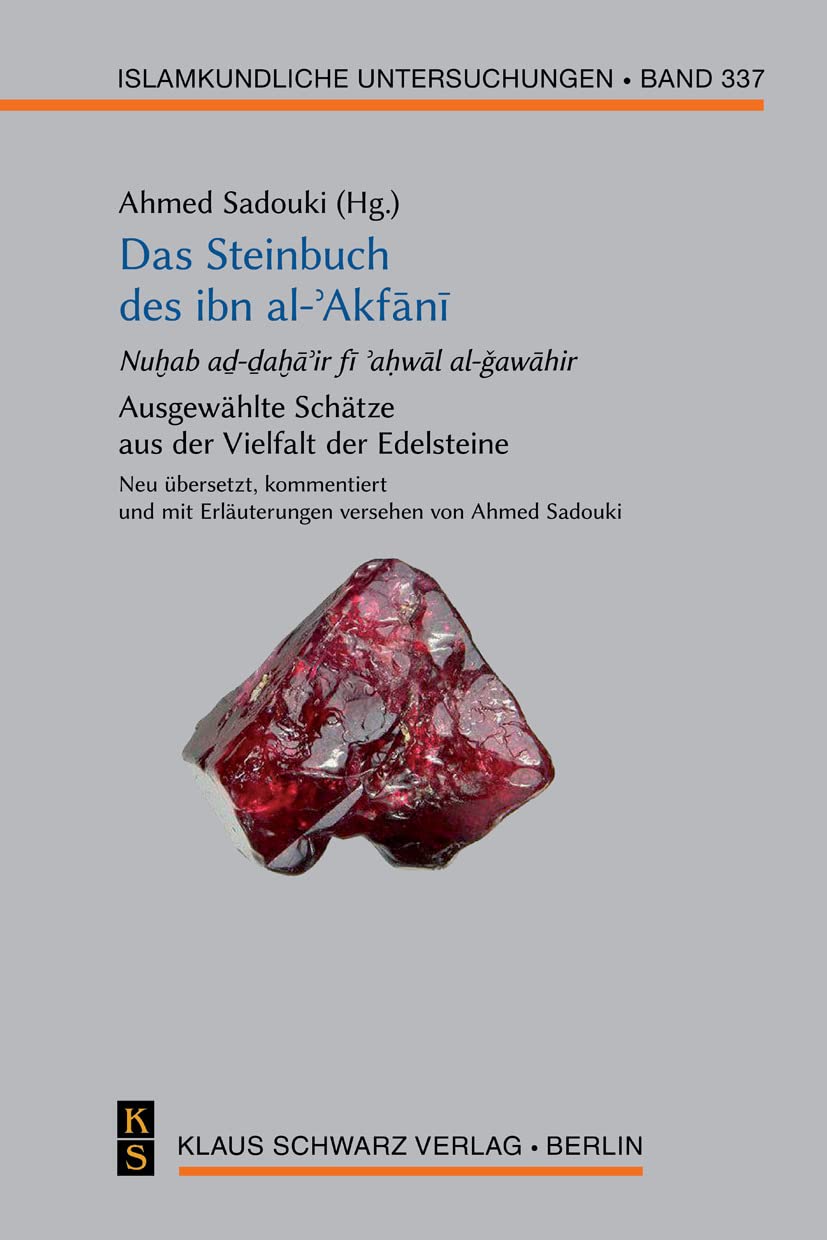
Das Steinbuch des ibn al-ʾAkfānī | Ausgewählte Schätze aus der Vielfalt der Edelsteine
The Book of Stones by Ibn al-Akfānī
Book
Sadouki, A. (2018) Das Steinbuch des ibn al-ʾAkfānī | Ausgewählte Schätze aus der Vielfalt der Edelsteine. [The Book of Stones by Ibn al-Akfānī] Berlin, Klaus Schwarz Verlag, 96 pp.
Record No. 16747  |  ISBN/ISSN: 9783880000000  |  DOI: https://doi.org/10.1515/9783112209417  |  Sinkankas/Born No.: NIS/NIB  |  Language: in German  |  RWHL
Nuḫab aḏ-ḏaḫāʾir fī ʾaḥwāl al-ğawāhir – newly translated, annotated, and supplemented with explanations by Ahmed Sadouki. Includes 24 color illustrations of gemstones. Ibn al-Akfānī was one of the most distinguished physicians in the history of the Bīmāristān al-Manṣūr, the largest and most advanced hospital of its time, completed in 1284 in what is now Cairo. The hospital had 8,000 beds, was divided into specialized departments, featured a convalescence center, and provided its services—ranging from diagnosis and treatment to full recovery—free of charge to all subjects, regardless of religion, skin color, gender, or social status. As the hospital’s chief quality inspector and an expert in gemstones, medicinal herbs, and the preparation of simple and compound remedies, Ibn al-Akfānī was responsible for personally assessing the quality and composition of every acquisition before purchase. It was within this role that he compiled his Book of Stones. Ibn al-Akfānī’s Book of Stones is a practical and objective handbook for physicians, designed to help them evaluate the quality and value of gemstones, understand their origins, and apply their therapeutic properties. The author explicitly states that he summarizes only the essential knowledge passed down by earlier scholars, deliberately omitting myths and legends. Ibn al-Akfānī died of the plague in 1348. The Qalāwūn Complex still stands today, housing a Quranic school, a hospital, and a mausoleum.The series Islamkundliche Untersuchungen was established in 1969 by Klaus Schwarz Verlag and has become one of the most important publication platforms for Islamic studies in Germany. With over 330 volumes, it covers the history, culture, and societies of North Africa, the Near and Middle East, as well as Central, South, and Southeast Asia.

Genesis of dolomite-related nephrite from Hetian and color-forming factors of typical nephrite in Hetian, Xinjiang
新疆和田地区大理岩型和田玉的形成及致色因素探讨
Journal Article
Han, D., Liu, X., Liu, Y., Zhang, Y., Zheng, F., Maituohuti, A., Zhang, H. and Wen, Z. (2018) Genesis of dolomite-related nephrite from Hetian and color-forming factors of typical nephrite in Hetian, Xinjiang. [新疆和田地区大理岩型和田玉的形成及致色因素探讨] Acta Petrologica et Mineralogica [岩石矿物学杂志], Vol. 37, No. 6, November, pp. 1011–1026.
Record No. 7224  |  Sinkankas/Born No.: NIS/NIB  |  Language: in Chinese with English abstract  |  RWHL
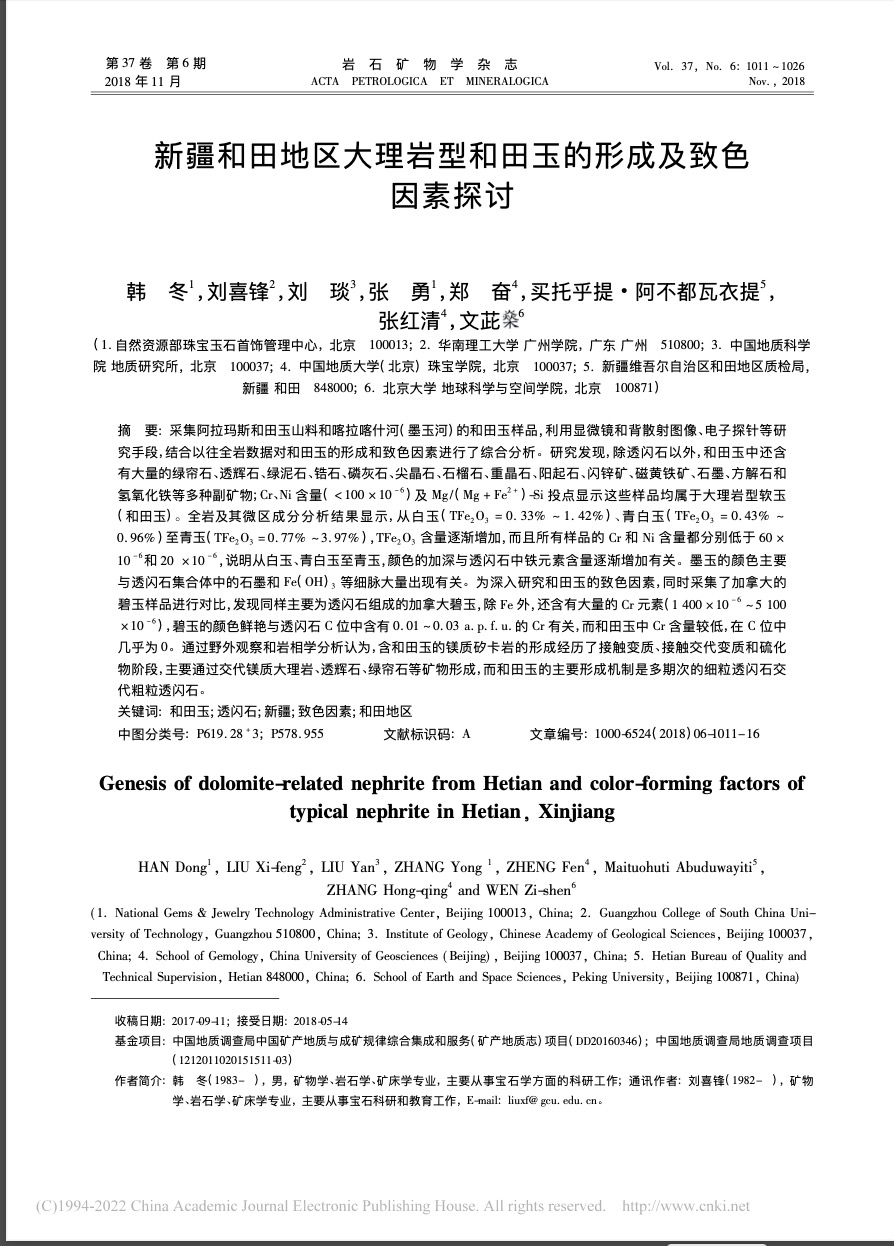
In this study, nephrite samples from Alamas and Karakash Rivers were collected. Also,serpentinite-related green nephrite samples were selected for comparison in colors. Methods such as electronic microprobe analysis and back-scattered electron images were employed to study the genesis and color-forming factors of nephrite. Based on whole-rock chemical analyses of nephrite obtained, the authors studied petrographic characteristics, mineral composition and color-forming factors. In this study, besides tremolite, associated minerals such as diopside, chlorite, actinolite,spinal, zircon, apatite, garnet, barite, pyrrhotine, graphite, calcite, and Fe(OH)₃ were found in nephrite. All samples have low concentrations of Cr, Ni (<100 ×10⁻⁶) and spots of Mg/(Mg +Fe²⁺) - Si, suggesting all these samples are dolomite related nephrite. According to the whole-rock analysis of nearly all data obtained, the data TFe₂O₃ = 0.33% ~1.42%, TFe₂O₃ = 0.43% ~ 0.96% and TFe₂O₃ = 0.77% ~ 3.97% were found in white, white-green and green nephrite, respectively. Also, values of Cr and Ni in these samples have low concentrations below 60 ×10⁻⁶ and 20 ×10⁻⁶ respectively. These chemical compositions suggest that the increasing content of TFe₂O₃ in crystal structures in tremolite leads to change of the colors in nephrite from white to green. Large amounts of graphite and veinlets of Fe(OH)₃ lead to the black color of nephrite. Although both serpentinite related and dolomite related nephrite samples have predominated tremolite, serpentinite related nephrite might have emerald color. In order to further study the coloring factors of Hetian nephrite, the authors collected samples of serpentinite-related nephrite in Canada for comparison. With serpentine related nephrite in Candia as an example, in addition to the amount of Fe, a large amount of Cr (1 400 ×10⁻⁶ ~ 5 100 ×10⁻⁶) was found in them. The emerald color of serpentinite-related nephrite is related to 0.01 ~ 0.03 a.p.f.u. of Cr in C site in tremolite. By contrast, there exists nearly no Cr in C site in tremolite in dolomite related nephrite. Based on the geological field observation and petrographic characteristics, the authors hold that the formation of Mg skarn has experienced metamorphism, metasomatism and sulfur stages and tremolite formed through the replacement at the expense of the dolomite marble, diopside and other minerals. Multiple replacement of coarse grained tremolite by fine-grained tremolite leads to the formation of nephrite.

A gemological description of Ethiopian emeralds

Journal Article
Vertriest, W. and Wongrawang, P. (2018) A gemological description of Ethiopian emeralds. InColor, pp. 73–75.
Record No. 6055  |  RWHL
In 2016, a new deposit of emeralds was discovered in the rural village of Kenticha and Dermi in the Seba Boru distinct near the town of Shakiso, which is located in the Oromia province in the Southern Ethiopia. GIA had the opportunity to study many samples from this new deposit.

The Tears of Fura

Book
Marcial, M.J. (2018) The Tears of Fura. no city, Outskirts Press, 293 pp.
Record No. 4487  |  Sinkankas/Born No.: NIS/NIB  |  RWHL
In contrast to the murderous political violence I saw firsthand during my years emerald mining in Colombia, the passage of time has brought me a world embracing vision that tells me we are destined to experience humanity's unification throughout the planet. There is no doubt of the USA's capability to spearhead a golden age of mankind in the fullness of time. It is for us to decide if we want to be like the ocean's tides, unfailingly reliable, or as unpredictable as the ripple of breezes on the water's surface. The question is: Do we take the super highway to get there or the rocky road? We can perhaps find answers in the narrative I write about of the history of the Muzo Tribe of Colombia and my own life experiences. It's ultimately about helping to chart a course for humanity that is worthy of the noble potential with which our Creator has endowed us.

Exploring the Literature of Emerald

Emerald literature spans gemology, mineralogy, deposits, identification, treatments, synthesis, history and the gem trade, with important sources covering deposits around the world.

For a curated guide to this subject, read Green Fire — Lotus Gemology's Guide to the Literature of Emerald.

About Four Treasures

Four Treasures is Lotus Gemology's freely accessible gemological reference database. Use the full database to search by author, title or keyword and explore literature on gemology, mineralogy, jewelry and related fields. Where available, hyperlinks on titles may lead directly to the full publication.

Search the Complete Four Treasures Database