Emerald Bibliography

Emerald Bibliography

Explore books, articles and historical sources on emerald in Four Treasures, the Lotus Gemology reference database. This bibliography brings together matching records from the collection, with publication details, abstracts and cover images where available.

Emerald References

The list below matches the terms emerald or emeralds in the database's searchable fields. Some references discuss emeralds as part of a broader subject.
401–420 of 851 matching references

Centuries of Opulence: Jewels of India
Book
Gemological Institute of America (2017) Centuries of Opulence: Jewels of India. Carlsbad, CA, Gemological Institute of America, 61 pp.
Record No. 4118  |  Sinkankas/Born No.: NIS/NIB  |  RWHL
This exhibit features 50 exquisite gemstone jewelry pieces and objects from India on loan from a private collection. Never seen in public, these pieces including several from the magnificent Mughal Empire (1526–1857) showcase more than 300 years of adornment from the 17th to the 20th centuries. The exhibit explores the distant sources of the diamonds, rubies, emeralds, sapphires and other gems decorating these pieces, their religious and cultural symbolism, the wars fought for them and the historical tradition of gemology in India.

Lao Hou Treasure Hunt: Experience in Jewelry Trading
老侯寻宝:珠宝交易实战经验 侯舜瑜
Book
Hou, Y. (2017) Lao Hou Treasure Hunt: Experience in Jewelry Trading. [老侯寻宝:珠宝交易实战经验 侯舜瑜] Guangzhou, 华南理工大学出版社 [South China University of Technology Press], 371 pp.
Record No. 4038  |  ISBN/ISSN: 9787560000000  |  Sinkankas/Born No.: NIS/NIB  |  Language: in Chinese  |  RWHL
Hou draws on practical experience in the Chinese jewelry trade to provide a guide to buying, selling, identifying, and evaluating gems and jewelry in real-world transactions. Written from the perspective of an experienced dealer and collector, the book discusses the knowledge and judgment required when examining jewelry, assessing quality and value, negotiating purchases, and recognizing potential problems or misrepresentation. Through examples and accounts drawn from the marketplace, Hou emphasizes the importance of combining gemological knowledge with close observation, commercial experience, and an understanding of changing market conditions. The volume offers practical insight into the workings of the Chinese jewelry trade and the considerations involved in selecting, purchasing, and evaluating gem materials and finished jewelry.

Gemstones: Terra Connoisseur

Book
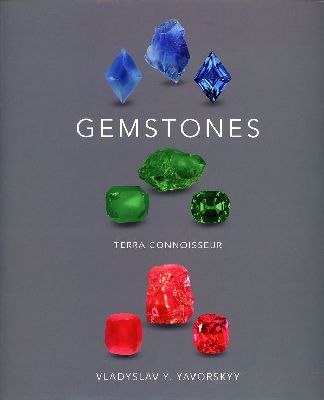
Yavorskyy, V.Y. (2017) Gemstones: Terra Connoisseur. Hong Kong, Yavorskyy Co., 234 pp.
Record No. 3857  |  ISBN/ISSN: 9780690000000  |  Sinkankas/Born No.: NIS/NIB  |  RWHL
Picture book of gems.

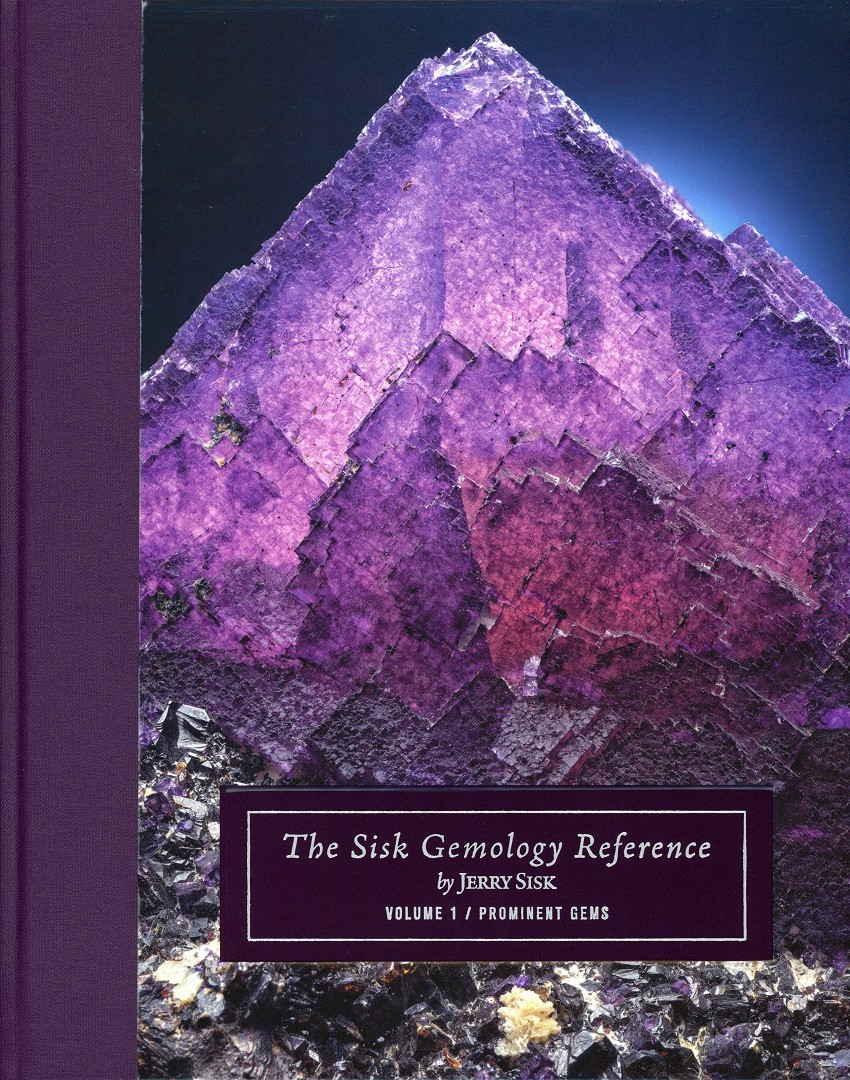
The Sisk Gemology Reference

Book
Sisk, J. (2016) The Sisk Gemology Reference. Knoxville, Jewelry Television, 3 Vols., >1000 pp.
Record No. 29563  |  ISBN/ISSN: 9780692713181 (V.1); 9780692794722 (V.2); 9780692794739 (V.3)  |  Sinkankas/Born No.: NIS / NIB  |  RWHL
A three-volume set, The Sisk Gemology Reference, Professional Edition, features over 1,000 pages and more than 2,000 photos, it will delight all, from those relatively new to the amazing world of gemstones to professional gemologists and jewelers long established in their careers. This comprehensive reference guide was the ultimate labor of love and a longtime mission of late Jewelry Television Co-Founder Jerry Sisk. His untimely passing left the task of completing the reference guide to our highly skilled team of gemologists and scientists. Volume 1, Prominent Gems, delves into the history, science, lore, sources, treatments and varieties (if applicable) of more than 100 well-known gems, including diamond, ruby, emerald, sapphire and tanzanite. Also included is an easy-to-comprehend study of gemstones and their properties. Volume 2, Noteworthy Gems, explores over 100 other rare and exotic gemstones, such as danburite, kyanite, pezzottaite and sphene. Volume 3, Gallery of Gems, is a pictorial compilation of incredible gemstones, jewelry and mineral specimens sure to leave you breathless as each page is turned. The Professional Edition is encased in a protective slipcase.

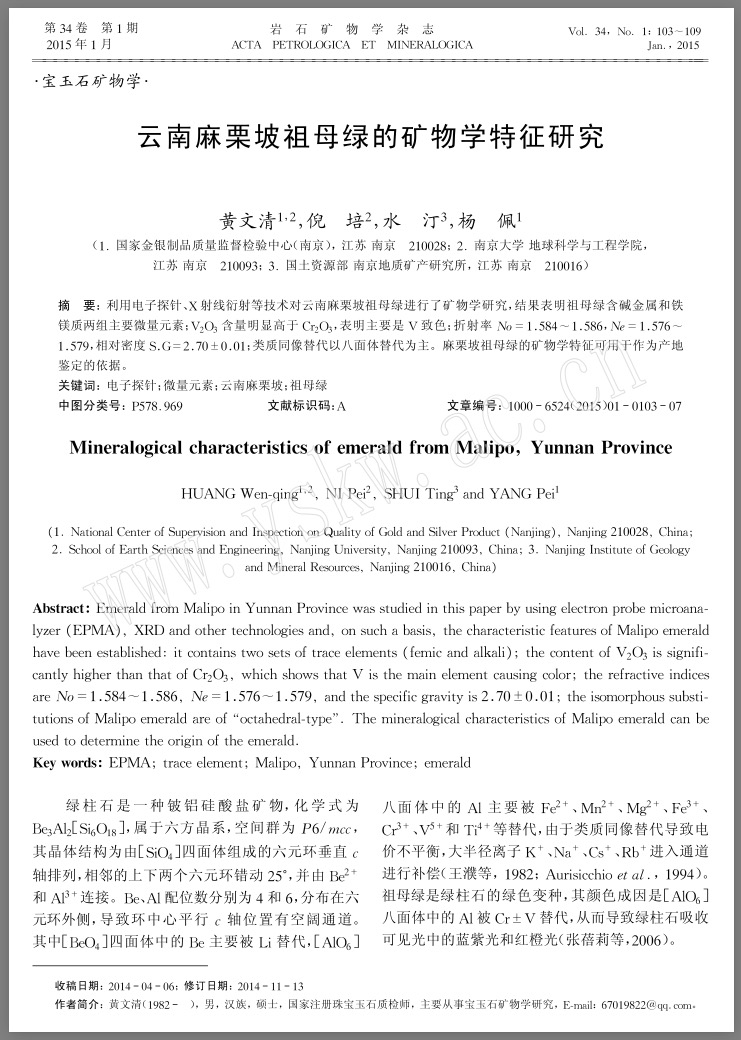
Mineralogical characteristics of emerald from Malipo, Yunnan Province
云南麻栗坡祖母绿的矿物学特征研究
Journal Article
Huang, W.-q., Ni, P., Shui, T. and Yang, P. (2015) Mineralogical characteristics of emerald from Malipo, Yunnan Province. [云南麻栗坡祖母绿的矿物学特征研究] Acta Petrologica et Mineralogica [岩石矿物学杂志], Vol. 34, No. 1, pp. 103–109.
Record No. 17169  |  Sinkankas/Born No.: NIS/NIB  |  Language: in Chinese with English abstract  |  RWHL
Emerald from Malipo in Yunnan Province was studied in this paper by using electron probe microanalyzer (EPMA), XRD and other technologies and, on such a basis, the characteristic features of Malipo emerald have been established: it contains two sets of trace elements (femic and alkali); the content of V₂O₃ is significantly higher than that of Cr₂O₃, which shows that V is the main element causing color; the refractive indices are Nₒ = 1.584–1.586, Nₑ = 1.576–1.579, and the specific gravity is 2.70 ± 0.01; the isomorphous substitutions of Malipo emerald are of “octahedral-type”. The mineralogical characteristics of Malipo emerald can be used to determine the origin of the emerald.

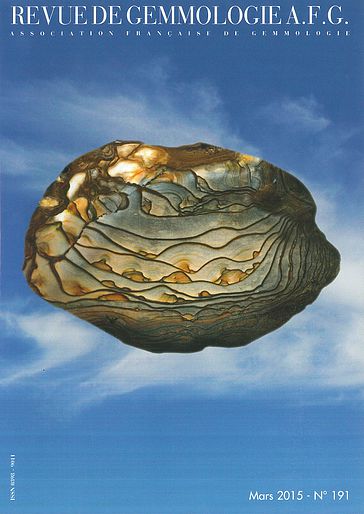
Actualités gemmologiques: Un rubis vraisemblablement huilé
Gemological news: A likely oil-treated ruby
Journal Article
Fritsch, E. and Droux, A. (2015) Actualités gemmologiques: Un rubis vraisemblablement huilé. [Gemological news: A likely oil-treated ruby] Revue de Gemmologie A.F.G., Mars, No. 191, pp. 4–6.
Record No. 5545  |  Sinkankas/Born No.: NIS/NIB  |  Language: in French  |  RWHL
Reports the examination of a 12.12 ct natural ruby whose inclusions and chemical composition were consistent with Myanmar origin, with no evidence of heat treatment. Microscopy revealed material within surface-reaching fractures, including flattened bubbles, whitish residues and patterns resembling dried oil in treated emeralds. Droplets formed at fracture openings under the warmth of fibre-optic illumination, while DiamondView imaging highlighted the filling’s luminescence. Infrared absorption confirmed an organic substance, with bands supporting identification as oil. The authors concluded that the ruby showed moderate transparency enhancement by fracture filling, probably with oil, documenting an unusual treatment in a large Myanmar ruby.

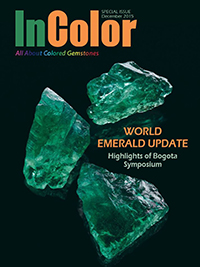
The geographic origin of emeralds

Journal Article
Schwarz, D. (2015) The geographic origin of emeralds. InColor, December, pp. 98–105.
Record No. 4207  |  RWHL

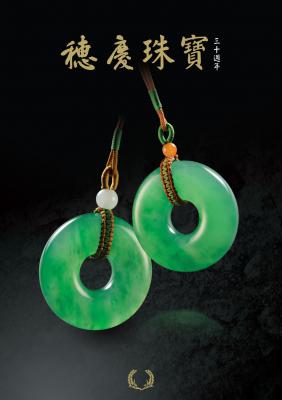
Jade Jewelry

穗慶珠寶
Book
Jewelry Business Magazine (2015) Jade Jewelry. [穗慶珠寶], Sheng Dian Culture Co., Ltd., 119 pp.
Record No. 3483  |  ISBN/ISSN: 9789870000000  |  Sinkankas/Born No.: NIS/NIB  |  Language: in Traditional Chinese  |  RWHL
Jadeite has been known as the “Oriental Emerald” since ancient times and is arguably the king of jade. The 30th Anniversary Book of Maoqing Jewelry contains more than fifty pieces of jade jewelry and ornaments. Whether it is a momentary choice for carving or coloring, it represents an important milestone in the 30 years of hard work for the company. Its unique collection of jade eyes and the quality of the requirements, is absolutely a favorite appreciation of the emerald jade map. Author: Jewelry Business magazine / ed Publisher: Sacred Culture Publishing Date: 2015/05/01 Publication : Taiwan Language : Traditional Chinese ISBN : 9,789,868,924,727 specifications: Hardcover / 120 / 16K / 19 the X-26 cm / Ordinary Level / Full Color Printing / First Edition

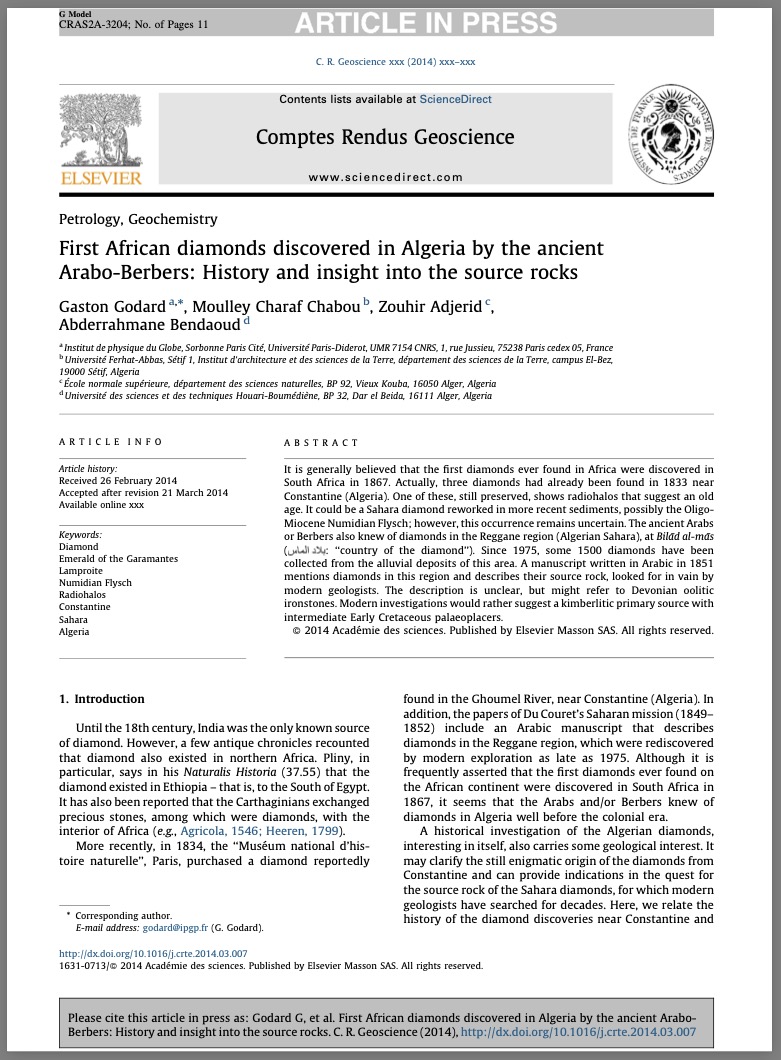
First African diamonds discovered in Algeria by the ancient Arabo-Berbers: History and insight into the source rocks
Journal Article
Godard, G., Chabou, M.C., Adjerid, Z. and Bendaoud, A. (2014) First African diamonds discovered in Algeria by the ancient Arabo-Berbers: History and insight into the source rocks. Comptes Rendus Geoscience, Vol. 346, No. 7, pp. 179–189.
Record No. 27472  |  ISBN/ISSN: 16310713  |  DOI: https://doi.org/10.1016/j.crte.2014.03.007  |  Sinkankas/Born No.: NIS/NIB  |  RWHL
It is generally believed that the first diamonds ever found in Africa were discovered in South Africa in 1867. Actually, three diamonds had already been found in 1833 near Constantine (Algeria). One of these, still preserved, shows radiohalos that suggest an old age. It could be a Sahara diamond reworked in more recent sediments, possibly the Oligo-Miocene Numidian Flysch; however, this occurrence remains uncertain. The ancient Arabs or Berbers also knew of diamonds in the Reggane region (Algerian Sahara), at Bilād al-mās (: “country of the diamond”). Since 1975, some 1500 diamonds have been collected from the alluvial deposits of this area. A manuscript written in Arabic in 1851 mentions diamonds in this region and describes their source rock, looked for in vain by modern geologists. The description is unclear, but might refer to Devonian oolitic ironstones. Modern investigations would rather suggest a kimberlitic primary source with intermediate Early Cretaceous palaeoplacers.

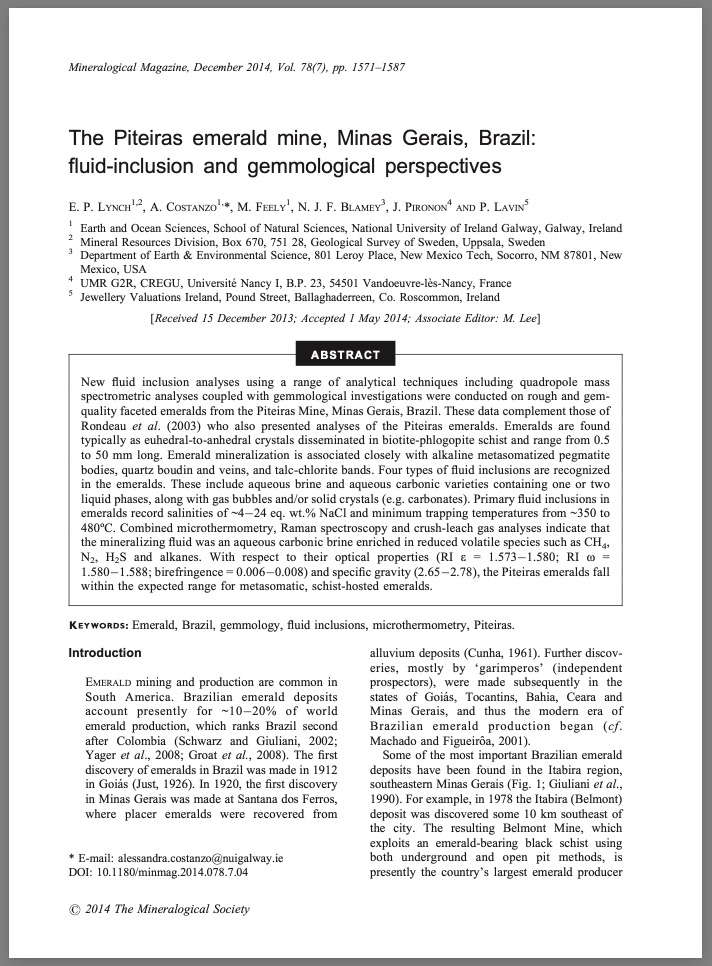
The Piteiras emerald mine, Minas Gerais, Brazil: Fluid-inclusion and gemmological perspectives
Journal Article
Lynch, E.P., Costanzo, A., Feely, M., Blamey, N.J.F., Pironon, J. and Lavin, P. (2014) The Piteiras emerald mine, Minas Gerais, Brazil: Fluid-inclusion and gemmological perspectives. Mineralogical Magazine, Vol. 78, No. 7, pp. 1571–1587.
Record No. 27205  |  ISBN/ISSN: 0026461X  |  DOI: https://doi.org/10.1180/minmag.2014.078.7.04  |  Sinkankas/Born No.: NIS/NIB  |  RWHL
New fluid inclusion analyses—using a range of techniques including quadrupole mass spectrometry coupled with gemmological investigations—were conducted on rough and gem-quality faceted emeralds from the Piteiras Mine, Minas Gerais, Brazil. These data complement those of Rondeau et al. (2003), who also studied emeralds from this locality. The emeralds typically occur as euhedral to anhedral crystals disseminated in biotite-phlogopite schist and range from 0.5 to 50 mm in length. Mineralization is closely associated with alkaline metasomatized pegmatite bodies, quartz boudins and veins, and talc-chlorite bands. Four types of fluid inclusions have been identified, including aqueous brine and aqueous carbonic inclusions containing one or two liquid phases, gas bubbles, and/or solid crystals such as carbonates. Primary fluid inclusions in the emeralds record salinities of approximately 4–24 equivalent wt.% NaCl and minimum trapping temperatures ranging from ~350 to 480 °C. Combined microthermometry, Raman spectroscopy, and crush-leach gas analyses reveal that the mineralizing fluid was an aqueous carbonic brine enriched in reduced volatile species such as CH₄, N₂, H₂S, and alkanes. In terms of optical properties (RI ε = 1.573–1.580; RI ω = 1.580–1.588; birefringence = 0.006–0.008) and specific gravity (2.65–2.78), the Piteiras emeralds fall within the expected range for metasomatic, schist-hosted emeralds.

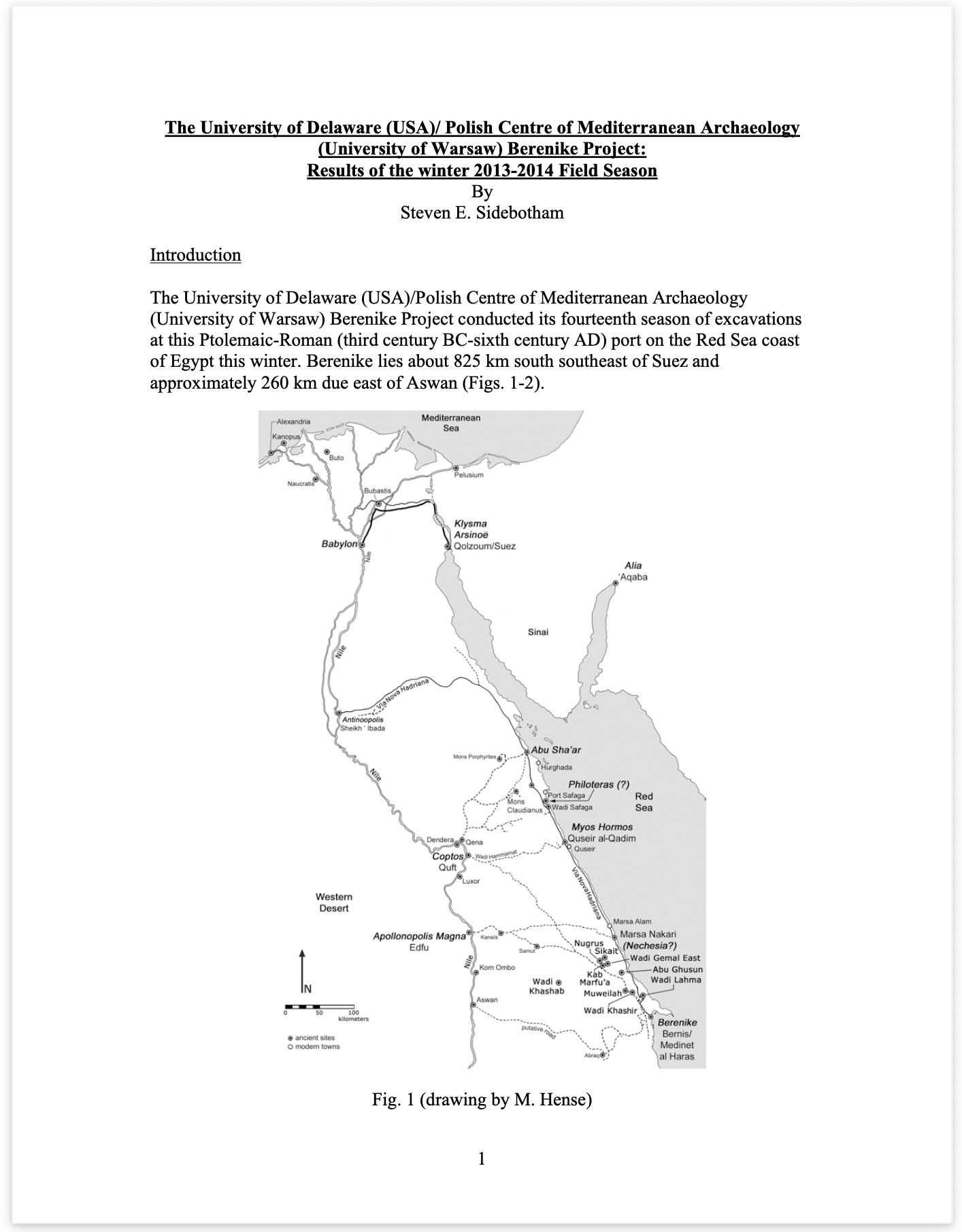
The University of Delaware (USA)/ Polish Centre of Mediterranean Archaeology (University of Warsaw) Berenike Project: Results of the winter 2013–2014 Field Season
Unpublished Work
Sidebotham, S.E. (2014) The University of Delaware (USA)/ Polish Centre of Mediterranean Archaeology (University of Warsaw) Berenike Project: Results of the winter 2013–2014 Field Season. 15 pp. (see pp. 9–11, figs. 11–12); unpublished report.
Record No. 17247  |  Sinkankas/Born No.: NIS/NIB  |  RWHL
The paper presents the findings of the University of Delaware and the Polish Centre of Mediterranean Archaeology's 2013–2014 field season at the archaeological site of Berenike in Egypt. Key components of the project included geophysical surveys, excavations of early Roman and Ptolemaic trash dumps, and documentation of maritime finds such as a significant portion of a Roman ship's frame. Results highlighted the potential presence of a substantial religious or administrative area, enriching our understanding of the site's historical context.

Mineralogical characteristics and genetic analysis of Qinghai nephrite
青海软玉的宝玉石学特征及成因分析
Journal Article
Li, Y., Gao, M. and Wang, Y. (2014) Mineralogical characteristics and genetic analysis of Qinghai nephrite. [青海软玉的宝玉石学特征及成因分析] Modern Mining [现代矿业], Vol. 539, No. 3, March, pp. 54–58.
Record No. 7245  |  Sinkankas/Born No.: NIS/NIB  |  Language: Chinese  |  RWHL
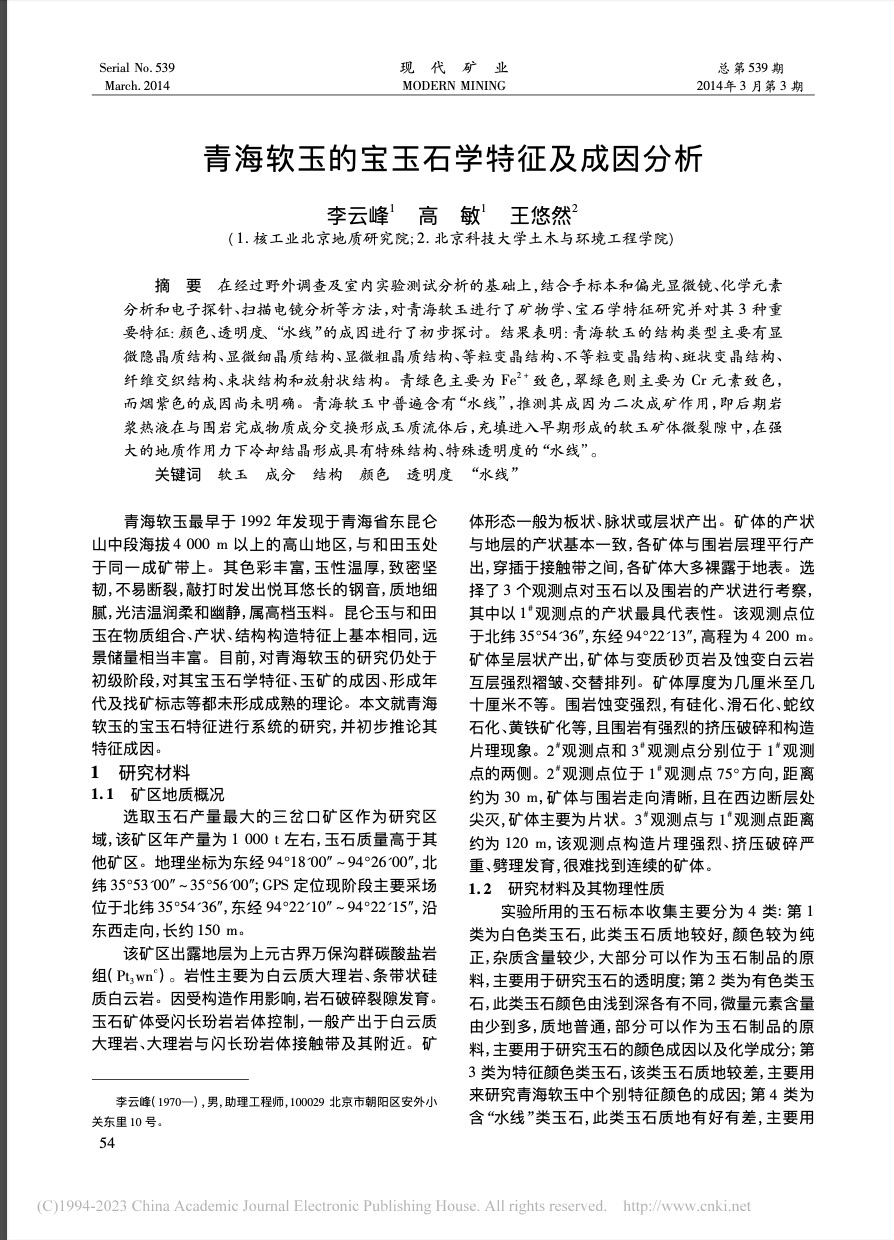
Based on field investigations and laboratory experiments, combined with methods such as hand specimens, polarizing microscopy, chemical element analysis, electron probe, and scanning electron microscope analysis, this study conducted mineralogical and gemological characteristic research on Qinghai nephrite. Three important features, namely color, transparency, and the “water line,” were preliminarily discussed. The results indicate that the structural types of Qinghai nephrite mainly include microcryptocrystalline structure, microfine-crystalline structure, microcoarse-crystalline structure, equigranular crystal structure, inequigranular crystal structure, patchy crystal structure, fibrous interwoven structure, bundle structure, and radiating structure. The green color is primarily due to Fe²⁺, while the emerald green color is mainly caused by Cr elements. The cause of the smoky purple color is not yet clear. Qinghai nephrite commonly contains a “water line,” and it is speculated that its formation is related to secondary mineralization. In other words, later-stage magmatic hydrothermal fluids, after completing substance exchange with the surrounding rock to form a jadeous fluid, filled into microfractures in the early-formed nephrite body. Under significant geological forces, it cooled and crystallized, forming a “water line” with a special structure and transparency.

Ahmad ibn Yusuf al-Tifasis Buch der königlichen Steine" • Eine Mineralienkunde für die arabischen Herrscher des 7./13. Jahrhunderts"
Ahmad ibn Yusuf at-Tifasi's Book of Royal Stones" • A mineralogy for the Arab rulers of the 7th/13th century"
Book
Schuster, A.K. (2014) Ahmad ibn Yusuf al-Tifasis Buch der königlichen Steine" • Eine Mineralienkunde für die arabischen Herrscher des 7./13. Jahrhunderts". [Ahmad ibn Yusuf at-Tifasi's Book of Royal Stones" • A mineralogy for the Arab rulers of the 7th/13th century"] Göttingen, Germany, Harrassowitz Verlag, 205 pp.
Record No. 6352  |  ISBN/ISSN: 9783450000000  |  DOI: https://dx.doi.org/10.2307/j.ctvk12t9d  |  Sinkankas/Born No.: NIS/NIB  |  Language: in German  |  RWHL
At-Tifasi (1184-1253) wrote this book on gemstones in 1242. In it he describes a total of 25 stones valued in the upper class, including pearl and coral, among others. In the presentation, it follows a given pattern, each divided into five sections: 1. Origin, 2. Place of discovery, 3. Quality (genuine or fake), 4. Magical-medicinal effect, 5. Value and price. At the same time, he passes on well-known fables and legends, e.g. about the Alexander Treasure in the harbor of Alexandria. His sources are on the one hand the stone literature such as the Stone Book of Aristotle", on the other hand information from merchants, jewel dealers and miners. However, his own experiences with minerals are also included. This clearly structured, generally understandable document is the best-known medieval Arabic treatise on gemstones. It was a model for later authors and was translated into Persian and Turkish.In addition to a Latin (1784), an Italian (1906) and an English version (1998), a German translation is now available for the first time, which also includes a comprehensive interdisciplinary commentary and a contains image part."

Emerald • Twenty-one Centuries of Jeweled Opulence and Power
Book
Hardy, J. (2014) Emerald • Twenty-one Centuries of Jeweled Opulence and Power. London, Violette Editions, 272 pp.
Record No. 4556  |  ISBN/ISSN: 9780500000000  |  Sinkankas/Born No.: NIS/NIB  |  RWHL
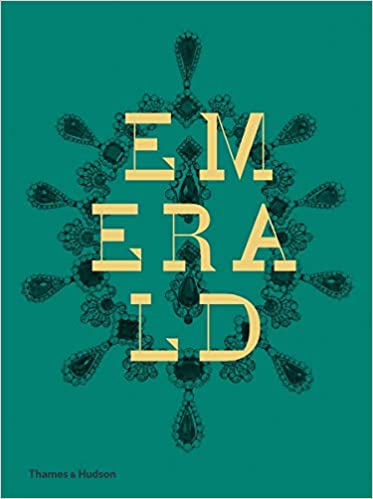
Coffee-table style treatment of emerald.

Jadeite World Auction Records: 2013.1.1 – 2013.12.31

Book
Auction Yearbook (2014) Jadeite World Auction Records: 2013.1.1 – 2013.12.31. Beijing, Beijing United Publishing Co., 208 pp.
Record No. 3519  |  ISBN/ISSN: 9787550000000  |  Sinkankas/Born No.: NIS/NIB  |  RWHL
This yearbook includes 44 world top auction houses such as Sotheby's, Christie's, Baolong, CITIC Macau, China Guardian (Beijing, Hong Kong), Beijing Poly, Poly Hong Kong and Beijing Hanhai. The most typical 1000 pieces of typical jadeite lottery with exact descriptions of the lot name, lot specification, auction agency, auction time, estimated price and transaction price are all about first-hand auction information. Among the 1000 jade pieces, there are 800 high-end auction items that the collectors must know representing the market trend of jadeite rables, as well as 200 pieces of low-price auction items of bargain-hunting price" level. Typical jade auction items are all included in This paper introduces the actual situation of Jadeite auction and also objectively and systematically records the development of Jadeite auction in the global auction. It is an annual jade auction yearbook which is objective, comprehensive, authoritative and highly valuable for collection and investment guidance.. For your reference and search, this yearbook will be divided into three major categories and more than 20 categories with accessories, utensils and miscellaneous items. Each auction is accompanied by detailed auction information and HD auction images, graphic combinations, set of dictionaries, catalogs, manuals, guides in one. Watched this yearbook and then shot, we will be able to accurately grasp the emerald auction market, to avoid losing sight of the market or in the auction."

Víctor Carranza, alias “El Patrón”

Víctor Carranza, alias “The Boss”
Book
Cepeda, I. and Javier Giraldo, S.J. (2012) Víctor Carranza, alias “El Patrón”. [Víctor Carranza, alias “The Boss”] Cundinamarca, Colombia, Grijalbo
Record No. 16693  |  ISBN/ISSN: 9789590000000  |  Sinkankas/Born No.: NIS/NIB  |  Language: in Spanish  |  RWHL
Much of what Colombia has experienced over the last sixty years is described by researchers and academics as “La Violencia” (with a capital “V”), a period whose starting point is established with the assassination of the liberal leader Jorge Eliécer Gaitán on April 9, 1948. Bipartisan wars and banditry during the 1950s; guerrilla movements of various kinds in the 1960s and 1970s; drug cartels, terrorism, paramilitary groups, and criminal gangs in the following decades form the backdrop of this gripping investigation centered on the life of Víctor Manuel Carranza, alias “El Patrón,” also known as the “Emerald Czar.” A survivor of three wars over control of the emerald business, which claimed nearly six thousand lives, as well as cinematic-style assassination attempts, Carranza was accused of various crimes, including the creation of paramilitary groups, homicide, extortionate kidnapping, and simple kidnapping. He was a friend and vote-gatherer for several former presidents and recognized by specialized magazines as a powerful businessman. Carranza has one of the most extensive criminal records found in the archives of the Colombian justice system. This book compiles some of those numerous legal cases, as well as repeated statements made by former paramilitary leaders to the Justice and Peace Unit of the Prosecutor’s Office, along with information provided to the authors by official institutions. The aim is to shed light on a case that, it seems, remains shrouded in the most astonishing impunity.

Study on mineralogical characteristics and genesis of green nephrite from Xinjiang Uyghur autonomous region
新疆和田碧玉的矿物学特征及成因初探
Thesis
Shi, M. (2012) Study on mineralogical characteristics and genesis of green nephrite from Xinjiang Uyghur autonomous region. [新疆和田碧玉的矿物学特征及成因初探]., Beijing, China: China University of Geosciences (Beijing), 63 pp.
Record No. 7269  |  Sinkankas/Born No.: NIS/NIB  |  Language: in Chinese with English abstract  |  RWHL
In the domestic jade market, there are many different kinds of green nephrite from different regions, and Hetian nephrite is of high quality. Samples were collected from Hetian-Yutian County, Xinjiang Uyghur Autonomous Region; its gemological and mineralogical characteristics, H and O isotopic features, and the forming mechanism were studied in this investigation. Observation under microscope shows that the main microstructure of this green nephrite is woven felt-like cryptocrystalline blastic texture, the arrangements of the mineral particles result in its delicate texture and high toughness. SEM characteristics illustrate its clean topography and compactness. Study on mineral composition indicates that the major mineral component is tremolite, and then it turns into actinolite with the help of the increase of iron oxide. X-ray powder diffraction shows that the nephrite mainly consists of tremolite with minor chromite, chlorite, serpentine, clinopyroxene, and apatite. The results of infrared spectroscopy and Raman spectroscopy coincide with the results of XRD. DTA curve demonstrates that the structure of the tremolite was destroyed at 900–1100 °C. TG curve demonstrates that the tremolite has such little water that its loss of weight was only 0.89–1.33% when heated to 900–1100 °C. The geological origin of green Hetian nephrite is alteration of ultrabasic rock, and the internal black spot-like mineral is chromite which is a sign of ultrabasic rock. The analysis of hydrogen and oxygen isotopic compositions indicates that the hydrothermal fluids of Gobi aggregates are primary magmatic water, but the hydrothermal fluids of primary nephrite and gravel are unknown and still need more investigation. It is important to evaluate the quality of green Hetian nephrite. According to a comparative study of the basic characteristics of Manasi nephrite, Russian nephrite, and Canadian nephrite, Hetian nephrite is a variety of better quality and less crack. The color of Hetian nephrite is emerald green and the texture is delicate.

Conditions for emerald formation at Davdar, China: fluid inclusion, trace element and stable isotope studies
Journal Article
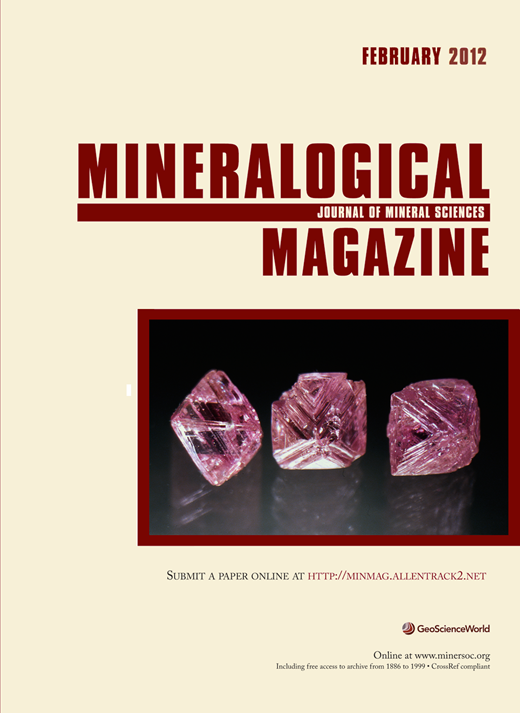
Marshall, D., Pardieu, V., Loughrey, L., Jones, P. and Xue, G. (2012) Conditions for emerald formation at Davdar, China: fluid inclusion, trace element and stable isotope studies. Mineralogical Magazine, Vol. 76, No. 1, February, pp. 213–226.
Record No. 6073  |  DOI: https://doi.org/10.1180/minmag.2012.076.1.213  |  RWHL
Preliminary geological work on samples from Davdar in China indicate that emerald occurs in quartz veins hosted within upper greenschist grade Permian metasedimentary rocks including quartzite, marble, phyllite and schist. Fluid inclusion studies indicate highly saline fluids ranging from approximately 34 to 41 wt.% NaCl equivalent, with minimal amounts of CO₂ estimated at a mole fraction of 0.003. Fluid inclusion, stable isotope and petrographic studies indicate the Davdar emeralds crystallized from highly saline brines in greenschist facies conditions at a temperature of ~350 ºC and a pressure of up to 160 MPa. The highly saline fluid inclusions in the emeralds, the trace-element chemistry and stable isotope signatures indicate that the Davdar emeralds have some similarities to the Khaltaro and Swat Valley emerald deposits in Pakistan, but they show the greatest similarity to neighbouring deposits at Panjshir in Afghanistan. Preliminary geological work on samples from Davdar in China indicate that emerald occurs in quartz veins hosted within upper greenschist grade Permian metasedimentary rocks including quartzite, marble, phyllite and schist. Fluid inclusion studies indicate highly saline fluids ranging from approximately 34 to 41 wt.% NaCl equivalent, with minimal amounts of CO₂ estimated at a mole fraction of 0.003. Fluid inclusion, stable isotope and petrographic studies indicate the Davdar emeralds crystallized from highly saline brines in greenschist facies conditions at a temperature of ~350 ºC and a pressure of up to 160 MPa. The highly saline fluid inclusions in the emeralds, the trace-element chemistry and stable isotope signatures indicate that the Davdar emeralds have some similarities to the Khaltaro and Swat Valley emerald deposits in Pakistan, but they show the greatest similarity to neighbouring deposits at Panjshir in Afghanistan.

Gem News International: Unusual trapiche sapphire
Journal Article
Kiefert, L. (2012) Gem News International: Unusual trapiche sapphire. Gems & Gemology, Vol. 48, No. 3, Fall, p. 229.
Record No. 3061  |  ISBN/ISSN: 0016626X  |  RWHL
The word trapiche, Spanish for “mill,” refers to the wheel that was once used to crush sugar cane. The same term is used for gems that show a characteristic six-rayed star-shaped growth zoning in cross section. This peculiar appearance, long thought to occur only in emerald, is due to bands of inclusions that radiate from the center of the crystal—the optic axis—toward the prism faces. Only in the past 20 years have other gems been discovered with a district trapiche structure, namely ruby and sapphire (K. Schmetzer et al., “Trapiche rubies,” Win-ter 1996 G&G, pp. 242–250) and tourmaline (T. Hain-schwang et al., “Trapiche tourmaline from Zambia,” Spring 2007 G&G, pp. 36–46). Generally, the trapiche ef-fect in these stones (as in emerald) is caused by dark inclu-sions. In some blue sapphires, however, it is due to strong color banding parallel to the hexagonal growth zoning. Such trapiche sapphires are known only from the Mogok region of Myanmar (K. Schmetzer, pers. comm., 2012). Recently, the Gübelin Gem Lab examined such a sap-phire, a 36.16 ct cabochon measuring 22.91 × 16.93 × 6.69 mm (figure 31). The stone showed a very pronounced blue zoning along the corners of the hexagonal growth struc-ture, while zones corresponding to the prism faces were white. In addition, many of the boundaries between the blue and the white areas displayed elongated white patches perpendicular to the growth direction of the prism faces (figure 32). Semiquantitative chemical analysis using EDXRF spec-troscopy identified both areas as corundum, with similar chemical compositions. Yet the Ti and Fe values (which cause the blue color in sapphire) as well as the Cr content were higher in the blue areas. Comparing the chemical composition of the blue portions with average concentra-tions of these elements in Burmese blue sapphires also in-dicated Myanmar as a likely origin.

A Lapidary of Sacred Stones

Book
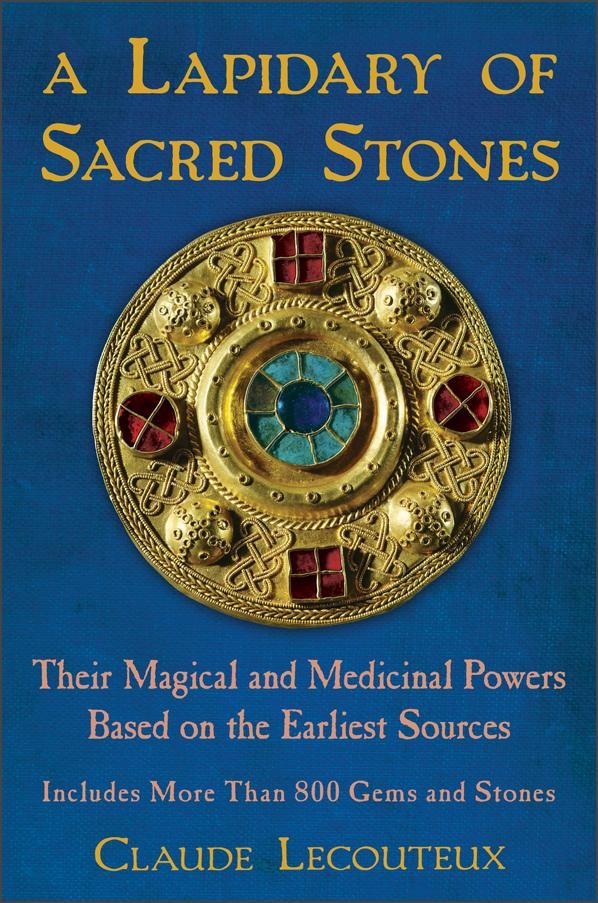
Lecouteux, C. (2012) A Lapidary of Sacred Stones. Rochester, VT, Inner Traditions, 357 pp.
Record No. 3057  |  Sinkankas/Born No.: NIS/NIB  |  RWHL
A comprehensive dictionary of sacred and magical gem lore that draws on the rarest source texts of Antiquity and the Middle Ages, this work reveals the healing and magical virtues of familiar gemstones such as amethyst, emerald, and diamond, as well as the lore surrounding exotic stones like astrios, a stone celebrated by ancient magicians. It examines bezoars—stones formed in animals’ bodies—and “magnets” that attract materials other than metal, based on ancient Arabic, Greek, Jewish, and European sources ranging from the observations of Pliny the Elder to extremely rare texts such as the Picatrix and Damigeron’s Virtue of Stones. Our ancestors believed stones were home to sacred beings of power, entities that if properly understood and cultivated could provide protection from ill fortune, envy, and witchcraft; grant invisibility and other magical powers; improve memory; and heal the sick from a wide variety of diseases. These benefits could be obtained by wearing the stone as a ring, bracelet, or pendant; through massage treatments; or by reducing the gem to a powder and ingesting it. Drawing from this wealth of sources, Claude Lecouteux synthesizes the known lore for more than 800 stones. He includes examples such as the emerald, which when engraved with the figure of a harpy holding a lamprey in its claws will banish panic and nightmares; beryl, which can summon water spirits or confer renown; and astrios, whose glowing center resembles a star. This unique dictionary, deeply rooted in ancient texts and traditions, is an invaluable resource for both gem enthusiasts and practitioners of the magical arts.

Exploring the Literature of Emerald

Emerald literature spans gemology, mineralogy, deposits, identification, treatments, synthesis, history and the gem trade, with important sources covering deposits around the world.

For a curated guide to this subject, read Green Fire — Lotus Gemology's Guide to the Literature of Emerald.

About Four Treasures

Four Treasures is Lotus Gemology's freely accessible gemological reference database. Use the full database to search by author, title or keyword and explore literature on gemology, mineralogy, jewelry and related fields. Where available, hyperlinks on titles may lead directly to the full publication.

Search the Complete Four Treasures Database