Emerald Bibliography

Emerald Bibliography

Explore books, articles and historical sources on emerald in Four Treasures, the Lotus Gemology reference database. This bibliography brings together matching records from the collection, with publication details, abstracts and cover images where available.

Emerald References

The list below matches the terms emerald or emeralds in the database's searchable fields. Some references discuss emeralds as part of a broader subject.
421–440 of 851 matching references

Summary of the Panjsher Valley emerald, iron, and silver area of interest
Book Section
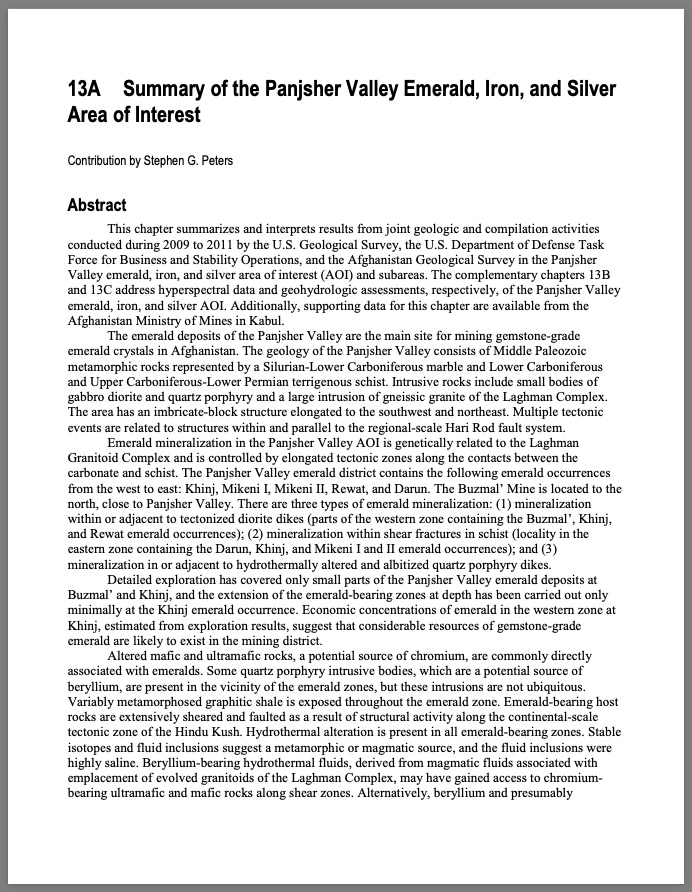
Peters, S.G. (2011) Summary of the Panjsher Valley emerald, iron, and silver area of interest. In: Summaries of Important Areas for Mineral Investment and Production Opportunities of Nonfuel Minerals in Afghanistan: US Geological Survey, pp. 987–1016.
Record No. 27480  |  Sinkankas/Born No.: NIS/NIB  |  RWHL
This chapter summarizes and interprets results from joint geologic and compilation activities conducted during 2009 to 2011 by the U.S. Geological Survey, the U.S. Department of Defense Task Force for Business and Stability Operations, and the Afghanistan Geological Survey in the Panjsher Valley emerald, iron, and silver area of interest (AOI) and subareas. The complementary chapters 13B and 13C address hyperspectral data and geohydrologic assessments, respectively, of the Panjsher Valley emerald, iron, and silver AOI. Additionally, supporting data for this chapter are available from the Afghanistan Ministry of Mines in Kabul. The emerald deposits of the Panjsher Valley are the main site for mining gemstone-grade emerald crystals in Afghanistan. The geology of the Panjsher Valley consists of Middle Paleozoic metamorphic rocks represented by a Silurian–Lower Carboniferous marble and Lower Carboniferous and Upper Carboniferous–Lower Permian terrigenous schist. Intrusive rocks include small bodies of gabbro diorite and quartz porphyry and a large intrusion of gneissic granite of the Laghman Complex. The area has an imbricate-block structure elongated to the southwest and northeast. Multiple tectonic events are related to structures within and parallel to the regional-scale Hari Rod fault system. Emerald mineralization in the Panjsher Valley AOI is genetically related to the Laghman Granitoid Complex and is controlled by elongated tectonic zones along the contacts between the carbonate and schist. The Panjsher Valley emerald district contains the following emerald occurrences from the west to east: Khinj, Mikeni I, Mikeni II, Rewat, and Darun. The Buzmal’ Mine is located to the north, close to Panjsher Valley. There are three types of emerald mineralization: (1) mineralization within or adjacent to tectonized diorite dikes (parts of the western zone containing the Buzmal’, Khinj, and Rewat emerald occurrences); (2) mineralization within shear fractures in schist (locality in the eastern zone containing the Darun, Khinj, and Mikeni I and II emerald occurrences); and (3) mineralization in or adjacent to hydrothermally altered and albitized quartz porphyry dikes.

Alexandrites from the Novello alexandrite-emerald deposit, Masvingo District, Zimbabwe
Journal Article
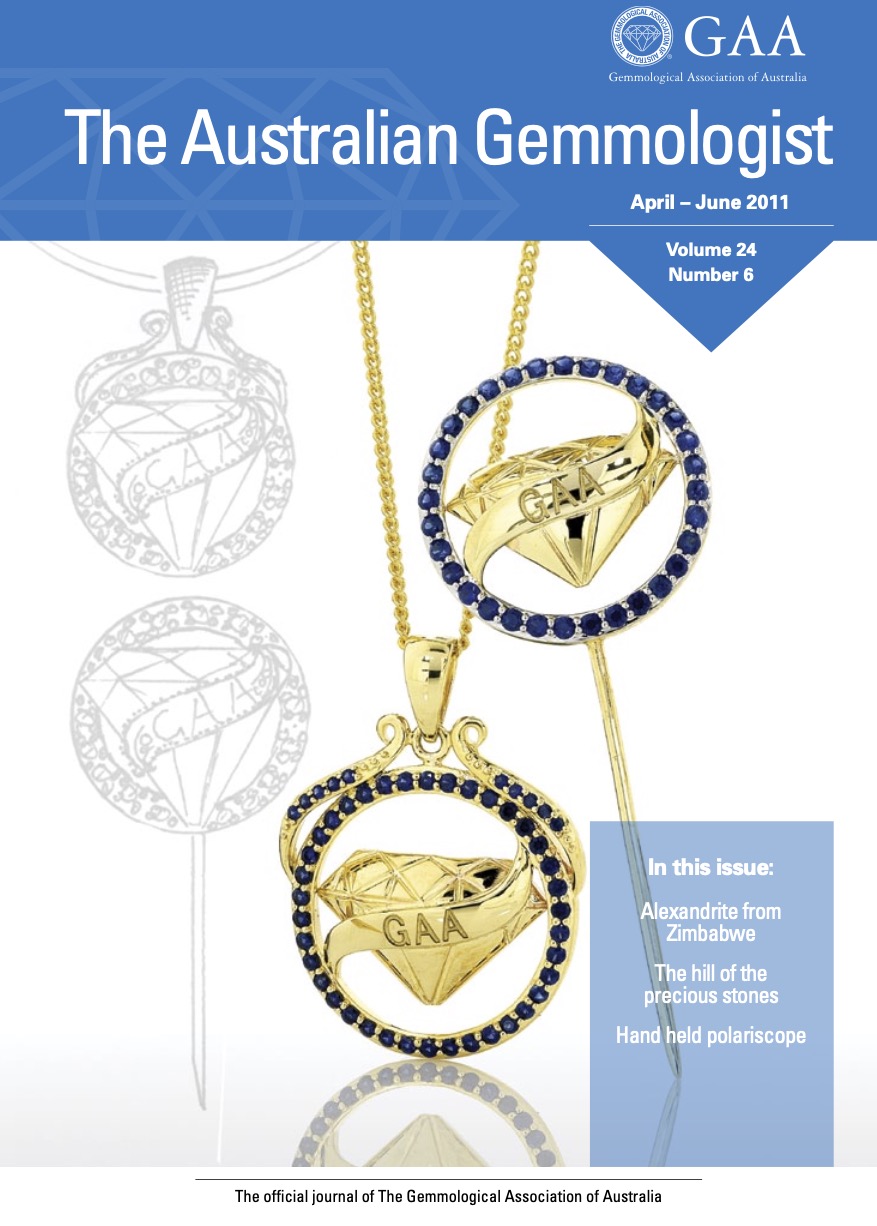
Schmetzer, K., Stocklmayer, S., Stocklmayer, V. and Malsy, A.-K. (2011) Alexandrites from the Novello alexandrite-emerald deposit, Masvingo District, Zimbabwe. Australian Gemmologist, Vol. 24, No. 6, pp. 133–147.
Record No. 8042  |  RWHL

Use of the Raman spectrometer in gemmological laboratories: Review
Journal Article
Kiefert, L. and Karampelas, S. (2011) Use of the Raman spectrometer in gemmological laboratories: Review. Spectrochimica Acta Part A: Molecular and Biomolecular Spectroscopy, Vol. 80, No. 1, pp. 119–124.
Record No. 6026  |  DOI: https://dx.doi.org/10.1016/j.saa.2011.03.004  |  RWHL
The current paper gives an overview of the development of Raman spectrometry in gemmological laboratories. While before 1990s, no commercial gemmological laboratory possessed such an instrument, all larger international labs have acquired these instruments by now. The Raman spectrometer is routinely used for the detection of emerald fillers, HPHT treatment of diamonds, analysis of the nature of a gemstone, analysis of gemstone inclusions and treatments, and the characterisation of natural or colour enhanced pearls and corals. Future developments in gemstone research lie in the closer analysis of the features of Raman and PL spectra and in the combination of several instruments.

The New England, New South Wales, Australia gem field: geographic typing of a world class giant gem deposit of basaltic placer origin
Conference Paper
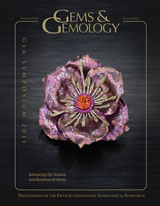
Sutherland, F.L., Abduriyim, A. and Webb, G.B. (2011) The New England, New South Wales, Australia gem field: geographic typing of a world class giant gem deposit of basaltic placer origin. 32nd International Gemmological Conference, Interlaken, Switzerland pp. 100–101.
Record No. 5425  |  RWHL
New England is home to one of Australia’s most important gem fields, though its richness and complexity are often underappreciated outside the country. The first sapphires and diamonds were discovered by prospectors in the 1850s, with diamond mining dominating until the 1920s before declining as sapphire extraction expanded in successive phases. Sapphire mining continues today through a combination of large- and small-scale operations, including heat treatment ventures (Coldham, 2003; Abduriyim et al., 2010). More than a million carats of sapphires and diamonds have reportedly been recovered from placer deposits. The diamonds are notable for characteristics attributed to their proposed ultra-high pressure subduction origins (Barron et al., 2008), while the sapphires are recognized for their fine blue hues and exceptional grades—some of the highest known from any sapphire deposit (Sutherland and Webb, 2007). The Kings Plains area, in particular, has yielded volcanoclastic deposits with extraordinarily high sapphire grades exceeding approximately 1800 g/ton. Additional gemstones found in the region’s basalt fields include abundant zircon—sometimes fashioned into sizable gems—and rarer occurrences of ruby, garnet, and peridot. Although the basement granites and folded strata also yield quartz, topaz, beryl (including emerald), and other rare stones, these are not addressed in this discussion (Webb and Sutherland, 1998).

Geographic origin determination of colored stones
Journal Article
Abduriyim, A. (2011) Geographic origin determination of colored stones. Gems & Gemology, Vol. 47, No. 2, Summer, pp. 114–116.
Record No. 5412  |  ISBN/ISSN: 0016626X  |  RWHL
Colored gemstones such as ruby, sapphire, emerald, and Paraíba-type tourmaline may achieve higher prices when associated with a specific geographic pedigree. Therefore, dealers and collectors increasingly turn to gemological laboratories for country-of-ori-gin analysis. To determine provenance, a laboratory must be knowledgeable about the gems’ geologic formation conditions and types of host rock, crystal growth features, and mineralogical and gemological properties. When the geologic conditions of the primary rock are very similar among several different localities, however, the gemstones’ properties may overlap, rendering origin determination difficult or impossible. Laboratories must meet this complex challenge by extending their observations and analytical capabilities to identify multiple features that yield diagnos-tic patterns to distinguish between similar sources.

Amber shadow on Ural emeralds

Web Page
Terletsky, V. (2011) Amber shadow on Ural emeralds. <https://www.rusbiznews.com/news/n1011.html>
Record No. 3135  |  RWHL
In March, the Russian Federal Agency on Mineral Resources is going to announce who will be entrusted with development of the Malyshevo emerald deposit (the Sverdlovsk Region). The tender participants are two companies -the Malyshevo Mining Company, LLC, and the Kaliningrad Amber Factory, a state-owned unitary enterprise, which recently went through the bankruptcy process. The regional and local authorities are lobbying the transfer of the one-of-a-kind mine to the outsiders". They believe that the Kaliningrad company will be able to get production on the right track at the emerald deposit that has been idle since 1995. However, as the "RusBusinessNews" columnist has found it out, these hopes are ungrounded: the amber factory is technologically obsolete and will have to focus on upgrading of its production within the next few years."

State of the art in the formation of high-value colored gemstones
Journal Article
Giuliani, G. (2011) State of the art in the formation of high-value colored gemstones. Gems & Gemology, Vol. 47, No. 2, Summer, pp. 108–110.
Record No. 2999  |  ISBN/ISSN: 0016626X  |  RWHL
Whereas diamonds are mined by large international companies and cut and marketed through a well-established distribution net-work, most high-value colored stones are extracted by independent miners or small companies and sold through less-organized channels. Exploration and grading protocols for ruby, sapphire, emerald, tsavorite, tanzanite, and alexandrite are virtually nonexistent due to the lack of intense research efforts or standardized values on the international exchange. Grading the quality of diamonds on the basis of the 4Cs (color, clarity, cut, and carat weight) is universally accepted and there are virtually no prove-nance-dependent variations in commodity value. With colored stones, though, geographic origin is an important factor for deter-mining price.

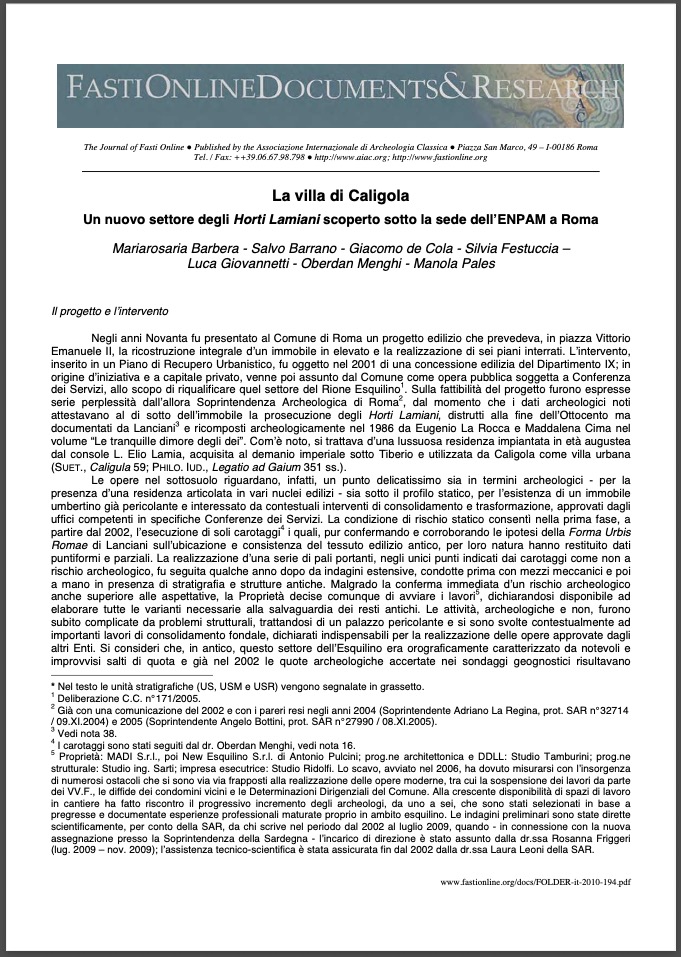
Imperial Mines and Quarries in the Roman World: Organizational Aspects 27 BC–AD 235
Book
Hirt, A.M. (2010) Imperial Mines and Quarries in the Roman World: Organizational Aspects 27 BC–AD 235. Oxford, Oxford University Press, 568 pp.
Record No. 27224  |  ISBN/ISSN: 9780200000000  |  Sinkankas/Born No.: NIS/NIB  |  RWHL
The control over marble and metal resources was of major importance to the Roman Empire. The emperor's freedmen and slaves, officers and soldiers of the Roman army, equestrian officials, as well as convicts and free labour were seconded to mines and quarries throughout Rome's vast realm. Alfred Hirt's comprehensive study defines the organizational outlines and the internal structures of the mining and quarrying ventures under imperial control. The themes addressed include: challenges faced by those in charge of these extractive operations; the key figures, their subaltern personnel and their respective responsibilities; the role of the Roman army; the use of civilian partners in quarrying or mining ventures; and the position of the quarrying or mining organizations within the framework of the imperial administration.

La villa di Caligola: Un nuovo settore degli Horti Lamiani scoperto sotto la sede dell’ENPAM a Roma
Caligula’s villa: A new sector of the Horti Lamiani discovered beneath the ENPAM headquarters in Rome
Journal Article
Barbera, M., Barrano, S., Cola, G., de, Festuccia, S., Giovannetti, L., Menghi, O. and Pales, M. (2010) La villa di Caligola: Un nuovo settore degli Horti Lamiani scoperto sotto la sede dell’ENPAM a Roma. [Caligula’s villa: A new sector of the Horti Lamiani discovered beneath the ENPAM headquarters in Rome] Journal of Fasti Online,
Record No. 26799  |  Sinkankas/Born No.: NIS/NIB  |  Language: in Italian  |  RWHL
In the 1990s, a construction project was submitted to the Municipality of Rome for the complete reconstruction of a building and the creation of six underground levels in Piazza Vittorio Emanuele II. Initially a private initiative included in an Urban Recovery Plan, the project was granted a building permit by Department IX in 2001 and later adopted by the Municipality as a public work subject to a Conference of Services, with the aim of redeveloping that part of the Esquiline district. However, the Archaeological Superintendency of Rome expressed serious concerns about the project’s feasibility, as archaeological evidence indicated that the area beneath the building contained remains of the Horti Lamiani. These gardens, destroyed in the late 19th century, were documented by Rodolfo Lanciani and archaeologically reconstructed in 1986 by Eugenio La Rocca and Maddalena Cima in their book Le tranquille dimore degli dei. The site was originally a luxurious residence established during the Augustan era by the consul Lucius Aelius Lamia, later acquired by the imperial domain under Tiberius and used by Caligula as an urban villa (see Suetonius, Caligula 59; Philo Judaeus, Legatio ad Gaium 351 ff.).

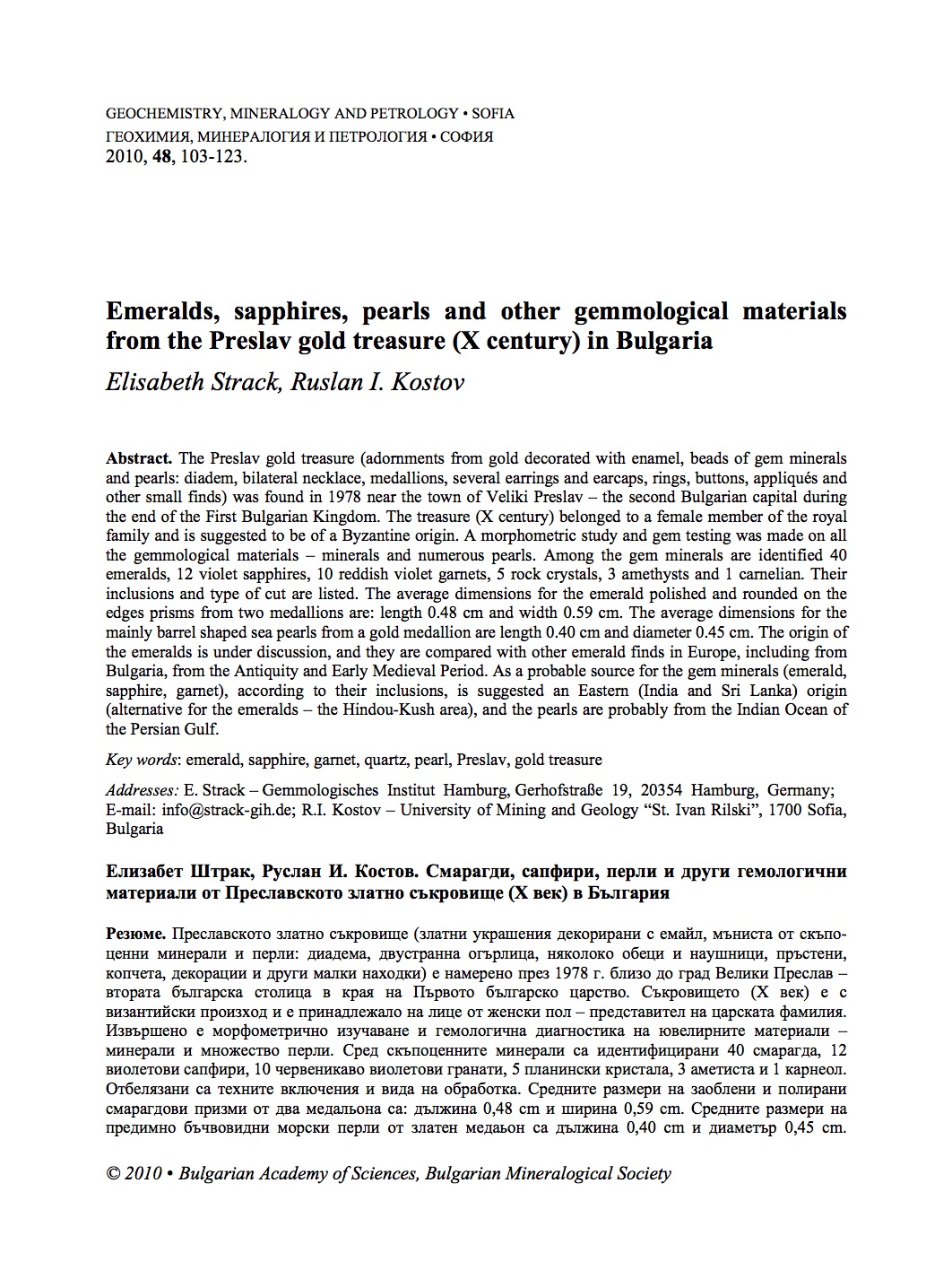
Legends of the Fire Spirits: Jinn and Genies From Arabia to Zanzibar
Book
Lebling, R. (2010) Legends of the Fire Spirits: Jinn and Genies From Arabia to Zanzibar. London, I.B. Tauris & Co. Ltd.
Record No. 26612  |  ISBN/ISSN: ISBN: 9781845119935  |  Sinkankas/Born No.: NIS/NIB  |  RWHL
When Westerners think of a genie, the first image that comes to mind may be Barbara Eden in her pink harem pants or the illuminated blue buffoon from the animated Disney film Aladdin. But to the people of the Arab and Islamic worlds, the picture is dramatically different. Legends of the Fire Spirits looks beyond Westernized caricatures to immerse the reader in the vibrant lore of the jinn—the wondrous, often troublesome, and sometimes terrifying spirit beings of ancient Arab and Islamic tradition. Robert Lebling delves into long-lost accounts, medieval histories, colonial records, anthropologist’s reports, and traveler’s tales to explore the origin and evolution of legends that continue to thrive in the Middle East and beyond. He cuts through centuries of Orientalists’ cultural presumption to craft a study that stands apart from the overwhelming body of literature concerned with religion in the Middle East. A captivating synthesis of history and folklore, this is the most diverse collection of jinn lore ever assembled in one volume. From ancient scriptures to The Arabian Nights and beyond, and with a foreword by acclaimed filmmaker Tahir Shah, Lebling has constructed a comprehensive account that not only transcends geographical borders but also spans some four millennia.

Emeralds, sapphires, pearls and other gemmological materials from the Preslav gold treasure (X century) in Bulgaria
Journal Article
Strack, E. and Kostov, R.I. (2010) Emeralds, sapphires, pearls and other gemmological materials from the Preslav gold treasure (X century) in Bulgaria. Bulgarian Academy of Sciences, Bulgarian Mineralogical Society, Vol. 48, pp. 103–123.
Record No. 6395  |  Sinkankas/Born No.: NIS/NIB  |  RWHL
The Preslav gold treasure was found in 1978 near the town of Veliki Preslav, the second Bulgarian capital during the end of the First Bulgarian Kingdom. The 10th-century trea-sure belonged to a female member of the royal family and is believed to be of Byzantine origin. Among the gem materials identified are emerald, violet sapphire, pearl, reddish violet garnet, rock crystal, amethyst, and carnelian. The average dimensions of the emeralds in two medallions were 0.5 cm long and 0.6 cm wide; their origin is suspected to be Egyptian or Austrian based on the deposits known at the time and similarities in their morphology, internal fea-tures, and inclusions. Fine rutile silk inclusions were iden-tified in the sapphire. As the Indian subcontinent was the main source of gem corundum in antiquity and Early Medieval times, it can be assumed that the sapphires in the Preslav treasure are of an Indian or Sri Lankan origin. The barrel-and baroque-shaped saltwater pearls (average 0.4 cm long and 0.5 cm in diameter), some of them partly decomposed, are thought to originate from the Persian Gulf and the coastal areas of the Indian Ocean.

Fluid composition, δD of channel H₂O, and δ¹⁸O of lattice oxygen in beryls: Genetic implications for Brazilian, Colombian, and Afghanistani emerald deposits
Journal Article
Giuliani, G., France-Lanord, C., Zimmermann, J., Cheilletz, A., Arboleda, C., Charoy, B., Coget, P., Fontan, F. and Giard, D. (2010) Fluid composition, δD of channel H₂O, and δ¹⁸O of lattice oxygen in beryls: Genetic implications for Brazilian, Colombian, and Afghanistani emerald deposits. International Geology Review, May-97,, 6-Jul pp. 400–424.
Record No. 6072  |  DOI: https://dx.doi.org/10.1080/00206819709465280  |  RWHL
The fluid composition, δD of channel H₂O, and δ¹⁸O of lattice oxygen have been determined in beryl and emerald from a variety of geological environments to constrain the origin of the parental fluids from which beryl has formed. Step-heating analyses using quadrupole mass spectrometry were employed to quantify the fluid phases in beryl from granitic pegmatites and greisens, and emerald from Brazil, Colombia, and Afghanistan. A key finding is that beryl and emerald share similar fluid compositions, with H₂O making up over 90 % of total water content in the mineral, regardless of formation age (2.0 Ga to 32 Ma) or tectonic setting. However, emeralds from the Santa Terezinha shear-zone deposit in Brazil contain significant CO₂, up to 13 wt% of the fluid. Another major result is that some Brazilian emeralds show channel H₂O contents higher than the established literature range, especially in shear-zone-related deposits (2.99 < H₂O < 3.16 wt%) and pegmatite-related deposits like Pombos, Pela Ema, and Pirenópolis (2.78 < H₂O < 3.01 wt%). In contrast, Colombian emeralds contain very low H₂O (1.30 < H₂O < 1.96 wt%), among the lowest globally. Brazilian, Colombian, and Afghan emeralds display distinct and constrained δ¹⁸O ranges. Brazilian emeralds from pegmatites show systematic inter-deposit variability (+6.3 < δ¹⁸O < +12.4‰), interpreted as fluid-buffering by host ultrabasic rocks during fluid–rock interaction. Shear-zone emeralds in Brazil have a narrow δ¹⁸O range (+12.0 < δ¹⁸O < +12.4‰), reflecting the original hydrothermal fluid signature. Colombian and Afghan emeralds exhibit strong enrichment in ¹⁸O (+13.4 < δ¹⁸O < +23.6‰), indicating extensive interaction with ¹⁸O-rich sedimentary or metasedimentary rocks. δD values in Brazilian emeralds vary by deposit type: pegmatite-related emeralds like Socotó and Carnaíba suggest a magmatic origin (mean δD = −37.8 ± 8‰), while Santa Terezinha emeralds suggest a metamorphic origin (mean δD = −32.4 ± 3‰). Colombian emeralds are also of metamorphic origin, while Afghan emeralds (mean δD = −46.3 ± 1.3‰) are compatible with both magmatic and metamorphic sources.

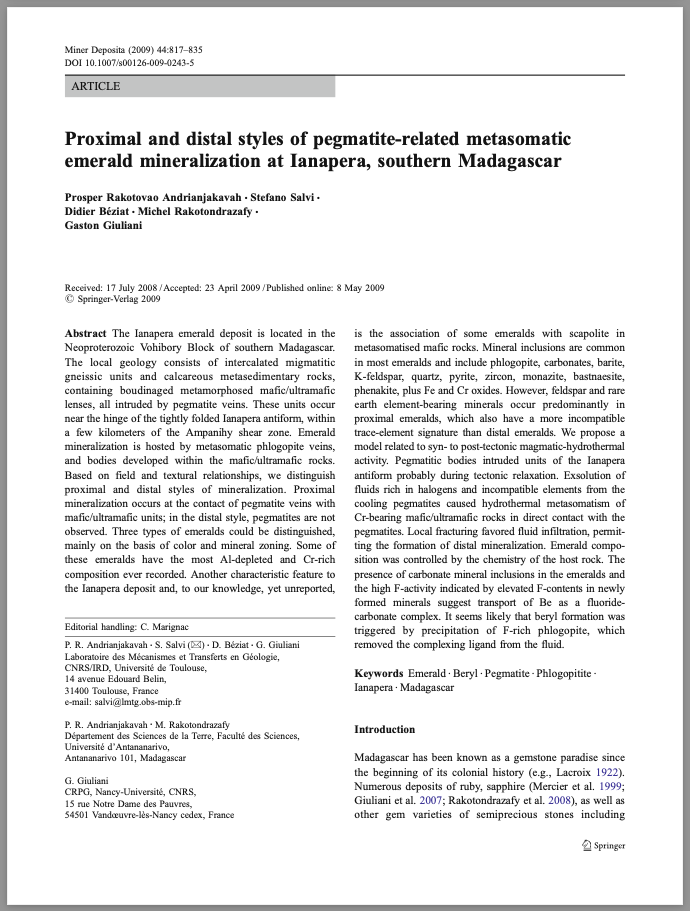
Proximal and distal styles of pegmatite-related metasomatic emerald mineralization at Ianapera, southern Madagascar
Journal Article
Andrianjakavah, P.R., Salvi, S., Béziat, D., Rakotondrazafy, M. and Giuliani, G. (2009) Proximal and distal styles of pegmatite-related metasomatic emerald mineralization at Ianapera, southern Madagascar. Mineralium Deposita, Vol. 44, pp. 817–835.
Record No. 28073  |  DOI: https://doi.org/10.1007/s00126-009-0243-5  |  Sinkankas/Born No.: NIS/NIB  |  RWHL
The Ianapera emerald deposit is located in the Neoproterozoic Vohibory Block of southern Madagascar. The local geology consists of intercalated migmatitic gneissic units and calcareous metasedimentary rocks, containing boudinaged metamorphosed mafic/ultramafic lenses, all intruded by pegmatite veins. These units occur near the hinge of the tightly folded Ianapera antiform, within a few kilometers of the Ampanihy shear zone. Emerald mineralization is hosted by metasomatic phlogopite veins, and bodies developed within the mafic/ultramafic rocks. Based on field and textural relationships, we distinguish proximal and distal styles of mineralization. Proximal mineralization occurs at the contact of pegmatite veins with mafic/ultramafic units; in the distal style, pegmatites are not observed. Three types of emeralds could be distinguished, mainly on the basis of color and mineral zoning. Some of these emeralds have the most Al-depleted and Cr-rich composition ever recorded. Another characteristic feature to the Ianapera deposit and, to our knowledge, yet unreported, is the association of some emeralds with scapolite in metasomatised mafic rocks. Mineral inclusions are common in most emeralds and include phlogopite, carbonates, barite, K-feldspar, quartz, pyrite, zircon, monazite, bastnaesite, phenakite, plus Fe and Cr oxides. However, feldspar and rare earth element-bearing minerals occur predominantly in proximal emeralds, which also have a more incompatible trace-element signature than distal emeralds. We propose a model related to syn- to post-tectonic magmatic-hydrothermal activity. Pegmatitic bodies intruded units of the Ianapera antiform probably during tectonic relaxation. Exsolution of fluids rich in halogens and incompatible elements from the cooling pegmatites caused hydrothermal metasomatism of Cr-bearing mafic/ultramafic rocks in direct contact with the pegmatites. Local fracturing favored fluid infiltration, permitting the formation of distal mineralization. Emerald composition was controlled by the chemistry of the host rock. The presence of carbonate mineral inclusions in the emeralds and the high F-activity indicated by elevated F-contents in newly formed minerals suggest transport of Be as a fluoride-carbonate complex. It seems likely that beryl formation was triggered by precipitation of F-rich phlogopite, which removed the complexing ligand from the fluid.

Emeralds from the Silk Road countries – A comparison with Colombia
Journal Article
Schwarz, D. and Pardieu, V. (2009) Emeralds from the Silk Road countries – A comparison with Colombia. InColor, No. 12, Fall/Winter, pp. 38–43.
Record No. 6065  |  RWHL

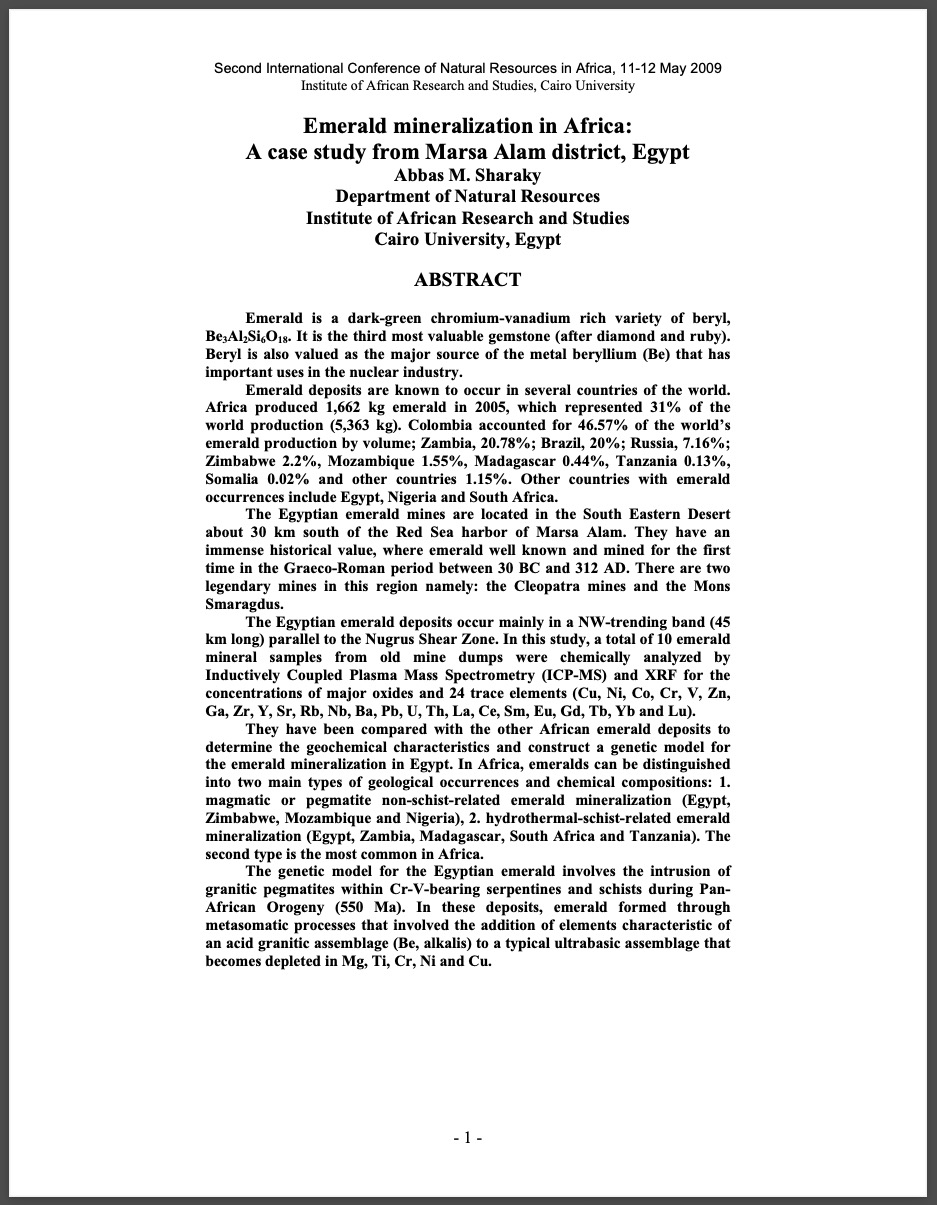
Emerald mineralization in Africa: A case study from Marsa Alam district, Egypt
Conference Paper
Sharaky, A.M. (2009) Emerald mineralization in Africa: A case study from Marsa Alam district, Egypt. Second International Conference of Natural Resources in Africa, Cairo: Institute of African Research and Studies, 21 pp..
Record No. 4575  |  RWHL
Emerald is a dark-green chromium-vanadium rich variety of beryl, Be₃Al₂Si₆O₁₈. It is the third most valuable gemstone (after diamond and ruby). Beryl is also valued as the major source of the metal beryllium (Be) that has important uses in the nuclear industry. Emerald deposits are known to occur in several countries of the world. Africa produced 1,662 kg emerald in 2005, which represented 31 % of the world production (5,363 kg). Colombia accounted for 46.57 % of the world’s emerald production by volume; Zambia, 20.78 %; Brazil, 20 %; Russia, 7.16 %; Zimbabwe 2.2 %, Mozambique 1.55 %, Madagascar 0.44 %, Tanzania 0.13 %, Somalia 0.02 % and other countries 1.15 %. Other countries with emerald occurrences include Egypt, Nigeria and South Africa. The Egyptian emerald mines are located in the South Eastern Desert about 30 km south of the Red Sea harbor of Marsa Alam. They have an immense historical value, where emerald well known and mined for the first time in the Graeco-Roman period between 30 BC and 312 AD. There are two legendary mines in this region namely: the Cleopatra mines and the Mons Smaragdus. The Egyptian emerald deposits occur mainly in a NW-trending band (45 km long) parallel to the Nugrus Shear Zone. In this study, a total of 10 emerald mineral samples from old mine dumps were chemically analyzed by Inductively Coupled Plasma Mass Spectrometry (ICP-MS) and XRF for the concentrations of major oxides and 24 trace elements (Cu, Ni, Co, Cr, V, Zn, Ga, Zr, Y, Sr, Rb, Nb, Ba, Pb, U, Th, La, Ce, Sm, Eu, Gd, Tb, Yb and Lu). They have been compared with the other African emerald deposits to determine the geochemical characteristics and construct a genetic model for the emerald mineralization in Egypt. In Africa, emeralds can be distinguished into two main types of geological occurrences and chemical compositions: 1. magmatic or pegmatite non-schist-related emerald mineralization (Egypt, Zimbabwe, Mozambique and Nigeria), 2. hydrothermal-schist-related emerald mineralization (Egypt, Zambia, Madagascar, South Africa and Tanzania). The second type is the most common in Africa. The genetic model for the Egyptian emerald involves the intrusion of granitic pegmatites within Cr-V-bearing serpentines and schists during Pan-African Orogeny (550 Ma). In these deposits, emerald formed through metasomatic processes that involved the addition of elements characteristic of an acid granitic assemblage (Be, alkalis) to a typical ultrabasic assemblage that becomes depleted in Mg, Ti, Cr, Ni and Cu.

The Gem Merchants

Book
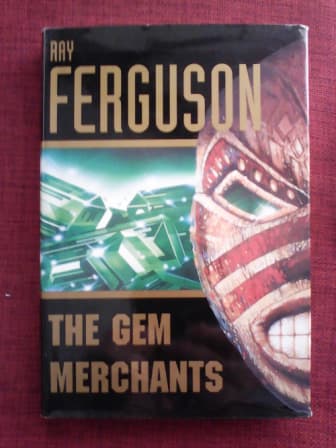
Ferguson, R. (2009) The Gem Merchants. Antananarivo, Piermont Gem Publishers, 285 pp.
Record No. 4553  |  ISBN/ISSN: 9780980000000  |  Sinkankas/Born No.: NIS/NIB  |  RWHL
Mark Branson, a young gem trader, knows that emeralds are mined, bought, stolen, coveted, and even killed for--knowledge that weighs heavy on his mind as he journeys from the sedate, gentlemanly world of London's Center for Precious Stone Trading to the deep bush of Africa in search for the glittering green gems. Mark also knows all too well that anyone caught trading emeralds can end up in jail with little or no recourse to any embassy. When he's given an emerald by an African mine owner, he has to quickly learn whom to trust, whom to bribe, and whom to avoid completely. In a world where jewels are expensive and life is expendable, Mark must navigate hard-drinking Irish missionaries, double-dealing Indian traders, hostile Afrikaners, and sex-starved girls, not to mention the trigger-happy Zambian police. After experiencing The Gem Merchants, readers will never look at an emerald the same way again.

A glimpse of the new fine emerald deposit at Xinjiang’s Davdar mine
Journal Article
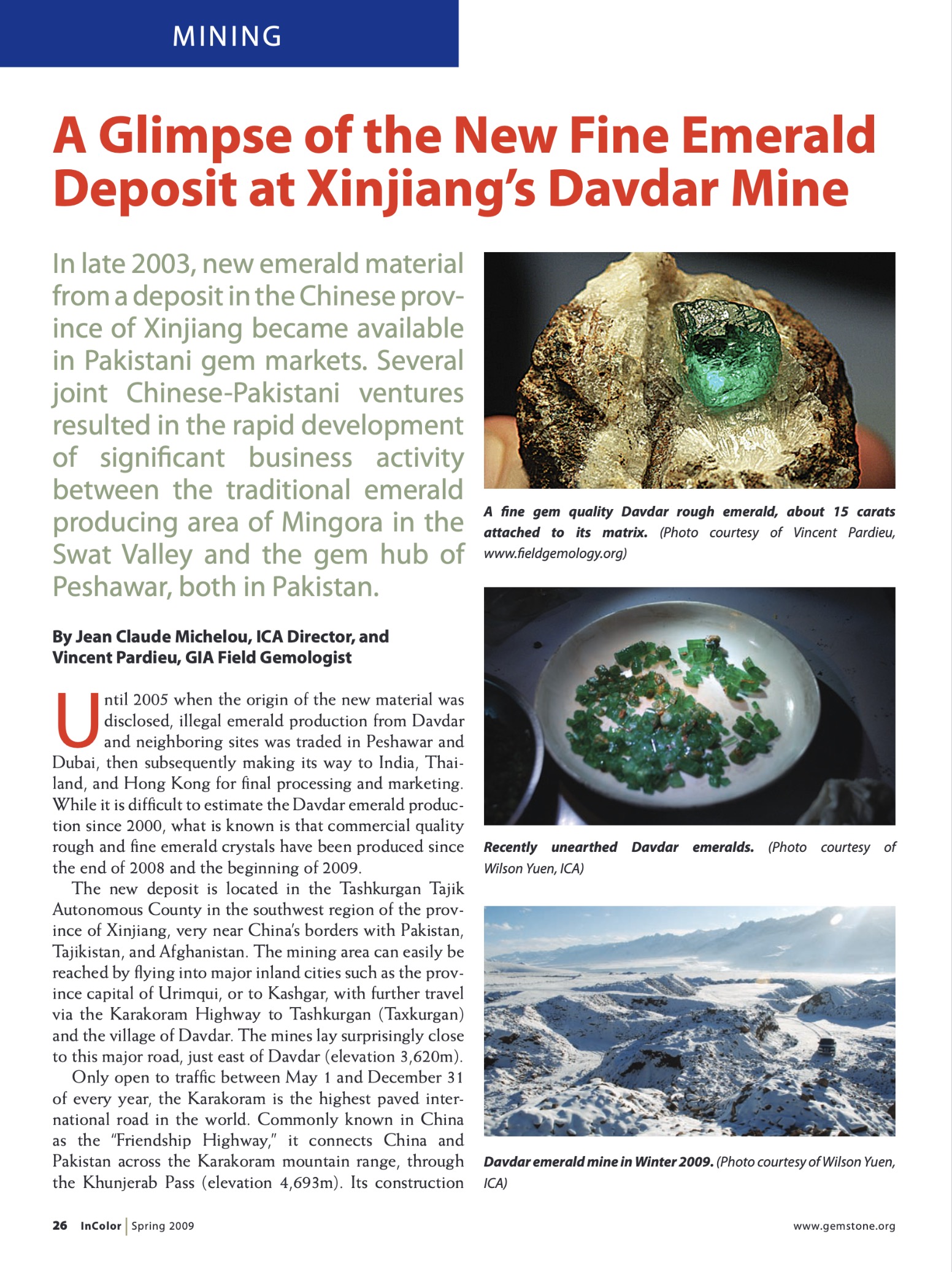
Michelou, J.C. (2009) A glimpse of the new fine emerald deposit at Xinjiang’s Davdar mine. InColor, No. 10, Spring, pp. 26–31.
Record No. 4205  |  RWHL

Ratnaśāstra in Kauṭilya’s Arthaéāstra (KA)
Journal Article
Wojtilla, G. (2009) Ratnaśāstra in Kauṭilya’s Arthaéāstra (KA). Acta Orientalia Academiae Scientiarum Hungaricae, Vol. 62, No. 1, March, pp. 37–44.
Record No. 3338  |  Sinkankas/Born No.: NIS/NIB  |  RWHL
KA II, 11, 28-41 is the earliest extant Sanskrit text on ratnasâstra 'gemmology'. It is a branch of traditional science and it reflects a great dea! of expérimental knowledge of jewellers, The présent paper analyses the structure of the established text, seeks for an answer why the passages concerning diamond follow the list of the precious stones proper and why emerald is missing. The readings offered by the manuscripts and commentaries have been rechecked and the Kangle's text has been revised at places. The revised portions of the text have been retranslated and accompanied with the necessary notes. From our investigations it has become clear that the extant text is very loosely edited and highly problematic; the text présents a mixture of värttäsästra (textbook of economy) and ratnasâstra; there are terminological inconsistencies; it seems that gemmology had existed before the édition of the KA and the place of birth of this science was South India.

Multi-stage emerald formation during Pan-African regional metamorphism: The Zabara, Sikait, Umm Kabo deposits, South Eastern desert of Egypt
Journal Article
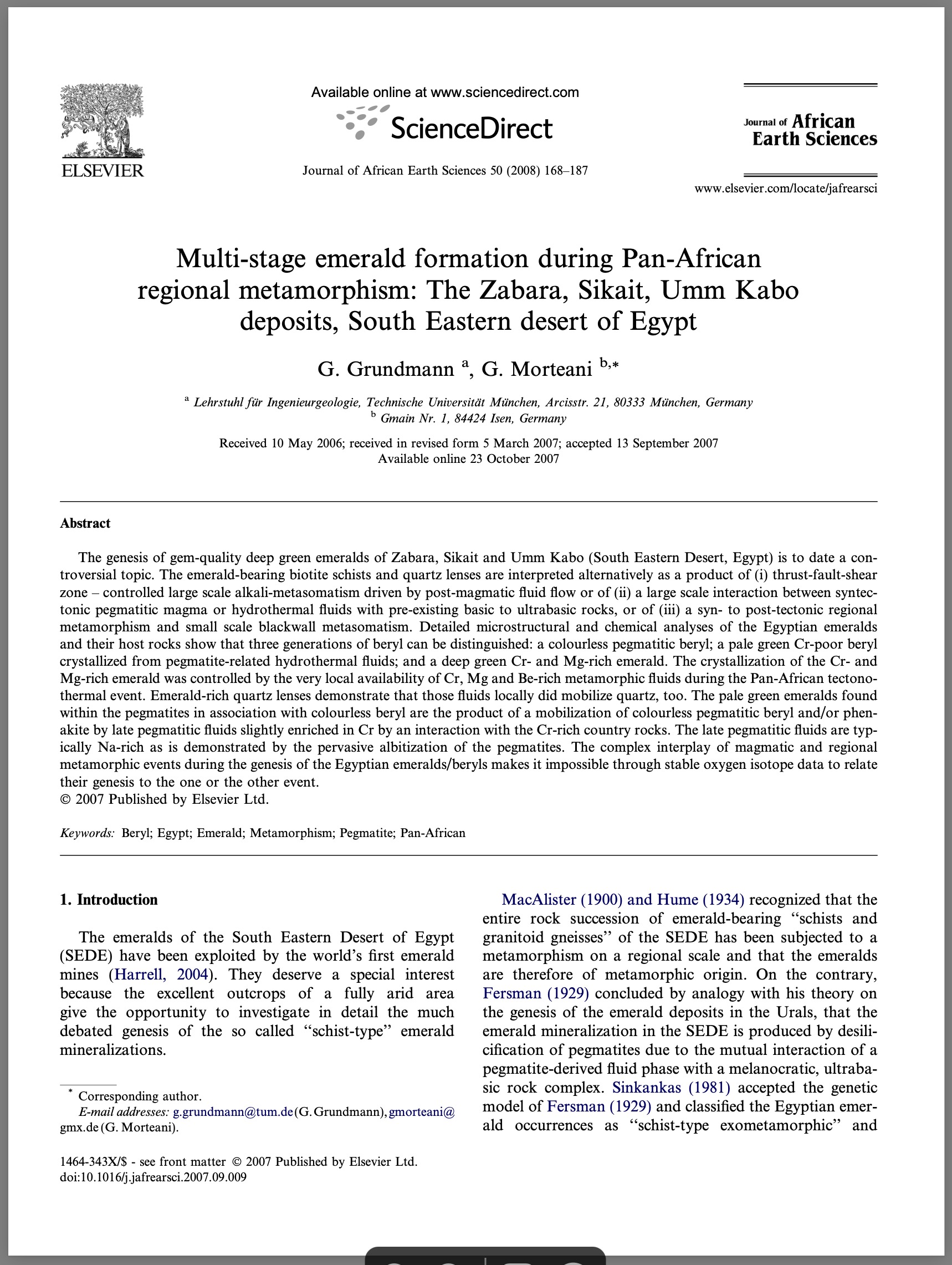
Grundmann, G. and Morteani, G. (2008) Multi-stage emerald formation during Pan-African regional metamorphism: The Zabara, Sikait, Umm Kabo deposits, South Eastern desert of Egypt. Journal of African Earth Sciences, Vol. 50, pp. 168–187.
Record No. 27098  |  DOI: http://dx.doi.org/10.1016/j.jafrearsci.2007.09.009  |  Sinkankas/Born No.: NIS/NIB  |  RWHL
The genesis of gem-quality deep green emeralds of Zabara, Sikait and Umm Kabo (South Eastern Desert, Egypt) is to date a controversial topic. The emerald-bearing biotite schists and quartz lenses are interpreted alternatively as a product of (i) thrust-fault-shear zone – controlled large scale alkali-metasomatism driven by post-magmatic fluid flow or of (ii) a large scale interaction between syntectonic pegmatitic magma or hydrothermal fluids with pre-existing basic to ultrabasic rocks, or of (iii) a syn- to post-tectonic regional metamorphism and small scale blackwall metasomatism. Detailed microstructural and chemical analyses of the Egyptian emeralds and their host rocks show that three generations of beryl can be distinguished: a colourless pegmatitic beryl; a pale green Cr-poor beryl crystallized from pegmatite-related hydrothermal fluids; and a deep green Cr- and Mg-rich emerald. The crystallization of the Cr- and Mg-rich emerald was controlled by the very local availability of Cr, Mg and Be-rich metamorphic fluids during the Pan-African tectono-thermal event. Emerald-rich quartz lenses demonstrate that those fluids locally did mobilize quartz, too. The pale green emeralds found within the pegmatites in association with colourless beryl are the product of a mobilization of colourless pegmatitic beryl and/or phenakite by late pegmatitic fluids slightly enriched in Cr by an interaction with the Cr-rich country rocks. The late pegmatitic fluids are typically Na-rich as is demonstrated by the pervasive albitization of the pegmatites. The complex interplay of magmatic and regional metamorphic events during the genesis of the Egyptian emeralds/beryls makes it impossible through stable oxygen isotope data to relate their genesis to the one or the other event.

Ancient murrhine ware and its glass evocation

Journal Article
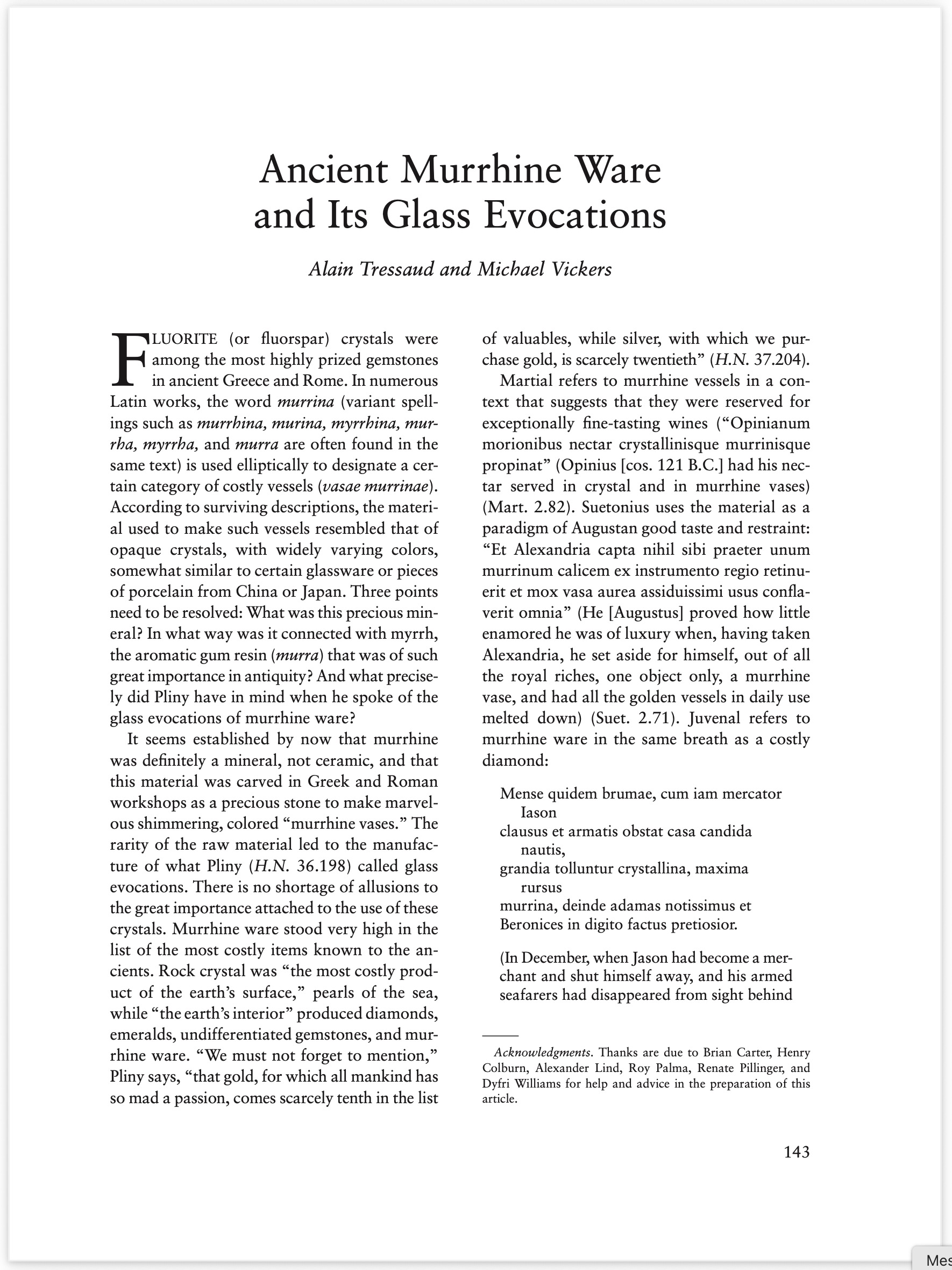
Tressaud, A. and Vickers, M. (2007) Ancient murrhine ware and its glass evocation. Journal of Glass Studies, Vol. 49, pp. 143–152.
Record No. 27342  |  Sinkankas/Born No.: NIS/NIB  |  RWHL
Fluorite (or fluorspar) crystals were among the most highly prized gemstones in ancient Greece and Rome. In numerous Latin works, the word murrina (with variant spellings such as murrhina, murina, myrrhina, murrha, myrrha, and murra often appearing within the same text) is used elliptically to designate a certain category of costly vessels (vasae murrinae). According to surviving descriptions, the material used to make such vessels resembled that of opaque crystals, with widely varying colors, somewhat similar to certain glassware or pieces of porcelain from China or Japan. Three points need to be resolved: What was this precious mineral? In what way was it connected with myrrh, the aromatic gum resin (murra) that was of such great importance in antiquity? And what precisely did Pliny have in mind when he spoke of the glass evocations of murrhine ware? It seems established by now that murrhine was definitely a mineral, not ceramic, and that this material was carved in Greek and Roman workshops as a precious stone to make marvelous shimmering, colored “murrhine vases.” The rarity of the raw material led to the manufacture of what Pliny (H.N. 36.198) called glass evocations. There is no shortage of allusions to the great importance attached to the use of these crystals. Murrhine ware stood very high in the list of the most costly items known to the ancients. Rock crystal was “the most costly product of the earth’s surface,” pearls of the sea, while “the earth’s interior” produced diamonds, emeralds, undifferentiated gemstones, and murrhine ware. “We must not forget to mention,” Pliny says, “that gold, for which all mankind has so mad a passion, comes scarcely tenth in the list of valuables, while silver, with which we purchase gold, is scarcely twentieth” (H.N. 37.204).

Exploring the Literature of Emerald

Emerald literature spans gemology, mineralogy, deposits, identification, treatments, synthesis, history and the gem trade, with important sources covering deposits around the world.

For a curated guide to this subject, read Green Fire — Lotus Gemology's Guide to the Literature of Emerald.

About Four Treasures

Four Treasures is Lotus Gemology's freely accessible gemological reference database. Use the full database to search by author, title or keyword and explore literature on gemology, mineralogy, jewelry and related fields. Where available, hyperlinks on titles may lead directly to the full publication.

Search the Complete Four Treasures Database