Emerald Bibliography

Emerald Bibliography

Explore books, articles and historical sources on emerald in Four Treasures, the Lotus Gemology reference database. This bibliography brings together matching records from the collection, with publication details, abstracts and cover images where available.

Emerald References

The list below matches the terms emerald or emeralds in the database's searchable fields. Some references discuss emeralds as part of a broader subject.
441–460 of 851 matching references

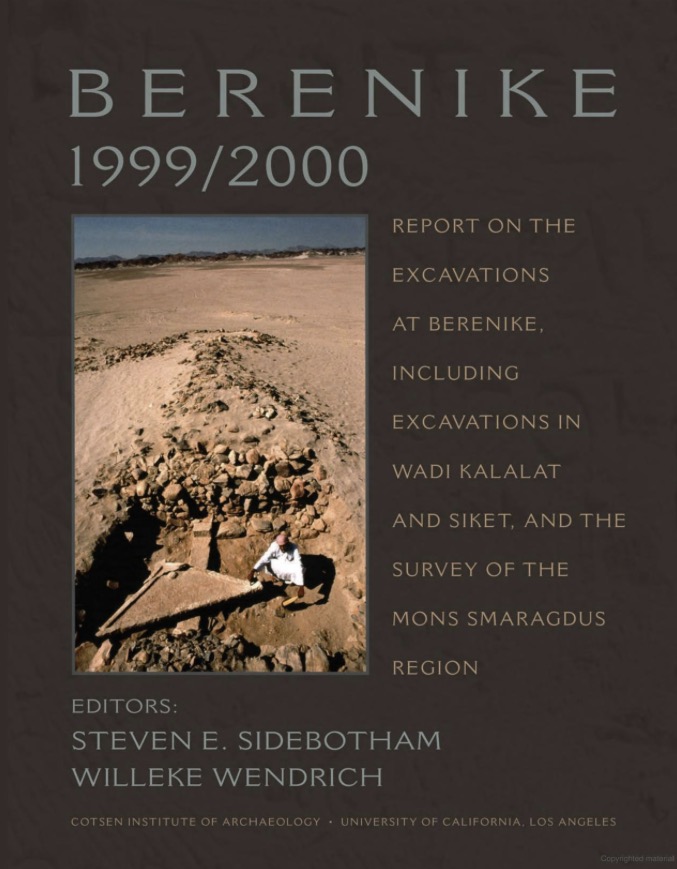
Berenike 1999-2000: Report on the Excavations at Berenike, Including Excavations in Wadi Kalalat and Siket, and the Survey of the Mons Smaragdus Region
Book
Wendrich, W. and Sidebotham, S.E. (2007) Berenike 1999-2000: Report on the Excavations at Berenike, Including Excavations in Wadi Kalalat and Siket, and the Survey of the Mons Smaragdus Region. Los Angeles, Cotsen Institute of Archaeology, UCLA, 424 pp.
Record No. 27085  |  ISBN/ISSN: 9781930000000  |  Sinkankas/Born No.: NIS/NIB  |  RWHL
Excavations at Berenike, a Greco-Roman harbor on the Egyptian Red Sea coast, have provided extensive evidence for trade with India, South-Arabia and sub-Saharan Africa. The results of the 1999 and 2000 excavations by the joint mission of the University of Delaware, Leiden University, and UCLA, have been published in a comprehensive report, with specialists' analyses of different object groups and an overview of evidence for the trade route from the Indian perspective. The book is lavishly illustrated with photographs, drawings, plans, and a large foldout map of Berenike and Sikait.

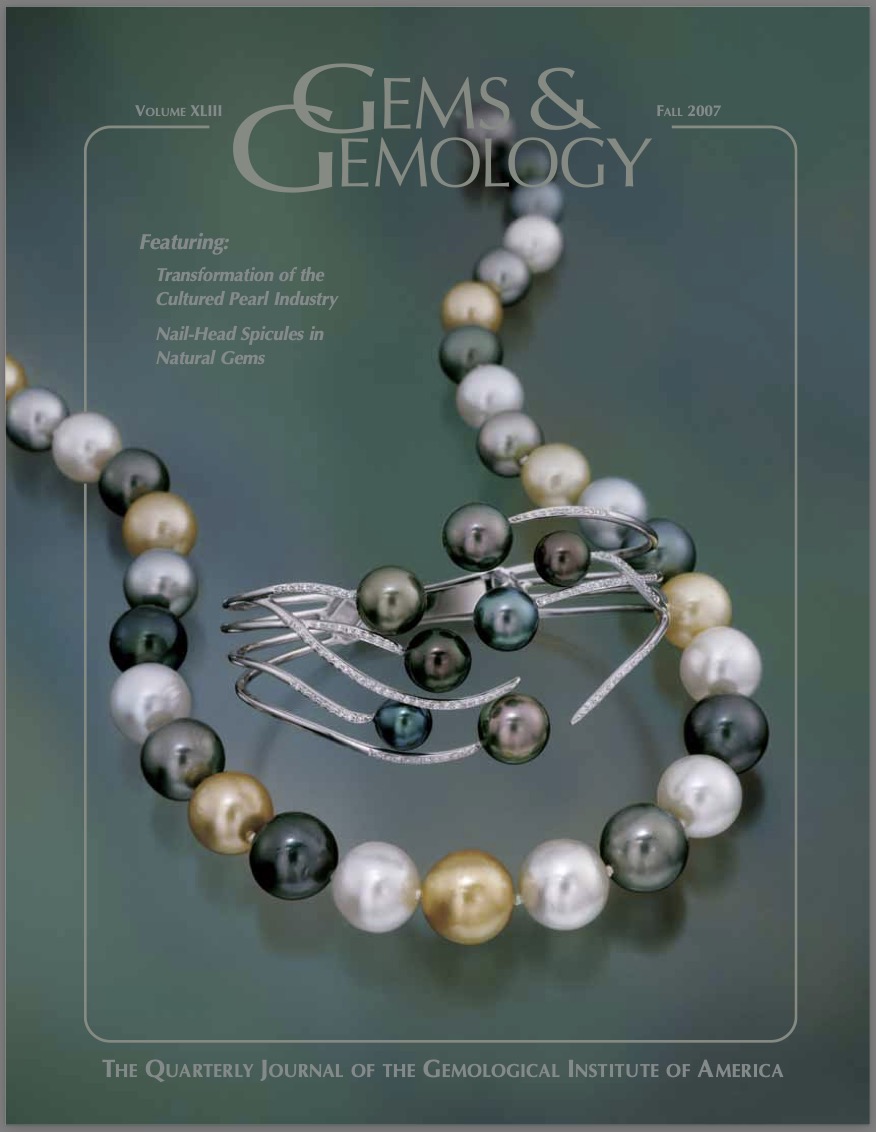
Gem News International: Cr/V-bearing green spodumene from Afghanistan
Journal Article
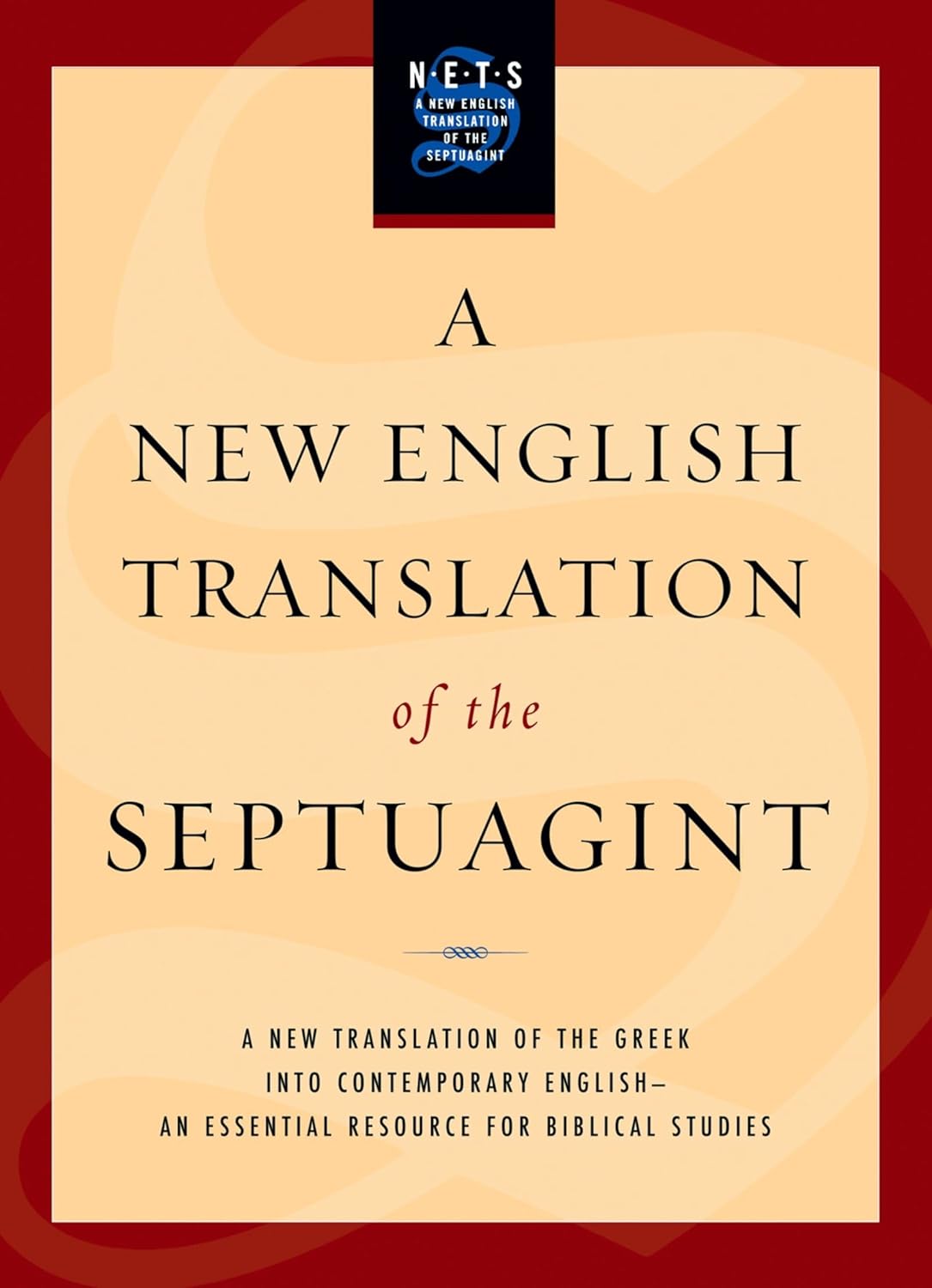
Chadwick, K.M., Shen, A.H., Laurs, B.M., Simmons, W.B. and Falster, A.U. (2007) Gem News International: Cr/V-bearing green spodumene from Afghanistan. Gems & Gemology, Vol. 43, No. 3, Fall, pp. 265–267.
Record No. 26682  |  Sinkankas/Born No.: NIS/NIB  |  RWHL
Spodumene (LiAlSi₂O₆), a lithium-rich clinopyroxene, derives its name from the Greek spodumenos (“burnt to ash”) in reference to the gray, non-gem material historically mined as a lithium ore. Gem-quality spodumene occurs in various colors: pink to lilac (kunzite), pale greenish yellow (triphane), pale violet-blue, pale green, and colorless. A distinctive chromium-bearing, emerald-green variety known as hiddenite is most famously sourced from Hiddenite, North Carolina. In late 2006, gem dealers Dudley Blauwet and Herb Obodda reported a new occurrence of distinctly green spodumene in Afghanistan. Blauwet first encountered the material in June 2006 during a buying trip to Peshawar, Pakistan, where its identity was then unknown to local traders. The material typically appeared as small cleavage fragments, unlike the large, well-formed spodumene crystals traditionally sought from Afghanistan. In June 2007, Farooq Hashmi observed a 30 kg parcel of mixed-quality green spodumene and a separate 2 kg lot of higher-quality material in Peshawar, mostly pale in color but with some “emerald” green pieces that appeared pink under a Chelsea filter. The main supplier reported that the stones came from Waigal, a locality a few hours’ walk from the village of Wadigram in Nuristan, where a single pegmatite—surrounded by others mined for blue tourmaline and kunzite—had produced the find.

A New English Translation of the Septuagint
Edited Book
Pietersma, A. and Wright, B.G., editor (2007) A New English Translation of the Septuagint.. Oxford, Oxford University Press, 1056 pp..
Record No. 26369  |  ISBN/ISSN: 9780490000000  |  Sinkankas/Born No.: NIS/NIB  |  RWHL
The Septuagint (the ancient Greek translation of Jewish sacred writings) is of great importance in the history of both Judaism and Christianity. The first translation of the books of the Hebrew Bible (plus additions) into the common language of the ancient Mediterranean world made the Jewish scriptures accessible to many outside Judaism. Not only did the Septuagint become Holy Writ to Greek speaking Jews but it was also the Bible of the early Christian communities: the scripture they cited and the textual foundation of the early Christian movement. Translated from Hebrew (and Aramaic) originals in the two centuries before Jesus, the Septuagint provides important information about the history of the text of the Bible. For centuries, scholars have looked to the Septuagint for information about the nature of the text and of how passages and specific words were understood. For students of the Bible, the New Testament in particular, the study of the Septuagint's influence is a vital part of the history of interpretation. But until now, the Septuagint has not been available to English readers in a modern and accurate translation. The New English Translation of the Septuagint fills this gap.

A study of nail-head spicule inclusions in natural gemstones
Journal Article
Choudhary, G. and Golecha, C. (2007) A study of nail-head spicule inclusions in natural gemstones. Gems & Gemology, Vol. 43, No. 3, Fall, pp. 228–235.
Record No. 5975  |  ISBN/ISSN: 0016626X  |  RWHL
Nail-head spicules are inclusions that have traditionally been associated with hydrothermal synthetic quartz and emerald. They are caused primarily by rapid growth conditions and disturbances during crystallization of their host. However, these or similar-looking inclusions have also been found in natural gems. The authors examined a natural emerald and blue sapphire showing true nail-head spicules, and a yellow sapphire, spinel, diamond, and rock crystal quartz with inclusions that strongly resembled them. Nail-head spicules remain a notable feature of rapid and disturbed growth, but they do not confirm a stone’s natural or synthetic origin without further examination.

From Satan's Crown to the Holy Grail: Emeralds in Myth, Magic and History
Book
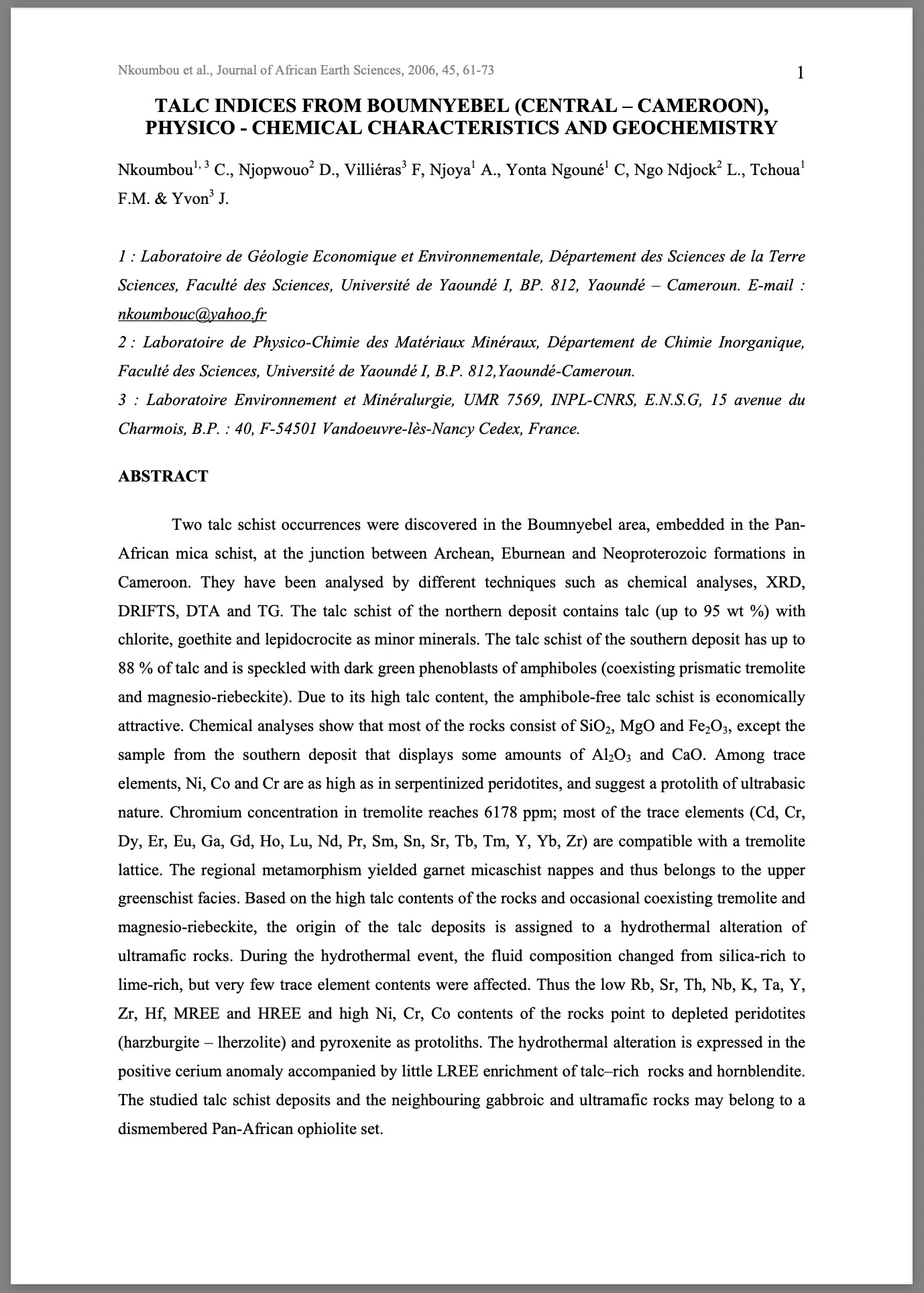
Morgan, D. (2007) From Satan's Crown to the Holy Grail: Emeralds in Myth, Magic and History. Westport, CT, Praeger, 181 pp.
Record No. 2651  |  Sinkankas/Born No.: NIS/NIB  |  RWHL
Morgan discusses the origin of the emerald, its peculiar structure, and its strange allure. The story weaves across several continents and thousands of years. It is a tale of conquistadors, treachery, shipwrecks, and alchemy. Along the way, we meet scientists and kings and bear witness as the great emeralds are born, mined, smuggled, cut, and sold. The book also discusses the modern art of making synthetic emeralds. From the fastnesses of Afghanistan to the steamy jungles of Colombia and Zimbabwe, from the sands of Egypt to the bitter Urals, this is the story of a stone whose strange journey reflects the yearnings, greed, passions, and longing for beauty of the human race.

Preliminary geological study and physicochemical characteristics of talc of Boumnyebel (Centre-Cameroon)
Journal Article
Nkoumbou, C., Njopwouo, D., Villiéras, F., Njoya, A., Ngouné, C., Ndjock, L., Tchoua, F. and Yvon, J. (2006) Preliminary geological study and physicochemical characteristics of talc of Boumnyebel (Centre-Cameroon). Journal of African Earth Sciences, Vol. 45, pp. 61–73.
Record No. 28260  |  DOI: https://doi.org/10.1016/j.jafrearsci.2006.01.007  |  Sinkankas/Born No.: NIS/NIB  |  RWHL
Two talc schist occurrences were discovered in the Boumnyebel area, embedded in the Pan-African mica schist, at the junction between Archean, Eburnean and Neoproterozoic formations in Cameroon. They have been analysed by different techniques such as chemical analyses, XRD, DRIFTS, DTA and TG. The talc schist of the northern deposit contains talc (up to 95 wt%) with chlorite, goethite and lepidocrocite as minor minerals. The talc schist of the southern deposit has up to 88% of talc and is speckled with dark green phenoblasts of amphiboles (coexisting prismatic tremolite and magnesio-riebeckite). Due to its high talc content, the amphibole-free talc schist is economically attractive. Chemical analyses show that most of the rocks consist of SiO2, MgO and Fe2O3, except the sample from the southern deposit that displays some amounts of Al2O3 and CaO. Among trace elements, Ni, Co and Cr are as high as in serpentinized peridotites, and suggest a protolith of ultrabasic nature. Chromium concentration in tremolite reaches 6178 ppm; most of the trace elements (Cd, Cr, Dy, Er, Eu, Ga, Gd, Ho, Lu, Nd, Pr, Sm, Sn, Sr, Tb, Tm, Y, Yb, Zr) are compatible with a tremolite lattice. The regional metamorphism yielded garnet micaschist nappes and thus belongs to the upper greenschist facies.

The Hellenistic Settlements in Syria, the Red Sea Basin, and North Africa
Book
Cohen, G.M. (2006) The Hellenistic Settlements in Syria, the Red Sea Basin, and North Africa. Berkeley, University of California Press, 501 pp.
Record No. 27305  |  ISBN/ISSN: 9780520000000  |  Sinkankas/Born No.: NIS/NIB  |  RWHL
This authoritative and sweeping compendium, the second volume in Getzel Cohen's organized survey of the Greek settlements founded or refounded in the Hellenistic period, provides historical narratives, detailed references, citations, and commentaries on all the settlements in Syria, The Red Sea Basin, and North Africa from 331 to 31 BCE. Organized geographically, the volume pulls together discoveries and debates from dozens of widely scattered archaeological and epigraphic projects. Cohen's magisterial breadth of focus enables him to provide more than a compilation of information; the volume also contributes to ongoing questions and will point the way toward new avenues of inquiry.

Emeralds from the Delbegetey deposit (Kazakhstan)
Journal Article
Gavrilenko, E.V., Calvo Pérez, B., Castroviejo Bolibar, R. and García del Amo, D. (2006) Emeralds from the Delbegetey deposit (Kazakhstan). Mineralogical Magazine, Vol. 70, pp. 159–173.
Record No. 27204  |  DOI: http://dx.doi.org/10.1180/0026461067020321  |  Sinkankas/Born No.: NIS/NIB  |  RWHL
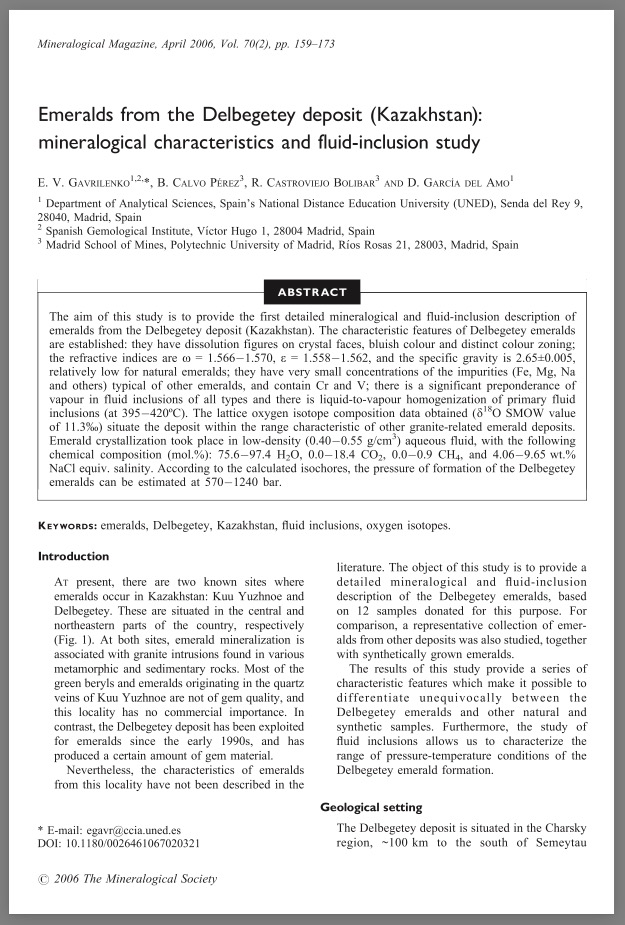
The aim of this study is to provide the first detailed mineralogical and fluid-inclusion description of emeralds from the Delbegetey deposit (Kazakhstan). The characteristic features of Delbegetey emeralds are established: they show dissolution figures on crystal faces, a bluish colour with distinct colour zoning; their refractive indices are ω = 1.566–1.570 and ε = 1.558–1.562, while the specific gravity is 2.65 ± 0.005—relatively low for natural emeralds; they contain only trace amounts of common impurities (Fe, Mg, Na, etc.) and are coloured by Cr and V. Fluid inclusions of all types are strongly vapour-rich, and primary inclusions homogenize to liquid at 395–420 °C. The lattice oxygen-isotope composition (δ¹⁸O SMOW = 11.3 ‰) places the deposit within the range typical of other granite-related emerald occurrences. Emerald crystallization occurred in a low-density (0.40–0.55 g cm⁻³) aqueous fluid composed of (mol %) 75.6–97.4 H₂O, 0.0–18.4 CO₂, 0.0–0.9 CH₄, with a salinity of 4.06–9.65 wt % NaCl equiv. Isochore calculations indicate formation pressures of 570–1240 bar.

Experiment in artificial compound jadeite
Journal Article
Shen, C. (2006) Experiment in artificial compound jadeite. China Gems & Jades, No. 59, pp. 46–51.
Record No. 26413  |  Sinkankas/Born No.: NIS/NIB  |  Language: in Chinese  |  RWHL
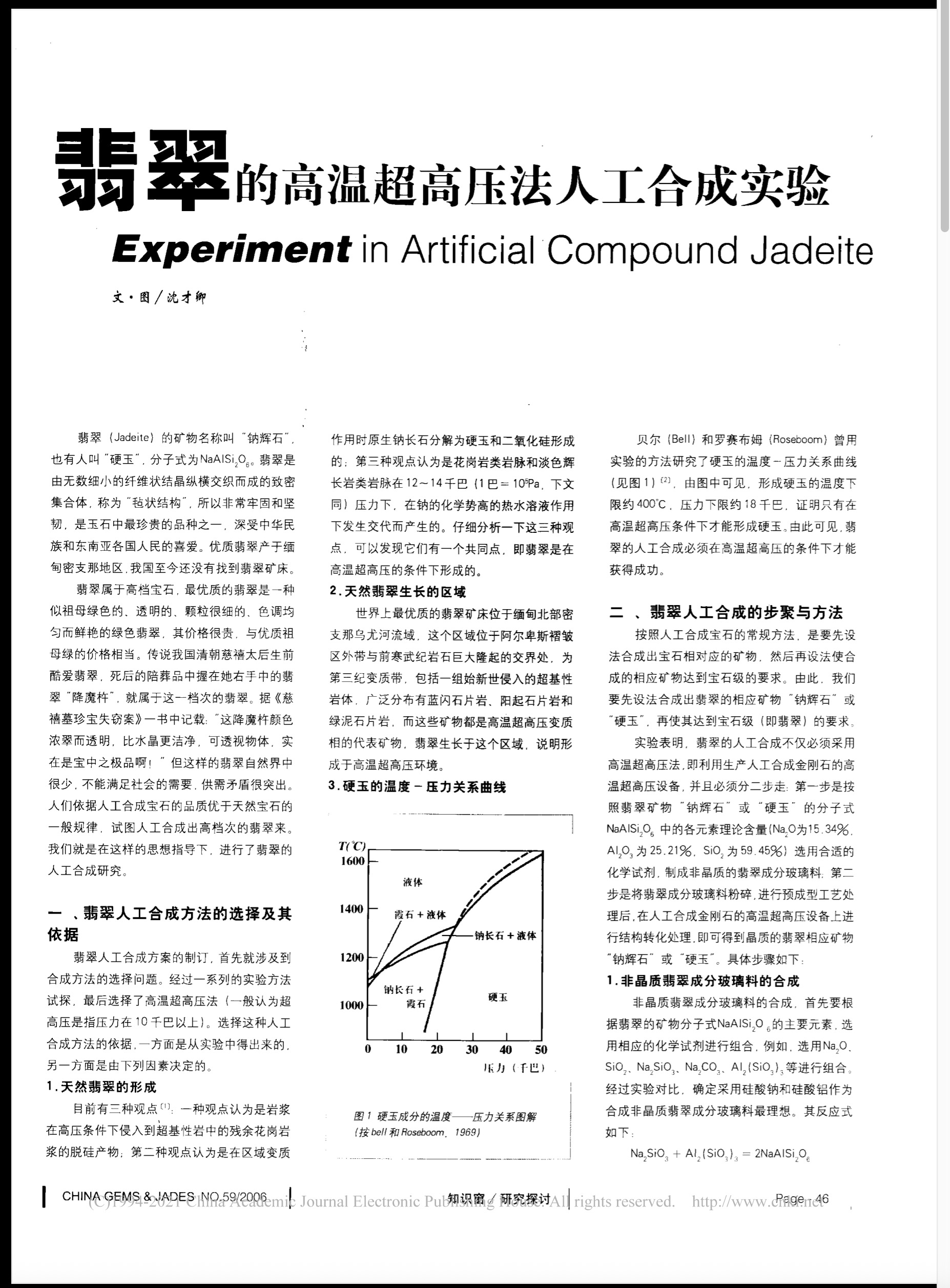
Fei cui, known mineralogically as “sodium jadeite” and sometimes incorrectly referred to as “hard jade,” has the chemical formula NaAlSi₂O₆. It is a dense aggregate composed of countless interwoven fine fibrous crystals, forming what is known as a “felted texture,” which makes it exceptionally strong and tough. As one of the most precious types of jade, jadeite is deeply loved by the Chinese people and by communities across Southeast Asia. The finest jadeite comes from the Myitkyina region in Myanmar; to date, no jadeite deposits have been discovered in China. Classified as a high-grade gemstone, the most valuable jadeite resembles emerald in color—transparent, extremely fine-grained, and with a vivid, evenly distributed green tone. Its price rivals that of top-quality emeralds. According to legend, Empress Dowager Cixi of the Qing dynasty had a particular fondness for jadeite, and among the burial items interred with her was a jadeite Vajra clutched in her right hand, considered to be of the highest grade. As recorded in the book The Case of the Theft of Treasures from Cixi’s Tomb, “The Vajra was a richly vivid green, transparent, purer than crystal, and able to reveal objects through it—truly a supreme treasure!” However, such high-quality jadeite is extremely rare in nature and cannot meet growing societal demand, creating a stark supply–demand imbalance. Based on the general principle that synthetic gemstones can sometimes surpass natural ones in quality, researchers have attempted to create high-grade synthetic jadeite. Our own work in this field was conducted under this guiding idea.

The Emerald Book

Book
Durlabhji, R., Durlabhji, Y., Fernandes, S. and Durlabhji, R. (2006) The Emerald Book. Jaipur, India, Jaipur Jewellery Show, 143 pp.
Record No. 6008  |  Sinkankas/Born No.: NIS/NIB  |  RWHL
From Gems & Gemology, Spring 2008: The Emerald Book was created to provide insight into the world of emeralds and the emerald industry, and to highlight Jaipur as a trading center. As a promotional book published in conjunction with the 2006 Jaipur Jewellery Show, it has a polished, professional look: The layout is attractive, and it is lavishly illustrated and printed on high-quality glossy paper. However, the text is organized in a way that makes it difficult, at first glance, to grasp the general content. There is no table of contents, and the book starts immediately with the chapter “Romance and Rhapsody,” describing the earliest sources of emerald and showing historic pieces of emerald jewelry. It reviews the discovery of Colombian emeralds and their effect on the world market, especially on Indian royalty. Also shown are examples of emerald carvings throughout history, and important emeralds and impressive pieces of jewelry (some with Indian designs), many of which are now owned by royal European families or held in museums throughout the world. Two brief sections cover beliefs in the magical power of emerald, especially within ancient Indian philosophies. The next section describes thehistory and evolution of the emerald trade in Jaipur. It gives the reader a good understanding of how Jaipur built its position as an emerald center, and how its sources of supply changed over the years, with Zambia now the only important one. A very concise overview of the most important commercial emerald mines reveals some interesting facts about the current mining situation. However, a section about “The Great Jewellers” seems a bit out of place. Although much attention is paid to their general impact on the jewelry trade, only one example is given of how a jeweler was inspired to use emeralds in a piece of jewelry. In my opinion, more in-depth information about this jeweler’s thought process would have made this section more interesting and appropriate. There is little geology or gemology in this book. As a result, a discussion about the term red emerald seems sudden and out of place, since the reader must have a thorough understanding of beryl gemology to be able to follow it. For all those who love emeralds and jewelry, though, this book gives an interesting and honest insider’s look into the emerald trade. The authors express great pride in the profession and in Jaipur’s status within the industry, but they also mention smuggling, robberies, violence at emerald sources, and concerns about the many museum pieces that are meant to be shown to the public, but all too often remain locked away in vaults. HANCO ZWAAN, Netherlands Gemmological Laboratory National Museum of Natural History Naturalis Leiden, The Netherlands

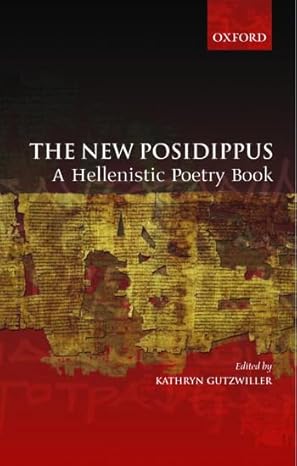
Cabinet fit for a queen: The Λιθικά as Posidippus’ gem museum
Book Section
Kuttner, A. (2005) Cabinet fit for a queen: The Λιθικά as Posidippus’ gem museum. In: The New Posidippus: A Hellenistic Poetry Book, Oxford: Oxford University Press, pp. 141–163.
Record No. 17264  |  ISBN/ISSN: 9780200000000  |  Sinkankas/Born No.: NIS/NIB  |  RWHL
The Milan Papyrus (P. Mil. Volg. VIII. 309), containing a collection of epigrams apparently all by Posidippus of Pella, provides one of the most exciting new additions to the corpus of Greek literature in decades. It not only contains over 100 previously unknown epigrams by one of the most prominent poets of the third century BC, but as an artifact it constitutes our earliest example of a Greek poetry book. In addition to a poetic translation of the entire corpus of Posidippus' poetry, this volume contains essays about Posidippus by experts in the fields of papyrology, Hellenistic and Augustan literature, Ptolemaic history, and Graeco-Roman visual culture.

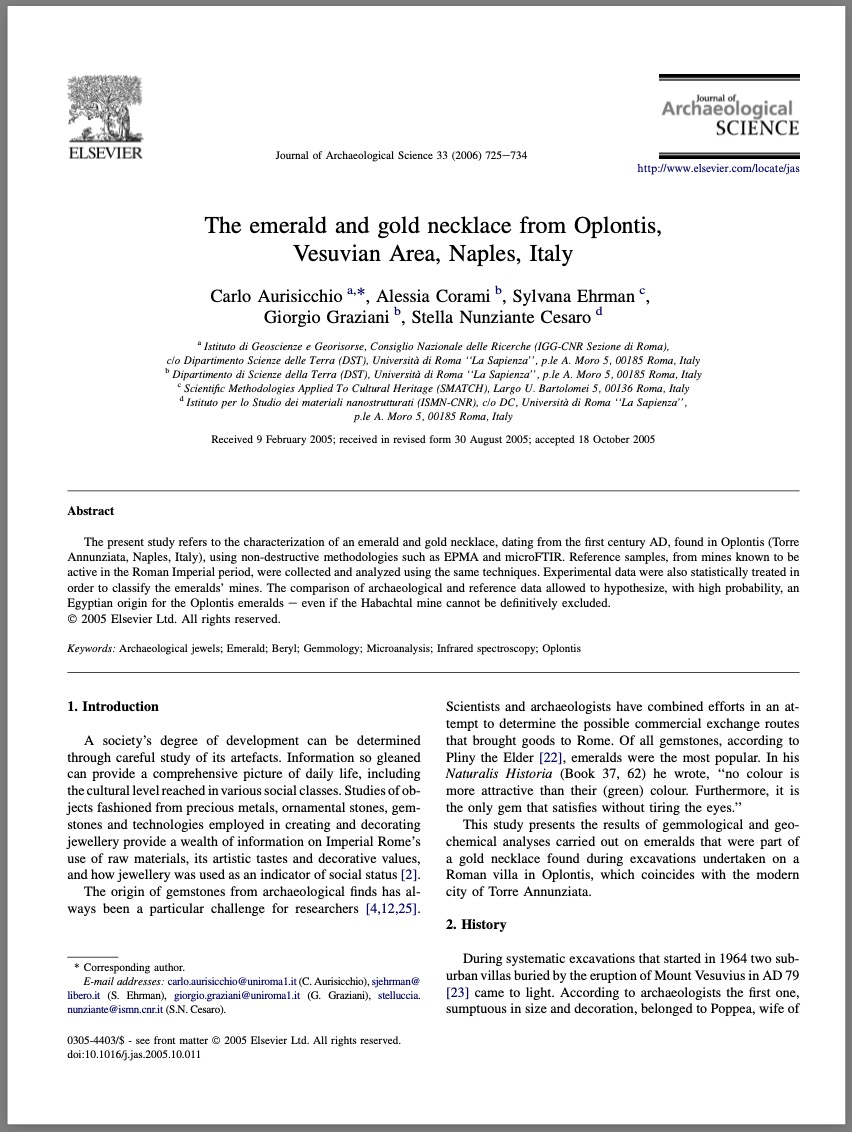
The emerald and gold necklace from Oplontis, Vesuvian Area, Naples, Italy
Journal Article
Aurisicchio, C., Corami, A., Ehrman, S., Graziani, G. and Cesaro, S.N. (2005) The emerald and gold necklace from Oplontis, Vesuvian Area, Naples, Italy. Journal of Archaeological Science, Vol. 33, No. 5, May, pp. 725–734.
Record No. 17126  |  Sinkankas/Born No.: NIS/NIB  |  RWHL
The present study refers to the characterization of an emerald and gold necklace, dating from the first century AD, found in Oplontis (Torre Annunziata, Naples, Italy), using non-destructive methodologies such as EPMA and microFTIR. Reference samples, from mines known to be active in the Roman Imperial period, were collected and analyzed using the same techniques. Experimental data were also statistically treated in order to classify the emeralds' mines. The comparison of archaeological and reference data allowed to hypothesize, with high probability, an Egyptian origin for the Oplontis emeralds – even if the Habachtal mine cannot be definitively excluded.

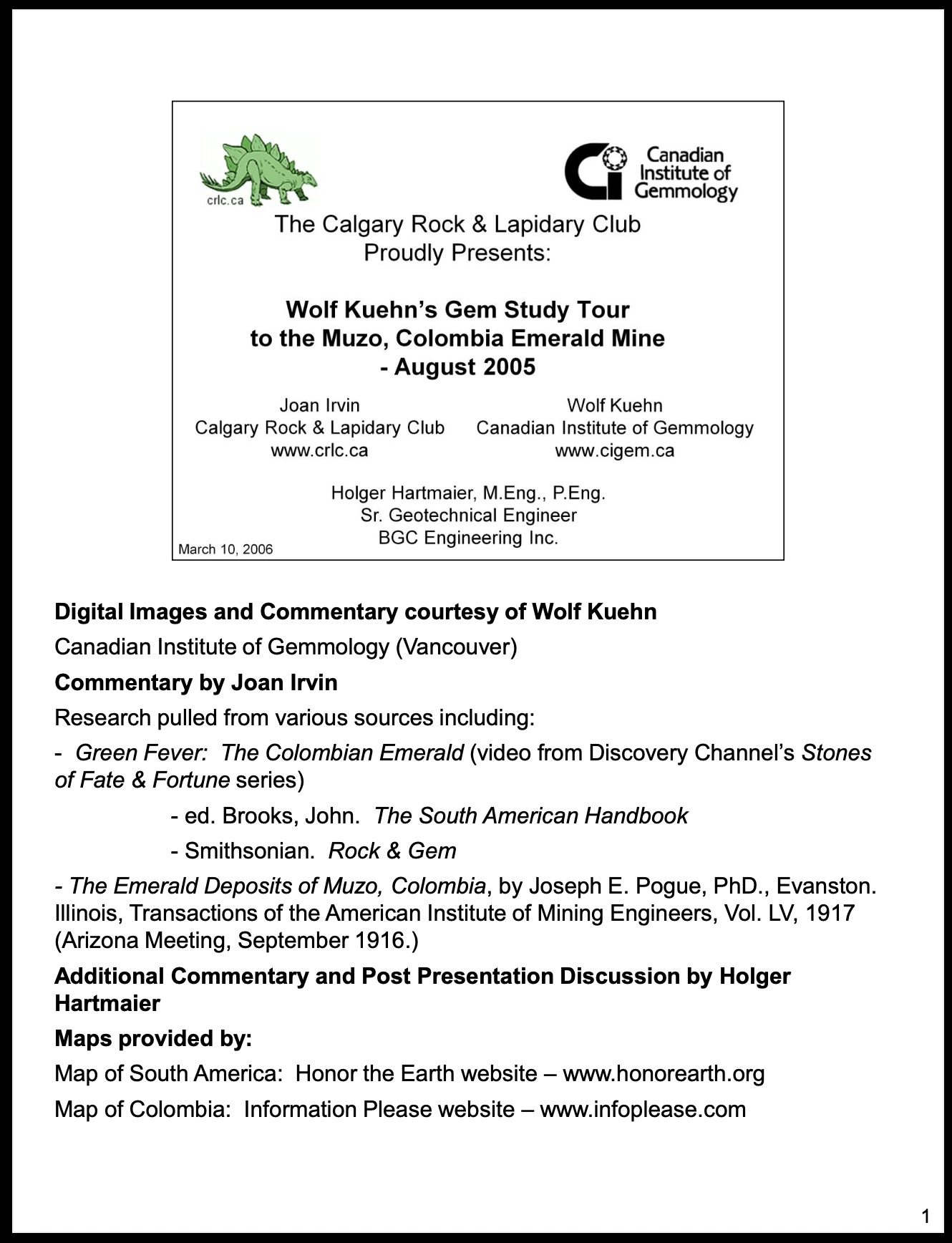
Wolf Kuehn's Gem Study Tour to the Muzo, Colombia Emerald Mine
Unpublished Work
Kuehn, W. (2005) Wolf Kuehn's Gem Study Tour to the Muzo, Colombia Emerald Mine. 47 pp.; unpublished report.
Record No. 17049  |  RWHL
Field trip guide to Colombia’s Muzo mines.

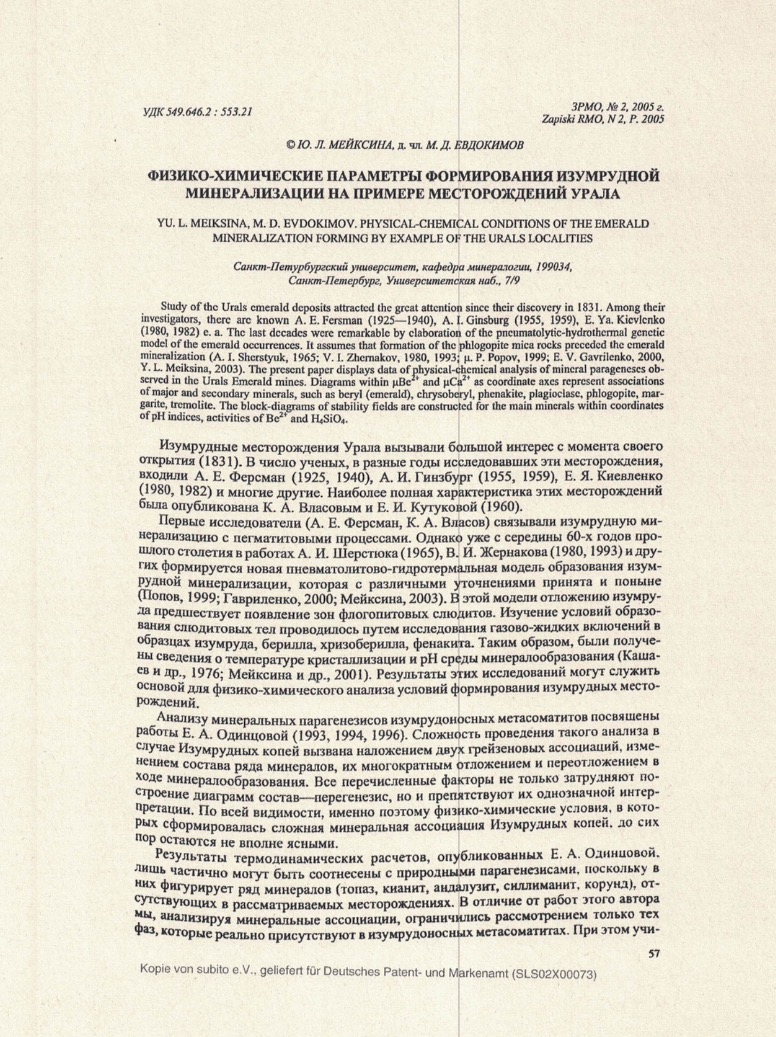
Physicochemical parameters of formation of emerald mineralization as illustrated by deposits in the Urals
Journal Article
Meiksina, Y.L. and Evdokimov, M.D. (2005) Physicochemical parameters of formation of emerald mineralization as illustrated by deposits in the Urals. Zapiski RMO (Proceedings of the Russian Mineralogical Society), Vol. 134, No. 2, pp. 57–67.
Record No. 8101  |  Language: in Russian  |  RWHL

Gem News International: New emerald deposit in Xinjiang, China
Journal Article
Blauwet, D., Quinn, E.P. and Muhlmeister, S. (2005) Gem News International: New emerald deposit in Xinjiang, China. Gems & Gemology, Vol. 41, No. 1, Spring, pp. 56–57.
Record No. 6066  |  ISBN/ISSN: 0016626X  |  RWHL

Emerald deposits of the Panjsher Valley, Afghanistan—preliminary assessment of geologic setting and origin of the deposits
Report
Snee, L.W., Lindsay, C.R., Bohannon, R.G., Turner, K.J., Wasay, A., Omar, M., Seal, R.R., Wilds, S.R. and Wilson, E.M. (2005) Emerald deposits of the Panjsher Valley, Afghanistan—preliminary assessment of geologic setting and origin of the deposits. USGS Administrative Report, US Geological Survey, 97 pp.
Record No. 6059  |  Sinkankas/Born No.: NIS/NIB  |  RWHL
As part of U.S. Geological Survey assistance in the reconstruction effort in Afghanistan funded by the U.S. Agency for International Development, the U.S. Geological Survey is working with the Afghanistan Ministry of Mines and Industries and the Afghan Geological Survey in conducting a mineral resource assessment of Afghanistan. In the early stage of this assessment, we are evaluating Afghanistan’s gemstone deposits. Afghanistan is rich in gemstone deposits including emeralds, rubies, lapis lazuli, and pegmatite-hosted semiprecious gems. This report presents a preliminary assessment of the geologic setting and origin of emerald deposits in the Panjsher Valley in the Hindu Kush Mountains of northeastern Afghanistan. Existing geologic maps and reports published by Soviet and Afghan geologists in the mid-1970s have been translated and are discussed. These maps and reports are used in conjunction with our new field and petrographic data to allow us to critically evaluate the Soviet geologic and tectonic interpretations for the northeastern part of the country. We also discuss the character of the emerald deposits and present a working hypothesis on the origin of the emeralds.

Gemstone resources of China

Journal Article
Ouyang, C.M. (2005) Gemstone resources of China. Australian Gemmologist, Vol. 22, No. 4, pp. 349–359.
Record No. 2889  |  RWHL
The occurrence of gemstones in China is reviewed after brief notes on the geology of this large area. Two diamond-bearing kimberlite pipes in the Wafangdian district of Liaoning Province are yielding 80,000–90,000 carats/year (30–40% gem quality); 12 kimberlite pipes in Mengyin, Shangdong Province, produce 50,000 carats/year (10–15% gem quality). Alluvial deposits in Hunan Province yield 20,000–30,000 carats/year (60–65% gem quality, but of small size). Chinese sapphire deposits are found mainly in alkaline basalts and derived alluvium, and are widely distributed over 20 provinces. Ruby (mostly cabochon quality) is found in impure marbles in Yunnan Province. Emeralds are associated with Precambrian pegmatites and greisen in the Wenshan district of southeastern Yunnan Province. Both transparent and chatoyant aquamarine is found mainly in the Altai pegmatite area of Xinjiang Province. Details are also given for gem-quality tourmaline, citrine, and amethyst, mainly from the Altai Mountains; gem-quality pyrope from Cenozoic alkali basalts of eastern China; and peridot from Tertiary alkaline basalts in Zhangjiangkou County, Hebei Province, and in Jiaohe County, Jilin Province. Occurrences of nephrite and bowenite (antigorite serpentine) are also described. RAH

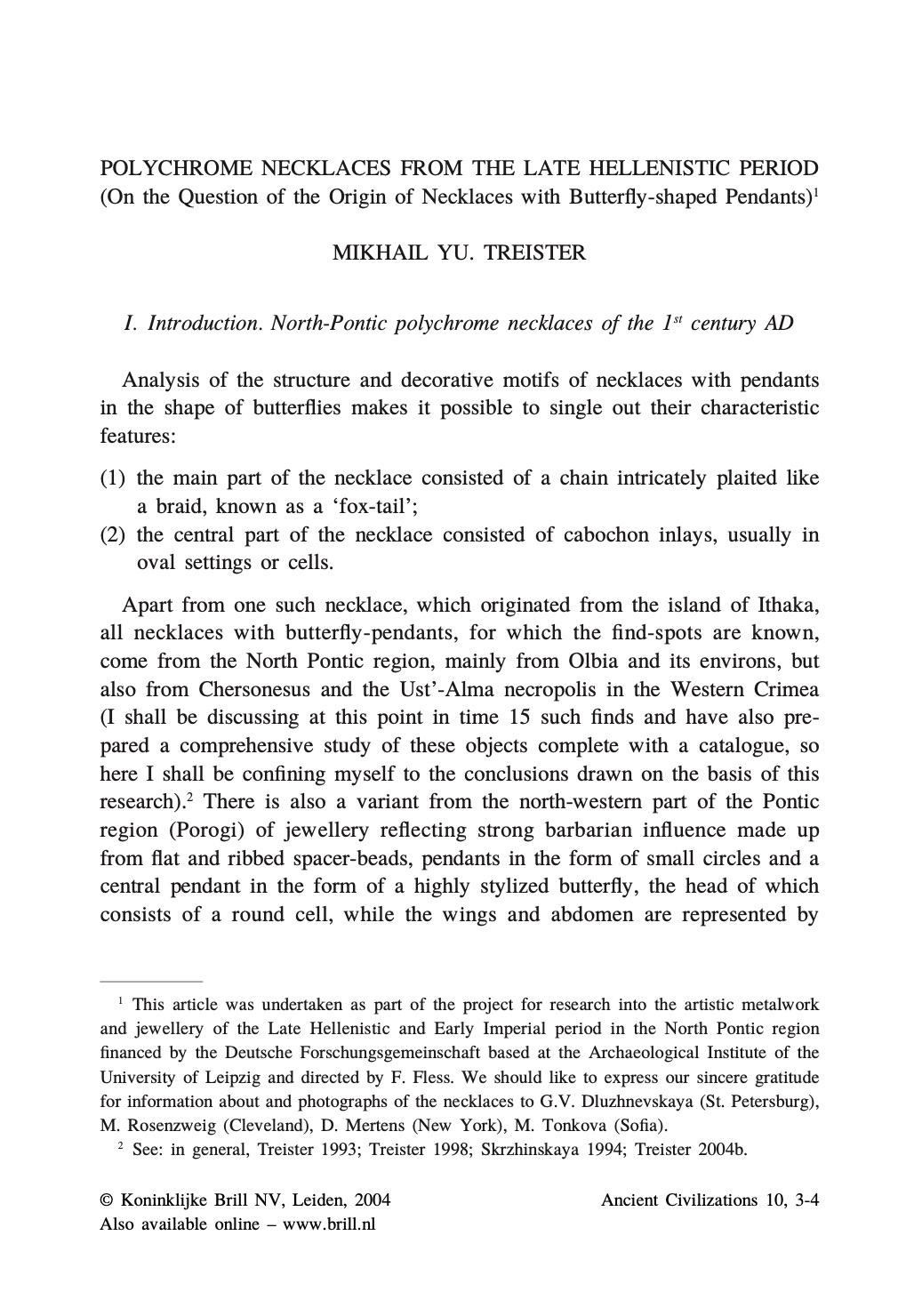
Polychrome necklaces from the late Hellenistic period. (On the Question of the Origin of Necklaces with Butterly-shaped Pendants)
Journal Article
Treister, M.Y. (2004) Polychrome necklaces from the late Hellenistic period. (On the Question of the Origin of Necklaces with Butterly-shaped Pendants). Ancient Civilizations, Vol. 10, No. 3–4, pp. 199–257.
Record No. 27680  |  Sinkankas/Born No.: NIS/NIB  |  RWHL
I. Introduction. North Pontic polychrome necklaces of the 1st century AD. Analysis of the structure and decorative motifs of necklaces with pendants in the shape of butterflies makes it possible to single out their characteristic features: (1) the main part of the necklace consisted of a chain intricately plaited like a braid, known as a ‘fox-tail’; (2) the central part of the necklace consisted of cabochon inlays, usually in oval settings or cells. Apart from one such necklace, which originated from the island of Ithaka, all necklaces with butterfly-pendants for which the find-spots are known come from the North Pontic region, mainly from Olbia and its environs, but also from Chersonesos and the Ust’-Alma necropolis in the western Crimea (I shall be discussing at this point in time 15 such finds and have also prepared a comprehensive study of these objects complete with a catalogue, so here I shall be confining myself to the conclusions drawn on the basis of this research). There is also a variant from the north-western part of the Pontic region (Porogi) of jewellery reflecting strong barbarian influence, made up from flat and ribbed spacer-beads, pendants in the form of small circles, and a central pendant in the form of a highly stylized butterfly, the head of which consists of a round cell, while the wings and abdomen are represented by drop-shaped cells. The pendant of the necklace from the Burachkov collection found at Kerch is a still more stylized depiction of a butterfly—the cells have been arranged on a rhomboid plate: a round one and others which are drop-shaped and heart-shaped representing the head, wings, and body of the butterfly. Finally, there is a necklace from a Sarmatian burial near the village of Petriki with a crescent-shaped pendant, which—considering its specific structural features—had originally also been a pendant in the form of a butterfly, not a crescent-shaped pendant, but from the start a butterfly-shaped pendant, and the necklace with the crescent-shaped pendant had probably originally had a pendant in the shape of a butterfly.

Tracing the emerald origin by oxygen isotope data: The case of Sandawana, Zimbabwe
Journal Article
Zwaan, J.C., Cheilletz, A. and Taylor, B.E. (2004) Tracing the emerald origin by oxygen isotope data: The case of Sandawana, Zimbabwe. Comptes Rendus Geoscience, Vol. 336, No. 1, pp. 41–48.
Record No. 27194  |  Sinkankas/Born No.: NIS/NIB  |  RWHL
Emeralds from the Sandawana mines in Zimbabwe display relatively low and consistent δ¹⁸O values (δ¹⁸O₍V‑SMOW₎ = +6.6‰ to +8.0‰), among the lowest recorded worldwide, despite the global range for emeralds spanning from +6.2‰ to +24.7‰. These low values are attributed to host-rock buffering within a narrow reaction zone between albitised pegmatites and ultrabasic greenstones, specifically metamorphosed komatiites. The δ¹⁸O values of Sandawana emeralds overlap with those of emeralds from Brazil, Austria, Australia, and Madagascar, indicating that oxygen isotope composition alone is insufficient for geographic origin determination. However, emeralds with similar δ¹⁸O values can potentially be distinguished through a combination of physical characteristics, inclusions, and chemical composition.

Red, blue and green gemstones from Hunza

Book Section
Hammer, V.M.F. (2004) Red, blue and green gemstones from Hunza. In: Pakistan: Minerals, Mountains & Majesty, extraLapis No. 6, Hampton, CT: Lapis International, pp. 54–55.
Record No. 26794  |  Sinkankas/Born No.: NIS/NIB  |  RWHL
For millennia, minerals and gemstones have been gathered and traded from the countries surrounding present-day Pakistan. While the Karakoram Mountains hosted portions of the Silk Road and other routes over which gems and minerals were traded, Pakistan's magnificent gem deposits were for the most part left undiscovered until the 20th century. Since then, a few daring miners, collectors and dealers have challenged the extreme climate, daunting terrain and rocky political landscape to bring the world some of its finest mineral treasures. No. 6 in the popular extraLapis English mineralogical monograph series, Pakistan - Minerals, Mountains & Majesty is packed with unmatched locality information, detailed maps, stories behind the finds and of course unforgettable photographs.

Exploring the Literature of Emerald

Emerald literature spans gemology, mineralogy, deposits, identification, treatments, synthesis, history and the gem trade, with important sources covering deposits around the world.

For a curated guide to this subject, read Green Fire — Lotus Gemology's Guide to the Literature of Emerald.

About Four Treasures

Four Treasures is Lotus Gemology's freely accessible gemological reference database. Use the full database to search by author, title or keyword and explore literature on gemology, mineralogy, jewelry and related fields. Where available, hyperlinks on titles may lead directly to the full publication.

Search the Complete Four Treasures Database