Emerald Bibliography

Emerald Bibliography

Explore books, articles and historical sources on emerald in Four Treasures, the Lotus Gemology reference database. This bibliography brings together matching records from the collection, with publication details, abstracts and cover images where available.

Emerald References

The list below matches the terms emerald or emeralds in the database's searchable fields. Some references discuss emeralds as part of a broader subject.
481–500 of 851 matching references

Mineralogical and geochemical investigation of emerald and beryl mineralisation, Pan-African belt of Egypt: genetic and exploration aspects
Journal Article
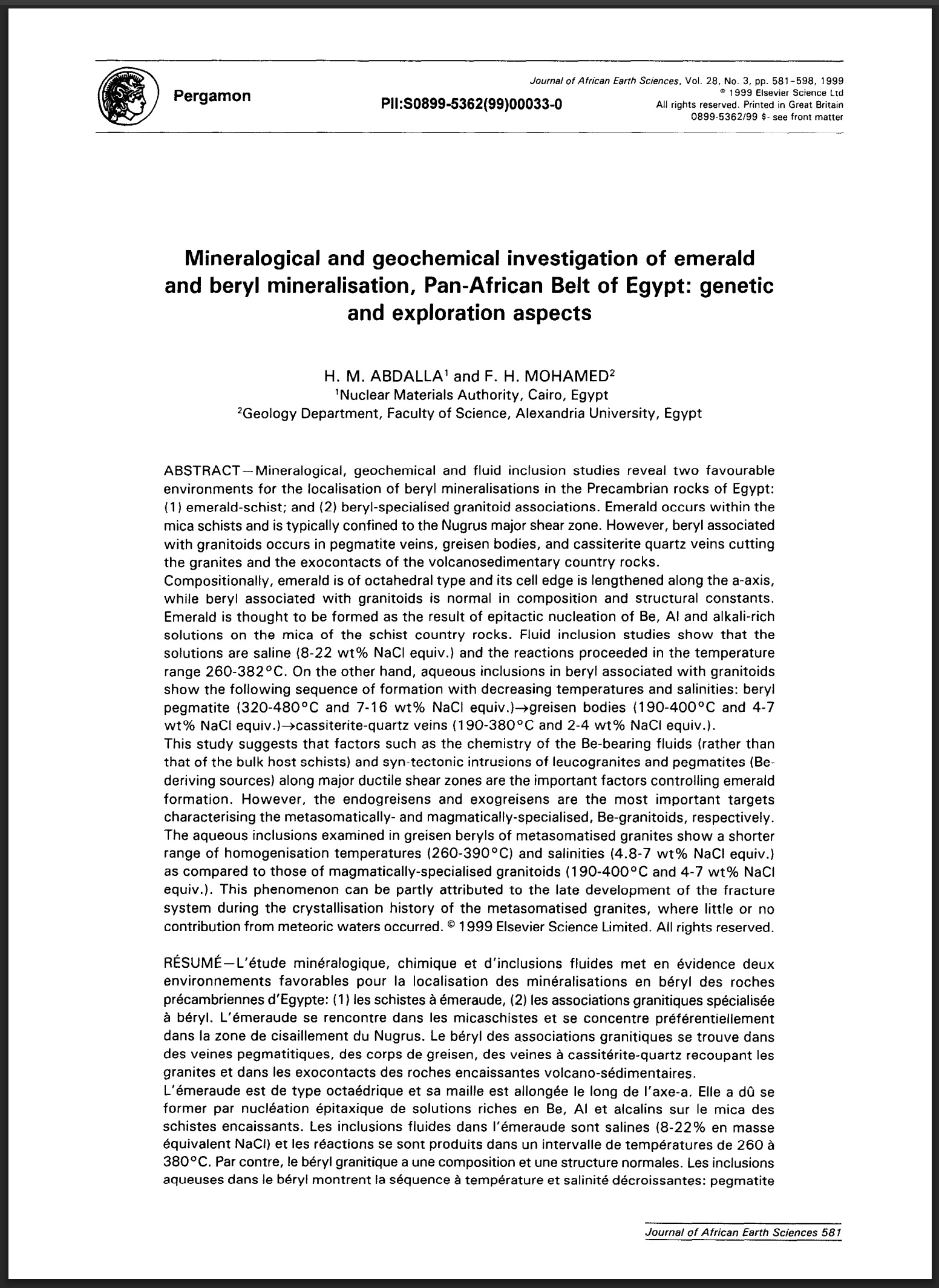
Abdalla, H.M. and Mohamed, F.H. (1999) Mineralogical and geochemical investigation of emerald and beryl mineralisation, Pan-African belt of Egypt: genetic and exploration aspects. Journal of African Earth Sciences, Vol. 28, No. 3, pp. 581–598.
Record No. 29952  |  ISBN/ISSN: 1464-343X  |  DOI: https://doi.org/10.1016/S0899-5362(99)00033-0  |  Sinkankas/Born No.: NIS/NIB  |  RWHL
Mineralogical, geochemical and fluid inclusion studies reveal two favorable environments for the localisation of beryl mineralisations in the Precambrian rocks of Egypt: (1) emerald–schist; and (2) beryl-specialised granitoid associations. Emerald occurs within the mica schists and is typically confined to the Nugrus major shear zone. However, beryl associated with granitoids occurs in pegmatite veins, greisen bodies, and cassiterite–quartz veins cutting the granites and the exocontacts of the volcanosedimentary country rocks. Compositionally, emerald is of octahedral type and its cell edge is lengthened along the a-axis, while beryl associated with granitoids is normal in composition and structural constants. Emerald is thought to be formed as the result of epitactic nucleation of Be, Al and alkali-rich solutions on the mica of the schist country rocks. Fluid inclusion studies show that the solutions are saline (8–22 wt% NaCl equiv.) and the reactions proceeded in the temperature range 260–382 °C. On the other hand, aqueous inclusions in beryl associated with granitoids show the following sequence of formation with decreasing temperatures and salinities: beryl pegmatite (320–480 °C and 7–16 wt% NaCl equiv.) → greisen bodies (190–400 °C and 4–7 wt% NaCl equiv.) → cassiterite–quartz veins (190–380 °C and 2–4 wt% NaCl equiv.). This study suggests that factors such as the chemistry of the Be-bearing fluids (rather than that of the bulk host schists) and syn-tectonic intrusions of leucogranites and pegmatites (Be-deriving sources) along major ductile shear zones are the important factors controlling emerald formation. However, the endogreisens and exogreisens are the most important targets characterising the metasomatically- and magmatically-specialised, Be-granitoids, respectively. The aqueous inclusions examined in greisen beryls of metasomatised granites show a shorter range of homogenisation temperatures (260–390 °C) and salinities (4.8–7 wt% NaCl equiv.) as compared to those of magmatically-specialised granitoids (190–400 °C and 4–7 wt% NaCl equiv.). This phenomenon can be partly attributed to the late development of the fracture system during the crystallisation history of the metasomatised granites, where little or no contribution from meteoric waters occurred.

Emerald mining in Roman and Byzantine Egypt
Journal Article
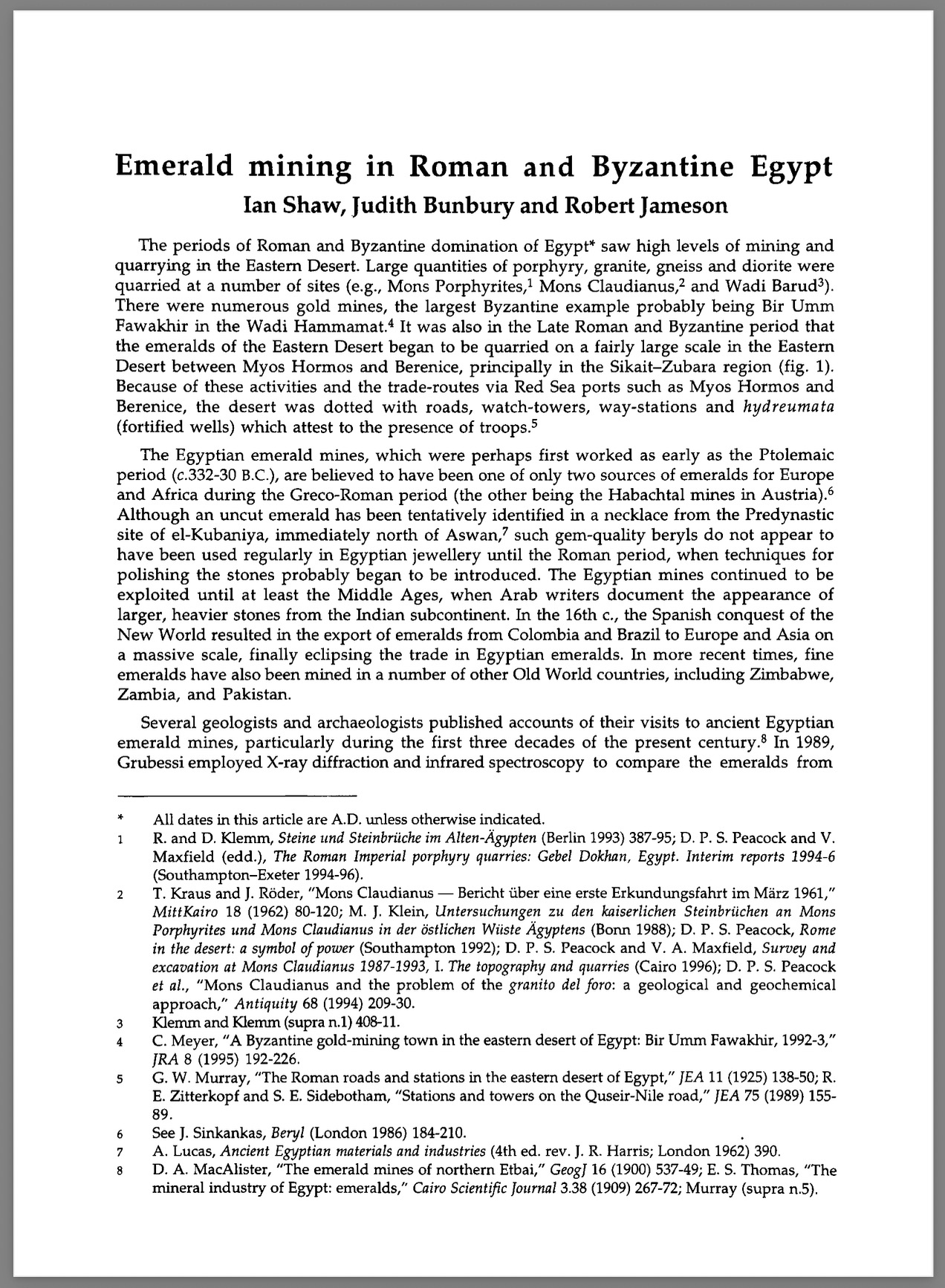
Shaw, I., Bunbury, J. and Jameson, R. (1999) Emerald mining in Roman and Byzantine Egypt. Journal of Roman Archaeology, Vol. 12, pp. 203–215.
Record No. 27219  |  Sinkankas/Born No.: NIS/NIB  |  RWHL
The periods of Roman and Byzantine domination of Egypt* saw high levels of mining and quarrying in the Eastern Desert. Large quantities of porphyry, granite, gneiss and diorite were quarried at a number of sites (e.g., Mons Porphyrites, Mons Claudianus, and Wadi Barud). There were numerous gold mines, the largest Byzantine example probably being Bir Umm Fawakhir in the Wadi Hammamat. It was also in the Late Roman and Byzantine period that the emeralds of the Eastern Desert began to be quarried on a fairly large scale in the Eastern Desert between Myos Hormos and Berenice, principally in the Sikait-Zubara region (fig. 1). Because of these activities and the trade-routes via Red Sea ports such as Myos Hormos and Berenice, the desert was dotted with roads, watch-towers, way-stations and hydreumata (fortified wells) which attest to the presence of troops.5 The Egyptian emerald mines, which were perhaps first worked as early as the Ptolemaic period (c.332–30 B.C.), are believed to have been one of only two sources of emeralds for Europe and Africa during the Greco-Roman period (the other being the Habachtal mines in Austria).6 Although an uncut emerald has been tentatively identified in a necklace from the Predynastic site of el-Kubaniya, immediately north of Aswan,? such gem-quality beryls do not appear to have been used regularly in Egyptian jewellery until the Roman period, when techniques for polishing the stones probably began to be introduced. The Egyptian mines continued to be exploited until at least the Middle Ages, when Arab writers document the appearance of larger, heavier stones from the Indian subcontinent. In the 16th c., the Spanish conquest of the New World resulted in the export of emeralds from Colombia and Brazil to Europe and Asia on a massive scale, finally eclipsing the trade in Egyptian emeralds. In more recent times, fine emeralds have also been mined in a number of other Old World countries, including Zimbabwe, Zambia, and Pakistan.

Hellenistic Engraved Gems

Book
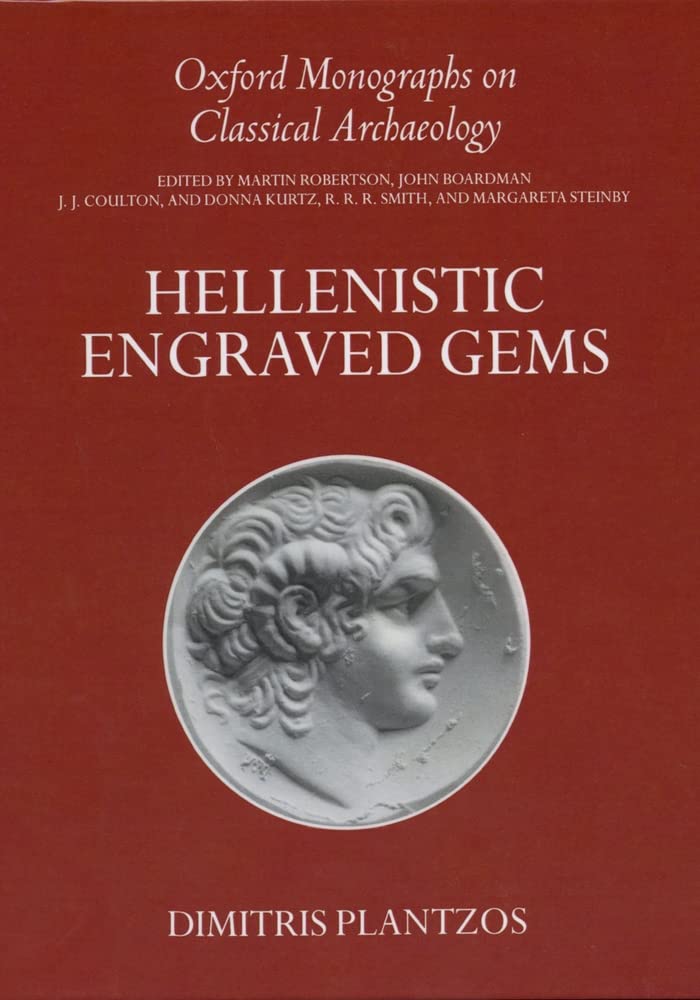
Plantzos, D. (1999) Hellenistic Engraved Gems. Oxford, Clarendon Press, 260 pp
Record No. 17282  |  ISBN/ISSN: 9780200000000  |  Sinkankas/Born No.: NIS/NIB  |  RWHL
This lavishly illustrated volume traces the development of Greek gem engraving from Alexander to Augustus. Dimitris Plantzos is a classical archaeologist, educated at Athens and Oxford. He has published on Greek art, the development of classical archaeology as a discipline in the twentieth century, and on modern receptions of classical heritage. He teaches classical archaeology at the Department of History and Archaeology, National and Kapodistrian University of Athens. He is the director of the Argos Orestikon Excavation Project (Kastoria, Greece) and a Fellow of the Society of Antiquaries in London.

Characteristics of western Sayan jadeite jade deposit in Russia
Journal Article
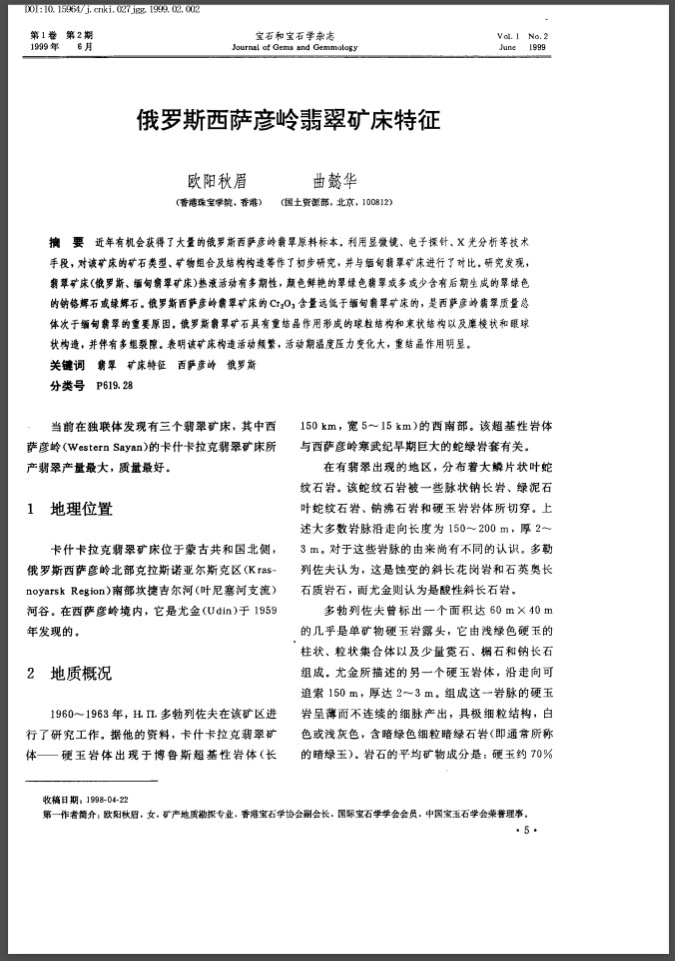
Ouyang, C.M. and Qu, Y.H. (1999) Characteristics of western Sayan jadeite jade deposit in Russia. Journal of Gems & Gemmology, Vol. 1, pp. 5–11.
Record No. 7836  |  Sinkankas/Born No.: NIS/NIB  |  Language: in Chinese  |  RWHL
In recent years, the author has received many jadeite jade raw materials from Western Sayan, Russia, and has had the opportunity to study the Western Sayan jadeite jade deposit. Using microscope, electron probe, and X-ray analysis, this paper emphasizes the investigation of ore type, mineral paragenesis, and microfabric of the Western Sayan jadeite jade deposit in Russia, along with a comparison between Western Sayan and Burmese jadeite jade. The research indicates that hydrothermal fluid activity occurred in multiple periods, and that emerald green jadeite jade contains varying amounts of kosmochlor or omphacite, which formed in the latest stage. The Cr₂O₃ content of the Western Sayan jadeite jade deposit is significantly lower than that of the Burmese deposit, resulting in a lower quality of Sayan jadeite jade compared to Burmese. Jadeite jade ore of Western Sayan exhibits spherulitic and packet textures formed by recrystallization, as well as mylonitic and “eyed” structures associated with multiple sets of fractures. It can be concluded that ore-controlling tectonic activity occurred frequently; temperature and pressure varied greatly during active periods, and recrystallization was pronounced.

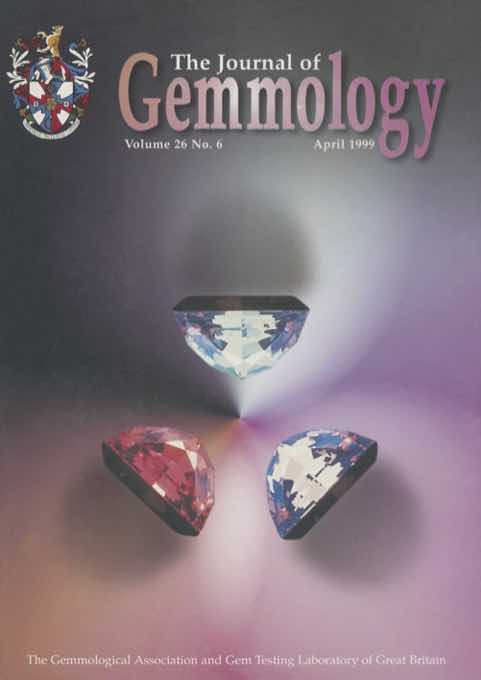
Mineral inclusions in emeralds from different sources
Journal Article
Moroz, I.I. and Eliezri, I.Z. (1999) Mineral inclusions in emeralds from different sources. Journal of Gemmology, Vol. 26, No. 6, pp. 357–363.
Record No. 6047  |  ISBN/ISSN: 221252  |  RWHL
Mineral inclusions in emeralds from eleven gem-mining regions and a hydrothermally grown synthetic emerald were chemically analysed with the electron microprobe JEOL JXA-8600. Emerald occurrences in Australia, Brazil, Mozambique, Russia, Tanzania (Lake Manyara) and Zambia belong to 'schist type' deposits. The inclusions comprise micas, talc, pyrophyllite, chlorite, wollastonite, chromite, calcite, dolomite, Fe-oxide, apatite, quartz, pyrite, fluorite and plagioclase. The geological settings for Colombian, Nigerian and Sumbawanga (Tanzania) deposits resulted in related assemblages of solid inclusions in these emeralds (for example, chlorine-rich Al- glauconite, sphalerite, titanium-rich mica, anhydrite and beryllium minerals).

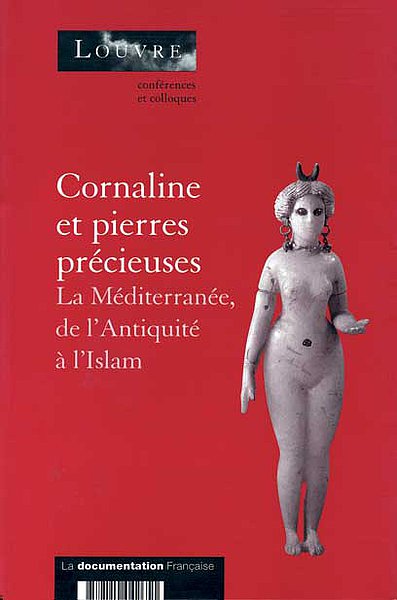
Les rubis d’Ishtar: Étude archéologique

The rubies of Ishtar: Archaeological study
Book Section
Tallon, F. (1999) Les rubis d’Ishtar: Étude archéologique. [The rubies of Ishtar: Archaeological study] In: Cornaline et pierres precieuses, La Mediterranee de l'Antiquité a l’Islam, Paris: Louvre éditions, pp. 229–234.
Record No. 3297  |  ISBN/ISSN: 9782110000000  |  Sinkankas/Born No.: NIS/NIB  |  Language: in French  |  RWHL
For their aesthetic and symbolic value, gemstones have always been sought out and used by humans. The Mesopotamian tablets, the oldest written records, frequently mention gemstones: lapis lazuli, carnelian… However, due to their rarity, the hard precious stones of Antiquity (diamond, ruby, emerald, sapphire) have been less studied. The examination of the Parthian statuette preserved in the Louvre Museum, an object inlaid with rubies, provided an opportunity for the Laboratory of Research of the Museums of France (LRMF) to implement ion beam analysis methods for in-depth research in the field of historical gemmology. The archaeological piece at the core of this study was discovered in Mesopotamia. Based on typology, it is attributed to the Parthian period and would thus date to the 3rd century BCE. This remarkable object represents the goddess Ishtar, associated with Aphrodite. The statuette is made of alabaster; her eyes and navel are inlaid with a red stone initially thought to be glass (fig. 1). In 1995, during the dossier-exhibition Precious Stones of the Ancient East, from the Sumerians to the Sasanians organized by François Talion at the Louvre Museum, Annie Caubet, curator in charge of the Department of Near Eastern Antiquities, proposed that we study this statuette. The objectives were, on the one hand, to confirm the suggestion of S. Van Roy², who believed these cabochons to be rubies, and on the other hand, to attempt to determine the geographic origin of these gems. The study of the rubies on the Parthian statuette from the Louvre Museum combines optical observation of their inclusions with their geochemical characterization using the PIXE method (with the help of AGLAE). It first confirmed that the red inlays of the eyes and navel are indeed natural rubies. Furthermore, it provided an opportunity to build a compositional database for major ruby deposits. Finally, thanks to statistical analysis, we can propose Burma as the most probable origin of the statuette’s rubies, though Sri Lanka cannot be ruled out. These results, along with recent improvements to the AGLAE accelerator, pave the way for a complementary study to strengthen the attribution and attempt to decide between a Burmese or Sri Lankan origin for these rubies. Indeed, the new extracted beam from AGLAE now makes it possible to focus the beam on an area just 0.03 mm in diameter. This tool is well suited for characterizing the mineral inclusions observed in our study (rutile, zircons, phlogopite…), a key factor for authenticating the paragenesis and, consequently, for tracing the provenance of the gems. These gemstones are evidence of exchange or trade across several thousand kilometers between Mesopotamia and Southeast Asia in the 3rd century BCE. To our knowledge, this is the earliest known use of ruby in this region. This representation of Ishtar is remarkable because it combines influences from three civilizations: Mesopotamia through the deity represented, Greece through its Hellenistic style, and Asia through both the placement (eyes and navel) and the nature of the precious stones.

Emeralds are a Girl’s Best Friend

Book
Heady, S. (1999) Emeralds are a Girl’s Best Friend. Edison, NJ, Chartwell Books, Inc., 96 pp.
Record No. 2439  |  ISBN/ISSN: 785810986  |  Sinkankas/Born No.: NIS/NIB  |  RWHL

Collectables of Yu

翠玉珍藏
Book
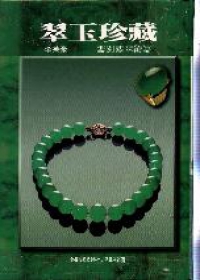
Hao, L. (1999) Collectables of Yu. [翠玉珍藏] Taipei, Art Book Company, 128 pp.
Record No. 129  |  ISBN/ISSN: 9576721865  |  Sinkankas/Born No.: NIS/NIB  |  Language: in Chinese  |  RWHL
With his eye-catching eyes, Li Yinghao has accumulated more than 30 years of experience in the collection of treasures. Following the best-selling books, Preserving the Value of Jade" and "Differential Emerald," he has devoted himself to his new work. To provide readers with identification of Jade Jade Tips: identify authenticity and inferiority of Cuiyu and its original stone cargo tips, correct folk absurd identification methods and misconceptions, uncover the B-between and C cargo and falsification of tactics. I hope that long-lasting, bright and elegant jade can be treasured by people forever."

Gem deposits of the former Soviet Union
Journal Article
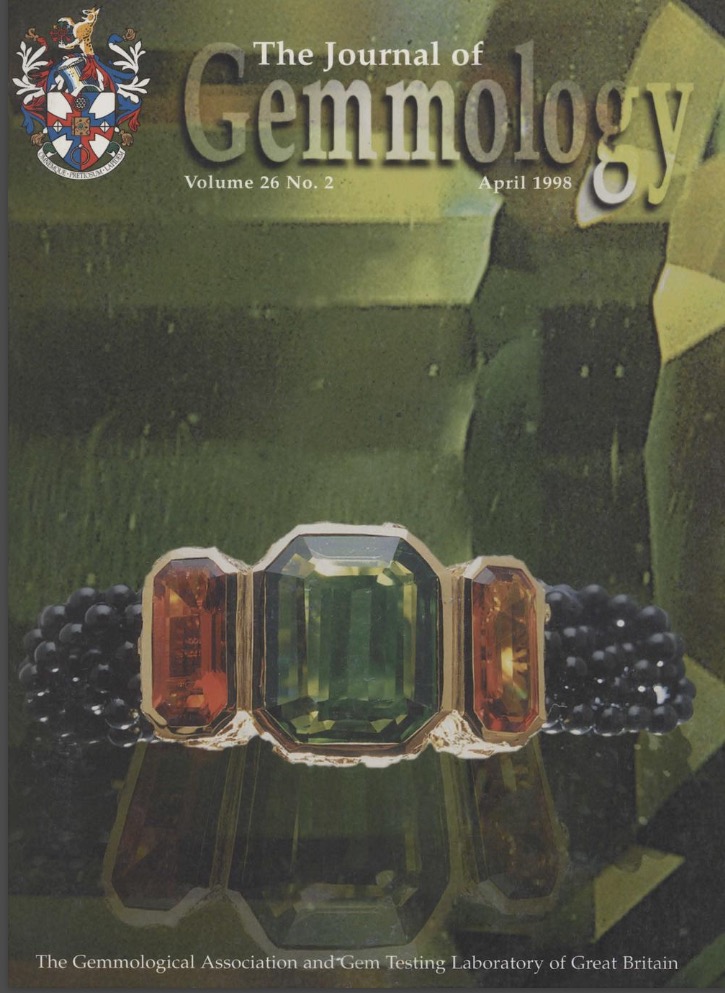
Spiridonov, E.M. (1998) Gem deposits of the former Soviet Union. Journal of Gemmology, Vol. 26, No. 2, April, pp. 111–125.
Record No. 26708  |  ISBN/ISSN: 221252  |  Sinkankas/Born No.: NIS/NIB  |  RWHL
The most important gemstone deposits of the former Soviet Union are described. The deposits range from diamond and ruby to amber and pearl. Some genetic features of gemstones are reported. Gem-quality minerals, including uvarovite, Cr-grossular and Cr-titanite, associated with the Saranovskoye chromite deposit, northern Urals, are described. The geology and mineralogy of the deposit indicates its formation following a well-known cycle of low-grade metamorphic processes and hydrothermal activity.

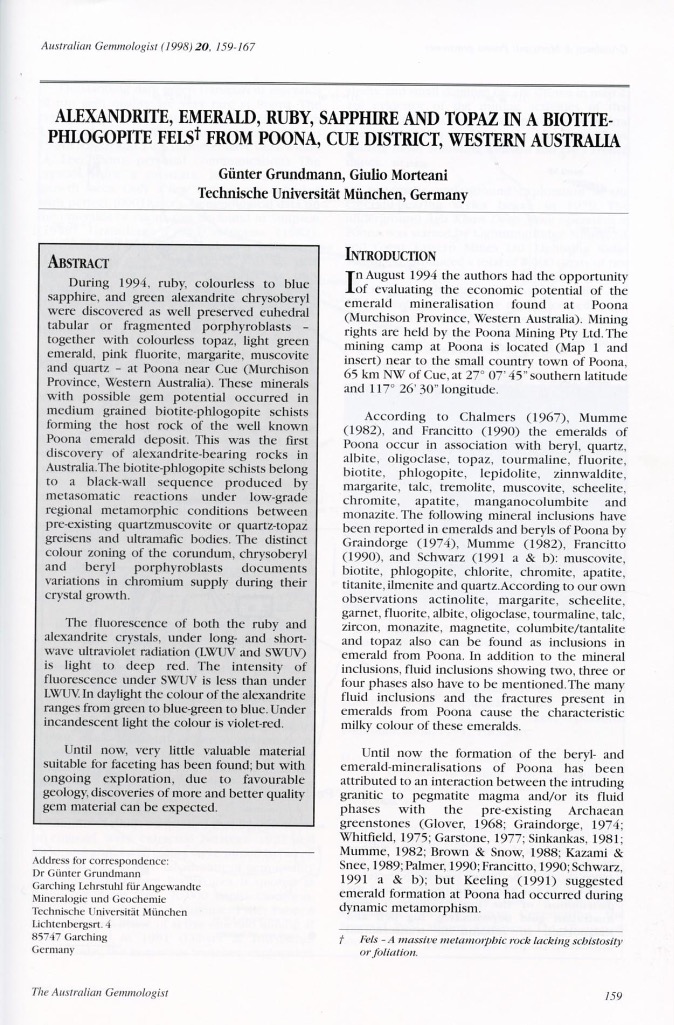
Alexandrite, emerald, ruby, sapphire and topaz in a biotite-phlogopite fels from Poona, Cue District, Western Australia
Journal Article
Grundmann, G. and Morteani, G. (1998) Alexandrite, emerald, ruby, sapphire and topaz in a biotite-phlogopite fels from Poona, Cue District, Western Australia. Australian Gemmologist, Vol. 20, No. 4, pp. 159–167.
Record No. 8040  |  RWHL

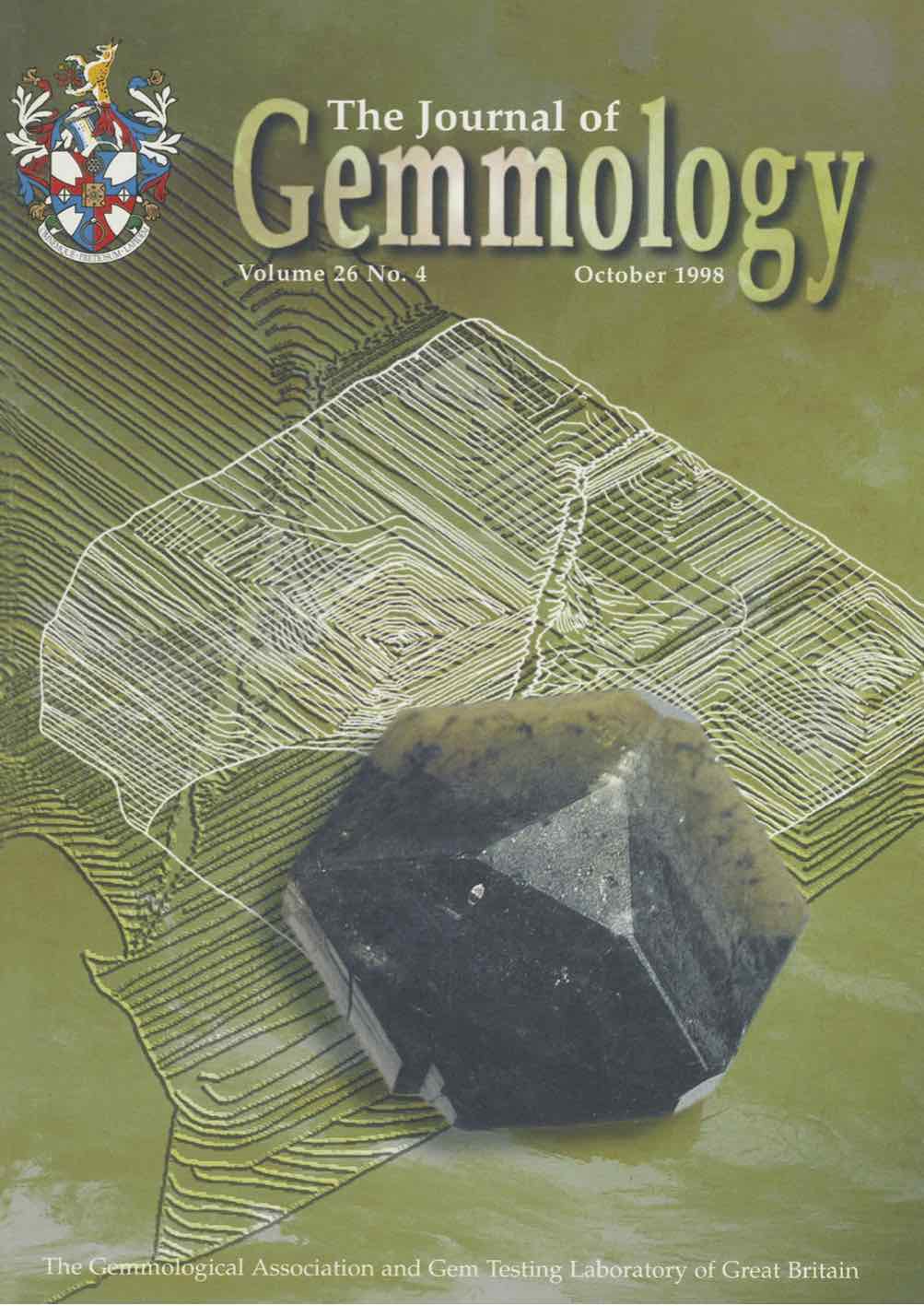
The chemical signature of emeralds from the Campos Verdes-Santa Terezinha Mining District, Goiás, Brazil
Journal Article
Pulz, G.M., Silva, L.J.H.d.e.-R., Neto, L.S.B., Brum, T.M.M., Juchem, P.L., Santos, C.A., Pereira, V.P. and Silva, J.J. (1998) The chemical signature of emeralds from the Campos Verdes-Santa Terezinha Mining District, Goiás, Brazil. Journal of Gemmology, Vol. 26, No. 4, October, pp. 252–261.
Record No. 6063  |  ISBN/ISSN: 221252  |  RWHL
Emerald crystals from the Campos Verdes mining district have been analysed by inductively coupled plasma mass spectrometry (ICP-MS), Fourier transform infrared spectroscopy and Mössbauer 2+ 3+ spectroscopy. These gems contain measurable amounts of Fe , Fe , Cr, V, Sc, Ni and Zn; large-ion lithophile element (LILE, Ba, Sr, Rb, Pb) and high field strength element (HFSE, Zr, Y, Ti) contents are near or below the limit of detection. This chemical signature reflects the metasomatic reactions between the mineralizing fluids and the ultrabasic host-rocks of this gem deposit.

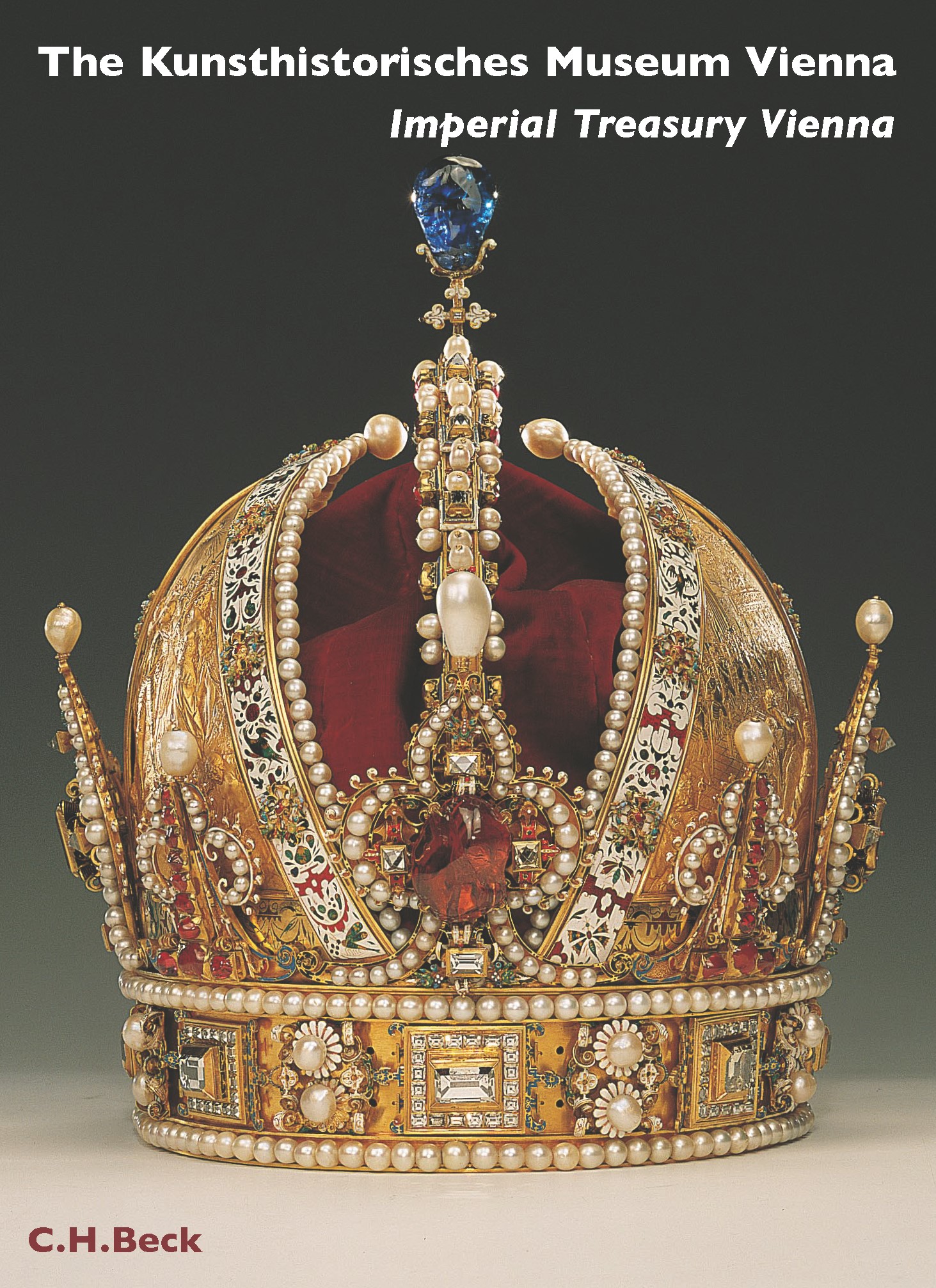
The Kunsthistorisches Museum Vienna | The Imperial and Ecclesiastical Treasury
Book
Beck, C.H. (1998, 2009) The Kunsthistorisches Museum Vienna | The Imperial and Ecclesiastical Treasury. London, Scala Publishers, 96 pp.
Record No. 4124  |  ISBN/ISSN: 9783410000000  |  Sinkankas/Born No.: NIS/NIB  |  RWHL
The secular and ecclesiastical Treasury at the Hofburg in Vienna keeps outstanding symbols of more than 1000 years of European history, from the insignia and imperial jewels of the Holy Roman Empire to precious relics and robes. Important pieces of this collection are presented in full colour with informative text.

New emerald deposits from Southern India
Journal Article
Panjikar, J., Ramchandran, K.T. and Balu, K. (1997) New emerald deposits from Southern India. Australian Gemmologist, Vol. 19, No. 10, April–June, pp. 427–432.
Record No. 26923  |  Sinkankas/Born No.: NIS/NIB  |  RWHL
In the mid-1990s, emeralds were discovered embedded in the wall of a well at the village of Sankari Taluka, in southern India’s state of Tamil Nadu. Gemmological research into the chemistry, properties, and characteristic inclusions of these emeralds has revealed similarities between the properties of Sankari emerald and those of emerald from several previously described locations on the island of Madagascar. This finding suggests that Sankari emeralds may have been emplaced into the ancient supercontinent of Gondwanaland before India rifted from it some 200 million years ago.

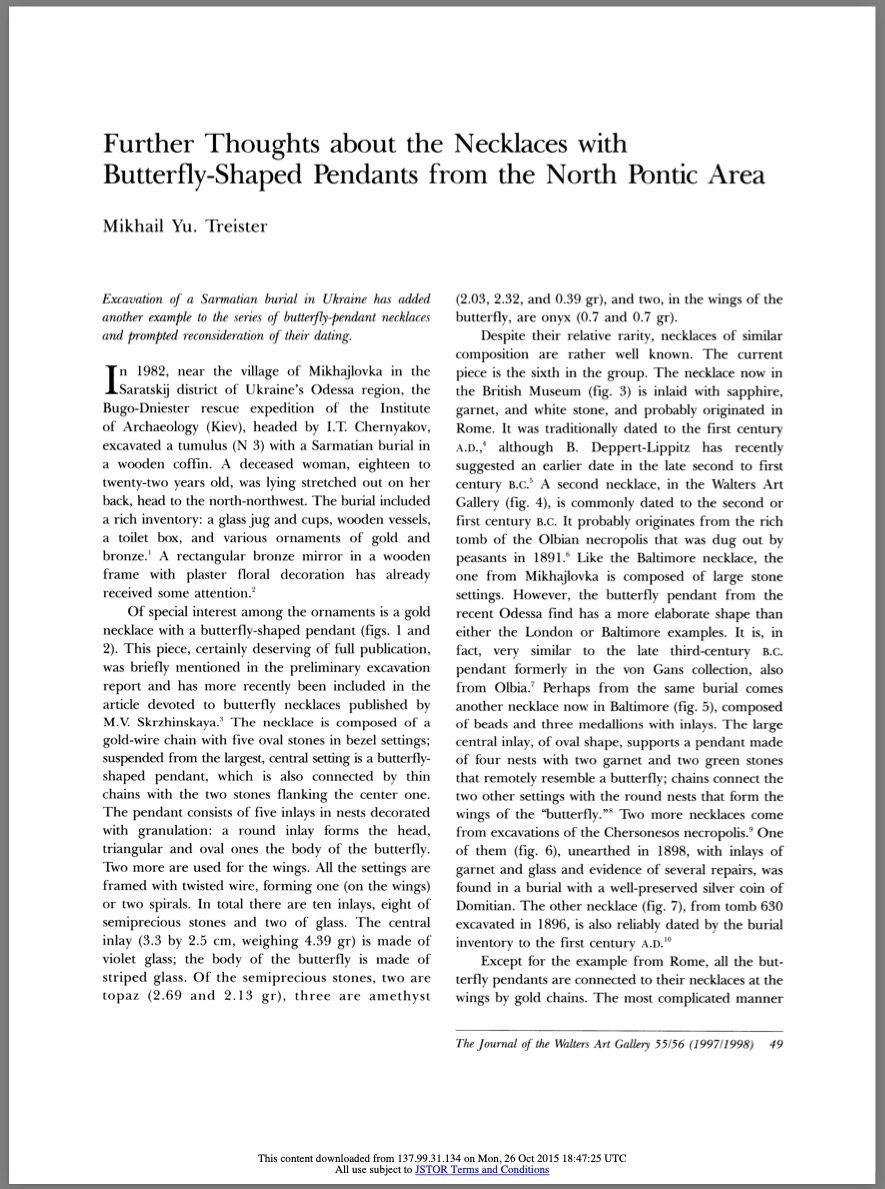
Further thoughts about the necklaces with butterfly-shaped pendants from the North Pontic area
Journal Article
Treister, M.Y. (1997/1998) Further thoughts about the necklaces with butterfly-shaped pendants from the North Pontic area. Journal of the Walters Art Gallery, Vol. 55/56, pp. 49–62.
Record No. 17235  |  RWHL
The excavation of a Sarmatian burial in Ukraine has provided a new example of a butterfly-pendant necklace and led to a reconsideration of the dating of such objects. In 1982, near the village of Mikhajlovka in the Saratskij district of Ukraine’s Odessa region, the Bugo-Dniester rescue expedition from the Institute of Archaeology in Kiev, led by I.T. Chernyakov, excavated Tumulus No. 3 containing a Sarmatian burial in a wooden coffin. The deceased, a woman aged approximately eighteen to twenty-two years, was found lying on her back with her head oriented to the north-northwest. The burial was richly furnished, including a glass jug and cups, wooden vessels, a toilet box, and various gold and bronze ornaments. Among these items, a rectangular bronze mirror set in a wooden frame with plaster floral decoration has already drawn scholarly attention.

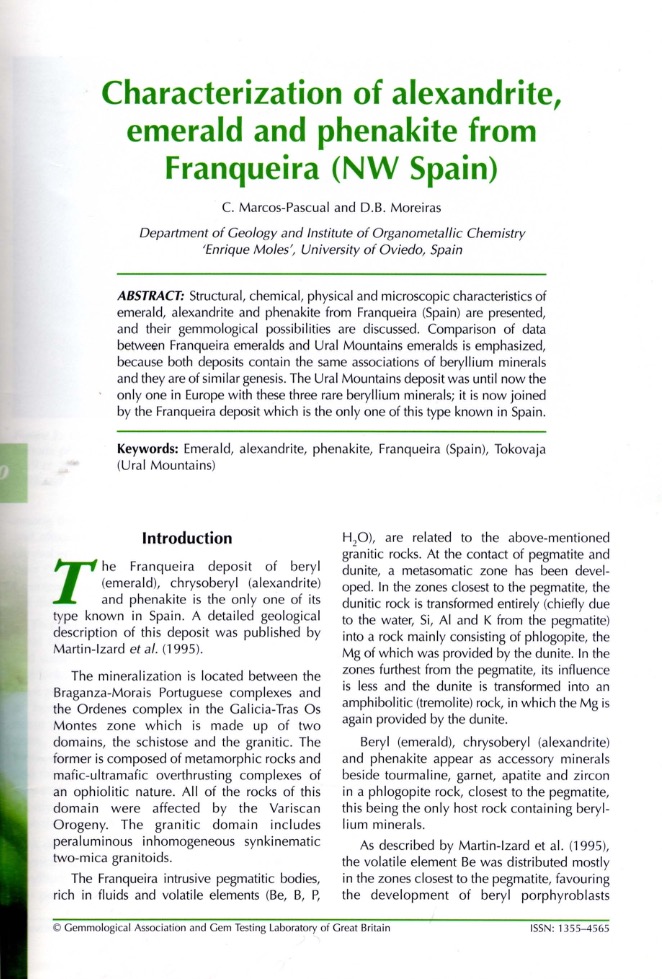
Characterization of alexandrite, emerald and phenakite from Franqueira (NW Spain)
Journal Article
Marcos-Pascual, C. and Moreiras, D.B. (1997) Characterization of alexandrite, emerald and phenakite from Franqueira (NW Spain). Journal of Gemmology, Vol. 25, No. 7, pp. 340–357.
Record No. 8041  |  ISBN/ISSN: 221252  |  RWHL

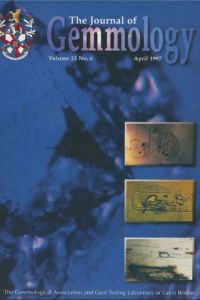
A Raman microscope in the gemmological laboratory: First experiences of application
Journal Article
Hänni, H.A., Kiefert, L. and Chalain, J.P. (1997) A Raman microscope in the gemmological laboratory: First experiences of application. Journal of Gemmology, Vol. 25, No. 6, April, pp. 394–406.
Record No. 5371  |  ISBN/ISSN: 221252  |  RWHL
CMS: The Swiss Gemmological Institute (SSEF) in Basel has found its recent acquisition of a Raman microscope well worth the investment, to judge by this excellent account of its initial applications at this laboratory. Much more accurate, easier to use, and considerably less expensive than its predecessors, the Renishaw Raman microscope at SSEF easily fits on a desktop. It has enabled SSEF staff members to identify CO₂ inclusions in sapphire that are diagnostic of heat treatment, detect and identify fracture fillings in emerald, easily identify mounted gemstones, and characterize specimens with irregular surfaces. It can also distinguish component minerals in many aggregates. The method is nondestructive in all but a few well-documented conditions and works on all types of materials, except those having simple compositions and high symmetry, such as metals and alloys. Raman spectroscopy does require that the user be aware of its limitations and parameters; also, the lack of a large, published database means that each laboratory must obtain many of its own reference spectra from known samples. However, Raman spectroscopy clearly has earned a place of respect among the few high-tech laboratory techniques that have proved indispensable to gemological testing today.

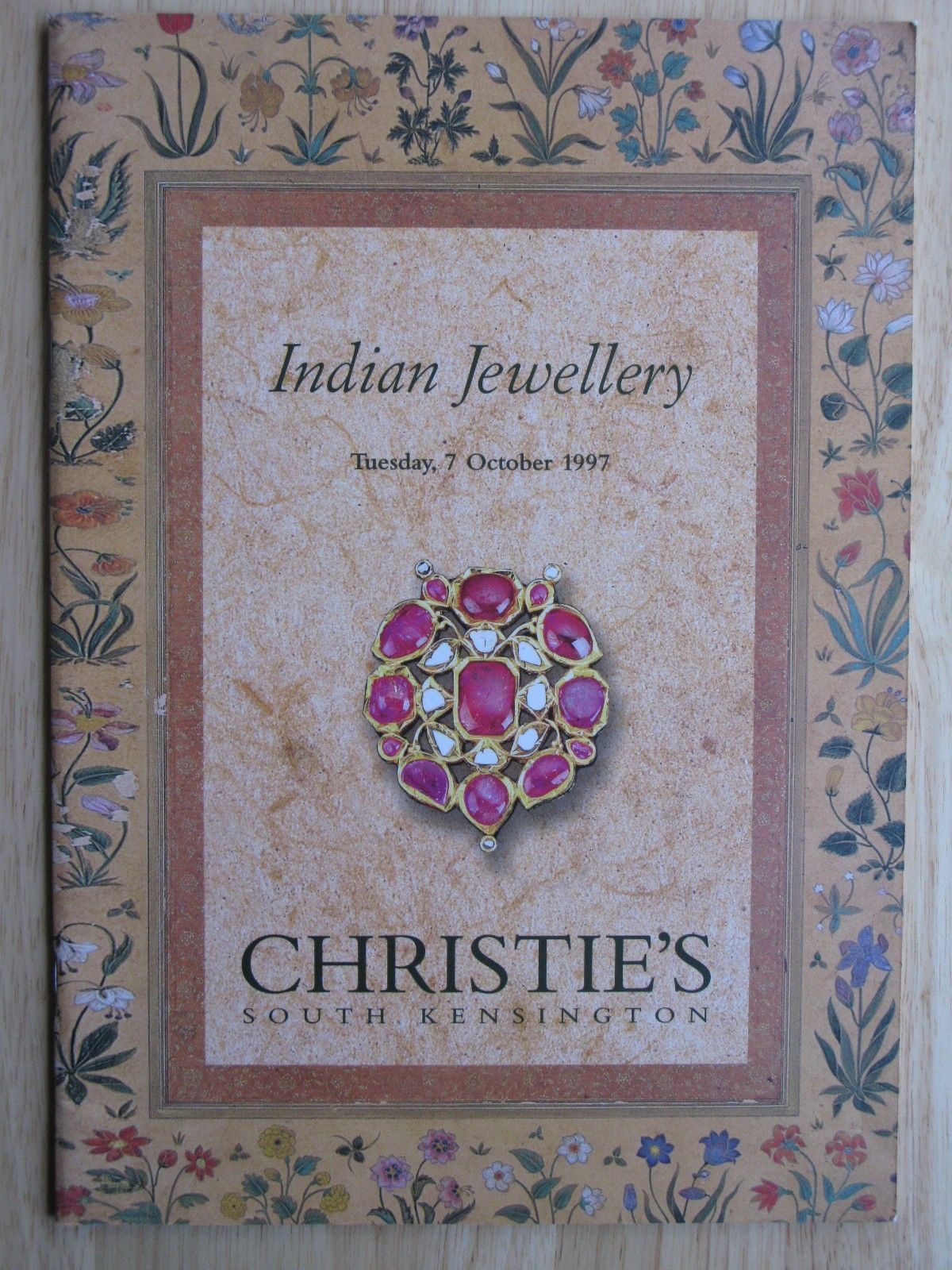
Indian Jewellery

Catalog
Christie’s (1997) Indian Jewellery. London: Christie's, 7 October
Record No. 3138  |  RWHL

Important Indian Jewellery

Catalog
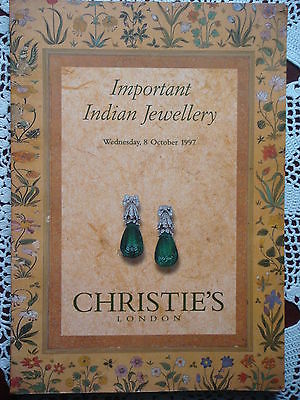
Christie’s (1997) Important Indian Jewellery. London: Christie's, 8 October
Record No. 2554  |  RWHL

Gem News: International conference on Raman spectroscopy and geology
Journal Article
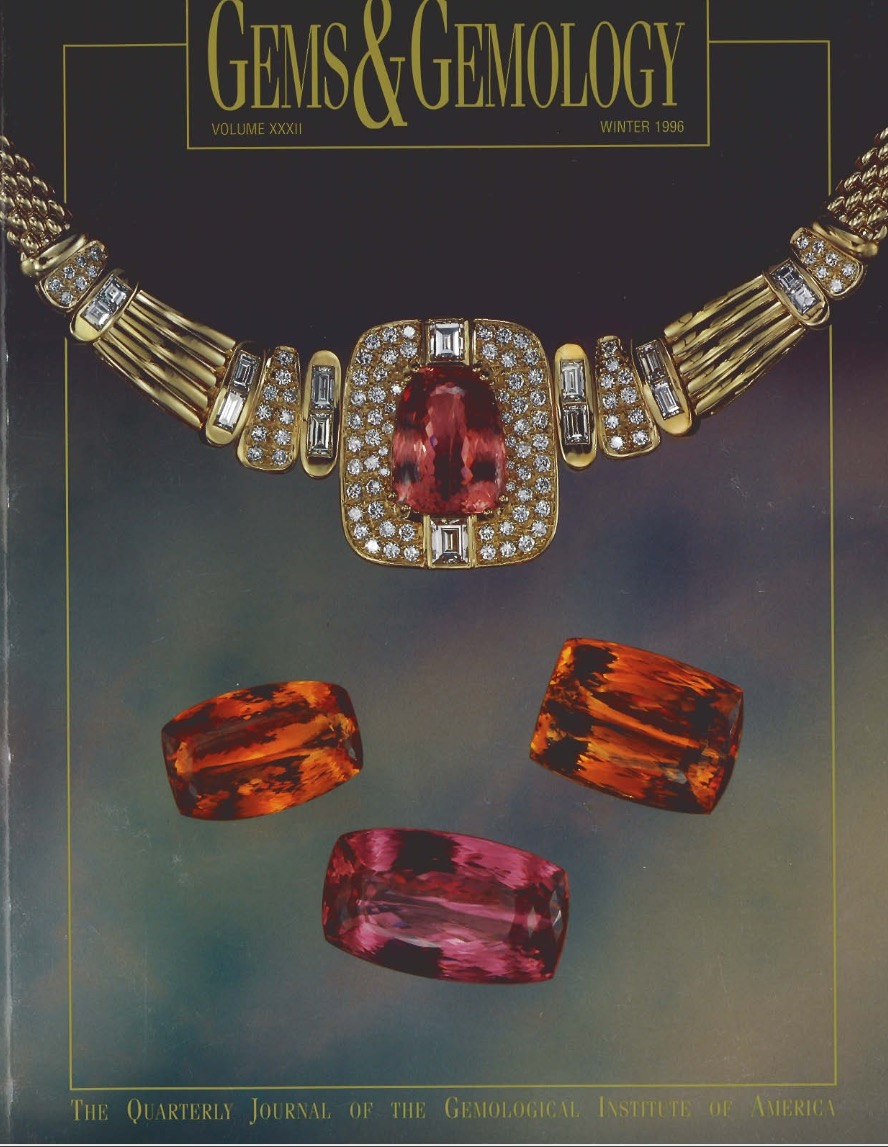
Fritsch, E. (1996) Gem News: International conference on Raman spectroscopy and geology. Gems & Gemology, Vol. 32, No. 4, Winter, pp. 290–291.
Record No. 26761  |  Sinkankas/Born No.: NIS/NIB  |  RWHL
Prof. Emmanuel Fritsch of the Institut des Matériaux, University of Nantes, France, reported on the Georaman 96 conference held in Nantes in June, which focused on the applications of Raman spectroscopy to geological materials. One session was dedicated to gemology, with many presentations centered on the use of Raman spectroscopy for identifying inclusions within gemstones.

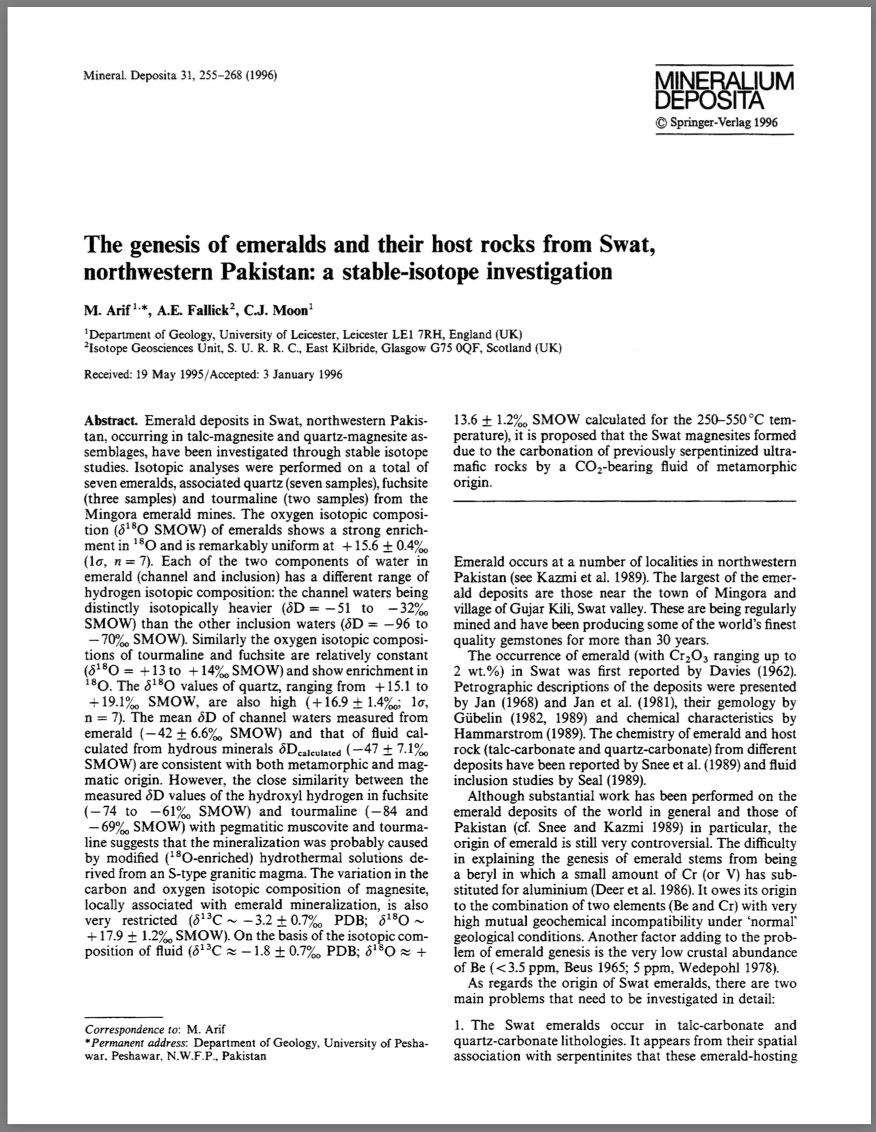
The genesis of emeralds and their host rocks from Swat, northwestern Pakistan: A stable isotope investigation

Journal Article
Arif, M., Fallick, A.E. and Moon, C.J. (1996) The genesis of emeralds and their host rocks from Swat, northwestern Pakistan: A stable isotope investigation. Mineralium Deposita, Vol. 31, No. 4, pp. 255–268.
Record No. 17125  |  RWHL
Emerald deposits in Swat, northwestern Pakistan, occurring in talc-magnesite and quartz-magnesite assemblages, have been investigated through stable isotope studies. Isotopic analyses were performed on a total of seven emeralds, associated quartz (seven samples), fuchsite (three samples) and tourmaline (two samples) from the Mingora emerald mines. The oxygen isotopic composition (δ 18O SMOW) of emeralds shows a strong enrichment in18O and is remarkably uniform at + 15.6 ± 0.4‰ (1σ,n = 7). Each of the two components of water in emerald (channel and inclusion) has a different range of hydrogen isotopic composition: the channel waters being distinctly isotopically heavier (δD = −51 to −32‰ SMOW) than the other inclusion waters (δD = −96 to −70‰ SMOW). Similarly the oxygen isotopic compositions of tourmaline and fuchsite are relatively constant (δ 18O = + 13 to + 14‰ SMOW) and show enrichment in18O. Theδ 18O values of quartz, ranging from + 15.1 to + 19.1‰ SMOW, are also high (+ 16.9 ± 1.4‰ 1σ, n = 7). The meanδD of channel waters measured from emerald (−42 ± 6.6‰ SMOW) and that of fluid calculated from hydrous mineralsδDcalculated (−47 ± 7.1‰ SMOW) are consistent with both metamorphic and magmatic origin. However, the close similarity between the measuredδD values of the hydroxyl hydrogen in fuchsite (−74 to −6‰ SMOW) and tourmaline (−84 and −69‰ SMOW) with pegmatitic muscovite and tourmaline suggests that the mineralization was probably caused by modified (18O-enriched) hydrothermal solutions derived from an S-type granitic magma. The variation in the carbon and oxygen isotopic composition of magnesite, locally associated with emerald mineralization, is also very restricted (δ 13 ∼ −3.2 ± 0.7%, PDB;δ 18O ∼ + 17.9 ± 1.27‰ SMOW). On the basis of the isotopic composition of fluid (δ 13C ≈ −1.8 ± 0.7‰ PDB;δ 18O ≈ + 13.6 ± 1.2‰ SMOW calculated for the 250-550°C temperature), it is proposed that the Swat magnesites formed due to the carbonation of previously serpentinized ultramafic rocks by a CO2-bearing fluid of metamorphic origin.

Exploring the Literature of Emerald

Emerald literature spans gemology, mineralogy, deposits, identification, treatments, synthesis, history and the gem trade, with important sources covering deposits around the world.

For a curated guide to this subject, read Green Fire — Lotus Gemology's Guide to the Literature of Emerald.

About Four Treasures

Four Treasures is Lotus Gemology's freely accessible gemological reference database. Use the full database to search by author, title or keyword and explore literature on gemology, mineralogy, jewelry and related fields. Where available, hyperlinks on titles may lead directly to the full publication.

Search the Complete Four Treasures Database