Emerald Bibliography

Emerald Bibliography

Explore books, articles and historical sources on emerald in Four Treasures, the Lotus Gemology reference database. This bibliography brings together matching records from the collection, with publication details, abstracts and cover images where available.

Emerald References

The list below matches the terms emerald or emeralds in the database's searchable fields. Some references discuss emeralds as part of a broader subject.
501–520 of 851 matching references

La explotación de las esmeraldas de Muzo (Nueva Granada), en sus primeros tiem
The exploitation of the emeralds of Muzo (New Granada) in Its early times
Conference Paper
Puche Riart, O. (1996) La explotación de las esmeraldas de Muzo (Nueva Granada), en sus primeros tiem. [The exploitation of the emeralds of Muzo (New Granada) in Its early times] XI Congreso Internacional de AHILA, 17–22 September, Liverpool pp. 99–104.
Record No. 4269  |  Language: in Spanish  |  RWHL
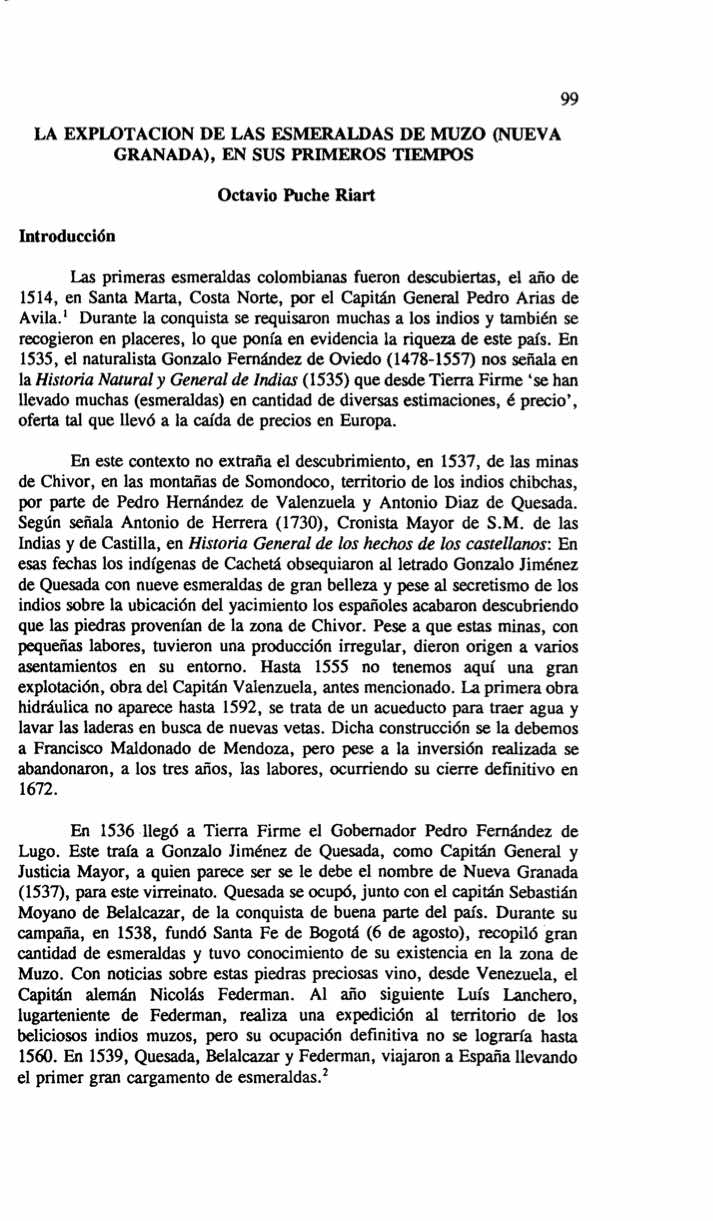
Las primeras esmeraldas colombianas fueron descubiertas, el año de 1514, en Santa Marta, Costa Norte, por el Capitán General Pedro Arias de Ávila. Durante la conquista se requisaron muchas a los indios y también se recogieron en placeres, lo que ponía en evidencia la riqueza de este país. En 1535, el naturalista Gonzalo Fernández de Oviedo (1478-1557) nos señala en la Historia Natural y General de Indias (1535) que desde Tierra Firme 'se han llevado muchas (esmeraldas) en cantidad de diversas estimaciones, é precio', oferta tal que llevó a la caída de precios en Europa.

West 47th

Book
Browne, G.A. (1996) West 47th. New York, Warner Books, 390 pp.
Record No. 176  |  ISBN/ISSN: 446516627  |  Sinkankas/Born No.: NIS/NIB  |  RWHL [fiction]
In the heart of New York City is a solid block of buying, selling, haggling, and handshakes over million-dollar deals. West 47th Street is the diamond district. And whenever a big jewel heist is pulled off anywhere, the men and women on the street know about it - fast. Now the word is out about a robbery in New Jersey that left a rich Iranian dead, his adulterous wife fighting for her life, and six million dollars worth of hot goods ready to hit the market. That's where Mitch Laughton comes in. A former Madison Avenue jeweler, Mitch Laughton makes a lucrative but highly dangerous living: he recovers stolen insured jewelry. He's married to Maddie, a lustful, gorgeous, wealthy woman, who despite being blind plays flamenco guitar in the nude and lavishes luxuries on him. The last thing Mitch needs is more excitement in his life. Then he takes on the case of the Iranian jewel heist... and is caught in a violent spiral of deceit. In pursuit of the missing swag, Mitch must confront two vicious though very different mobsters, a disillusioned cop, a half-mad fence, and informants of all shades. Yet it's only when Mitch makes a remarkable recovery of the missing merchandise itself that he finds the truth. Still out there is a pair of inscribed emeralds worth twenty-five million dollars to the finder. More than enough to turn honest men into liars, thieves into killers, and Mitch and Maddie into a couple who must run - and fight - for their lives.

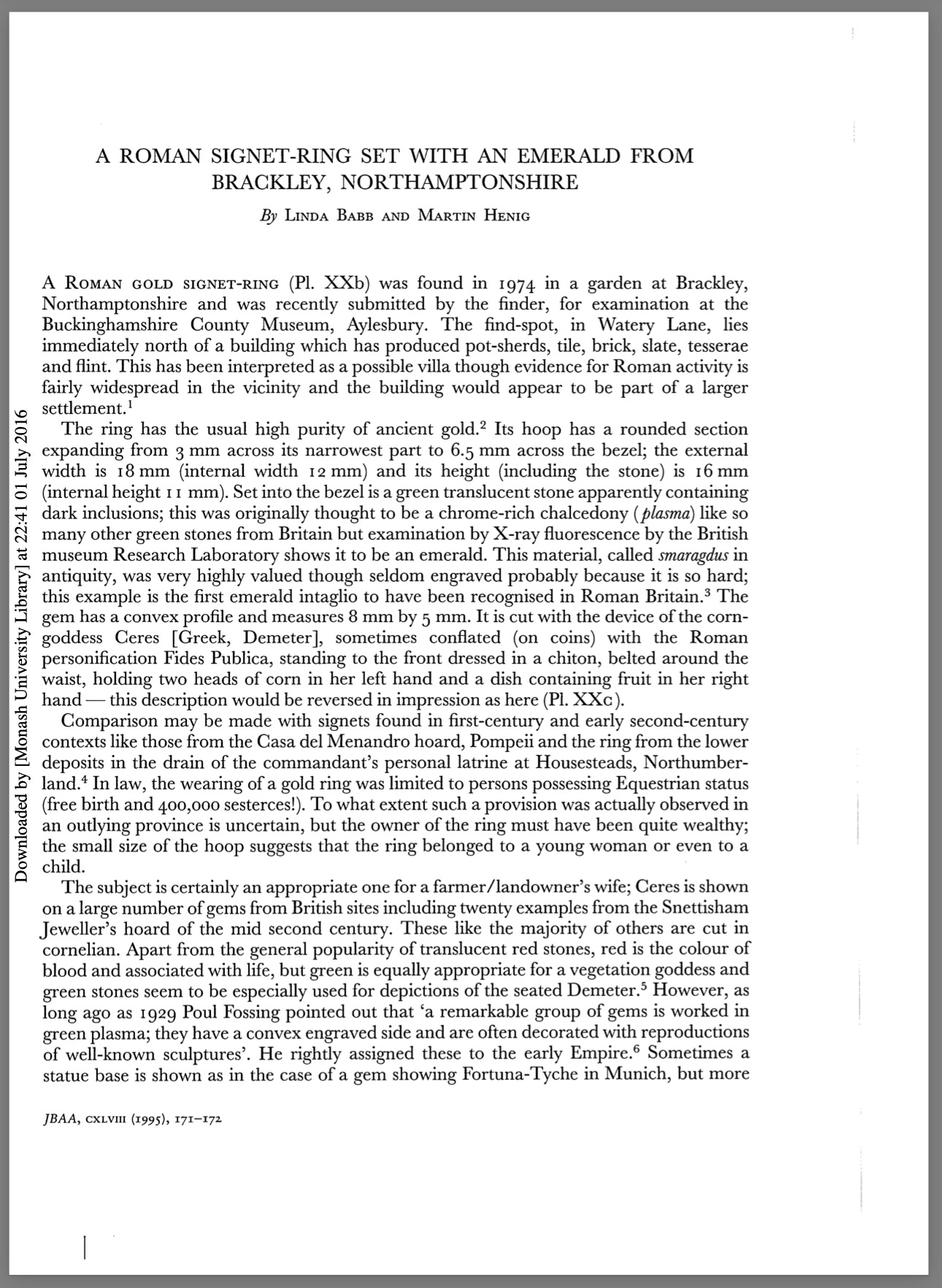
A Roman signet-ring set with an emerald from Brackley, Northamptonshire
Journal Article
Babb, L. and Henig, M. (1995) A Roman signet-ring set with an emerald from Brackley, Northamptonshire. Journal of the British Archaeological Association, Vol. 148, No. 1, pp. 171–172.
Record No. 26471  |  DOI: https://doi.org/10.1179/jba.1995.148.1.171  |  Sinkankas/Born No.: NIS/NIB  |  RWHL
A Roman gold signet-ring (Pl. XXb) was discovered in 1974 in a garden at Brackley, Northamptonshire, and was later submitted by the finder for examination at the Buckinghamshire County Museum, Aylesbury. The find-spot, located in Watery Lane, lies just north of a building that has yielded pot-sherds, tile, brick, slate, tesserae, and flint—suggesting a possible villa, though Roman activity appears widespread in the area, indicating the building may have been part of a larger settlement. The ring is made of high-purity ancient gold and features a hoop with a rounded section that expands from 3 mm at its narrowest point to 6.5 mm at the bezel; its external width is 18 mm (internal width 12 mm) and its height, including the stone, is 16 mm (internal height 11 mm). Set into the bezel is a green translucent stone with dark inclusions, initially believed to be a chrome-rich chalcedony (plasma), as is common in Britain, but identified through X-ray fluorescence analysis by the British Museum Research Laboratory as an emerald. Known in antiquity as smaragdus, emeralds were highly prized though rarely engraved due to their hardness—making this the first known emerald intaglio from Roman Britain. The gem, which has a convex profile and measures 8 mm by 5 mm, is engraved with the image of the corn-goddess Ceres (Greek, Demeter), sometimes conflated with the Roman Fides Publica on coins. She is depicted standing frontally, dressed in a belted chiton, holding two heads of corn in her left hand and a dish of fruit in her right—an image that would appear in reverse in impression (Pl. XXc).

Routes through the Eastern Desert of Egypt
Journal Article
Sidebotham, S.E. and Zitterkopf, R.E. (1995) Routes through the Eastern Desert of Egypt. Expedition, Vol. 37, No. 2, pp. 39–51.
Record No. 17245  |  RWHL
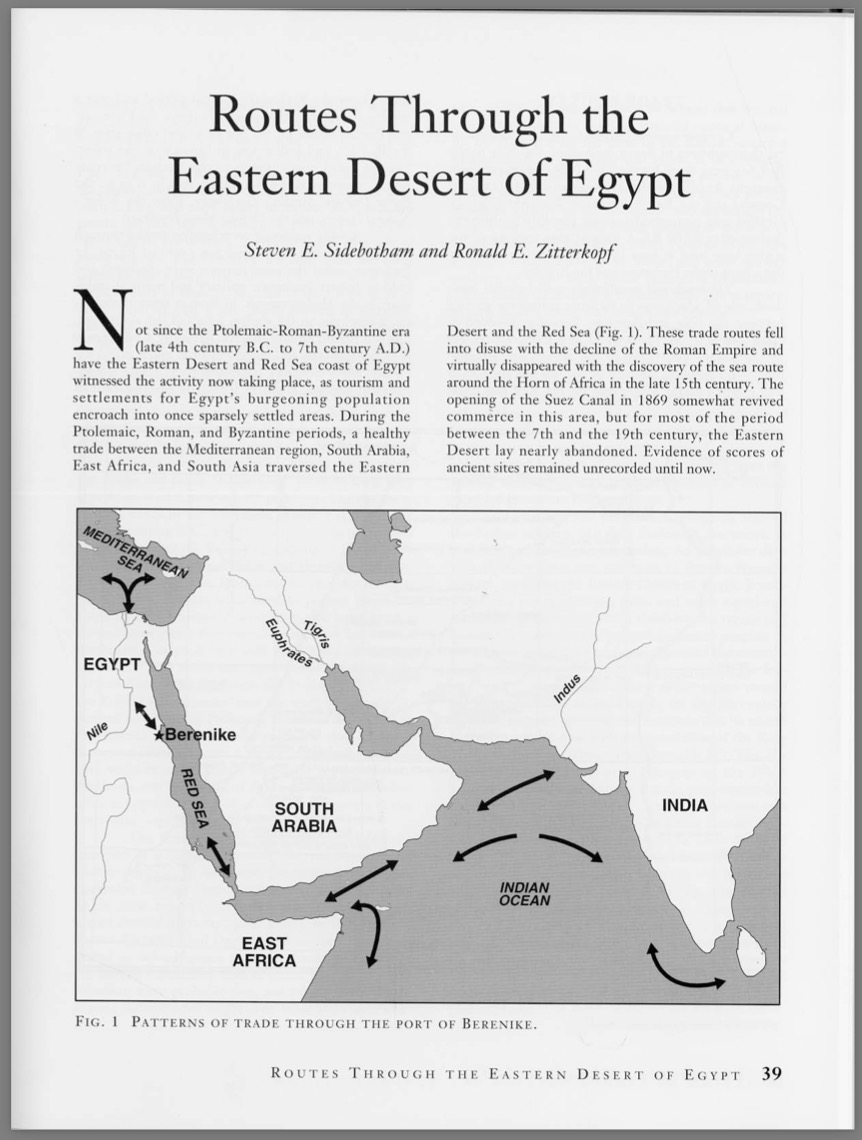
Not since the Ptolemaic-Roman-Byzantine era (late 4th century B.C. to 7th century A.D.) have the Eastern Desert and Red Sea coast of Egypt witnessed the activity now taking place, as tourism and settlements for Egypt’s burgeoning population encroach into once sparsely settled areas. During the Ptolemaic, Roman, and Byzantine periods, a healthy trade between the Mediterranean region, South Arabia, East Africa, and South Asia traversed the Eastern Desert and the Red Sea (Fig. 1). These trade routes fell into disuse with the decline of the Roman Empire and virtually disappeared with the discovery of the sea route around the Horn of Africa in the late 15th century. The opening of the Suez Canal in 1869 somewhat revived commerce in this area, but for most of the period between the 7th and the 19th century, the Eastern Desert lay nearly abandoned. Evidence of scores of ancient sites remained unrecorded until now.

Metasomatism at a granitic pegmatite-dunite contact in Galicia: The Franqueira occurrence of chrysoberyl (alexandrite), emerald, and phenakite
Journal Article
Martin-Izard, A., Paniagua, A., Moreiras, D., Acevedo, R.D. and Marcos-Pascual, C. (1995) Metasomatism at a granitic pegmatite-dunite contact in Galicia: The Franqueira occurrence of chrysoberyl (alexandrite), emerald, and phenakite. Canadian Mineralogist, Vol. 33, pp. 775–792.
Record No. 8108  |  RWHL

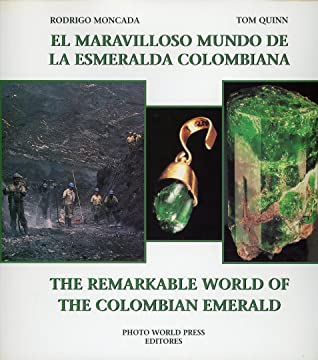
El Maravilloso Mundo de la Esmeralda Colombiana
The Remarkable World of the Colombian Emerald
Book
Moncada, R. and Quinn, T. (1995) El Maravilloso Mundo de la Esmeralda Colombiana. [The Remarkable World of the Colombian Emerald] Santafé de Bogotá, Photo World Press-Editores, 131 pp.
Record No. 5177  |  ISBN/ISSN: 9589578004  |  Sinkankas/Born No.: NIS/NIB  |  Language: in Spanish and English  |  RWHL

Trace elements as colouring agents in jadeites
Journal Article
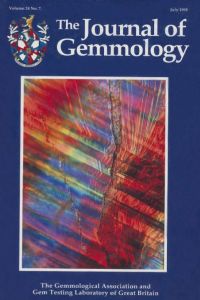
Harder, H. (1995) Trace elements as colouring agents in jadeites. Journal of Gemmology, Vol. 24, No. 7, July, pp. 508–511.
Record No. 3700  |  ISBN/ISSN: 221252  |  RWHL
Jadeite may be white, pink, lilac, brown, red, orange, blue, black or many shades of green, and contains different trace elements as colouring agents. Of these trace elements, iron shows the highest concentration and its oxidation states of ferrous or ferric iron produce different colours. In white jadeite nearly all iron is present as ferric (trivalent) iron, while in black jadeite half is ferrous (divalent) and half ferric. In the leaf green jadeites the Fe2+ /Fe3+ ratio ranges from 0.1 to 0.2. The finest green Burmese jadeite, whose colour is caused by up to 0.3 per cent chromium, has been called Imperial jade' or 'emerald jade'. Contents of iron (up to 0.6% Fe) and nickel (0.04% Ni) can modify the rich chromium green of the jadeite. Lilac, mauve or lavender jade may contain manganese (up to 0.01% Mn), cobalt (up to 0.001% Co), chromium (up to 0.001% Cr) and iron (from 0.006 to 0.3% Fe).

The Crown of the Andes

Catalog
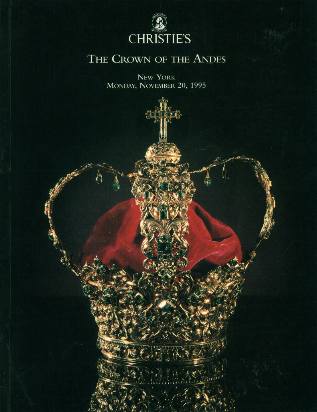
Christie’s (1995) The Crown of the Andes. New York: Christie’s, 20 November
Record No. 2585  |  Sinkankas/Born No.: NIS/NIB  |  RWHL
Metropolitan Museum: Spaniards arriving in sixteenth-century South America encountered a rich and complex indigenous tradition of gold working that had developed over the course of millennia. Many, if not most, Precolumbian works in gold were melted down in the sixteenth and seventeenth centuries, their precious metal repurposed for new religious and secular leaders both in Spain and the Americas. This crown was made to adorn a sacred image of the Virgin Mary venerated in the cathedral of Popayán (Colombia). A symbol of the Virgin’s divine queenship, the crown is encircled by golden vinework set with emerald clusters in the shape of flowers, a reference to her purity. The diadem is topped by imperial arches and a cross-bearing orb that symbolizes Christ’s dominion over the world. Although the practice was controversial, it was common to bestow lavish gifts, including jewels and sumptuous garments, on sculptures of the Virgin Mary. To gain salvation, the faithful sought her intercession and worked to honor her and increase the splendor of her worship. At the same time, the crown represents one of the most distinctive artistic achievements of a region whose wealth derived from the mining of gold and emeralds. This is an auction catalog for the sale of the crown, which is now on public display at New York’s Metropolitan Museum of Art.
Emerald [sapphire] mines earn $2.36b

Emerald [sapphire] mines earn $2.36b

Newspaper Article
Anonymous (1995) Emerald [sapphire] mines earn $2.36b. Central Queensland News, 24 Feb., 1995
Record No. 374  |  RWHL

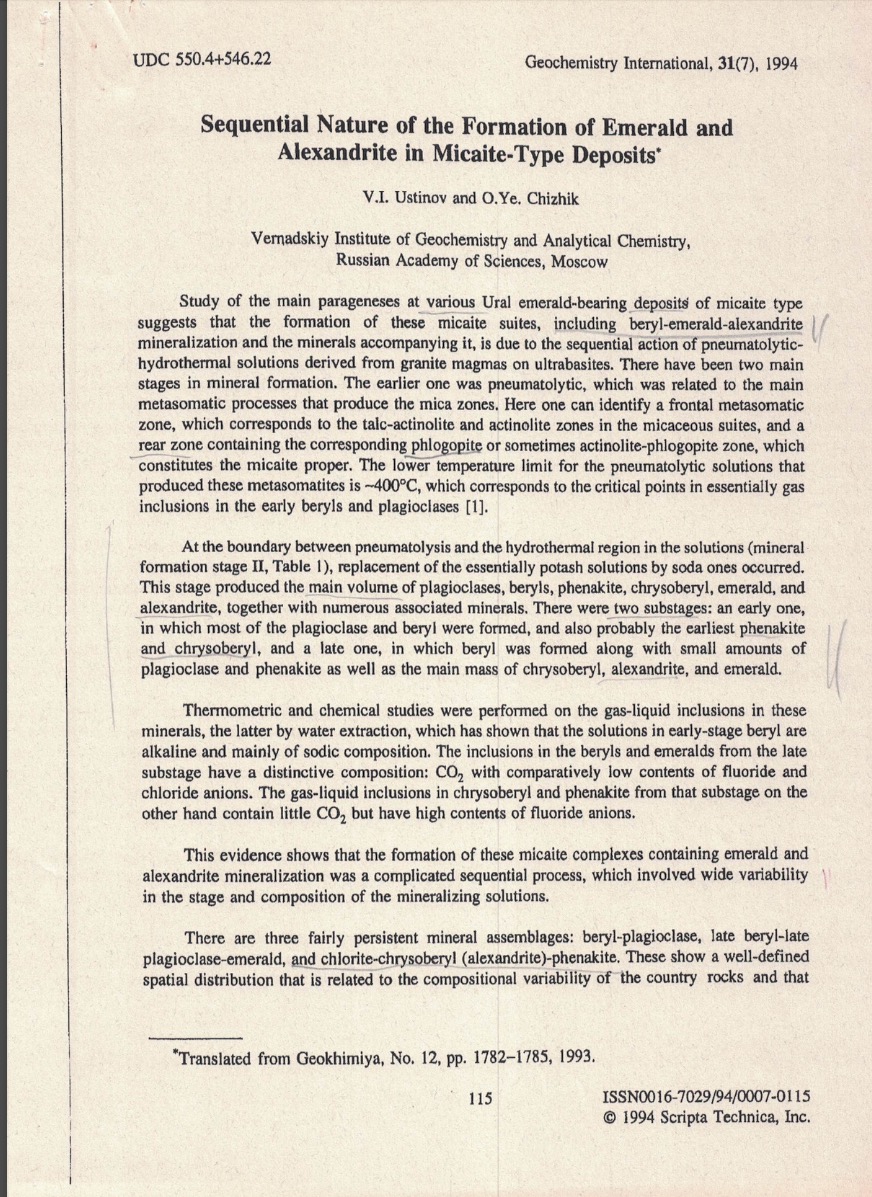
Sequential nature of the formation of emerald and alexandrite in micaite-type deposits
Journal Article
Ustinov, V.I. and Chizhik, O.Y. (1994) Sequential nature of the formation of emerald and alexandrite in micaite-type deposits. Geochemistry International, Vol. 31, No. 7, pp. 115–118.
Record No. 8102  |  ISBN/ISSN: 00167029/94/00070115  |  RWHL

The physical and chemical properties of synthetic and natural jadeite for jewellery
Journal Article
Zhao, T., Yan, X., Cui, S. and Niu, W. (1994) The physical and chemical properties of synthetic and natural jadeite for jewellery. Journal of Materials Science, Vol. 29, No. 6,, 3/1/94 pp. 1514–1520.
Record No. 6195  |  ISBN/ISSN: 15734803  |  DOI: https://dx.doi.org/10.1007/BF00368918  |  RWHL
Jadeite was synthesized from its glass of stoichiometric composition NaAlSi₂O₆, and a colouring agent Cr₂O₃ (0.3–0.6 wt%) was added to achieve the emerald colour. The conditions employed were a pressure range of 3.0–5.0 GPa and a temperature range of 1150–1750°C, for periods of 1–480 min. The physical and chemical properties of synthetic jadeite, such as microstructure, unit cell parameters, melting point, thermal stability, hardness, density and refractive index, etc., were compared with those of natural jadeite. The optimum crystallizing conditions for the synthesis of jadeite for jewellery were above 4.5 GPa, 1450°C and 60 min. The synthetic jadeite was emerald in colour, translucent, 12 mm in diameter and 6 mm thick.

Formation of the Muzo hydrothermal emerald deposit in Colombia
Journal Article
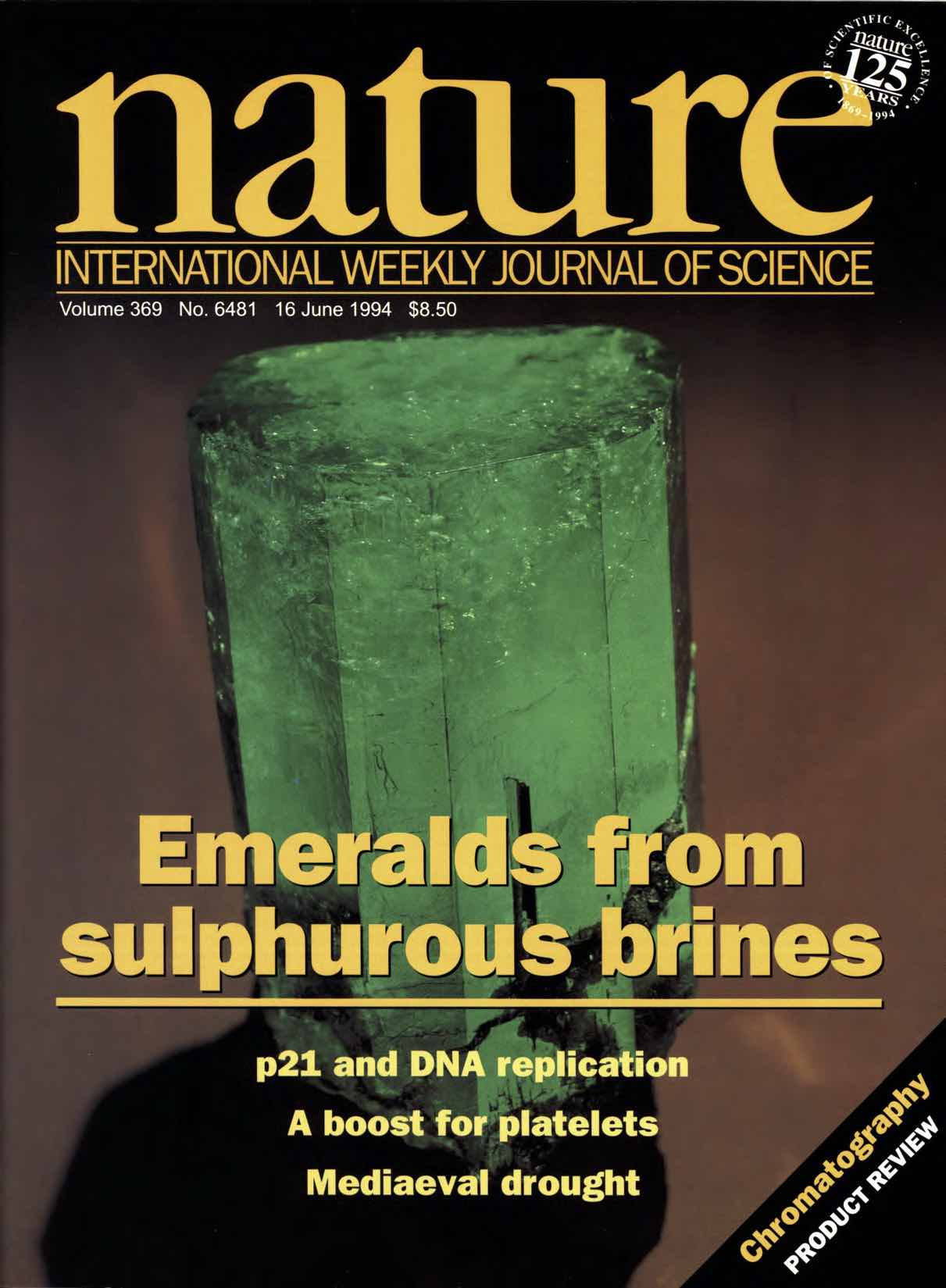
Ottaway, T., Wicks, F., Bryndzia, L. and Spooner, E. (1994) Formation of the Muzo hydrothermal emerald deposit in Colombia. Nature, Vol. 369, No. 6481, 16 June,, 16-Jun pp. 552–554.
Record No. 6075  |  DOI: https://dx.doi.org/10.1038/369552a0  |  RWHL
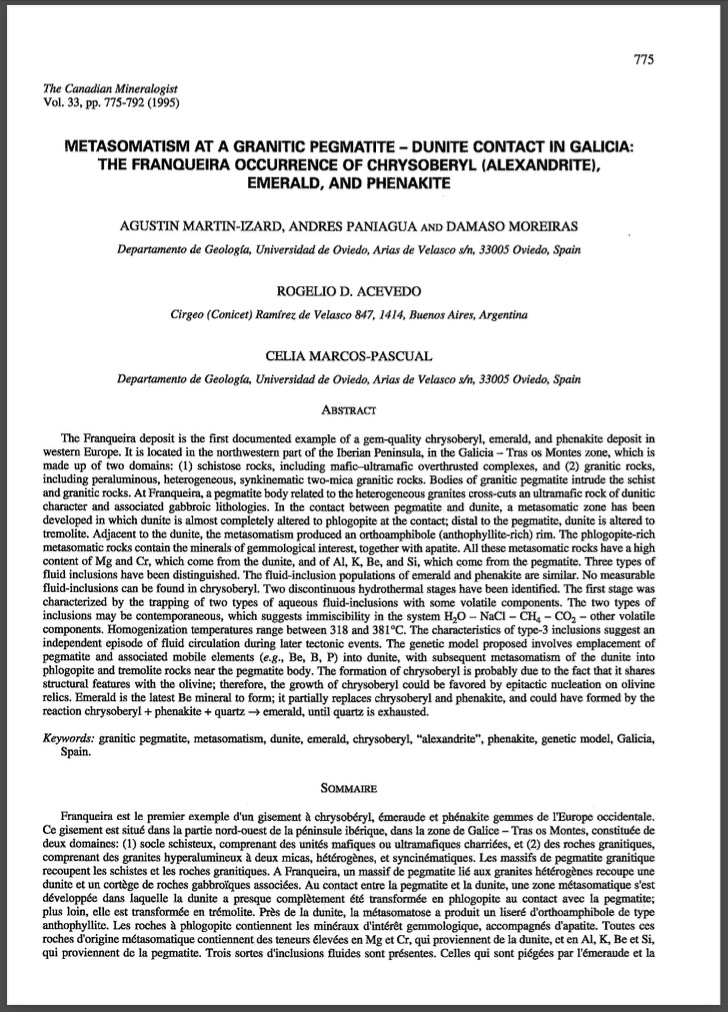
For over 1,000 years, the emerald deposits of Colombia have been the principal source of the world's largest and finest gem-quality emeralds—a variety of beryl containing chromium and vanadium1. Whereas most emerald deposits are found in association with igneous host rocks1, the Colombian deposits occur in organic-rich black shales, and their origin in the absence of any evidence of igneous activity has been a persistent enigma. Here we present evidence from the Muzo mine (located about 100km from Bogotá) that hydrothermal brines transported evaporitic sulphate to structurally favourable sites, where it was thermochemically reduced. We suggest that the sulphur generated by this process reacted with organic matter in the shales to release trapped chromium, vanadium and beryllium, which in turn enabled emerald formation.

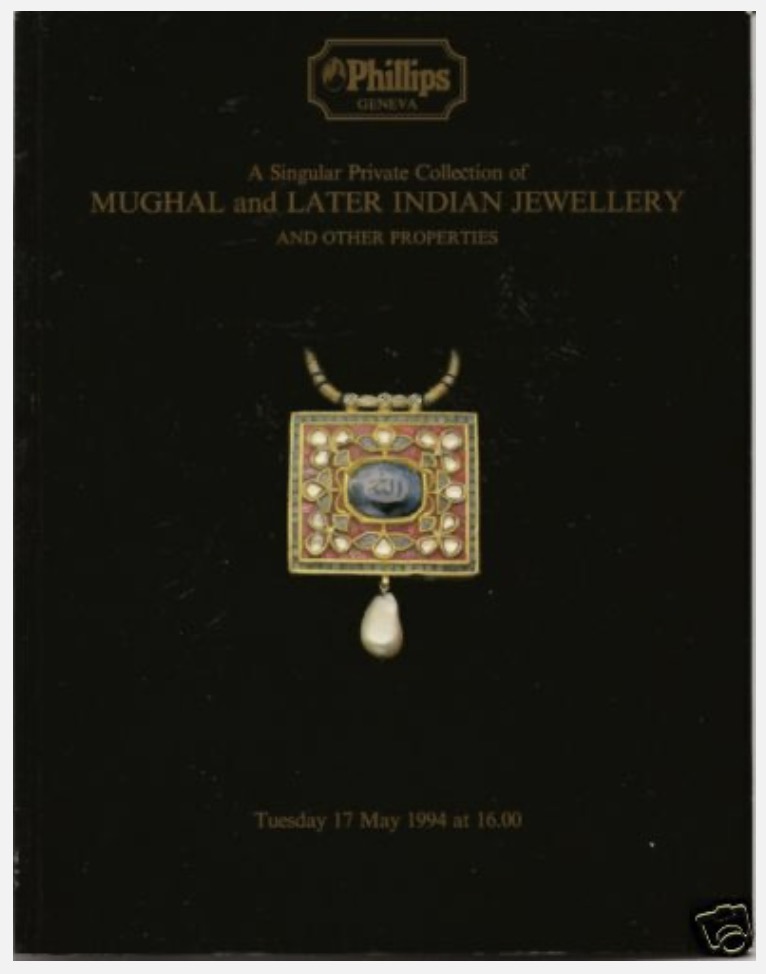
A Singular Private Collection of Mughal and Later Indian Jewellery and Other Properties
Catalog
Phillips (1994) A Singular Private Collection of Mughal and Later Indian Jewellery and Other Properties. Geneva: Phillips, 17-May
Record No. 2556  |  RWHL

Voyage of the Emerald Buddha

Book
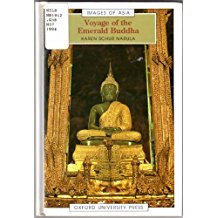
Narula, K.S. (1994) Voyage of the Emerald Buddha. Kuala Lumpur, Oxford Univ. Press, 88 pp.
Record No. 29  |  Sinkankas/Born No.: NIS/NIB  |  RWHL

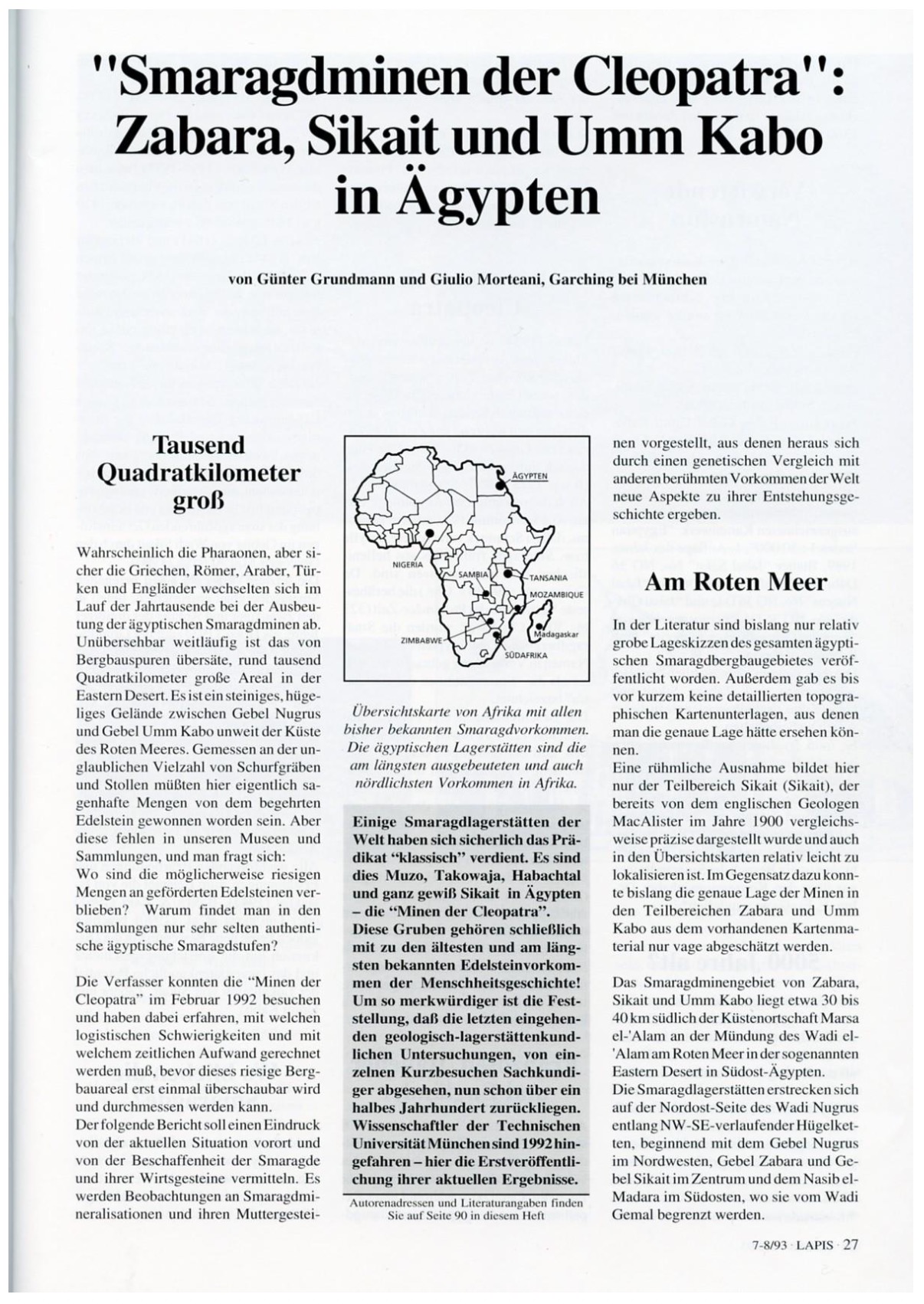
Smaragdminen der Cleopatra”: Zabara, Sikait and Umm Kabo in Ägypten
Journal Article
Grundmann, G. and Moretani, G. (1993) Smaragdminen der Cleopatra”: Zabara, Sikait and Umm Kabo in Ägypten. Lapis, Vol. 18, No. 7/8, pp. 29–39, 90.
Record No. 29951  |  Sinkankas/Born No.: NIS/NIB  |  RWHL
Grundmann and Moretani provide a historical, mineralogical, and geological study of Egypt’s ancient emerald-mining district, concentrating on Zabara, Sikait, and Umm Kabo in the Eastern Desert. They review ancient references to Egyptian emeralds and the history of exploration and rediscovery of the workings, while noting the confusing nomenclature applied to the individual mining localities. The authors describe extensive ancient excavations and settlement remains and discuss evidence for mining over a long period, including Pharaonic, Ptolemaic, Roman, and later activity. Detailed geological sections examine the emerald occurrences within the Precambrian metamorphic complex, particularly their association with mica and biotite schists, serpentinites, talc-carbonate rocks, granitic and pegmatitic bodies, and structurally controlled zones of deformation and fluid activity. The three principal localities are treated separately, with descriptions of their mineral assemblages, host rocks, emerald-bearing zones, and proposed processes of emerald formation. The authors emphasize the importance of tectonic structures and hydrothermal or metasomatic processes, with beryllium-bearing fluids interacting with chromium-bearing rocks to produce emerald. Numerous maps, geological diagrams, photographs of the mines and workings, and photographs of emerald specimens illustrate both the archaeological and mineralogical aspects of the deposits.

England, the international gem trade and the growth of geographical knowledge from Columbus to James I
Book Section
Lenman, B.P. (1993) England, the international gem trade and the growth of geographical knowledge from Columbus to James I. In: Renaissance Culture in Context : Theory and Practice, pp. 86–99.
Record No. 29020  |  Sinkankas/Born No.: NIS/NIB  |  RWHL
It is comparatively recently that historical scholarship has begun to escape from the Eurocentric assumption that the first global economic system was ‘invented’ by European seafarers in the late fifteenth and sixteenth centuries. This latter phenomenon, so brilliantly described by Immanuel Wallerstein,1 we now begin to see rather as a European take over of the run-down remains of an older global trading system, in which Europe was peripheral, and in which a series of precociously-developed urban complexes exchanged a highly selective range of goods through a network of trade which was intricate, far-flung and often indirect. This global system peaked in the thirteenth century, with the Islamic Middle East as its heart, and China as its most advanced participant.2 Medieval Europe’s knowledge of quite important parts of the system was vague. If we glance at Mandeville’s Travels, which was originally written in French, possibly at Liège around 1357, not, of course, by its fictitious English author, but certainly by someone who had never left Europe, we have, in effect, a compilation of other men’s accounts of the Middle East and Asia. They are quite good on the Middle East, where Crusader and Armenian sources were available, and not totally ill-informed about central Asia and China thanks to the accounts of Franciscan missionaries like Odoric of Pordenone. ‘Mandeville’ says, quite correctly, that Genoese and Venetian merchants visited Cathay. On India he is woefully ignorant, more than usually inclined to fable and error, but clear that it is from ‘Ind’ that men obtain ‘the good diamonds.

Presencia de piedra verde en el Grupo A-IV-1 de Kaminaljuyu
Presence of greenstone in Group A-IV-1 at Kaminaljuyú
Conference Paper
Suasnávar, J.S. (1993) Presencia de piedra verde en el Grupo A-IV-1 de Kaminaljuyu. [Presence of greenstone in Group A-IV-1 at Kaminaljuyú] VI Simposio de Investigaciones Arqueológicas en Guatemala, 1992, Guatemala City: Museo Nacional de Arqueología y Etnología, pp. 346–352.
Record No. 28687  |  Sinkankas/Born No.: NIS/NIB  |  Language: in Spanish  |  RWHL
We know that in the most advanced civilizations jade was used for ceremonial and ornamental objects; the characteristic most admired was its hardness, which best served artistic expression, together with its ability to receive and retain a lustrous polish (Foshag 1954:3). Jade was a stone of particular significance to the people of pre-Columbian Mesoamerica, for whom it was “the precious stone of grace, the first infinite grace, its green colour forming an allegorical metaphor for young maize, flowing water, and life itself” (Thompson 1950). In Group A-IV-1 at Kaminaljuyú, during excavations carried out in 1990 and 1991, a small but important assemblage of greenstone artefacts was recovered (Figure 1). Apparently, the first European contact with the material occurred in the sixteenth century through specimens brought back by the Spanish, rather than, as might be assumed, through contact with China (Foshag 1957:2). The word jade was coined in France as a derivation of the term piedra de ijada (“stone of the flank”), used by Spanish chroniclers to refer to this green stone arriving from the Americas, to which medicinal properties against kidney ailments were attributed (Hammond et al. 1977:38). By the time of the Conquest (Foshag 1954), several types of jade were distinguished among the Aztecs: chalchihuitl, which could be translated as “green-grass jewel stone,” referring to ordinary jade; quetzalitli, named after the iridescent green tail feathers of the quetzal, probably denoting the finest translucent emerald-green jade; tlilayutic, which may refer to dark chloromelanite; and white chalchihuitl, which appears to have been albite-jadeite. In addition to the identification of different qualities of the mineral, there is evidence of a preference among the elite for the finest-quality jades, a pattern that can also be traced back to Preclassic groups. With the Spanish conquest and the replacement of indigenous cultures, the use and knowledge of jade disappeared; along with it, the associated folklore was also lost.

Trace element fingerprinting of emeralds by PIXE/PIGE
Journal Article
Ma, X., Macarthur, J.D., Roeder, P.L. and Mariano, A.N. (1993) Trace element fingerprinting of emeralds by PIXE/PIGE. Nuclear Instruments and Methods in Physics Research B, Vol. B75, Nos. 1–4, April, pp. 423–427.
Record No. 27062  |  DOI: https://doi.org/10.1016/0168-583X(93)95689-3  |  Sinkankas/Born No.: NIS/NIB  |  RWHL
Gemologists consider the mineral beryl, beryllium aluminium silicate, to be the gem, emerald, when it contains sufficient chromium, > 0.1%, to colour it a strong green. Emeralds usually contain other trace elements. To investigate the feasibility of distinguishing an emerald's country of origin through its trace content, the trace elements in emeralds and a few beryls from sixteen locations have been determined with a single nondestructive measurement using PIXE and PIGE. From the database established with this limited number of samples, distinguishing trace element patterns were found.

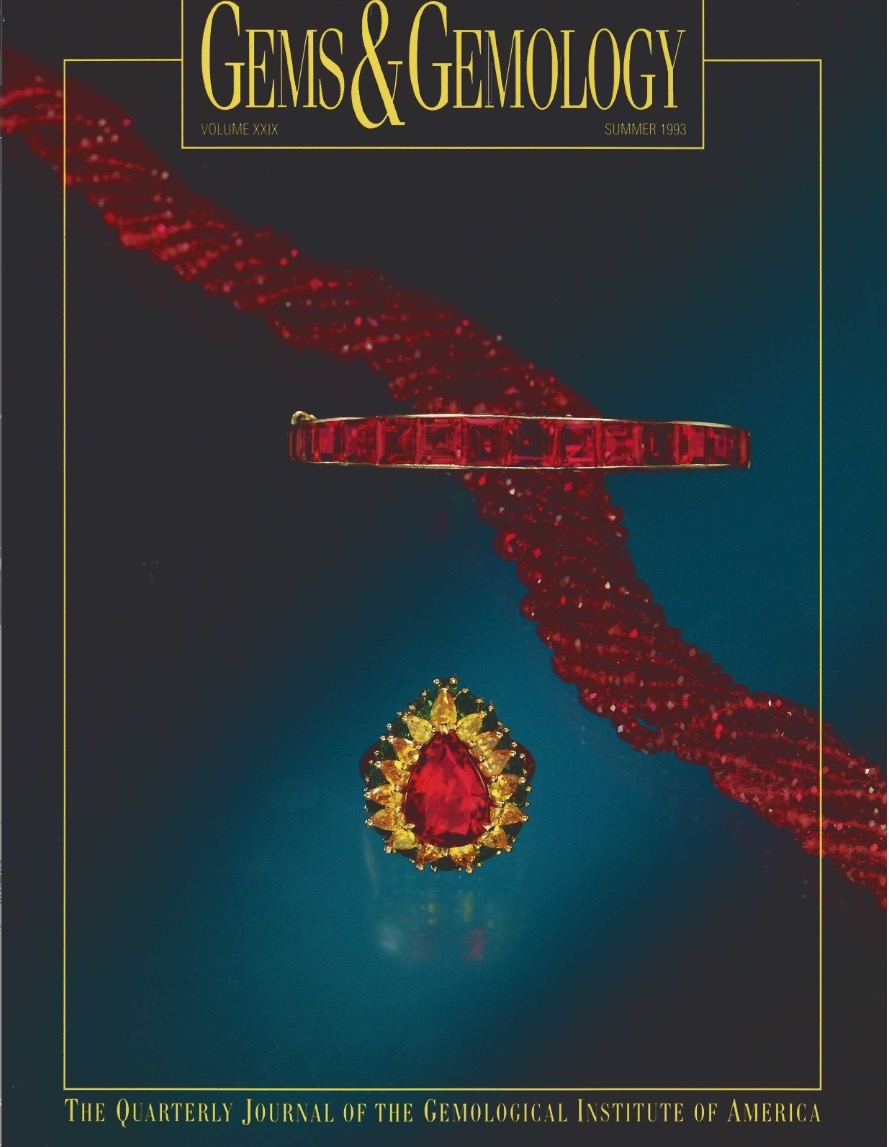
Gem News: Gems from Orissa, India

Journal Article
Koivula, J.I., Kammerling, R.C. and Fritsch, E. (1993) Gem News: Gems from Orissa, India. Gems & Gemology, Vol. 29, No. 2, Summer, pp. 133–134.
Record No. 26756  |  Sinkankas/Born No.: NIS/NIB  |  RWHL
The state of Orissa in eastern India has emerged as an increasingly important source of gemstones. Since 1989, rising quantities of rhodolite garnets from the region have been seen, followed by notable finds of aquamarine and ruby. At the 1993 Tucson Show, Amar J. Jain presented a 2.99 ct faceted alexandrite and dark grayish blue tourmalines from Orissa, one of which—a 1.74 ct emerald-cut specimen—showed gemological properties consistent with tourmaline from other locations, including refractive indices of 1.620 and 1.640, birefringence of 0.020, and specific gravity of 3.11. Hessonite (grossular) garnet is also being mined near Kanta Bhaji in the Kalahandi area, with faceted stones ranging from reddish orange to orangish brown; many exhibit a pronounced “roiled” appearance typical of Sri Lankan hessonites, sometimes resembling translucent sard. A 2.19 ct orange stone tested with an R.I. of 1.748 and S.G. of 3.65, confirming it as hessonite. Following the show, the editors received a report from Shyamala Fernandes of the Gem Testing Laboratory in Jaipur describing a December 1992 find of chatoyant sillimanite, initially misidentified and marketed as “moonstone cat’s-eye.” Identified as sillimanite, the material exhibited an R.I. of 1.659–1.678 (1.66 spot), S.G. of 3.25, biaxial optic character, and Mohs hardness of 7–8. Microscopy revealed parallel acicular inclusions responsible for the chatoyancy, along with “fingerprint” two- and three-phase inclusions and black platelets. The sillimanite occurs in colors ranging from colorless to gray, pinkish brown, yellow, green, and blue-green, typically in lighter tones, and most cabochons—some up to 20 ct—display sharp cat’s-eyes and a vitreous luster. Though precise production data is lacking, the material has been readily available in Indian markets since its discovery.

Gem Trade Lab Notes: Emerald, an ancient miniature carving

Journal Article
Moses, T. (1993) Gem Trade Lab Notes: Emerald, an ancient miniature carving. Gems & Gemology, Vol. 29, No. 2, Summer, p. 125.
Record No. 26751  |  Sinkankas/Born No.: NIS/NIB  |  RWHL
Common gem materials can present challenges in identification when fashioned into intricate carvings or altered by surface conditions. A miniature bust submitted to the East Coast lab—purported to depict the Roman Emperor at age 11–13 (circa 49–51 A.D.)—was examined for authenticity and composition. Due to the detailed carving, refractive index measurements were not possible, but hydrostatic testing gave a specific gravity of 2.70. Spectroscopy revealed weak chromium absorption typical of emerald, and a faint pink reaction under the Chelsea filter further supported this identification. The piece, semitransparent to translucent, displayed numerous fluid inclusions and small, unidentified crystals, one likely being biotite mica. Surface-reaching fissures exhibited yellowish brown iron staining, but no signs of oiling. Based on its properties, the bust was identified as natural emerald. If its reported provenance is genuine, it is probably Egyptian in origin. According to John Sinkankas, emeralds were mined in Egypt during the Graeco-Roman period through the 13th century A.D. Supporting this, Robert C. Kammerling of GIA collected samples from Egyptian mines in 1991 that matched the carving in color, transparency, inclusion patterns, and biotite presence.

Exploring the Literature of Emerald

Emerald literature spans gemology, mineralogy, deposits, identification, treatments, synthesis, history and the gem trade, with important sources covering deposits around the world.

For a curated guide to this subject, read Green Fire — Lotus Gemology's Guide to the Literature of Emerald.

About Four Treasures

Four Treasures is Lotus Gemology's freely accessible gemological reference database. Use the full database to search by author, title or keyword and explore literature on gemology, mineralogy, jewelry and related fields. Where available, hyperlinks on titles may lead directly to the full publication.

Search the Complete Four Treasures Database