Emerald Bibliography

Emerald Bibliography

Explore books, articles and historical sources on emerald in Four Treasures, the Lotus Gemology reference database. This bibliography brings together matching records from the collection, with publication details, abstracts and cover images where available.

Emerald References

The list below matches the terms emerald or emeralds in the database's searchable fields. Some references discuss emeralds as part of a broader subject.
541–560 of 851 matching references

Characterization of Russian hydrothermally-grown synthetic emeralds
Journal Article
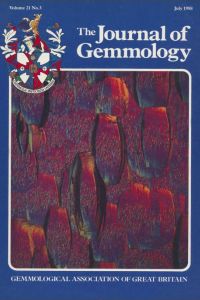
Schmetzer, K. (1988) Characterization of Russian hydrothermally-grown synthetic emeralds. Journal of Gemmology, Vol. 21, No. 3, pp. 145–163.
Record No. 2388  |  ISBN/ISSN: 221252  |  RWHL

The diagnostic properties of the latest synthetic stones
Journal Article
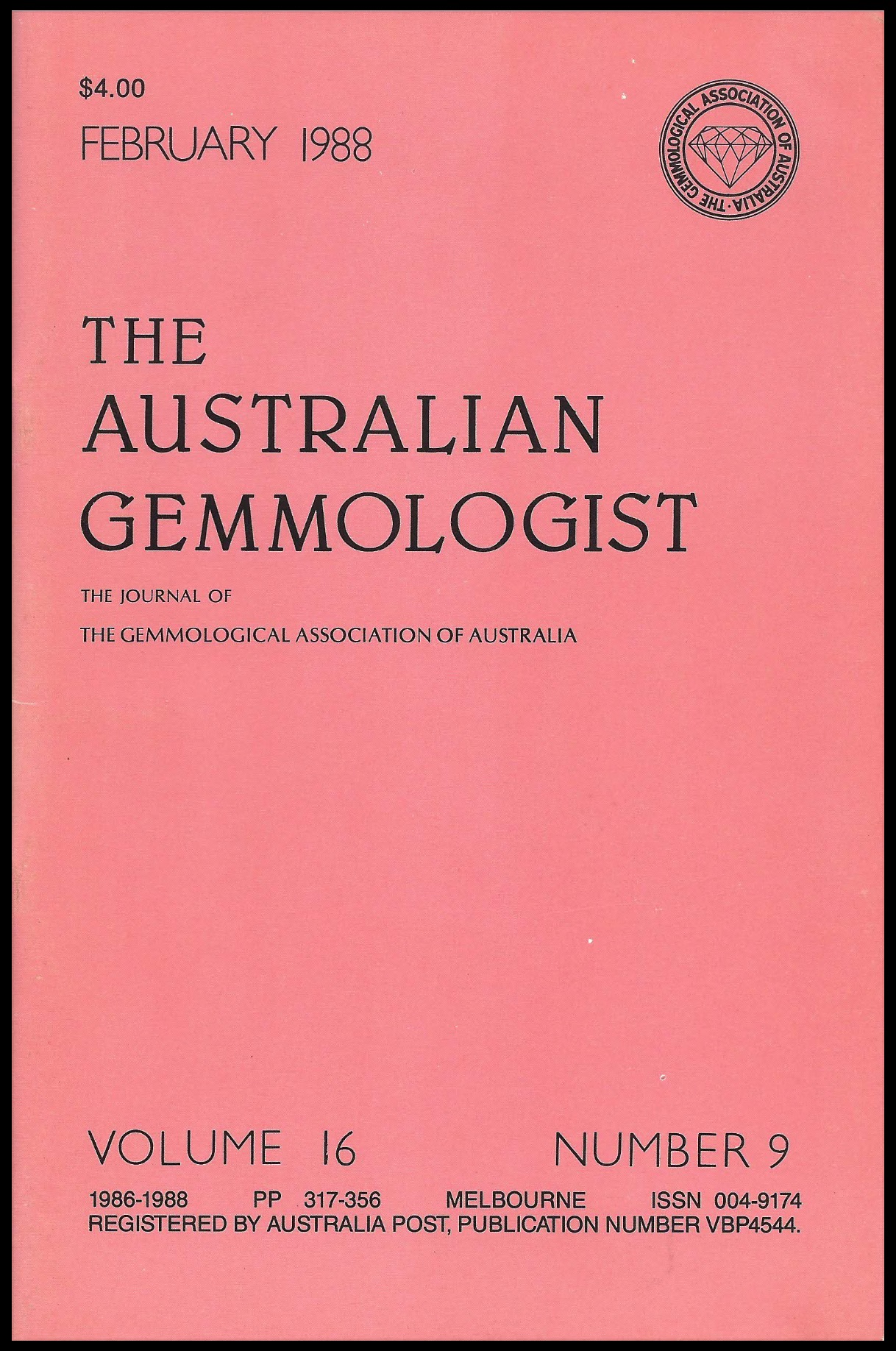
Gübelin, E.J. (1988) The diagnostic properties of the latest synthetic stones. Australian Gemmologist, Vol. 16, No. 9, February, pp. 329–341.
Record No. 2187  |  RWHL

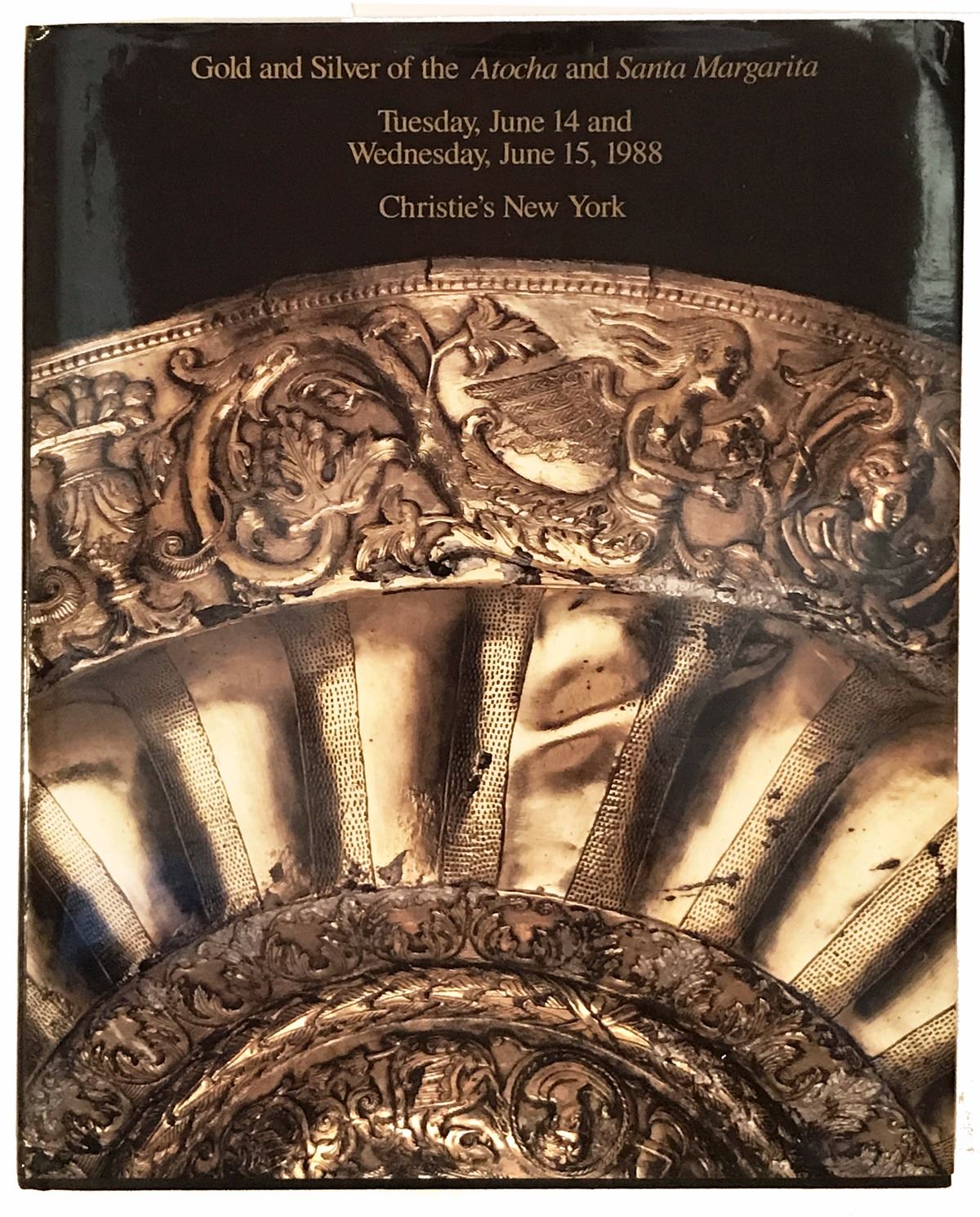
Gold and Silver of the Atocha and Santa Margarita
Catalog
Christie’s (1988) Gold and Silver of the Atocha and Santa Margarita. New York: Christie’s, 14–15 June
Record No. 15  |  RWHL

The Lennix synthetic emerald

Journal Article
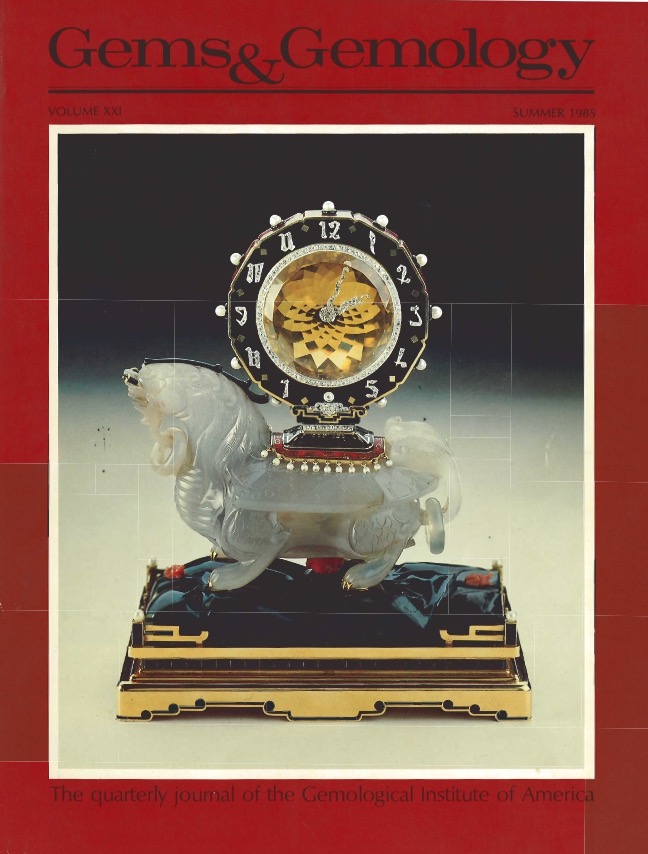
Gübelin, E.J., Graziani, G. and Martini, M. (1987) The Lennix synthetic emerald. Gems & Gemology, Vol. 23, No. 3, Fall, pp. 140–147.
Record No. 5061  |  ISBN/ISSN: 0016626X  |  RWHL
The Lennix synthetic emerald, currently n~anufacturedin France, is a dark green, moderately transparent to translucent material grown by flux fusion. With the microscope, zones of lighter and darker green are evident. For the most part, the gemological properties of this synthetic emerald overlap those of natural einer-aids, although the low refractive-index and specific-gravity values are good indi-cators that this material is synthetic. The presence of wispy veil" inclusions pro-vides conclusive proof of synthetic origin, as do the chemical analyses, infrared transmission spectra, and cathodo-luminescence."

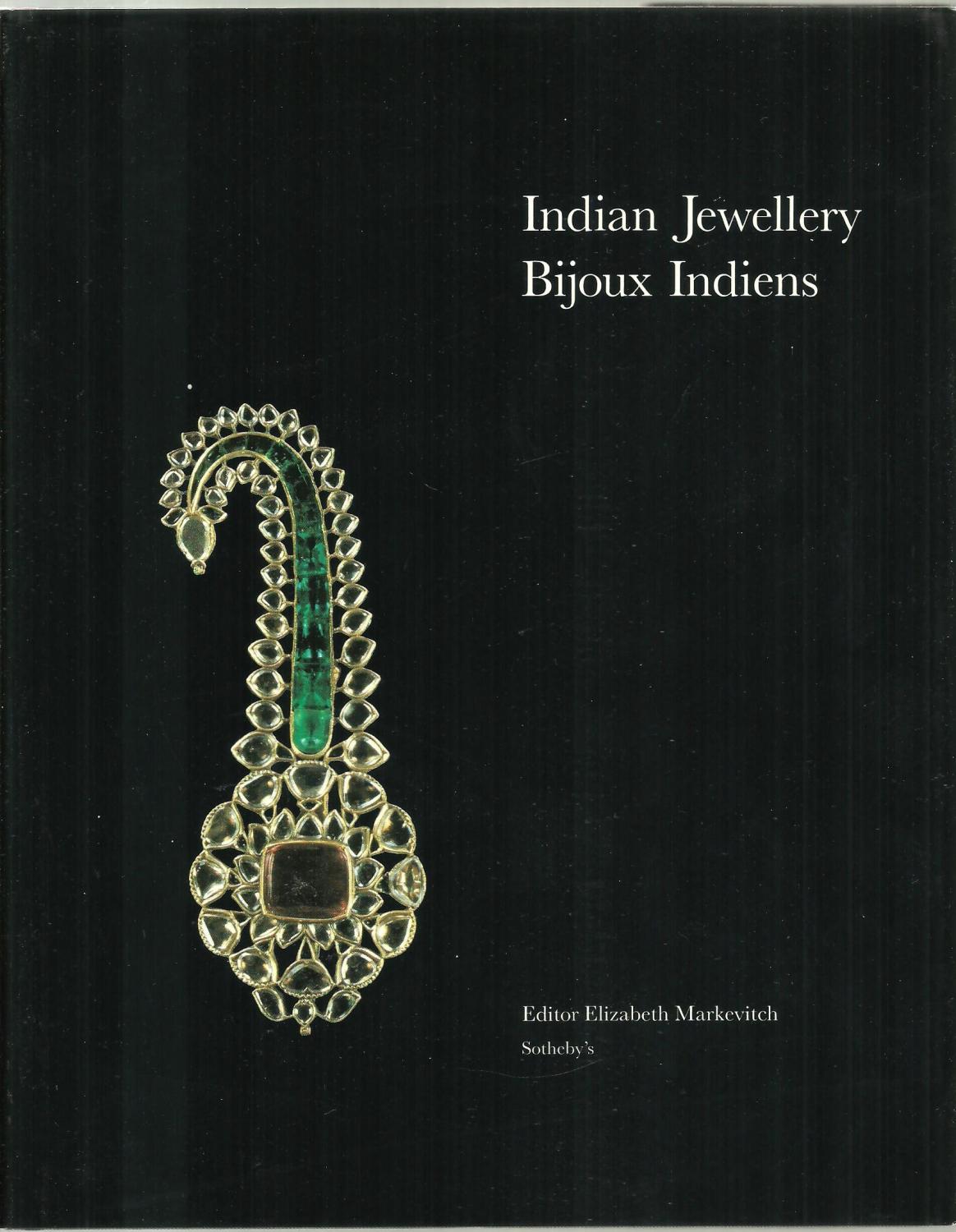
Indian Jewellery – Bijoux Indiens

Edited Book
Markevitch, E., editor (1987) Indian Jewellery – Bijoux Indiens.. Stäfa, Switzerland, Sotheby's, 123 pp..
Record No. 2555  |  Sinkankas/Born No.: NIS/NIB  |  RWHL
Catalog of an exhibit on Indian jewelry curated by Elisabeth Markevich.

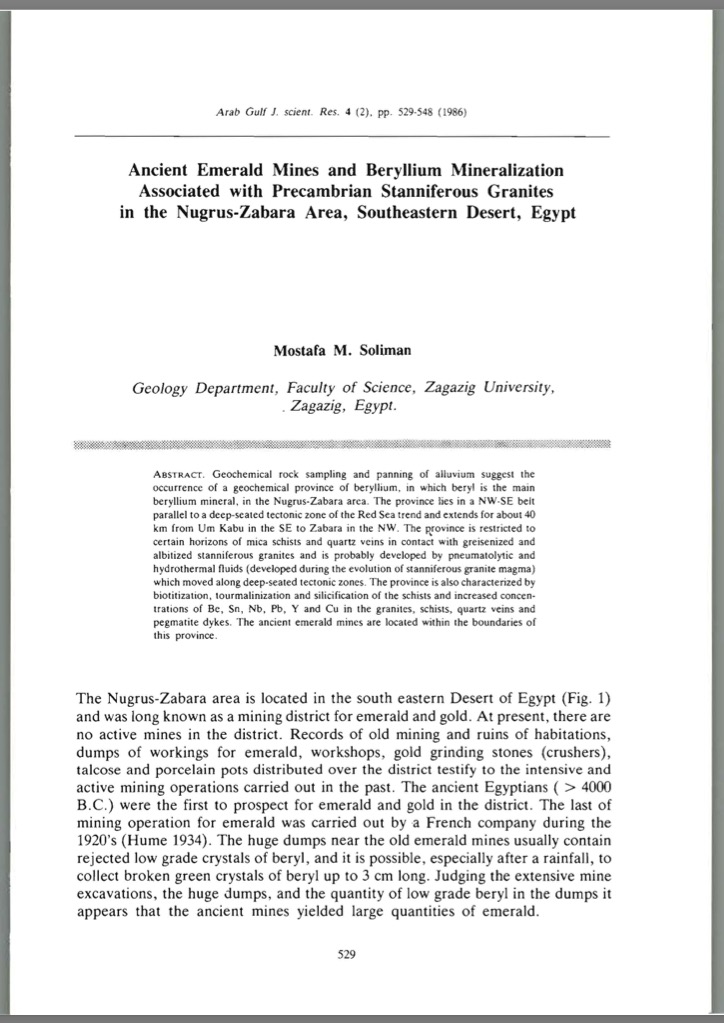
Ancient emerald mines and beryllium mineralization associated with pre-cambrian stanniferous granites in the Nugrus-Zabara area, SE desert, Egypt
Journal Article
Soliman, M.M. (1986) Ancient emerald mines and beryllium mineralization associated with pre-cambrian stanniferous granites in the Nugrus-Zabara area, SE desert, Egypt. Arab Gulf Journal of Scientific Research, Vol. 4, No. 2, pp. 529–548.
Record No. 26330  |  Sinkankas/Born No.: NIS/NIB  |  RWHL
Geochemical rock sampling and panning of Alluvium suggest the occurrence of a geochemical province of beryllium, in which beryl is the main beryllium mineral, in the Nugrus-Zabara area. The province lies in a NW-SE belt parallel to a deep-seated tectonic zone of the Red Sea trend and extends for about 40 km from Um Kabu in the SE to Zabara in the NW. The province is restricted to certain horizons of mica schists and quartz veins in contact with greisenized and albitized stanniferous granites and is probably developed by pneumatolytic and hydrothermal fluids (developed during the evolution of stanniferous granite magma) which moved along deep-seated tectonic zones. The province is characterized by biotitization, tourmalinization and silicification of the schists and increased concentrations of Be, Sn, Nb, Pb, Y and Cu in the granites, schists, quartz veins and pegmatite dykes. The ancient emerald mines are located within the boundaries of this province.

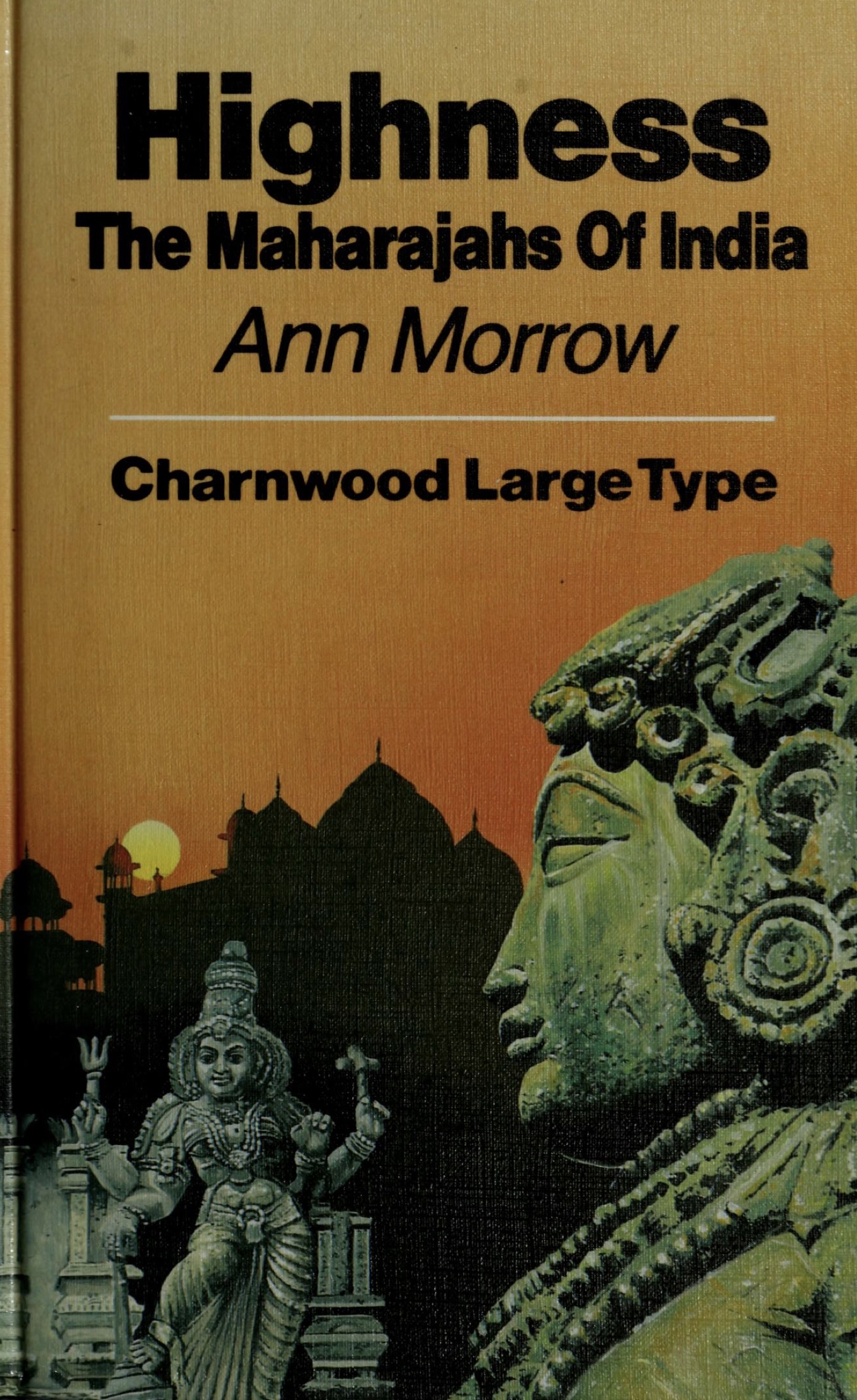
Highness | The Maharajahs of India

Book
Morrow, A. (1986) Highness | The Maharajahs of India. London, Grafton, 290 pp.
Record No. 17047  |  ISBN/ISSN: 070898441X  |  RWHL
This mid 1980s book is a portrait of a number of Indian princes and their sumptous lifestyle. An account of the Princes of India, who lived lives of fabled splendour until, in the early 1970s, Prime Minister Mrs. Gandhi removed their titles. Later, the Maharajahs became ambassadors and politicians, many of their palaces have become hotels, but their legend is part of India.

Pink topaz from Pakistan

Journal Article
Gübelin, E.J., Graziani, G. and Kazmi, A.H. (1986) Pink topaz from Pakistan. Gems & Gemology, Vol. 22, No. 3, Fall, pp. 140–151.
Record No. 5057  |  ISBN/ISSN: 0016626X  |  RWHL
In addition to the relatively recent discovery of significant amounts of emerald, aquamarine, and ruby, Pakistan has also begun to produce fine gem-quality pink topaz. In a small hillock of recrystallized limestone north of Katlang, narrow calcite veins encase pink topaz crystals up to 3 cm long, accompanied by larger amounts of reddish brown, tan, and colorless topaz crystals. More than 70,000 ct of gem-quality pink topaz has been reported to date. The refractive indices, optic axial angle, unit-cell dimensions, and density of the topaz are influenced by a partial replacement of fluorine by hydroxyl ions. The color is due to trace elements—principally chromium (Cr³⁺). Treatment experiments revealed that the color of the brown, tan, and colorless topaz from this source may be improved by irradiation and heat.

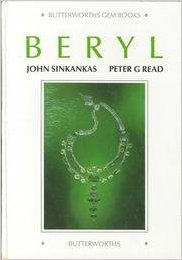
Beryl

Book
Sinkankas, J. and Read, P.G. (1986) Beryl. London, Butterworths, 225 pp.
Record No. 4988  |  Sinkankas/Born No.: 6112  |  RWHL
The aim of the author was to provide a comprehensive history of beryl and its varieties throughout the span of history, embracing such aspects as its cultural history & lore, associated scientific knowledge and its development, the occurrences of beryl, its etymology, and the references that deal with beryl from the earliest mentions in ancient times to the present. This edition is a pared down version of “Emerald and Other Beryls.” Skip it and buy the full original edition.

Differentiation between natural gems and synthetic minerals by laser Raman microspectrometry
Journal Article
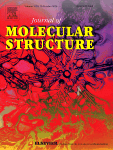
Déle-Dubois, M.-L., Dhamelincourt, P., Poirot, J.-P. and Schubnel, H.-J. (1986) Differentiation between natural gems and synthetic minerals by laser Raman microspectrometry. Journal of Molecular Structure, Vol. 143, pp. 135–138.
Record No. 4752  |  Sinkankas/Born No.: NIS/NIB  |  RWHL
By allowing positive identification of fluid and solid inclusions inside minerals, laser Raman microspectrometry has proved to be a perfect technique for discriminating between natural gems or synthetic minerals made for jewellery (sapphire, ruby, emerald)

Die diagnostischen Eigenschaften der neusten Synthesen
The diagnostic properties of the latest syntheses
Journal Article
Gübelin, E.J. (1986) Die diagnostischen Eigenschaften der neusten Synthesen. [The diagnostic properties of the latest syntheses] Deutsche Goldschmiede-Zeitung, November, pp. 69–76.
Record No. 2180  |  Sinkankas/Born No.: NIS/NIB  |  Language: in German  |  RWHL
Gübelin reviews the diagnostic features of the latest synthetic gemstones then appearing on the market, concentrating on Lennix, Biron, Soviet and Seiko synthetic emeralds and Seiko, Lechleitner and Knischka synthetic corundums. Particular emphasis is placed on microscopic identification, especially characteristic inclusions and growth features associated with the different synthesis methods. Gübelin shows that conventional physical and optical properties may overlap substantially with those of natural stones, making internal features especially important for reliable separation. The study compares the characteristic inclusion patterns of the various products and provides practical criteria for distinguishing these increasingly sophisticated synthetics from their natural counterparts. A later English version contains 46 color figures.

Tracking Treasure

Book
Trupp, P.Z. (1986) Tracking Treasure. Washington, D.C., Acropolis Books, 256 pp.
Record No. 2012  |  RWHL

Pakistan’s emeralds: A trickle becomes a stream
Journal Article
Beesley, C.R. (1986) Pakistan’s emeralds: A trickle becomes a stream. Jewelers’ Circular Keystone, February, pp. 359–365.
Record No. 448  |  RWHL

Treasure of the Atocha

Book
Mathewson, R.D., III (1986) Treasure of the Atocha. New York, E.P. Dutton, 160 pp.
Record No. 83  |  ISBN/ISSN: 525244972  |  RWHL

Editorial Forum: Foil-backing still a popular treatment
Journal Article
Tatiwala, N.K. (1985) Editorial Forum: Foil-backing still a popular treatment. Gems & Gemology, Vol. 21, No. 2, Summer, p. 115.
Record No. 26776  |  Sinkankas/Born No.: NIS/NIB  |  RWHL
The Gem Trade Lab Notes section (Winter 1984, p. 228) reported on emerald imitations made from colorless rock crystal quartz backed with green foil—a technique still commonly used today, even in enameled jewelry. Similarly, colorless beryl or corundum is often backed with red or green foil to mimic emerald or ruby, while silver foil may be applied behind colorless synthetic or natural sapphire to enhance its brilliance.

More on Russian hydrothermal synthetic emeralds
Journal Article
Koivula, J.I. (1985) More on Russian hydrothermal synthetic emeralds. Gems & Gemology, Vol. 21, No. 1, Spring, pp. 59–60.
Record No. 2383  |  ISBN/ISSN: 0016626X  |  RWHL
Dr. Frederick H. Pough, noted mineralogist and gemologist, supplied Gem News with the following information concerning the Russian hydrothermal synthetic emer-alds that have recently appeared on the colored-stone market. The emeralds show a refractive index of 1.574–1.580 with a birefringence of 0.006. They do not fluoresce to either long-wave or short-wave ultraviolet radiation, and their color-filter reaction is negative. The specific gravity is above 2.67, as would be expected from a hydrothermal synthetic emerald.The emeralds show a unique chevron-shaped internal growth pattern (figure 3),which has not been observed in any natural emeralds. The emeralds are doped with iron which maslts the fluorescence. The Gem News Editor also has examined some of these Russian synthetic emeralds and his obser-vations support those of Dr. Pough.

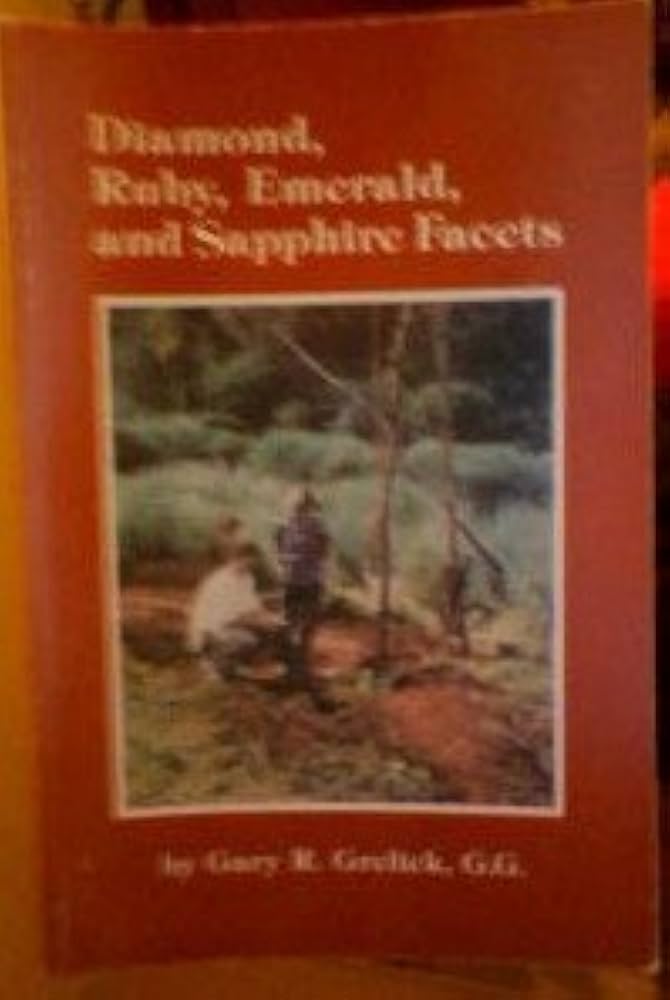
Diamonds, Ruby, Emerald and Sapphire Facets

Book
Grelick, G.R. (1985) Diamonds, Ruby, Emerald and Sapphire Facets. no city, self published, 60 pp.
Record No. 846  |  RWHL
Covers of synthetic emeralds and synthetic corundums (different colors) after Lechleitner
Covers of synthetic emeralds and synthetic corundums (different colors) after Lechleitner

Journal Article
Bank, H. (1985) Covers of synthetic emeralds and synthetic corundums (different colors) after Lechleitner. Call Idar-Oberstein, No. 1/85, pp. 125–128.
Record No. 428  |  RWHL

Priroda Okraski Samotsvetov (The nature of the coloration of gemstones)
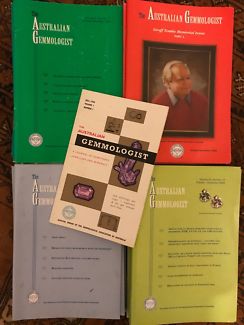
Природа окраски самоцветов
Book
Platanov, A.N., Taran, M.N. and Balitskii, V.S. (1984) Priroda Okraski Samotsvetov (The nature of the coloration of gemstones). [Природа окраски самоцветов] Moscow, Nauka, 195 pp.
Record No. 28800  |  Sinkankas/Born No.: 5159 (not seen); NIB  |  Language: in Russian  |  RWHL
Sinkankas: Detailed treatise on the nature & causes of color in gemstones. Provides historical notes, past theories, discussions of all major & minor gemstone color phenomena, suggested causes, measurement of color, etc., many color absorption curves, some crystal structure drawings. Species: corundum, beryl & emerald, chrysoberyl, jadeite, spinel, topaz, garnet, tourmaline, spodumene, zircon, turquoise, peridot, lazurite, quartz. Describes procedures and apparatus used. Platonov also wrote Priroda okraski mineralov, Kiev: Naukova Dumka, 1976, 264 p., not seen.

Report on the investigation of an emerald from the Kitwe district, Zambia

Journal Article
Graziani, G., Gübelin, E.J. and Lucchesi, S. (1984) Report on the investigation of an emerald from the Kitwe district, Zambia. Australian Gemmologist, Vol. 15, No. 7, August, pp. 227–234.
Record No. 5054  |  RWHL

Exploring the Literature of Emerald

Emerald literature spans gemology, mineralogy, deposits, identification, treatments, synthesis, history and the gem trade, with important sources covering deposits around the world.

For a curated guide to this subject, read Green Fire — Lotus Gemology's Guide to the Literature of Emerald.

About Four Treasures

Four Treasures is Lotus Gemology's freely accessible gemological reference database. Use the full database to search by author, title or keyword and explore literature on gemology, mineralogy, jewelry and related fields. Where available, hyperlinks on titles may lead directly to the full publication.

Search the Complete Four Treasures Database