Emerald Bibliography

Emerald Bibliography

Explore books, articles and historical sources on emerald in Four Treasures, the Lotus Gemology reference database. This bibliography brings together matching records from the collection, with publication details, abstracts and cover images where available.

Emerald References

The list below matches the terms emerald or emeralds in the database's searchable fields. Some references discuss emeralds as part of a broader subject.
801–820 of 851 matching references

Treasure Hunt: The Sixteen Year Search for the Lost Treasure Ship Atocha

Book
Sullivan, G. (1987) Treasure Hunt: The Sixteen Year Search for the Lost Treasure Ship Atocha. New York, NY
Record No. 2011  |  seen
La tradition manuscrite du Liber lapidum de Marbode de Rennes d'après les manuscrits conservés en France

La tradition manuscrite du Liber lapidum de Marbode de Rennes d'après les manuscrits conservés en France

Thesis
Herrera, M.E. (1986) La tradition manuscrite du Liber lapidum de Marbode de Rennes d'après les manuscrits conservés en France. Paris IV Sorbonne, 718 pp.
Record No. 27918  |  Sinkankas/Born No.: NIS/NIB  |  not seen
This thesis begins by an introduction which contains, the life of Marbode of Rennes, something about the history of lapidaries, above all of Latin lapidaries, and explains the contents of the liber lapidum. In the second chapter, the author enumerates the medieval translations of the book into eleven languages and describes the editions of the Latin text. The chapter ends with a list of the manuscripts of the liber lapidum kept outside of France and with a description of the history and of the contents of the manuscripts kept in France. In the third chapter, we have the classification into six families of the manuscripts kept in France. The thesis ends with a supplement containing two chapters of the critical edition that the author will publish in the future: the prologue and chapter vi on the emerald with a French translation. At the end we find a bibliography and an index of the manuscripts cited in the thesis.
Hydrothermally-grown beryls of gem quality
Hydrothermally-grown beryls of gem quality

Book Section
Lebedev, A.S., Il'in, A.G. and Klyakhin, V.A. (1986) Hydrothermally-grown beryls of gem quality. In: Morphology and phase equilibria of minerals. Proceedings of the 13th General Meeting of the International Mineralogical Association, Varna 1982, Vol. 2 , pp. 403–411.
Record No. 7710  |  not seen

Die diagnostischen eigenschaften der neuen synthesen
The diagnostic properties of the new syntheses
Journal Article
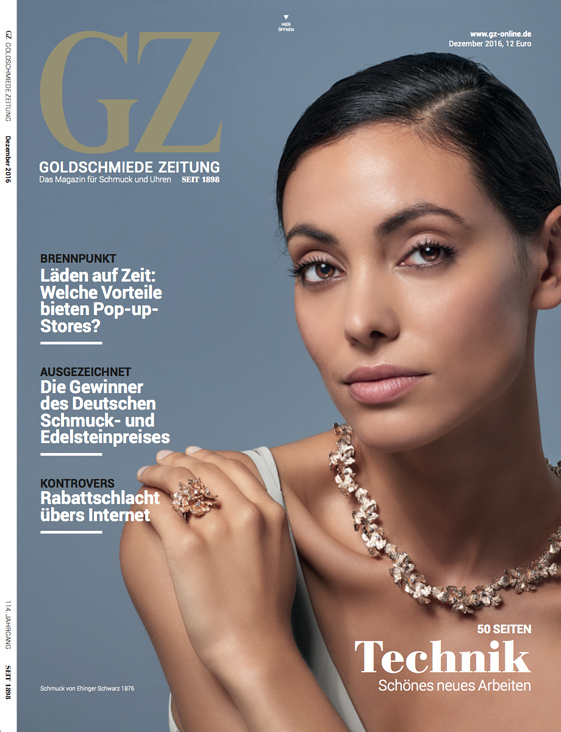
Gübelin, E.J. (1986) Die diagnostischen eigenschaften der neuen synthesen. [The diagnostic properties of the new syntheses] Deutsche Goldschmiede-Zeitung, Vol. 84, No. 11, pp. 69–76.
Record No. 2175  |  Language: in German  |  not seen
Gübelin reviews the diagnostic properties of several recently introduced synthetic gemstones and the problems they pose for separation from their natural counterparts. Emphasis is placed on the combination of conventional gemological properties with microscopic examination of inclusions and growth structures, supplemented where necessary by spectroscopic and other analytical methods. The article discusses characteristic features of newer synthetic materials, particularly synthetic corundum and emerald, and shows that physical constants alone may be insufficient for identification as manufacturing techniques increasingly reproduce the appearance and properties of natural stones. Gübelin stresses the diagnostic importance of flux residues, metallic inclusions, growth zoning and other internal features associated with particular synthesis processes. The paper summarizes practical criteria by which these newer products can be recognized in gemological testing.

Rasterelektronen-mikroskopie. Einige anwendungen in der edelsteinforschung
Scanning electron microscopy. Some applications in gemstone research
Journal Article
Hofmann, C., Schrader, H.W. and Stender, E. (1985) Rasterelektronen-mikroskopie. Einige anwendungen in der edelsteinforschung. [Scanning electron microscopy. Some applications in gemstone research] Goldschmiede Zeitung, Vol. 83, No. 6, pp. 76–77.
Record No. 2382  |  Sinkankas/Born No.: NIS/NIB  |  Language: In German  |  not seen
Hofmann, Schrader and Stender describe applications of scanning electron microscopy (SEM) to gemological research, emphasizing its usefulness for examining surface structures and extremely small features beyond the practical resolution of conventional gemological microscopy. Examples illustrate how the technique can reveal the morphology of inclusions, growth and dissolution features, fracture surfaces, and other microscopic structures relevant to gemstone investigation. When combined with electron-beam microanalysis, SEM also permits localized chemical characterization of minute inclusions or surface features. The brief article demonstrates the value of SEM as a complementary research technique where conventional optical microscopy alone provides insufficient morphological or compositional information.

The Search for the Nuestra Senora de Atocha

Book
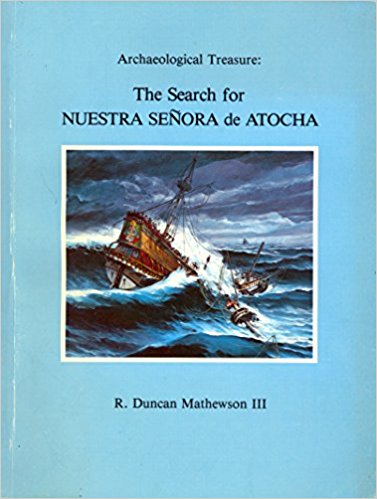
Mathewson, R.D.I. (1985) The Search for the Nuestra Senora de Atocha. Woodstock, Vermont, USA
Record No. 1997  |  seen
Gemas no estado de Goiás: ocorrências e estudos gemológicos
Gemas no estado de Goiás: ocorrências e estudos gemológicos

Conference Paper
Lima Jr., E.A. and Deus, W.T. (1984) Gemas no estado de Goiás: ocorrências e estudos gemológicos. XXXIII Congresso Brasileiro de Geologia, Rio de Janeiro In: ANAIS… pp. 5027–5039.
Record No. 7798  |  not seen

The genesis of an emerald from the Kitwe District, Zambia
Journal Article
Graziani, G., Gübelin, E.J. and Lucchesi, S. (1983) The genesis of an emerald from the Kitwe District, Zambia. Neues Jahrbuch für Mineralogie – Monatshefte, No. 4, April, pp. 175–186.
Record No. 6044  |  not seen

Emissionsspektralanalyse von natürlichen und synthetischen rubinen, sapphiren, smaragden und alexandriten
Emission spectral analysis of natural and synthetic rubies, sapphires, emeralds, and alexandrites
Journal Article
Kuhlmann, H. (1983) Emissionsspektralanalyse von natürlichen und synthetischen rubinen, sapphiren, smaragden und alexandriten. [Emission spectral analysis of natural and synthetic rubies, sapphires, emeralds, and alexandrites] Zeitschrift der Deutschen Gemmologischen Gesellschaft, Vol. 32, No. 4, pp. 179–195.
Record No. 1135  |  Sinkankas/Born No.: NIS/NIB  |  Language: In German  |  not seen
Kuhlmann applies emission spectrographic analysis to 207 natural and 61 synthetic rubies, sapphires, emeralds and alexandrites, examining eleven trace elements: Be, Cr, Cu, Fe, Mn, Mo, Ni, Si, Sn, Ti and V. The analyses reveal characteristic trace-element patterns that can help distinguish natural gemstones of different geographic origins from synthetic products. Natural rubies from Kenya, Tanzania, Afghanistan, India, Burma and Greenland contain varying combinations of Cr, Si, Ti, V, Mn, Fe, Sn and Cu, whereas Chatham and Verneuil synthetic rubies show molybdenum, and Kashan and Knischka synthetics contain comparatively more copper. Natural sapphires from several localities likewise show trace-element assemblages differing from Verneuil and Chatham synthetics. Corresponding comparisons are made for natural and synthetic emerald and alexandrite. Kuhlmann concludes that emission spectrography provides a useful supplementary method for determining natural versus synthetic origin and, in some cases, characterizing geographic provenance. The paper contains eight figures and one table.

Islamic Metalwork from the Iranian World, 8–18th Centuries
Book
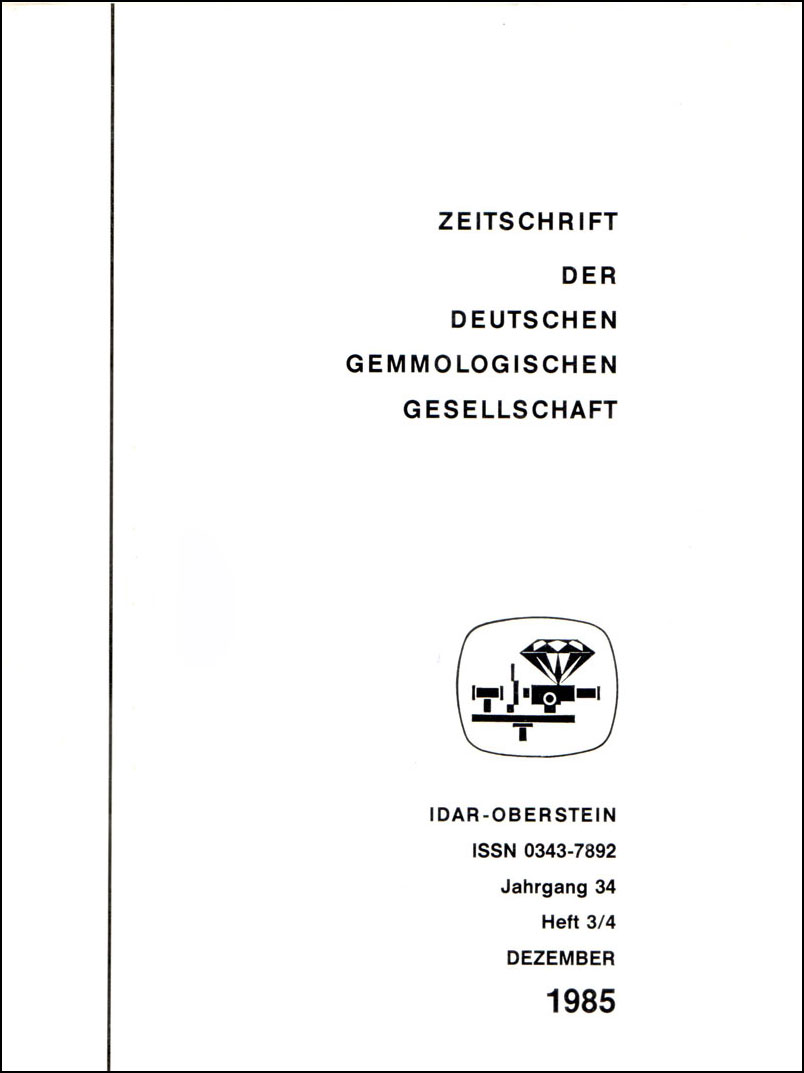
Melikian-Chirvani, A.S. (1982) Islamic Metalwork from the Iranian World, 8–18th Centuries. London, Victoria & Albert Museum, 445 pp.
Record No. 27832  |  ISBN/ISSN: 9780110000000  |  Sinkankas/Born No.: NIS/NIB  |  not seen
This was the first outline of Islamic Iranian metalwork to be published in any language. It is based on the collection in the Victoria & Albert Museum and is the work of Dr. Assadullah Souren Melikian-Chirvani [b. 1936], the distinguished authority of Near Eastern metalwork. The many illustrations present relevant details of epigraphy and iconography, the great majority of which have not been previously published. Souren Melikian is a French-Iranian art historian, art critic, and curator. He is a renowned scholar of Iranian culture, and its sphere of influence.

Über ein neues Vorkommen von Smaragd bei Santa Terezinha, Goyaz, Brasilien
On a new occurrence of emerald near Santa Terezinha, Goyaz, Brazil
Journal Article
Bank, H. and Petsch, E. (1982) Über ein neues Vorkommen von Smaragd bei Santa Terezinha, Goyaz, Brasilien. [On a new occurrence of emerald near Santa Terezinha, Goyaz, Brazil] Zeitschrift der Deutschen Gemmologischen Gesellschaft, Vol. 31, No. 1/2, pp. 89–90.
Record No. 6056  |  Sinkankas/Born No.: NIS/NIB  |  Language: In German  |  seen
Bank and Petsch report a newly recognized emerald occurrence near Santa Terezinha de Goiás, Brazil, describing the locality and the characteristics of the emerald material being produced there. The brief paper discusses the geological occurrence of the emeralds and their association with the host rocks, together with observations on the appearance and gemological characteristics of the crystals. It represents an early gemological report on Santa Terezinha, which subsequently became one of Brazil’s important emerald-producing districts.

Étude par spectroscopie raman d'inclusions dans les diamants, saphirs et émeraudes
Study by Raman spectroscopy of inclusions in diamonds, sapphires, and emeralds
Journal Article
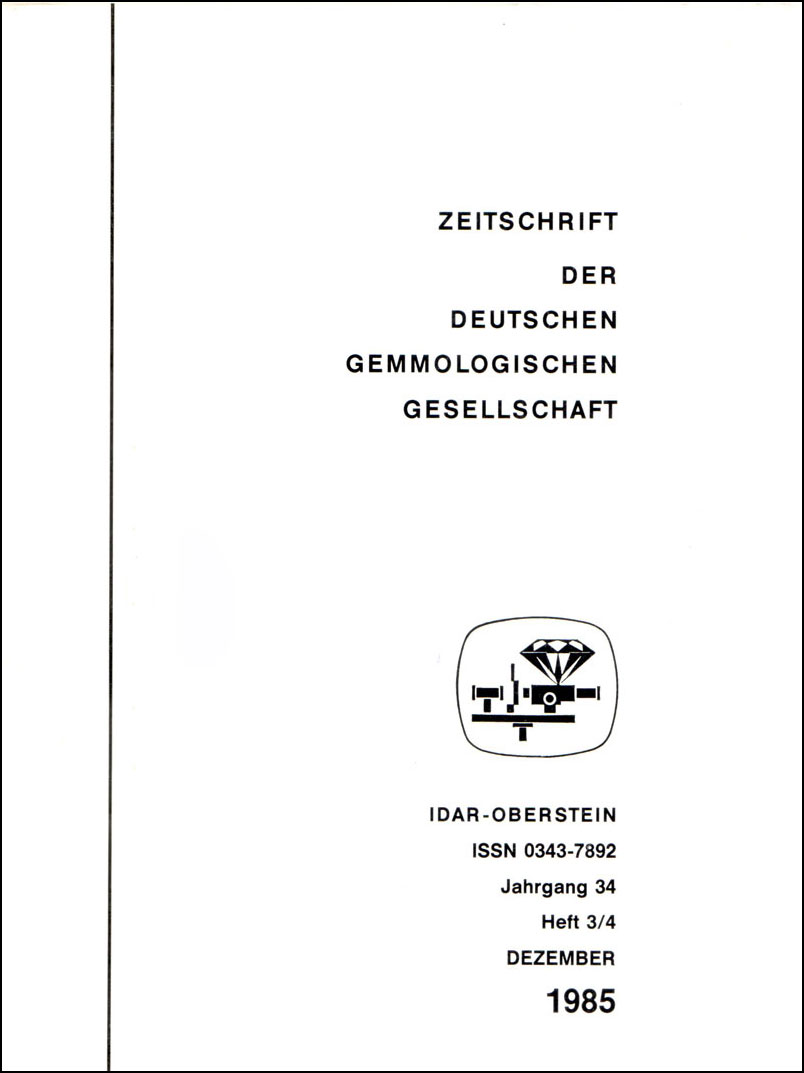
Dele-Dubois, M.-L., Dhamelincourt, P. and Schubnel, H.-J. (1980) Étude par spectroscopie raman d'inclusions dans les diamants, saphirs et émeraudes. [Study by Raman spectroscopy of inclusions in diamonds, sapphires, and emeralds] Revue de Gemmologie A.F.G., No. 63, pp. 11–14.
Record No. 7724  |  Sinkankas/Born No.: NIS/NIB  |  Language: in French  |  seen
Dele-Dubois, Dhamelincourt, and Schubnel examine the application of Raman spectroscopy to the non-destructive identification of mineral inclusions in diamonds, sapphires, and emeralds. The technique permits inclusions to be analyzed in situ through the host gemstone by means of their characteristic Raman spectra, avoiding the need to extract or otherwise damage them. The authors demonstrate the usefulness of Raman spectroscopy for identifying very small inclusions that may be difficult to determine by conventional microscopy, illustrating its value both for gemological identification and for investigating the mineral assemblages trapped during gemstone formation.

A proposal for delimiting ruby (from rose and violet corundum) and emerald (from light green and dark green beryl)
Journal Article
Superchi, M. and Rolandi, V. (1980) A proposal for delimiting ruby (from rose and violet corundum) and emerald (from light green and dark green beryl). Zeitschrift der Deutschen Gemmologischen Gesellschaft, Vol. 29, pp. 68–70.
Record No. 5000  |  not seen

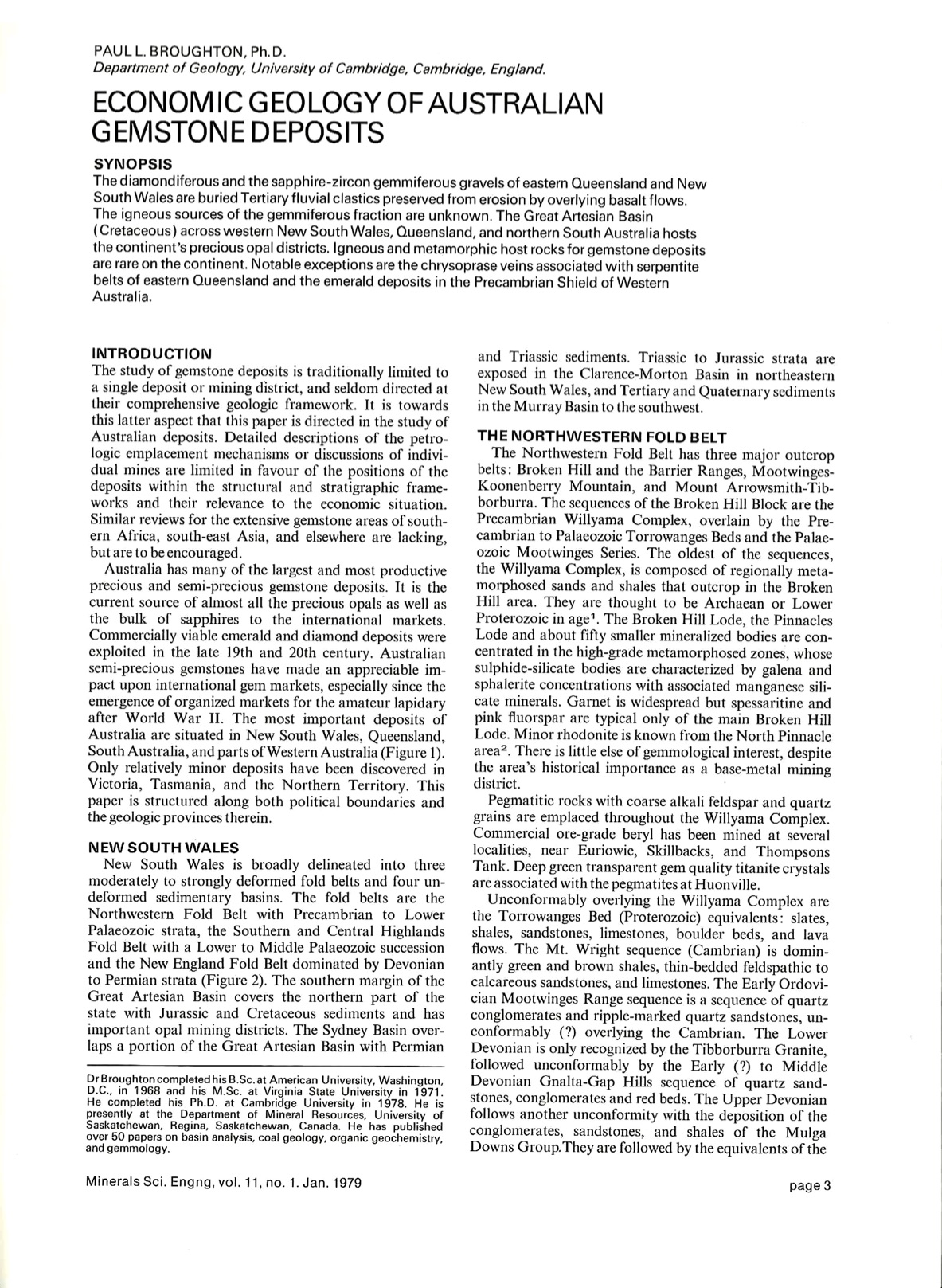
Economic geology of Australian gemstone deposits
Journal Article
Broughton, P.L. (1979) Economic geology of Australian gemstone deposits. Mineral Science and Engineering, Vol. 11, No. 1, pp. 3–21.
Record No. 7447  |  not seen
The diamondiferous and the sapphire-zircon gemmiferous gravels of eastern Queensland and New South Wales are buried Tertiary fluvial clastics preserved from erosion by overlying basalt flows. The igneous sources of the gemmiferous fraction are unknown. The Great Artesian Basin (Cretaceous) across western New South Wales, Queensland, and northern South Australia hosts the continent's precious opal districts. Igneous and metamorphic host rocks for gemstone deposits are rare on the continent. Notable exceptions are the chrysoprase veins associated with serpentite belts of eastern Queensland and the emerald deposits in the Precambrian Shield of Western Australia.

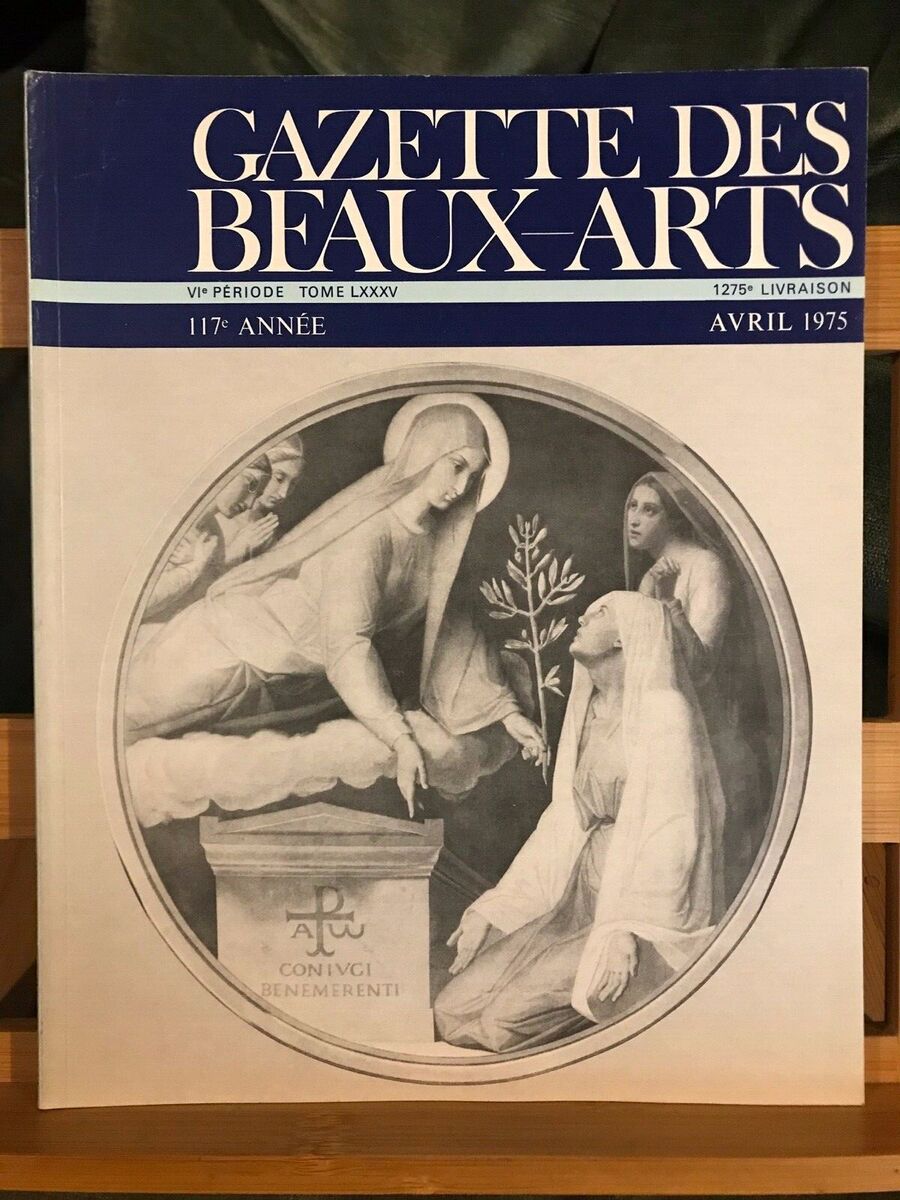
Or, émeraudes et griffons à travers la Patrologie latine
Gold, emeralds, and griffins through the Latin Patrology
Journal Article
Camès, G. (1977) Or, émeraudes et griffons à travers la Patrologie latine. [Gold, emeralds, and griffins through the Latin Patrology] Gazette des Beaux-Arts, Series 6, Vol. 90, No. 119, pp. 105–108.
Record No. 27903  |  Sinkankas/Born No.: NIS/NIB  |  Language: in French  |  not seen
Camès examines references to gold, emeralds, and griffins in the Patrologia Latina, considering their place in medieval Christian literature and symbolism.

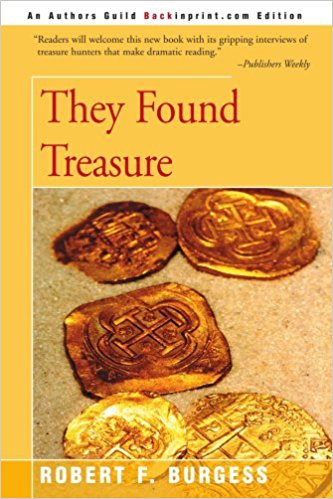
They Found Treasure

Book
Burgess, R.F. (1977) They Found Treasure. New York, NY
Record No. 1969  |  not seen

Smeraldi di Sandawana

Emerald of Sandawana
Journal Article
Gübelin, E.J. (1976) Smeraldi di Sandawana. [Emerald of Sandawana] La Gemmologia, Vol. 2, No. 2, pp. 5–18.
Record No. 29566  |  Sinkankas/Born No.: 2584 (not seen); NIB  |  Language: in Italian  |  not seen

Über die Steine: das 14. Ahmad des Muhammad Ibn Kapitel aus dem Kitab-Mursid" Al-Tamīmī, nach dem Pariser Manuskript herausgegeben, übersetzt und kommentiert"
On Stones: Chapter 14 of the Kitāb al-Murshid of Aḥmad ibn Muḥammad al-Tamīmī, Edited, Translated, and Annotated from the Paris Manuscript.
Book
Schöenfeld, J. (1976) Über die Steine: das 14. Ahmad des Muhammad Ibn Kapitel aus dem Kitab-Mursid" Al-Tamīmī, nach dem Pariser Manuskript herausgegeben, übersetzt und kommentiert". [On Stones: Chapter 14 of the Kitāb al-Murshid of Aḥmad ibn Muḥammad al-Tamīmī, Edited, Translated, and Annotated from the Paris Manuscript.] Freiburg, Klaus Schwarz Verlag, 259 pp.
Record No. 28745  |  Sinkankas/Born No.: 5859 (not seen); NIB  |  Language: in German  |  not seen
Mineralogical and gemological extracts from the large Arabic treatise on medicine and medicaments, based on the Paris manuscript. Schönfeld notes that this pharmacopoeia is “one of many dealing with simple healing materials, which borrow from Greek pharmacopoeias, particularly those of Dioscorides and Galen.” Among its contents are a list of abbreviations, an index to the literature, a biography of al-Tamīmī, descriptions of the manuscripts, orthographic and stylistic peculiarities, a discussion of medicine and magic, and a heavily annotated translation accompanied by the Arabic text. In general, the two classes of stones found in this work are: (1) “eye-healers,” including antimony, pearl, zircon, emerald, carnelian, hematite, coral, lapis lazuli, jet, turquoise, and meerschaum, among others; and (2) personal protective devices incorporating diamond, malachite, bezoar, and other substances. Isis, Critical Bibliography, vol. 69, 1978, p. 64.

Das Smaragd-Alexandritvorkommen von Lake Manyara/Tansania
The emerald-alexandrite deposit of Lake Manyara/Tanzania
Journal Article
Gübelin, E.J. (1976) Das Smaragd-Alexandritvorkommen von Lake Manyara/Tansania. [The emerald-alexandrite deposit of Lake Manyara/Tanzania] Zeitschrift der Deutschen Gemmologischen Gesellschaft, Vol. 25, No. 3, pp. 130–147.
Record No. 2120  |  Sinkankas/Born No.: NIS/NIB  |  Language: in German  |  not seen
Gübelin discusses the emerald and alexandrite occurrence at Lake Manyara in Tanzania, where chromium-bearing beryl and chrysoberyl occur together in the same gem-producing area. The paper concerns the geological and mineralogical character of the deposit and the properties of its emerald and alexandrite.

Synthetic emerald: the confusing history and the current technologies

Journal Article
Nassau, K. (1976) Synthetic emerald: the confusing history and the current technologies. Journal of Crystal Growth, Vol. 35, No. 2, pp. 211–222.
Record No. 1999  |  not seen
Two techniques, flux and hydrothermal, have been used to grow emerald crystals, and various solvents have been employed. The lithium molybdate flux technique originated with Hautefeuille and Perrey in 1888 and was independently brought to feasibility by Nacken and at I.G.-Farben. This technique has proved to be commercially viable in the hands of Chatham and Gilson, who both perfected their processes independently of the Nacken and I.G.-Farben work, as well as of each other. Hydrothermal work culminated in the success of Flanigen and others at Linde, who found two acid mineralizers which gave satisfactory emerald growth; this process has not been commercially viable. Other crystal growth approaches of less significance are also discussed. Much confusion has existed because several flux techniques have in the past been misidentified as hydrothermal (there is, in fact, no evidence that even Nacken ever grew hydrothermal emerald) and some techniques claimed to produce crystals probably only yielded emerald glass, an inferior product. This account is based on original research, on an extensive literature search, as well as on many personal interviews. It is intended to clarify the confusing record as well as to present what is known about the current technology of gem emerald synthesis.

Exploring the Literature of Emerald

Emerald literature spans gemology, mineralogy, deposits, identification, treatments, synthesis, history and the gem trade, with important sources covering deposits around the world.

For a curated guide to this subject, read Green Fire — Lotus Gemology's Guide to the Literature of Emerald.

About Four Treasures

Four Treasures is Lotus Gemology's freely accessible gemological reference database. Use the full database to search by author, title or keyword and explore literature on gemology, mineralogy, jewelry and related fields. Where available, hyperlinks on titles may lead directly to the full publication.

Search the Complete Four Treasures Database