Treated Sapphire Inclusions
Explore treated sapphire inclusions in Hyperion, the Lotus Gemology inclusion database. Hyperion contains photomicrographs of inclusions and internal features in natural sapphires that have undergone treatment, documented with information on geographic origin, treatment, lighting conditions, field of view, photographer and published references.
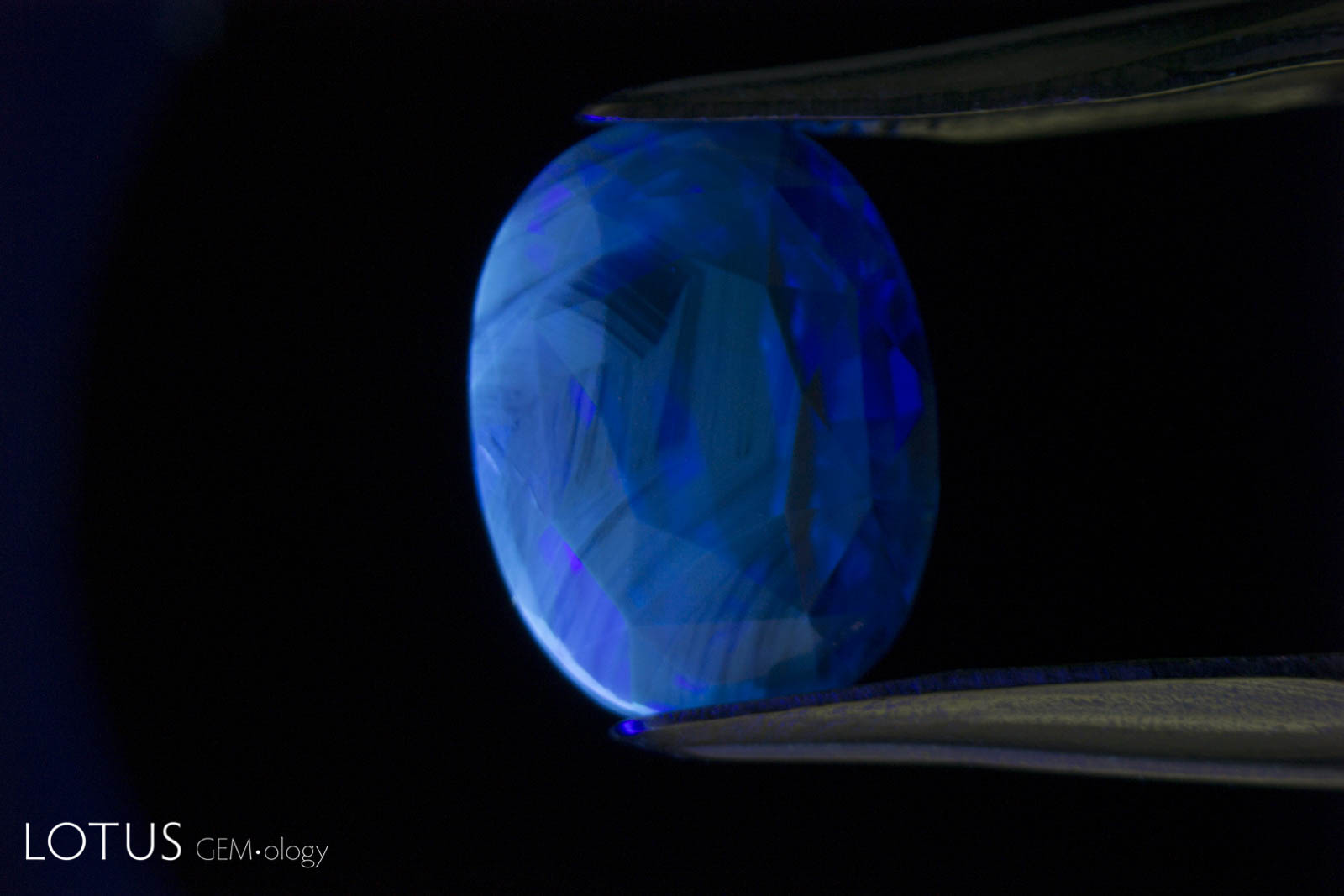
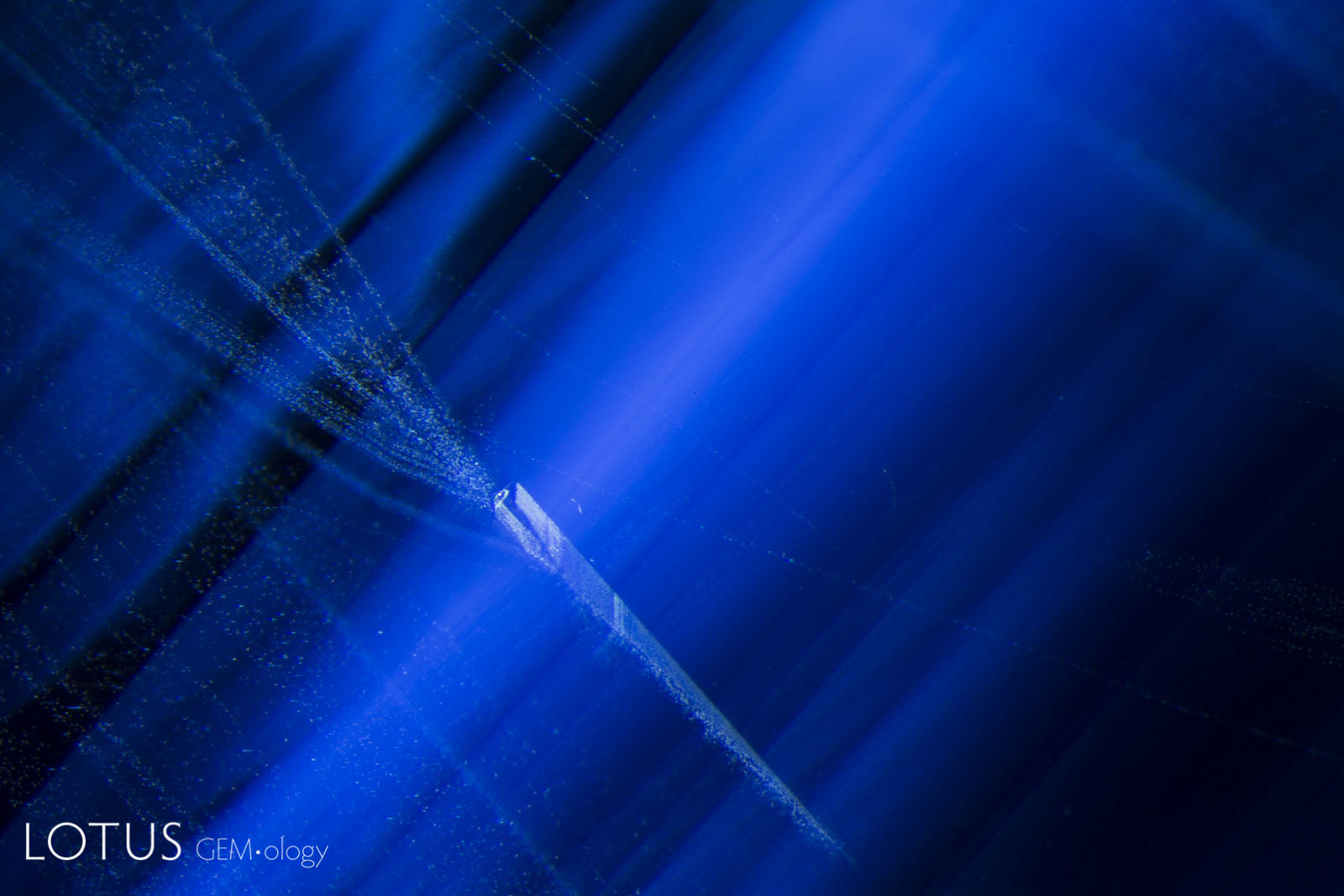
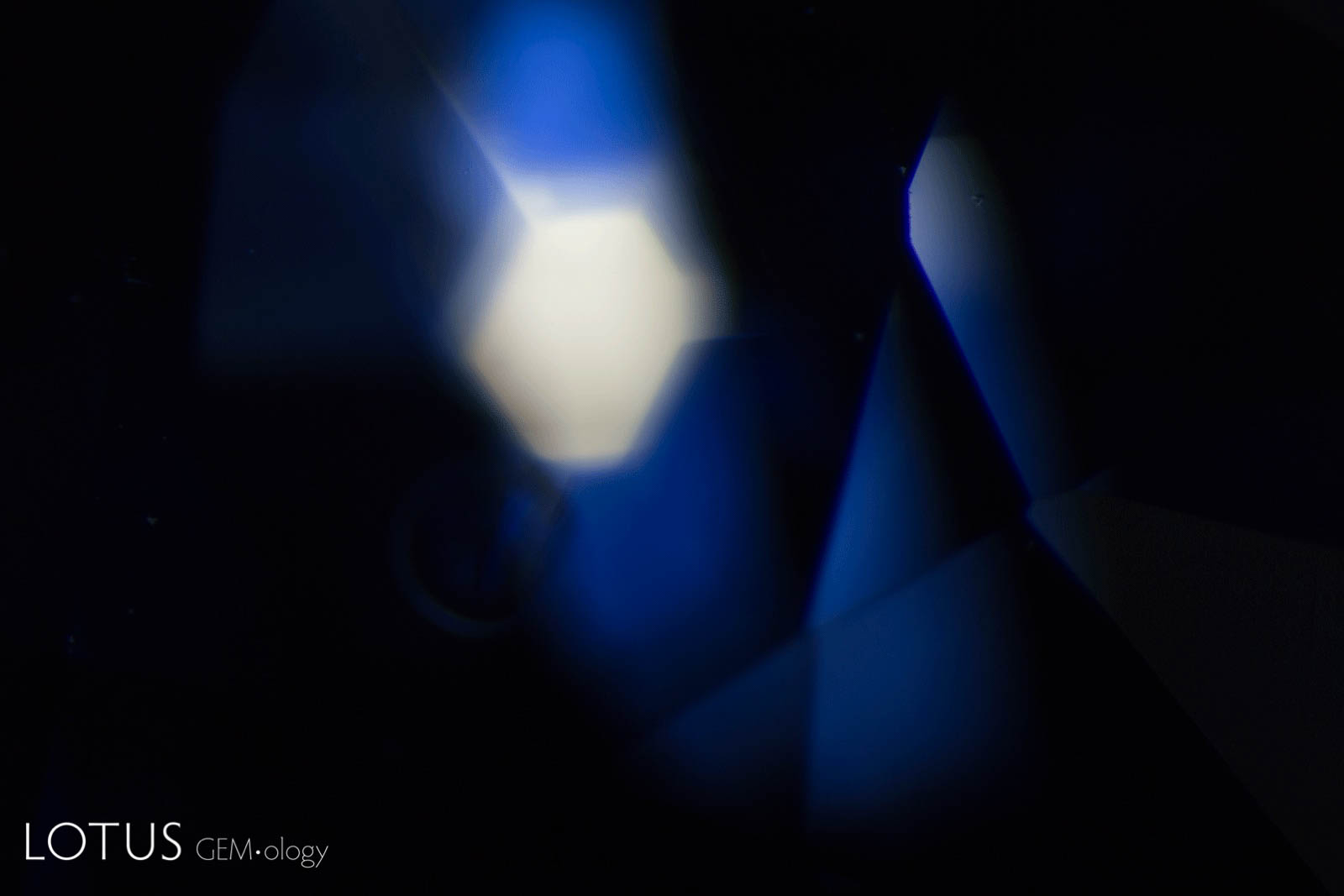
Pink sapphires from Sri Lanka are routinely heated at relatively low temperatures (>1200°C) to drive off the blue tint. While this rarely changes the inclusions, it can be unmasked by reference to the shortwave ultraviolet fluorescence, which often develops chalky zones, as shown in this stone.
Natural Sapphire •
Sri Lanka (Ceylon) •
Enhancements:
Heat (H) •
Lighting Conditions:
Ultraviolet: Shortwave
Photographer:
Richard W. Hughes •
Image Number:
A-001-0957-1
Hughes, R.W. and Emmett, J.L. (2005) Heat Seeker: UV fluorescence as a gemological tool. The Guide, Vol. 24, No. 5, Part 1, Sept.–Oct., pp. 1, 4–7; RWHL*.
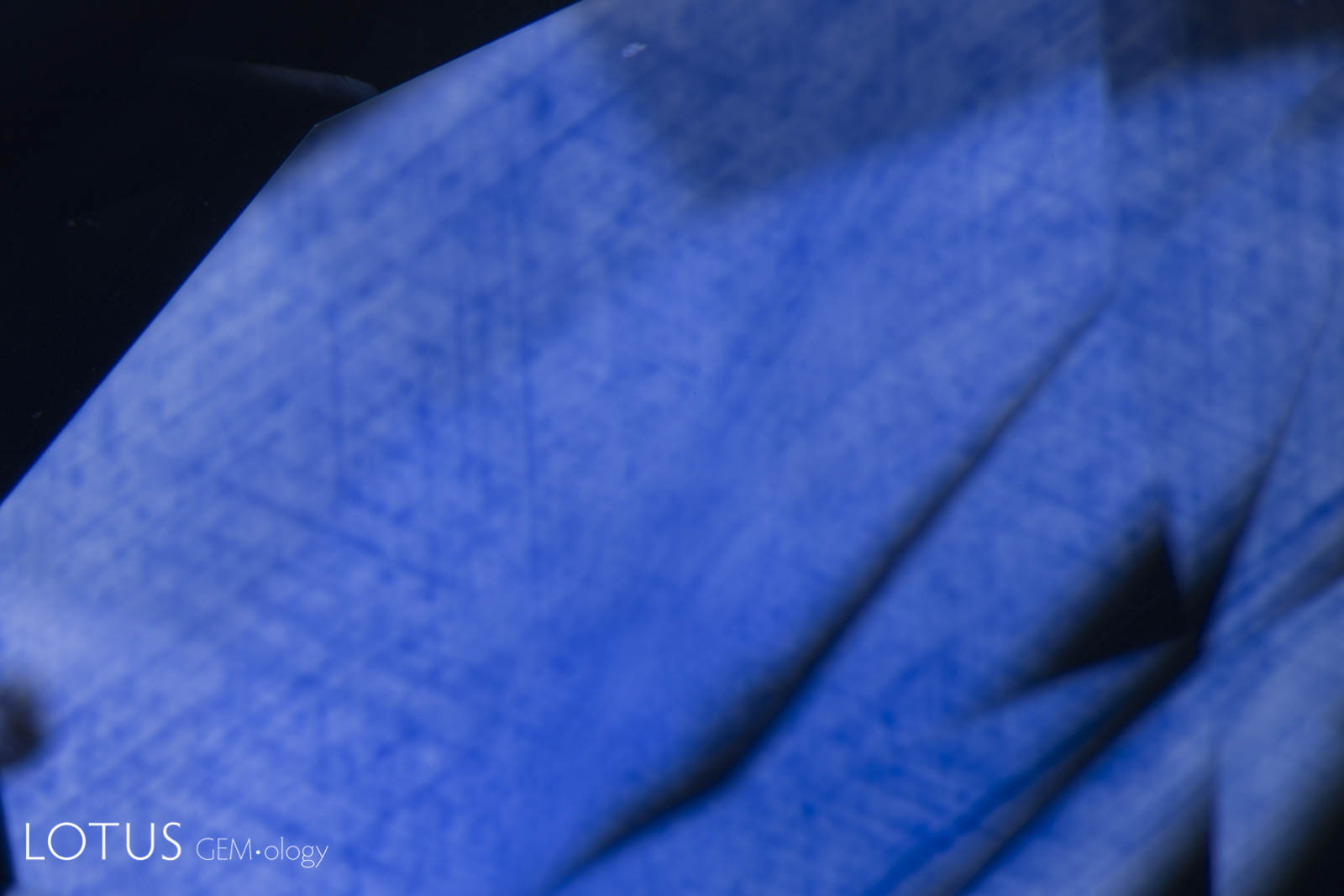
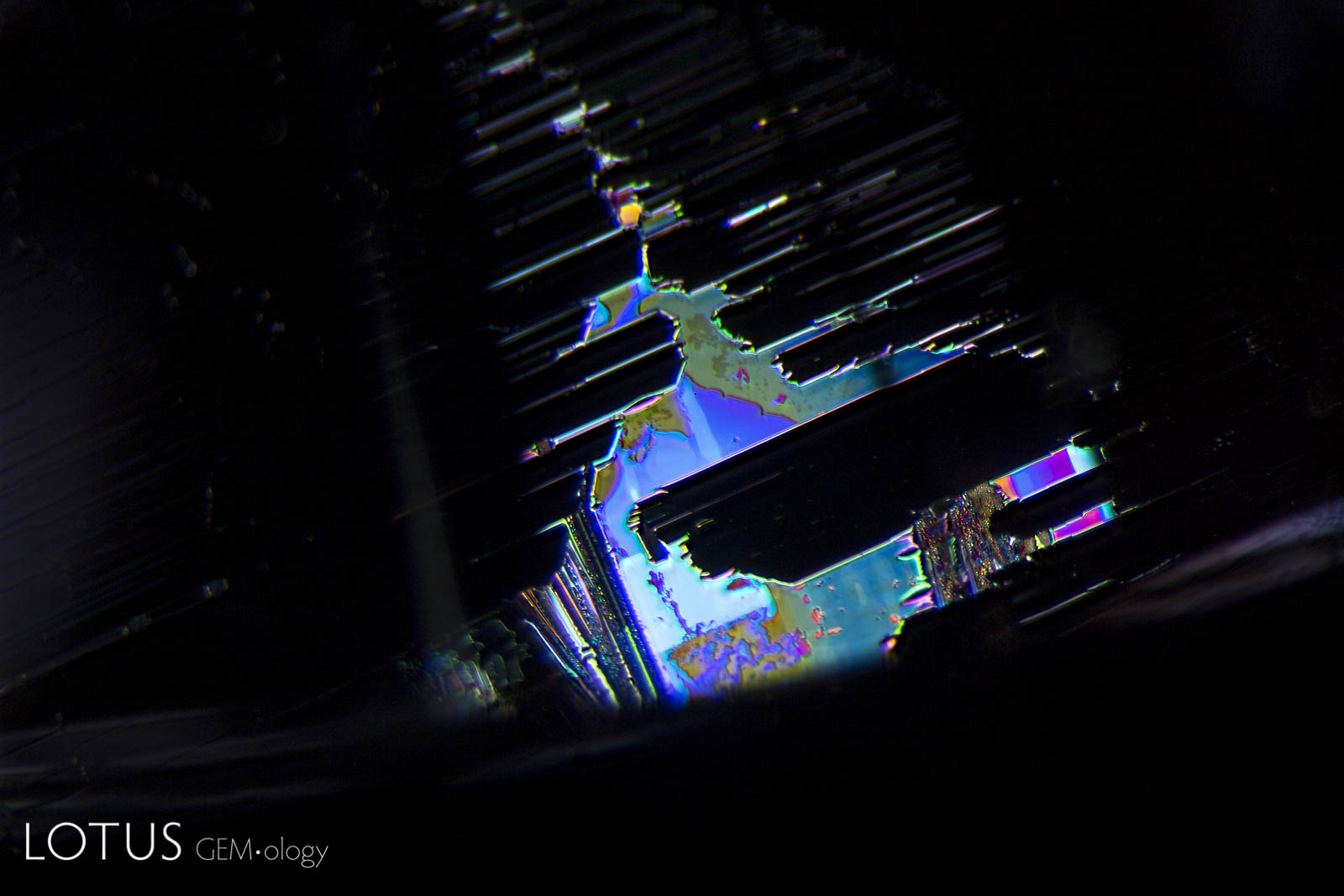
When low-iron sapphires are heat treated, a chalky shortwave fluorescence often develops. This generally is related to colorless or lightly colored regions of the gem, and so follows the crystallographic structure, as is seen here. This is strong evidence of heat treatment.
Natural Sapphire •
Sri Lanka (Ceylon) •
Enhancements:
Heat (H) •
Lighting Conditions:
Ultraviolet: Shortwave
Photographer:
E. Billie Hughes •
Image Number:
A-001-1014-1
Hughes, R.W. and Emmett, J.L. (2005) Heat Seeker: UV fluorescence as a gemological tool. The Guide, Vol. 24, No. 5, Part 1, Sept.–Oct., pp. 1, 4–7; RWHL*.
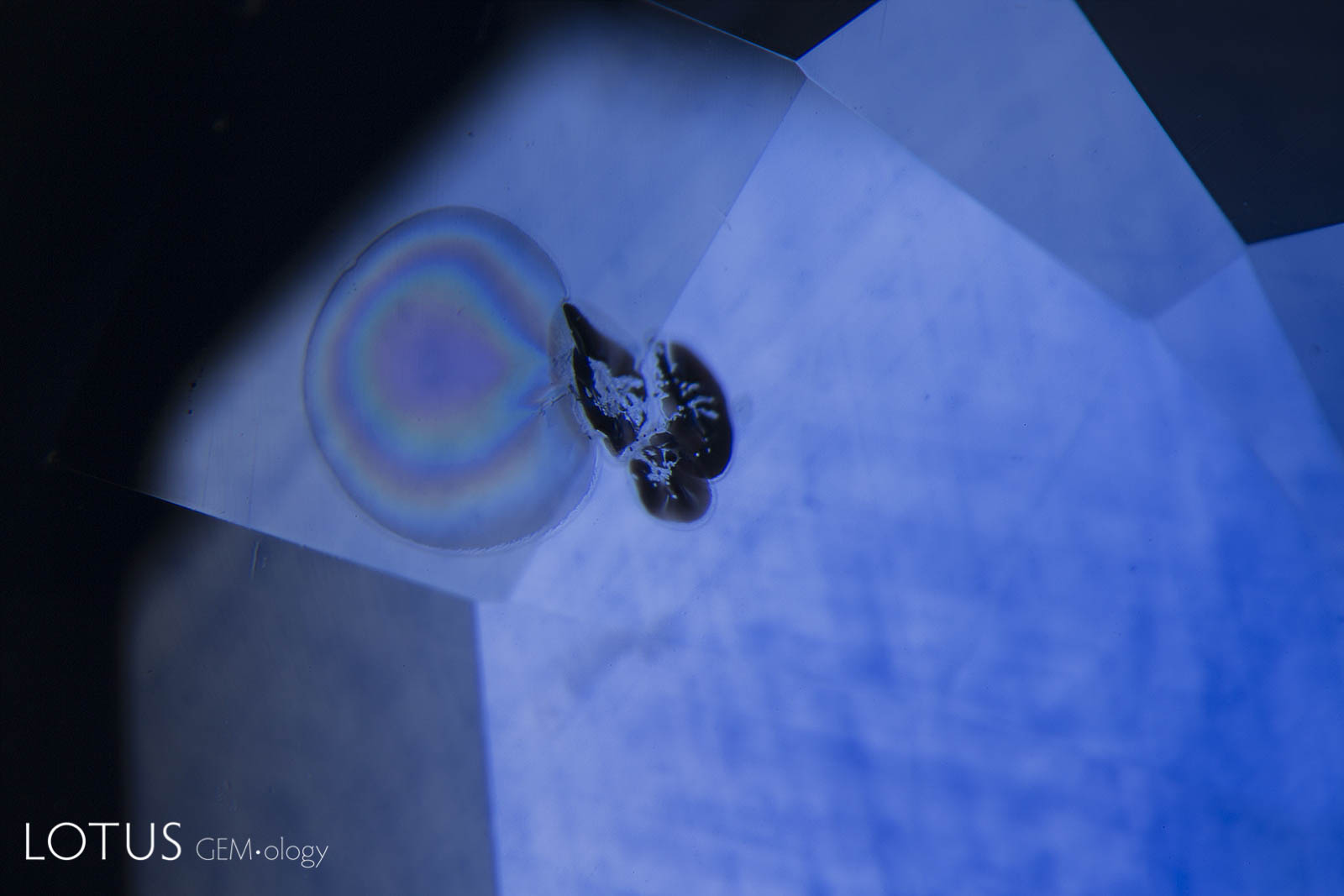
When a rutile-silk containing sapphire (such as this stone from Sri Lanka) is heated, the titanium from the rutile moves into solid solution in the sapphire, coloring the area around the rutile blue, creating a distinctive “ink spot” internal diffusion pattern.
Natural Sapphire •
Sri Lanka (Ceylon) •
Enhancements:
Heat (H) •
Lighting Conditions:
Light Field + Oblique Fiber Optic
Photographer:
Richard W. Hughes •
Image Number:
A-001-0988-2
Koivula, J.I. (1987) Internal diffusion. Journal of Gemmology, Vol. 20, No. 7/8, pp. 474–477; RWHL*.
When a rutile-silk containing sapphire (such as this stone from Sri Lanka) is heated, the titanium from the rutile moves into solid solution in the sapphire, coloring the area around the rutile blue, creating a distinctive “ink spot” internal diffusion pattern.
Natural Sapphire •
Sri Lanka (Ceylon) •
Enhancements:
Heat (H) •
Lighting Conditions:
Light Field + Oblique Fiber Optic
Photographer:
Richard W. Hughes •
Image Number:
A-001-0988-1
Koivula, J.I. (1987) Internal diffusion. Journal of Gemmology, Vol. 20, No. 7/8, pp. 474–477; RWHL*.
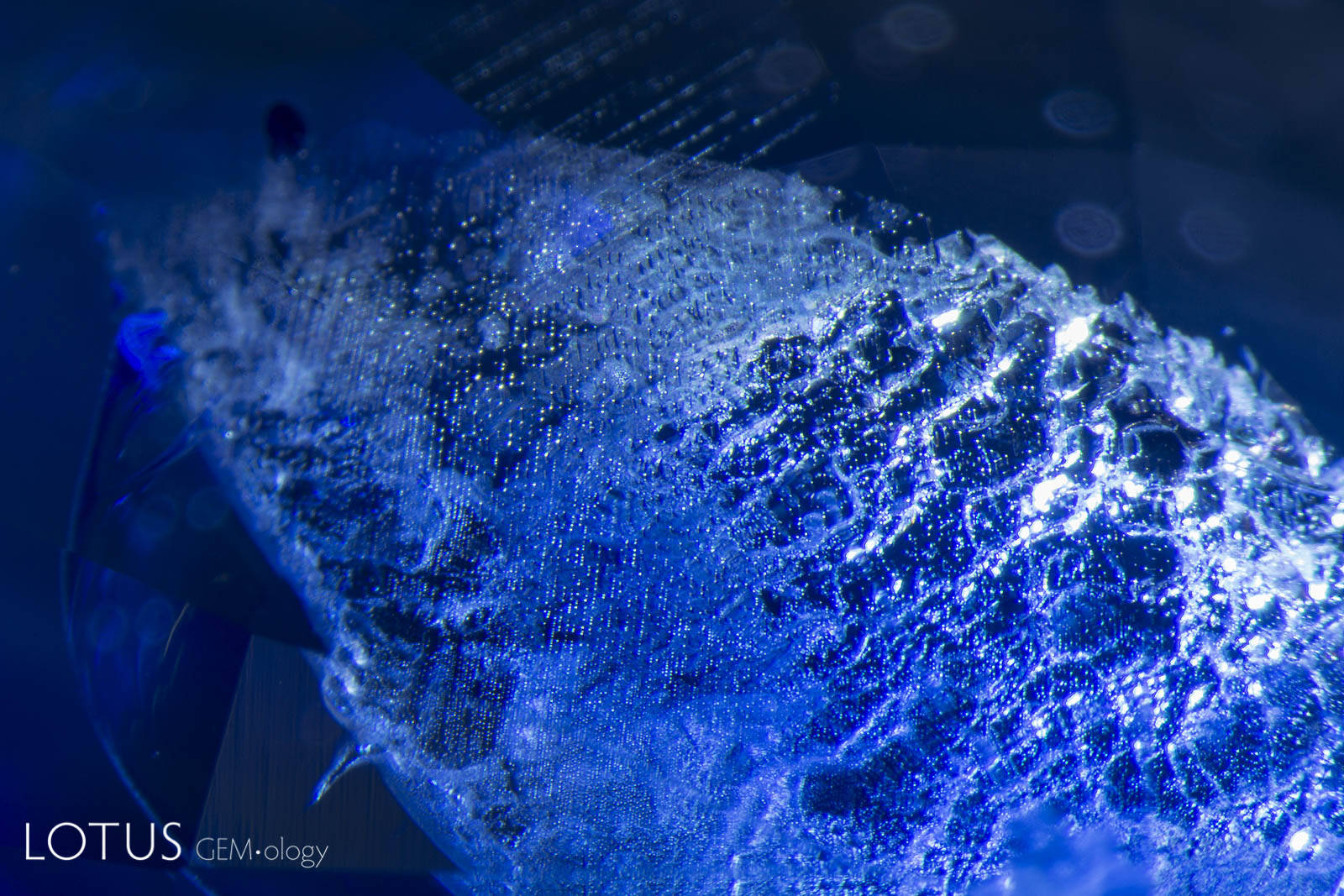
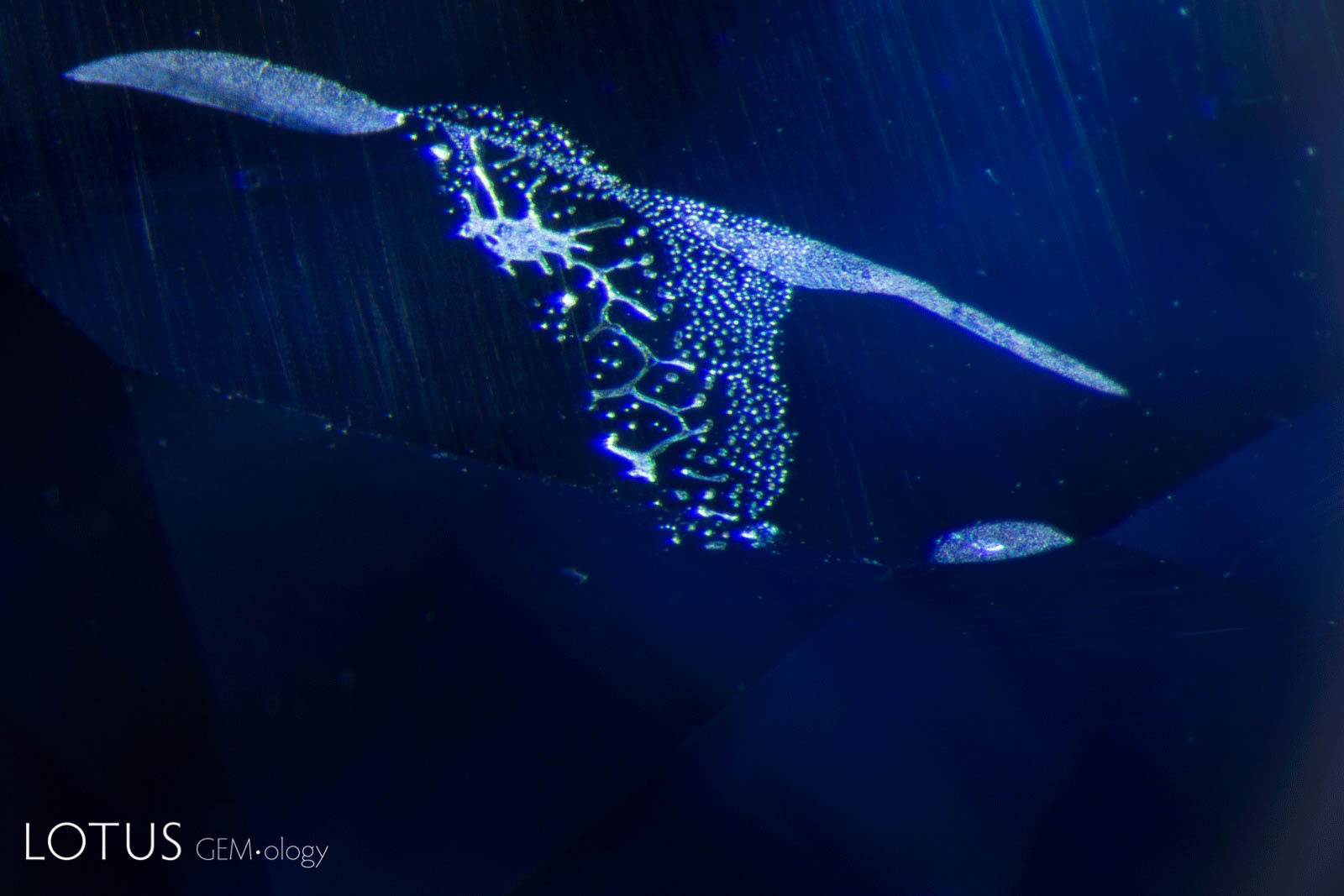
Fingerprints are made up of tiny negative crystals. This often contain carbon dioxide and were formed at depth under high pressure. When the gem reaches the surface, the pressure pushing out can be quite large. Thus they are particularly heat sensitive and often burst if the gem is heat treated. Here we can see what happens when such a fingerprint is subjected to heat treatment. Each tiny negative crystal bursts, creating a series of microfractures.
Natural Sapphire •
Sri Lanka (Ceylon) •
Enhancements:
Heat (H) •
Lighting Conditions:
Fiber Optic: Oblique
Photographer:
Richard W. Hughes •
Image Number:
A-001-0974-1
Koivula, J.I. (1986) Carbon dioxide fluid inclusions as proof of natural-colored corundum. Gems & Gemology, Vol. 22, No. 3, pp. 152–155; RWHL*.
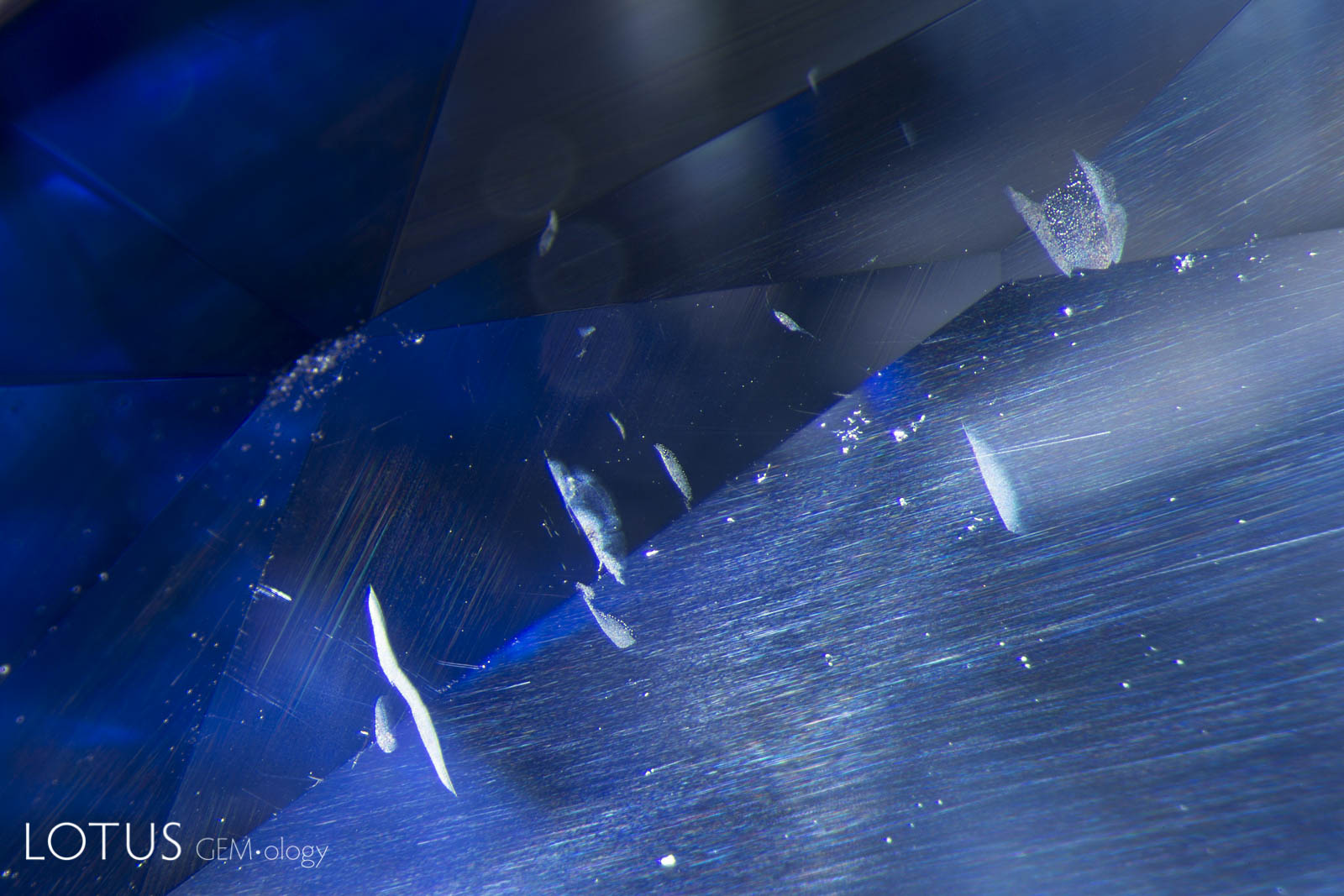
Many crystals contain shallow fissures on their surfaces. In sapphires from Sri Lanka, Myanmar and Madagascar, these fissures often contain yellow stains. High-temperature heating not only destroys the yellow stains, but begins a process of healing, where the fissures turn white and start forming fingerprints, as we can see here.
Natural Sapphire •
Sri Lanka (Ceylon) •
Enhancements:
Heat (H) •
Lighting Conditions:
Fiber Optic: Oblique
Photographer:
Richard W. Hughes •
Image Number:
A-001-0977-1
Hughes, R.W., Manorotkul, W. et al. (2017) Ruby & Sapphire: A Gemologist's Guide. Bangkok, Lotus Publishing, 816 pp.; RWHL*.
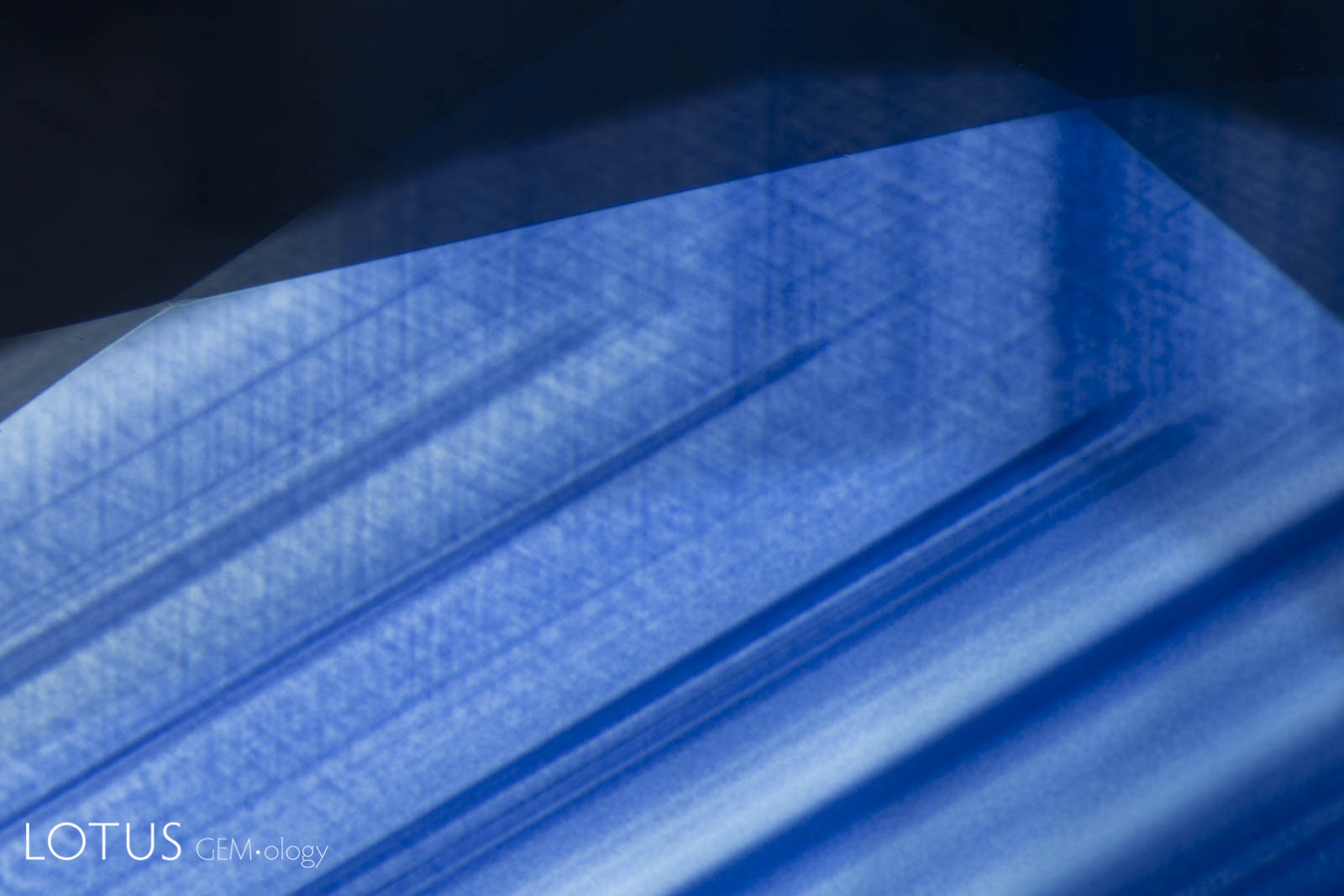
When a rutile-silk containing sapphire (such as this stone from Kanchanaburi, Thailand) is heated, the titanium from the rutile moves into solid solution in the sapphire, coloring the area around the rutile blue, creating a distinctive “ink spot” internal diffusion pattern.
Natural Sapphire •
Thailand (Siam); Bo Ploi •
Enhancements:
Heat (H) •
Lighting Conditions:
Diffuse Light Field (Transmitted Light)
Photographer:
E. Billie Hughes •
Image Number:
A-001-0859-1
Koivula, J.I. (1987) Internal diffusion. Journal of Gemmology, Vol. 20, No. 7/8, pp. 474–477; RWHL*.
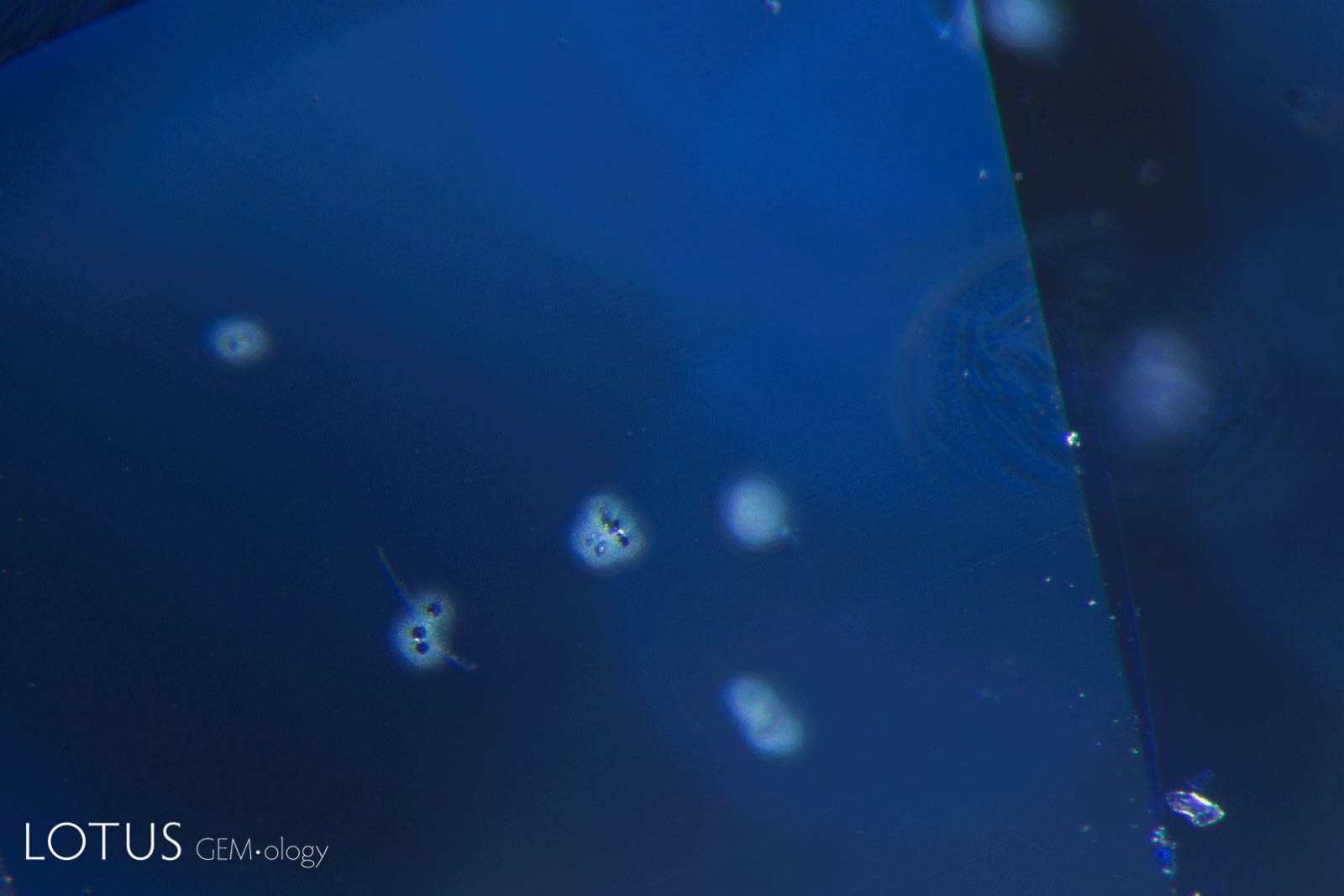
Heat-altered “snowball” like crystals in a heat-treated sapphire from Sri Lanka.
Natural Sapphire •
Sri Lanka (Ceylon) •
Enhancements:
Heat (H) •
Lighting Conditions:
Fiber Optic: Oblique
Photographer:
Richard W. Hughes •
Image Number:
A-001-0737-1
Nassau, K. (1981) Heat treating ruby and sapphire: Technical aspects. Gems & Gemology, Vol. 17, No. 3, pp. 121–131; RWHL*.
Gübelin, E.J. and Koivula, J.I. (2005) Photoatlas of Inclusions in Gemstones, Volume 3. Basel, Switzerland, Opinio Publishers, 672 pp.; RWHL*.
249 Total Images
Results: 217 – 228 | Page 19 of 21 Pages
Treatment can alter existing inclusions and produce new microscopic features in sapphire. These may include changes to mineral inclusions, altered rutile silk, tension fractures, healed fissures, residues and other features associated with heating, diffusion, fissure filling and other treatment processes.
Treated Sapphire Inclusion Photomicrographs
The Hyperion treated sapphire gallery includes microscopic features documented in natural sapphires subjected to treatment. Each entry identifies the recorded treatment and is accompanied by descriptive information and, where available, references to the gemological literature.
What Inclusions Can Reveal About Sapphire Treatment
Microscopic examination is an important part of detecting treatment in sapphire. The appearance and alteration of inclusions, fractures and growth features can provide evidence of treatment and, in some cases, information about the processes to which a sapphire has been subjected.
Hyperion combines inclusion photomicrography with supporting gemological information so that treatment-related features can be compared with documented examples in natural sapphire.
About Hyperion
Hyperion is the Lotus Gemology searchable inclusion database. It allows users to browse gemstone inclusions by gem type, geographic origin, treatment and keyword.
Search the Complete Hyperion Database