Treated Sapphire Inclusions
Explore treated sapphire inclusions in Hyperion, the Lotus Gemology inclusion database. Hyperion contains photomicrographs of inclusions and internal features in natural sapphires that have undergone treatment, documented with information on geographic origin, treatment, lighting conditions, field of view, photographer and published references.
Red-orange crystals shoot through this Pailin (Cambodia) sapphire. Once considered unique to Pailin sapphire, we now know that such uranopyrochlore inclusions are found in sapphires from many sources.
Natural Sapphire •
Cambodia; Pailin •
Enhancements:
Heat (H) •
Lighting Conditions:
Dark Field + Oblique Fiber Optic
Photographer:
E. Billie Hughes •
Image Number:
A-001-8453-2
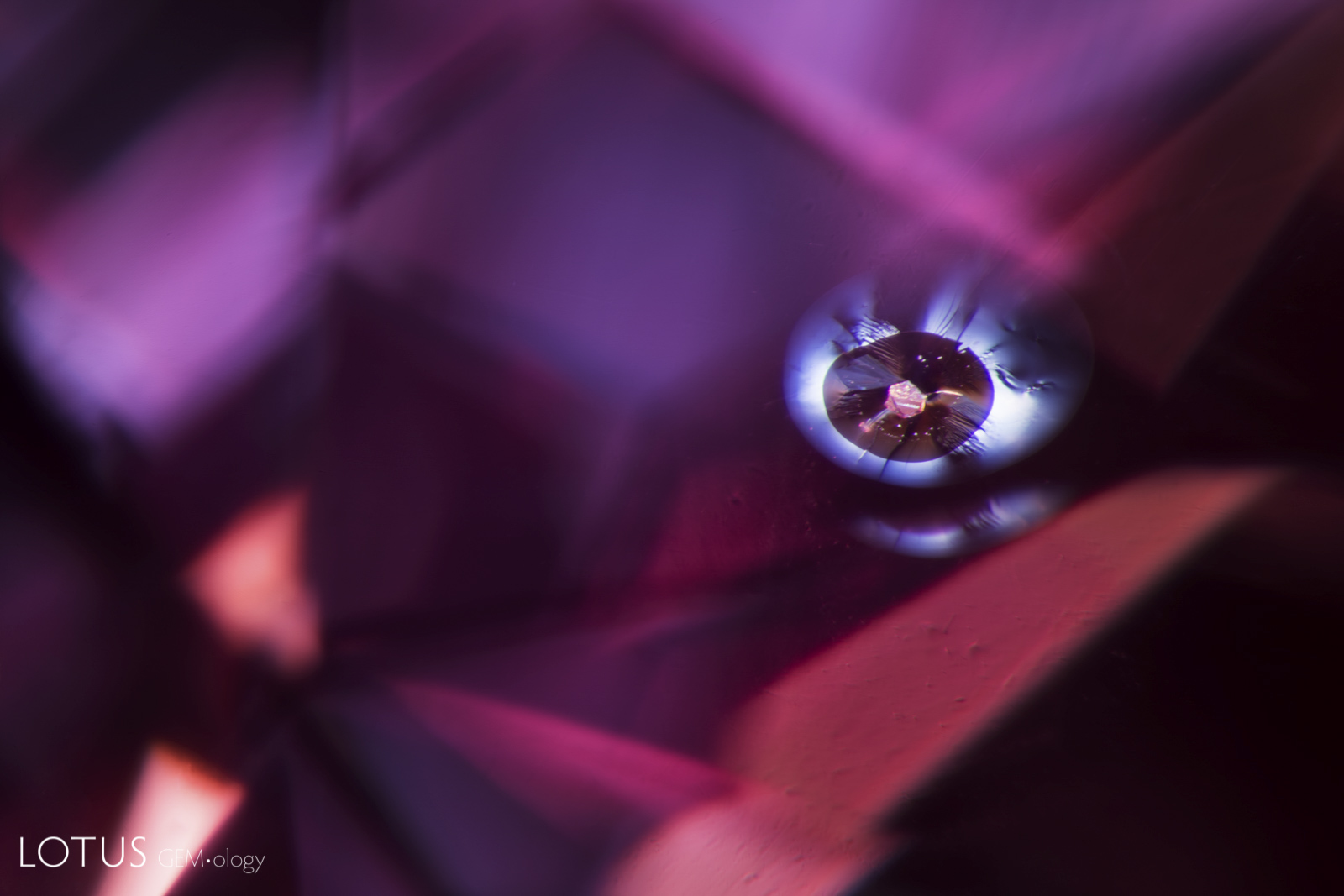
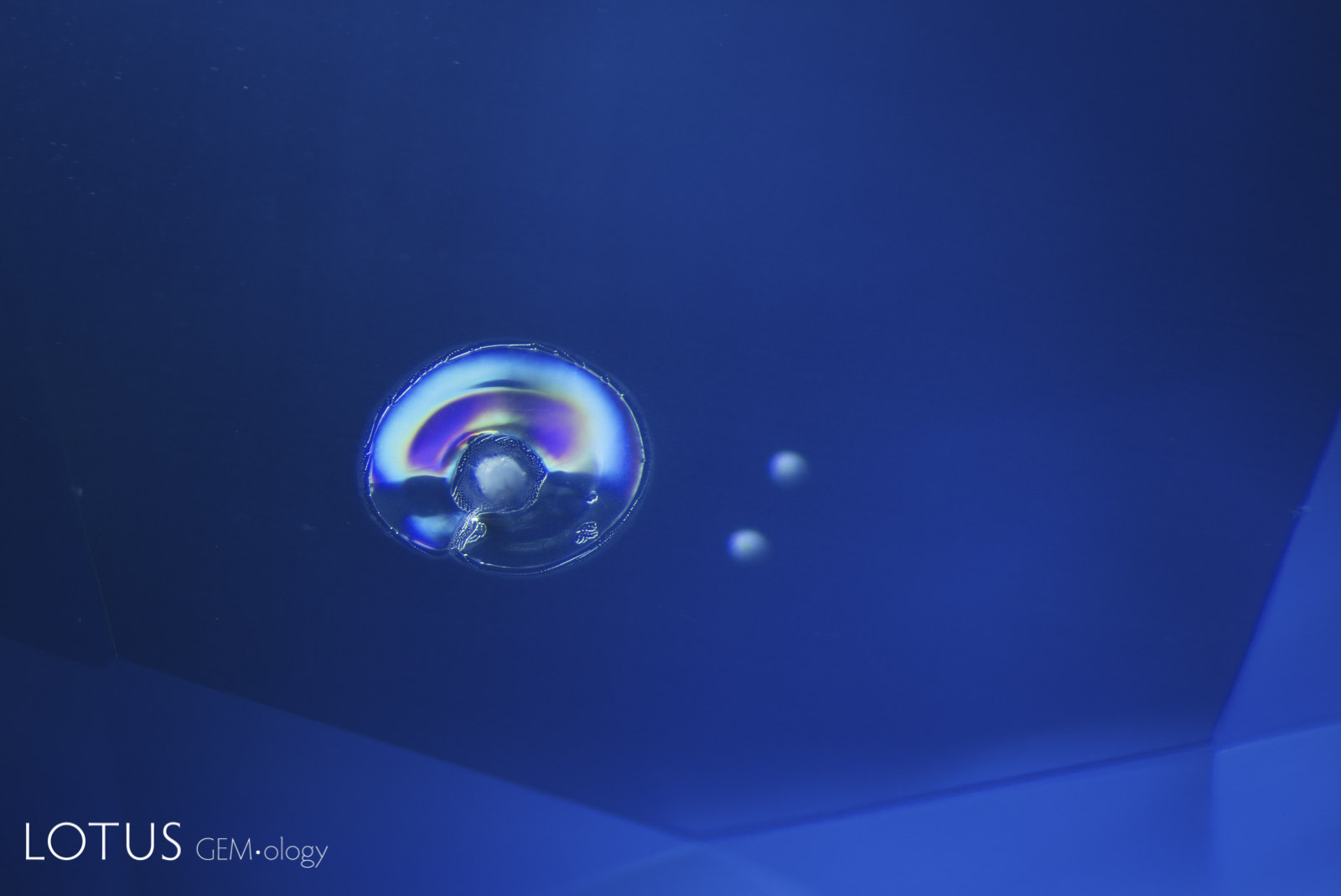
A glassy discoid around this mica crystals suggests that its pink sapphire host was heat treated.
Natural Sapphire •
Madagascar •
Enhancements:
Heat (H) •
Lighting Conditions:
Dark Field + Diffuse Fiber Optic
Photographer:
E. Billie Hughes •
Image Number:
A-002-1531-1
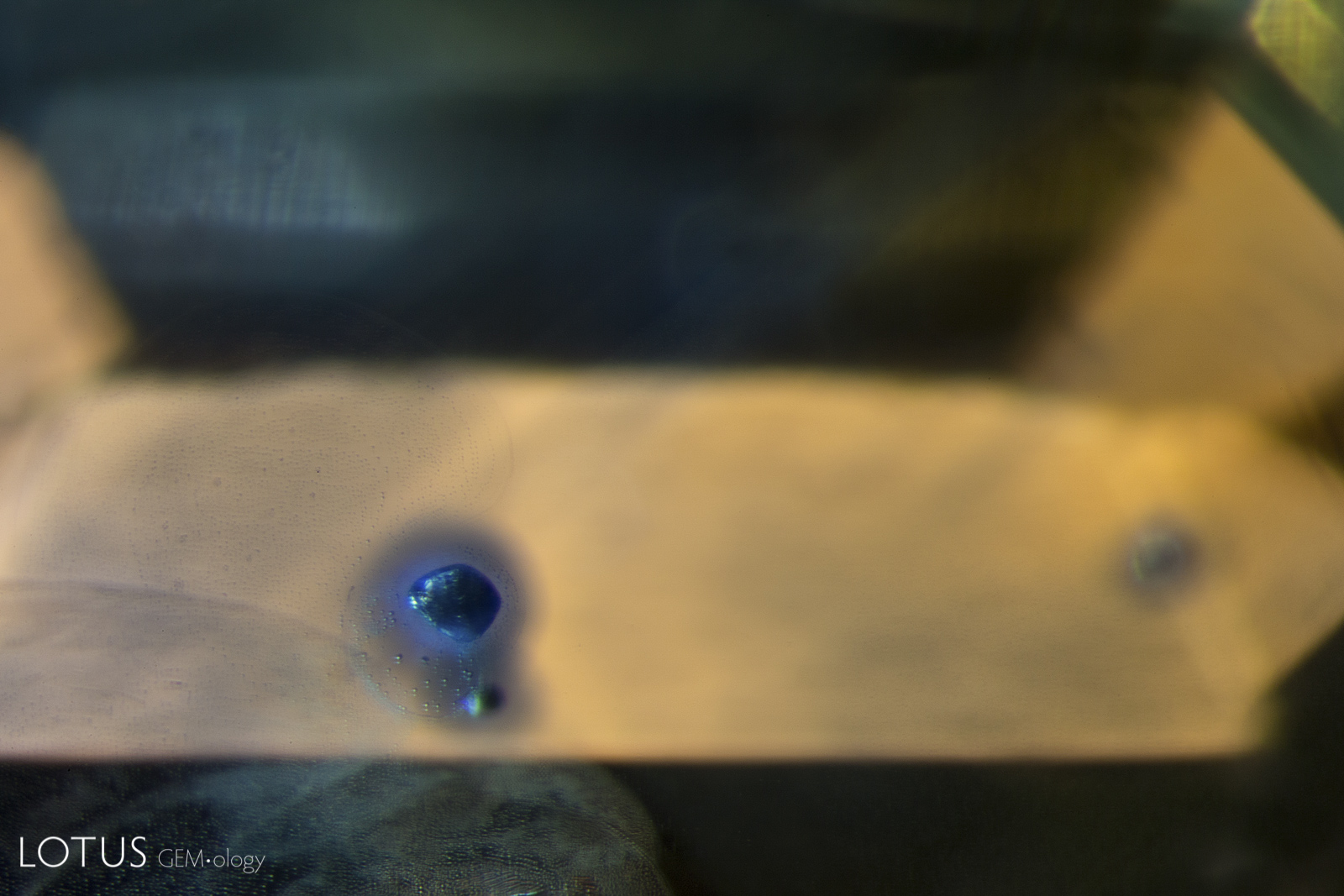
Internal diffusion caused by the heat treatment of a titanium-bearing crystal in a Malawi sapphire.
Natural Sapphire •
Malawi •
Enhancements:
Heat (H) •
Lighting Conditions:
Dark Field + Oblique Fiber Optic
Photographer:
E. Billie Hughes •
Image Number:
R-001-5756-1
Koivula, J.I. (1987) Internal diffusion. Journal of Gemmology, Vol. 20, No. 7/8, pp. 474–477; RWHL*.
Internal diffusion caused by heat treatment of a titanium-bearing crystal causes the blue color concentration in this Malawi sapphire.
Natural Sapphire •
Malawi •
Enhancements:
Heat (H) •
Lighting Conditions:
Dark Field + Diffuse Fiber Optic
Photographer:
E. Billie Hughes •
Image Number:
R-001-5741-1
Koivula, J.I. (1987) Internal diffusion. Journal of Gemmology, Vol. 20, No. 7/8, pp. 474–477; RWHL*.
This pale sapphire has been soaked in blue dye to deepen its color. Under the microscope one can clearly see the blue stains in the fissures.
Natural Sapphire •
Thailand (Siam) •
Enhancements:
Fissure Filling with Dyed Filler (FF-DF2) •
Lighting Conditions:
Dark Field + Shadowing
Photographer:
E. Billie Hughes •
Image Number:
R-001-5737-1
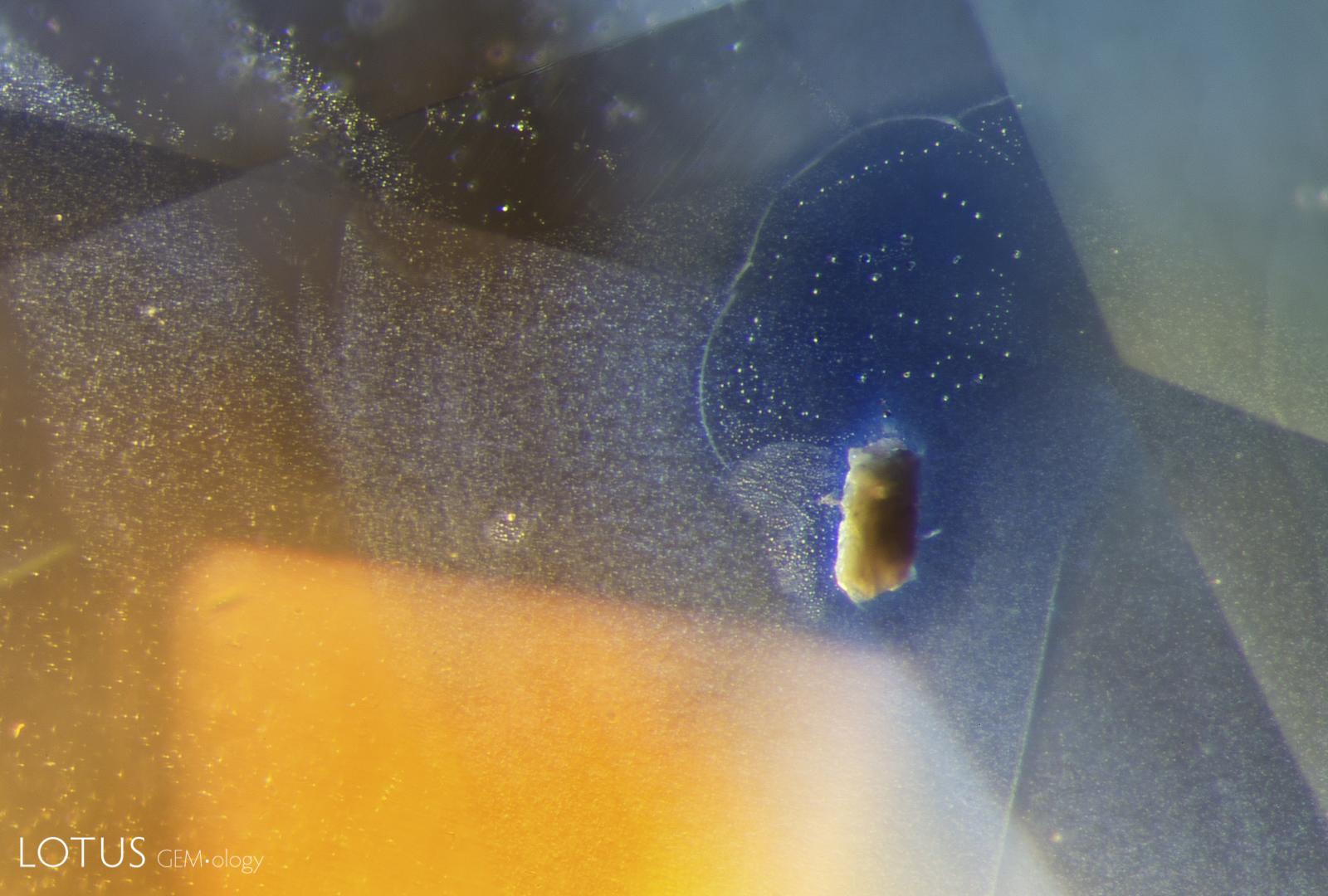
“Ink spot internal diffusion” surrounding partially resorbed rutile silk indicates that this stone has been heated. During treatment, the rutile dissolves, sending titanium into solution, thus coloring the stone blue around the silk.
Natural Sapphire •
Sri Lanka (Ceylon) •
Enhancements:
Heat (H) •
Lighting Conditions:
Diffuse Light Field (Transmitted Light)
Photographer:
Patharaphum Sudprasert •
Image Number:
A-002-1566-1
Koivula, J.I. (1987) Internal diffusion. Journal of Gemmology, Vol. 20, No. 7/8, pp. 474–477; RWHL*.
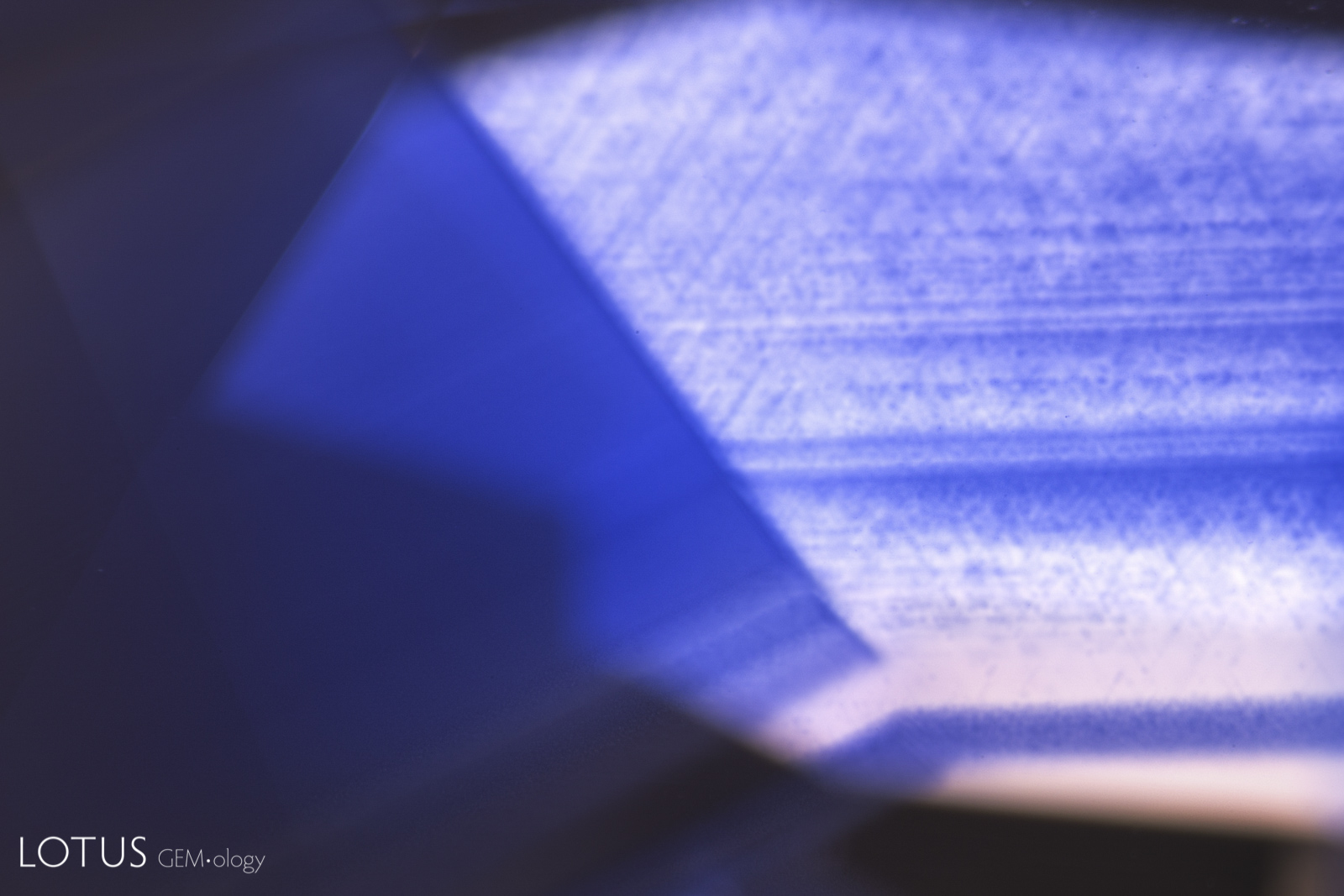
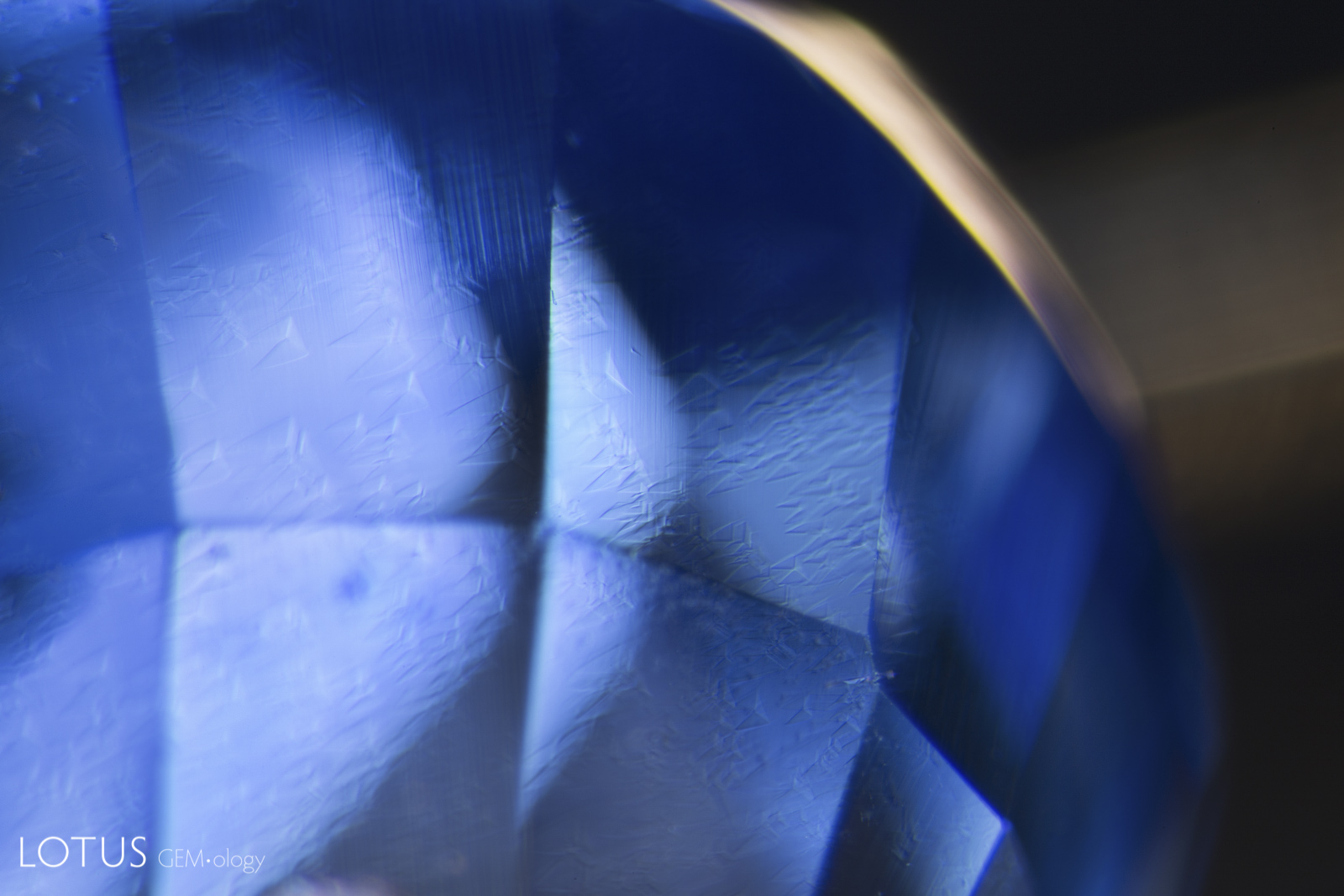
Triangular growth zoning in a Madagascar sapphire. Milky regions contrasting with deep blue zones are common in Madagascar sapphire.
Natural Sapphire •
Madagascar •
Enhancements:
Heat (H) •
Lighting Conditions:
Dark Field + Oblique Fiber Optic
Photographer:
Patharaphum Sudprasert •
Image Number:
A-001-9419-1
These melted snowball crystals with glassy discoids provide evidence of heat treatment in this Sri Lanka sapphire.
Natural Sapphire •
Sri Lanka (Ceylon) •
Enhancements:
Heat (H) •
Lighting Conditions:
Fiber Optic: Diffuse Oblique
Photographer:
E. Billie Hughes •
Image Number:
A-001-7683-2
These melted snowball crystals with glassy discoids provide evidence of heat treatment in this Sri Lanka sapphire.
Natural Sapphire •
Sri Lanka (Ceylon) •
Enhancements:
Heat (H) •
Lighting Conditions:
Fiber Optic: Diffuse Oblique
Photographer:
E. Billie Hughes •
Image Number:
A-001-7683-1
Melted crystals surrounded by heat-altered fingerprints in a heat-treated Madagascar sapphire.
Natural Sapphire •
Madagascar •
Enhancements:
Heat (H) •
Lighting Conditions:
Diffuse Light Field + Fiber Optic
Photographer:
Patharaphum Sudprasert •
Image Number:
A-001-8832-1
Hughes, R.W. (1997) Ruby & Sapphire. Boulder, CO, RWH Publishing, 512 pp.; RWHL*.
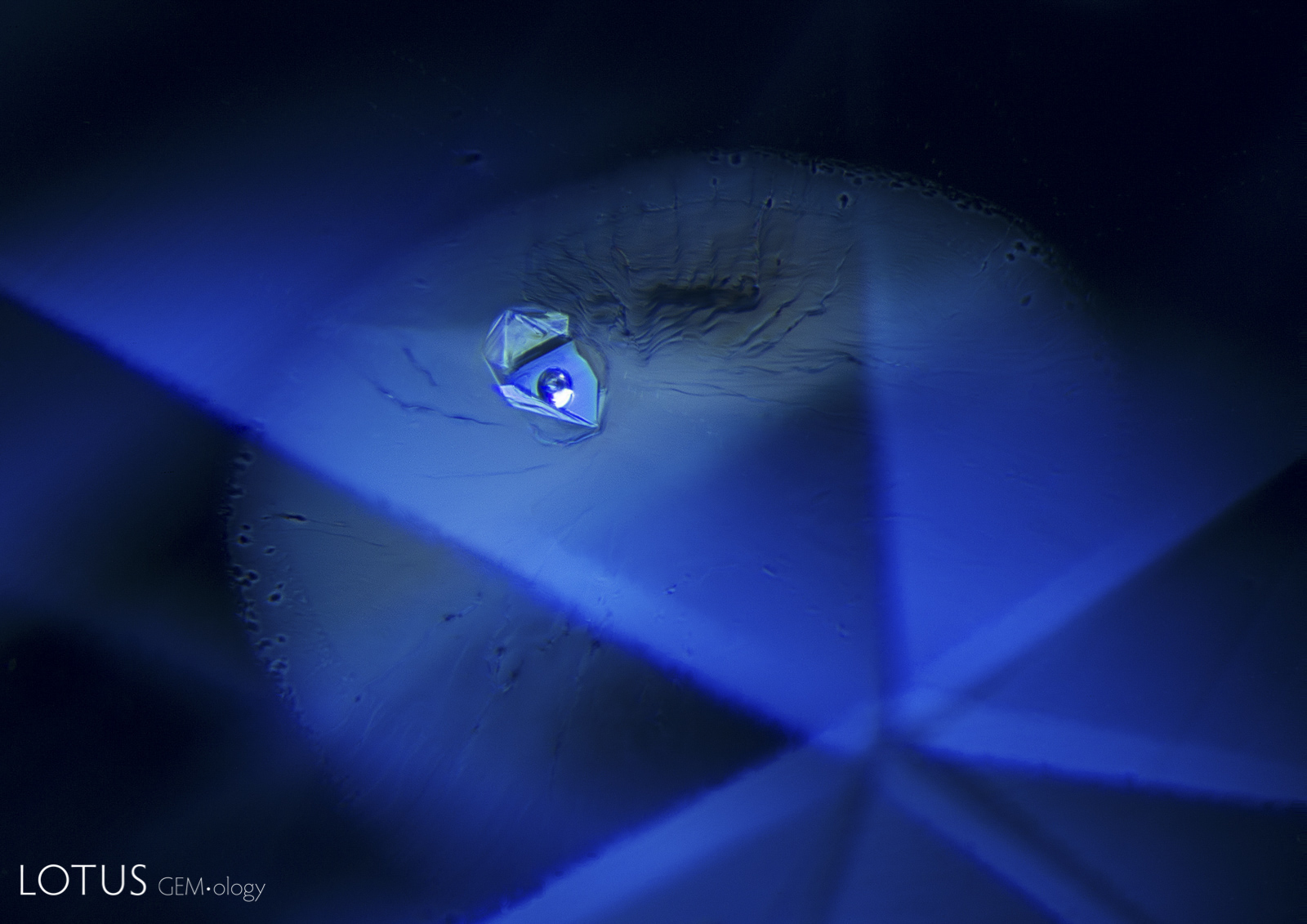
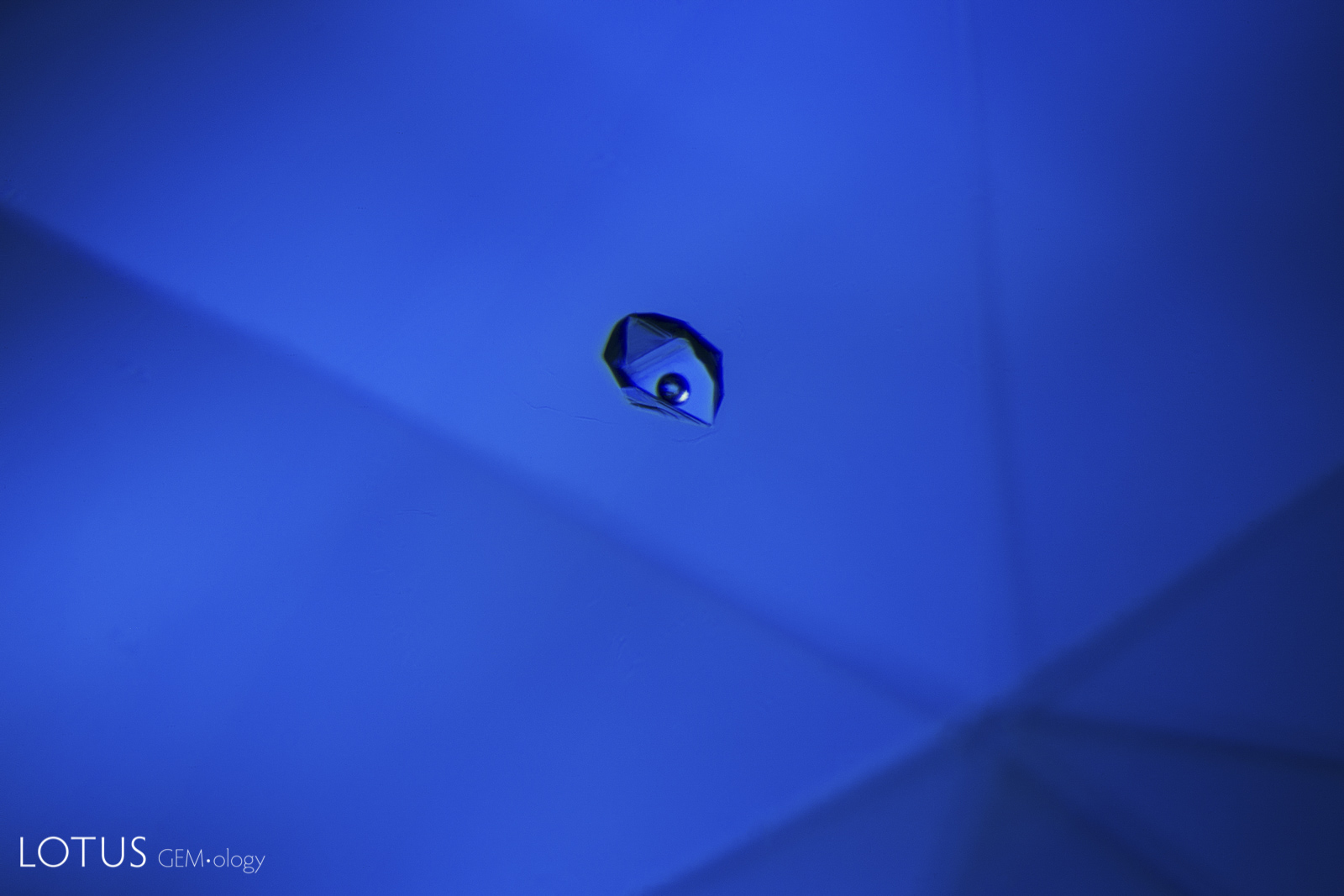
A frozen gas bubble shines in a negative crystal in this heated basaltic sapphire. When illuminated from some angles, there is a visible fissure surrounding the crystal, providing further evidence of heat treatment.
Natural Sapphire •
Nigeria •
Enhancements:
Heat (H) •
Lighting Conditions:
Fiber Optic: Diffuse Oblique
Photographer:
E. Billie Hughes •
Image Number:
A-001-7505-6
Treatment can alter existing inclusions and produce new microscopic features in sapphire. These may include changes to mineral inclusions, altered rutile silk, tension fractures, healed fissures, residues and other features associated with heating, diffusion, fissure filling and other treatment processes.
Treated Sapphire Inclusion Photomicrographs
The Hyperion treated sapphire gallery includes microscopic features documented in natural sapphires subjected to treatment. Each entry identifies the recorded treatment and is accompanied by descriptive information and, where available, references to the gemological literature.
What Inclusions Can Reveal About Sapphire Treatment
Microscopic examination is an important part of detecting treatment in sapphire. The appearance and alteration of inclusions, fractures and growth features can provide evidence of treatment and, in some cases, information about the processes to which a sapphire has been subjected.
Hyperion combines inclusion photomicrography with supporting gemological information so that treatment-related features can be compared with documented examples in natural sapphire.
About Hyperion
Hyperion is the Lotus Gemology searchable inclusion database. It allows users to browse gemstone inclusions by gem type, geographic origin, treatment and keyword.