Treated Sapphire Inclusions
Explore treated sapphire inclusions in Hyperion, the Lotus Gemology inclusion database. Hyperion contains photomicrographs of inclusions and internal features in natural sapphires that have undergone treatment, documented with information on geographic origin, treatment, lighting conditions, field of view, photographer and published references.
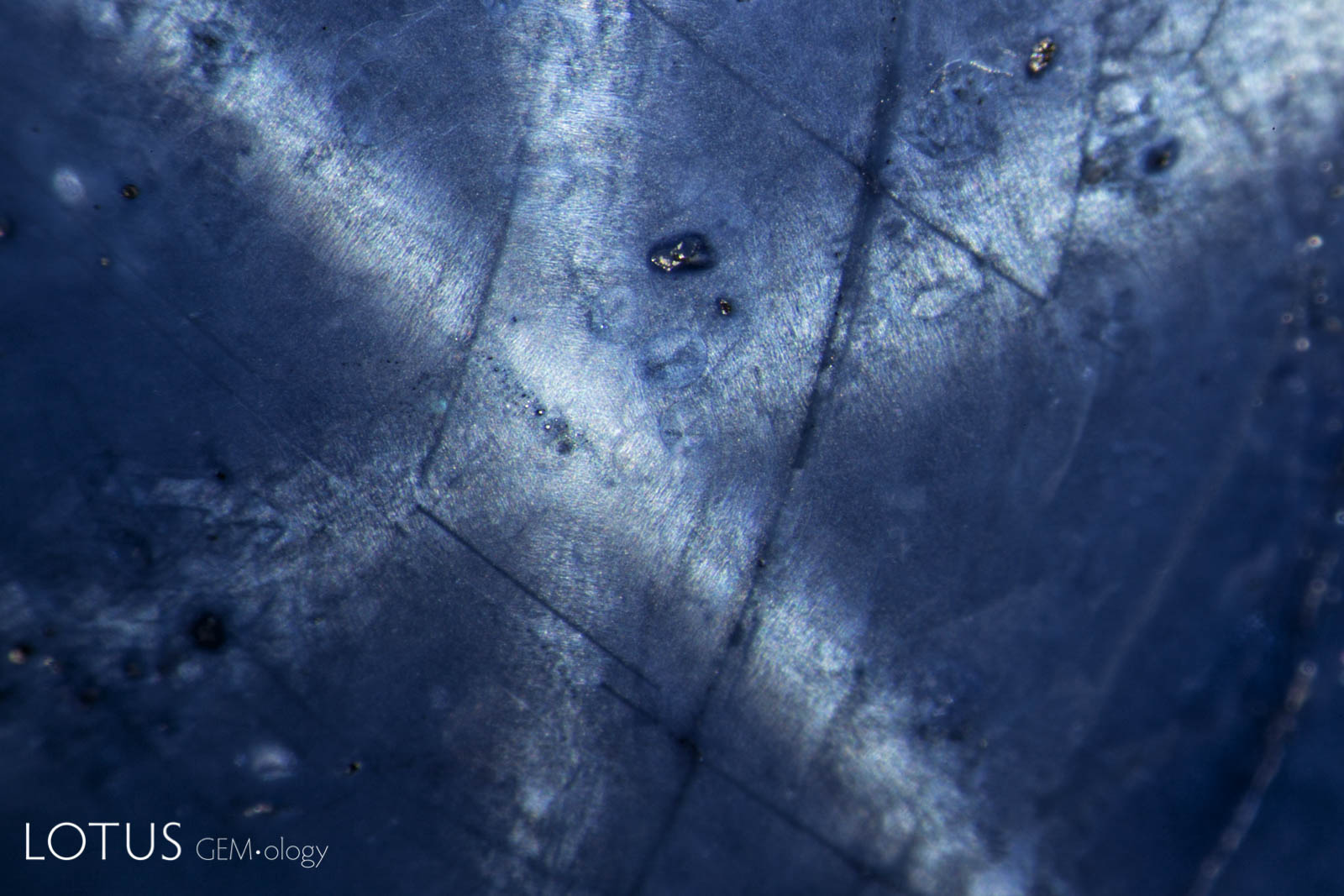
When a rutile-silk containing sapphire is heated, titanium from the rutile dissolves into the surrounding sapphire. Once in solid solution, the titanium reacts with iron, creating a blue color. The result is tiny blue halos surrounding the remnants of the rutile silk, a process dubbed “inkspot internal diffusion” by John Koivula. This partially dissolved silk with blue color concentrations is a clear sign that the sapphire was heated.
Natural Sapphire •
Sri Lanka (Ceylon) •
Enhancements:
Heat (H) •
Lighting Conditions:
Diffuse Light Field (Transmitted Light)
Photographer:
E. Billie Hughes •
Image Number:
A-001-3417-1
Koivula, J.I. (1987) Internal diffusion. Journal of Gemmology, Vol. 20, No. 7/8, pp. 474–477; RWHL*.
Hughes, R.W. (1997) Ruby & Sapphire. Boulder, CO, RWH Publishing, 512 pp.; RWHL*.
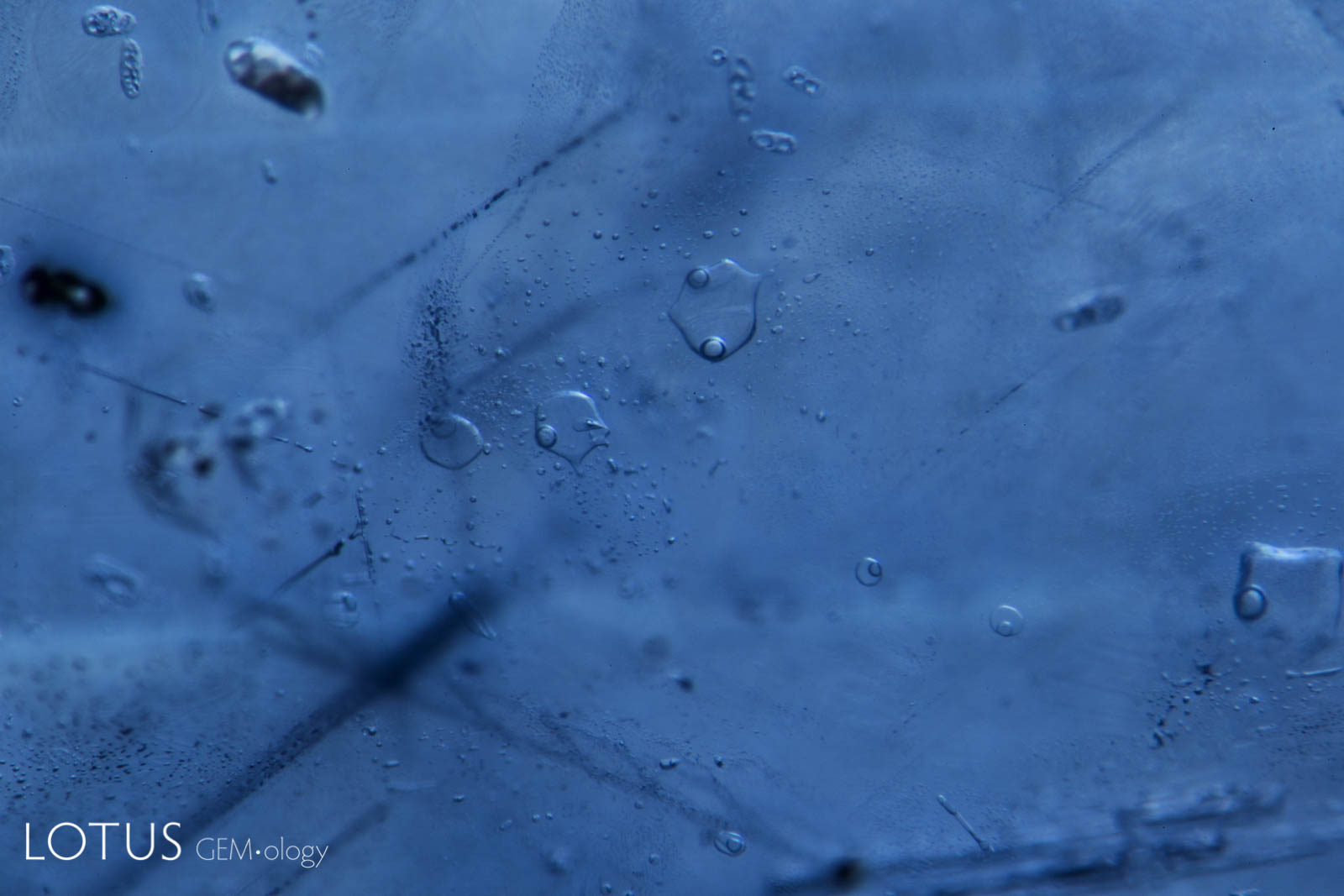
A melted “snowball” crystal is ensconced in heat-altered fingerprints in this heated sapphire from Sri Lanka. Such “snowballs” and bubbly fingerprints are typical of stones heated at high temperatures.
Natural Sapphire •
Sri Lanka (Ceylon) •
Enhancements:
Heat (H) •
Lighting Conditions:
Dark Field
Photographer:
E. Billie Hughes •
Image Number:
A-001-3338-1
Nassau, K. (1981) Heat treating ruby and sapphire: Technical aspects. Gems & Gemology, Vol. 17, No. 3, pp. 121–131; RWHL*.
Crowningshield, R. and Nassau, K. (1981) The heat and diffusion treatment of natural and synthetic sapphires. Journal of Gemmology, Vol. 17, No. 8, Oct., pp. 528–541; RWHL*.
A melted “snowball” crystal is surrounded by a fingerprint showing many small bubbles, a sign of heat alteration. This inclusion is typically found in heated Sri Lankan sapphire.
Natural Sapphire •
Sri Lanka (Ceylon) •
Enhancements:
Heat (H) •
Lighting Conditions:
Dark Field + Oblique Fiber Optic
Photographer:
E. Billie Hughes •
Image Number:
A-001-3406-1
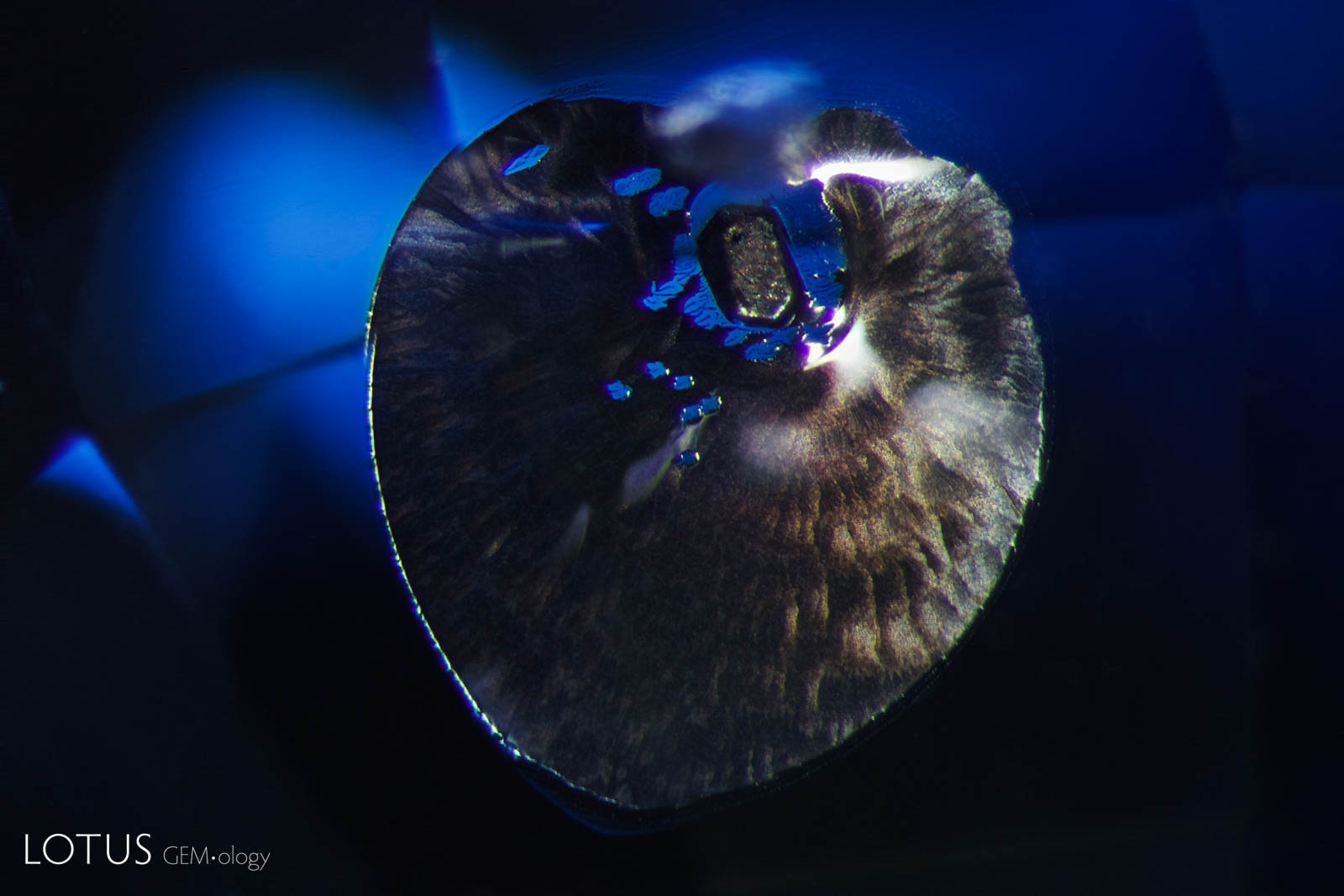
A melted crystal surrounded by an unusual bronze discoid with a glassy surface. This shiny, glassy appearance provides evidence that the stone was heated.
Natural Sapphire •
Sri Lanka (Ceylon) •
Enhancements:
Heat (H) •
Lighting Conditions:
Fiber Optic: Diffuse Oblique
Photographer:
E. Billie Hughes •
Image Number:
A-001-3103-1
Crowningshield, R. and Nassau, K. (1981) The heat and diffusion treatment of natural and synthetic sapphires. Journal of Gemmology, Vol. 17, No. 8, Oct., pp. 528–541; RWHL*.
Nassau, K. (1981) Heat treating ruby and sapphire: Technical aspects. Gems & Gemology, Vol. 17, No. 3, pp. 121–131; RWHL*.
Melted crystals with a frosted surface, surrounded by heat-altered fingerprints in a heat-treated sapphire from Sri Lanka. Note the hexagonal symmetry of the fingerprint, which shows that it lies in the basal plane.
Natural Sapphire •
Sri Lanka (Ceylon) •
Enhancements:
Heat (H) •
Lighting Conditions:
Dark Field + Oblique Fiber Optic
Photographer:
E. Billie Hughes •
Image Number:
A-001-3197-2
Hughes, R.W. (1997) Ruby & Sapphire. Boulder, CO, RWH Publishing, 512 pp.; RWHL*.
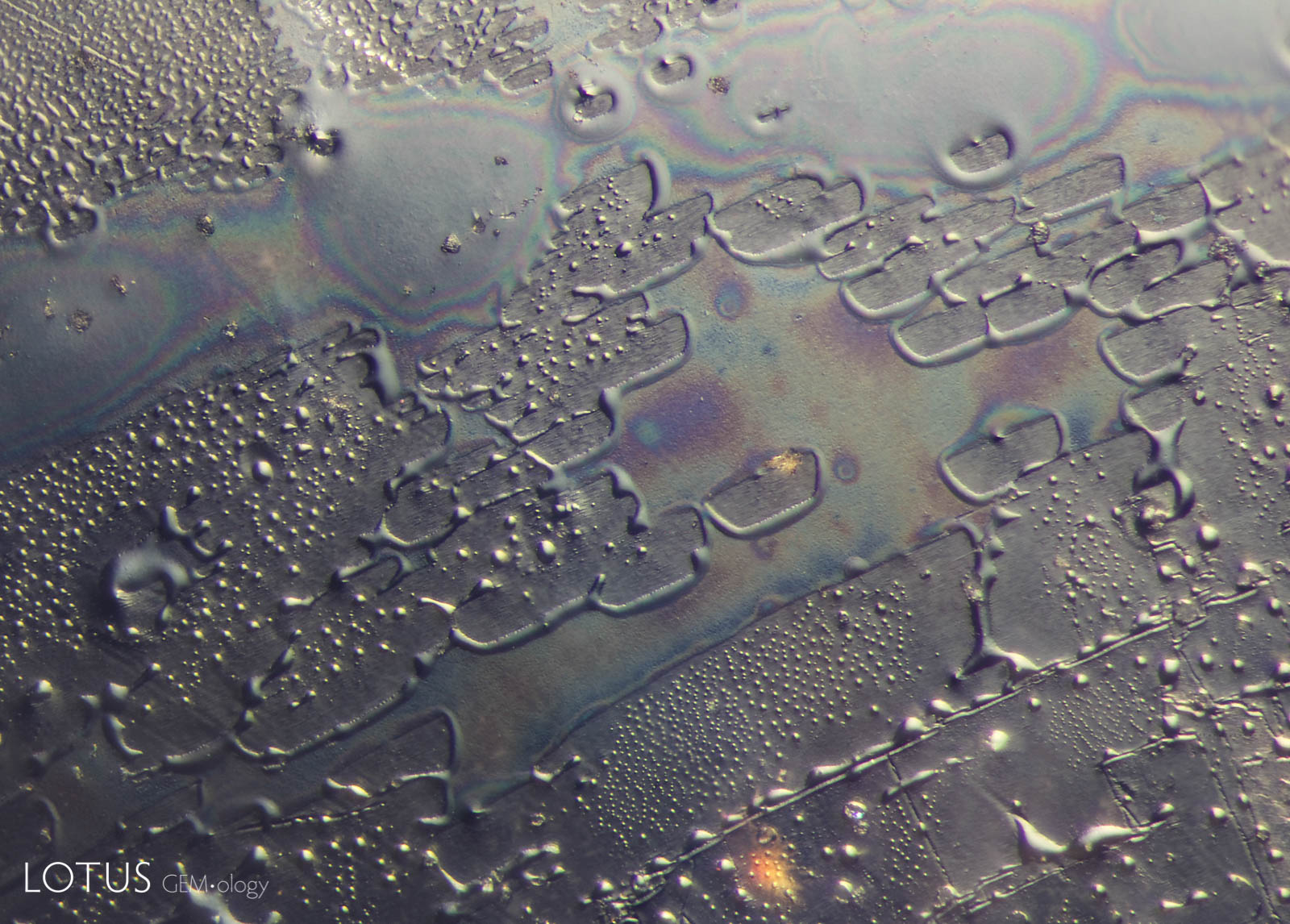
A heat-altered fingerprint at the culet of a heat-treated sapphire from Sri Lanka. Note the small microfractures and discoids that result from explosion of the individual negative crystal channels that make up the fingerprint.
Natural Sapphire •
Sri Lanka (Ceylon) •
Enhancements:
Heat (H) •
Lighting Conditions:
Dark Field
Photographer:
Richard W. Hughes •
Image Number:
A-001-3197-1
Hughes, R.W. (1997) Ruby & Sapphire. Boulder, CO, RWH Publishing, 512 pp.; RWHL*.
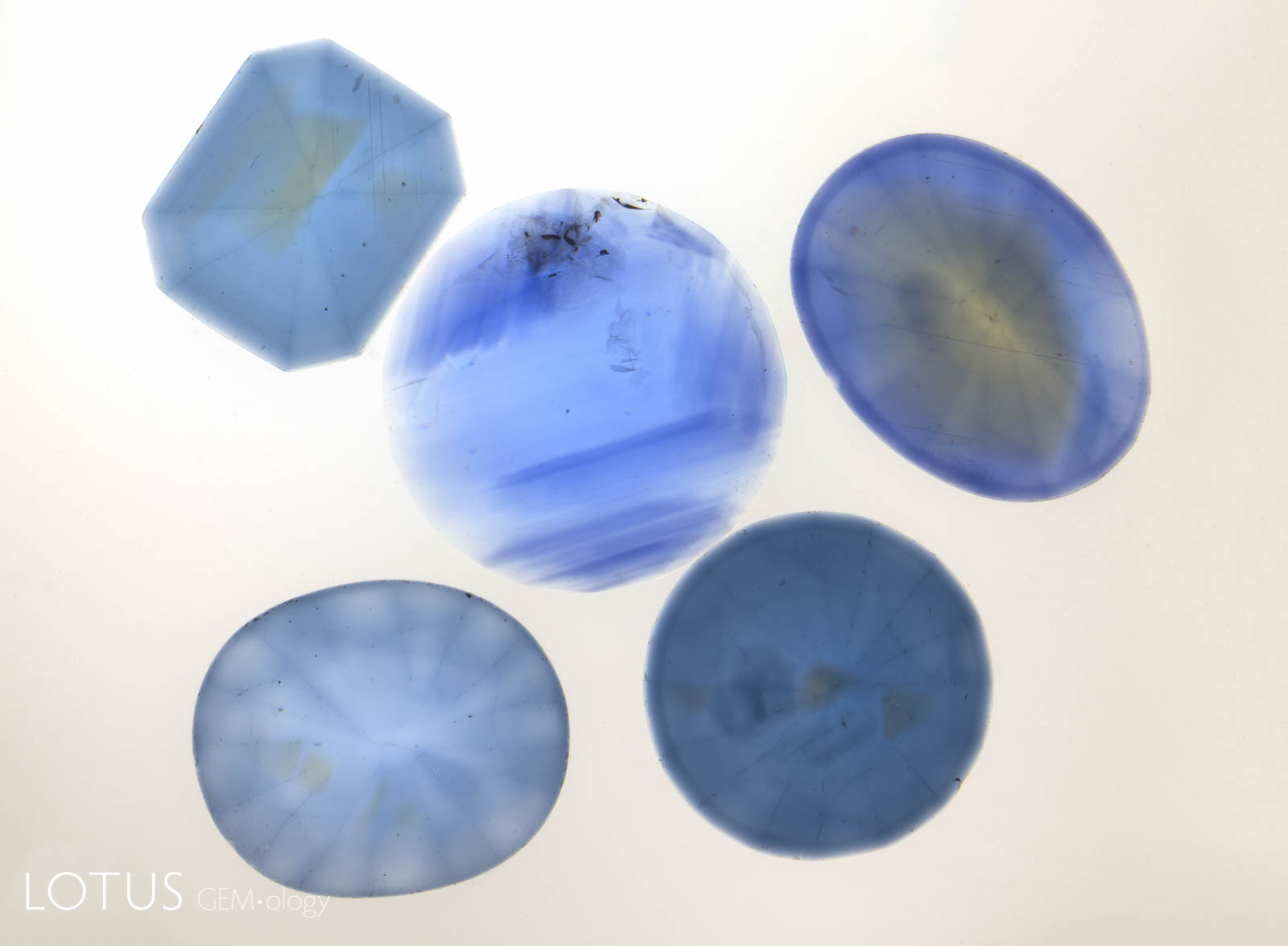
Four titanium lattice-diffused sapphires surround a natural untreated sapphire. The characteristic dark girdles and highlighted facet junctions of the lattice-diffused sapphires are readily apparent.
Natural Sapphire •
USA (Montana); Rock Creek •
Enhancements:
Heat + Diffusion of external coloring agents (H-D) •
Lighting Conditions:
Diffuse Light Field + Immersion
Photographer:
Richard W. Hughes •
Image Number:
R-001-3027-1
Hughes, R.W. (1991) There's a rumble in the jungle: The sapphire face-lift face-off. Gemological Digest, Vol. 3, No. 2, pp. 17-31, RWHL*.
Kane, R.E., Kammerling, R.C. et al. (1990) The identification of blue diffusion-treated sapphires. Gems & Gemology, Vol. 26, No. 2, Summer, pp. 115–133; RWHL*.
This Burmese sapphire was diffused with titanium to induce both a blue color and a star. The rutile silk in such a diffused star occurs in extremely short needles in a shallow layer at and just below the surface.
Natural Star Sapphire •
Myanmar (Burma); Mogok •
Enhancements:
Heat + Diffusion of external coloring agents (H-D) •
Lighting Conditions:
Fiber Optic: Overhead
Photographer:
Richard W. Hughes •
Image Number:
R-001-3154-2
Hughes, R.W. (1991) There's a rumble in the jungle: The sapphire face-lift face-off. Gemological Digest, Vol. 3, No. 2, pp. 17-31, RWHL*.
Kane, R.E., Kammerling, R.C. et al. (1990) The identification of blue diffusion-treated sapphires. Gems & Gemology, Vol. 26, No. 2, Summer, pp. 115–133; RWHL*.
249 Total Images
Results: 169 – 180 | Page 15 of 21 Pages
Treatment can alter existing inclusions and produce new microscopic features in sapphire. These may include changes to mineral inclusions, altered rutile silk, tension fractures, healed fissures, residues and other features associated with heating, diffusion, fissure filling and other treatment processes.
Treated Sapphire Inclusion Photomicrographs
The Hyperion treated sapphire gallery includes microscopic features documented in natural sapphires subjected to treatment. Each entry identifies the recorded treatment and is accompanied by descriptive information and, where available, references to the gemological literature.
What Inclusions Can Reveal About Sapphire Treatment
Microscopic examination is an important part of detecting treatment in sapphire. The appearance and alteration of inclusions, fractures and growth features can provide evidence of treatment and, in some cases, information about the processes to which a sapphire has been subjected.
Hyperion combines inclusion photomicrography with supporting gemological information so that treatment-related features can be compared with documented examples in natural sapphire.
About Hyperion
Hyperion is the Lotus Gemology searchable inclusion database. It allows users to browse gemstone inclusions by gem type, geographic origin, treatment and keyword.
Search the Complete Hyperion Database