
Gemology Books Bibliography

Gemology Books Bibliography

Explore books on gems, gemology, jewelry and mineralogy in Four Treasures, the Lotus Gemology reference database. This bibliography brings together matching book records from the collection, with publication details, abstracts and cover images where available.

Gemology Book References

The list below matches books concerning gemology and related subjects in the database's searchable fields. Some works cover several branches of gems, jewelry or mineralogy.
121–140 of 3,452 matching references

Jade: A Taxonomy for Fei Cui (翡翠), Jade, Jadeite, Jadeitite, Nephrite, and Yu (玉)
Book
CIBJO (2026) Jade: A Taxonomy for Fei Cui (翡翠), Jade, Jadeite, Jadeitite, Nephrite, and Yu (玉). Milano, CIBJO, 104 pp.
Record No. 29538  |  Sinkankas/Born No.: NIS/NIB  |  RWHL*
At its core, any nomenclature system is a means of classification, a way to create logical categories that can be used to educate others. Like a garden, nomenclature systems require regular maintenance to remove overgrowth and “deadwood”. Nomenclature evolves naturally over time as it reflects the current state of knowledge. As understanding deepens, we often discover that items once thought to belong to one category more properly fit into another. At that point, we face a choice: move the item to the category that best represents it, or allow it to remain where it is as an exception. Every nomenclature system has these exceptions. This CIBJO guide examines one such case with jade, where mineral species names may have been improperly applied to gem materials that are actually rocks. This is not a purely academic exercise as financial costs may apply as a real consequence in a world where third-party verification of gem materials is a requirement, i.e., gem testing costs that involve the non-destructive analyses of rocks can be prohibitive, particularly at the low-value end. CIBJO takes no official position on this question. We recognize that many parties, particularly in China and across the East, consider the replacement of the terms/names jadeite, omphacite, and kosmochlor with the collective term/name fei cuì to be consistent with modern gemmological practice. Accordingly, they see no deception in marketing a gem whose constituent minerals are intimately intergrown under this unified term, a tradition that dates back to the early 1700s. At the same time, CIBJO acknowledges that traders, gemmologists, and consumers may prefer to divide pyroxene jade into its individual mineral components. CIBJO remains neutral on these differing approaches and accepts that variations in practice may exist between regions and that neither approach should be considered an unfair trade practice. There are sound reasons why nomenclature cannot, and should not, be expected to be identical everywhere. Each culture uses language to describe the world in its own way. The issue of ‘yù’ versus ‘jade’ illustrates this clearly: the two words carry distinct meanings, and neither has an exact equivalent in the other language. The proliferation of different languages and dialects reflects the diversity of human cultures. Nomenclature, therefore, inevitably carries a cultural dimension and must accommodate meaningful regional and linguistic differences where they arise. In the pages that follow, we aim to present this complex subject logically and consistently, bearing these principles in mind. The discussion represents the outcome of extensive dialogue among representatives from around the world. Jade is a human treasure. It is our hope that this guide will foster greater understanding of this remarkable natural canvas, beloved by jeweller and carver alike.

Records from a luxurious past: Gem inventory of a seventeenth-century Armenian merchant
Journal Article
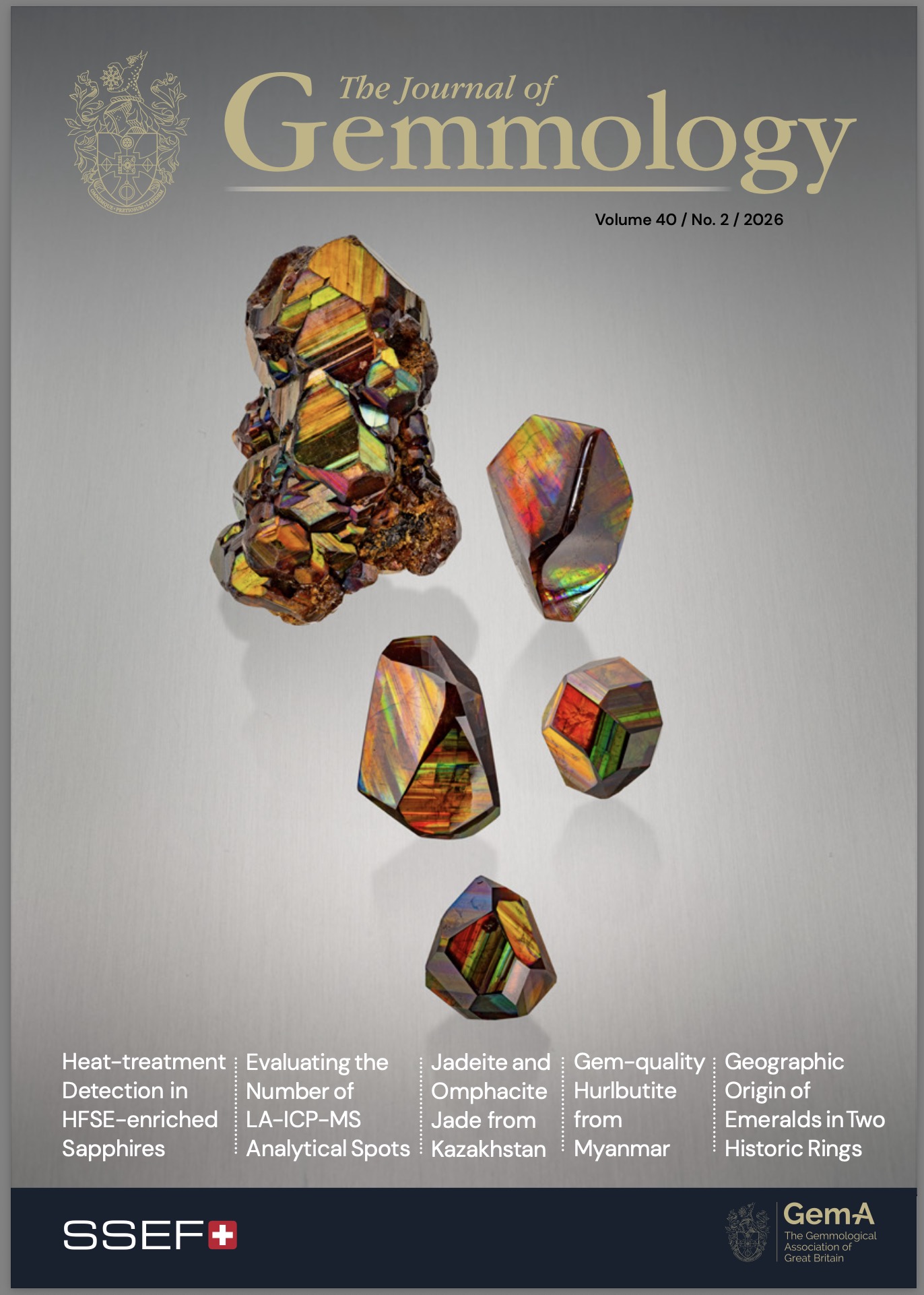
Tajiryan, S. (2026) Records from a luxurious past: Gem inventory of a seventeenth-century Armenian merchant. Gems & Gemology, Vol. 62, No. 1, Spring, pp. 38–66.
Record No. 29116  |  DOI: https://doi.org/10.5741/GEMS.62.1.38  |  Sinkankas/Born No.: NIS/NIB  |  RWHL*
A rare 1688 probate inventory documents the extensive gem collection of Gregorio di Girach-Mirman (1612–1688), a prominent Armenian merchant active in Venice and Livorno, Italy. Originally written in Armenian and later translated into Italian, this archival record lists more than 100,000 gemstones, including diamonds, sapphires, emeralds, and pearls, as well as more than 1,700 kilograms of rough amber, garnet, lapis lazuli, and turquoise. Housed in the State Archives of Venice, the inventory offers a uniquely detailed window into the early modern luxury trade and highlights the global commercial reach of Armenian merchant families like the Girach-Mirmans. Drawing on this previously unstudied source, along with a broader set of archival documents from across Europe and Armenia, the present article reconstructs the world of seventeenth-century gem dealing and collecting. It argues that Armenian merchants were central figures in the global trade of luxury goods, operating alongside and sometimes in competition with better-known European contemporaries. The provenance and diversity of Gregorio’s gem holdings, likely sourced from as far as modern-day Colombia, Sri Lanka, Iran, and Myanmar, attest to the geographic reach of Armenian trading networks and the sophistication of their market knowledge. By placing this inventory in its global and material context, the article contributes to ongoing discussions around early modern economic history, material culture, and global commodity flows across Eurasia and the New World. It demonstrates that gem inventories, often overlooked as solely bureaucratic and estate documents, can illuminate the complexity of merchant strategies, the transcontinental mobility of luxury goods, and the dynamics of status and prestige in the early modern period. Finally, one of the central aims of this article is to illuminate the inner workings of gem dealing in this period, including practices of sourcing and collecting, through a rare body of obscure commercial correspondence. These materials offer an exceptional view into a dimension of the trade that remains largely inaccessible and nearly absent from existing historiography.

Evidence for an ‘uncommon’ geographic origin (Pakistan) of emeralds in two rings of historical significance
Journal Article
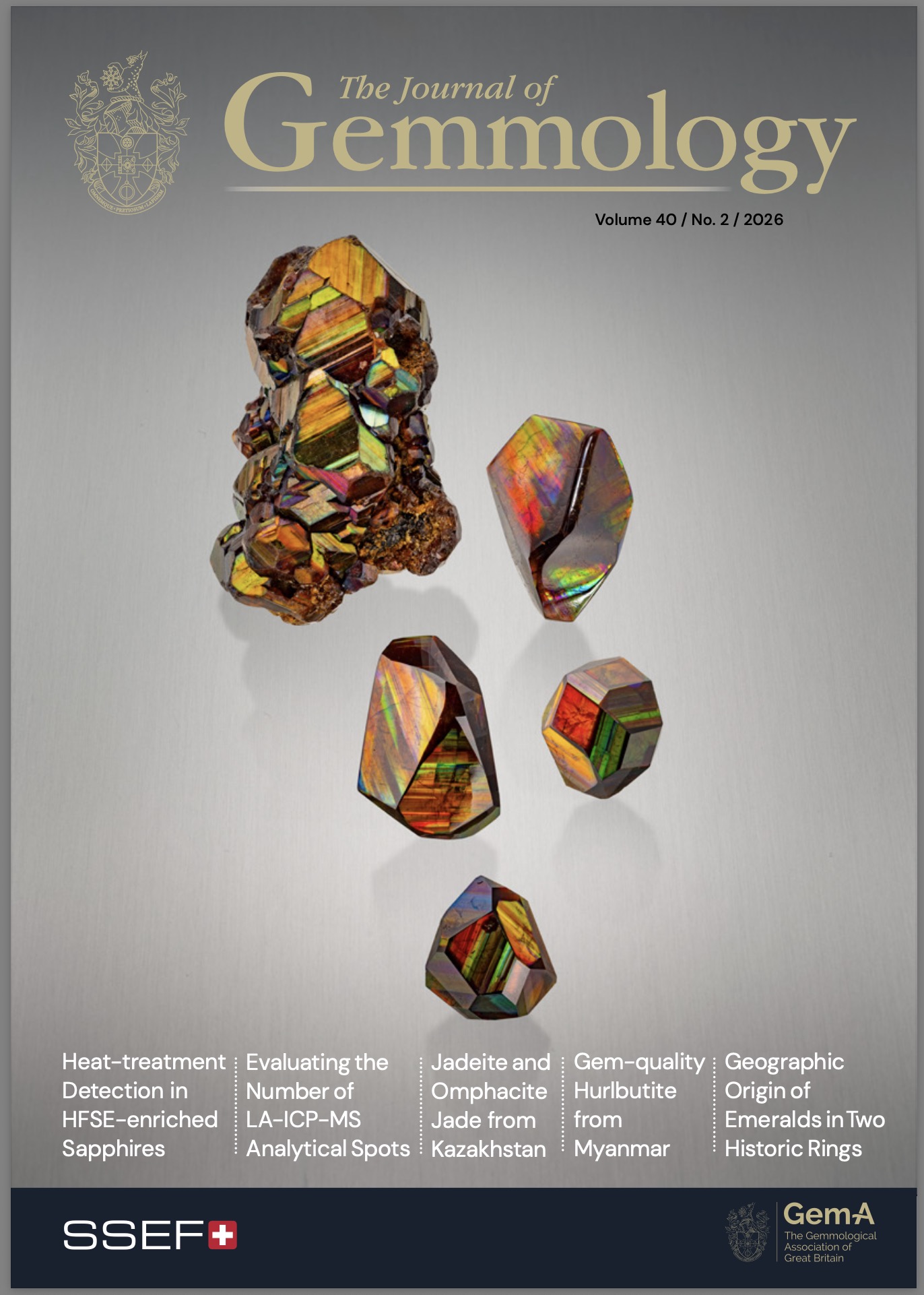
Karampelas, S., Hennebois, U., Delaunay, A., Herreweghe, A. and Cassius-Duranton, M.-L. (2026) Evidence for an ‘uncommon’ geographic origin (Pakistan) of emeralds in two rings of historical significance. Journal of Gemmology, Vol. 40, No. 2, pp. 188–194.
Record No. 28988  |  DOI: https://doi.org/10.15506/JoG.2026.40.2.188  |  Sinkankas/Born No.: NIS/NIB  |  RWHL*
An emerald from the late Hellenistic (or early Roman) period and another emerald from the end of the Middle Ages, both set in small rings, were studied using non-destructive methods. Their microscopic, spectroscopic and chemical characteristics are consistent with those of emeralds from the Swat Valley, Pakistan. This suggests that Swat Valley emeralds may have been more common in ancient jewellery than previously thought. This study highlights the importance of combining gemmological analytical techniques with archaeology to draw more reliable conclusions about the origins of historical gemstones.

HFSE-enriched metamorphic blue sapphires: FTIR and trace-element study, and implications for heat-treatment detection
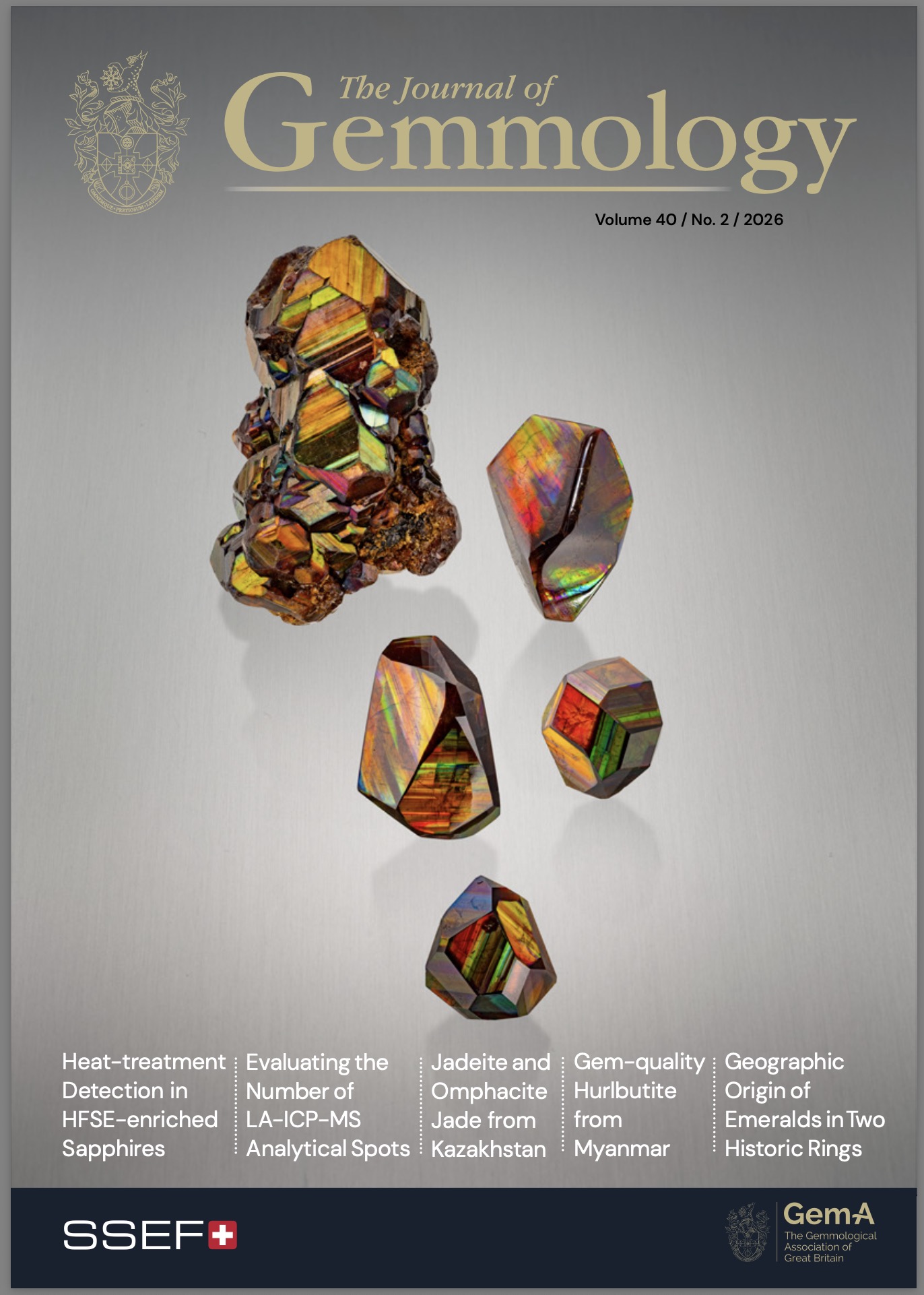
Journal Article
Hardman, M.F., Shigley, J.E., Sun, Z. and Palke, A.C. (2026) HFSE-enriched metamorphic blue sapphires: FTIR and trace-element study, and implications for heat-treatment detection. Journal of Gemmology, Vol. 40, No. 2, pp. 157–169.
Record No. 28987  |  DOI: https://doi.org/10.15506/JoG.2026.40.2.142  |  Sinkankas/Born No.: NIS/NIB  |  RWHL*
This study examines sapphires naturally enriched in high-field-strength elements (HFSE) from metamorphic origins in Sri Lanka and Madagascar. These sapphires display distinctive chemical inhomogeneities and microscopic growth features, as well as variable FTIR spectra, often including a broad absorption band near 3300 cm–1. Some of the studied samples also show FTIR spectral characteristics and short-wave UV luminescence typically associated with heat-treated stones, although all were unheated. Our findings demonstrate that commonly used indicators—such as specific FTIR band patterns (mainly the 3309 cm–1 triplet) and chalky bluish white short-wave UV fluorescence—are not always reliable for identifying heat treatment. Accurate distinction between heated and unheated sapphires requires detailed microscopic examination combined with advanced trace-element analysis and spectroscopic techniques, including Raman micro-spectroscopy of inclusions such as zircon, goethite and diaspore.

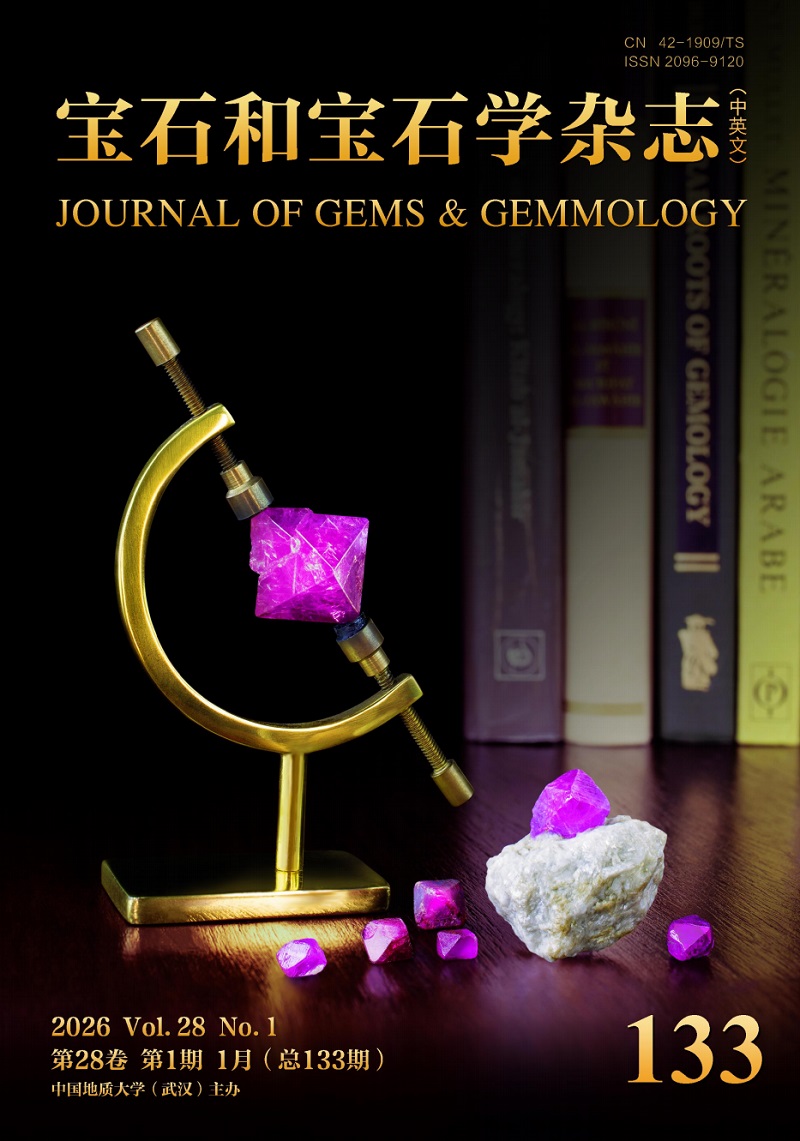
HFSE-enriched metamorphic blue sapphires: FTIR and trace-element study, and implications for heat-treatment detection
Journal Article
Krzemnicki, M.S., Cartier, L.E., Zhou, W., Lefèvre, P., Wälle, M., Wang, H.A.O. and Braun, J. (2026) HFSE-enriched metamorphic blue sapphires: FTIR and trace-element study, and implications for heat-treatment detection. Journal of Gemmology, Vol. 40, No. 2, pp. 142–156.
Record No. 28986  |  DOI: https://doi.org/10.15506/JoG.2026.40.2.142  |  Sinkankas/Born No.: NIS/NIB  |  RWHL*
This study examines sapphires naturally enriched in high-field-strength elements (HFSE) from metamorphic origins in Sri Lanka and Madagascar. These sapphires display distinctive chemical inhomogeneities and microscopic growth features, as well as variable FTIR spectra, often including a broad absorption band near 3300 cm–1. Some of the studied samples also show FTIR spectral characteristics and short-wave UV luminescence typically associated with heat-treated stones, although all were unheated. Our findings demonstrate that commonly used indicators—such as specific FTIR band patterns (mainly the 3309 cm–1 triplet) and chalky bluish white short-wave UV fluorescence—are not always reliable for identifying heat treatment. Accurate distinction between heated and unheated sapphires requires detailed microscopic examination combined with advanced trace-element analysis and spectroscopic techniques, including Raman micro-spectroscopy of inclusions such as zircon, goethite and diaspore.

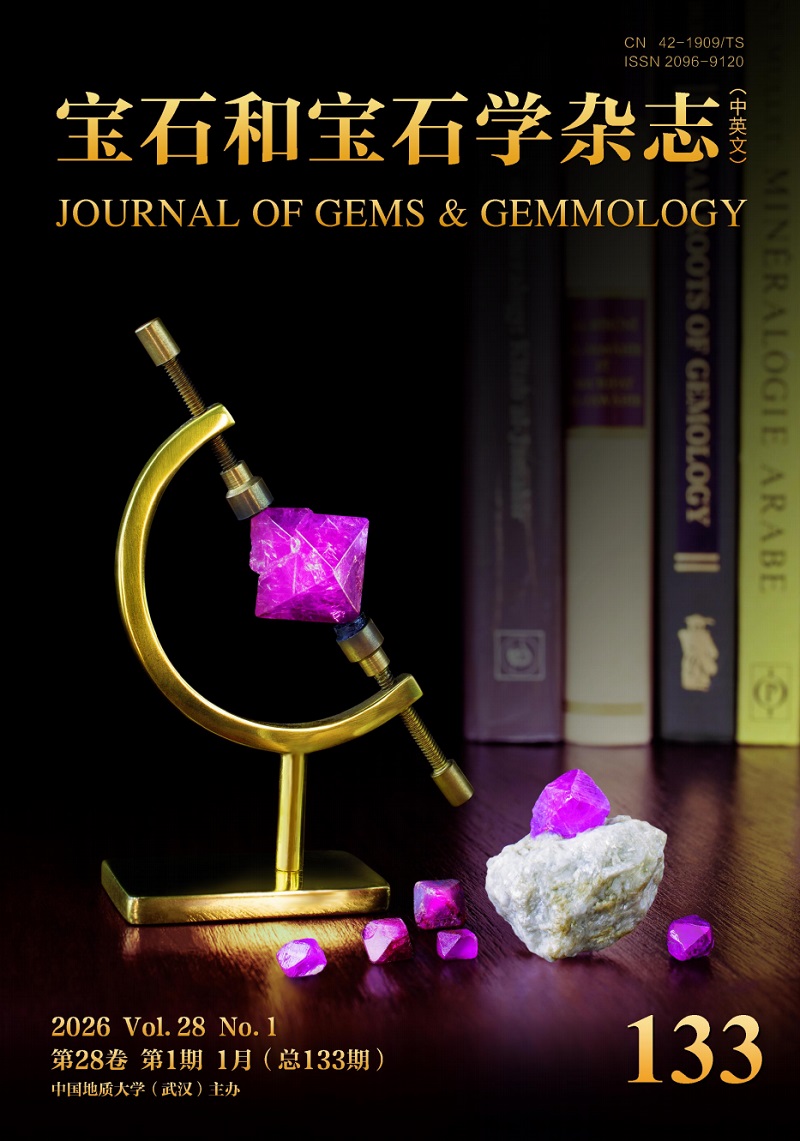
Emeralds from the Silk Roads: From myth to reality
Journal Article
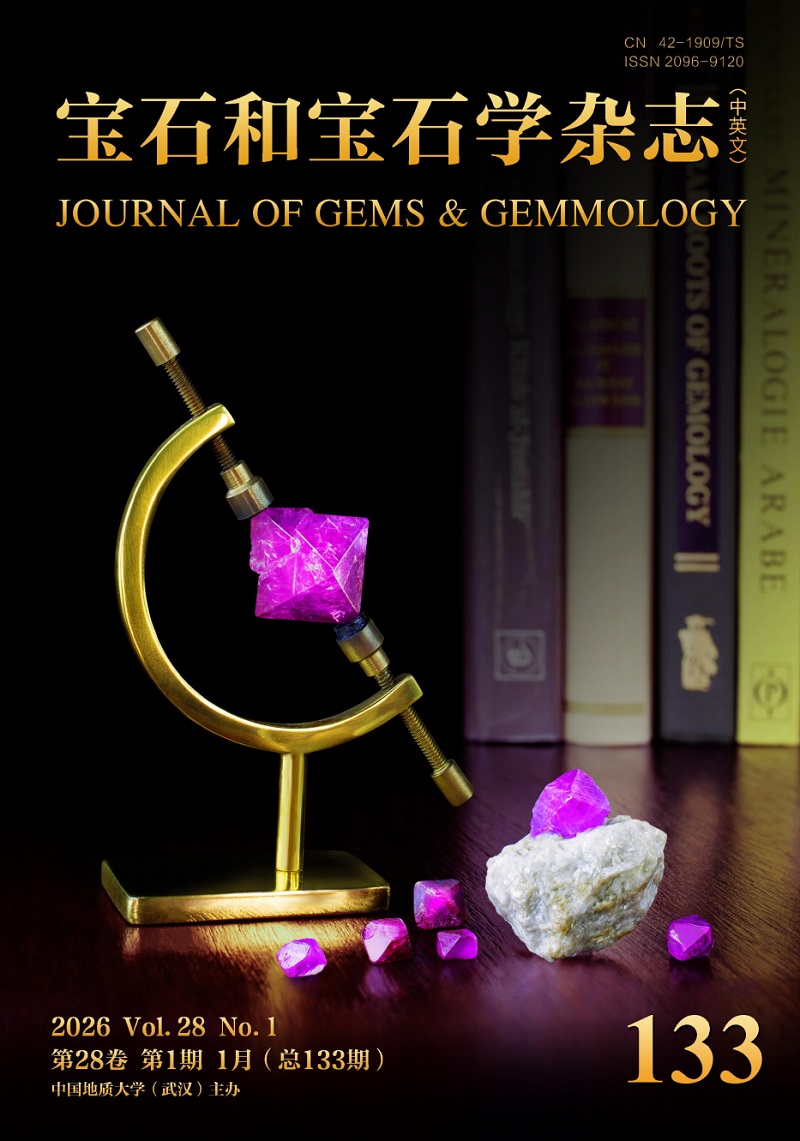
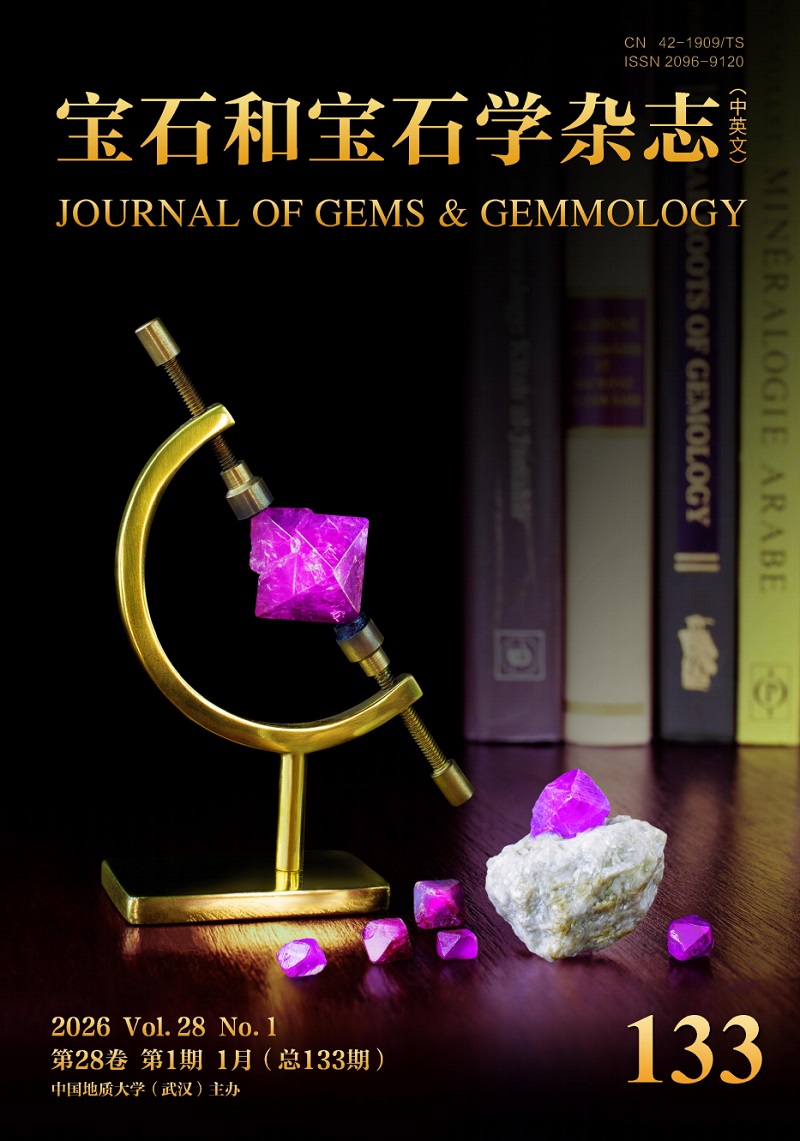
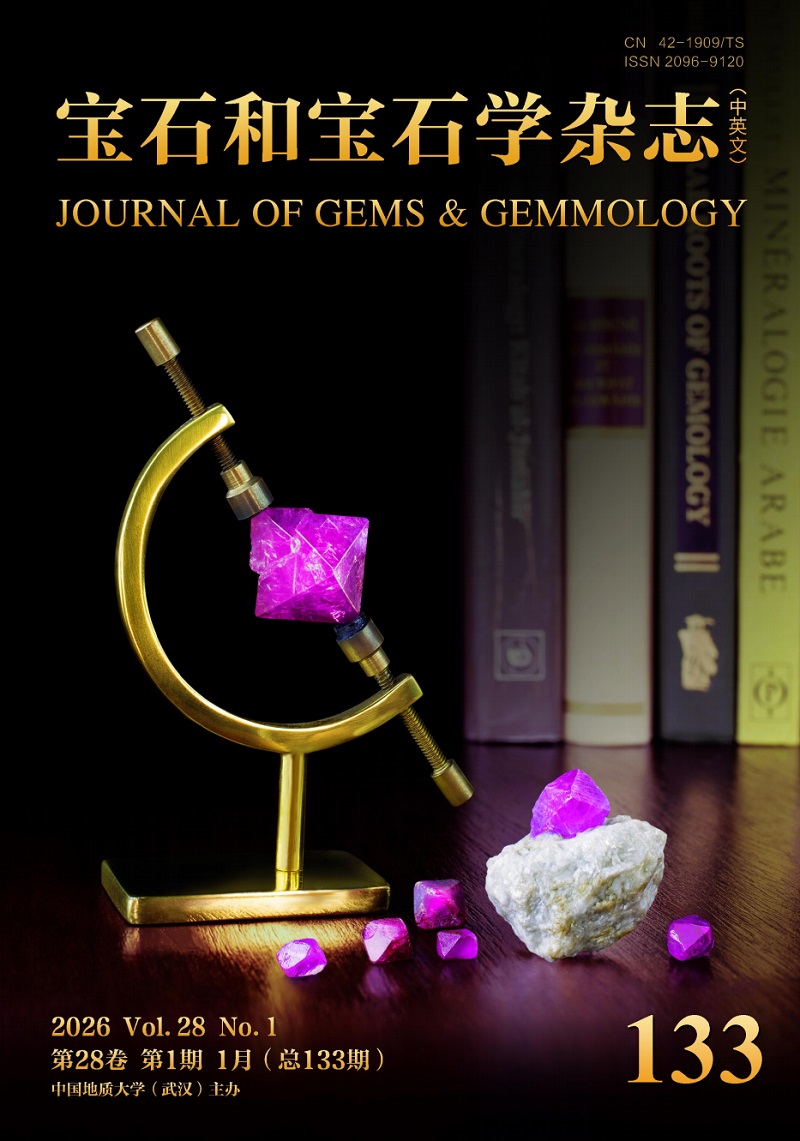
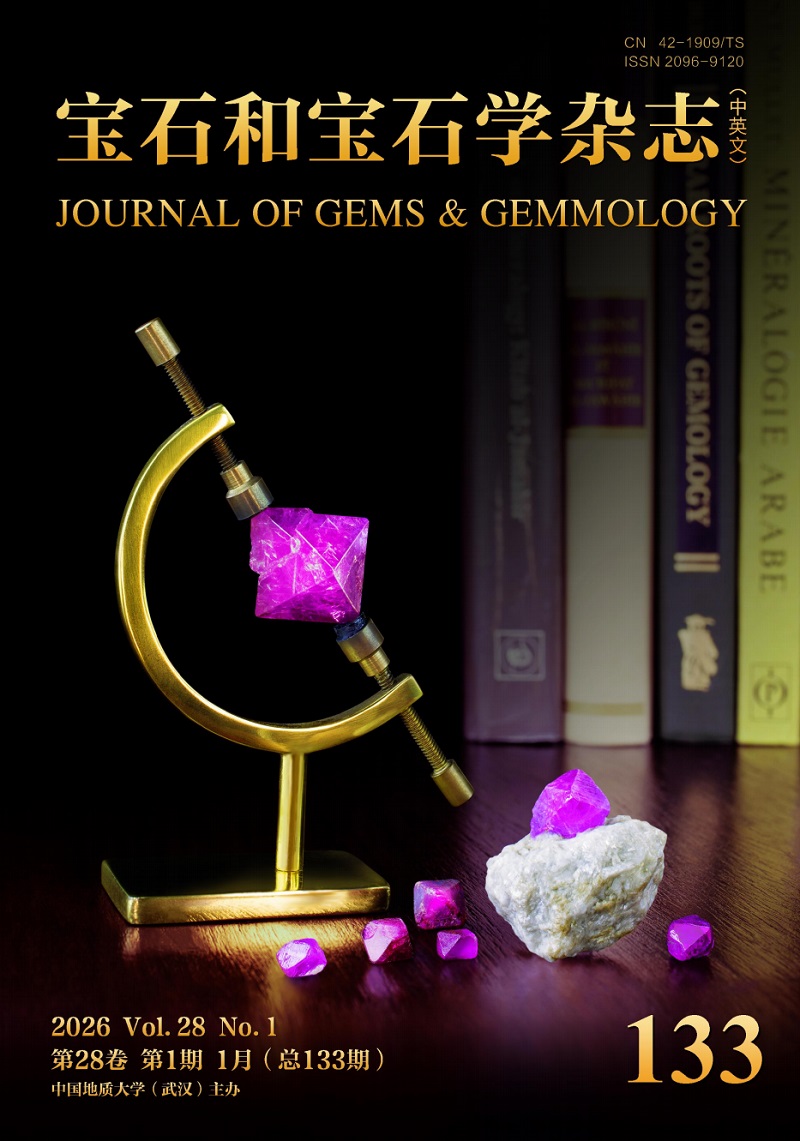
Cassius-Duranton, M.-L., Pardieu, V. and Karampelas, S. (2026) Emeralds from the Silk Roads: From myth to reality. Journal of Gems & Gemmology, Vol. 28, No. 1, pp. 39–54.
Record No. 28538  |  DOI: https://dx.doi.org/10.15964/j.cnki.027jgg.2026.01.004  |  Sinkankas/Born No.: NIS/NIB  |  RWHL*
Although the emerald deposits in India and the Himalayas were not officially discovered before the 20th century, recent gemological analyses conducted by the LFG (French Gemological Laboratory) on emeralds from historical jewelry dating back to the 16th century have shown that they correspond to the characteristics of the Swat deposits (Pakistan). This discovery is consistent with ancient gemological literature, which, since Theophrastus (4th century BCE), mentions the Himalayas as a source of emeralds. This interdisciplinary article explores the methodological difficulties inherent in historical gemology and highlights the importance of scientific gemology for art history and archaeology.

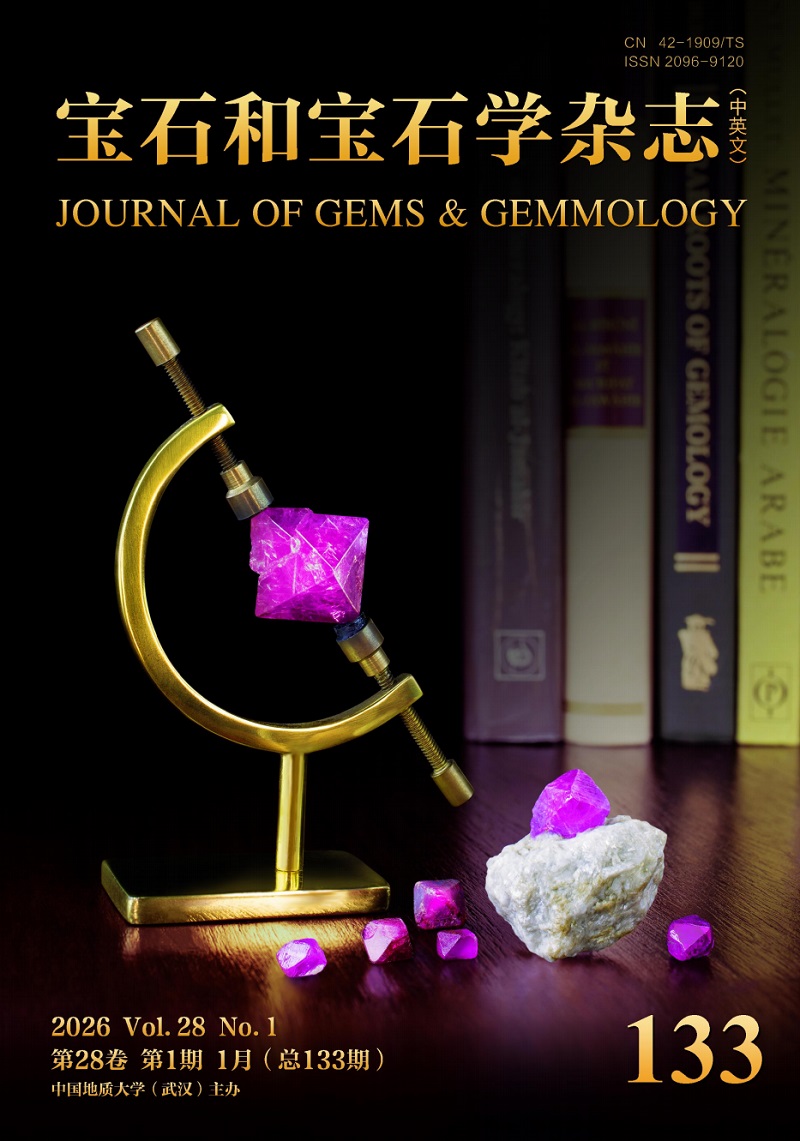
Mineral classification and gemmological concepts in Classical Antiquity
Journal Article
Thoresen, L. (2026) Mineral classification and gemmological concepts in Classical Antiquity. Journal of Gems & Gemmology, Vol. 28, No. 1, pp. 18–31.
Record No. 28537  |  DOI: https://dx.doi.org/10.15964/j.cnki.027jgg.2026.01.002  |  Sinkankas/Born No.: NIS/NIB  |  RWHL*
Many important works of ancient literature have been translated many times over the centuries, perhaps none more so than Pliny the Elder's Natural History. Because classical writers did not follow conventions of objectivity or citation remotely similar to modern standards, understanding the literary context is important when trying to extract factual information. The perspective of a translator also shapes how modern readers interpret an elusive original meaning. Older translations are well known for distorting the meaning of a word or passage when the text is unclear. Translators sometimes imposed their own contemporary knowledge on the past-knowingly or not. This was especially common when they lacked subject expertise, misread corrupt (damaged) texts, or failed to grasp the literary genre, for example, interpreting poetic rhetoric as an objective description of physical things, as in technical writing. The task becomes more difficult when ancient words have no direct equivalents in modern languages. The following essay explores some of the challenges of technical writing about gems from the Hellenistic to Roman periods (323 BCE to-2nd century CE), with a focus on Book 37 of Pliny's Natural History, written in the 70s CE. It contains the richest vocabulary in classical literature for describing gemstones, including their names, colours, and visual properties. Although these terms do not always correspond with modern gemmological classifications, there are notable overlaps that can help identify some minerals whose identity might otherwise remain unclear.

The evolution of the modern gemmological laboratory
Journal Article
Scarratt, K. (2026) The evolution of the modern gemmological laboratory. Journal of Gems & Gemmology, Vol. 28, No. 1, pp. 75–86.
Record No. 28536  |  DOI: https://dx.doi.org/10.15964/j.cnki.027jgg.2026.01.007  |  Sinkankas/Born No.: NIS/NIB  |  RWHL*
This article traces the development of the modern gemmological laboratory from 1925 to the present day, a 100-year journey that has seen not only a gradual and then explosive evolution in the application and maturity of the science, but also importantly the standing that gemmological laboratories have enjoyed within the gemstone industry and the scientific community. The passionate people involved have made tremendous contributions to the understanding of gem materials, and their willingness to embrace the latest technology and attract successive generations to the field has made the study of gem materials within gemmological laboratories one of the most exciting theaters of life.

Inclusions in quartz: A photomicrographic exploration beyond rutile
Journal Article
Koivua, J.I. and Renfro, N. (2026) Inclusions in quartz: A photomicrographic exploration beyond rutile. Journal of Gems & Gemmology, Vol. 28, No. 1, pp. 87–90.
Record No. 28535  |  DOI: https://dx.doi.org/10.15964/j.cnki.027jgg.2026.01.008  |  Sinkankas/Born No.: NIS/NIB  |  RWHL*
Throughout the history of gemology, quartz has been a main target of gemological microscopists. A detailed study of the wide variety of inclusions in quartz is as complex an earth-science related mental exercise as any gemologist would ever undertake. This is not surprising, as quartz occurs in a wider range of geologic environments than any other mineral species, and the inclusions it holds testify to this. The photomicrographs, pictured here with this study, provide the reader only a glimpse at the micro-world of quartz beyond rutile.

A puzzle almost as old as the modern science of gemology itself
Journal Article
Saul, J.M. (2026) A puzzle almost as old as the modern science of gemology itself. Journal of Gems & Gemmology, Vol. 28, No. 1, pp. 103–105.
Record No. 28533  |  DOI: https://dx.doi.org/10.15964/j.cnki.027jgg.2026.01.010  |  Sinkankas/Born No.: NIS/NIB  |  RWHL*
A puzzle, almost as old as the modern science of gemology itself, concerns metamorphic minerals such as garnet and corundum that normally crystallize in an opaque, stony manner. Under rare circumstances, however, such minerals crystallize as transparent gems. Why should that be? An area in the Kenyan-Tanzanian border region provides clues to why, where, and when gem-quality crystallization occurs. Higher than usual temperature at depth permits metamorphic minerals to crystallize at shallower levels. and thus with less than usual constraining pressure, hence potentially as transparent gems. A source of short-lived excess heat in the Penny Lane area (Kenyan-Tanzanian border) is furnished by friction produced by nearby thrust faults.

Judging gems: A history of gem appraisal
Journal Article
Ogden, J. (2026) Judging gems: A history of gem appraisal. Journal of Gems & Gemmology, Vol. 28, No. 1, pp. 55–65.
Record No. 28532  |  DOI: https://dx.doi.org/10.15964/j.cnki.027jgg.2026.01.005  |  Sinkankas/Born No.: NIS/NIB  |  RWHL*
This article is a brief survey of the historical methods of describing and assessing the quality of coloured gemstones, tracing these from ancient times to the end of the 18th century. Examining historical texts and inventories reveals how features and flaws of gemstones were observed and used to determine their value. This article considers various historical periods, including the ancient world, the medieval Muslim world, early India, and medieval Europe, highlighting the changing criteria and expertise involved in gem judgement. This study demonstrates the historical depth of gem connoisseurship and its influence on modern gem assessment practices.

Taking a Shine — Agate carvings for the Qing Court
Journal Article
Bellemare, J. (2026) Taking a Shine — Agate carvings for the Qing Court. Journal of Gems & Gemmology, Vol. 28, No. 1, pp. 66–74.
Record No. 28531  |  DOI: https://dx.doi.org/10.15964/j.cnki.027jgg.2026.01.006  |  Sinkankas/Born No.: NIS/NIB  |  RWHL*
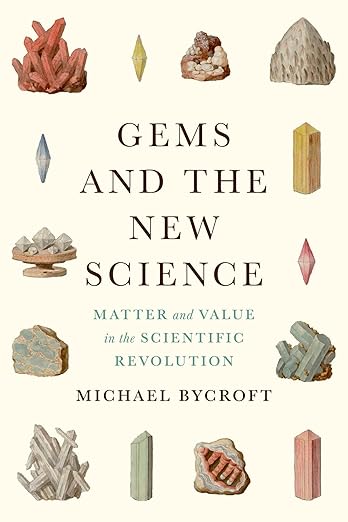
During the Qing Dynasty (1644–1911), court artisans carved agates with a high degree of technical ability and inventiveness. Agate wares produced during the reign of the Yongzheng (1723–1735) and Qianlong (1736-1795) emperors exploit the full breadth of chromatic effects and degrees of translucency offered by these silicate stones. During this period, agate carvings were produced in high numbers, and imperial commissions made conscious use of the stone's unique material qualities. Because the geological environment in which agates are formed affects their pigmentation, the range of agate colors recorded in historical documents and seen in surviving objects reflects a variety of geographical origins. This paper considers how agates were understood by scholars and appreciated by emperors at a time of territorial expansion and interest in new minerals.

Gems and the New Science: Matter and Value in the Scientific Revolution
Book
Bycroft, M. (2026) Gems and the New Science: Matter and Value in the Scientific Revolution. Chicago, University of Chicago Press, 336 pp.
Record No. 28310  |  ISBN/ISSN: 9780230000000  |  Sinkankas/Born No.: NIS/NIB  |  RWHL*
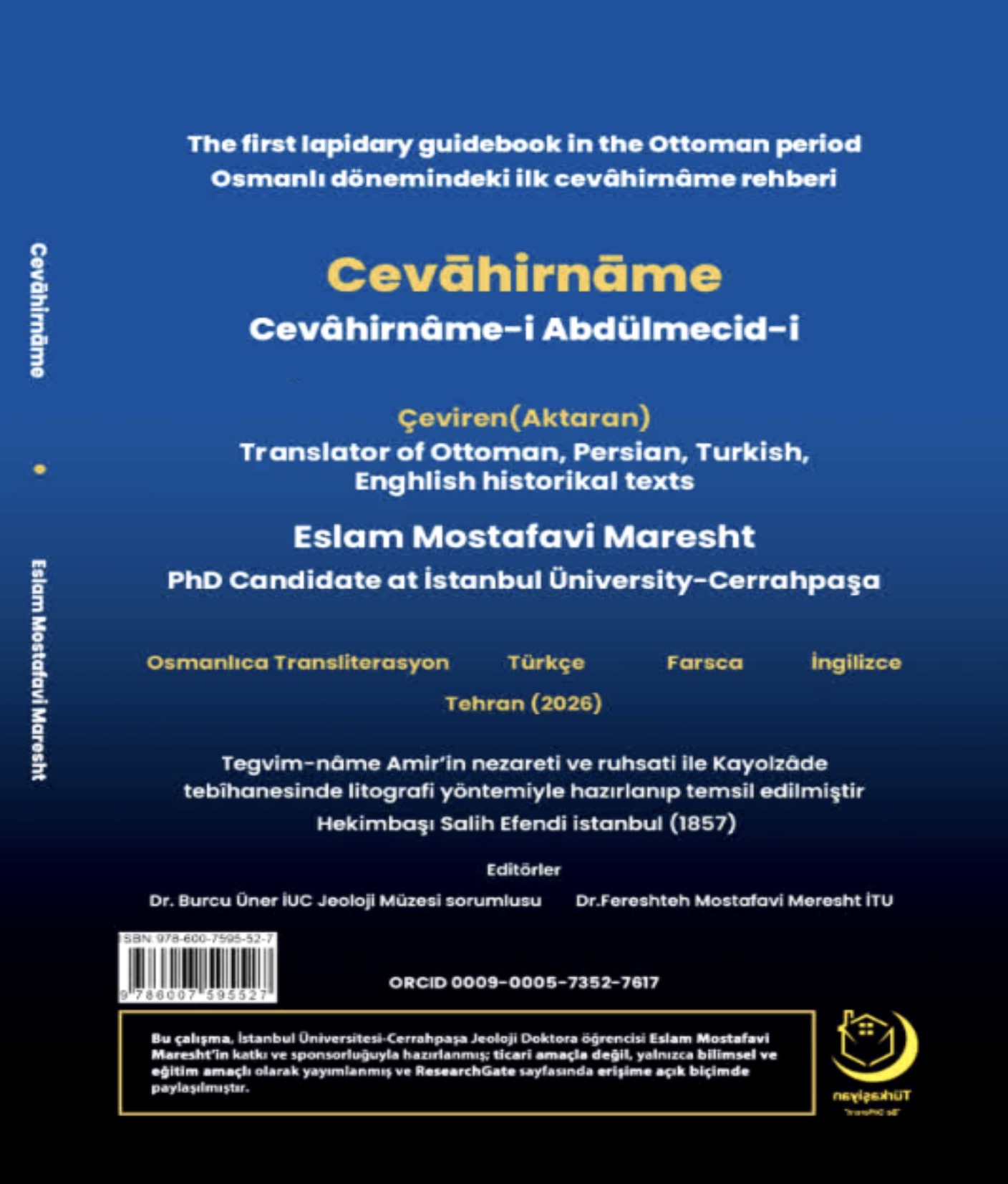
In Gems and the New Science, Michael Bycroft argues that gems were connected to major developments in the “new science” between the sixteenth and nineteenth centuries. As he explains, precious and semiprecious stones were at the center of dramatic shifts in natural knowledge in early modern Europe. They were used to investigate luminescence, electricity, combustion, chemical composition, and more. They were collected by naturalists; measured by mathematicians; and rubbed, burned, and dissolved by experimental philosophers. This led to the demise of the traditional way of classifying gems—which grouped them by transparency, color, and locality—and the turn to density, refraction, chemistry, and crystallography as more reliable guides for sorting these substances. The science of gems shows that material evaluation was as important as material production in the history of science. It also shows the value of seeing science as the product of the interaction between different material worlds. The book begins by bringing these insights to bear on five themes of the Scientific Revolution. Each of the subsequent chapters deals with a major episode in early modern science, from the expansion of natural history in the sixteenth century to the emergence of applied science early in the nineteenth century. This important work is not only the first book-length history of the science of gems but also a fresh interpretation of the Scientific Revolution and an argument for using a new form of materialism to understand the evolution of science.

Cevâhirnâme-i Abdülmecid-i: The First Lapidary Guidebook in the Ottoman period
Book
Maresht, E.M. (2026) Cevâhirnâme-i Abdülmecid-i: The First Lapidary Guidebook in the Ottoman period. Teheran, Novin Kushan, 148 pp.
Record No. 28237  |  ISBN/ISSN: 9786010000000  |  Sinkankas/Born No.: NIS/NIB  |  Language: In Turkish, Farsi and English  |  RWHL*
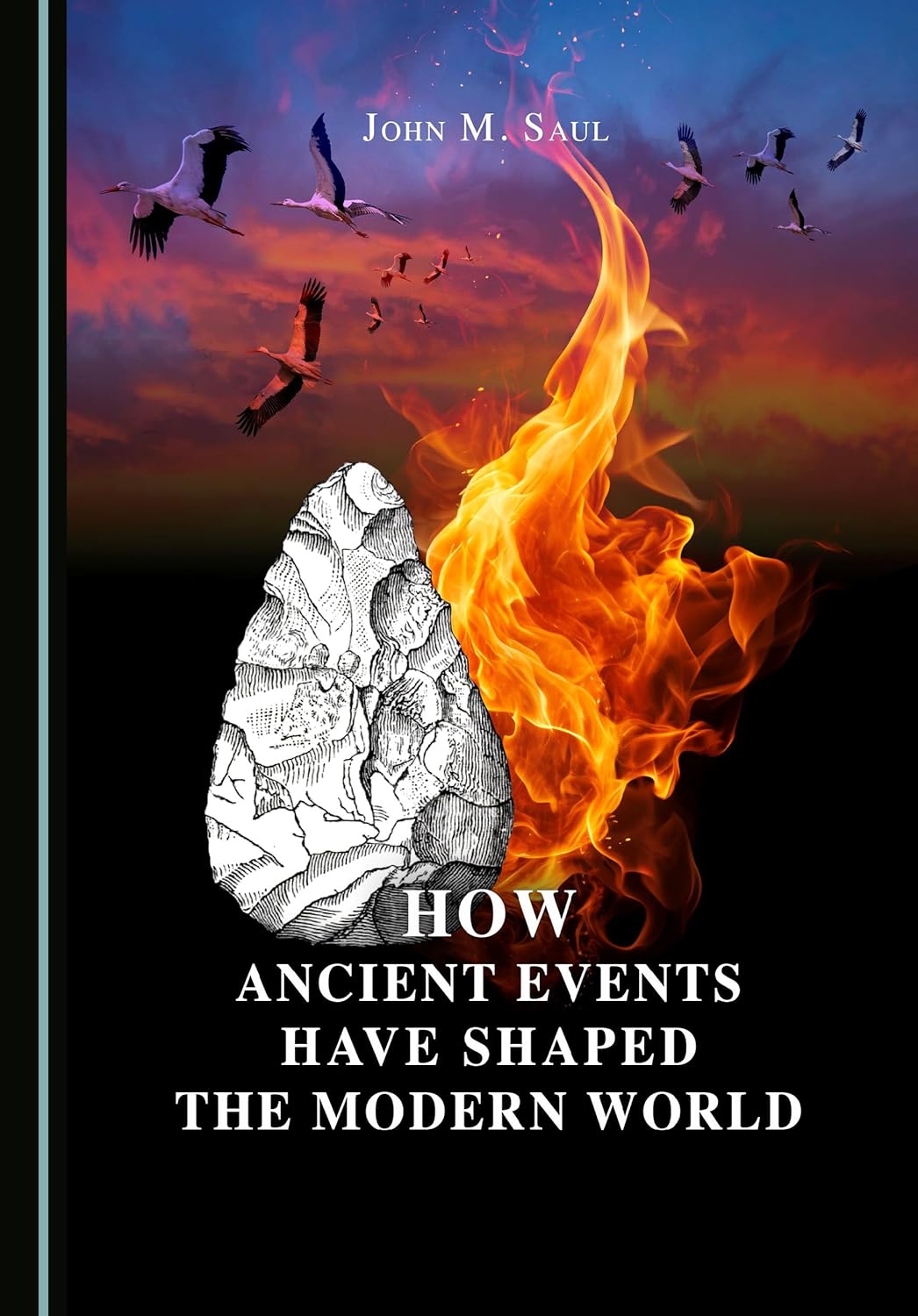
Cevâhirnâmes are significant scientific and cultural texts within the Islamic intellectual tradition, particularly during the Ottoman period. Precious and semi-precious stones were valued not only for their aesthetic and economic importance but also for their perceived medical and therapeutic properties. Numerous works titled Cevâhirnâme were produced to describe the origin, classification, physical and chemical characteristics, and healing qualities of these stones. One of the most important examples of this tradition is the Cevâhirnâme-i Abdülmecid-i (Guidebook), compiled in 1857 by Chief Physician Salih Efendi under the patronage of Sultan Abdülmecid. Considered the first systematic gemological study in the Turkish-Islamic world, the work represents one of the final examples of the classical cevâhirnâme tradition. The book consists of twelve chapters devoted to stones such as diamond, ruby, emerald, pearl, turquoise, amber, coral, agate, and jade, examining their physical properties alongside their temperaments (mizaj) and effects on the human body. By combining traditional humoral medicine with empirical observations of gemstones, the Cevâhirnâme-i Abdülmecid-i serves as a valuable historical source that bridges traditional Islamic medicine and early modern gemology, reflecting the scientific, medical, and cultural knowledge of the late Ottoman period.

How Ancient Events have Shaped the Modern World
Book
Saul, J.M. (2026) How Ancient Events have Shaped the Modern World. Newcastle upon Tyne, Cambridge Scholars Publishing, 242 pp.
Record No. 28155  |  ISBN/ISSN: 9781040000000  |  Sinkankas/Born No.: NIS/NIB  |  RWHL*
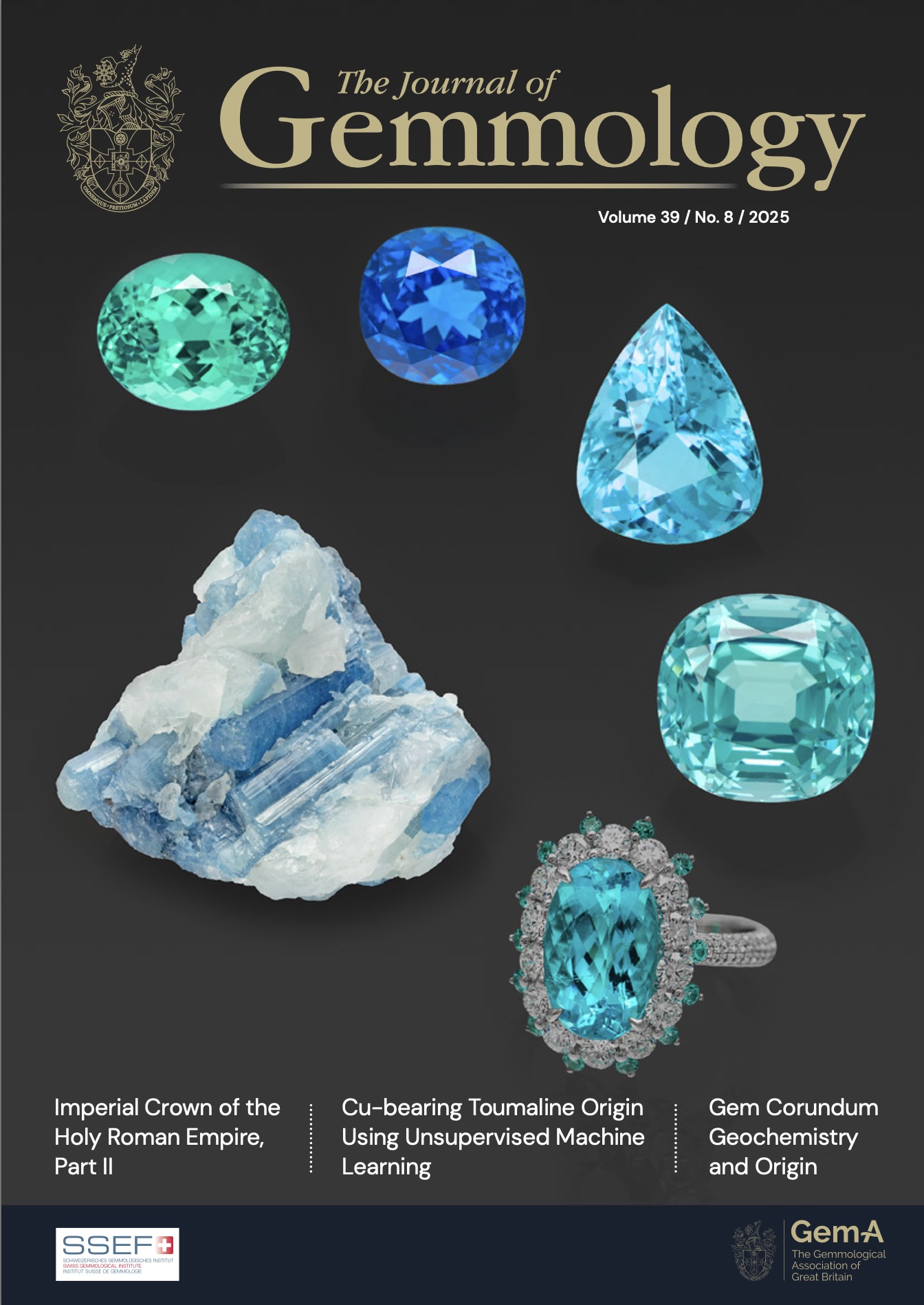
This book is basically a retrospective of the writings/musings of John Saul, the noted geologist who discovered the John Saul ruby mine in Kenya. These essays touch on the great questions of Origins. The human adventure began when people first started to share complex ideas. A very early set of shared ideas provided a reasoned scheme that was both religious and scientific that would enable souls to take the Milky Way to the domain of the immortal gods. Other essays present cancer as originating when damaged tissues lose control over individual cells. Liberated cells multiply and may vary in ways that are incompatible with the functioning of multi-celled creatures, of humans in particular. Cancer first emerged during the Cambrian Explosion itself. Four essays discuss the survival of deep terrestrial impact-scars akin to those on the Moon, but far less easy to see. Such scars provide our planet's initial conditions. Fractures on the rim-zones of the scars guide plate tectonics and the deposition of minerals, and are implicated in at least one mass extinction.This book touches on little-discussed aspects of prehistory, history, the explosion of life during the late Precambrian, cancer research, and regional geology. Saul's writings and ideas represent some of the most original in the field of gemology, tying together not just the origins of gems, but the origins of human civilization itself. Highly recommended!

Unheated pink sapphire from Madagascar with OH-related 3232 and 3185 cm⁻¹ FTIR bands
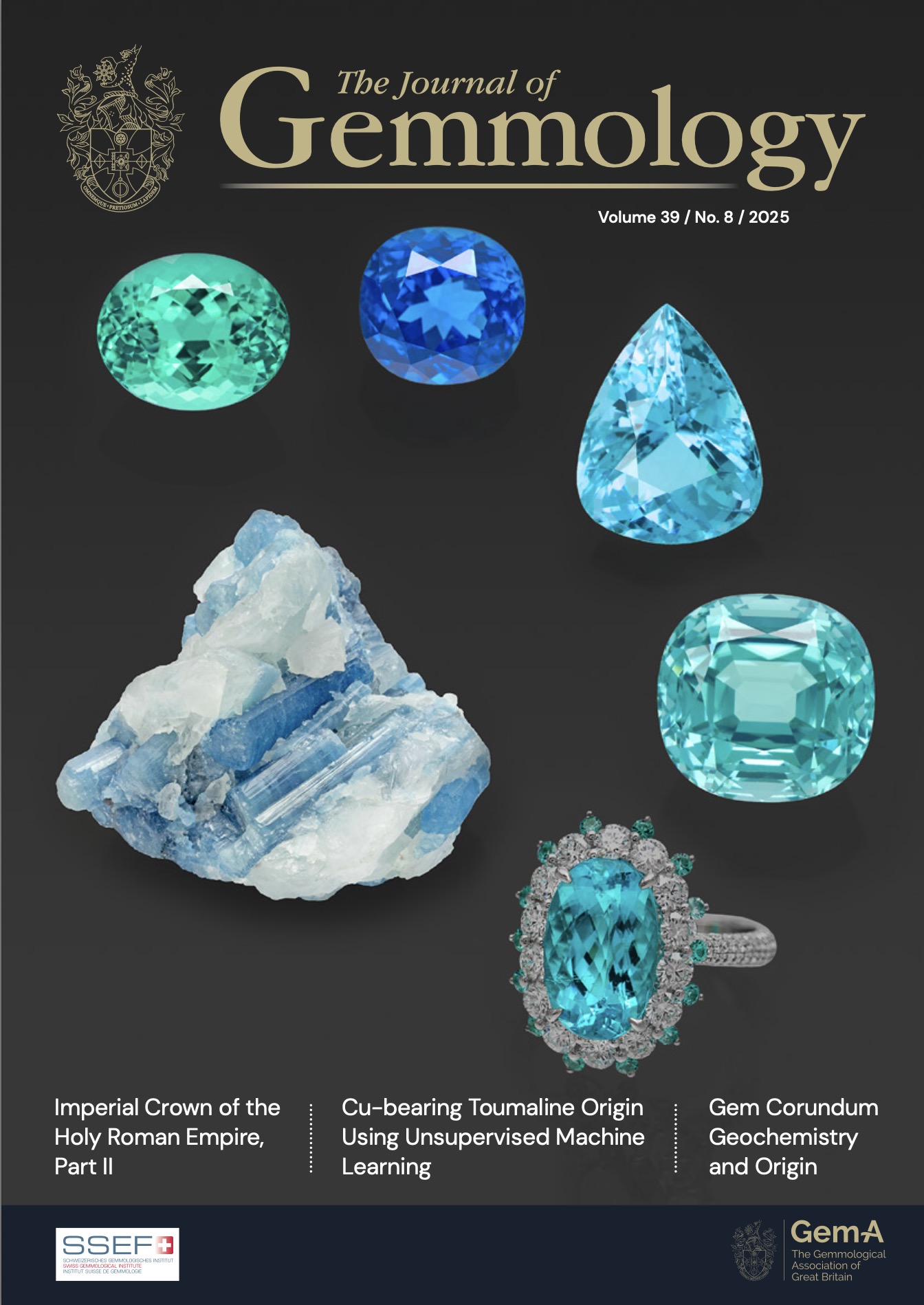
Journal Article
Krzemnicki, M.S., Wang, H.A.O., Sun, Y., Beney, I. and Wälle, M. (2025) Unheated pink sapphire from Madagascar with OH-related 3232 and 3185 cm⁻¹ FTIR bands. Journal of Gemmology, Vol. 39, No. 8, pp. 734–736.
Record No. 28184  |  Sinkankas/Born No.: NIS/NIB  |  RWHL*
Describes the appearance of a 3232 FTIR peak in a pink sapphire from Madagascar that appeared to be unheated. This peak is typically associated with gems that have been heat treated.

Unsupervised machine learning for the geographic origin determination of Cu-bearing tourmaline
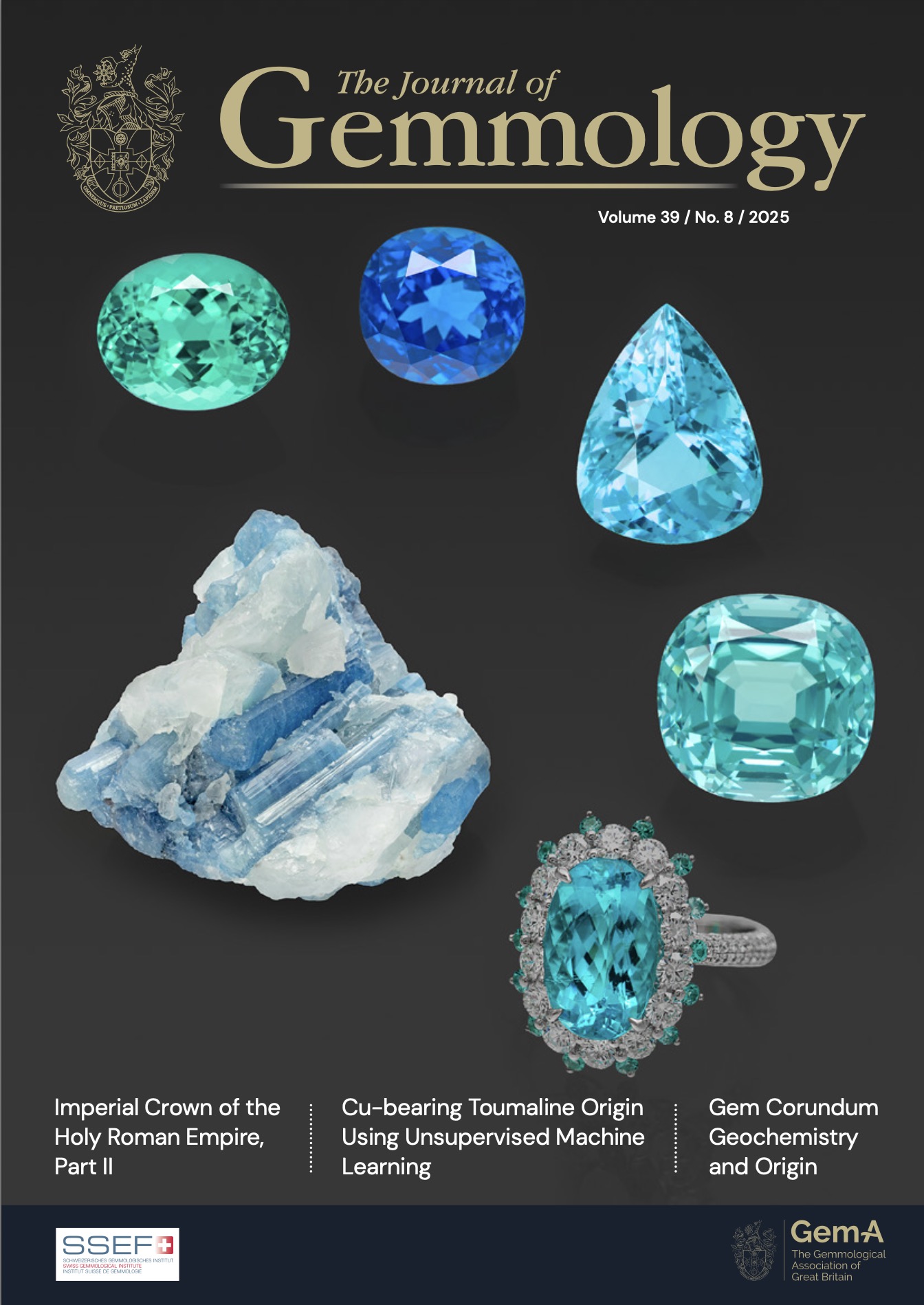
Journal Article
Wang, H.A.O., Krzemnicki, M.S., Wälle, M. and Schultz-Guttler, R.A. (2025) Unsupervised machine learning for the geographic origin determination of Cu-bearing tourmaline. Journal of Gemmology, Vol. 39, No. 8, pp. 772–787.
Record No. 28180  |  DOI: https://doi.org/10.15506/JoG.2025.39.8.772  |  Sinkankas/Born No.: NIS/NIB  |  RWHL*
Determining the geographic origin of Cu-bearing tourmaline poses a significant challenge in gemmology, particularly when traditional microscopic methods yield inconclusive results. This study applies a combined analytical and computational approach using 469 gem-quality samples from Brazil, Mozambique, and Nigeria. A total of 57 elements (from Li to U) were quantified using full-mass-spectrum LA-ICP-TOF-MS. The high-dimensional elemental dataset was reduced to interpretable 2D maps using non-linear unsupervised machine-learning algorithms, including t-distributed stochastic neighbour embedding (t-SNE) and uniform manifold approximation and projection (UMAP). These methods successfully identified complex patterns and distinct subgroups, revealing compositional similarities not captured by traditional linear approaches. The resulting clusters provided a clear framework for geographic origin determination of unknown samples. Elemental signatures of key elements (i.e. Na, Ca, Li, Ti, Fe, Mn, Cu, Ga, Sr, La, and Pb) highlighted their influence on clustering and related geochemical variations to colour and geographic origin. Unsupervised machine-learning algorithms do not rely on predefined origin labels. This reduces errors caused by uncertain origin information and helps reveal statistical outliers that may point to new or undocumented sources. By integrating colour information with compositional clustering, the method also provides a possible framework for identifying heat treatment in high-clarity stones.

The Imperial Crown of the Holy Roman Empire, Part II: Origin determination of the gemstones and pearls
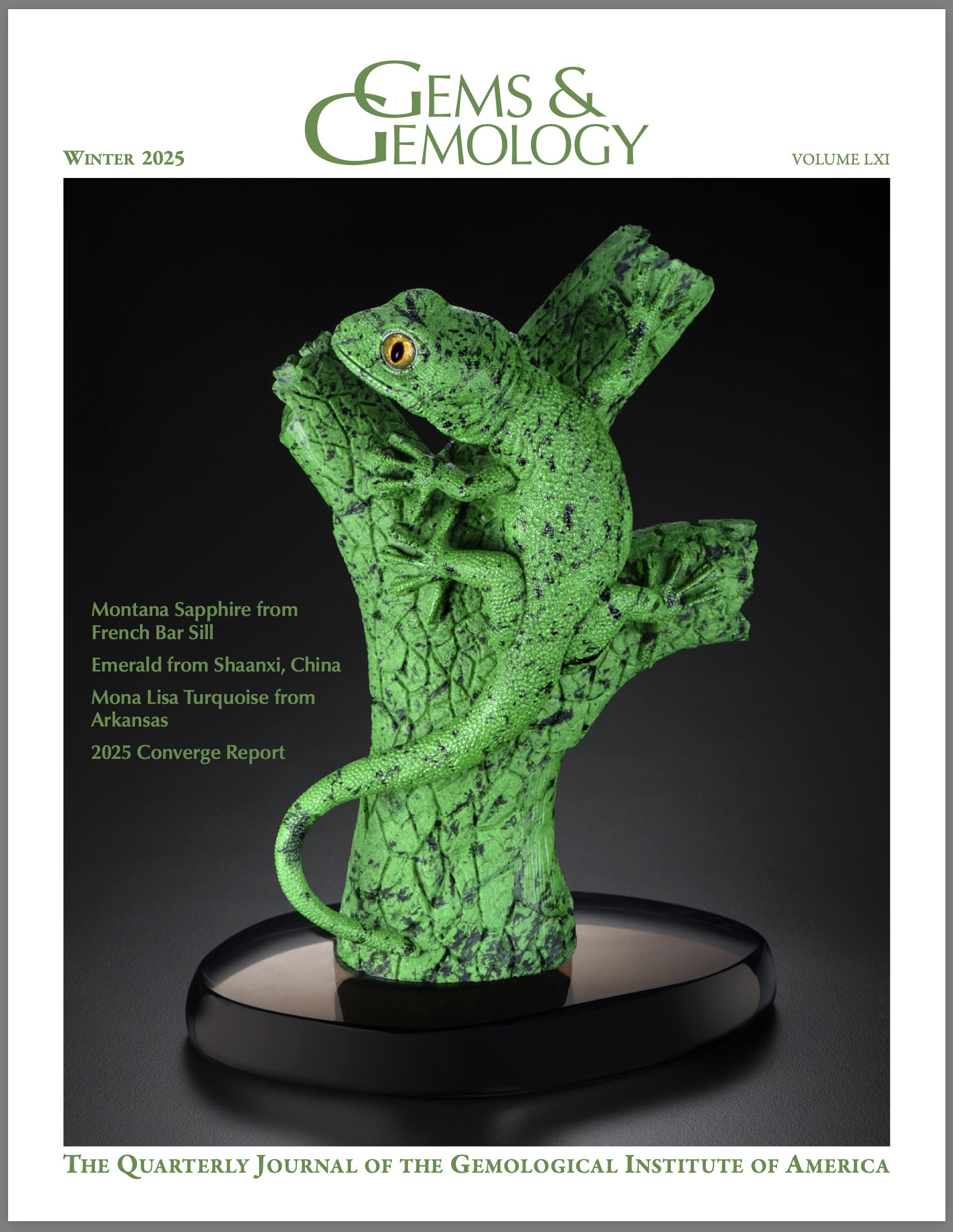
Journal Article
Gilg, H.A., Karampelas, S., Lamers, T., Uhlir, K., Griesser, M. and Kirchwegner, F. (2025) The Imperial Crown of the Holy Roman Empire, Part II: Origin determination of the gemstones and pearls. Journal of Gemmology, Vol. 39, No. 8, pp. 740–770.
Record No. 28179  |  DOI: https://doi.org/10.15506/JoG.2025.39.8.740  |  Sinkankas/Born No.: NIS/NIB  |  RWHL*
The medieval Imperial Crown of the Holy Roman Empire preserved in the Imperial Treasury in Vienna, Austria, has been the focus of an ongoing study (e.g. Nasdala et al. 2023). Here, we report on geographic origin determinations of its gems, which can offer new insights into the gem trade of the Early and High Middle Ages. We examined the 172 gemstones and 233 selected pearls in the crown using a combination of high-magnification digital microscopy, μ-EDXRF analysis, and UV-Vis-NIR spectroscopy with mobile instruments. The gemmological characteristics of most of the sapphires (including four stones over 100 ct) were consistent with a Sri Lankan origin. Most of the almandine and pyrope garnets were from South Asian deposits, while the emeralds were attributed to Egyptian sources, except for two from Swat, Pakistan. All these deposits have likely been exploited since Antiquity. Several stones, including three antique amethyst intaglios, were reused antique gems. The two spinels on the front plate of the circlet came from Kuh-i-Lal in Tajikistan, and six small (< 1 ct) basalt-related sapphires may have originated from deposits in France. Six faceted sapphires with steep, four-sided, and trigonal pyramids mark the onset of faceting of hard gemstones. The pearls were predominantly of saltwater origin from the Indian Ocean, but a significant number were most likely European freshwater pearls. The assemblage of gem materials in the crown’s removable arch and cross suggests that they are of later manufacture than the circlet.

Gem News International: Reconstructed specimens and the rise of deceptive practices in Pakistan
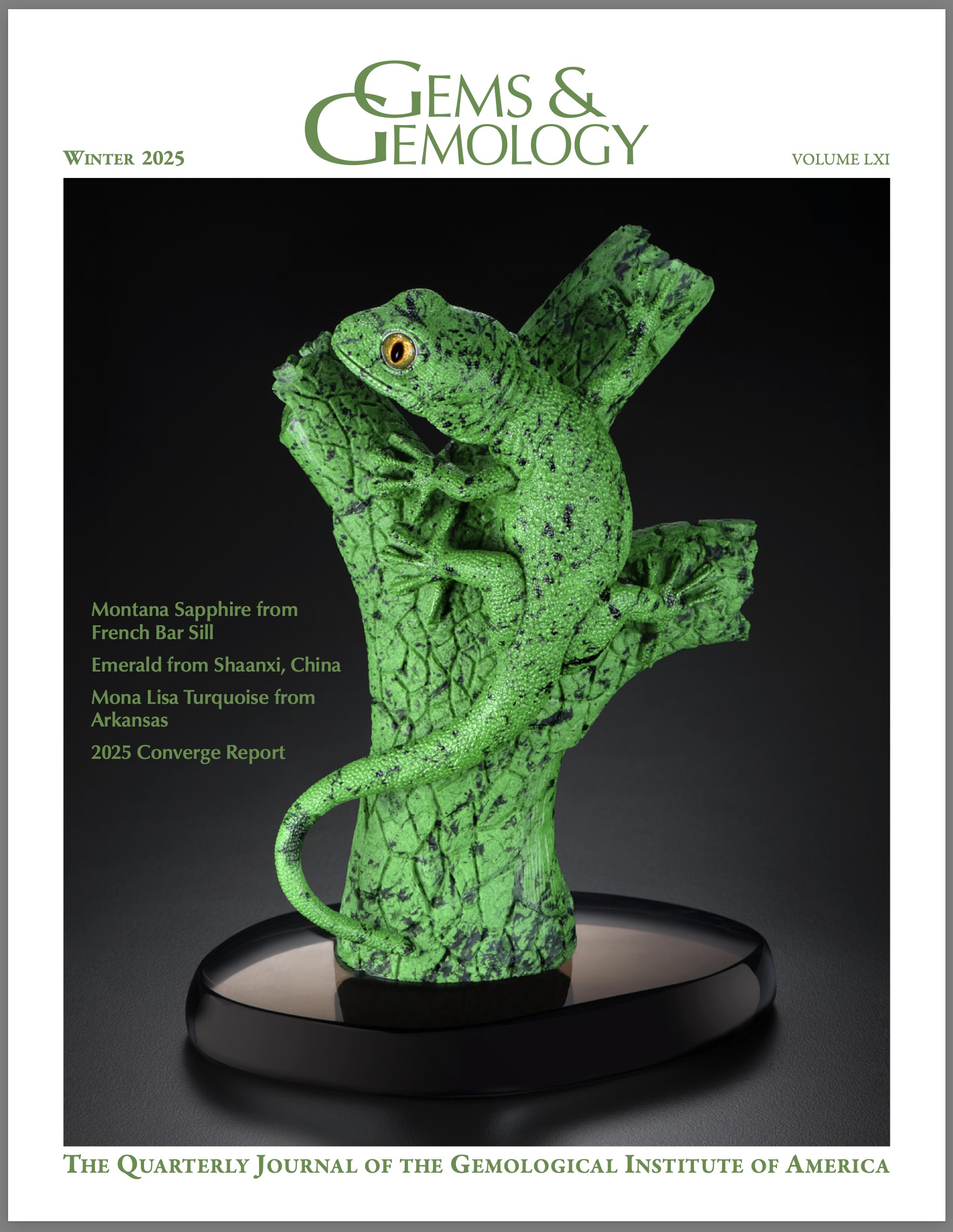
Journal Article
Bakht, T.H. and Shah, M.M. (2025) Gem News International: Reconstructed specimens and the rise of deceptive practices in Pakistan. Gems & Gemology, Vol. 61, No. 4, Winter, pp. 450–452.
Record No. 28178  |  Sinkankas/Born No.: NIS/NIB  |  RWHL*
Recent field observations in Pakistan have revealed that specimens circulating in local gem markets and near mine sites have increasingly been artificially assembled or altered. Local dealers and prospectors from the Hunza and Gilgit mining areas offered “Frankenstein” specimens, pieces assembled by gluing together fragments of crystals and host rock (figure 6). While adhesives can sometimes be seen under magnification, many joints are subtle enough to mislead buyers or tourists. Crystals such as aquamarine are often skillfully mounted onto matrices to imitate natural specimens, with some pieces further polished, dyed, or even oiled to enhance their appearance (figure 7). In certain cases, resins mixed with crushed marble or host rock are applied, making detection even more difficult. For example, in Peshawar’s Namak Mandi gem market, a ruby reportedly from Jegdalek was identified as a synthetic crystal mounted on natural host rock. In addition to this deceptive practice of adhering specimens to host rock, broken specimens are also repaired with adhesives, often without disclosure. With time, the quality of assembly is improving, making detection more challenging. The close proximity of these reconstructed specimens to the mines is a reminder that “from the mine” does not automatically guarantee authenticity. Collectors and gemologists should be aware that stones described as directly sourced may have undergone significant human intervention. Similar practices are common in neighboring regions, including Afghanistan.

Gem News International: Fuchsite-bearing dolomite aggregate as a new jadeite imitation

Journal Article
Yang, T., Huang, K., Chou, Y. and Lin, S. (2025) Gem News International: Fuchsite-bearing dolomite aggregate as a new jadeite imitation. Gems & Gemology, Vol. 61, No. 4, Winter, pp. 449–450.
Record No. 28177  |  Sinkankas/Born No.: NIS/NIB  |  RWHL*
Recently, a carved green snuff bottle was submitted as jadeite jade for identification at the Taiwan Union Lab of Gem Research (TULAB) (figure 1). The surface of the bottle displayed a white matrix with dense mottled green areas. A spot refractive index was approximately 1.68–1.69, which was noticeably higher than the typical range of values for jadeite jade. However, such results may occur if jadeite contains kosmochlor. Under microscopic observation, the surface of the carving revealed a white matrix with green patches (figure 2). Interestingly, these green patches appeared red when viewed through a Chelsea filter. To further identify the material, Raman spectroscopy (785 nm laser) was performed and compared with the RRUFF database (B. Lafuente et al., 2015, https://rruff.info/about/downloads/HMC1-30.pdf). The results indicated that the white matrix was dolomite, while the dark green patches were muscovite (figure 3). With the assistance of energy-dispersive X-ray fluorescence (EDXRF) analysis, the green portions were confirmed to be fuchsite (chromium muscovite). All testing indicated that the snuff bottle was composed of a dolomite aggregate with fuchsite. Although its appearance resembled jadeite jade, the bottle’s refractive index and Chelsea filter reaction clearly distinguished it from jadeite jade. Raman spectroscopy and EDXRF were used as more precise methods to confirm the material, which appears to be a new jadeite simulant that has recently appeared on the market.

Building a Gemological Library

Gemological books range from general identification manuals and textbooks to specialized works on individual gems, mineralogy, jewelry, treatments, synthesis, history and gem-producing regions.

For a curated selection of particularly useful books, read The Gemologist's Core Library — Classic Books on Gemology, Jewelry and Mineralogy.

About Four Treasures

Four Treasures is Lotus Gemology's freely accessible gemological reference database. Use the full database to search by author, title or keyword and explore literature on gemology, mineralogy, jewelry and related fields. Where available, hyperlinks on titles may lead directly to the full publication.

Search the Complete Four Treasures Database